

Robin S Webber
This transcript was generated by AI and may contain errors. It is provided to assist those who may not be able to listen to the message.
Well, I know we certainly want to say thank you very much to you. You've heard of a two-fer before? Well, they are a three-fer because Paul speaks, Bonnie can play the piano, and then they can do special music together. So that really makes it delightful for congregations when they're able to do that. They're out in Redlands today. And I also believe that some of our membership is down in San Diego, our sister congregation. They're having an Ambassador College Bricket Wood Reunion for the old folks. Just teasing. That goes back a ways. And so we have probably a rather full house today down in San Diego, and I know San Diego is delighted in that. I do want to mention, just to kind of let you know where I'm going to be going as far as some of the presentations that I'm going to be bringing you, I have not forgotten that we are still in a series, and I hope you haven't forgotten that we are still going through the series of the New Covenant realities and Christian responsibility. It's on my mind. We're going to be coming back to that and finishing with two more presentations on that. We're going to be discussing the subject of the biblical food laws in the light of the New Covenant, and we're also going to be discussing the aspect of tithing in the light of the New Covenant. But those presentations will be coming after I come back from Redlands. But today I wanted to build upon the foundation that Mr. Velasquez laid out so abundantly, and that is about moving out of our comfort zones. And it's always amazing how messages can dovetail together. This time of the year is often called the season of Ruth. It is during this time period that the book of Ruth is read in Jewish synagogues and also in many Church of God communities around the world. There's a reason for that. The book of Ruth, when understanding how it played out in real time, plays out right during this time. The time of between the days of Unleavened Bread and the time of Pentecost. There's some words that I'd like to put down on the whiteboard here for you. For those of you that are looking at this piece of furniture in front of me, this is called a Jurassic PowerPoint. And I'm the Jurassic, and this is the PowerPoint. But I'd like to write some words. And when we come to church, I presume we come to learn and not just listen. So I'm going to ask you to take out your notebooks. And I'd like you to write down some words with me, because all these words are going to pop up in the course of the book of Ruth, so that we can all stay together. I presume that's why we're here. The first word I'd like to write down is integrity. Integrity. This is a very thin whiteboard. Integrity. First word. Look for it. We're going to talk about it. The second word I'd like to write down is compassion. Compassion. So far, so good. Third word. Are you with me? Next word is inclusiveness. Inclusiveness. And last but not least, if you have your... I'm going to put a little star here. A little star. And we're going to write down a scripture. Are you with me? Here we go. Let's write this scripture down together. 2 Corinthians 5, 17. Now that's the goal before us as we discuss the book of Ruth.
And the book of Ruth is very important for us, especially we that are under the new covenant. Because let's understand something. And that is that under the new covenant through Jesus Christ, we're able to approach God the Father in what the author of the book of Hebrews calls a new and a living way. A new and a living way. Now just to say that, that's a bumper sticker. A new and a living way.
But what does that mean? How do we make it practical? How do we make that real? How do we join Ruth and Boaz in Naomi of old today living a new and a living way? Well, that's why we're going to go through this story. Because Ruth teaches us how not to only move out of our comfort zone, but how to move forward in the future that God has planned for us. Because when we think of the overall text of the spring festivals of Passover, the Days of Unleavened Bread and Pentecost, it is not only leaving the world behind where God found us and began to work with us and said to turn, but in the turning we had to move into a future. God does not operate in a vacuum. Satan can operate in a vacuum when nothing is happening. God cannot work in a vacuum. There has to be action. There has to be movement in this new and this living way. And that's why I want to introduce you again to the book of Ruth. I know that at times, perhaps you've heard this story told. It's a glorious story. It's a beautiful story. It's a story about moving out of our comfort zone and moving into the future that God has prepared for us. And Ruth, like the book of Philemon, like the book of Esther, there are these little boutique books that have many windows that you can look into. And every time you go into these small books, these stories of life and hearts and hopes and dreams and futures, it's like looking into a different facet. It just speaks to you. It moves you. You begin to say, I want to be like them. I want God to use me as He used a Ruth or as He used an Esther, as Mr. Velasquez brought out. So on this Sabbath day, friends, let's open up our Bibles. Let's go to the book of Ruth. And let's understand how integrity and compassion and inclusiveness leap out of this book through the lives and the hearts of people that leave a past behind, move to the future, and move out of that comfort zone that Mr. Velasquez talked about. Ruth 1, verse 1, let's go together. Now it came to pass in the days when the judges ruled that there was a famine in the land and a certain man of Bethlehem, Judah, went to dwell in the country of Moab, he and his wives and his two sons. The name of the man was a limelak, the name of his wife was Naomi, and the names of his two sons were Malon and Chileon, Ephrathites of Bethlehem Judah, and they went to the country of Moab and remained there. Oh, it must have been desperate. No Israelite necessarily wanted to cross the border and go into the Gentile country of Moab. It must have been very rough and it must have been very tough.
It's very interesting when you look at that first paragraph, now it came to pass. Now we read that and we look backwards and say, and now it came to pass. We don't know what's going to come to pass in our life this next Monday or Tuesday or Wednesday. Are you like me a little bit that, you know, life is what's happening? That you have not planned for? That becomes unexpected? And are we going to be ready for it? It comes to pass. And the judges ruled, which sets up the whole story of Ruth and Boaz, Naomi. Anybody read the book of Judges out here recently? It's like a Wild West story. I mean, things were happening back there.
You know, when you read the book of Judges, you hear the echo. You hear that report that comes two or three times in the book of Judges where it says, And every man did that, which was right in his own eyes. You read the book of Judges, you sometimes have to go away and say, what was God doing here?
Because you read about these people, people that had been brought out of Egypt, people that had crossed the river Jordan, given the land of milk and honey, and they were running around like a bunch of cowboys with sandals on, doing their own thing. It was like the Wild West. Not everybody was following God. Not everybody was a person of integrity. Not everybody was a person filled with compassion. Not everybody was inclusive. Everybody was about somebody, somebody being themselves. It's also interesting as we launch into the book of Ruth that there was a famine in the land.
The book of Ruth starts with a chapter of despair, a chapter of despair, of destitution, famine. We haven't had too many famines in our land in the United States of America. I know we're undergoing economic challenges right now. There is a famine of money, there's a famine of jobs, and maybe we can relate to that. Famines are not pretty things. Children, women, die. Men don't know how to feed their families. They're driven to extremes, and there was a famine in the land. But have you ever noticed in the course of the Bible how God uses famine to grow His people?
So often when there was a famine in the Old Testament, whether it was in the time of Abram, whether it was in the time of Jacob and his children as they had to go to Egypt, in that time of famine, or now in the time of Naomi and her husband, there's a famine. And God puts His people out of their comfort zone, and God moves His people.
And even when it doesn't seem as if anything is growing around them, God is planting His seeds, His seeds, in their lives for a future that He has prepared for them. We don't always see those seeds immediately. Are you with me? Because I know right now some of you are going through famines in your life, perhaps spiritually, perhaps emotionally, perhaps financially. Perhaps there's a desert, as it were, between these two ears of yours, this famine, this desolation that things just aren't happening. You don't know how things are going to work. Guess what, friends? That's why God gave us the book of Ruth, to understand that even in the low points of our life, He is planting seeds for our future.
As we leave our past behind, we turn our back on the world that He called us from, but we don't stand still. We begin to move towards the future that He has prepared for us. Verse 3, then, Elimelech, Naomi's husband, died, and she was left, and her two sons.
Oh, that's horrible! Terrible to have the misfortune of, in that sense, hitting this chapter of life and being a widow. Being a widow is tough stuff. Remember what James says in the book of James, you know, pure and undefiled religion before God is to visit the widows in their affliction. There is an affliction in the aspect of widowhood. But then now notice, then now they took wives, speaking of the boys, they took wives of the women of Moab, the name of the one was Orpah, and the name of the other Ruth, and they dwelt there about ten years. Now notice verse 5.
This story is going down further. Then both Malon and Chilean also died, so the woman survived her two sons and her husband. And then she arose with her daughter-in-laws that she might return from the country of Moab, for she had heard in the country of Moab that the Lord had visited His people by giving them bread.
Now before she moves out to Moab, let's understand what's happening here. Number one, Naomi had, first of all, lost her husband. Now she loses her two boys. Let's understand back in that time in society that there was no social security. There was no disability. You may already know this, but I'm going to remind you.
We were talking about 3,300 years ago. There was no health net. The socioeconomic system was based upon the family unit. It was based upon having many, many children and actually many, many sons. This is as if her social security went, her SSI went, her insurance benefits went. She had nada. She had nothing! This is where the book of Ruth begins. She was as it were a dead person amongst the land of the living.
Therefore she went out, notice what it says, therefore she went out from the place where she was and her two daughters with her, and they went on their way to return to the land of Judah. Verse 7 is a fascinating set of words. And therefore she went out. It has the rhythm and it has the echo of what Abram did. In Genesis 12 and verse 1, when God began planting seeds of His future, and He said, Abram, I want you to leave the land.
I want you to go forth where I will show you. And so it says, and Abram departed. He went. He got out. He took off. He had no compass. His true north was simply God calling Him. The same here with Naomi. She goes out. And that's the first thing that all of us have to do as Christians, is we have to leave the comfort zone that we have been in, and to allow God to begin to work with us, we have to go out.
We have to leave that which is familiar and follow the call of God. And Naomi said to her two daughters-in-law, Go and return each to her mother's house. The Lord deal kindly with you, as you have dealt with the dead and with me. And the Lord grant that you may find rest each in the house of her husband, so she kissed them, and lifted up their voices, and they wept. So here is one of the great graphic scenes that we find in the Old Testament.
We are on this dusty road in the semi-arid country between Moab and Bethlehem. And here are three women, three gals, one older, two younger. And they are connecting in a way that only women can when they are grieving. They're grieving the past, they're grieving the loss of a husband and a father-in-law, and children and husbands.
And you come upon them, as it were, and you see just three figures standing in the dusty road on the road to Bethlehem from Moab, three women crying. And over in the Middle East, if you've ever noticed the pictures, they don't just cry. They just don't even do a Western sob. They wail. They let it out. Because in Naomi's mind, she's never going to see her daughter-in-laws again. This has been a bad tour over in Moab. And they're about to leave one another. You know, they're not going to get on the Internet that night and see, talk to one another on Facebook.
This is it. And so she says, go back to your families. And they said to her, surely we will return with you to your people. They didn't leave. But Naomi said, turn back my daughters. Who will go with me? Are there still sons in my womb that they may be your husbands? Turn back my daughters. Go, for I too am old. And if I even had a husband here, and I should have him tonight, am I going to bear sons?
Are you going to stick around until they're grown? Restrain yourselves from having husbands? No, my daughters, for it grieves me very much for your sake that the hand of the Lord has gone out against me. Back then, when bad things happened to good people, it was considered to be a direct curse from God. And not only that, but we also see here's a religious woman who has lost her husband, lost her children. And we do see the natural set of grieving occurring as well. There is anger. There is doubt. There is suspicion as to what is God doing?
Is he even listening? What are his motives? What's happening? I'm disconnected? And this is where Naomi's at, at least in that present moment. Verse 14, Then they lifted up their voices and wept again. They're wailing. It's silent. They're wailing. You and I are watching this on this dusty road going to Bethlehem. And Orpah kissed her mother-in-law, but Ruth clung to her. And she said, Look, your sister-in-law has gone back to her people, and to her gods, return after your sister-in-law. Now, lest we're too hard on Orpah, maybe you've been hard on Orpah in the past.
Let's understand something about Orpah. Orpah got through two discussions with Naomi. She did not leave her mother-in-law immediately. Have you ever noticed that? I mean, not only tried to shoo her away twice, she didn't do that. Orpah was a wonderful daughter-in-law. She loved Naomi. She did more than just simply one for the gipper. She went through two. But there's a difference between simply being good or very good, and now the status and the state that Ruth would hold in the Bible. Notice what it said.
She clung to Naomi. She stayed a moment longer. She said, well, look at your sister-in-law, Orpah. She's going back. And notice something very carefully if you're reading. Not only going back to your family, but she's going to go back to her gods. Now, probably while Orpah was with Naomi's family, the father-in-law, her husband, she'd come into that household who would be the God of Israel. But now she's going back. She's not only going back to her family, but she's going back into that entire world, and she's going back to those gods.
Ruth does not. Ruth clings. Clings to Naomi. What is there about clinging that bears fruit, even when you don't know all the answers? Maybe right now, some of us out here in this room, we're unsure of our path. We don't know what's held in the future. Perhaps we need to cling to people. We need to hold on.
Let's allow patience to have a perfect work. That's where Ruth was. And then Ruth brings out what we call the song of Ruth, which is beautiful. Intreat me not, Naomi, to leave you, or to turn back from following after you, for wherever you go, I will go. Wherever you lodge, I will lodge. Your people shall be my people, and your God my God.
Beautiful. Sometimes we actually hear that spoken of in weddings.
But now we move into something very deep. Are you ready? And maybe you've never noticed this before, never really thought about it. Let's go to the next line. Where you die.
Where you die, I will die.
And there will I be buried.
These are not just words. This is a covenant that Ruth is making with Naomi, and with the God of Naomi. This is the final seal of embracing Naomi's family.
It is moving away from the world of the comfortable, and she is now moving into a new identity. A new identity under the God of Israel. And what I want to share with you, and it comes back to that new and that living way that we are experiencing and talking about between the days of Unleavened Bread and Pentecost, as first fruits, is simply this.
What we see in verse 17, if you'd like to jot it down on your notes and go back and think about it, what we find here is the death of self. The death of self. In one sense, Ruth no longer exists. She's given away her past. She's given away her world. You see, the new man, the new woman in Christ, cannot be until there is the death of self.
We don't gain the new identity that the Father desires for us to have, until we have died in Christ, until we've divorced ourselves from the world in which God the Father called us. The death of self enables then the beginning of the new man and new woman. And she says, the Lord so do to me, and more so also, if anything but death parts you and me.
We begin to see something very important in this new and living way of a woman that, in a sense, was dead in the land of the living. We see that Ruth is a woman of integrity. She has made, in a sense, a covenant with a small sea, with Naomi, and perhaps in a greater, bigger sea with the God of Israel. We also see a woman of compassion towards a younger woman, towards this older woman. Ruth could have gone back to her country, gone back to her family, remarried. She says, no, I'm with passion. I have compassion.
We begin to see why God's going to use Ruth. When she saw that she was determined to go with her, she stopped speaking to her. Basically, this is saying in the Weber paraphrase, Naomi zipped it up. Have you ever talked to somebody and you're trying to convince them of something, and finally you know they're not going anywhere with you? They're stubborn as a Missouri mule. You can't even whack them.
It's time to... and move on. Well, that's exactly what Naomi did. And now the two of them went on to... they came to Bethlehem, and it happened when they had come to Bethlehem that all the city was excited because of them, and the woman said, is this Naomi?
They say, what's wrong with these people? Do they have amnesia, or do they have bad eyesight back in, you know, 1300 BC? What's happening here? Let's understand something, and I want to break it to those that are older baby boomers and above.
Hello, folks. People change. When you haven't seen somebody in 10 or 15 years, we begin to look different. And especially because of Naomi's challenge that she was going through, her countenance changed her. It was changing her human landscape. I know that next week, when I go back to the General Conference of Elders, I'm going to probably bump into people that I haven't seen sometimes for 10 or 15 years. You know what I always do?
Here's a trade secret, because I'm with a lot of people. I always go up and I say, hey, this is Robin here. I don't let them even guess who they're talking to, because I've done it the other way, too. People change looks. Countenances can change people. And so, here's Naomi coming into Bethlehem. She said, don't call me Naomi. Call me Mara, for the Almighty has dealt very bitterly with me. She's still in this grieving process. I went out full, and the Lord has brought me home empty again.
Empty. Since the Lord has testified against me, the Almighty has afflicted me. She took this extremely personally, as people do when they're grieving. So, Naomi, in verse 22, returned, and Ruth the Moabites, her daughter-in-law with her, who returned from the country of Moab, and they came to Bethlehem at the beginning of the barley harvest. Now, if you're with me as we're going through this, two big things you want to see. All of a sudden, Ruth is given a nickname.
She's given a tag. She's called Ruth the Moabites. And she's going to live with us for a couple of chapters. It's not just Ruth the daughter-in-law. Now it's Ruth the alien. Ruth the stranger. Ruth that other person. She doesn't look like us. She doesn't dress like us. She doesn't move like us. She doesn't speak like we speak. She's different. Ruth the Moabites. But it's interesting that in all of this, they move into a city called Bethlehem. Do you know what Bethlehem means? Bethlehem means house of bread. Bread is the staff of life. Who was born in Bethlehem?
And what did he say who he was? I am the bread of life. The bread of life was born in the house of bread in Bethlehem. And here now they enter Bethlehem at the time of the barley harvest. The barley harvest is going on right now over in Israel. We are in real time with real people searching for that real God.
Now there was a relative, Chapter 2, Verse 1 of Naomi's husband, a man of great wealth of the family of Olimalak, and his name was Boaz. So Ruth the Moabite said to Naomi, Please let me go to the field and glean heads of grain after him in whose side I might find favor. And she said to her, Go, my daughter. And then she left and went and gleaned in the field after the reapers.
And she happened to come to the part of the field belonging to Boaz, who was of the family of Olimalak. Now, behold, Boaz came from Bethlehem and said to the reapers, The Lord be with you. And they answered him, And the Lord bless you. And then Boaz told his servants, Who was in charge of the reapers? Whose young woman is this? And so the servant who was in charge of the reapers answered and said, It is the young Moabite woman who came back with Naomi from the country of Moab. See, it's not just Miss Ruth or Mrs. Ruth. It's always she's got a last name now.
It's called Moabites. People cannot get over the difference. This is where the third point is going to come in here. Now I've got a question for you. I love this set of verses because Boaz comes into the field and he says, The Lord be with you. How many of you work during the week? Go to the office. Can I ask you, can we talk? Have any of your bosses kind of greeted with you at eight o'clock in the morning when you come into work?
Has anybody used that on you this past week? Did anybody say, The Lord be with you? I don't think so. The point is this, Boaz did. Can you imagine when God is at the center of your life and you greet people with spiritual conversation, what it does to their energy level? When you say that, No, I don't want you all to go after church and go echoing, The Lord be with you. It's not what we're talking about.
But what I'm talking about is positivity is contagious. Negativity is contagious. Not talking about God amongst the people of God can be contagious. Talking about God and having a spiritual feast around a dining table can also be contagious. It just has to start with one. We all know how contagious things are.
Have you ever noticed in an audience? Of course, none of you are doing it right now. I'm trying to put you at ease. Nobody's yawning right now. But know as soon as one person starts yawning, no, everybody's mouth starts opening up. Or you see one person kind of going like this. Everybody starts going like this, you know, like a cage of monkeys out there. It's contagious. Boaz. Boaz was contagious as an individual. He said, The Lord be with you. And they echoed back, The Lord be with you. And he said, Who is this person? And in verse 7, it says, Please let me glean and gather after the reapers among the sheaves.
So she came and has continued from mourning until now. Though she rested a little in the house. And then Boaz said to Ruth in verse 8, You will listen, my daughter, will you not? Do not go to glean in another field, or go from here. But stay close to my young women. Let your eyes be on the field which they reap, and go after them. Have I not commanded the young men not to touch you?
And when you are thirsty, go to the vessels, and drink from what the young men have drawn. Now, you may not have recognized this before, but let's remember the time frame we were in. We're in the time of the land, or in the time of the judges. A time in which people were doing everything which was right in their own eyes.
They were not necessarily practicing the ways of God. Boaz was practicing the ways of God. Join me if you would in Deuteronomy 15, and let's pick up the thought in verse 7. In Deuteronomy 15 and verse 7, This was given to Israel before they crossed Jordan. When they went into the land, here was Israel who had been slaves, and had been strangers out of their own land. And God was giving them instruction to remember who and what they had been until He had visited them in their lives. If there is among you a poor man of your brethren within any of the gates in your land which the Lord your God has given you, you shall not harden your heart, nor shut your hand from your poor brother.
Let's notice something, friends. See my hand up here as it's extended? The hand has a string to the heart. It doesn't start with the hand. It starts with the heart. If your heart is wide, if your heart is loving, if you have compassion in the new and the living way, because you understand what God has done for you in your life, your hand is going to be wide.
It says, You shall open your hand wide to Him, and willingly lend Him sufficient to His need, whatever He needs. Boaz had a wide hand. Not only that, but when you recognize the socioeconomic situation in a land that was supposed to be a theocracy, that it's mentioned in Leviticus 23 under the section about Pentecost that if you went to glean, you were to leave the corners of the land for those that were without.
For those that were without. For those that were without. For those that were poor. Yes, you were to reap the harvest of your hard work, but you were to always remember the stranger. I suggest this comes into play with the story of Ruth. What we do understand is something, if we put these two factors together, number one, Boaz reflected Deuteronomy of having a wide hand.
Boaz most likely also kept the corners of his land ungleaned for the poor. What does that tell you about Boaz? Boaz was a man of integrity. He honored God's commandments. Boaz was a man of compassion. Boaz was moving into an intersection with a woman named Ruth, who was also a woman of integrity and a woman of compassion.
In this new and in this living way. Notice then, so she fell on her face after she heard all of this, bowed down to the ground and said, Why have I found favor in your eyes? Other translations say, Why have I found grace in your eyes? That you should take notice of me. I'm an alien. I am a foreigner. She was overwhelmed. She was overwhelmed.
And she was acknowledging that there had been an intervention in her life. It is at this junction of this verse where it mentions, How have I found grace in your sight? That the book of Ruth begins to take on new dimensions. Let's understand that the book of Ruth, it's often been thought that Samuel wrote the book of Ruth, to in a sense give the line of David a family scrapbook. When you're a king, you have to have a family tree.
And so we have the presentation of the story of Ruth. But Samuel was looking back as to where David came from. In the Christian community, we look at the book of Ruth, it's not only looking back, but now looking forward. We begin to see a relationship here between these two individuals in Bethlehem, Boaz and Ruth, and we call it the kinsmen-redeemer relationship. It is the relationship between Jesus Christ as that greater Boaz, that second Boaz, and the church represented by Ruth. Let's see how it plays out. And Boaz answered and said, It has been fully reported to me that all that you have done for your mother-in-law since the death of your husband and how you have left your father, your mother, and the land of your birth, you have come to a people that you did not know before.
As Mr. Velasquez was bringing out, Ruth voluntarily left her comfort zone. Notice in verse 12, The LORD, we pay your work, and a full reward, be given to you by the LORD, the God of Israel, under whose wings you have come for refuge. This was not just a trite verse of prose. This harkens back to the writings of Moses as to when in Exodus 19 where God tells Israel that I took you out of Egypt on eagles' wings, the covering, the protection of the mother eagle.
And you've come for refuge. You have faith. You've not only turned from your world of Moab, but now you've come to trust. See, there's a difference, are you with me? There's a difference, friends, between repenting and turning around. You can repent, you can turn around, and you can still be in paralysis of spiritual movement.
It's only when you begin to start walking in a different direction with God that you begin to grow. You begin to trust. You begin to have a relationship with God that's built on faith and trust. We now notice verse 13. Then she said, Let me find favor in your sight, my Lord, for you've comforted me and have spoken kindly to your maidservant, though I'm not like one of your maidservants.
Now Boaz said at her mealtime, Come here and eat of the bread, and dip your piece of bread in the vinegar. So she sat beside the reapers, and he passed parched grain to her, and she ate and was satisfied. She also kept some back, probably for Naomi.
And when she rose up to glean, Boaz commanded his young men, saying, Let her glean, even among the sheaves, and do not reproach her. Always caring, always concerned. Oh, don't we all wish that we had a Boaz in our life.
Notice verse 16. And also, let grain from the bundles fall, purposely for her. Leave it that she may glean, and don't rebuke her. Guys, I'm not talking about you. All the guys just looked up. I'm Boaz talking to the guys in this field. You can at ease. All the guys looked up. I loved it. Is this. You're saying, Guys, kind of poke a hole in your bag, and let some of the grain fall, so that she can pick it up.
You see, that's why Boaz is a type of Christ. He's a type of Christ because he's a man of integrity, he's a man of compassion, he's a man of inclusiveness, now including Ruth the Moabites, the Other.
This is a man that looks at people as people, not as others. This is a man that does not build walls, but builds bridges between men and women and men and men and women and women and all peoples. He understands the ways of God. He is that type of Christ as illuminated in Psalm 23 and verse 1. The Lord is my shepherd.
I shall not want. The Lord is my shepherd I shall not want. And it says that he prepares a table before me. Boaz was preparing the table before Ruth. Brethren, here in Los Angeles, if there's a famine in your life today or an ongoing famine that is occurring, I'm here to remind you that we worship a Lord. We come before a God in whom we shall not want. He is sufficient. Even in a time of famine in your life.
He is planting seeds in your life. And just like Boaz with Ruth, he's letting some of it come out of bag sometimes as well. That's his part. Your part is to continue to walk forward in faith, and you've got to pick it up. God will let it go, but you've got to pick it up.
There's a relationship that's developing air. Maybe today you've come to church, and maybe you've felt that today our God has abandoned you. Let's make it more personal that your God has abandoned you. That death is all around you. That you have the unmitous touch that everything that you're touching is not turning to gold, but is turning to naught, is turning to drought in your life. Read the book of Ruth. Understand that we may not have anything, but we can have integrity.
We can have compassion. We can have inclusiveness. We have been called to this new and this living way. We can have an identity that is in Christ, and all things are new. A new and a living way when everything else seems to be dying around us. Verse 18, and then she took it up and went into the city, and her mother-in-law saw what she had gleaned.
She brought it out, gave it to her, and kept back some. And then her mother-in-law said to her, where have you gleaned? And where did you work? And blessed be the one who took notice of you. So she talked to it, and at the end of the story it happens that it was Boaz. Boaz was the man. Let's pick up the story now in chapter 3 and verse 1. Then Naomi, her mother-in-law said to her, My daughter, shall I not seek security for you, that it may be well with you. Now Boaz, whose young women you were with, is he not our relative?
In fact, he's winnowing barley tonight at the threshing floor. Therefore, wash yourself, anoint yourself, get gidded up, get it on, go down to the threshing floor. But do not make yourself known to the man until he has finished eating and drinking. Then it shall be, when he lies down, that you shall notice the place where he lies, and you shall go and cover his feet, and lie down, and he will tell you what you should do.
Verse 5, very important, And she said to her, Ruth, speak in Naomi, All that you say to me I will do. Incredible response. Moving into the unknown, moving into the dark, moving into customs that she was not familiar with, how was she able to answer in verse 5? Ruth was a woman of integrity. And that's why on this Mother's Day weekend, she is a spiritual mother in the Lord to take notice of. So she went down to the threshing floor, and did according to all that her mother-in-law instructed her.
And after Boaz had eaten and drunk, and his heart was cheerful, he went to lie down at the end of the heap of grain, and she came softly and uncovered his feet, and she lay down. Now, before you get any ideas, this was not a torrid evening in Bethlehem. Hollywood can make something out of this. If you notice, all the gal did was take off his slippers, okay? And lay down in front of the stack, in front of him.
There's something very special that's going on here. Now, it happened at midnight that the man was startled and turned himself, and there was a woman lying at his feet. Probably heard a Russell looked up. What is it? A big rat? No, it's a woman!
Whoa! Where'd that come from? And of course, you know, back then in Bethlehem, he couldn't go to, you know, no flashlights. No, flip of the switch. You know, this had to be funny. And he said, Who are you? Hello! Hello! It's Ruth! So she answered, I am Ruth, your maidservant. Take your maidservant under your wing, for you are a close relative. We're beginning to get into what we call the levered relationship, which was a socio-economic development that God put in the Bible, to take care of those that were without, that kinsmen would redeem and provide.
We're going to build on that towards the end of the message. And what she was doing is she was, in a sense, in submissiveness and in humility, having not, was laying at his feet. And she took off as slippers, part of the system, and said, under whose wings I want to be placed. Remember how earlier that blessing that Boaz said, you have sought refuge and under whose wings you have come to feel secure. And now she, in a sense, is using that same phraseology, that I want to come under your wing.
This understands something very important, and I think it, again, fits so well with what John was talking about in reaching out to people and not being weary of well-doing, to recognize that we worship a spiritual God, and God uses the people of God as His wings, as His arms, as His feet, at times as His tongue, at times as His heart to reach others. God uses people to help them. This coming week, if you're a person of integrity, a person of compassion, a person of inclusiveness, somebody may come underneath your wing that needs encouragement, that needs a word of hope, that needs a place to be.
God does not work in a vacuum. He works through people. Then He said, blessed are you of the Lord, my daughter, for you have shown more kindness at the end than at the beginning, in that you did not go after young men, whether poor or rich.
And now, my daughter, do not fear I will do for you all that you request, for all the people of my town know that you're a virtuous woman. Her reputation was changing. Now, it is true that I am a close relative. However, gotta bring it up. That's not in the Bible. That's a paraphrase. Gotta bring it up. There's a relative closer than I. Stay this night, and in the morning it shall be that he will perform, if he will perform the duty of a close relative for you, good. Let him do it. But if he does not want to perform the duty for you, then I will perform the duty for you as the Lord lives.
Here was a man, friends, of integrity. And the reason why he was a man of integrity is he was God-centered. There is something, perhaps, developing now between Boaz and Ruth, a companionship, a friendship that was developing. Perhaps even the beginning of... who knows? Do I dare say romance? Don't want to take it that far. But obviously there is a bond of two people that were God-centered. But God was at the center. It wasn't going to be about his emotions or her feelings. It was going to be the way that God was going to do it.
It was going to be God in the middle of this. It wasn't going to be two to tango. It was going to be three to tango. God was going to be in the middle of all this. So she lay down at his feet until morning. She arose, and before one could not know it was dark... excuse me. Then he said, Do not let it be known that the woman came to the threshing floor. And he said, Bring the shawl that is on you and hold it. And when she held it, he measured six ephas of barley, laid it on her, and then she went into the city.
Now, when she came to her mother-in-law, she said, Is that you, my daughter? And then she told her everything that had gone on. Verse 17. And she said, These six ephas of barley he gave me. For he said to me, Do not go empty-handed to your mother-in-law. Then she said, Sit still, my daughter, until you know how the matter will turn out. For the man will not rest until he has concluded the matter of this day.
Now, can you just imagine that here's Ruth running in. She's all excited. Looks like there might be an answer to her life and to her future. She's got the vapors a little bit. She's kind of excited. And then what does her mother-in-law tell her? Sit still. Are you like me a little bit? When life is anxious and you don't know what the next moment or the next hour is going to bring about, the last thing that you want to hear is sit still. The last thing you want to do is saddle up to the Israelites on the banks of the Red Sea with God telling Moses, Tell the people to sit still and see the salvation of the Lord. You say, Who? Who? Me? Sit still? Going like this, you know? Because you're excited. You don't know what's going to happen in the future. But you can't move with God until you sit still. You must lose your own identity, as it were, your own plans, and in humility drop them and recognize that the living God is going to intervene in your life. And those seeds that He has planted in this time of non-harvest are going to come to the fore. The God who will not rest, just like Boaz. Now Boaz went up to the gate and sat down there, verse 1, chapter 4, and behold the close relative of whom Boaz had spoken came by. And Boaz said, Come aside, friend, sit down here so he came aside and sat down. Basically what's happening here is this guy, we don't know his name, he is being set up big time. And he took ten men of the elders of the city and said, Sit down. And so they sat down. Now, the only way I can explain this, I see my good friend Keith here on the third row. Hi, Keith. Keith, I'd like you to, after services, I'd like you to join me over at Starbucks. I'd like to talk to you a little bit. Is that okay? He's nodding right now. But, I wonder if Keith and I are over at Starbucks and all of a sudden, all the elders and all the deacons came into Starbucks and sat around both of us. And I said, Keith, we can now talk. This is basically what happened in the gates of Bethlehem. This relative was set up, put aside, let's talk, and all of a sudden, all the elders of the city convene. This is being wised as a serpent, harmless as a dove. And then he said to the close relative, Naomi, who has come back from the country of Moab, sold the piece of land, which belonged to our brother, Alimalek. And I thought to inform you, just by the way, saying, Buy it back in the presence of the inhabitants and the elders of my people. And if you will redeem it, redeem it. But if you will not redeem it, then tell me, and I may know, for there is one but to redeem it, and I am next after you. The relative says, Sure, I will redeem it. Boaz said, Excuse me, excuse me, just one more thing.
On the day you buy the field from the hand of Naomi, you must also buy it from Ruth. And he lays this out. Ruth Lomoa Biedas, the wife of the dead, to perpetuate the name of the dead through his inheritance. And the close relative said, I can't do it. I can't redeem it for myself, lest I ruin my own inheritance.
I won't have a future. You redeem my right of redemption for yourself, for I cannot redeem it. Now, this was the custom in the former times in Israel concerning redeeming and exchanging to confirm anything. One man took off his sandal, gave it to the other, and this was a confirmation in Israel. Therefore, the close relative said to Blas, Buy it for yourself. And so he took off his sandal. And Boaz said to the elders and all the people, You are witnesses that this day I have bought all that was Alumilax, and all that was Chilians and Melons from the land of Naomi. Moreover, Ruth the Moabiedas, she is a Moabiedas, but she's coming in as a part of the package. The widow of Melon I have acquired as my wife, not my concubine, my wife, to perpetuate the name of the dead through his inheritance. That the name of the dead may not be cut off from among his brethren from that position in the gate. You are witnesses this day. Now, notice verse 8. Verse 8 it says, And he took off his sandal, gave it to Boaz. Orpah has her name mentioned in the book of Ruth. This potential kinsman-redeemer, his name, doesn't even get mentioned. All he gets in the Bible is a pronoun. We'll never know who he is. We know who Boaz is. How many of you know Boaz? Let's raise our hands. Get a little oxygen in here. Okay, good. We're almost done. We know Boaz. Boaz moved out of his comfort zone. Boaz didn't only want the land, he wanted this lady. He wanted to fulfill the love-right laws of Leviticus in Deuteronomy. Boaz was a man that was in a new and a living way, as it states in the book of Hebrews. He was a man of integrity. He was a man of compassion. He was a man of inclusiveness. It is very interesting what was going on here. We call it the love-right laws. Let's discuss it for just a moment.
The love-right laws were this. It was so important in the socio-economic system of antiquity to preserve the family unit and the seed and the name. And under the love-right laws, you can jot down Leviticus 25 and Deuteronomy 25 and study it later, that under the love-right law that the kinsmen could redeem or buy somebody out of slavery, somebody that was indentured because of economic famine or economic plight, they could be brought back to success, brought back and given a future. Also, people would lose land. You could buy back the land and get it back into the family. You think about what's going on today with the economic plight and the foreclosures that are occurring right here in southern California. And also that if somebody died and there was no seed, that the nearest kinsmen would have a child so that that man's line would go on, those children would grow, there would be sons, and that there would be a socio-economic system intact to take care of the family. How does that relate to you and me in the kinsmen-redeemer plane? Let's understand that all of us in this room have been slaves of sin. All of us have been slaves of sin. All of us have been redeemed. All of us have been made free to a new and a living way. We were dead to sin. You notice how often the term dead comes up in the book of Ruth. We were dead. We were the living dead, dead to sin. There was no hero coming over the hill. God the Father sent His Son, and it is through that sacrifice that we are redeemed, and in that sense, we are free from slavery. Humanity, since the time of Eden, has been off the land and under a curse. Our home started in Eden with Adam and Eve, but they were not people of integrity. Grandpa Adam, Grandma Eve, lost the property. It is redeemed through the greater Boaz. It is redeemed through that greater Boaz, that second Boaz, redeemed that we might have a future. Also, to recognize and carry on the family line. I want to share a scripture with you. It is so exciting. It is a wonderful way to end a message. Join me if you would in Hebrews 2. In Hebrews 2 and verse 10. Let's just notice here for a second. Thinking of the one kinsman that is not in my future. Thank you very much. You can have her. Notice what the greater Boaz, Jesus Christ, the greatest of kinsmen's redeemers did. Where it says, verse 10, chapter 2, Hebrews, For it was fitting for him for whom are all things, by whom are all things, And bringing many sons to glory, to make the captain of their salvation perfect through sufferings. For both he who sanctifies, and those who are being sanctified, are all one. Some translations will say, all one family. For which reason he is not ashamed to call them brethren, saying, I will declare your name to my brethren, and in the midst of the assembly, I will sing praise to you. Jesus Christ does not care whether or not we were outside the camp. That was the mission that the Father gave him, to come to this earth, that we might be redeemed, that we might have a new identity, that we might have a new name, that we might have a future, that those seeds of God the Father that were planted in the desert of drought might bloom, and that you and I might have a glorious future in that future Eden called the kingdom of God. I'm going to finish with one thought. Turn to 2 Corinthians 5 and verse 17. Please. Because this is so powerful in understanding what God is calling us under the new covenant, friends, to be a part of a new and a living way. It's exciting.
Therefore, if anyone is in Christ, that greater Boaz, that ultimate kinsman-redeemer, he is a new creation. Old things have passed away, but behold, all things have become new. I want to share something about this identity that is mentioned by Paul in Corinthians. We've looked at integrity today, compassion today, and inclusiveness. I want to stop and finish with inclusiveness. Each and every one of us are given a new identity. I want to share something with you with the power of the book of Ruth, especially as we move towards Pentecost. And that is simply this. We have three individuals. It's like a stage play. It's always neat when there's just two or three people in a story. Here we have Naomi, a widow. And in that day and age, we might call the living dead, but she's given life. She's given the future. And in the end of the book, there's a little old bed being bounced on her lap. We have Ruth, a woman of Moab, a woman that was looked over by her relative because he was afraid of what his future might look. Ruth, who became a member of the line of Christ, the Gentile, grafted into the family tree of Jesus Christ. Not just the family tree of David, but the family tree of Christ. Oh, and let me bring out one more, please. And Boaz. You know who Boaz was? Boaz was the son of a prostitute. Did you know that? How many of you knew that? Son of a prostitute. His mother was Rahab. The gal on the wall. That's probably what they called her in Jericho. Oh, the gal on the wall. And God forever has enshrined in his holy word the story of the son of a prostitute, a woman, a widow, in a sense, at that time, the living dead, without any family, and this lady, woman, who was a Gentile outside the camp and brings them all together and gives them a new identity. Because they were people of integrity, they were people of compassion, and they were people of inclusiveness. And God gave them a new name, and God gave them a future. Who are you out there today? How is your life going? What have you turned your back on, and what are you walking towards? I know that our Father above has blessed us through Jesus Christ to be a part of a new and a living way. Sounds ethereal, sounds like a bumper sticker, until you break it down with these steps and take the steps of Ruth and Boaz, Naomi, and be all of this. Not just simply for yourself, but that your life might be a praise to God.
Let's think about it. I hope you look at the book of Ruth in a new and a different and a living way. Here on Mother's Day Weekend, a mother in the faith.
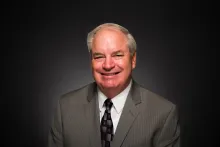
Robin Webber was born in Chicago, Illinois, in 1951, but has lived most of his life in California. He has been a part of the Church of God community since 1963. He attended Ambassador College in Pasadena from 1969-1973. He majored in theology and history.
Mr. Webber's interest remains in the study of history, socio-economics and literature. Over the years, he has offered his services to museums as a docent to share his enthusiasm and passions regarding these areas of expertise.
When time permits, he loves to go mountain biking on nearby ranch land and meet his wife as she hikes toward him.
