

Robin S Webber
This transcript was generated by AI and may contain errors. It is provided to assist those who may not be able to listen to the message.
I want to build upon the message that Mr. Velasquez shared with us today. And he shared a four-letter word. And I want to build upon that four-letter word because I think it's the word that is a lighthouse to all Christians at all times.
And sometimes that lighthouse is a little bit more difficult to see than others because of the fog of life. But what I would speak to all of you about today to inform and to encourage is on the subject of hope, on the subject of hope. In a crowd this large, plus those that are watching us this afternoon, I can appreciate that there are some here today that are lacking hope.
There are perhaps lives that, even as Christians, may be empty. We might think that our life is futile and going no place except down to a blind alley. For some of us, we might feel that life is over. The book is closed, the door is slammed, and we see no way forward. I'm here today, as one Christian to another, to share with you a very powerful phrase that comes out of the Psalms. And it simply says, the Lord is my shepherd, in whom I shall not want.
That's the beginning of the 23rd Psalm, but then there's a lot of verses in between until we get to the end of that, which speaks of days that are full. Not immediately, but as we continue on the pilgrimage, that there's a confidence that indeed we shall enter into the house of the Lord. Today, I'd like to share a message with you, which is one of the two favorite messages of mine of all times. I have been addressing the people of God for 40 years, and there's two messages that I enjoy giving more than any other message, unless maybe I will yet find it.
But there are two messages. One is in the New Testament, one is in the Old Testament. The one in the New Testament is the book of Philemon, the book of Philemon, which is so hope-filled, when it seems as if life has come to a dead end, especially for one individual, the slave. Philemon is the story of three Christians. One is a slave, one is a slave owner, and the other is the man of God, Paul.
It almost operates like a stage play, and I, Susie and I love intimate, small stage plays with great scripts. And when you read the book of Philemon, you know it's a great script. But before I go any further, I'm not going to talk about the book of Philemon, because you've heard me speak about Philemon before. We're going to go to the Old Testament, and we're going to deal with another story.
We're going to deal with the story of three individuals, individuals who had every hope in life, but their life came to a standstill. Their life was, to a degree, empty. And our God, their God, filled it in a way that was beyond themselves, beyond their works, beyond what current events demanded at the time of them, or what they understood, by that page of life that they were stuck on for the moment. I would speak to you today from the book of Ruth. Ruth is a story that deals with two very basic, basic Christian principles I want to share with you today.
If you take any notes today out of this, and you don't have to, but I would ask that you just simply jot down two words, because that will allow me to stand course, that will allow you to stand course. Just two words, and we will build upon it. When we go to the book of Ruth, we're going to deal with two words, two principles, two, in a sense, roots of the Christian life that we need to build upon.
Number one is integrity. Integrity. And number two is compassion. Oh, that the people of God today more than ever would rise to the integrity of Jesus Christ and the examples that we'll look at in the Old Testament, and that they might rise to the compassion of Jesus Christ, as we will see in the examples of the Old Testament. Join me if you would. Let's turn to the book of Ruth, and you might say, well, why are we going through the book of Ruth here in the month of June?
The book of Ruth is historically read in the synagogue during this time period. Let's understand what Ruth is about for those that have never heard the story. It is in the time of harvest. It is in the time of the spring harvest. It is in the time of the barley harvest, and later, the wheat harvest. Those that we reflect upon as we go through the days of Unleavened Bread and through the time of Pentecost. And so we're in this very unique stretch of time, in the time of harvest, which was not only locked into the Old Testament, but is for us today to understand.
And what we're going to do for a few minutes here is we're going to enter into the lives of a couple of pilgrims, a couple of people that are so journeying. What we are going to see are lives that are in transition, lives that are moving forward. Not knowing every event, just like you and I today, don't know every event that is going to happen in our life.
Whether we live in D'Hunga, whether we live in Calabasas, whether we live in Ventura, whether we live in central Los Angeles, or whether we live out in Kokimunga. We do not know. But God above knows, and God has called us for a purpose. But it doesn't always just come in one moment, in one day, in one weekend, or even in one sermon, or one reading of the Bible.
A pilgrimage is not just simply an event. It's an existence. It's just not simply moving towards a destination. It's a way of traveling. You and I, as New Covenant Christians, we long for that kingdom of God. We long for that resurrection that Mr. Velasquez talked about.
Those are an event, yet in the future. But God has called us to be in an existence. He's asked us to travel in a certain way. And just as if you have four wheels on a car and traveling, the two wheels that I would like us to consider in our travel are being people of integrity and people of compassion. Let's open up the story of Ruth here, and we're going to go through it. You're going to say, wow, this might be a five-hour sermon. No, it won't be. We're going to move through it quite quickly. Let's notice what happens here. Now it came to pass in the days when the judges ruled that there was a famine in the land. And a certain man of Bethlehem, Judah, went to dwell in the country of Moab. He and his wife and his two sons. And the name of the man was the limalak. The name of his wife was Naomi. And the name of his two sons were Meilon and Chileon, Ephrathites of Bethlehem, Judah. And they went out to the country of Moab and remained there. Now let's understand that when we reflect on the Old Testament, oftentimes God, in one way or another, pushed his people out of that which was familiar. Out of those comfortable slippers of life that you and I are accustomed to and that they were accustomed to. And oftentimes there would be famine in the land. We know that Abram left the land and went to Egypt. We know that later on Jacob and his children would leave the land and they would go to Egypt. We recognize that even the Christ child, along with his parents Joseph and Mary, would be forced out of their land and they would go to Egypt for a while. But instead of going west, here we have the story of them going east in the land of Moab. Now the Moabites were a Hebrew people. They are descendants of Lot. But by this time they were a pagan people. To a degree it was a hostile environment. But nonetheless, that's where the food was. That's where the ability to nurture and nourish themselves would be. So they went to Moab and they remained there. Now notice verse 3, then a limelike, Naomi's son, died. Naomi's husband died and she was left and her two sons.
In antiquity for a woman to lose a husband, just as much as today, the death of one in a marriage is an incredible event. Life changes. More so, perhaps, even in that day because there was not the same social economic backdrop to help the widow. But she did have two sons. And thus that social economic backdrop of help might be there. But then notice verse 4, now they took wives of the women of Moab, that is the two sons. The name of the one was Orpah and the name of the other was Ruth. And they dwelt there about 10 years, about 10 years. Then both Malon and Chileon also died and so the woman survived her two sons and her husband. You know, it's kind of amazing, friends, when you think about it, what can happen over 10 years. How much life can change? What has happened that we haven't planned for? 10 years, 10 months, 10 days, sometimes 10 hours in our lives can change everything. We might say that we need to come to expect the unexpected in life. Now here this woman no longer had a husband to support her, but her two sons were dead. What would she do? What would she be about? Remember the story in the Gospels of the widow of Nan who is moving outside of the gate and there's the body of her son that is being carried. And it said her son had died and the emphasis is her only son. That back in that day a widow would be absolutely destitute without the help of a family member. Then notice verse 6, then she arose with her daughter-in-laws that she might return from the country of Moab. For she had heard in the country of Moab that the Lord had visited his people by giving them bread. And therefore she went out from the place where she was and her two daughter-in-laws with her. And they went on the way to return to the land of Judah. Now as those daughter-in-laws followed her, it's very interesting. Here you have three widows, one that is older, two that are younger. But it's interesting the interaction and the compassion that Naomi has with the daughter-in-laws and the daughter-in-laws have with Naomi. Now it's very important to play off with the name of Naomi if you're with me for a second because Naomi literally means Pleasant One. That was her given name at birth. Pleasant One. Maybe she came out with smiling. I'm not sure, but she was called Pleasant One. And maybe that was her her general personality, upbeat, optimistic. But that was being gnawed away at by life circumstances. But here are the daughter-in-laws going back with her. And therefore she went out of the place where she was. The two daughter-in-laws went with her and they went to return to the land of Judah. And Naomi said to her, two daughter-in-laws, go return each to her mother's house. The Lord deal kindly with you as you have dealt with the dead and with me. And the Lord grant that you may find rest each in the house of her husband. And so she kissed them and they lifted up their voice and they wept.
You know we can read those words, but allow me to add a little bit of color for a moment to create something for all of us to think about.
There is death as for the moment, even with what we know as Christians, is not easy to bridge in this life. For a moment that which was is no longer.
There is a void. Even as Mr. Velasquez shared with us the hope of every Christian, that doesn't take away the void of that lies within humanity, seemingly the closed door.
Sometimes because of age and because of circumstances we can expect that of an older couple, say like Naomi and her husband. But now here, and we are not given the cause, here are two young men that die. So here we are. Let's take that journey. We're going from Moab and we're headed west to Bethlehem. And remember, they weren't in a car. There was no freeway. They are most likely on a road of dirt. They are on a road that is very dusty in that semi-arid area. And there they are, three women. Seemingly, everything blocked out. Current events are horrible beyond the pale of imagination. The family seems to literally be cursed. And there are three women, an older woman in two, and it says, and they stopped and they wept.
And when you lose somebody in your family, there is a weeping that is deep.
A weeping that just goes out. And there are three women weeping, as we would weep today if we had the loss of a loved one. But not only that, but you think of the cultural background of how they mourn and how they weep in the Middle East, where it's so animated, it is so graphic, it is so all-volume. We've seen that sometimes when we see what's happened over in the Arab countries or in Israel, how they weep. So here are three women. They're alone, and they're alone, and they're weeping, and they're holding one another, and they are connecting in their grief. And that is the story that is before us. And they wept.
So what happens then?
After that, and they said to her, surely we will return with you to your people. But Naomi said, turn back my daughters. Why will you go with me? Are there still sons in my wombs that they may be your husbands? Turn back my daughters. Go for I'm too old to have a husband. If I should have hope, if I should have a husband tonight and should bear sons, would you wait for them till they are grown? Would you restrain yourself from having husbands? And she's speaking to the loverate law that we're going to build upon, how families would take care of families back then. No, my daughters, for it grieves me very much for your sake that the hand of the Lord has gone out against me. The hand of the Lord has gone out against me. Now, it's very interesting that this is spoken by friends by the one that is called the Pleasant One. This is by Naomi. But for the moment, it seems as if in her mind and in her heart that God has stiffed her, that God's hand has held her at bay. Back then, in that society, when things happened either health-wise, life-wise, death-wise, it was basically just thought literally cause and effect. There was no other explanation. There was no gray area of consideration. Somehow, she felt that she was cursed.
But again, we remember the story of Jesus with the man that was blind. Jesus said to that man in his darkness, to the crowd that was around him, that neither this man or his parents have sinned, but that this might be done to the glory of God. That's what we're going to see in the book of Ruth.
She said after that, then they lifted up their voices and wept again, and Orpah kissed her mother-in-law, but Ruth clung to her. I want to share a story with you for a moment. We often hear about Ruth. We don't hear that much about Orpah. How many of you have been thinking about Orpah this week? Nobody? Okay. But we all know Ruth because the book is named Ruth, not Orpah. Orpah was not necessarily a bad person. She loved her mother-in-law. She was honoring the family as much as she could and at first was willing to move away from Moab. And it was only after the second time... Oh, good. Thank you, Mom. I'm out of here. Goodbye. No, it was after the second time she was hanging on, hanging on. But I want to share a thought with you here. One of the powerful verses, one of the powerful thoughts of Scripture, verse 14, it says, then they lifted up their voices, they wept, and Orpah kissed her mother-in-law basically goodbye, but Ruth clung to her. There was something about Ruth and in that clinging beyond the moment, beyond the circumstance, she clung, notice, to her.
My question as we look at this story offered to us in the season of harvest between the days of Unleavened Bread and Pentecost, a time that Pentecost points to the first fruits. And as often said to all of you over the years, first fruits put first things first. And my question to you is simply this, what is your clinging power like? Are you a Ruth? Are you a Ruth in spiritual nature? That even when we don't see everything clearly in this moment, will we cling to God?
I know sometimes I speak to people who say, but you don't know what I'm going through.
But will we cling to God? See, Psalm 23 says, the Lord is my shepherd I shall not want.
There is no better shepherd than I put my life into, even when I do not understand it. Oh yes, the still waters are nice, the the green pastures are nice. But then there are those other areas of Psalm 23, the valley of the shadow of death. But whatever stage, whatever chapter of life comes our way, we are not just speaking to an older lady like Naomi, but to God Himself. Notice what it says here, what we oftentimes call the song of Ruth in verse 16. But Ruth said, In treat me not to leave you, or to turn back from following after you. For wherever you go, I will go. Wherever you lodge, I will lodge.
Wherever you lodge, I will lodge. Your people shall be my people, and your God, my God. At this point, remember, she was a Moabites. She'd come out of a pagan society, but something was happening on that dusty road, headed towards Bethlehem. Your God will be my God, and where you die, I will die. And there will I be buried. The Lord do so to me, and more also, if anything but death parts you and me. May I say something to you, friends? We begin to see the integrity of Ruth. When she says something, when she puts her hand and her heart to something, there is a clinging, there is a staying power, that will be bucked up against, but will stay. You know, when I read this, I cannot help but think of the time that we're in, as we're between the days of 11 bread and Pentecost. That what Ruth said to Naomi, is that not what we said in a sense to God Almighty and to Jesus Christ at the New Testament Passover? When we renewed our commitment to them, through thick and thin, through whatever comes our way, that God will be our God, and we will be His people. God will be our Father. Christ will be our brother, their family, and that we will hold on. That we will have staying power. That we will cling. Let me read it again, and think of it in the sense of our covenant with God. And treat me not to leave you, or to turn back from following after you. For wherever you go, I will go. Wherever you lodge, I will lodge. Wherever you place me, wherever you stop, that is where I will stop. That is where I will lodge. I will learn both to be abased, and I will learn to abound. As you have called me, and also as your son said, follow me, and your people shall be my people. You're my people.
Susie and I are your people. We have abundantness as a spiritual family. Where you die, I will die, and there I will be buried. And when you think of what we said at the new covenant, Passover, that we said that once again, we renew that covenant, we understand what God did for us. We understand what His Son did for us. And as His Son died, therefore we say we die. And as we are crucified with Christ, yet we live because Christ lives in us. And there will I be buried, the Lord, so do I, and more also, if anything but death, part you and me. When you think about it, friends, we live in a very plastic society. We are just in warp speed in 2016, in a world and a society which is changing, not century by century anymore, decade by decade, but year by year.
It is going so quickly. And there is companies are no longer loyal to employees. Employees are no longer loyal to companies.
Relationships break up.
Staying power, clinging, that when you make a vow, you hold on to it, of being a person of integrity. When she saw, speaking Naomi, that she was determined to go with her, she stopped speaking to her. Have you ever talked to somebody before and you know the conversation is over? They got it. Ready to move on. She knew that this was one determined woman.
She was a woman of integrity. When she said something, she meant it.
She acted upon it. Naomi went silent. She was determined.
I have a question for you. May I? And that is simply, there's two words that come out of this. Number one, clung and determined. Here's the question I have for you that only you can answer.
If Ruth had not clung, and if in verse 18 she was not determined, do you think anything would be written beyond Ruth 118?
Or would that be the end of the story? Would that be the end of the story?
Just like in the book of Daniel, when it says in Daniel 1.8 that Daniel was determined not to eat the king's vittles.
And the story of Daniel begins.
If Daniel had not been determined, had not been a person of integrity, like Ruth, would there be Daniel 2 and 3 and 4 and 5 and up to 12?
I made it a day to tell you, friends, as I read the book of Ruth, that I am compelled to share God's encouragement with everybody of every age here, from the teenagers that are back there on the sixth row to some that are over here or look like teenagers. I can't see.
God wants us to be people of integrity.
Integrity doesn't start at age 21. Integrity starts at a young age.
Character doesn't just happen. It is produced over a period of time. It's a pattern and it's a system of making a lot of little decisions along the way towards a grand conclusion. She was determined.
Now, the two of them went into Bethlehem, and it happened when they had come to Bethlehem, that all the city was excited because of them, and the women said, is this Naomi? But she said to them, do not call me Naomi. Call me Mara, for the Almighty has dealt very bitterly with me. Call me bitter. Don't call me pleasant one. That's how you used to know me. But now I am Mara. I am bitter. For again, notice the Almighty has dealt very, very bitterly with me.
Do I dare say?
Her thought about current events has not gone any further at this point.
She believes her life is over. She believes that her life can never be filled again.
She believes her actions are futile. She believes that her life has come to a dead end.
She said, I went out full and the Lord has brought me home empty.
Why do you call me Naomi, since the Lord has testified against me?
And the Almighty has afflicted me the third time, where she says, God's hand is against her.
So Naomi returned and Ruth the Moabiteus, her daughter-in-law with her, who returned from the country of Moab.
And now they came to Bethlehem at the beginning of the barley harvest. It's the time of Unleavened Bread. We're in the time of harvest.
Now, chapter 2, verse 1, there was a relative of Naomi's husband, a man of great wealth of the family of a limelak, and his name was Boaz. So Ruth the Moabiteus said to Naomi, Please let me go into the field and glean heads of grain after him, and whose sight I may find favor.
Now, here's what I want to share with you on this story. Stay with me a second. We now have the introduction of all three characters. We have Ruth. We have Naomi. We now have Boaz.
Now, why is this in the Bible?
What we're going to find is that it's twofold. Number one, within the Jewish community and within the Scriptures, the book of Ruth was placed in the canon to show the background in the family scrapbook of David. They give a background to David, going back to his great-great grandparents, and to give him validity and to give him a story, going actually back to the time of Dexter. On the other hand, why then do we read it during this time? Because we have come to understand that there is a tremendous—and I'll use a theological term for a moment, just one theological term—there's a Christology to this. There's an imprint of Christ in the Old Testament here. And what we're going to be going through now—I want to especially speak to the young people here who may not be as acquainted with Ruth—is that we're going to begin to see the kinsmen-redeemer relationship develop. We're going to find that Boaz is a type of Christ. Boaz is the type. Christ is what we call the anti-type. Boaz is first. Christ is second. There is Boaz. There is the greater Boaz. And that is found in Jesus Christ, who is the ultimate kinsman-redeemer of all of us.
Now, here's the one thing I want to share with you, and I forgot to tell you at the beginning. So, we're going to rewind for a moment. This story is a really neat story because it's so encouraging. I have a question for you. May I? If you were to start a church, who would you start a church with?
If you were going to put up on the cover of the United Church of God, welcome to the church, and this is who our members are, who would you pick out?
Who would fit that description?
Here we have, number one, Naomi, a widow, grieved. She even thinks that God's hand is out against her.
Number two, we have Ruth, not of Israel, but of Moab, not initially of God, but of a pagan religion.
Ruth, the Moabites. You will see again and again, it's almost like a print going all the way through Ruth.
Ruth from Moab, Ruth the Moabites, Ruth the Moabites, damsel again and again and again.
Number three, things come in threes. Number three, we have Boaz. Who is Boaz? Boaz is the son of Solomon. Who did Solomon marry? Solomon married Rahab. Who is Rahab? Rahab, and I know there is some argument to this. I can appreciate that. Rahab is normally known as Rahab the harlot, the woman that helped Israel during the time of the conquest of the Promised Land.
So here we go, folks. This is our profile of what's going to be on the page of Welcome to the Church. We've got a widow, we've got a foreigner who's a pagan, and we've got the son of a prostitute.
Welcome to the Church. Here's a question I have for all of you, and this is why the book of Ruth is so neat. Who do you think God should pick? Who do you think God should pick to be in His Church?
Well, that wasn't run by me. Whoa! Who put them on the cover? It's on the cover forever, and not only that, but they're in the line of Jesus Christ, and that's why this is so important.
This was, I gain such hope out of the book of Ruth. Let's continue with the story. So Boaz is introduced. So Ruth Moabai said, Let me go into the field and glean heads of grain. Ask him in whose sight I may find favor. And she said to her, Go, my daughter. And then she left and wept. Then she went and gleaned in the field after the reapers, and she happened to come to the part of the field belonging to Boaz. Who was of the family of Olimalak? Now Boaz came from Bethlehem and said to the reapers, The Lord be with you. And they answered him, The Lord bless you.
What a neat working environment. Did any of that happen to you last week when you went to work?
Did your employer come through the door? Or did he write you a little message on the computer? The Lord be with you as we begin to work today. And then to hear that echo come back from the field, The Lord be with you. Boaz was a man of optimism. Boaz was a man of God. The Lord be with you. Then Boaz, who was a servant, who was in charge of the reapers? Whose young woman is this? And so the servant who was in charge of the reapers answered and said, It is the young notice, notice, notice, notice, the Moabite woman who came back with Naomi from the country of Moab.
And she said, Please let me glean and gather after the reapers among the sheaves. So she came and has continued from mourning until now, though she rested a little in the house. And then Boaz said to Ruth, You will listen, my daughter, will you not? So it's an older man. He calls her his daughter.
Do not go to glean in another field, nor go from here, but stay close by my young women. And don't let your eyes be on the field which they reap and go after them. Have I not commanded the young men not to touch you? And when you are thirsty, go to the vessels and drink from what the young men have drawn. So she fell on her face, bowed down to the ground and said to him, Why have I found favor in your eyes that you should take notice of me since I am a foreigner? I'm an alien.
Now let's understand something that's going on here. Very important.
And it befits these days that we are moving through the days of Eleven Bread to Pentecost.
This transition. When is this taking place? This is taking place during what we call the time of the Judges. During the time of the Judges, it is defined by the last verse in the book of Judges.
And it was a time in which every man was doing that which is right in his own eyes.
You might say it was a little bit like the Wild West. You might say that morality had been tossed out the window. Following God to the letter had been tossed out the window. People were making up their own rules. They were making up their own designs. They might have been given God lip service. But every man did that which was right in his own eyes.
Now sometimes with you and me as we look around this world, growing darker, growing more distant from God, seeing sometimes what our family members are doing or not doing, sometimes maybe evaluating what fellow Christians are doing or not doing, we can consider that every man is doing that which is right in his own eyes. So you know what? I might as well just give up and join the ant line towards the sugar. Just get in the conga line. Just do what everybody else is doing. Rather, the book of Ruth is given to us for those of us that are in days of darkness in which every man is doing right which is in his own eyes to remind us and to encourage us that we are to be people of integrity.
People of integrity. Even in the most difficult times, in the darkest times, just like the times of the judges. What we're seeing here is what Boaz was doing was he was following the laws of God, maybe when everybody else wasn't. This is part and parcel of Leviticus 23. Join me if you would there for a moment. Leviticus 23 verse 22. Real quickly, and as we know, these are the mentions of the annual festivals of God. And the annual festival of what was then called the Feast of First Fruits is mentioned in 18 through 21. But then notice verse 22, and when you reap the harvest of your land, you shall not wholly reap the corners of your field. And when you reap, nor shall you gather any gleaning from your harvest, you shall leave them for the poor, and for the stranger, for the Moabites damsel, for the widow that has come back home for those that are less fortunate. I suggest to you that the encounter of Ruth with Boaz is part and parcel of Boaz being a man of integrity, of obeying the laws of God, of not only having integrity but having compassion, thinking beyond himself. And I say, oh man, look at that whole corner of the land. I could get this much more there in the square of Bethlehem if I took this, and you know, God will understand this year. No, Boaz was a man of integrity. The reason I'm sharing this today, brethren, we look around on the national scene, we look at the international scene, we look at our leadership today, and we recognize that when we see our nation and other nations, that we are reflective of what it says in the Old Testament, that it's not just the head that is sick, it is the entire body. And we must move out of the arena of now and look for heroes and heroines in the Scriptures, people of integrity, women of valor, even when it seems that if life is going against them, of recognizing that as God does this part, they've got to do their part, and that God's ways work and work best, just as holding off the corner of that land for those that are less fortunate. But it doesn't stop there. It says, Ruth, saying, so she fell on her face, bowed down to the ground, and said to him, why have I found favor or grace in your eyes, that you should take notice of me since I am a foreigner? It seems as if, Boaz, you believe in me, you're doing something for me. Why is this favor coming my way? What we're beginning to see is a trust factor develop between Boaz and Ruth, and beyond that, Ruth with her God.
But Boaz is showing that link towards God Almighty. You see, what happened in the story of Ruth, and that's why it's lodged between the Passover and the Days of Unleavened Bread, and that which we call Pentecost, because initially, when we see the Passover period, we understand that we had to be pulled out of something. There had to be repentance. You had to, in a sense, if you look up here for a moment, repentance is this.
You were headed this way, and all of a sudden, God began working with you. You stop in your tracks, and you begin to turn. You can't just stay stopped in your tracks. That's only half the deal. You can't just repent. When Jesus Christ came to Galilee, it says He came to Galilee preaching the Gospel, and it says to repent and to believe.
So it's not enough just simply to repent, stop in your tracks, and do nothing, because God cannot operate in a vacuum. We've got to turn around, begin going the other way, as Ruth did with Naomi, following her, and then God wants us to expand our spiritual lungs and begin to believe in something other than ourselves, and to recognize that the Lord is our Shepherd, that we shall not want. And that doesn't mean it's all going to come at once, because if it all came at once, we'd be by our works rather than faith and belief in God.
But she fills the shelter, and then she said, Let me find favor in your sight, my Lord, for you have comforted me, and have spoken kindly to your maidservant, though I am not like one of your maidservants. Now Boaz said to her at mealtime, Come here and eat the bread, and dip your piece of bread in the vinegar.
So she sat beside the reapers, and he passed parched grain to her, and she ate and was satisfied. And some came back. You know, when I read that last week, I looked at that. How many of you have recently taken a little bread or a taco chip and put it into some vinegar? But that's what they did back then.
That kind of was kind of that would wake you up for the rest of the day to work. But that's how they did it back in that culture. And when she arose up to glean, Boaz commanded his young men, saying, Let her glean even among the sheaves, and do not reproach her. Also let grain from the bundles fall purposely for her. Leave it that she may glean, and do not rebuke her. Now notice verse 17, So she gleaned in the field until evening, and beat out what she had gleaned.
And it was about an epa of barley. Here's what I want to share with you out of the story of Ruth. Remembering that Boaz is a type of Christ as we have come to understand it. I have to say to myself and ask myself some time, how often does the Good Shepherd, how often does that greater Boaz sprinkle blessings around me or Susie and all of you? Things that we're not even aware of at times. Things that don't, he doesn't have to do. Sometimes I've done enough. I've done enough. But to recognize the Good God, and the love in Christ that we have, so often there are things that are before us that they want us to pick up on.
That they have laid before us and all around us. But our eyes have got to be open. Our faith has got to be real and alive. And also we have to do the picking, even as Boaz did his part and had his servants put all this stuff around. Ruth also still had to do her part. God did his part. We have to do our part. The more we do, the more God does. And we begin to develop that relationship with God Almighty.
She went home. Verse 19, mother-in-law, and I know he said, Where have you gleaned today? And she mentioned that she was with Boaz. Then Naomi said to her daughter in verse 20, Blessed be the Lord, who has not forsaken his kindness to the living and the dead. And then Naomi said to her, This man is a relation of ours. He's a close relative. Notice verse 21, And Ruth the Moabite has said, Well, he said to me, You shall stay close to my young men until they have finished all my harvest.
And Naomi said to Ruth her daughter, It's good, my daughter, that you go out with those young women. So she did. And in verse 23, it says that she gleaned till the end of the barley harvest and the wheat harvest, and she dwelt with her mother-in-law.
That is the time that we find ourselves in right now. Between days of 11 bread and Pentecost is the time of the barley harvest, the time of the wheat harvest. It is a time of gathering. Time of gathering. Now chapter three, let's build upon it. Then Naomi said to her mother-in-law, then Naomi, her mother-in-law said to her, My daughter, shall I not seek security for you, that it may be well with you. Not just herself. Not just herself. She's thinking of Ruth.
Things are beginning to happen. Naomi, let's put it this way, is having a comeback.
She's going back to that Naomi, that pleasant one, outgoing, compassion. Now Boaz, whose young women you were with is not. He are relative. In fact, he is winnowing barley tonight at the threshing floor. Therefore, wash yourself, anoint yourself, put on your best garment, go down to the threshing floor, but do not make yourself known to the man until he has finished eating and drinking. Verse 4, then it shall be when he lies down that you shall notice the place where he lies, and you shall go in, uncover his feet, and lie down, and he will tell you what you should do.
What's happening here in the dark? What's going on in Bethlehem?
We can look at the story and let's understand something. This is not a story of seduction.
This is a story of responsibility, following the laws that God had set in motion to take care of families that otherwise redestitute. It's called the Levereat Law that you can find back in Deuteronomy. In the book of Deuteronomy, that if a man died, that his nearest kinsman would take that woman to life and would have a child, that that man's name might not go unknown.
So she's told to do that.
And she said to her, all that you say to me, I will do. Now, I have a question for you. Ladies here for a moment. It's kind of fun. May I ask you a question? That is simply this. Wonder if your mother-in-law told you who to go date and said to you, girl, get up, get washed, get clean, go out, do it. And here is Ruth. And she says, I will do it. Now, I have a question for you.
Why she knows that Boaz is at the threshing floor and it's at nighttime? Why is Boaz at the threshing floor at nighttime? Well, number one, deduction is simply this. You harvest during the day.
You harvest during the day. Then you deal with the harvest at nighttime, separating the wheat from the chaff. But let's recognize that what they were harvesting was going to have to last them throughout the year. The value of that harvest would become the value that would keep them alive. It was very, very, very precious. So she knew that Boaz, being the head of that operation, would be there at nighttime. And he would be working. And not only that, but he would be protecting that harvest that has been reaped. Now, what they did with the threshing floor would be kind of a stone. And that they would actually use that stone to separate the kernel from the chaff, which is interesting. The kernel from the chaff. They would beat it. They would thresh it. And sometimes they would actually have it up in a high place to where actually the winds might blow the chaff away. But isn't that really what the book of Ruth is all about? Separating the wheat from the chaff. You see a separation of who God is going to use and not only that, but when you recognize it, Boaz being a type of Christ, he is up there guarding the harvest. He's up there guarding the harvest. Join me if you would for a moment in John 6. I'm going to share a verse of encouragement. Maybe where we are today and feeling a little bit like Naomi.
But in the Gospel of John, John 6, Jeremy there for a moment, would you? John 6. These are the words of that greater Boaz, Jesus Christ. Let's notice what it says in John 6.
And in verse 35, And Jesus said unto them, I am the bread of life, and he who comes to me shall never hunger, and he who believes in me shall never thirst. But I say to you, that you have seen me, and yet you do not believe. All that the Father gives me will come to me.
See, it's God the Father that plants the seed of harvest. He's the One, He's the Father.
He calls whom He will and how He will. And the One who comes to me, I will by no means cast out. For I have come down from heaven, nor not to do my own will, but the will of Him who sent me.
Notice verse 39, this is the will of the Father who sent me, that of all He has given me, the harvest that He has destined, I should lose nothing, but should raise it up the last day. And the Father has commissioned Jesus Christ to bring that harvest in.
And He's made a commitment to His Father, and He's made a commitment to us, that what the Father has planted, He is not going to lose. He's going to do His most.
Boaz was awake at night. He was not going to sleep until later, until the work was done, until the harvest was brought in. And He was going to safeguard it against robbers, against burglars, against thieves. And sometimes, when we think about the story of Ruth, there's two things. Number one, as I mentioned before, sometimes we don't know the spiritual droppings that God is placing all around us. We think that maybe He doesn't care.
We're looking in all the wrong directions, and we need to pick up what God is giving us, to recognize that it is sufficient to move us towards the day of full understanding.
And number two, here it is in the dark. And sometimes, say, life is dark. Life seems to have no openings, no bridges out of this obscurity that I find myself in. And it is in that point that we remember that we worship a God of light, that we worship the Good Shepherd.
That same Psalm of Psalm 23, when it says, as I entered the valley of the shadow, the darkness, the night. But nothing seems good. Nothing seems right. And maybe we think that we're all alone.
But in that tale of the shepherd, it is in those moments of darkness and danger that the shepherd is at his most acute in sensitivity and in intimacy with the flock, as he moves it from low ground to high ground or high ground to low ground, depending upon the season. And sometimes we think, where is the shepherd? I want to tell you something. Wherever you are today in your life, where you feel that your life is empty. And I can appreciate that. Naomi did. Ruth did. Boaz, an older man, did. That God will fill it.
Maybe not the way that we want. Maybe not the way that we think. But he will fill it. That's what God gives us in the book of Ruth. So let's notice what happens here. So she went down to the threshing in verse 6 and did according to her mother-in-law. And after Boaz had eaten in verse 7 and drunk and his heart was cheerful, he went down to lie at the end of the heap of grain, and she came softly, uncovered his feet, and lay down. And now it happened at midnight that the man was startled and turned himself, and there a woman was lying at his feet. Ah! You know, you're going into a deep slumber after drinking.
And all of a sudden you feel the shoes going off. And remember, Mr. Edison wasn't born yet. You know, it'd be hundreds of years down the line, and there's no flipping of the switch. There were no flashlights. What's going on down there? Who's tickling my feet? And here she was at his feet. And he said, Who are you? And she answered, I'm Ruth, your maidservant. Take your maidservant under your wing, under your shoulder, for you are a close relative. And then he said, Blessed are you of the Lord, my daughter, for you have shown more kindness at the end than at the beginning, and that you did not go after young men, whether poor or rich.
And now my daughter, do not fear I will do for you all that you request, and for the people of the town know that you are a virtuous woman.
And now it is true that I am a close relative, however there is a relative closer than I.
Stay this night, stay this night, leave in the morning, leave the rest to me. I'm paraphrasing.
I want to share something with you. Again to our young people, because I think Ruth speaks so loudly to young people.
Twice in the book of Ruth, twice in the book of Ruth, it mentions that Ruth is a woman of integrity. It speaks of her reputation. In the fields when Boaz first met her, it says, I have heard how you have taken care of my kin's woman.
We've heard how you've taken care of the elderly. We hear how you've taken care of the widow.
And then it said here, the whole town of Bethlehem, even though you're a Moabites, they know that you are a woman of virtue. You have integrity and you have compassion.
To our young people and to you that are recycled teenagers, let's always understand that our reputation goes before us.
Oftentimes people meet our reputation, whether it is for good or for ill, before they meet us.
Reputations are not just body-bound. They go before us on the tongues of men. And you say, yeah, but Mr. Weber, I want to change my reputation.
I want to be like a Boaz. I want to be like a Ruth.
Well, you can. You can change people's minds. It might not just happen over a day.
It might even happen over a year. But if you are a person that gives your life to God, a person of integrity and a person of compassion, then people will come to notice. How do I know that? I've been amongst you for 40 years.
Some of you remember Susie and I in college. Some of you remember me in high school, like the Helgies. Some of you remember perhaps what I was like as a young man.
Perhaps some of you remember what I was like as a young elder.
Perhaps some of you know what I was like as a young pastor.
Sometimes when I have people meet me, they say, oh, I remember you. And I'm thinking, oh, when did they meet me? Was it on a good day or a bad day? What are they thinking? You know, we're all human. What encounter did we have? I can't be responsible for the past.
I can only be responsible for now, and I can only lay a path for the future.
All I can do is be a person of integrity and a person of compassion, like Boaz, like Ruth, like Naomi. That was verse 18. Ruth goes home, tells Naomi what's going on, and then she said, listen, daughter, listen. She said, sit still, my daughter, until you know how the matter will turn out, for this man will not rest until he has concluded with the matter this day. He's not going to rest. He is not going to stand still.
He is going to be restless until the job is done. Join me, if you would, in Isaiah 62, recognizing that Boaz is a type of Christ, and Christ was the Jehovah of the Old Testament. In Isaiah 62, notice something here. It says simply this, For Zion's sake I will not hold my peace, and for Jerusalem's sake I will not rest, until her righteousness goes forth as brightness, and her salvation as a lamp that burns. Wherever we are today in our lives, perhaps we feel our lives are empty.
Perhaps we feel that our lives are over. Perhaps we know otherwise, but it seems very dark right now.
I want to share with you and reveal to you out of the scriptures that you and I worship a restless God. And like Boaz said, I will do what I will do. God says, I will do what I will do.
And I'm going to remain involved in the life of my people. Chapter 4, verse 1.
Now Boaz went up to the gate and sat down in there, and behold, a close relative of whom Boaz had spoken came by. So Boaz said, Come aside, friends, sit down. So he came and said. And then all of a sudden he took ten men of the elders of the city and said, Sit down here. So they sat down.
You talk about a set up. You know, next time somebody invites you to Starbucks and says, Can we have a talk? Have a seat? You think he's just one? And then you have ten people come in?
Make a circle. Watch out. Just teasing a little bit here. Here are the elders of the city.
And he informs the man saying, Look, Naomi has come back and sold a piece of land belonging to our brother, Alimelak. And taught to inform you, saying, buy it back in the presence of the inhabitants and the elders of my people if you will redeem it, redeem it. But if you will not redeem it, then tell me that I may know for there is no one but you to redeem it and I am next after you. And he said, Oh, sounds good. Piece of property. Good. That'll be fine on the resume.
Then Boaz said, On the day you buy the field from the hand of Naomi, you must also buy it from Ruth the Moabitus, the wife of the dead, to perpetuate the name of the dead through his inheritance.
And the close relatives said, Oh, and he can see just the look that came over his face. Oh, I can't redeem it for myself, lest I ruin my own inheritance. You redeem my right of redemption for yourself, for I cannot redeem it. Now this was the custom in former times in Israel concerning redeeming and exchanging to confirm anything, taking off a shoe, and this was a confirmation in Israel. Therefore, the close relatives said to Boaz, Buy it for yourself. So he took off a sandal. And Boaz said to the elders and to all the people, You are witnesses this day that I have bought all that was the limilex and all that was chileons and malleons from the hand of Naomi. Moreover, Ruth, the Moabitus, the widow of Malon, I have acquired as my wife in perpetuation of the name of the dead through his inheritance, that the name of the dead may not be cut off from among his brethren and from his possession at the gate. And you're witnesses of this day. Now, why is this so important for you and me to go back 3,000 years in Bethlehem? Because this is but an event of what is going on and will continue to go on in our lives and in the lives of those that are yet going to live. Because remember, Jesus Christ is the greater Boaz. And the point is simply this, brethren, when we look at the story of Naomi and Boaz and Ruth, and let's center on Ruth Moabitus, one that was outside of the camp of Israel, who in herself humanly had no worth, as it were, for that moment. That Boaz gave her worth, gave her an identity beyond being a Moabitus, and gave her a future. The kinsmen, whose name that we will never know, the kinsmen we know not, can you imagine taking up scripture? Are you with me? Taking up scripture, having a moment in the sunlight of God's Word and not knowing the name.
His time came, his time went. He was not a man of integrity. He was pressed to the moment and buckled.
He thought that everything he had would be lost. How does this apply to you and me as we move from Unleavened Bread, the new life, towards that of being a first fruit and understanding that first fruits put first things first? Jesus Christ is that greater Boaz. Jesus Christ gave up everything for you and for me. Everything. In the book of Philippians, it said, He did not grab on to being God, but divorced Himself of His divinity, gave up for a moment that was heavenly riches, and that estate which is above, that you and I might have identity, might have worth, we that were outside of the camp, we who had no hope, we who had no future, we who were destined to the grave. Think about it for a moment. This man, this kinsman that did not fulfill his duty. We do not know his name, but we know through the book of Acts that it says there is no name under heaven other than Jesus Christ, and his name is mentioned that man might be saved, that we can walk away from the old man, have that new life in us, that is part and parcel of the days of 11 bread, and have the love of God, the Spirit of God, the power of God, the life of that greater Boaz in us, that we might be people, we might be women, we might be children, we might be teens of integrity, and with compassion, looking beyond the moment, looking beyond ourselves, recognizing as a Christian there is no dead end.
There is no tunnel so wide that we cannot see the light of God's hand and see what he's putting down before us to pick up. But we must do that. The beauty of all of this is simply this.
Ruth, at an early age, thought her life had come to an end, that it would never be full. It would never be full. Ruth was given a husband, and Ruth was able to give birth to a baby.
She was so excited that she called it Obed. Have any of you ladies named your child Obed recently?
Just teasing. Obed. And Obed would be the father of Jesse, and Jesse would be the father of David.
And David, his descendant down the line, would be a son of David, and it would be Jesus Christ.
Naomi, whose life seemed to have come to an end, she would be bouncing Obed on her knee, and she would have a roof over her head. And Boaz, whose days were seeming to come to an end, would have more light, would have more life, and that he would shelter those that had not.
Brethren, as we wrap this up, let's simply think about this. This is the season of Ruth.
This is why Ruth is read in the synagogues. It's a time of harvest. It's a time of separating the wheat from the chaff. It's a time of gathering. It's a time of firstfruits. It's a time of not only marching away from Egypt and leaving it behind, but having a faith, having a confidence, having a belief in the God of Abraham, Isaac, Jacob, Ruth, Boaz, and Naomi.
Let's be like them. Let's put first things first as firstfruits of God. Let us, as we move through our Mondays, Tuesdays, and Wednesdays, that of us, let's walk with them. Let's walk with their descendant, Jesus Christ, who says, follow me, no matter where it goes, no matter what he asks.
And as we do, let's be people of what? Number one, integrity. Number two, compassion. And then leave the rest to God.
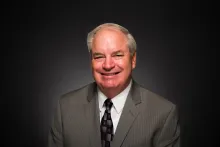
Robin Webber was born in Chicago, Illinois, in 1951, but has lived most of his life in California. He has been a part of the Church of God community since 1963. He attended Ambassador College in Pasadena from 1969-1973. He majored in theology and history.
Mr. Webber's interest remains in the study of history, socio-economics and literature. Over the years, he has offered his services to museums as a docent to share his enthusiasm and passions regarding these areas of expertise.
When time permits, he loves to go mountain biking on nearby ranch land and meet his wife as she hikes toward him.
