

Robin S Webber
This transcript was generated by AI and may contain errors. It is provided to assist those who may not be able to listen to the message.
Well, I've got some good news for you this morning, and I thought, what good news could I bring to you on a May-gray day? And I don't think there's any better news than sharing one of what I consider two of the jewels. And one of the two jewels in the scriptures between the covers of this Bible. They're actually my two favorite all-time messages to be able to share, and I always share it in different ways, because you just begin looking at it differently. It's just like when you look into a jewel and you see all the facets and all the different prisms and all the light that comes to the fore. And one of them is the Book of Philemon, but that's not what we're going to speak about today. And the other one is found in the Old Testament, and that's what we're going to speak about today, because it speaks to this time that we are in between the days of Unleavened Bread and the New Testament Passover and Pentecost. It speaks to a turn from where we were to the new life that is in us to what we do when God has selected us to be a first fruit, and to give Him glory and to give Him honor in whatever we do. So that's what I'd like to talk about today. We're actually going to be talking about this because sometimes our own lives can seem empty. Our own lives can sometimes seem futile. Our own lives can seem over, and not recognizing that sometimes the best is yet to come. That is, if we'll surrender to God. That if we'll give Him glory and give Him honor, and even step out, even when we don't see the end of those steps and where they lead to, to recognize that the Lord is our Shepherd and we shall not want.
I love giving this message too because it just reminds me of the unique people that God calls upon to share His will with and to just stun the world sometimes and just bring us back to the reality that God is going to use, who He's going to use. He's not going to ask you and He's not going to ask me. But it's going to be to His glory and to His honor. You might ask yourself this question. If you had to start a mission field or if you had to start a church, if you had to start the San Diego congregation all over again, what three people would you start with? And we could say this, who would you put on the cover of a United Church of God booklet to represent this way of life? Well, that's why we're going to talk about what we're going to talk about. You're going to say, well, get into it. Let's talk about it. Right? Right? Who are we talking about? But to recognize who we're going to be talking about is simply this. And that is a lady who was a foreigner. We're going to be talking about a lady, an older lady, who was a widow. And we're also going to talk about a man who is the son of a prostitute. Are you with me? And so we go to the book of Ruth. Let's open up the book of Ruth. Because in this, we're going to sense what God is doing, that it is so incredible what He puts together, that so often He puts together nothing and makes it something to His glory. Which is His favorite miracle, whether it's taking clay and making it into a man, whether it's taking a woman who is barren like Hannah and giving her a son, whether it's taking a woman who is barren like Elizabeth and giving her a son, whether it's taking a woman who is a virgin and bringing forth the Son of God, the Son of Man, whether it is where there is no escape route as you back up against the Red Sea and He makes the path clear, always come to expect the unexpected from God.
What I want to share with this, and I'm not sure where you are today, whether you're in San Diego or Chula Vista or La Mesa or up in Fallbrook or whether it's up in the Inland Empire, to recognize that sometimes we don't see the end immediately. But there's two words that are going to come out of our study of Ruth. You might want to jot them down so I don't lose you in this message. And that's simply this. When I consider what I pull out of, the takeaway out of the book of Ruth is simply this. Integrity, spiritual integrity, will see us through. And also compassion will see us through. Integrity, compassion are so important when we understand what is going on in the book of Ruth. And it's interesting because we're going to be here during the harvest seasons. We're going to talk the barley harvest, there's the wheat harvest later on in the book, and this is the time of harvest. We're coming up to the Feast of First Fruits. And one thing you want to do here, you might want to jot this down, and then we're going to roll into the story, okay? And that is simply this. And you've heard me say this for years and years. First fruits put first things first. First fruits put first things first. And I would suggest some of the first things that we put forward are integrity and compassion. So let's go to the book of Ruth, and we're going to move right through it. And it says here in Ruth 1 and verse 1. We'll see if we can move through this rather quickly so that we can have some fellowship afterwards, because Suzy and I are going to have to go to Redlands this afternoon. Now it came to pass. In the days when the judges ruled that there was a famine in the land, and a certain man of Bethlehem, Judah, went to dwell in the country of Moab, and he and his wife and his two sons. And the name of the man was Elimelech, and the name of his wife was Naomi, which actually meant at that point that word there means pleasant one, which will play into this story. And the names of his two sons were Meleon and Chileon, Ephraa, Theites of Bethlehem, Judah. And they went to the country of Moab and remained there. Very interesting when you look at verses 1-2 to set the story, is to recognize how often God had his servants, especially in the Old Testament, because of famine moved to a different location. A different location, whether it was a brahm going to Egypt, whether it was later on Jacob going to Egypt, whether there was the plight that was upon the family of Jesus, Joseph and Mary, that again they had to transfer in pilgrimage and go to Egypt, at least for the first seven years of his life. And here we have the family of Naomi, and they go to Moab, which was at that time the enemy of God's people. Moab was a rogue nation and a pagan nation, even though they were of Hebrew stock going back to the sons of Lot.
So there they are, this pleasant one, Naomi, with her family, her husband and her children, set their course. And it says, and they remained there. And then, a limlech, Naomi's husband died, and she was left, and her two sons. And now they took wives of the women of Moab. The name of the one was Orpah, and the other name was Ruth. And it says they dwelt there for about ten years, so they became customized to being in that area. Now, the story is already set, are you with me? That Naomi becomes a widow. In that society back then, let's understand that the plight of a widow was truly devastating in one sense. If her man was not there, her family might not be there, to recognize that there was no social fabric, backup fabric, like we have today, with the different governmental programs that we have, whether it be social security, whether it be this or that. That was it. And that's why in the book of James it says, always remember the widow in her affliction. But then we find here, notice what it says, then in verse 5, both Malon and Chilean also died. So the woman survived her two sons and her husband. That's why people had children, to be able to take care of them. Just as, again, God intended, we take care of the kids when they're young, and they take care of us as we get older. Then it says, then she arose with her daughters-in-law that she might return from the country of Moab, for she had heard in the country of Moab that the Lord had visited his people by giving them bread. Now, you might want to circle bread because that's going to be interesting in this story, because she's going to go back to where? Bethlehem, which we're going to talk about a little bit later, because, again, remember, Bethlehem does mean the house of bread.
That's what Bethlehem literally means. And remember who was born in Bethlehem later on, about 1,300 years later, was the one that said, I am the bread of life. Now, let me take you back to the story for just a second to bring you in, if you've never gone through Ruth before. Why is Ruth in the Scriptures? First of all, it was put into Scripture, some ascribe it to Samuel, that cannot really, in a sense, be provable. It's a nice thought, but it did come into play sooner or later. But it was basically to give a backdrop or a scrapbook, as it were, of the family of the man that would become the king of Israel. It was important to give a legacy and a background. Now, we as New Covenant Christians, the church today looks at it because we specifically see what is called the kinsmen-redeemer relationship, which we'll get into in a few minutes. And we have moved that forward and given it in what we might call a theological term, a Christology.
We see Christ in this, that the man Boaz becomes a type of Christ and Ruth becomes a type of the church. And so we fast forward to how we look at it now as Christians, especially as we come up to the Feast of Pentecost.
So now let's go back into the story. Then she arose with her daughters-in-law that she might return from the country of Moab. She heard that the famine had been relieved. Therefore, she went out from the place where she was and noticed in her two daughters-in-laws with her, and they went on the way to return to the land of Judah. Now, you think about that. Here's an elderly widow, and here are two young widows. There can be nothing in a sense.
That's a pretty sad picture. And they're on a dirt road leaving Moab on a pilgrimage, going back to what they might not know is going to occur. But here are three women and three widows. And it's interesting, if I can make a comment. Remember, Naomi's name was Pleasant One, and obviously that affected the relationship of her with her daughters-in-law.
There were no mother-in-law jokes mentioned in the book of Ruth. And I think that's a credit to the name that she's given. She had a drawing power. And Naomi said to her two daughters, Go, return, each to your mother's house. The Lord deal kindly with you, as you have dealt with the dead. And with me. There's a reciprocation that's going on here. And the Lord grant that you may find rest, each in the house of her husband. So she kissed them, and they lifted up their voices and wept.
Now, when they say that they wept, it's enough just to think of a man or a woman weeping. When you think of how they did it, how they do, continue to do it, in the Middle East, in a cultural manner, you can just imagine the emotion and the commotion and the sound going up. Just three women on a road, dirt road, Moab to Bethlehem, and the sadness that back then, you know, they weren't going to get on Facebook that night.
They weren't going to have a webcam back and forth between Moab and Bethlehem. They weren't going to reach for their smartphone and have a little picture there. This would be it. This is the finality. And they said to her, Surely we will return with you to your people. But I always said, Turn back, my daughters. Why will you go with me? Are there still sons in my womb that they might be your husbands?
So she's justing in a very cryptic way, basically saying, If I had a husband tonight and I got pregnant, are you going to wait around for them? Are you going to wait around for them? And it was basically speaking to the Leverett law, which we'll be discussing a little bit later, about families taking care of families.
Would you wait for them? In verse 13, till they're grown, Would you restrain yourself from having husbands? Know my daughters, for it grieves me very much for your sake, that the hand of the Lord has gone out against me. Very important phrase in the book of Ruth. Who of us in this room at times has not felt, for one reason or another, sincerely, even though we love God, and know what God has done for us, that at times we just feel that God has stiffed us, God's hand has gone out against us.
And we get settled in that moment, we feel this depression in that moment, we feel isolated, we feel cut off, which just goes to remind all of us, as we continue with the book of Ruth, that current events that are happening in our life are not the best way of measuring God's love and God's purpose and concern in our life.
Now for you, it might be a financial matter right now. For us, it might be a family matter. For others, it might be a health matter. You say, well, how did I get here? I was doing everything right! It's like I've just been kneecapped. The hand of the Lord has gone out against me.
And this was the one that was called Naomi, the pleasant one. No, no, no. So notice what it says in verse 14, Now something that you've maybe never understood in the story, say, well, Ruth was the good girl, and Orpah was out of here.
No, it took Orpah twice. It was twice. She was hanging in for quite a while, wasn't she? Two times. Go, go, no, no, go, go, no, no. But what I want to share with you as we look at this is verse 14.
But Ruth clung to her. It's not that Orpah did a bad thing or something that was very natural, coupled with great respect and love towards Naomi, but there's something almost spectacular that was beginning to develop in the life of Ruth. And it says, and she clung to her. My question to all of us, whatever is confronting us on this day, friends, is simply how well do we cling beyond the moment? When do we say, God, it is enough? I'm out of here. I'm done with this. I'm going to go into greener pastures right now.
And there are times when we do need to leave something alone. I'm not saying that. Wisdom needs to be executed. But I will suggest that you look at this example of Ruth, who, again, is a type of the church, of clinging, of holding on beyond adversity, and not necessarily expecting anything other than to do the right thing. She was going to be with Naomi. That's one of my favorite verses. And it says that, Ruth clung to her. Now, when we think about society today, which is more than a plastic society, everything is changing so quickly that we hold on to something.
We think we have the newest gizmo, and the newest gizmo is over anymore, within a half a year. It's all over. Then you get a new gizmo and another gizmo. And if you get a lot of them, you know, to use the Latin, and they're gizmi, no plural.
And that you just keep on changing and changing and changing, rather than staying power. Staying power. And we're looking at an example between a daughter-in-law and a mother-in-law, but I challenge you today to consider our staying power with God Almighty as the head of our life, as our key family member. And she said, look, your sister, in verse 15, has gone back to her people. And notice, and to her gods, to her gods, return after your sister-in-law. So it gives the hint that Ruth at this point was not a believer. But then notice what it says, but Ruth said, and treat me not the song of Ruth, and treat me not to leave you or to turn back from following after you, for wherever you go, I will go.
And wherever you lodge, I will lodge. Your people shall be my people. Your God, my God, where you die, I will die. And there will I be buried. The Lord do so to me, and more also, if anything but death parts you and me. You know, when I read this this morning, I thought, isn't that all what we said when we were baptized? That God, you will be my God, and wherever you take me, I will follow. And in that sense, I will die in Christ, that you might live in me. And is that not just what we once again reconvened at the New Testament Passover in covenant with God as we renewed that covenant that we set on this pilgrimage that we're going to towards the kingdom of God?
That it's not just going to be a destination, but it's going to be a way of traveling? This is what I'm going to put in the bag of my heart. This is what I travel with on this pilgrimage, of which I do not know every twist, turn, and angle. But I am going to be committed. I am going to be a person of integrity. I will not let go, and I will cling to you, both in life and in death, both in the green pastures and in that valley of the shadow of death. When she saw that she was determined... Have you ever met somebody that's determined? When you meet somebody that's determined, remember Daniel in Daniel 1.8, and it said, and he was determined.
He wasn't going to eat the bittles of the king. Daniel 1.8 says, he was determined. I would suggest if he was not determined in verse 8, there would not be the next 12 chapters of the book of Daniel. God was looking down and seeing a partner that he could deal with and bring along to be a part of his way of life. Now, the two of them went up and they came to Bethlehem, and it happened when they had come to Bethlehem that the city was excited because of them, and the woman said, is this Naomi?
You know, 10 years can do a lot to you on the road. I've got to share something with you. Sometimes when I haven't seen people for 15 or 20 years, I will always go up because I don't want to break it to all of you, but we can change over the years. And I'll go up, hi, it's Robin. You know, I just put it right out, this is Robin. Because some people remember me as a basketball player with lots of dark hair and about so many pounds lighter. Age will do that to you. Susie still likes me, but age will do that to you.
And so they said, is this Naomi? You might say, you know, small village, don't they know? And people change. But she said, then do not call me Naomi, call me Mara. For the Almighty has dealt bitterly with me, and I went out full. And the Lord has brought me home again empty. Why do you call me Naomi or a pleasant one? Since the Lord has testified against me, it's like He has this case against me, and He will not let go of me.
And the Almighty has afflicted me. So Naomi returned and noticed Ruth the Moabites, her daughter-in-law with her, who returned from the country of Moab. And now they came to Bethlehem at the beginning of the barley harvest. This is neat. This is the time of year that we're going through the barley to the wheat harvest in that part of the land. What is very interesting in the book of Ruth, if I can make this comment, what cleaves to Ruth throughout all of this is Ruth the Moabites.
Ruth from Moab. Ruth the Moabites damsel. It's mentioned about 12 to 14 times in the book of Ruth. God is not letting go. He is kind of having a smile 1,300 years before Jesus, saying, I will use who I will use, and it's not going to belong to you, it's going to belong to me. I will call whom I will call, and you need to be acceptable and ready to receive them.
Chapter 2. There was a relative of Naomi's, a man of great wealth, of the family of Alimelak, and his name was Boaz.
So notice Ruth Moabites said to Naomi, please let me go to the field and glean of grain after him, and whose sight I may find a verb. Now Boaz was the son of Solomon and Rahab. Remember Rahab the harlot, as it was called in the Bible. Rahab the woman on the wall with the scarlet thread. That was Mama.
So, most likely Boaz was somewhat of an older man, if you try to put this all together, down to the time of David, as it were. But now he's a man of stature. And notice what it says, in whose sight I might find favor. You might want to circle that or underline that. Because what you see in all of this is Boaz, as we understand it, is a type of Christ, a type of the kinsman redeemer, the good guy.
The rescuer, the savior, the one that takes the empty and makes it full, the one that takes a life that is dead and over and makes it rich and wonderful, just as we come up to Pentecost and we recognize the gifts that God wants to pour upon us.
And she said to her, Go, my daughter. And so then she left and went and gleaned in the field after the reapers. And she happened to come to the part of the field belonging to Boaz, who was the family of Elimelech. Now behold, Boaz came from Bethlehem and said to the reapers, The Lord be with you. And they answered him, The Lord bless you.
Wow, what a wonderful employer-employee relationship. Wouldn't you like to have that in the morning when you're either in downtown San Diego or in Mission Valley? You know, optimism? You know, when you run into somebody at work in the morning? How are you doing? Horrible! You know, your whole energy level goes down. But can you imagine where somebody comes and says, The Lord bless you. The Lord be with you. And the employees go back. You know, that's how it's going to be in the wonderful world tomorrow. That's how it's going to be in the kingdom of God. Optimism and joy, unbounded. Everybody on the same wavelength.
Then Boaz said to his servants, Who was in charge of the reapers? Whose young woman is this? So the servant who was in charge of the reapers answered and said, It is the young Moabite woman who came back with Naomi from the country of Moab. And she said, Let me glean and gather after the reapers among the sheaves. So she came and has continued from morning until now, though she rested a little in the house. Then Boaz said to Ruth, You will listen, my daughter, will you not? Do not go to glean in another field, nor go from here, but stay close by my young woman. And let your eyes be on the field which they reap, and go after them. Have I not commanded the young men not to touch you? And when you are thirsty, go to the vessels and drink from what the young men have drawn. And so she fell on her face and bowed down to the ground and said, Why have I found favor in your eyes, that you should take notice of me since I am a foreigner? Now, one thought, you say, OK, where are we going with this? I'll tell you right now. Let's understand that this is during the time. Are you with me? This is during the time of the Book of Judges. At the end of the Book of Judges, it said, Every man did that which was what? Right in his own eyes. Do you think everybody was keeping the law of God back then? I don't think so. But there was a law of God that comes out of the Scriptures, out of the Leviticus, that talks about that when you harvest, you leave the corner of the land for those that are disadvantaged, so that they will have something to partake of. You can turn to that in Leviticus 23, 22, and it comes right after the story of Pentecost in Leviticus 23, or back then, the Feast of First Fruits. See, God's ways work. And Boaz was a man that was honoring God's law. When we, as teenagers or young adults, when we keep God's law, things work. When we think out beyond ourselves, things work. Well, I can't do that. I need that. I need to take that to market. God said, You save the corners of your land for those that are less fortunate. Now, I have a question for you. Here's Boaz. Would Boaz and Ruth have ever met if Boaz was not a God-fearing, commandment-keeping man? See, God's ways work. And she says, Why have I found favor? Because I'm a foreigner. You know, dealing with what we call the other is not something just in our century. People that are not like us. It goes back into time and memorial. And we recognize, especially when you can read the commentaries on the Middle East, that very crowded neighborhood of different ethnic and dialectic and linguistic groups, how they treat one another. You can see that in Iraq. You can see that in Syria. You can see that in every aspect of how the Jews treated the Gentiles later on. And it's as if Boaz was blind in that regard. He saw a need.
And we can take that as we think of Ruth and Boaz. Boaz being a type of Christ in the church, we being the church, the members, the body. Why God's favor would look down upon us and say, I want you to be a part of my field. You're going to be a part of my harvest.
You have no worth of your own. I love you. And my love is going to give you worth. That's the story that's happening here. And Boaz answered in verse 11, said, It has fully been reported to me that all you have done for your mother-in-law since the death of your husband, and how you've left your father and your mother in the land of your birth, and have come to a people whom you did not know before. And the Lord repay your work, and a full reward be given by the Lord God of Israel, under whose wings you have come for refuge.
I want to share something with you, especially those that are a little bit younger, and for we that are recycled teenagers to simply remember this. Whatever we do, our reputation goes before us.
Boaz had already met Ruth without meeting her. Are you with me?
Boaz had already met Ruth without meeting her. Her reputation, a good name, a person of integrity, a lady who had compassion on her mother-in-law and stuck with her and clung with her. And now it says that under whose wings you have come. You see, this is the story as we move from the days of Unleavened Bread to Pentecost. To recognize that at Passover, we basically said at this point, God, you will be our God.
And then with the days of Unleavened Bread, we have that new life living in us. But as we begin this pilgrimage, moving forward, we're continually going to be challenged with, are we willing and able to stay underneath God's wing and trust Him? It is one thing to stay with me. It is one thing to repent. Remember, Jesus came into Galilee, Mark 1, 14-15. He says He came into Galilee preaching the gospel of the Kingdom, saying, repent and believe. It's one thing to repent. Okay? It's one thing to...are you with me? It's one thing to turn around.
That's repentance. But they have to start moving in a different direction, and in there comes the belief. There's your leaving Moab behind, as it were, and you're moving forward, and you need that gift of belief to sustain yourself.
Then, she said, Let me find favor in your sight, my Lord, for you have comforted me and have spoken kindly to your maidservant.
Now, verse 14, Boaz said to her, Mealtaling, Come here and eat of the bread, dip your piece of bread in the vinegar. I read that this morning. I thought, you know, you read these things. I said, I'd rather have a taco chip with some good tortilla sauce. I could handle that, but it was the vinegar thing happening here. But that was the husband. So she sat beside the reapers, and he passed parched grain to her, and she ate and was satisfied and kept some back. And when she rose up to glean, Boaz commanded his young men, saying, Let her glean among the shears. And notice this, And also let grain from the bundles fall purposely for her. Leave it that she may glean, and do not rebuke her. You know, when you look at verse 16, thinking of Boaz as a type of Christ, the bequeathed head of the church by God the Father, how often does our God leave things for us to pick up? How aware are we of His goodness? How aware are we of His goodness? Now Ruth is in there doing her part, and, you know, as Christians, we have to do our part. Remember, Jesus said, My Father works, and so do I.
And the more we do, the more God does for us and with us. But He left, He told His servants, Leave some gleanings. Make it happen for her.
Are we generous like God? Are we generous like Boaz? Are we thoughtful towards those that are less advantaged than we are? So she gleaned, and then she took it up and went into the city, told Naomi all about it. Naomi asked her in verse 19, Where have you been today? Then she said, The man's name with who I work today, Ruth speaking, is Boaz. Then Naomi said to her daughter-in-law, Blessed be the Lord, who has not forsaken His kindness, both to the living and the dead. And Naomi said to her, This man is a relation of ours, one of our closest relatives.
Now, when you look at that, I want to share a thought with you. It says, notice that His kindness to the living and the dead. Who is Boaz a type of? Help me. This is not... This is easy. Who's Boaz? Pardon, Diane? Christ. And Christ is the Lord of what? The living and the dead.
He's handling everything here, as it were. And Ruth Moabiteus, in verse 20, said, He also said to me, Stay close by my young men, until they have finished the harvest. And Naomi, in verse 22, said to Ruth, It is good, my daughter, that you go out with His young men, and that the people do not meet you in any other field. So she stayed close by the young women, until the end of the barley harvest and the wheat harvest, and she dwelt with her mother-in-law.
Now, the barley harvest was the early spring harvest, and now we move to the wheat harvest, and that's exactly where we would be right now, with all the typologies of the harvest season. Now, chapter 3, very interesting. We're almost done. Then my Naomi, her mother-in-law, said to her, My daughter, shall I not seek security, for you, that it may be well with you.
Now, Boaz, whose young women you were with, is he not a relative? In fact, he is winnowing barley tonight at the threshing floor. Therefore, wash yourself and anoint yourself. Basically, he's saying, Get up, girl, and look good. You'll wash yourself, anoint yourself, and go down to the threshing floor. But do not make yourself known to the man, until he has finished eating and drinking. And then it shall be when he lies down, that you shall notice the place where he lies, and you shall go in and uncover his fate and lie down, and he will tell you what you should do.
Now, let's understand something, lest we get too excited about this passage. This was not a big romantic encounter. This was not a seductive liaison. This was a matter of family business. Boaz, an older man, probably much older, to be frank. I like the guys they put in the movies of the Song of Ruth about 1961. This was family business. This was the loverate arrangement, that if somebody dies, the next of kin would either take that individual as wife and or make sure that the next individual would take her to wife.
So this was very common for servants to sleep. For those that would come underneath the umbrella of an individual to sleep at somebody's feet. What is very interesting in this is simply this. It says that, in fact, he is winnowing barley tonight at the threshing floor. Why was he winnowing barley at nighttime? You had to use the daytime to harvest. You had to have sunlight. You had to have light to be able to harvest. But at nighttime, they would be at the threshing floor, which is basically rock.
It's very interesting. In that rock is where they would take the grain and separate the grain from the chaff. Interesting. Isn't that what the book of Ruth is all about? Separating the grain from the chaff. What they would do is actually be up in a high place to where the winds could be, because as they ground it down, then the wind would actually move the chaff away, and then you'd have the wheat down there below.
But also, Boaz was there because Boaz had harvested. He put his entire being into it. And he didn't want to lose a one. He did not want to lose a one of those pieces of grain that had been harvested by his people. I'd like you to join me, if you would, for a moment in John 6. In John 6, I was reading about this this morning, about 6 a.m. this morning, as I was preparing this. I couldn't help when I heard that, that here he was at nighttime, that he was harvesting, that there was the threshing floor, that he was at work.
And also, he was there at night because he didn't want to have one thing stolen. Look at what it says in John 6. When you think of Boaz being a type of Christ, in John 6, verse 35, And Jesus said to them, I am the bread of life, and he who comes to me shall never hunger, and he who believes in me shall never thirst. But I say to you, that you have seen me, and you do not believe. All that the Father gives me will come to me, and the one who comes to me I will by no means cast out. For I have come down from heaven, not to do my own will, but the will of him who sent me.
And this is the will of the Father who sent me, that of all he has given me, this harvest, as it were, I should lose nothing, but should raise it up the last day. God through Christ is harvesting humanity at this time, the first fruits. And sometimes you can say, well, it's dark out there. It all looks very dark right now, in my life, in my heart. But to recognize the whole power of Scripture is so often that God's most intimate and most immediate work, most sensitive being in dealing with his flock and with that elect, is when it's dark.
When you look at the twenty-third psalm, there's green pastures, there's still water, there's green pastures, but there's also a valley of death, and that which seems so dark. But as we know, when you read the story of how the shepherd would take his flock up to the highland, that when it was in that valley, that the shepherd was really at his keenest and at his best, and was most sensitive, that that which had been placed in his charge from the plateau down below to move them up to the mountains into the pasture, through that valley of death, that that is where the sensitivity of the ultimate kinsman-redeemer comes into play the best.
Is it any wonder, then, that Jesus is the anti-type of Boaz being the type of Jesus caring, watching over the harvest, making sure things are happening?
So notice what it says. Again, first, I have a question, ladies. I want to ask you real quickly. I wonder if your mother-in-law told you how to date. I'm just watching the eyes of the ladies. Okay? Okay. Go dress up. Go anoint yourself. Go do this with your hair. Go do this. Go do that. I'm just watching your face and seeing what you would do, even though most of you probably have had a good relationship or do with your mother-in-law.
It's like, bye-bye, girl. I'll take care of this one my own. Notice what it says. Again, is there any reason why God uses people at times? And Ruth said in verse 5, All that you say to me I will do. Is that what we as a church, Ruth being a type of the church, is that what we say when our Father above or His Christ bid us to do something? We read it in the Scripture.
We hear it in the sermons. We're in a conversation with somebody. The conviction of God's Spirit is upon us. Do we just say, stop. Stop. I'm tired of fighting. This isn't about me. All that you say to me I will do. Ruth was a person of integrity. Boaz was a person of integrity. You show me the people today on the national scene that are people of integrity. Somebody that you want to emulate. Somebody that we say, well, that's my gal. That's my guy.
That's the woman. That's the person I want to set my course to. That's exactly who I want to copy. That's why in these times of darkness we need to go back to the stories in the Bible. Real heroes, real heroines, men of God, women of God, people of integrity, people that lift others up by their attitude, by their conversion, by their approach, by their faith in God, by their willing to give up everything. That there's a spiritual optimism that, as we often say, a rising tide lifts all boats. That's what God has called us to be, a modern-day Ruth, a modern-day Boaz. Notice what it says here. Then it says, Now it happened at night the man was startled.
She laid down and turned himself, and there a woman was laying at his feet. Starpling. And he said, Who are you? Remember, there were no lights. Mr. Edison was not yet born. Who are you? Who's there? I'm Ruth, your maidservant. Take your maidservant under your wing, for you are a close relative.
And then he said in verse 10, Blessed are you of the Lord, my daughter, for you have shown more kindness at the end than at the beginning, that you did not go after a young man, whether poor or rich. And now my daughter, do not fear I will do for you that which you request, for all the people of my town know that you are a virtuous woman.
Reputation. It went before her. And now my daughter, do not fear I will do for you all that you request. I mentioned that. Now it is true that I am a close relative. Verse 12, However, there is a relative closer than me. Stay this night, and in the morning it shall be that if he will perform the duty of a close relative, good, doesn't do it. If he does not, then I will perform the duty for you, as the Lord lives, lie down until the morning.
So she did. She laughed. Being the generous man that he was, he even gave her more of the harvest to take home to Naomi, always caring, always thoughtful, always thinking away from himself. Verse 18, then she said, she's gone home, she says, Naomi, you won't believe this. Got something to tell you. So you have the two ladies there around the table or whatever connecting, sharing the events of the night before. She said, Sit still, my daughter, until you know how the matter will turn out. This is so encouraging, brother, when you think of Boaz being a type of Christ. For the man will not rest until he has concluded the matter this day.
The man was about a mission. The man who represents Christ. Christ is about a mission. Isaiah 62. Let's go over there just for a second. Isaiah 62, while we're at it. Matching a man of God with God himself. Isaiah 62. Let's take a look at this. Verse 1, For Zion's sake I will not hold my peace, and for Jerusalem's sake I will not rest until her righteousness goes forth as brightness.
See, Boaz was restless. It's good to be restless when you're trying to obey God's way of life. Boaz is a type of Christ, a type of Jehovah of old who says, I will not rest until Jerusalem is restored. We have a God that neither slumbers nor sleeps. He's about our activity, about our business. Now, let's finish up in chapter 4 real quickly.
Boaz went up to the gate and sat down there. Behold, the close relative of whom Boaz had been spoken came by. Boaz said, Come aside, friend, sit down here. So he came aside and sat down. After we get through the story of the next couple of verses, you'll always be a little leery when somebody says, Hey, friend, come aside and sit down.
Let's just kind of pass the time of day. There's a set up here, actually. He took ten men, Boaz, of the elders of the city and said, Sit down here. And so they sat down. And then he said to the close relative, Naomi, who has come back from the country of Moab, sold the piece of land which belonged to our brother, Alimelak. And I thought to inform you, saying, Buy it back in the presence of the inhabitants and the elders of my people.
And if you will redeem it, redeem it. But if you will not redeem it, then tell me that I may know, for there is no one but you to redeem it, and I'm next after you. And he said, I will redeem it. But now comes the fine print. Then Boaz said, this always reminds us, remember what our parents' grandparents taught us? Always read the fine print before you sign. Then Boaz said, Oh, by the way, on the day that you buy the field from the hand of Naomi, you must also buy it, notice, from Ruth, notice how it's termed, Ruth the Mo-ah-bite-desk.
It's there for a reason. The other, the wife of the dead, to perpetuate the name of the dead through his inheritance. In other words, to raise up a child in the name of your kinsmen. Couldn't close the deal. And the close roll of said, I cannot redeem it for myself. Lest I ruin my own inheritance, you redeem my right of redemption of yourself.
For I cannot redeem it. Now this was the custom in former times in Israel concerning redeeming and exchanging to confirm anything that one man took off his sandal and gave it to the other. And this was a confirmation in Israel. And therefore the close roll of said to Boaz, buy it for yourself. So he took off his sandal. And Boaz said to the elders and all the people, you are witnesses this day, that I have bought all that was limilex and all that was chilions, amelions from the hand of Naomi. Moreover, Ruth the Moab bied us, the widow of Malon, I have acquired as my wife to perpetuate the name of the dead through his inheritance.
The name of the dead may not be cut off from his brethren and from his position at that gate. You are my witnesses this day. Everybody said we are your witnesses. Isn't this what Jesus Christ did for all of us? That he was willing, no matter who we were, where we were, who we are, that he was willing to give up his inheritance.
This man, and we will never know his name. We will never know his name. We'll just say that man. We know Boaz's name. Boaz was a man of great compassion, wasn't he? He was a man of integrity. And we know the name of Boaz. But we do not know this man's name.
Oh, to live a life and somebody not know your name. That while we have life, that while we're able to add a verse to the story, that we decline, that we recline, and let somebody else fill it in. Jesus gave up everything for us. He gave up his inheritance.
He said it was not in his mind who clinged to God, but came to this earth. In one of Paul's favorite lines and greatest themes in the Scriptures, it says, he became poor, and that we might become rich. See, Jesus has integrity. Christ and our Heavenly Father have compassion, that when we were without, when we could not raise ourselves up, gave Himself for us. In these days and in these increasing days of darkness, in days sometimes when we wonder what God is doing, we need to remember that current events are not the best way of seeing what God is doing.
If we're just stuck in the moment, we'll be stuck in the moment. Give God breath. Give God latitude. Give God our life. As we do, ask Him to help you to be a person of compassion, like Boaz, a person of integrity, like Ruth. And do what He asks you to do. As we come up to the Feast of Pentecost, remember, first fruits put first things first. And from these little moments along the way, whether it be three women on a dusty road going out of Moab, or a man and a woman in a field outside of Bethlehem, or talking to one another at night in the Threshing Hold, to recognize that character comes one little bit at a time towards an end.
Boaz and Ruth would have Obed. That would be their son. Obed would have a son named Jesse. And Jesse would have a son named David. And down the line there would be a son of David, a son of David named Jesus of Nazareth, from Bethlehem, from the house of bread where harvest was made. What a wonderful story.
I hope it's encouraged you today, in moments of our darkness, of moments of wondering where is God, that we see an older man's life filled with a wife. We see at the end of the story little Obed.
Is that a name? Anybody have a middle name, Obed? Just checking. Having little Obed on the lap of Naomi, and having Ruth a full and a wondrous life, as she served her husband in the land of Bethlehem before our God.
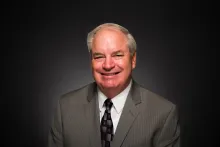
Robin Webber was born in Chicago, Illinois, in 1951, but has lived most of his life in California. He has been a part of the Church of God community since 1963. He attended Ambassador College in Pasadena from 1969-1973. He majored in theology and history.
Mr. Webber's interest remains in the study of history, socio-economics and literature. Over the years, he has offered his services to museums as a docent to share his enthusiasm and passions regarding these areas of expertise.
When time permits, he loves to go mountain biking on nearby ranch land and meet his wife as she hikes toward him.
