
Steve Myers
Look for part 1 from March 19, 2016.
This transcript was generated by AI and may contain errors. It is provided to assist those who may not be able to listen to the message.
Spiritual thing a little bit there is bars and lessons we can learn from when they built the physical temple. Because today I want to give part two of the sermon I began last time on building the Temple of God.
Of course, we're talking about building the spiritual temple of God, building God's church that we're all a part of, God's spiritual temple. Last time I showed that the Inspired Order and Rangement of the Old Testament ended with this proclamation by Cyrus, which is a partial proclamation that's given there in 2 Chronicles, which is the last book of the Old Testament in the originally inspired Order and Rangement that the Jews had at the end of the Old Testament period.
It was given by Cyrus and is recorded there in the very end of 2 Chronicles 36, the very last verse. 2 Chronicles 36 verse 23 gives it as part of this proclamation that Cyrus gave, which is the last verse of the Old Testament in its inspired Order and Rangement that the Jews made. Thus says Cyrus, king of Persia, All the kingdoms of the earth, the Lord God of heaven, has given me, and he has commanded me to build him a temple at Jerusalem. Who is among you of all his people? May the Lord his God be with him, and let him go up.
As I pointed out last time right across the page in the book of Ezra, it completes that and shows that, which then goes into building the physical temples, as Haggai talks about as well. But this kind of ends just with, who is among you of all his people?
May the Lord his God be with him, tying in with what Kevin gave in his sermonette, and let him go up to build the temple. This is an insinuation. This then directly connects the Old Testament to the New Testament. It was originally raised by the Jews. To the book of Matthew 1.1, I should say, which starts off talking about the genealogy of Jesus Christ.
So it links this proclamation by Cyrus to the beginning of the New Testament, to this book of the genealogy of Jesus Christ. Of course, we're all part of the spiritual genealogy, if you will, of Jesus Christ, called to be a part of God's family, and be a part of that spiritual temple of God that God is now building through all of us that he has called, and he has called over the last 2,000 years. But you think about it now, and you're talking there, and Kevin was talking about his sermonette, about building the physical temple, the different tools you would need to do that, and the different materials.
But you can't build a spiritual temple that way. A spiritual temple has to be built using spiritual tools. And the first thing Christ did at the very beginning of his earthly ministry, there in the book of Matthew, was to give his followers those spiritual tools that they would need to be a part of building his spiritual temple, building the Church of God. And those spiritual tools are given to us by Christ in his Sermon on the Mount, as recorded in Matthew 5, 6, and 7.
Those are all spiritual tools that are given to us that we need to utilize to build the spiritual temple of God, God's Church. Now, last time I covered just the first two of those many tools, which are the first two verses there of Christ's words there, Matthew 5. Happy are the poor in spirit, for theirs is the kingdom of heaven. And the second verse was, Happy are those who mourn, for they should be comforted. I think that's verses 3 and 4. The first two verses are black letters, the rest are in red letters, they are words of Christ himself. So those are the first two principles I covered last time, first two spiritual tools, if you will.
And as we prepare now and think about the Passover coming up not too far from now in a couple weeks, we can all examine ourselves in all of these areas as given on the Sermon on the Mount. And see, are we applying these tools in our lives, in our relationship to God, in our relationships to one another? And also, even then, we can go expand beyond that, and see are we applying these principles, even in our relationship with people in the world, that we deal with and come into contact with.
So we can all study that, meditate on that, to see how much we are applying these particular tools. But for today, in part two, I just want to expand on five additional principles that Christ gave us here in the Sermon on the Mount, that pertain to building the spiritual temple of God in our part, in doing that. So my title here for this particular sermon here this morning is Building the Temple of God, part two.
Building the Temple of God, part two. Now, the first principle, I want to use five of these tools here in Matthew 5, 6, and 7. Three from Matthew 5, one from Matthew 6, or one from Matthew 7. But the first principle ties in directly with current world events. And the first one I want to mention is, blessed are the peacemakers. And that's given in Matthew 5, 9. Let's read that. Matthew 5, verse 9, where Christ said, Blessed are the peacemakers, for they shall be called sons of God. Those are the ones that are going to be a part of God's family, that learn how to be peacemakers.
Interesting, and I just, of course, all things have happened in the news every week. They just kind of astound us. And we want to realize how blessed we are to be here in America right now with God's protection. And now, I hope that lasts for a while longer, but we don't know where things are going to be headed. They're not heading in a good direction, it doesn't look like right now. And I don't think any of the candidates for president are going to be able to change things a whole lot.
But this past week, and this is Christianity Today, I don't take Christianity Today, but I publish it online, it says, suicide bomber kills more than 70 as Taliban targets Christians celebrating Easter at Pakistan Park. A Pakistani Taliban faction claimed it targeted Christians, and Christians are being targeted in other parts of the world. They're actually being targeted. It's amazing. In Sunday's attack on the children's area, and they targeted children. Sunday's attack on the children's area of a major park in Pakistan.
The final tally remains unclear, but at least 14 of the victims were Christians. And when other Morningstar News reports that Christians' fatalities were probably closer to 45, and at least 29 of the overall deaths of the suicide bomber exploded himself, 29 of them were innocent children. It's horrible. The number of people wounded has surpassed 300, and some of those are in critical conditions, and may die as well.
Now, going back to the week prior to that, back on Tuesday, March 22nd, a coordinated terrorist attack occurred in Brussels, Belgium, and that's very significant of where it occurred, in Brussels, Belgium. Killing more than 30 people, or 31 or 34, something like that, and injuring over 200 more. And some of those are still in critical condition. But it's interesting that it took place in Brussels. That's where it was targeted, because Brussels, for all intents and purposes, is the capital of the EU, of the European Economic Union, in the tax-tricks place near the European Parliament building, and near the headquarters of NATO, the North Atlantic Treaty Organization headquarters.
So it was particularly targeted in that particular area. And you think about that. This could lead to the formation of the King of the North versus the King of the South. I mean, the King of the South is now attacking. The Arabs are attacking. They're pushing at the northern European countries and so on. Belgium, France. And of course, they even have targeted by words United States, and have targeted the United States, as we know from 9-1-1, and from San Bernardino.
But it could well lead to the formation of the King of the North, as we recorded in Daniel 11. Let's go to Daniel 11, just read a little bit of that. Daniel 11. And I'll pick it up in verse 40, because a lot of this is prophecy, because it covers a long period of time. It's the longest prophecy in the Bible. It covers a period of well over 2,000 years.
We'll pick it up to the time of the end, our time today, or the time just ahead of us. Daniel 11, verse 40, at the time of the end, the King of the South shall attack him, the King of the North. And then the King of the North shall come against him, shall come against the King of the South, like a whirlwind, with chariots and horsemen and many ships, and he shall enter the countries, overwhelm them, and pass through.
And he, the King of the North, shall also enter the glorious land, and many countries shall be overthrown. But these shall escape from his hand, Edom, Moab, and the prominent people of Ammon. And he shall stretch out his hand against the countries, and the land of Egypt shall not escape. Now, I'm not going to go into trying to clarify this prophecy. I think we're going to have to wait to see how it all unfolds to know for sure how it's going to come out in the end, how it's going to be in detail.
But obviously, this prophecy, for the time of the end, will involve European nations to the north, which currently have Brussels as their economic capital, and it will be against Arab nations to the south. We're now pushing towards the north, by attacking France and Belgium and the United States. Where is it all going to lead? Well, it's going to lead to the latter-day fulfillment of Daniel 11 and to the return of Jesus Christ. Now, when it comes to Matthew 5.9 and being a peacemaker, there's one thing we all know for sure.
And I'll just quote this. Isaiah 59.8. The way of peace they have not known. Men does not know the way to peace. Isaiah 59.8 predicted that many, many years ago. So when it comes to being a peacemaker, I would like to then view this from two overall perspectives when it comes to being a peacemaker. One, from the perspective of the world, and second, from the perspective of our personal relationships.
Because we need peace in both those areas. The world needs peace, and we also need peace in our personal relationships. So we have with one another. First of all, what would it take to bring peace to the world? It's very interesting to look at the word peace as it was in ancient Hebrew, not modern Hebrew, but ancient Hebrew.
Which was a Hebrew that was used up until the close of the Old Testament period. That's what a Hebrew changed to more modern Hebrew. But the Hebrew word for peace, which a lot of you know, is shalom.
It's the words you use for greeting one another in a nation of Israel today. When people greet each other today, instead of saying, Hi, how are you, they say, Shalom. It is a greeting. And it means, basically, when you greet somebody by saying, Shalom, you're basically saying, you're wishing that person everything that's good. It means you're wishing the best for that person. Shalom, may God bless you and keep you, you might say. So you're wishing that person good.
It's a positive greeting in Hebrew and over in Israel. But when it comes to obtaining world peace, the only way that you could ever have world peace is pictured within the word shalom, the Hebrew word for peace, as it was written in ancient Hebrew. As I mentioned before, ancient Hebrew was a word-picture language. Each of the 22 Hebrew letters in ancient Hebrew was drawn so it pictured something. It was drawn to picture something. And therefore, each word had a word-picture meaning depending on the letters that were used to make that word.
Now, the word shalom in Hebrew is spelled with four Hebrew letters. Sheen, the first letter, Sheen was drawn to picture teeth. Kind of like our W, but a picture of teeth. And it symbolized that to devour or to destroy, as teeth can devour your food and destroy things, your teeth. So a picture devouring or destroying. Lamed was drawn to picture a shepherd's staff. Symbolized authority, like the authority a shepherd has in guiding his sheep. The third letter in shalom was the letter vav, pictured a nail. You nail something into a post, it's like to establish something, to nail it down, to establish. And the fourth letter was the letter mem, which pictured a wave of water, was drawn to picture a wave of water.
And this could symbolize, among other things, but it could symbolize chaos. Like a ship in high seas and a major storm on the ocean. You have a god in the ocean, you have these major waves come in, you get in this storm, it can be very chaotic. So it could symbolize chaos as a wave in the sea. Shalom, sheen, lamed, vav, mem. Put it all together, here's what that word pictures. The word picture meaning of shalom is destroy the authority that establishes chaos. So the only way to have world peace is destroy everyone who disrupts peace by making war. You have to destroy those who are making war. It tells you right there that we'll never be able to make peace with ISIS, those terrorists.
You're not going to ever make peace with them. The only way you're going to have peace is you have to destroy every last one of them. It's the only way. You know, you stop and think about it. What's going to happen when Christ returns? What's he going to do to bring world peace?
He's going to destroy all those that are disrupting peace and causing chaos around the world. That's exactly what Christ is going to do at his return. He's going to destroy all authority that has established chaos by making war. They're all going to be destroyed. First thing Christ is going to have to do, because you can't have world peace without that.
Now let's turn to personal relationships. What will it take to bring peace to personal relationships? Now that's a huge subject, a very important subject for all of us, especially when it comes to the churches of God and the people of God. You may not understand how this ties in, but I want to start with this particular quote from Psalm 139.
Psalm 139, verse 14, I'm just going to quote it. I won't turn there. But here's what David wrote in Psalm 139, verse 14. He said, I am fearfully and wonderfully made. You might say, well, what in the world does that have to do with peace and our personal relationships? It has everything to do with it. We are so wonderfully made by God that no two people have ever been born in the past 6,000 years that are exactly alike in every single way. Our DNA is different. Even identical twins have different DNA. Their different personalities are different. But besides that, in addition to that, even if you had two people who are exactly alike as far as their physical makeup goes, in addition to that, we each have been mold and shaped by the circumstances around our birth, by our parents, what conditions we were born in, what experiences we've had growing up in life.
We all have our own unique upbringing and experiences that we have that have mold and shaped us into who we are and what we are. There's no two people that are identical. It's amazing. You look at God's perspective on all the people who have ever been born and lived in the earth in the 6,000 years. God wants each and every member of his family to be special and to be unique. He doesn't want a bunch of automatons. He wants us all to be special and unique. Because of that, we all have different experiences. We have different views on things.
We see things differently. We have different perspectives on things that come up in the world and even in our lives, in our relationships. Now, since each of us thinks differently in some areas, and since we all view things from our own unique perspective we each have, how then can we all be brought together to have peace and unity in our personal relationships with one another?
Since we're all different, we all see things differently. We view things differently. We have a different perspective. How can we all be brought together? I want to just quickly bring out three overall principles on how we can become peacemakers in our personal relationships. The first one comes from William Barkley, from his commentary on Matthew 5.9 in his New Testament Study Bible. Here's what William Barkley says in regards to, blessed are the peacemakers. He says, The bliss of bringing men together is what he titles it.
Matthew 5.9, blessed are the peacemakers. The bliss of bringing men together. Here's what he says, this portion of what he says. It must carefully be noted what this beatitude is saying. The blessing is on the peacemakers, not necessarily on the peace lovers. It very often happens that if a man loves peace in the wrong way, he succeeds in making trouble and not peace. The peace, which the Bible calls blessed, it comes from facing issues and dealing with them and conquering them. What this beatitude demands is the active facing of things and the making of peace even when the way to peace is to struggle.
That's the first overall principle in being a peacemaker in personal relationships, is to openly face issues head on, whatever those issues might be, and that can sometimes be a struggle. We have to struggle to do that.
It's not easy. Now, how do you do that? To do that, you have to be willing to listen to all sides of an issue, even if you don't necessarily agree with that person's viewpoint. But at least you've got to be able to listen to all sides.
It wasn't taken in order to listen to all sides of an issue. That brings us to the second principle of being a peacemaker in our personal relationships. The second principle we have to apply is to take humility. To be able to listen to all sides, even though you have strong feelings that have contrary me to what the other side thinks.
So humility to do what? I'll give you the answer from the Apostle Paul himself for that.
Paul himself answers that for us in his letter to the church in Philippi. Let's go to Philippians 2.
Philippians 2, beginning in verse 1. He says, What does it take to do that? What does it take for us to all be in one accord and of one mind? Verse 3.
Wow, that's not easy to do. Why does it take humility to be a peacemaker in our relationships? Because at times we have to, as it says here, esteem others better than ourselves. And that is not easy. That can be a struggle.
Much more can be said, but let's go on to a third overall principle by asking this question. What does it take in addition to humility in order to esteem others better than ourselves? How do you take so much humility? What else does it take? What does it take to listen to and at times give preference to the thoughts and feelings of others with whom we may differ and not agree? Again, the answer is given to us by the Apostle Paul. This time in his letter to the Romans, the church of Rome. Let's go to Romans 12.
Romans 12, beginning in verse 1. Paul writes, Again, this is esteeming others better than yourself, also in the same principle. But to think soberly as God has dealt to each one a measure of faith. For as we have many members, as the churches of God have many members, but all members, excuse me, but one body, one spiritual body, the church has one spiritual body, but it has many members, individual members, who are all different, think differently, act differently sometimes, and have different perspectives. But all the members do not have the same function. We all have different functions within God's church. So we, being many, are one body in Christ and individually members to one another.
Verse 6, Having them gifts differing according to the grace that is given to us, we all have different abilities and different gifts that we can contribute to God's church. Now, since we have many members in one body, and since all the members do not have the same function, what does it take then, in addition to humility, to esteem others better than ourselves? What will that take? Verse 9, Let love be without hypocrisy, abhor what is evil, cling to what is good, and one of the things we could say that we need to cling to that is good is being a peacemaker. To be able to be a peacemaker in our relationships, that's a good thing.
So cling to being a peacemaker. But how can we do that? How can we cling to being a peacemaker? Verse 10, Be kindly affection to one another with brotherly love, and then, and there's the latter part of verse 10, in honor, giving preference to one another.
It takes honor to be a peacemaker. To be a pacemaker, it takes honoring one another. In honor, giving preference to one another.
So to be a peacemaker, we have to honor one another. But what does that mean? What does it mean to honor one another?
To honor someone means to value them. When you place a high honor on something, that means you place a high value on that, whatever it is.
So to honor someone, it means to value them. It means to place a high value on that particular relationship. How high a value should we place on some relationships, on all relationships, especially within God's Church? It means we must at times value that relationship more than being right in our own eyes. We all like to be right in our own eyes. We all think we're right. That's what we are. We have our own perspective. Our own things that we grow up with are part of us. But sometimes you have to value the relationship more than being right in your own eyes. That's placing a high honor on that other person.
So to quickly review, then, what three overall principles must we apply in order to be peacemakers in our personal relationships? Well, I only must be willing to hear all sides of an issue. What does it take to do that? Well, B, it takes humility. Humility at times will have to esteem others better than ourselves. It wasn't it takes to do that. It takes honoring one another. It takes valuing the other person and valuing that relationship.
Now let's look at a second additional principle Christ gave us in his Sermon on the Mount. A second additional tool for building the spiritual temple of God in addition to being a peacemaker.
That's given to us in Matthew 5, 13. You are the salt of the earth. Matthew 5, going back to Matthew 5, Matthew 5, verse 13. Christ said, You are the salt of the earth, but if the salt loses its flavor, how shall it be seasoned? It is then good for nothing but to be thrown out and trampled underfoot by men.
You are the salt of the earth. You think about it. Christ is telling all of us that he called, all of us here in this room, and all of the people in the heart of God's church today and who have been over the last 2,000 years. He said, You are the salt of the earth. You think about it. That's one of the greatest compliments that could be paid to any man or any woman. You are the salt of the earth. Now we don't think about so much today, but in the ancient world, salt was very highly valued.
It was highly valued for five particular qualities that it had. When you think of those five qualities that made salt so valuable in the ancient world, if we had those same qualities spiritually, we would be highly valued by God.
Because the true follower of Christ possessing the values of salt will be highly prized by God himself. Here are the five values of salt we also need to have, which will give us great value to God. Salt is connected with purity. It's white. It's white. It's connected with purity.
We must keep ourselves pure from the world.
Look at the world around us. You watch television. You can't watch it too long. You don't have to watch it very long. You find out the world is losing values fast. They're just about gone. There's very little value in the way the world is going. The world is lowering standards. It doesn't have much standards anymore. There are not many godly values or godly standards anymore portrayed by the world. We've seen that in our own lifetime. And you look at what TV and the way things are going now, you wonder how far is it going to go before Christ returns. See, a true Christian must hold to God's standard. Have purity in speech, purity in conduct, and even more difficult purity in thought. We have to control our thoughts as well. And everything in the world is geared to get our thinking down around track, away from God's changes and God's values. Second quality of salt is salt is a preservative. In the ancient world, it was the commonest of all preservatives, kept things from going bad, and preserved things from corruption. We have to be that way as well. We must preserve God's way, God's standards, and a world that's filled with corruption. We have to be people that, by our very presence, when people see us, they know there's something different about these people. They have different standards. They stand for something far greater than what the world stands for.
By our very presence should make people want to follow God. What makes you so special is so different. Others should want to follow God and come out of the corruption of the world that they're in. It's destroying millions of lives. Third quality of salt, salt adds flavoring. We know that if you have food that's unsalted, it doesn't have a lot of flavor. Food adds flavoring. We as Christians should also add flavor to other people's lives, so they would want to be a part of us. In the world, what do you see in the world? Like Kevin brought out in his sermon, you see fear and worry. People worry. When they see us, they should see people that are full of hope. We don't have to fear. We don't have to worry. Because we've got a tremendous promise from God, and we know God's going to keep that promise. So we can have hope in a world that's full of fear and worry.
You'll see a lot of people in the world today, they fight depression. I don't know the statistics, I don't have the statistics with me right now, but I mean, there are hundreds of suicides that take place every year. I mean, every year, every day. People are committing suicide or thinking about it. They're very depressed. They think there's no hope. So in a world full of depression, we should be seen as people whose lives are full of joy and happiness. Because we've got a tremendous calling that God has given us that we can be so happy about. Full of love about. Or I was going to say, in a world filled with hatred, a lot of hatred in the world today, we see hatred everywhere. We should be seen as having the love of God. So assault adds flavor, so must we add flavor to all of our relationships. Now, fourth quality of salt. Salt, we can use salt. You know, you get snow and ice in your driveway, you can put salt out there, it'll melt the snow and ice. So salt can melt ice. We could say it melts coldness, if you will. So must we. We must extend warmth and genuine hospitality to others. We must be seen as warm and friendly, and people would want to be a part of us. So people will always come and want to feel welcome in our presence, whoever they are, whoever they are in their life. And the fifth quality of salt is, salt can help heal wounds. Many of the people of God, and many of the people of the world today, they've been wounded. Wounded by the relationships they've had, by other things. People have treated them, I should say. Maybe just by things that have happened in their lives, coming up. Many people need healing today. And I'm not talking about physical healing, they need spiritual healing, mental, emotional healing.
And who better to be those healers than we? People of God, who can help others heal from their broken relationship. And I have to say, this last time, it reminds me of a song, long ago. And I can't remember the name of the song, but maybe the title is in the word, but I remember the words, one of the lines. I'm a broken lady, waiting to be mended, waiting for the peace to be put back in place. That's where many people of the world are. Their lives are broken. They need to be mended, they need to be healed. They're waiting for their lives to be men healed, and for the peace of their lives to be put back in place. And who more to do that than the people of God?
Why? Because you are the salt of the earth, Christ said. You can be those healers. You can heal, help heal people's wounds, and heal their hurt. Third principle I want to get from the Sermon on the Mount is, one of the most difficult ones to apply, but one most important, is love your enemies. Matthew 5, verse 43. You've heard that it was said, You shall love your neighbor and hate your enemy, but I say to you, Christ says, verse 44, Love your enemies, bless those who curse you, do good to those who hate you, and pray for those who spitefully use you and persecute you, that you may be sons of your Father in heaven, for He makes His Son rise on the evil and on the good, and He sends rain on the just and on the unjust. Verse 48. Therefore, you shall be perfect just as your Father in heaven is perfect.
You know, the entire Sermon on the Mount deals with personal relationships, and I think no verse in the Bible is more central to personal relationships than Matthew 5, 44. Love your enemies, bless those who curse you, do good to those who hate you, and pray for those who spitefully use you and persecute you. I could probably categorize this as being maybe the most important passage in the entire Bible when it comes to fulfilling our calling.
See, what was Christ really saying here? And what was He demanding of His followers? And maybe even more importantly, why? Why does Christ demand this of His followers? Why does He demand for us to learn how to love our enemies? Why is that so important? Well, first, we need to break it down a little bit so we can understand it better. Because there are four words in Greek for love, and they have different meanings. And it's key, then, here to understand what word for love is used here in Matthew 5, 44 when it says, Love your enemies. What kind of love is He talking about? First, there's the Greek word storje, as T-O-R-G-I. It's used to characterize family love, such as the love of a parent for a child, the love of a child for his parent or parents.
That kind of a love comes naturally. It's the love of the heart that comes naturally. We naturally love our family members. We should. Normally that's the case. Unless it's been really bad, mistreatment or something. Two, there's the Greek word eros. It was used to characterize erotic love, or the love between a husband and wife. Third, there's the Greek word philia. It's used to characterize the warmth and affection we have with our closest and dearest friends. It kind of describes brotherly love that we should have with our friends. And with all of us here, members of God's Church, too, we as Shep brotherly love for one another. But none of these big words are used here in Matthew 5, 44. None of those words are used. The love Christ demands of us here is definitely superior to all of those kinds of loves. The Greek word for love used here in Matthew 5, 44 is agape. I'm not sure if it's pronounced agape or agape, but A-G-A-P-E. I'll say agape.
And it's used to characterize nothing less than the love of God. Characterize God's love. And God's love is far superior to any other kind of love. God's love depicts an unconquerable love and benevolence and goodwill toward all, regardless of where they are in their life. No matter who they are. No matter who they are or where they are.
It is regardless of whether they're righteous or unrighteous.
Regardless of how they may treat us. It doesn't matter whether they treat us right or not. We still should have that kind of benevolence toward that person. That's the kind of love God has. How many people in the world treat God right? He still loves him. He has a love that's beyond how he's treated. People take his name in vain. They curse him. God still loves those people.
You think of how high a love that is.
So what does this mean in a very personal way when it comes to each and every one of us? It means this. It means if we have a God-pay love, then no matter how someone treats us, no matter how much they may insult us, no matter how they may injure us or grieve us in some way, it means that no matter what, we will never allow bitterness against that individual to invade our hearts. We won't get bitter against them. Stably we will regard that individual with unconquered benevolence and goodwill, and we'll only seek the highest good for that particular individual. Sit there and say, well, someday I hope God is going to call that person and help that person become a part of God's family.
See, what doesn't it mean? This is important not only what it does mean, it's also important to know what a God-pay doesn't mean. It means that Christ doesn't ask us to love our enemies the way we love our family members.
It means that Christ doesn't ask us to love our enemies the way we love our nearest and dearest friends. Those are the loves that come from our hearts. They are natural loves that we can have. Those loves come naturally.
What is the main difference in between those kinds of love and a God-pay love? In the case of a God-pay love, in the case of loving our enemies, it's not a matter just of the hearts, it's a matter of the will. It means we have to make a decision to love those people.
It falls a decision of our minds. Characterized as the very love of God and the love of Christ who...what did Christ do? He suffered and died for those who were hurting Him, who were killing Him, who wounded Him, who caused Him a great deal of pain and suffering. But He loved those people, He died for them. That's the kind of love that God has, that Christ had.
So how do we attain that kind of love? You know, you stop and think about it. We can't on our own. That's come beyond us. This has to come from God. It's a love that has to come from God. We have to ask God for it. We have to ask for it so we can become like Him. Because it says He makes His sunshine on the evil and on the good, and He sends rain on the just and on the unjust.
One last point here is very important. Why does God demand that kind of love of His followers? Why is it so vitally important for us to do good to those who spitefully use us and persecute us? Why must we pray for them?
Stop and think about it. What one thing can destroy us more than anything else, if it ever enters into our heart? Bitterness can destroy our person. If you ever allow bitterness to penetrate your heart, to penetrate your soul, if you will, to penetrate your thinking and your feelings, that bitterness will destroy you.
Destroyed, and I'll use the Hebrew name, it destroyed Halel. That was Lucifer's name. It says Lucifer. That's Latin. It's Greek. It's Halel. Light bringer of God. He was a great archangel who became an adversary of God. He became vain, and he all bitterness to penetrate his heart. He became good. It destroyed him.
And Satan will do anything he can to take any circumstances, unfair, anything that we wrongfully suffer. He'll try to take that and turn it into bitterness. He'll try to get bitter about it, because he knows if he can do that, take something that's wrong, something that's not fair, that's not right in our eyes, it's hurtful. He'll try to use that to bring bitterness into us, because he knows bitterness can destroy us. We allow that to penetrate into our hearts. How can we assure that that never happens? We can assure that it never happens by loving our enemies, by doing good to those who hate us, by praying for those who spitefully use us and persecute us, because you can't remain bitter against someone you are praying for. If you're sincerely praying for that person, if you're sincerely seeking to do good for that person, if you're sincerely wanting the best for them, you cannot remain bitter against that person if you're doing those things. That will destroy bitterness. So, agape love, the love of God, is an essential spiritual tool for building a temple of God, as it will ensure that nothing will ever separate us from God or God's purpose. It will ensure we remain a part of the spiritual temple of God by ensuring that bitterness will never be allowed to penetrate into our hearts. Loving your enemies so you can be made into... I should say, love your enemies so you can be made into God's image of light and just be like God. Okay, let's go to a fourth principle. That's Matthew 6, verses 19 and 21. Lay up treasures in heaven. Go to Matthew 6 this time, beginning in verse 19. Do not lay up for yourselves treasures on earth where moth and rust destroy them, where thieves break in and steal, but lay up for yourselves treasures in heaven where neither moth nor rust destroys, and where thieves do not break in and steal, for where your treasure is, there your heart will be also. Now, the bottom line question Christ is asking all of us here is, where do we place our most value and what do we place our highest value?
What's the primary focus of our lives? Do we place our highest value on things on the earth? Is our primary focus on this life? Or in our future life in God's kingdom? Is that our focus? Is that where we put the most values on being in God's kingdom? The point Christ makes here is that everything in this life, regardless of what its current value is, everything in this life and everything on the earth that we now live on is only temporary. It's not going to last forever. It's temporary. All the things that we possess, they can be here today and gone tomorrow. It's only temporary. There's only one thing that we can take into the kingdom of God. And what that is? Ourselves. Ourselves and the character that we have built through the experiences we've gone through in this life. The one treasure that cannot be destroyed is the character we have built through all the trials we've gone through. That make us who we are and that make us what we are. So in other words, our greatest treasure is to seek first the kingdom of God and God's righteousness, as Kevin mentioned in his sermon. That's our greatest value, greatest treasure. And if that is where our treasure is, that's where our heart will be also. God wants our hearts, doesn't He? Because God's greatest treasure is to win our hearts. That's God's greatest treasure because if He wins our hearts, then He can welcome us into His family someday and give us to get to eternal life. Let's go finally to a fifth overall principle from the Sermon on the Mount. That's in Matthew 7. Enter by the narrow gate. Matthew 7, beginning in verse 13. Origines in chapter 13 and 14. Enter by the narrow gate, for wide is the gate, and broad is the way that leads to destruction, and there are many who go in by it, because narrow is the gate, and difficult is the way which leads to life, and there are few who find it. You think about it, this takes us back to the most basic, most fundamental step that all of us had to take when God first opened our mind to call us into His Church, into His spiritual temple. All new people who have their minds open to the truth, they have to take this as their first step. And all teens and young adults who grow up in the Church, they have to take this as their first step, becoming a part of the spiritual temple of God. Matthew 7, verses 13 and 14. It actually depicts life at the crossroads, if you will, for everyone who is called. You stop and think about it. Every action of our life, all throughout our lives, we're confronted with choices, aren't we? And sometimes you get to certain things, you have to make a choice. I'm going to go down this road, I'm going to go down that road, I'm going to do this, I'm going to do that.
The Old Testament breaks it down into two basic choices. It states those two basic choices three times, three being the number of finality. I'll just relate those two. First is to the nation of Israel through Moses as they're about to enter the Promised Land. This is recorded in Deuteronomy 30, verses 15 to 20. I'm just going to pick up a portion of that. Deuteronomy 30, verses 15 to 20. Deuteronomy 30 was written just as the 40th year they're wandering in the wilderness. Deuteronomy is written just as they're about to enter into the Promised Land, just before they enter into the Promised Land. That's the time frame of Deuteronomy. In Deuteronomy 15 and 30, verses 15 to 20, incorporated within those passages, is this. I've said before you today, God told Israel through Moses they're about to enter the Promised Land. I've said before you today, life and good, death and evil. Therefore, choose life that both you and your descendants may live. Two basic choices. The way of life and the way of death. The way of good and the way of evil. A second time was through Joshua, not too many years later. Joshua was handing over his leadership of Israel to others who would follow. And he presented Israel and their future leaders with the same choice, basically. He said, Choose for yourselves this day whom you shall serve. Joshua 24, verse 15. Choose this day whom you will serve. Are you going to serve God? Are you going to serve idols and other things that are false? The third time was through the prophet Jeremiah. This is really interesting, because this gets down to what happens if you don't make the right choice somewhere along the line. The third time was through the prophet Jeremiah, as the house of Judah was about to go into captivity to King Nebuchadnezzar and the Babylonians of the Chaldeans, as they were also called. They're about to go into captivity because they made the wrong choice. Now they're going to go into captivity. They hadn't followed God. They turned away from God. They had chosen the broad way that leads to destruction.
As Christ says in Matthew 7. Now they only had two choices left. Neither were real good choices, but they had these two choices. And you think about what if you confronted with these two choices? Which choice would you take?
The two choices they had was either to remain in Jerusalem to fight the Chaldeans who were coming in. They were about to take over the city. They could fight the Chaldeans, or they could defect into the Chaldeans. Give themselves over to the Chaldeans. Let them be taken over as slaves to the Chaldeans before they got into Jerusalem. Stay and fight, or give yourself into captivity. Those were now their two choices for the people in Jerusalem as the Chaldeans were about to invade the city.
Here's what God told them through Jeremiah. He's recording Jeremiah 21, verses 8 and 9. Behold, now I have said before you the way of life and the way of death. He remains in the city. If you stay in the city to fight the Chaldeans, you will die. But he who goes out and defects to the Chaldeans shall live. If you go ahead and let them take you captive, then you'll live. And then what really is interesting is what it says next in Jeremiah 21, verse 9. He shall live and his life shall be a prize to him. Think about that. His life will be a prize. What does that mean? What will his life be a prize?
Because now he will realize how valuable his life is. Life will become valuable while God spared him. He went into captivity, but his life is spared. Everybody in the city died. He realized how valuable his life is and how important it is to make the right choices in life. That is going to sink in.
His life shall be a prize to him. Now, what are the main differences between the two gates and the two ways laid out by Christ in Matthew 7, verses 13-14? One, it's the difference between the hard way and the easy way. There is never an easy way to success or greatness. Achieving greatness is always the product of hard toil and labor and often sacrifice. It's never easy. To become a master at playing the piano takes a lot of practice. It's not easy to master the piano or any other instrument. It's not easy to be a championship golf player. You've got to spend hours out there golfing on the course. It takes a lot of work. It's not an easy way. It's a hard way. It's a lot of practice, a lot of sacrifice. It takes a lot of time and diligence. Two, the difference between the two ways and the two gates is the difference between the long way and the short way. No one ever arrived at creating a masterpiece or achieving greatness and success by taking a shortcut. It takes a lot of time. You know, Senator, because it's what we live in, they're always making promises. You can get this immediately right now. You can have this or that. The world we live in today, we are generally bombarded with ads, which promise immediate results. It has promising results using the short way rather than the long way, where results will only come at some point in the future. A lot of work and time and commitment. Because the lasting things never come quickly. The long way is always best in the end. Number three, it's the difference between the disciplined way and the undisciplined way. Nothing lasting was ever achieved without discipline. It takes discipline. And fourth, the difference between the two gates, the two ways, the difference between the thoughtful way and the thoughtless way. Which really gets to the heart of the two ways.
You know, so you don't want to ever take the wide gate or the broad way if they truly thought it through. Why not? Because we realize the results would only be short-lived in most cases. If you take a shortcut, you're going to have short-lived results, usually. Everything in this world has two aspects. How it looks right now at the moment, and then how's it going to look down the road in the future? What's going to happen in the future? That's what we need to look at things. Down the road. What's the end result going to be? Not immediately. See, the only way to get our values right so we can make the right choice to see, not the beginning of something, but the end down the road. What's it going to lead to down the road? In the end, all of us have been given the vision to see is eternal life in the kingdom of God. And there's no easy way to achieve that goal. Why not? Because narrow is the gate and difficult is the way it was leased to life and there are few who find it. But, you know, we have found it. God has found it for us. He's led us to that gate that way.
So stay on that road. No matter what. No matter how narrow the road gets. No matter how difficult it gets, stay on that road because the road is going to lead to God's kingdom.
In conclusion, then, we have all been called to be a part of the spiritual temple of God. Let us all participate in building that temple by striving to apply the principles that Christ gives us here in Matthew 5, 6, and 7 on His Sermon on the Mount. Remember also that these words here in Matthew 5, 6, and 7, they're the first words spoken by a true prophet of God in over 400 years since the close of the Old Testament. And they are the basis of the entire New Testament. Those words in Matthew 5, 6, and 7. In 2 Chronicles 36, 23, the Old Testament ends with the unfinished proclamation by Cyrus to build God a temple at Jerusalem, which is in Judah. And he says, Who is among you of all His people? May the Lord as God be with Him and let Him go up.
And you stop and think about it. That's a proclamation from God Himself to all of us that He's called today. Who He wants to help Him build the spiritual temple of God. And God Himself, through Christ, has given us the spiritual tools to build that temple in His Sermon on the Mount. So let's all strive to apply those tools as we help build the temple of God.
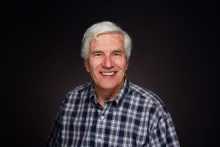
Steve Shafer was born and raised in Seattle. He graduated from Queen Anne High School in 1959 and later graduated from Ambassador College, Big Sandy, Texas in 1967, receiving a degree in Theology. He has been an ordained Elder of the Church of God for 34 years and has pastored congregations in Michigan and Washington State. He and his wife Evelyn have been married for over 48 years and have three children and ten grandchildren.
