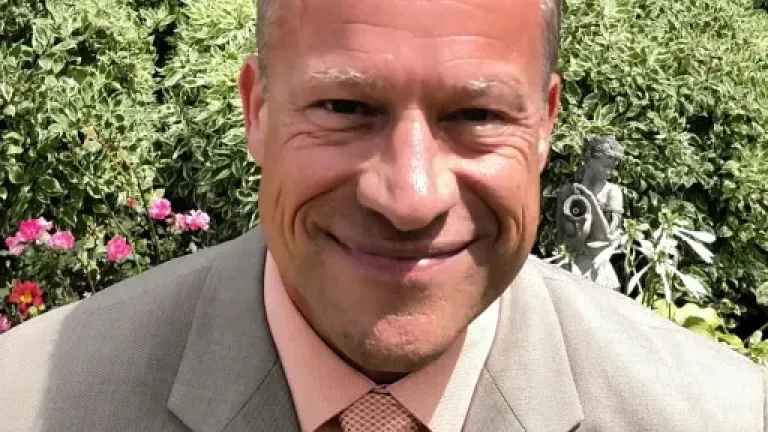

Daniel Apartian
This sermon expounds on our spiritual metamorphosis. We are being transformed from the inside out. We need to allow a full demolition and remodeling of ourselves.
This transcript was generated by AI and may contain errors. It is provided to assist those who may not be able to listen to the message.
God created nature for many different purposes, right? It wasn't only to overwhelm us, right? To make us awestruck, to realize that was a Creator. But God also placed in it parallel spiritual lessons that we're supposed to learn from nature. And we'll talk about one of those today. 15% approximately of insects go through what is called an incomplete metamorphosis.
An incomplete metamorphosis has three stages. The first stage starts as an egg. The second stage, the egg hatches into what's called a nymph. And a nymph is basically a small adult. They eat the same food as the adult insect eats. Nymphs usually have an exoskeleton, so a hard outer shell, which they shed and replace four to eight times over a lifetime. Or as they grow, I should say. And then you run into the third stage. So the third stage is as an adult. And at that stage, the insect stops molting. They've reached their maximum size, and oftentimes they'll grow wings. But in other words, the only real change with an incomplete metamorphosis is in the size. Their appearance is relatively the same. 85% approximately of insects go through what is called a complete metamorphosis. A complete metamorphosis has four stages. The first stage is as an egg, which is usually planted on a leaf. The second stage is a larva, which hatches from the egg.
Larva don't look anything like the adult it will grow into.
They usually have a worm-like shape, so you can picture, you know, a caterpillar, a maggot, a grub, all different variations from the insect family. They can eat up to three times their body weight each day, not as suggested for anybody here at lunch. And that's all to gain a lot of strength over a very short cycle for what's going to come next. So you could probably picture that that caterpillar on a leaf that it was born on, just eating that leaf away. That's a classic example. Larva will molt their skin several times, but they grow only slightly. The third stage for an insect going through a complete metamorphosis is as a pupa.
This happens when larva grows back into itself and forms a chrysalis or cocoon. Now, at that stage, they don't eat at all. Basically, they are going into this very complex change, and they're basically eating themselves. I mean, it starts with the demolition phase, where they basically digest and break down their body into a soup that's needed to rebuild themselves. Then they get a renovation where cells reorganize to form the adult body parts.
Everything else is kind of digested into that soup to enable the process, and you start having the wings and the organs forming.
After a period of time, anywhere from four days to many months, I read, the fourth stage is as an adult. This stage is where the insect breaks out of the cocoon and emerges as something totally different. Completely, entirely different. The young insects that go through this complete metamorphosis doesn't look anything like an adult. They're now the epitome of what they are created for, and they oftentimes live in a different habitat, enjoy different foods. Complete metamorphosis. Well, the process of a complete metamorphosis has very deep spiritual lessons that links to the transformation that God brings Christians through over the course of our lives as believers. See, you and I, we are expected to go through a full-scale transformation of our mind, of our soul, to reach the vision that our Creator has for us. If you'll turn to 2 Corinthians 11 and verse 14. 2 Corinthians 11 and verse 14. There are two Greek words for transform that are used in the Bible.
The first speaks to an outward change. I'll butcher this, but the Greek word used in this way for transform is metashimatizo. It's Strongs 3 3 4 5 if you want to look up. But it means to change the appearance, the figure of something. And if you think about humans, that type of change is an objective a lot of humans have. We desire to appear as a different person over time. More successful, happier, healthier, even spiritually, sometimes we want to appear a certain way. But this verse gives you an interesting perspective by using that word. 2 Corinthians 11 and verse 14. And no wonder for Satan himself transforms himself into an angel of light. So even Satan can do this transformation and appear spiritually godly to those who only focus on the outward appearance. That's not what God is wanting from us. Because in truth, that's just an outward deception that's taking place. It's an incomplete, outward-only change. That's not what God is interested in. The second Greek word, which we will focus on today, is a metamorpho. 3339 in Strongs. And it's used four times in the New Testament. And we're going to review those uses.
It speaks to a total change from the inside out. It's the word from which we get the word metamorphosis. If you'll turn to Romans 12 verses 1 through 2. Romans 12, 1 through 2. Let's start working through the times that this word is used. You remember the TV show Extreme Makeover? God was into extreme makeovers well before we thought they were cool. And he's doing one in us at this time. God's extreme makeover has as little or nothing to do with the externals. What we see, it has everything to do with what makes us who we are, right? Our character, our nature, our spirit, our heart. That's what he's focused on. Romans 12 in verse 1. I beseech you therefore, brethren, by the mercies of God, that you present your bodies a living sacrifice. Holy, acceptable to God, which is your reasonable service. So, the first stage of spiritual metamorphosis is to relinquish our body as an offering to honor God. You could paraphrase this verse by saying, I beg you, as an act of sincere and reasonable worship, to give God your bodies as a living sacrifice, pure and pleasing to him. Verse 2 starts, and do not be conformed to this world. Conform is an interesting word. In Greek, that's the word schema. Think of a schematic. A schematic is the plan or the diagram that shows how each component and device connects, right? So, it works properly. If you're assembling a radio, then you'd better be sure that you follow the schematic. But, the Bible warns that the devil, right, the prince of this time, this darkened world, has switched the schematic on us. He has a plan for us that leads us away from God if we conform to its design. God wants us to conform to only God's schematic. Verse 2, but be transformed, metamorpho, by the renewing of your mind that you may prove what is that good and acceptable and perfect will of God. So, to conform to God's schematic, we must transform. We must be metamorphosized and change from one form to another. And remember, picture that word. It means a complete metamorphosis, a complete renewal of our minds. Romans 12 too could be restated. Do not imitate the world's habits, but go through a metamorphosis, like a caterpillar changing into a butterfly, by the renovation of your mind into a spiritual state. Butterflies, frogs, they have no choice. It's when they transform. That's in their DNA.
But spiritual metamorphosis, that's not automatic. Turn to Titus 3 verses 5 through 6.
Mankind's learned a lot of lessons from what God has created around us, and there's a lot that we mimic, right? What nature does. But the spiritual transformation that God has planned and is doing within us goes way beyond what we can understand in science. Spiritual metamorphosis doesn't just happen to us, and it absolutely cannot, we cannot do the transformation by ourselves. Titus 3, starting in verse 5. Not by works of righteousness, which we have done, but according to his mercy he saved us through the washing of regeneration and renewing. Renovation, right? Of the Holy Spirit, whom he poured out on us abundantly through Jesus Christ our Savior. So we need to let God do the renovation in us to achieve this complete transformation that's being discussed. Turn to 1 Corinthians 2 verses 9 through 12. 1 Corinthians 2, 9 through 12. It's the results of our cooperation, our conforming with God's Spirit, working in us to achieve what is being described. 1 Corinthians 2 and verse 9. But as it is written, I has not seen nor ear heard, nor have entered in the hearts of man the things which God has prepared for those who love him. A caterpillar? It has no clue that it's going to turn into a butterfly. And similarly, it hadn't even entered into our minds what God had prepared for us before he entered the world. That's why those verses that talk about that is staggering to us. Verse 10. But God has revealed them to us through his Spirit. For the Spirit searches all things. Yes, the deep things of God. For what man knows the things of a man except the Spirit of the man which is in him. Even so, no one knows the things of God except the Spirit of God. So God has given us the ability to understand physical laws like gravity and relativity and motion. But people cannot understand spiritual thoughts without the Holy Spirit and what it does. Verse 12. Now we have received not the Spirit of the world but the Spirit which is from God that we might know the things that have been freely given to us by God. So the Bible gives us this amazing ability to view into the future, even if it's a cloudy image of what it's going to be like and we don't really get it fully. Meanwhile, in this life, we're being transformed from the inside out as the Holy Spirit allows us to change internally.
Okay, how do we let the Holy Spirit renovate our minds and our hearts?
I think an interesting perspective is an analogy to think about is we each have hidden rooms with suppressed memories or sins that we keep heavily locked up that we want to hold on to. God doesn't want us to keep me rooms, right? Personal rooms where we hold pride or anger or lust, dislike. Anything we feel we don't want God to influence. Do you have any me rooms in you that you are protecting? We need to allow for complete demolition and remodeling. We need to let the Holy Spirit change us. And not just changes, but changes fully. No locked doors, right? No locked doors going on. So that we love as God does. We understand His will. We even say no to our will when it hurts. And all of that requires us relying on us believing in God. The two foundational starting points for this change are awareness and acceptance. Turn to Luke 14 verses 27 through 30. Luke 14, 27 through 30. So start with the first one. We need to be aware of our need for transformation and our inability to do it without God before we can change. Once sin enters the world, only God could stop it, right? So God first created man and then God now has to recreate man. There's no way we could cleanse ourselves. As you know, it doesn't stop there. It's just awareness. Humans can be aware of what's wrong and we can still resist doing it, right? We know what we're supposed to do. Or say we're aware of what's right and still resist doing it. God recognizes and that's why we now must accept the need for the cleansing blood of Christ. And that's when renovation starts. Luke 14 and verse 27. I think I asked you to turn there. Luke 14 and verse 27. And whoever does not bear his cross and come after me cannot be my disciple. For which of you, intending to build a tower, does not sit down first and count the cost? Whether he has enough to finish it? Lest, after he has laid the foundation and is not able to finish, all who see it begin to mock him, saying, this man began to build was not able to finish.
So baptism is an element of counting the cost, right? It is reviewing and signing a spiritual contract of devotion, of commitment with God. In a sense, God says, okay, it's going to cost everything. It's going to take our entire life. All right, sign here. And we then are asked, are we willing to go through this? And for those of us who've been baptized, we signed this contract at baptism. Once we come to realize that we need Jesus in our lives, then this metamorphosis begins to take place. Ah, but if we are baptized, is our contract with God still current?
Right? Are we still aware and accepting the terms? Are we aware of the renovation that's taking place inside us? And are we accepting and allowing it to happen? Because that's part of the terms that we contracted to. Now, let's now look at the second place the word metamorpho is used. Turn to 2 Corinthians 3 verses 5 through 18. 2 Corinthians 3 verses 5 through 18. So we're starting a little early on this one to get a feel of the verses leading up to it. And you're going to find in verse 5, Paul is referencing many of the things we just discussed about awareness and acceptance. 2 Corinthians 3 and verse 5.
Not that we are sufficient of ourselves to think of anything as being from ourselves, but our sufficiency is from God, who also made us sufficient as ministers of the new covenant. Not of the letter, but of the Spirit, for the letter kills, but the Spirit gives life. So verse 5 is talking about reflecting on our old life, our old nature, and the fact that we have to move away from it. We all have things we let go of. Rooms we need God to clean out and refurbish. And you'll see later when we use a house example, really tear down to the substructure and build up in the right way. The next verse talks about when Moses returned from the top of Mount Sinai. You remember that situation? He received the Ten Commandments, but the Israelites couldn't handle looking at just the fading glory that he held after seeing and talking one-on-one with the Creator of the universe. Let's continue in verse 11. For if what is passing away, the glory on Moses' face, was glorious, what remains is much more glorious. Therefore, since we have such hope, we use great boldness of speech. Unlike Moses, who put a veil over his face so that the children of Israel could not look steadily at the end of what was passing away, but their minds were blinded. For until this day, the same veil remains un-lifted in the reading of the Old Testament, because the veil is taken away in Christ. But even to this day, when Moses is read, a veil lies on their heart. Nevertheless, when one turns to the Lord, the veil is taken away. Now the Lord is the Spirit, and where the Spirit of the Lord is, there is liberty. So again, play this analogy through. It no longer is just one person, like Moses, who has access to God, who can reflect God's glory. All of us, as followers, can reflect the glory of God now. And God's glory is not reflected on us outwardly, like Moses was. It's reflected inwardly in deep life changes that God makes in us in our heart, in our character. All right, verse 18. But we all, with unveiled face, behold as in a mirror the glory of the Lord, as being transformed, metamorpho, into the same image from glory to glory, or ever increasing glory, just as by the Spirit of the Lord.
So instead of just reflecting God's glory in our faces, we're actually being transformed, metamorphosized, by the Spirit of the Master Renovator into the same image of God through Jesus Christ. I love the analogy. And where Moses face reflected the glory visually, just for a little period of time, our actions are what should radiate, should display God's glory outwardly. Our characteristics, our thoughts should change, right? Our actions should reflect those thoughts, our words, the way we love God and others. All of these things should change.
That's what is intended to happen as part of this journey.
And as followers of Jesus, we don't need to veil our faces. And instead of the glory fading, with Moses, the glory of God is supposed to increase throughout our lives as we go through our complete process of metamorphosis. Again, realize that transformation is absolutely critical for us to get to where God wants us to be, to be in His kingdom. Without it, we have no future. Another thing that's clear from this passage is that we only can cooperate with this process. We cannot initiate it, and we cannot sustain it alone. God, through the Holy Spirit, is at work within us, accomplishing this transformation. But it is also equally clear by these verses it implies our cooperation, right? It's given as a command. It happens as we yield, as we submit to God's Spirit, metamorphosizing us. I don't know about you, but I don't want to be in the way of God changing and making this transformation inside of me. But I do, right? I'm human. I'm faulty. The goal, as Philippians 2.5 says, is, let this mind be in you, which was also in Christ Jesus. That's where I aim into it. And this marvelous transforming process takes place from glory to glory. You can say that from one degree of glory to another. What does that mean? What that means is there's no single experience in the Christian life that will reproduce his image in a moment. We love that as humans. Boy, we want an easy button, don't we? That just appeals to us. But that's not the way it works. It's not an instant change. It's over a lifetime. That's God's extreme makeover. The God edition of it, right? That's what it is. Now, I'm sure you may think of a lot of other verses throughout the Bible that don't use this exact Greek word, but convey this concept. So I'm going to review a couple of them with you. But when you picture that our intention for all of us humans is a metamorphosis, it really makes you look at a lot of the Bible very differently. Turn to John 3, verses 3 through 7. It's critical that we fully recognize that a massive change must happen, and we have to allow God to recreate us in this way, including and despite the fact that there's going to be challenges, right? There's going to be difficulties as we do it. John 3, verse 3, we see a spiritual leader in the Jewish area struggling with this concept. Jesus answered and said to him, Most assuredly I say to you, unless one is born again, he cannot see the kingdom of God. Nicodemus, part of the Sanhedrin, said to him, How can a man be born when he is old? Can he enter a second time into his mother's womb and be born? Jesus answered, Most assuredly I say to you, Unless one is born of water in the spirit, he cannot enter the kingdom of God. That which is born of the flesh is flesh, and that which is born of the spirit is spirit. Do not marvel that I said to you, you must be born again. Again, follow the analogy. Nicodemus was like a caterpillar who was being told he had to change into a butterfly. He's thinking, What? He didn't get it.
Yet this is what we were created for. It is the only way we will be in the kingdom of God. We have to repent. We have to be baptized, spiritually reborn, receive the Holy Spirit, obey, and then submit to the reshaping to enter the kingdom of God. And we're in no place to tell God we know a better way to do it. We're in no place to tell God, You know what? Let me do it my way a little bit. I'll just kind of make my version of your rules. You should be okay with it. It's not how it works. Turn now to Romans 8 verses 5 through 9. Romans 8, 5 through 9.
God has something much greater in mind for us than just a short lifetime as a human, where we're worried about our health and our bills and our entertainment. That approach ends in death.
Dying in the flesh is not what we were created for. Romans 8 and verse 5. For those who live according to the flesh set their minds on the things of the flesh, but those who live according to the Spirit the things of the Spirit. For to be carnally minded is death, but to be spiritually minded is life and peace, because the carnal mind is enmity against God, for it is not subject to the law of God, nor indeed can be. So then those who are in the flesh cannot please God. Without God's Spirit, we simply cannot live by God's law. Verse 9. But you are not in the flesh, but in the Spirit, if indeed the Spirit of God dwells in you, is metamorphosizing you. Now if anyone does not have the Spirit of Christ, he is not his. But sometimes we're stubborn, right? We're proud. Sometimes there's for other reasons we're unwilling to change. It's in our nature. I thought that was comically illustrated by a story I read. It said, a doctor gravely said to a patient, you are in terrible shape. You've got to do something about it. So first, tell your wife to cook more nutritious meals. Stop working like a dog. Also inform your wife you're going to make a budget and she has to stick to it. And have her keep the kids off your back so you can actually relax from time to time. Unless there are some changes like that in your life, you'll probably be dead in a month. Dog, said the patient. That would sound more official coming from you. Could you please call my wife and give her those instructions? When the guy got home, his wife rushed to him and wailed, I talked to your doctor. Poor man, you've only got 30 days to live.
Well, sometimes we're enjoying a sin too much to change, right? Isaac Newton's first law of motion says everything continues in a state of rest unless it is compelled to change by forces impressed upon it. If we have faith, truly repent, have God's spirit working on us, then God enables us to start moving, right? To be on the road of metamorphosis to a changed life. That's how we start to see and to act and to think differently. Now we already read where Paul said that metamorphosis is accomplished by the renewing of our mind. I'd like you to think of a house, right? We've all learned a lot from having homes, from being in homes.
What if you want to make your home better? You can make cosmetic changes, you know, paint, carpets. You can make it look a little bit better, maybe increase the value a little bit. Or you can restore a home to its original historic condition. You could take out the carpets. You could refinish the original hardwood, right? You can look around to find windows and doors, hardware, good condition from the period. Remove all of these little parts that make the house look aged, other people's bad attempts at modernizing. But Paul isn't talking about restoring our minds to their original condition. We were born sinners. We did not have the mind of God. So what's there to restore? Both those approaches may cover up some ugly defects. For a while, they may increase a physical value a little bit, but they aren't going to lead to the transformation that God wants. Paul is talking about a complete renovation. Again, play the analogy out. It's like taking a house and completely gutting it. Walls, floors, wiring, plumbing, cabinets, bath, kitchen, fixtures, roof, it's all completely new. Anyone who's ever seen the house in his previous condition would not recognize it now, because each and all the rooms have to be rebuilt by our Creator. And he is the only one who can build us the right way. And that starts by tearing us down to remove that pride, to remove that self-sight of us that thinks we know our will of what we need. And we still sin after baptism, right? But we're committing to God, aware of our sins now, and we know we need help. And as a result, we allow God to change our hearts over time. Sometimes that involves God having to teach us the same thing over and over and over and over. I'm sure we have all experienced that. At other times, he is shaping us by going deeper. He's dealing with the things he couldn't quite get to before, because those things were under layers of hardness and sin. So God will deal with things systematically, which is why it's a lifetime process. Sometimes one at a time and at other times by digging deeper and deeper. I love a statement that I read that said, the problem with living sacrifices is they keep crawling off the altar. We do that, don't we? We think we know our own ways and just want to do things. I'll take it back, God. You got me far enough now. I can do the rest. The real change in us will only happen if we're not running after our past sins anymore. Turn to Ephesians 4 verses 22 through 24. Ephesians 2, 22 through 24.
Our self-surrender must be this ongoing, this day-by-day offering that we give. And that's critical to real spiritual metamorphosis. Sometimes there's better days than others. Let me read Ephesians 4 from the New Living Translation. It says, Ephesians 4 and verse 22, throw off your old sinful nature in your former way of life, which is corrupted by lust and deception. Instead, let the Spirit renew, reconstruct, rebuild your thoughts and attitude. Put on your new nature, created to be like God, truly righteous and holy. Right? The word metamorphosis, the Greek word metamorpho is not in that. But Paul, what he's describing is at the very heart of that concept. You don't need to turn to 2 Corinthians 5 and verse 17, but it says, therefore if anyone is in Christ, he is a new creation. Old things have passed away. Behold, all things have become new. Again, another one, that just conveys that whole concept of metamorphosis without using the word.
Christians are to be brand new people on the inside. And as they do, the Holy Spirit is giving us a new life. So we're not the same anymore. We're being reformed. We're being rehabbed. I'm sorry, we're not being reformed or rehabilitated or re-educated. We're being recreated. New creation. Whenever you hear that, think of a metamorphosis, because that's what is being conveyed by those words. And being a new creation is what Christ is doing, and it's radically different, just like a frog is from a tadpole or a butterfly is from a caterpillar. It's impossible to be in Christ and not experience a metamorpho. Only Christ has the ability to recreate us. And when we become Christians, it begins the spiritual process of restoring and recreating us into His image. That's a privilege. But to get there, we have to look past things that are seen. Nicodemus, right? Being a caterpillar, we have to look past what the world says, well, this is how things work. We're all caterpillars. We have to look past the temporary afflictions of the transformation process, and instead we must focus on the eternal things that are not seen, symbolically, becoming a spiritual butterfly. Very different things that we can't fully visualize, other than trusting what the Bible says. Turn to Mark 9, verses 1 through 9. Let's read the final use of metamorpho. Mark 9, 1 through 9. Now, the same story is repeated in Matthew 17. That's why I said the word is used four times in the Bible. Two of the Gospels tell this story. Where we're coming into now is where the promised transformation is displayed in its fullest sense. Mark 9 will start in verse 1. And he said to them, assuredly I say to you that there is some standing here who will not taste death till they see the kingdom of God presented with power. Now, after six days, Jesus took Peter, James, and John, and led them up on a high mountain apart by themselves. And he was transfigured before them. Jesus was metamorphosized. That's metamorpho. In front of them into his full spiritual state. Verse 3. His clothes became shining, exceedingly white like snow, such as no launderer on earth can whiten them. Matthew's account words it. His face shone like the sun, and his clothes became as white as the light. And Elijah appeared to them with Moses, and they were talking with Jesus. Then Peter answered and said to Jesus, Rabbi, it's good for us to be here. And let us make three tabernacles, one for you, one for Moses, and one for Elijah, because he did not know what to say. For they were greatly afraid. In a sense, Peter was like Nicodemus, saying, wow, I had no idea. He was overwhelmed. And then God kind of put him in perspective. And a cloud came and overshadowed them, and a voice came out of the cloud, saying, this is my beloved son. Hear him! Listen, believe, follow him, and you too can experience that same metamorphosis. Suddenly, when they had looked around, they saw no one anymore, but only Jesus with themselves. Now, as they came down from the mountain, he commanded them that they should tell no one the things they had seen till the Son of Man had risen from the dead.
For this very, very brief moment, Christ, the first born of many brethren, exemplified the final eternal metamorphosis that's being planned for all of us. All of us who are his disciples. And right now, we're being made ready for that to happen. And it happens by the renewing of our minds, of our hearts. It happens by our priorities being changed, our values changing. Right? If you'll turn to Romans 8 and verse 18. Romans 8 and verse 18. When you look at whatever you're working through right now, in that perspective, in that lens, it really does put our trials in perspective. Sure, we will experience suffering along the way as we're being reshaped, but it's all going to be worth it. God is making us ready. He's giving us strength for what is planned. Romans 8 and verse 18. For I consider that the sufferings of this present time are not worthy to be compared with the glory which shall be revealed in us.
Our life is to be this new, this totally different life than our old life.
Do you see your life is completely different and transformed after being baptized? How do you see yourself in that way? Or do you see yourself as still a continuation of some form of the past? I think one of the things that as humans, it's so easy to do, is to focus on our shortcomings, to feel like we don't do anything right.
We need to see ourselves as God sees us. God sees us as new creations. That's important. And I think we can so easily live the anchor of our past and beat ourselves up over and over in our past and go back and say, I wish I wouldn't have done X. Well, that's relevant going forward from this point, but you got to let it go. God sees us as new creations. That's why he sees David as a person after his own heart. Even though he was a murderer and an adulterer, David rededicated himself to follow God's way after repentance. Flip back a couple chapters to Romans 6 verses 1 through 4. Think of all the verses on being a new vessel and the old love and lump needing to be fully replaced. Just all these analogies that play through. It's about a metamorphosis, is what it's describing. God sees our lives as completely different. The sacrifice of Christ allows us to be new creations, a new lump. Well, we celebrate every year, right? We reflect on Romans 6 and verse 1. What shall we say then? Shall we continue in sin that grace may abound? Certainly not. How shall we who died to sin live any longer in it? Or do you not know that as many of us as were baptized into Christ Jesus were baptized into his death? Therefore, we were buried with him through baptism into the death that just as Jesus Christ was raised from the dead by the glory of God, even so, we also should walk in newness of life. Walk in newness of life. We must be active participants.
And we must offer ourselves to God and not to sin. Don't give up. Don't lose sight of what's happening in what God is doing inside of you. You could think of the analogy of the five virgins, right? Five of them didn't have enough oil. They weren't completely metamorphosized inside.
Don't... I guess I'll just read the verse to you. You don't need to turn there. 2 Timothy 1 and verse 6 says, Therefore, I remind you, stir up the gift of God which is in you through the laying on of your hands. We aren't to be bystanders, in other words. We're supposed to strive side by side with the Holy Spirit, participating by our choices, by our submission, by God working through us. And we must do things in the transformation process to keep it going. Every day. Think about what more you can do. And it's not just bringing coffee and donuts to a Bible workshop. We have to put our efforts and our treasures into the kingdom. We have to yield and study and pray and obey and serve. Exhibit Christ being in you more and more each time.
We must stay excited because of the end result. How much do we value being in the kingdom of God? If you'll turn to Colossians 3 verses 9 through 10. Colossians 3, 9 through 10. To go back to analogy I used earlier, I'll ask you, what rooms are you hiding from God that need renovation?
What rooms are you and I hiding from God that need renovation? Ask God for the understanding and the ability to make your metamorphosis a priority and to help our unbelief. Because we all have it, right? When doubt kicks in. Colossians 3 and verse 9. Do not lie to one another since you have put off the old man with his deeds and have put on the new man who is renewed in knowledge according to the image of him who created him. Put off, put on. Simple analogy to say. It's much harder to do. Put off in the Greek means to wholly put off or separate from oneself. And of course, that's talking about the old man, right? That should be put off. Our sinful side that was willfully a transgressor against God.
Our early sinful larva form, you could say, must be undone and lost in order to reach our full potential. I read a quote from a military situation of a brave officer who told his soldiers on the day of battle, unless you kill your enemies, they will kill you. And in like manner, it could be said, unless we crucify the flesh, it will be our everlasting ruin.
We've got to go through the metamorphosis. The first Adam, he was the loser. The second Adam, Jesus Christ, is in every way a winner. And he's the one who's enabling us to put on, to instill that new nature that's being talked about, right? So put on. Put on in Greek means to be arrayed or clothed with.
In Christ, the Christian has everything that's needed to become daily more like Christ through the help of the Holy Spirit. That's beautiful. And we're told we can do all things through Christ who strengthens us. What do you have in your life right now that you're trying to make a decision or work through, or fear or uncertainty, or I'm not strong enough, or will it work? It's in your head.
Christ is the one who is strengthening us and can make us do things we doubt ourselves on. And as free moral agents, we can accept or reject the directions to put off and to put on. It's to our advantage to believe in Jesus Christ, to continue to grow in grace and knowledge.
But again, let's keep it real. Change is this difficult thing for us as humans, isn't it? We struggle against it. It's certainly something we all strive to find shortcuts for as humans. And again, I thought that was illustrated funny by another story, so I'll share another story. A man from the back country of Tennessee found himself one day in a large city, and for the first time he saw an elevator. Well, he watched as an old haggard woman hobbled on and the door closed. And then a few minutes later, the door opened. A young, attractive woman marched smartly off. And the father hollered to his little young son and said, bring mama! Don't we all wish change was that easy? I mean, sometimes we have these visions. We're like, give me just two days. I've got this thing. I'll nail this one. We're good. Just one more time, and it won't ever happen again. But in reality, it isn't. An elevator will not change an individual one iota. Being sanctified into our future metamorphosized state is this lifelong process. Not a one-time occurrence, and then it's done. But, boy, I think we struggle with that. We always want every part of our life to be easier than it is because it's the journey that's making us stronger, that's making us more able. It takes the blood of Jesus Christ to receive forgiveness, to wash away the sins of the old man, and to renew us. That makes us justified. We are justified at baptism. And for that brief moment, we're declared righteous, but then we sin. And that's where this journey of repent, God's Spirit, continues to strengthen us, forgive us, shape us. We do better and better, but we're learning, and we're being changed from the inside out. That's what we're doing. And undoubtedly, it will be longer, and it will be harder than our nature may desire. I think it's most often very gradual and very progressive. I read a quote, which I love, from, I don't know who the gentleman is, he's a minister, obviously his name is Fred Craddock, and he was addressing other ministers. And here's what he said, to give my life for Christ appears glorious. To pour myself out for others, to pay the ultimate price of martyrdom, I'll do it. I'm ready, Lord, to go out in a blaze of glory. We think giving our all to the Lord is like taking a thousand dollar bill and laying it on a table and saying, here is my life, Lord, I'm giving it all.
But the reality for most of us is that he sends us to the bank and has us cash in the thousand dollars for quarters. We go through life putting out 25 cents here, 50 cents there. We listen to the neighbor's kid troubles instead of saying, get lost. We give a cup of water to a shaky old man in a nursing home.
We go to a church committee meeting. Usually giving our life to Christ isn't glorious. It's done in all of those little acts of love, 25 cents at a time. It would be easy to go out in a flash of glory. It's harder to live the Christian life little by little over the long haul. Isn't that beautiful? It's just so true. It's a beautiful visual of one bill, four thousand experiences.
Really? I'm only... How far through these learnings that we have to go through? Our life after baptism is about that lifelong process of gradually changing into the image, into the likeness of our saviors. And again, I think if you view the Bible from that concept of metamorphosis, you see it everywhere. And it sets every story, every book, every example is where people are or are not looking more and more like Jesus Christ. You can almost theme the Bible around that. That appearance change is not physical, but it's seen in character, in attitude, in behavior.
And that's what the word sanctification is called in the Bible. The English word sanctification comes from a Latin word meaning the act or process of making holy or consecrated. We were set apart to God at conversion. We're to live out that dedication to God through a lifetime of holiness. Which, if I come back, that's going to be what my next message is on. Easton's dictionary says that sanctification involves more than a mere moral reformation of character, brought about by the power of the truth.
It is the work of the Holy Spirit bringing the whole nature more and more under the influence of the new gracious principles implanted in the soul in regeneration. In other words, sanctification is the carrying on to perfection of the work begun in regeneration and it extends to the whole man. It captures the thought. God is not interested in leaving us how He found us when He saved us.
God is about metamorphosizing us and making us ready to stay in His presence for eternity. So sanctification is about change. God is about change. All right, let's keep it real again. Sometimes change is so challenging, we wish it would be easier and we decide we rather stay the way we are. Guilty? The lesson is we must support the renovator and be very mindful of avoiding what's called renovation fatigue.
Renovation fatigue as we go through our spiritual transformation. All of you who own homes, I'm sure, have experienced this one time or another. I read it's been estimated up to 80% of people renovating a home will over time experience renovators fatigue. And what that means is you decide that you struggled through a change up to the point where it's good enough. Right? I planned when I bought the house, all those little things are... yeah. And you look around and you say, I'm sick of living through this renovation.
I think the way it looks now, it's unwell enough. If we try that spiritually, it stops the effects of the Holy Spirit changing us. And actually, empower Satan to slip our human nature back in, to take us back to where we were. Every Christian will face renovation fatigue.
Every Christian will face renovation fatigue. Every Christian will face renovators fatigue through the process at times. But I encourage you, when you are struggling with it, remember what the word means. Remember, God offers to help from inside of us who are born again.
It's a process from the inside out. And when we have God's Spirit in us, He is the one working in us. We doubt that too much. God Himself has joined us in the transformation process, and He invests in us in ways we can't imagine and will only discover over a lifetime. He is the one who makes it possible for us to change, right, to put off, to put on. He is the one that does that. Turn to 1 John 3 in verses 1 through 3. 1 John 3 verses 1 through 3. 1 through 3. Or when you're located, if we.
When we first become believers in Christ, we often go through... it feels like more radical life changes, right? There's large things that are changing. And through that initial stage, God usually helps us grow spiritually as we overcome large, obvious sins in our lives. But we're not supposed to stop there and be satisfied. After God purchased the big things in our life, God next takes us deeper into an ongoing change, right? The big rocks are gone. We still have the stones and the pebbles that remain.
Take strength knowing that the end result of that transformation process is really, really exciting. 1 John 3 in verse 1. Behold, what manner of love the Father has bestowed on us that we should be called children of God. Therefore, the world does not know us because it did not know Him. Beloved, now we are children of God and it has not yet been revealed what we shall be. But we know that when He is revealed, we shall be like Him. For we shall see Him as He is, and everyone who has this hope in Him purifies Himself just as He is pure. That same promise awaits us as Christ experienced, right? At the end of our metamorphosis, we will be like Him. But to get there, we must let go of self. We must go through a complete transformation. And that process won't be complete until we can see Him face to face for eternity. We must allow ourselves to go through that transformation knowing that our ultimate destiny is going to be amazing. And that should be a motivator for us, right? It should motivate us to cooperate as the Holy Spirit works in our lives. It should motivate us to cooperate with this extreme makeover, God-style, right? It should motivate us to keep morally pure and free from the deception of sins, to deeply repent when we do fall short. It's important that we understand going through this is going to be a long process because we'll feel that renovator's fatigue. It's going to happen. What's fascinating is if you watch... I recommend you do it because it's fun... watch a time-lapse video showing the metamorphosis of a butterfly. And if you do, I can almost guarantee that your instinct will be you want to help the butterfly.
Want it? Maybe, you know, you might just pull the cocoon just a little bit to make it easier for the butterfly to come out. But if you did, there would be tragic results. Not enough fluid would be squeezed through the butterfly's wings. Removing the difficulty would make future flying impossible. As parents, you guys know that one. You know, you've got to let your kid figure out and make their mistakes. And you want to do what you can. But if you try to make it too easy, you're actually ruining it. Well, it's through the escape that enough strength is developed for a butterfly to fly. The cocoon prepares the butterfly for life. And we as Christians have a cocoon also. And it's enabled through the death, through the burial, through the resurrection of Christ. As humans, we naturally will first approach God, right? Early before we got baptized, or before we committed. And we're like little prickly human caterpillars. And we approach our spiritual master like the parable of the prodigal son. And we say, God, give me my share. And God says, okay, we'll let you learn how that works for you. And just like the prodigal son, we can't be saved until we realize how lost we are. As we stand before God, the holy spotless Savior, He reveals the depth of our sins, the fear of judgment that we deserve, and our need for forgiveness in the Holy Spirit. And we say, what should we do? Right? That's what leads us where Jesus says, if anyone would come after me, he must deny himself. He must take up his cross and follow me. Anyone who wants to save his life will lose it. But anyone who forfeits his life from me in the gospel shall save it. Repent. Turn to God and turn your life around. How? By entering into the cocoon of Christ's death, being baptized or being buried at baptism, and then emerging from the cocoon with the ability to fly because of God's Holy Spirit. That's what enables us to transform. Turn in conclusion to 1 Corinthians 15 54 through 58. 1 Corinthians 15 54 through 58. All of us, we need to collectively and individually allow God to do inside of us what's needed to release the potential in us. That's the beauty of the concept of metamorphosis and why nature is so inspiring. I mean, that little caterpillar turned into something just remarkable. And we might enter the cocoon of grace and fear of punishment, but God says that shouldn't be our ongoing motivation. God says perfect love casts out fear. And as our lives are in Christ, we are becoming a new creation. See yourself that way. Believe in what God can do through you. Now what you can force yourself to do. Let's reflect on the contrast between our current physical state and our potential future state that Paul is talking about in 1 Corinthians 15, starting in verse 54. So when this corruptible has put on incorruption and this mortal has put on immortality, then shall be brought to pass the saying that is written, death is swallowed up in victory. O death, where is your sting? O Hades, where is your victory? The sting of death is sin, and the strength of sin is the law. But thanks be to God who gives us the victory through our Lord Jesus Christ. Therefore, my beloved brethren, be steadfast, immovable, always abounding in the work of the Lord, knowing that your labor is not in vain in the Lord. So for death to be swallowed up in victory, we must allow Jesus Christ to metamorpho us. Right? The result is being conformed into the image of his son, like we read about in Romans 8-29. The result is being transformed by the renewing of our minds, Romans 12-2. The result is becoming a new creation. As it says in 2 Corinthians 5-17, as the disciples witnessed when Christ was transformed, Mark 9 in Matthew 17. That metamorphosis has to happen for us to be eternal and to experience all that God has planned for us.

Dan Apartian is an elder who lives in Bloomington, IL. He is a graduate of Ambassador College and has an MBA from the University of Southern California. Dan is widowed and has a son.
