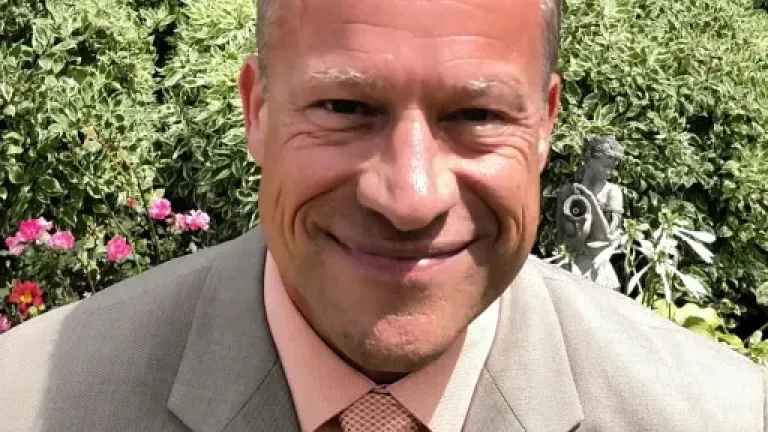

Rick Shabi
This transcript was generated by AI and may contain errors. It is provided to assist those who may not be able to listen to the message.
Well, I thought I would open today with something that I think all of our young people, teens and even our pre-teens, could identify. How many of this audience have ever seen one of the Transformer movies? Okay. You don't know what Transformer movie is? I probably wouldn't know what it is, except Transformers have been around for a long, long time. Back when my oldest son was young, we bought our first Transformer toy. If you don't know what they are, they're kind of a clever little thing. You can take a car and turn it around and it becomes a robot and vice versa. I remember the first time my older son had one, he was like, how do you make this thing work? But after some practice, you can turn those things inside out and something becomes another. Over the years, there's been these Transformer movies. It's turned out to be quite a, quite a lucrative thing for the studios. There's been six Transformer movies and worldwide they have grossed under just under five billion dollars because young people are very fascinated with the fact that you can take one thing and change it into something totally different. You know, the toy itself, the toy, the first time the Transformer was introduced was back in 1984, so there's been a whole generation of toy-plus, excuse me, Transformer toys. And if you look at the business sections, the business website, you can see that Hasbro has really made a life off of downloadable toys with almost 14 billion dollars in sales. Atfork time they called Hasbro and got out of business, but the Transformer industry turned them around. It is fascinating. It is fascinating just to know that you can have one thing and do something and then it turns something totally different. And even if you don't know what Transformers are, for those of us who, you know, are alive before Transformer movies, we have movies like Superman, right? We had Miles Banner, Clark Kent, who was a reporter by day, and then all of a sudden when the challenge came up, he was transformed into the superhuman being that would fight for good. It was kind of amazing to see that. He would, you know, he would turn, he was Superman. We had Batman. There's been other cartoon characters over the years that have done those things as well because people are fascinated that we could be something that we're not now or maybe there's something potential in us that we could be something different than we would be. Well, Transformers, transformation.
...life and I was thinking about it as I was walking around outside and looking at some of the plants in our backyard that, you know, it used to be years ago when spring and summer would come around, I would go out in the yard, and this was like a long time ago, like when I was a kid, and you would see caterpillars every place. Some of our young people, have you seen a caterpillar at all crawling around? Okay. Yeah, I mean, it used to be that they were literally everywhere.
And I was thinking as I was walking around, I thought, man, I haven't seen a caterpillar in a long time. Caterpillars are a fascinating, fascinating aspect of nature because they do something that's unique in nature that fascinates us, and I could probably have some of our young people come up and talk about it, what they learn in science class, because if you see this caterpillar crawling around, and they used to be there in droves, crawling around on the leaves, and you know, your mom might have tried to shoo them off because they eat all the leaves, they turn into a butterfly, of all things.
You would look at a caterpillar, and you would never think when you see a caterpillar that in another stage of its life, that caterpillar would be a butterfly that is one of the most beautiful things on earth, that could do things that it could never dream of. As a caterpillar, it could actually fly. When it's a caterpillar, it just crawls around on leaves, and then it becomes this beautiful, beautiful being that flies and that is a fascination of creature, a fascinating creature. You know, if you study a little bit, just to give you a little bit of rehearsal on the life of a caterpillar or butterfly, you know, when the caterpillar eggs are laid, they're laid on leaves.
The reason they're laid on leaves is because caterpillars are going to eat those leaves, and in their caterpillar stage, the first stage of their life, they have to eat. They have to eat a lot. They say that they eat three times their weight because they have to get ready for the transformation of what they're going to be doing, the metaphysists that they're going to go through, for the next phase of their life.
And so they go through this process. They go through this process of eating, and pretty soon their skin, their outside skin, does something miraculous. The scientists can't figure out exactly how it happens or why. We know why, because God built it into nature, as an example, I think, for us to see, to learn something from. But their skin will turn, and then all of a sudden they become a pupa, and in their next phase, they're having to fight out of this cocoon thing that they're in.
And the interesting thing is that people can't help those caterpillars that are now in a pupa stage fight out of that, because if they help them fight out of it, the caterpillar dies. It has to have developed the strength in its caterpillar stage that it can fight through that stage and emerge as a butterfly. If it doesn't do it on its own, it'll die. And then it is, there in the same life, in one phase of it, it's a caterpillar, and in the next phase, where it's kind of born again, it's a butterfly. The fascinating, fascinating part of physical life, and as we know, so many of the things that God built into our physical life, there has a spiritual element to it as well.
So part of our life is transformation. You know, the whole process of caterpillar butterflies is called metamorphosis. Metamorphosis comes from the Greek word metamorpho-o, and we find that word in the Bible. And you probably are thinking about a few places that metamorpho-o is in the Bible. Let's turn back to a verse that maybe you haven't thought about, as we've been talking about that, back in 2 Corinthians 3. 2 Corinthians 3, and let's pick it up in verse 12.
As Paul is writing here to the Corinthians and this second epistle that we have for us, he's talking about a spiritual transformation that happens in our lives. You know, at one time, we're in infant stage, we don't even know that there's a spiritual life that we don't understand. And then God opens our minds as if the veil as he says here in this group of scriptures is taken off, and that we see something that we didn't even know before.
And Paul's addressing that as he's writing to the Corinthian church here. 2 Corinthians 3, we'll pick it up in verse 12. He says, therefore, since we have such hope, we use great boldness of speech unlike Moses. And he's, of course, referring to the Old Testament, unlike Moses, who put a veil over his face so that the children of Israel couldn't look steadily at the end of what was passing away.
And you remember that occasion when Moses came back down from having been on Sinai with God, that he had to put a veil on his face because his face shone so bright that Israel couldn't look on him. So he's saying Moses had to put a veil on because it was so bright. There was something new in the metamorphosis of Israel from slave to what God wanted them to become. Verse 14, But their minds were blinded, for until this day the same veil remains unlisted in reading of the Old Testament because the veil is taken away in Christ.
We can understand the Bible because the veil is taken away when God takes it away. When we understand, when we listen to his call, when we take up the call, he'll take the veil away from the Old Testament. But even to this day, when Moses is read, a veil lies on their heart. Nevertheless, when one turns to the Lord, the veil is taken away.
Now the Lord is the Spirit, and where the Spirit of the Lord is, there is liberty.
It's an important verse. Where the Spirit of God is, there is liberty. You know when Israel was in Egypt, God knew where they were, but they were living in a domain where there wasn't the Spirit of God. And so they were oppressed, they were held back, they were never going to become what God wanted them to be and what they could be. Until we have the Spirit of God, we will never know what the next phase is. Just like the caterpillar, if it never metamorphosed into a butterfly, it has no idea what the next phase of its existence is. And until God takes the veil away from our eyes, we have no idea that there's more to life than just what we're living in this physical body today. It only happens with God. It only happens with His Holy Spirit. And where the Spirit is, in the environments we live, in our lives, and in our minds, there's liberty. There's liberty. There's hope. There's future. There's something beyond what we might call our mundane existence if we didn't know God.
Where the Spirit of the Lord is, there is liberty. If we're oppressed, held back, not feeling the energy, not seeing the future, not seeing the hope, we might want to look and see where is the Spirit of God because that's what we should be seeking, as in coming out of the darkness and into the light. Verse 18, but we all, with unveiled face, beholding as in a mirror the glory of the Lord are being transformed into the same image from glory to glory, just as by the Spirit of the Lord. That word transformed. Only one of five times it's used in the New Testament is metamorpho-o. Metamorpho-o. Metamorphosis, that's where that word comes from. It means changing from one part to another, an internal change. Not just changing overnight, but a process like the caterpillar to butterfly that Paul is talking about for you and me. Transforming from one stage of life to another, to another. Something that God would want us to understand, that God would want us to keep in front of us, that God has given us an understanding of that should motivate us and keep us focused. Just a couple chapters over in 2 Corinthians 5, as Paul continues in this discourse, he says in 2 Corinthians 5, 17, therefore if anyone is in Christ, he's a new creation.
Just like the butterfly is, you know, it's a caterpillar, but it's a new creation when it's born the second time as a butterfly out of that cocoon or that pupa that's in. Therefore, if anyone is in Christ, he's a new creation. Old things have passed away. Behold, all things have become new, as it is with caterpillars and butterflies. As it is with them, it is with the people of God. God has called us to a life of transformation. His spirit is the transformer.
His spirit in us are yielding to him, are submitting to him, and opens up that possibility. Christ made it all possible when he died and gave his life for us, but it's up to us. It's up to us whether we go through that process of transformation, of metamorpho. So let's talk about that a little bit today, but before we do that, let's stay in the book of 2 Corinthians here, and let's look at another verse that you may have thought of when you thought of the word transformation.
Let's go to 2 Corinthians 11. Here in the middle verses of chapter 11, Paul is talking about Satan, and Satan tries to go through this process of transformation as well, but it's different than metamorpho. That God would have us be. 2 Corinthians 11 and verse 13 says, for such are false apostles, deceitful workers, transforming themselves into apostles of Christ. They're not being transformed by God, as we'll read here in a second, but they're transforming themselves into apostles of Christ.
In verse 14, and no wonder, for Satan himself transforms himself into an angel of light. Therefore, it's no great thing if his ministers also transform themselves into ministers of righteousness, whose end will be according to their works. Well, the word translated transforming in those verses is not metamorpho-o. That's a word that I couldn't even begin to pronounce, but it's Greek 33 in Strong's Greek number 3345. It's an external transformation. Now, what it means when you look it up, it can be transfigured, it can be transformed, but literally it means to disguise oneself. So, if you look at some of the newer translations in the Bible, the God's Word translation, the New Living translation, when it goes into 2 Corinthians 11, verses 13, 14, 15, here, they don't use the word transforms, they use the word disguise.
For such are false prophets, deceitful workers, disguising themselves as apostles of Christ. And no wonder for Satan himself disguises himself as an angel of light. Therefore, it's no great thing if his ministers disguise themselves into ministers of righteousness, whose end will be according to their works. That transformation is simply external. Like if we went out and we put a mask on our face and we try to pretend to be someone else, Satan and his ministers pretend to be something else.
They pretend to be ministers of light. They pretend to be ministers of truth. They don't transform themselves because transformation comes from the inside out. Transformation isn't something we do to ourselves. Transformation is something that God does to us if we allow him. The caterpillar doesn't transform himself. He goes through a process that God designed and orchestrated.
He, he or it, goes through that process and God turns that caterpillar into a butterfly. It doesn't do it itself. It has to go through the process. It has to fight to come out of that stage of pupa to become that butterfly. But it's God who orchestrated. It's God who designed it just like he designs what goes in our lives and the transformation he puts us through.
So the caterpillar and the butterfly. Born as a caterpillar, but then born again as a butterfly. Same insect, same living being, but two births. Let's go back to John. John 3. We have Christ speaking to Nicodemus, and he talks and he answers some questions or makes some comment that Nicodemus just doesn't understand at that point. Let's pick it up in John 3 and verse 3. Jesus answered to Nicodemus and said to him, Most assuredly, Nicodemus, I say to you, unless one is born again, he can't see the kingdom of God. Well, Nicodemus probably scratched his head and thought, what do you mean born again?
Nicodemus said to him, How can a man be born when he's old? Can he enter a second time into his mother's room and be born? And Christ answered, Most assuredly, I say to you, unless one is born of water in the spirit, he cannot enter the kingdom of God. That which is born of the flesh is flesh. Every single one of us here has been born in the flesh. Not every one of us here, now none of us here, have yet been born into the spirit.
We're in the process, we're in the process, but it hasn't happened for us yet. That which is born of the flesh is flesh, and that which is born of the spirit is spirit. Two parts of the same life. We're all here, today in the flesh. If we follow God, if we yield to him, if we let him complete the process he's begun in us, if we're loyal, if we're committed, if we're submitted to him, if we're submitted to him, if we make the right choices, deny self, follow him, then one day we will be born into the spirit.
Two births that Jesus Christ talks about. Let's go back to Romans 8, where Paul talks about the difference between flesh and spirit. Two parts of the same life, just like the caterpillar and butterfly, they're both part of the same life. They're not two different beings. They're one being, one in one stage, and then born again as a second stage. In Romans 8, let's begin in verse 5, it says, those who live according to the flesh. If that's what we're living for, if that's the things that we do, if that's what we adhere to, and we know if we've been in the church for a while, if we're living to the flesh, or if we're living to the spirit, what Paul is talking about here, for those who live according to the flesh, what do they do? They set their minds on the things of the flesh. What's more important to them is the thing that they do in everyday life. How important is this to me? What entertainment do they gravitate toward? When they have spare time, what do they listen to?
What do they do? The things of the flesh? Where do they do something else? Those who live according to the flesh set their minds on the things of the flesh, but those who live according to the spirit, the things of the spirit. Where's their mindset? For to be carnally minded, and we can say to be naturally minded, to be fleshly minded, to be humanly minded, for to be carnally minded, is death. Ah, without God, without the transformation, without Him putting us and opening our eyes, taking that veil off, it's death. For to be carnally minded is death, but to be spiritually minded is life and peace. When He takes the veil off, when He makes known to us, when we can understand the words of the Bible. Life is there. Peace is there. A purpose is there. A reason to get up in the morning, a reason to look beyond the aches and pains and the other trials of life. Because the carnal mind, the natural mind, the human mind without God, the human mind that doesn't have the veil taken off, because the human mind is enmity against God. It's not subject to the law of God, and indeed it cannot be. It's going to reject God. It's going to take the fleshly route every single time. They may have good intentions. They may want to try, but without God's Spirit, they simply can't do it. So then who are in the flesh cannot please God.
But God has in mind that every single person will have an opportunity to be in the Spirit as well. All of us who are in the room today, we have the opportunity to please God, but not if we remain in the flesh, not if we don't take the opportunity. So we have flesh and we have Spirit. Let's go back to 1 Corinthians 15. 1 Corinthians 15 is the resurrection chapter. We often call it. Jesus Christ, we know He was born in the flesh. And then the same life when He was born in the Spirit.
He's now something different. 1 Corinthians 15, verse 22. For as in Adam all die, He was the first man, first physical man on earth. For as in Adam all die, even so in Christ all will be made alive.
Adam didn't make the transformation from life to death, from darkness to light, from flesh to the Spirit.
For as in Adam all die, even so in Christ all shall be made alive, but each one in his own order. Christ the firstfruits, He was flesh. Through His life, He was prepared for death. Through His life, He honored God, committed to God, lived a perfect life, strengthened Himself, as we'll see here in a minute, through the many things that He went through. When He was resurrected, He was resurrected not as a flesh and blood, human, but in the Spirit. But each one in His owner, Christ the firstfruits, our example, the one who went before us afterward, those who were Christ's at His coming. He was the first of the firstfruits. There are other firstfruits. We'll talk more about that when we get to the day of Pentecost. Let's drop down to verse 40.
There are celestial bodies, Paul writes, and there's terrestrial bodies. There's the bodies up in heaven. There's the bodies on earth. But the glory of the celestial is one, and the glory of the terrestrial is another. There's one glory of the sun, another glory of the moon, and another glory of the stars, for one star differs from another star in glory. He says, so also is the resurrection of the dead. The body, this fleshly body, is sown in corruption. It's raised in incorruption. Same life, same person, but when the new life and the new birth comes, it's in incorruption. It's sown in dishonor. It's raised in glory. It's sown in weakness. How weak are we as human beings? It's sown in weakness. It's raised in power. It's sown in natural body. It's raised in spiritual body. There is a natural body, and there is a spiritual body. And so it is written, the first man, Adam, became a living being. The last Adam became a life-giving spirit. Verse 46, however, the spiritual isn't first, but the natural, the state that we're in today. The spiritual isn't first, but the natural, and afterward the spiritual. The body is the first. The butterfly isn't the first state. The caterpillar is. And then comes the butterfly. The first man was of the earth, made of dust. The second man is the Lord from heaven. As was the man of dust, so also are those who are made of dust. And as is the heavenly man, the resurrected Jesus Christ, so also are those who are heavenly, who have that opportunity because God has called and they've responded, who live by God's Spirit, yielded to him until the day they die. And as we have borne the image of the man of dust, the image we have today, we also will bear the image of the heavenly man. Paul says this, I say, brethren, flesh and blood cannot inherit the kingdom of God, nor does corruption inherit incorruption. We won't be in the kingdom of God in fleshly bodies. Behold, I tell you a mystery. We shall not all sleep, we all won't all die, but we will be changed in a moment in the twinkling of an eye at the last trumpet. For the trumpet will sound and the dead will be raised incorruptible. And we will be changed. For this corruptible must put on incorruption, and this mortal must put on immortality. So when this corruptible, this body we're in today, when this corruptible has put on incorruption, and this mortal has put on immortality, then shall be brought to pass the saying that is written, death. Death is swallowed up in victory. Look at the process that God has us going through. Look at what He has called us to. Look at what He's opened our minds to see. Look at what we are in now, and what we should be doing now, and the process that He has us living in now. The state of a caterpillar, getting ready for the change, all the things that we should be doing if we're mindful of that state, of what God has called us to, what He's doing. If we believe, excuse me, if we believe that, where our attention should be, where our focus in life should be, let's go back to Romans 12. Romans 12. Here in verses 1 and 2, as Paul takes the Roman Church through the process of salvation, God's call, justification, sanctification, the Holy Spirit, what He's doing with us in chapters 12. In chapter 12, verse 1, he writes, "'I beseech you therefore, brethren, by the mercies of God, if you understand this, if you believe it, do you understand what you're called to?
I beseech you therefore, brethren, by the mercies of God, then present your bodies a living sacrifice, holy, acceptable to God, which is your reasonable service. And don't be conformed to this world, don't be conformed to a life of the flesh, don't be conformed to this world, but be,' notice that word, be, you're not going to do it yourself, but you be transformed, there's metamorpho from the inside out, but you be transformed by the renewing of your mind, that you may prove what is that good and acceptable and perfect will of God." What is that good and acceptable and perfect will of God?
Well, His will is that we would all have eternal life. His will is that we would all come to repentance. His will is that we would all finish the process, that we would let Him complete what He started in us. It won't be us who does it, it's Him who completes it. Be transformed, it says here, and do those things. We have to be transformed by God. We have to allow Him to work His purpose in us by yielding and by submitting to Him.
He says, be transformed by the renewing of your mind, by the renewing of your mind.
Well, we've already read that when we're in the flesh, we think about the things of the flesh, but when we're in the spirit, we think of the things of the spirit. So part of the process that we go through is a mind that transforms from things that are just purely focused on the fleshly things of life to the spiritual things of life. How do we do that? Let's go back to Ephesians. Ephesians 2.
Ephesians 2 and verse 19.
Paul, writing to the church in Ephesus, he says, Now therefore you're no longer strangers and foreigners.
You're part of the family of God. Now, church that has believed, that has repented, that has been baptized, you're no longer strangers and foreigners, but fellow citizens with the saints and members of the household of God. That's all of us here today. You're no longer strangers and foreigners. Now you're part of the household of God. It's quite an honor, quite a privilege. None of us did it. It's what God has done when He took the veil off of our minds. Of course, we had to accept it. We had to follow it. We had to repent of our old ways. Now therefore, you're no longer strangers and foreigners, but fellow citizens with the saints and members of the household of God, having been built on the foundation of the apostles and prophets, Jesus Christ Himself being the chief cornerstone. Remember the caterpillar? It's born on a leaf, the very leaf that it's going to be eating. And it's going to spend its life eating and eating and eating of those healthy things that are going to enable it to pass from caterpillar to butterfly. If we're going to pass from life, from death to life, if we're going to pass from flesh to spirit, we have to eat. We have to eat, not the unhealthy things of the flesh, not the unhealthy things of the world around us. We have to eat of the Word of God.
Our lives, individually and collectively, must be built on the foundation of the apostles and prophets. We need to know this Bible. We need to eat this Word of God. Just like Jesus Christ said, man doesn't live by bread alone, but by every word that proceeds from the mouth of God. Just like Paul wrote in 1 Corinthians 5-6, eat the unleavened bread of sincerity and truth, something that we rehearsed just a few weeks ago during the days of unleavened bread.
Put the leavening out and put the unleavened in and eat that unleavened word the rest of your life. Feed on that if you will pass through the process of transformation. If the caterpillar ate all the junk food around it, it would never have the strength to pass from caterpillar to butterfly. Never had the strength to emerge from that other state.
If we eat mostly of the world, if we eat mostly of our own ideas, if we don't know, and if we're our foundation, if we're not planted on that leaf that is the Word of God, the foundation of the apostles and prophets, we won't have the strength, we won't have the nourishment to be able to do it. Eat of that! Keep your finger there in the Ephesians 2. We'll be back there in a minute. Let's go to 2 Peter 3. 2 Peter 3 and verse 18.
Just picking up in the middle of the sentence here that Paul wrote, he says, but you, he talks to you and me, but you grow in the grace, grow in the grace and knowledge of our Lord and Savior, Jesus Christ.
Grow in knowledge. Grow in grace. Learn more. Be strengthened. Understand what it means to have the knowledge. Understand what it means to be living under and in the grace of God. And don't just get the knowledge, as we've talked about before. Apply that knowledge. Part of having the knowledge is applying it into our lives that we begin to see what is the thing of God that he wants us to learn.
Now, in this past Bible study season, we talked about studying the Bible and how the Word of God is given to us for many, many different things. We hear the Word of God. We hear it every week. We may listen to a sermon or Bible on a tape in the car. We hear it. That's one of the things he did it for. We read it. We might read four or five chapters a day. We might preach it. We do preach it. He tells his church, you preach the gospel. You speak the Word of God. We do that to the world. We do that in church services. But we also have to study. Study the Word of God. And that's different than the rest of those things, as we talked about in that study. How do we study the Word of God? Because if we're not studying, if it's all just those other things and we're just listening, if we're just reading, we're not going to grow in the grace and knowledge of Jesus Christ. We have to do that as well, as Paul tells Timothy in 1 Timothy 2.15 or 2 Timothy 2.15.
Have to eat. Have to eat of the good things of life. Their caterpillar doesn't eat junk food.
We can't be eating junk food and expect to pass from flesh to spirit.
God gives us... He takes the way of the veil. He gives us His Holy Spirit. We can do it, but we have to do it. We have to do it and make sure that we do it the way He says. Let's go back to Ephesians 2. You still should have your finger in that chapter. So He says to us in Ephesians 2.20, you know, we got to be built. We have to build our houses individually and collectively. On the foundation of the apostles and prophets, Jesus Christ Himself being the chief cornerstone.
Verse 21 of Ephesians 2, He says, in whom the whole building... Well, that's you and me, but the whole building is all of us. All of us. All of us here in Orlando. All of us in Jacksonville. All of us in the Church of God. All of us that God is called to. An individual temple, but a temple of people in whom the whole building being fitted together grows into a holy temple in the Lord.
They're growing individually, but that's not the only part that we have to grow and be strengthened by. We have to have each other. We have to have each other in whom you also are being built. Notice the word in verse 22, together. Together for a dwelling place of God in the Spirit.
Eat. Eat the word of God. Eat the things of the Spirit.
Got to have fellowship with one another. I put you in a body where the whole Church I'm working with I'm working with you individually, God says, but I'm working together with the Church, the building that I'm building that you are all a part of and have your place in.
That's part of the strengthening that you need to pass from flesh to Spirit, from light to dark, from death to life. Oh, we need Jesus Christ. He's the Chief Cornerstone. Without him, it's hopeless. It's meaningless. He did that. Oh, we need to study and we need to know the word of God and we need to grow in the grace and knowledge of Jesus Christ. We absolutely need to do that and we need to apply it into our lives so it becomes us. And as we apply it, it renews our mind that it's programmed with what God wants as opposed to what we've always done in our lives. That helps us overcome the weaknesses and the things that we don't want to do, even, that we know we must do it and that God will give us the desire to do and overcome if we yield to him that he can build that temple. Though we do all those things together. Notice in verse 19, he says, we read it, therefore you are no longer strangers and foreigners but your fellow citizens with the saints and members of the household of God. You're together. So you can read verses, you know, verses like Hebrews 10, 24 through 25, where Paul says, or not Paul, the author of Hebrews says, don't forsake the assembling of yourselves together, as is the manner of some. Don't forsake the assembling of yourselves together. You're supposed to be together. I want you to be together. I built into your lives the opportunity to be together at least weekly and other times during the year and other opportunities that you have to be together as well. Whether it be at potlucks, at Bible studies, whatever it might be, don't forsake it. It's part of what you do. It's part of the strength thing that you must go through. Be strong. Be strong in God. Work with one another. Understand what God has called us to. Pray for one another. Work with one another that we become who he wants us to be individually and collectively.
It all fits together as we go from life or death to life.
In this lifetime, in this lifetime, living in the flesh, it's our time to be getting strong, to be building that strength as we look forward and as we understand the next phase of what God has given us to, has called us to, a very real phase that we should not ever lose sight of.
Because if all we ever think about is the flesh and what we're doing today and what we're doing tomorrow and this and that, we're missing so much. Missing so much of what our lives should be. Well, let's go back to 2 Corinthians 3, where we started.
And let's look at another phase of this metamorpho O.
2 Corinthians 3, we read verses 12 through 18. Let's just look at verse 18 again.
It says, We all, we all with unveiled face, God's taken the veil off, we all with unveiled face, beholding as in a mirror the glory of the Lord.
We see who He is. He's the first of the first fruits. He's gone before us.
We look at Him. We see what God has done with Him. We see the future for us, if.
If. But we all with unveiled face, beholding as in a mirror the glory of the Lord, our being. There it is again. Not by our might, not by our power, not by our spirit, but by the Spirit of God. We are being transformed into the same image from glory to glory, just as by the Spirit of the Lord.
I will turn to verse 3. We've talked about it many times. Remember what it says? It says, If you have this hope in you, if you get it, if you get caterpillar to butterfly, if you get flesh to spirit, if you get born again once and then born again to be in the kingdom of God, if you get it, what is the hope? Purifying self. When we purify ourselves, what do we become? Stronger and stronger and stronger in the Word of God. Stronger and stronger and stronger in the life of God. How do we get stronger? We eat the Word of God. The more that we eat the Word of God, the more pure we become, because we see the contrast and we see the difference between our way and God's ways. Our will, God's will. And all the things that go along with it. And we desire more and more His way, no matter how uncomfortable it is for each and every one of us. And our own individual preferences or whatever that must be yielded to God as He molds us into who He wants us to be. So we know that if we have that hope that's in Him, that we'll be like Him, it says. We see Him as He is, and that's the next step of our existence. You know, the apostles, a few of them, had an opportunity to see this. Let's go back to Matthew 17.
Matthew 17. They knew Christ in the flesh. They followed Him. God revealed to them that He is the Son of God. And Christ spoke to them of the kingdom of God. And so they began to hear His words. And as God's Spirit worked with them, and then later, as we'll talk on the day of Pentecost, as the Spirit was in them, as He began to perfect them. But here in Matthew 17, we have the incident of the transfiguration, if you will. In verse 16, verse 28, Christ says, I say to you, there are some standing here who shall not taste death until they see the Son of Man coming in His kingdom. And indeed, that was the case, because then in a vision here, beginning in chapter 17, it says in verse, after six days, Jesus took Peter, James, and John, his brother, led him up on a high mountain by themselves, and he was transfigured. Transfigured is Greek metamorpho. He was transformed. They knew Him in the flesh. But in a vision, they saw Him as He would be. The next phase, He was a caterpillar when they knew Him, but they saw Him as a butterfly, astounded them. He was transfigured before them, His face shone like the sun. His clothes became as white as the light. And behold, Moses and Elijah appeared to them talking with Him. And Peter answered and said to Jesus, Lord, it's good for us to be here. This is what the next phase is. This is the vision of who You will be. This is the vision of what we can be, what You called us to be. Really? From caterpillar to butterfly? From flesh to spirit? It's awesome. It's something we couldn't even have imagined. It's what Paul said in 1 Corinthians 2.9, I hasn't seen, ear hasn't heard, hasn't even entered into the hearts of man the wonders that God has prepared for those that love Him. That complete that process of letting God take them through metamorpho. Peter answered and said, Lord, it's good for us to be here. If you wish, let us make here three chabbernacles, one for you, one for Moses, and one for Elijah. And while he was still speaking, behold, a bright cloud overshadowed them. If you get it, apostles, if you get it, disciples, if you get it, those who God has called, if you get it, those who God has taken the veil off of our minds away from our eyes, if you get it, if you see it, if you study, if you catch the vision of what God has in mind for you, a voice came out of the clouds saying, this is my beloved Son, in whom I am well pleased, hear him, hear him.
Not other voices that might want to say this is what he said. Hear him. Listen to him.
Listen to him. That's where future, that's where it all lies. Listen to him. Keep your eyes on him.
As the apostles knew him, he was flesh. But then they saw the transformed Jesus Christ, the next phase of the same life.
It was good. It motivated them. I think for the rest of their lives, they remembered that. And you know what? God will give us the same vision of who we will be, of what our life as caterpillars can be when we become the butterflies he wants us to become. If we have our eyes in the things of the Spirit, if our mind is on the things of the Spirit, if we're eating of the things of the Spirit, just like that caterpillar must eat to have the strength, Jesus Christ went through the same process that you and I are going through.
Let's go back to Hebrews 2. Hebrews 2.
You know, Jesus Christ led a perfect life, as we all know. He didn't need to be baptized because he was already living a perfect life, but he was baptized as an example to us. The Holy Spirit came on him just as it does, just as it leads and guides us. In Hebrews 2, verse 9, the author here says, we see Jesus. You know, Jesus had already been resurrected. He'd already died and been resurrected at the time this was written, but we see Jesus who was made a little lower than the angels. He was a human. And he didn't, you know, he was flesh and blood, just as you are today. We see Jesus who was made a little lower than the angels. He was in that first stage. For the suffering of death, crowned with glory and honor, that he by the grace of God might taste death for everyone. That was his mission in life. For it was fitting for him, for whom are all things, and by whom are all things, in bringing many sons to glory, because that's what his will is, that we would follow the path, that we would follow what he has called us to. For it was fitting for him, for whom are all things, and by whom are all things, in bringing many sons to glory, to make the captain of their salvation perfect through sufferings. And he had to go through a lot of suffering. He had to go through a lot in his life, physically, mentally. Far more than you and I have had to endure in our lives.
He had to go through it all. What did it do? It strengthened him. It strengthened him. As he fought through this life, like that caterpillar fighting out of that stage of the pupa into butterfly, he had to develop the strength, and he fought his way through it, through many sufferings, through many trials. Through a lot of pain, through a lot of agony, he was able to do it because of the strength he had in God, because of the Spirit in him, because of how he lived his life, the faith that he had in God, and the things that God had brought him through. He made it all possible.
Back in Romans 8, we were in Romans 8 a little earlier, speaking of the way of the flesh and the way of the Spirit. Later on in Romans 8, Paul speaks of the same thing that you and I must go through. If Jesus Christ went through it, you and I must go through the same process, just like every single caterpillar has to go through the same process if it will ever become a butterfly. Romans 8 and verse 18. Paul says, I consider that the sufferings of this present time, they're not worthy to be compared with the glory which will be revealed in us.
Man, I have to go through some struggles. I have to go through some trials.
Things can be really tough. But you know what? If I know that I'm going to become a butterfly, if I know what the next phase is, if I have that vision, if I keep it in front of me, if I use the Spirit of God to power, to give me the power to work through these things, that I understand that in this process I will struggle, it will hurt. But boy, if I fight through it with God's Spirit, if I let him give me the strength to fight through it, if I prepared myself, it isn't anything to even compare with what the next phase is when you're born in the Spirit. I consider that the sufferings of this present time aren't even worthy to be compared with the glory which shall be revealed in us, for the earnest expectation of the creation eagerly waits for the revealing of the sons of God. Eagerly waits, looking forward to it, not thinking, I hope it's a few years off, I hope I've got time to do this, I'd like to live in the flesh a lot more, eagerly waits for the revealing of the sons of God. Because they're eager to get to that next phase, they're eager for Christ to return, eager for the kingdom of God to be set up, eager for what that will mean for all the world that you and I have a part in, and the tremendous excitement that should bring us to know that we'll be part of a people that will help the world understand finally what peace and hope and love and harmony and abundance is. Because it isn't anywhere in this world, it isn't anywhere in this flesh, it is only, it is only in Jesus Christ and the life he called us to. We have to eat, we have to get strong, we have to be part of it together, we have to work together in fellowship, as the Bible says from beginning to end, we have to go through some trials, we're going to have to fight our way through it, but Christ says he'll never leave us, he'll never forsake us. Back in Philippians 2, Philippians 2, Philippians 2 and verse 12, it says, therefore, my beloved, Paul writes and says that to us, God says that to us, therefore, my beloved, as you have always obeyed, not as in my presence only, but now much more in my absence. You know what joy that had to give Paul when he wrote that? You know, when I was there watching over you and with you, you obeyed, but man, I see you doing even more now that I'm gone.
That's God working in you. You're doing it for him. You get it. You've caught the vision. You see the future. Therefore, my beloved, as you have always obeyed, not as in my presence only, but now much more in my absence, work out your own salvation with fear and trembling.
You need each other. You need God. You need the Holy Spirit. You have to have it.
We help each other, but only we can do it. Remember what it said about the caterpillar and its pupil stage? If someone tries to do it for the caterpillar, it will die. It has to do it itself. It has to have the strength to emerge from that pupil stage into a butterfly on its own. As much as we would like to do it for each other, as much as we would like to do it for our children, as much as we would like to do it for our spouses, God says, work with one another. God says, encourage each other. God says, exhort each other, but we have to work out our own salvation with fear and trembling. Together, in concert with him, we have to be strong. We have to develop that strength. We have to fight through the trials of life, and they're different for each and every one of us. We should never minimize each other's trials, whatever they may be, whatever things that God does. He knows where we need to be strengthened, and then he gives us those trials and those opportunities in life to become strong, so that when the time comes to emerge from one stage to another, we've developed, we've taken the opportunities, no matter how small they may look, to develop that strength that we can pass from one stage to another. We have to develop that strength on our own, where was I? 12-15. Yes. Therefore, my beloved, as you've always obeyed, not as in my presence only, but now much more in my absence, work out your own salvation with fear and trembling. For it's God who works in you both to will and to do for his good pleasure. What is his good pleasure? We repent, and we will find that we will be, we will receive eternal life. Do all? That's enough. For it's God who works in you both to do the will and to do for his good pleasure. So God has brought us all. He's opened all our minds. You and I sit here in a situation where God has given us the opportunity to be transformed, to be metamorpho-o'd, if you will. He's given us the opportunity. Jesus Christ did it for us, but now it's up to us. It's up to us to do the things that we've talked about. The things that you know that you've heard before, as we allow God to lead us, but we have to stay close to him. We have to yield to him. We have to keep it at the forefront of our mind, and we have to know and remember that he will always be with us. One chapter back in Philippians 1.6. Paul says, Be confident of this very thing, that he who has begun a good work in you, he who has begun your process of transformation, he who has begun a good work in you will complete it until the day of Jesus Christ.
He'll never give up on us.
We might, and I pray none of us would ever give up on him. He'll never leave us if we continue in the path of not just a small transformation, an external transformation, an external transformation, but a transformation from inside out. Philippians 3. Philippians 3 and verse 20. Though we all remember as God transforms or puts us through the process of transformation as we understand it, as we live it, as we embrace it, our citizenship is in heaven, verse 20, from which we also eagerly wait for the Savior, the Lord Jesus Christ, who will, metamorpho-o, who will transform our lowly body, that it may be conformed to his glorious body, according to the working by which he is able even to subdue all things to himself. Let's be committed to metamorpho-o.

Rick Shabi (1954-2025) was ordained an elder in 2000, and relocated to northern Florida in 2004. He attended Ambassador College and graduated from Indiana University with a Bachelor of Science in Business, with a major in Accounting. After enjoying a rewarding career in corporate and local hospital finance and administration, he became a pastor in January 2011, at which time he and his wife Deborah served in the Orlando and Jacksonville, Florida, churches. Rick served as the Treasurer for the United Church of God from 2013–2022, and was President from May 2022 to April 2025.
