
Steve Shafer
This transcript was generated by AI and may contain errors. It is provided to assist those who may not be able to listen to the message.
So last time in Part 4, we looked at the Big Bang Theory and the Nebula Hypothesis on how our solar system was possibly formed, by the way they look at it. And what the Hebrew word translated, signs, and seasons, means in Genesis 1.14. Again, the Hebrew word for signs represents something by which a person or group is characteristically marked or identified. And it's the same Hebrew word as I mentioned used in Genesis 4.15, where it says, The Lord said a mark or a sign on Cain. Same word there in Genesis 1.14, translated signs. And the Hebrew word translated, seasons, in Genesis 1.14, as we looked at last time, refers to God's festival seasons. That's how it's used throughout the Old Testament. You can look that up and see how that's how it's used. So God's Feast and Holy Days, they do mark and they do identify God's people, at least to a large degree, along with, in addition to, the Seventh-Day Sabbath being a sign of God's people as well. And of course, it is for the purpose of observing God's Feast and Holy Days that we need a calendar to be able to observe them in their proper season and so on. So today I want to just look at two overall questions in this particular Bible study. How many seasons are there from the perspective of the Bible? Not from our perspective as we look at it today in the world we live in, but from the perspective of the Bible? And is there such a thing as a biblical calendar? Is there enough information in the Bible itself in order to construct a calendar with all the details you would need for that? So the title of this particular Bible study is the Calendar, Part 5. And we're just going to look at seasons and the calendar. So first I want to ask the question, how many seasons are there? That is from the perspective of the Bible. Are there four seasons, or are there only two seasons? Now, when we think of seasons, we think of the four seasons, the climate seasons. We think of spring, summer, fall, and winter, four seasons. And all of those seasons, the way we look at them and construct them today, they have an exact dividing line, an exact day in which one season begins. They're divided by the spring and fall equinox and by the summer and winter solstice. But that's not the perspective of the Old Testament or of the New Testament, for that matter. Now, some who reject using the Hebrew calendar, and I'm not favoring one calendar necessarily over another here. I just want to take a look at some of the different calendars and show where they all fall a little bit short, if you want to really ask a lot of questions as far as they're originating from the Bible or not.
Let someone reject the Hebrew calendar and who devise another version of a calendar. Some utilize the four seasons that we have. They divide it by equinoxes and so on, and they use those visions of the four seasons we have today in order to construct their calendar. But the thing is, that's fine for doing that today, but you can't find that in the Bible.
You can't see anything in the Bible about solstices or equinoxes or those being dividing lines.
You can't find the seasons dividing the Bible the way we do today, but despite the effort of some to do so. Now, when I gave this sermon a number of years ago back in Michigan, and I'm getting a little bit different here, I'm updating it a little bit and adding some things, I spent at least an hour or more covering one particular word that's used in the Old Testament that some people use that word to say, that's the word that shows that they divide seasons the way we do today.
That Hebrew word is the word tukuku. I don't know how to pronounce it. Tukuku. T-E-K-U-P-H-O-T, however you pronounce that. It's used actually four times in the Old Testament. Some try to go to great details and depths to use that word to show that's showing the division of the four seasons that we have today. But actually, that particular word is just referencing a general cycle of time after which an event occurs.
And I spent time in my last one, I went through all the four places where it's used and shows how that's really what it is. In fact, in one place it's used in 1 Samuel 1.20. It's in reference to Hannah's cycle of pregnancy, the word tukukufu, whereas you have a nine-month cycle after which an event occurs, in this case, a pregnancy of birth of an infant, of a baby.
So it doesn't... when you really look at it closely, you can't really use that word to say this is where it divides when you cannot observe holy days and that sort of thing. But it's interesting to look at the Bible and see how many seasons are clearly shown in the Old Testament, because it has a different perspective than we would think up today when we think of the four seasons as we divide today.
What is the biblical perspective when it comes to seasons? Well, the Bible primarily focuses on two seasons and on two types of seasons, not four. And those two types of seasons are the harvest seasons and the festival seasons. And there are two harvest seasons overall and two festival seasons which correspond to the two harvest seasons. There are two harvest seasons, or the spring or early harvest season, and then the fall or late harvest season. In both the Old and New Testament place a great deal of emphasis on those two overall harvest seasons.
In fact, it's interesting to go through Christ's parables. A lot of His parables focus on the harvest seasons. And I'll just mention some of them too, you won't go through them. But, for example, the parable of the sower in Matthew 13, verse 3, focuses on the harvest seasons. And the parable of the tares in Matthew 13, 24. Also, the labors in the vineyard, Matthew 20, verse 1. In the parable of the wicked husband, Matthew 21, 33. There's the parable of the scattered seed in Mark 4, verse 26. In the parable of the ground of a rich man in Luke 12, 16.
All those parables focus on the harvest seasons, and with lessons associated with that. So the Bible focuses on two overall harvest seasons, the spring harvest season and the fall harvest season. And along with that, of course, the Bible focuses on two overall festival seasons that correspond to those two harvest seasons.
The spring festival season, of course, being Passover, Pentecost, and then culminating, I mean Passover and Unleavened Bread, culminating at Pentecost. And then the fall festival season of Trumpet's Atonement, a piece of Tabernacles, which all occur during the fall harvest season. So again, the Bible focuses on two overall harvest seasons and two overall festival seasons that correspond to those two harvest seasons. Of course, we often use that. There's going to be two spiritual harvests. There's going to be a smaller spring spiritual harvest.
Those will be harvested spiritually at the time they return to Christ. And there'll be a much greater spiritual harvest at the time Christ returns to the last great day, as we call it, or the eighth day. But what about climate season? It's interesting also to look at climate seasons. Because the day when you ask how many climate seasons are there, we would say there are four. But how many climate seasons are there from the perspective of the Bible? Are there four? Are there only two overall climate seasons? Interestingly, the Bible only focuses on two overall climate seasons, not four.
There are only two words in Hebrew that refer to climate seasons, and they're often translated. If you look them up, they're often translated as summer and winter. The Hebrew word translated as summer is kaiyitz, spelled Q-A-Y-I-T-S. It's number 7-D-19, 7-0-1-9, in strongs and chordants. And it refers to the dry or warm summer season, the warmer summer season. And the Hebrew word translated as winter is karef, K-H-O-R-E-P-H. It's number 2779 in strongs.
And it literally means the crop gathered, and by implication refers to the autumn season, or to the cool or cold season that follows the autumn season. So the two overall climate season in the Old Testament are the warmer summer season and the cool or cold winter season. Now, it's interesting to look at where those words are used. Those two words are used together in four places in the Old Testament. So it's interesting to look at those four places where those two words are used to clearly see that the Bible focuses on two climate seasons. The first place they're used together is in Genesis 8. We'll just turn there and read these real quickly. They're just very quick verses. Genesis 8, verse 22, where it says, While the earth remains, seedtime and harvest, cold and heat, winter and summer, and day and night shall not cease. The words translated in the New King James here, translated winter and summer, are the Hebrew words karef and kayit. Winter and summer, cold and heat, clearly allude to two overall climate seasons. The second place where those two words appear together is in Psalm 74. Psalm 74, verse 17, but let's begin with verse 16 of Psalm 74.
The day is yours, the night also is yours, and you have prepared the light and the sun. And in verse 17, you have set all the borders of the earth, you have made summer and winter. You have made kayit and karef, summer and winter. And also, it's interesting to hear the Hebrew verb translated have made, is y-a-t-s-a-r, yat-sar, number 33, 35, in strong concordance. And it means, when you look up, to determine, to fashion, to form, to purpose, or to make. So it kind of tells us here that God made or formed or purposed two climate seasons overall. Summer season and a winter season, if you will, or a warm season and a cool season. The third place where the two words there appear together is in the book of Amos, in the minor prophets. Amos chapter 3, in verse 15, we begin with verse 14. Amos 3, 14 says, that in the day I punish Israel for their transgressions, I will also visit destruction on the altars of Bethel, and the horns of the altar shall be cut off and fall to the ground. Then verse 15 says, I will destroy the winter house along with the summer house.
The houses of Ivory shall perish, and the great houses shall have an end, says the Eternal. So I will destroy the winter, the Koreph house, and along with the summer, the Caite's house, if you will. Again, indicating two overall climate seasons. Summer, winter are cool and warm. The fourth and final place where those two words appear together is in Zechariah chapter 14, right at the very end of the Old Testament, just before Malachi and our arrangement. Zechariah 14, and I'll begin in verse 1, just to get the setting of this prophecy here.
Behold, the day of the Lord is coming. And then dropping down to verse 8, And in that day it shall be that the living waters shall flow from Jerusalem, half of them toward the eastern sea, and half of them toward the western sea. In both summer and winter it shall occur. In both summer Caite's and winter Koreph it shall occur. Now, is this time period, is this prophetic of the future into when Christ returns? Well, verse 9 tells us that.
It gives us the time setting, this is for the future. And the Lord shall be king over all the earth, and in that day it shall be the Lord is one, and His name is one. So when Christ returns, the Bible here then prophetically still refers to two overall climate seasons, the warm summer season and to a cool or winter season. And also, as you look at these passages here and you look through them, you see that they aren't distinguished as ending or beginning on any particular day.
They are viewed with no specific boundaries separating one from the other, as if one climate season just gradually goes into the other one in a gradual way, without being attacked day or something that's cut off. Because some people construct calendars, they construct on the fact that seasons are divided by particular day, as we do in our world today, as we view the seasons, but that's not the way it is in the Bible.
These seasons here are not divided by any particular specific day. It's just like one kind of graduates into the other one. And that's significant, again, like I said, because some divide counters by a specific day, when seasons have to occur, and so on. Now, it is true, of course, you want to observe Passover on Love and Brad leading up to Pentecost in the spring season, and you want to observe the fall festivals in the fall.
And, of course, you have to have a counter then that keeps those things in conjunction, because, as I explained in a previous Bible study, the rotation of the moon and the sun, they don't come out together. Twelve lunar rotations don't equal one revolution of the sun around the earth. It comes off soft, so there's differences there that have to be made up by some kind of counter, keep that in balance so the seasons don't drift, as I explained in a previous Bible study.
But again, there's no mention here of any particular day or equinoxes or solstices to divide the seasons. So that's in the biblical perspective on the seasons. There are two harvest seasons, and there are two festival seasons. And, of course, those festival seasons correspond to the two harvest seasons. And also, as we just saw, there are also two overall climate seasons from the perspective of the Bible. What then brings us to this question, which I'll take a couple of Bible studies to go into in detail. But it's a very important one to look at, because if you really look at it closely and you ask some specific questions, it leads you to an interesting conclusion.
Because there are always different people who want to construct a calendar. And you have to have a calendar for observing God's holy days and festivals in their proper season. But can you get everything you need to construct a calendar from the Bible alone? Or do you have to come up with some rules that would be outside of the Bible, so to speak? Because there are a number of people who try to construct a calendar using information in the Bible specifically.
It is interesting that those who do that will come to different conclusions and they'll have variances in their calendar. They won't all agree on which calendar is the true biblical calendar, and the reasons why that is the case. But did God really give us a calendar in the Bible? Does the Bible give us the specific information we would need to construct a calendar? To construct a calendar, for example, from the Bible, we'd have to know the exact day that a year begins. And we'd have to know precisely how many days there are going to be in a month, when one month ends and one month begins.
And you can see there is an outline for that in the Bible, but we'll look at that more closely as well. You have to know how many months there are in a year, and how do you get the year to correspond to the revolutions of the moon around the sun, how do you bring those two things in conjunction with one another, and how many days there are in a year, and precisely on what day of each month begins and ends, when a month begins and ends.
But when you put all of these things, you look really closely, you'll find out there are some problems when it comes to constructing the Bible. We need that kind of information. And you'll come to see there's really no way you can really construct a calendar solely based on information in the Bible, and be specific enough to get that to count that everybody's going to agree on. Now, I've already examined Genesis 1, verse 14 in quite detail, but nothing in that verse in Genesis 1, 14 is specific enough to really construct a calendar. So I want to just begin by just asking this one question.
We'll get into the moon a little bit in the next Bible study, but when does the... For example, if you're going to have a calendar, you've got to know when the biblical year begins. Now, it might seem like you have an answer for that, but do we really? So let me ask that.
When does the biblical year begin? And can you clearly delineate that in the Bible? Now, the Scripture that applies to that, at least for those in the Northern Hemisphere, is Exodus 12, verse 2. Let's turn to Exodus 12, verse 2.
Exodus 12, beginning in verse 1. Now, the Lord spoke to Moses and Aaron in the land of Egypt, saying, This month, this month, shall be your beginning of months. It shall be the first month of the year to you. Therefore, the first day of that month, then, will be the beginning of the year.
Now, in several other places, not here in Exodus, but several other places, this first month of the year is called ABIB, A-B-I-B. As it is in Deuteronomy 16.1, where Israel was told, Observe the month of ABIB and keep the Passover to the Lord your God. For in the month of ABIB, the Lord your God brought you out of Egypt by night. Now, ABIB means to be tender or green, insinuating spring.
It's going to be in the spring. So, a biblical year begins in the spring, at least in the northern hemisphere. But that's really all it says, if you look at the definition of that word. It means to be tender or green or spring. So, we know it begins in the spring. And we also know the biblical month begins with a new moon. But later we'll see some problems when it comes to trying to specifically define that. I mean, there's a natural explanation and definition, but again, what is it?
Does the Bible clearly define a new moon? Some would say it does. Others would question that. So again, it just becomes a kind of a tricky problem to resolve to get everybody to agree. But when it comes to the new moon that would begin the month of ABIB, hence mark the beginning of the biblical year, when you get into that, you can run into some problems when you try to get specific. Does the first month of the new year begin with the new moon after the spring?
Because some want to talk about the spring equinox. Because it can be after the spring equinox, or it can begin before the spring equinox. How do you determine when that month is going to be? How do you determine the first month of the year? And we know it begins with the first month of ABIB, but how do you know when that month starts? What does the Bible tell you how to figure out how it starts exactly? Does the new year begin with the new moon closest to the spring equinox, for example? Which could at times occur before the spring, or maybe other times after the spring equinox?
Or does the spring equinox even mention the Bible? Some talk about the spring equinox in relation to that, but the Bible doesn't mention the spring equinox, so it's hard to define that beginning of the year by using the spring equinox, whether it's a new moon before or after, whatever. The Bible does not tell us if the Passover always has to be at the first month of the year, but it's hard to determine exactly when that month begins.
The Bible doesn't make real clear distinctions in some of these areas. When does one season end and one season begin? When does the winter season begin and the spring begin? Well, it depends. Sometimes winter season lasts longer than other years. Sometimes you'll have an early spring. Sometimes you'll have a late spring. Sometimes you'll have an early fall.
Sometimes you'll have a late fall. Sometimes, I think, it's called an Indian summer. So seasons can change depending on the weather and climate and so on, that one can blend and go the other one. But the bottom line is the Bible does not clearly tell us when the biblical year begins. Only that it begins in the spring when years of grain become tender. Now, I want to talk about one particular branch of Jews that I try to determine at the beginning of the year by this word, abib.
And again, I'm not putting them down. Actually, these particular branches of Jews, they try to be scripturalists. That's what their name means, scripturalists. They're Karaite Jews. And they're a branch of Judaism, a smaller branch. As far as trying to trace their history, they would trace their history all the way back to Moses.
But if you go to just the origin of their name, the origin of their name goes back to about the 7th or 8th century AD. That's where they click on their name, Karaite Jews as being scripturalists. And that was because some things were happening there where they were, which I won't go into the history there. But anyway, that's where you could trace their name back to. Although, they'll trace their history further back than that. But they applied the word abib in this way.
Now, this is honorable. I'm not saying it isn't. But there are some problems. As far as trying to say, this is what the Bible absolutely clarifies, the way we have to do it. And the reason I'm bringing this up is because there are a number of people in God's Church who use this kind of a calendar to follow this approach, that the Karaite Jews do, actually. One particular individual who follows this way, the constructor, the calendar, I mean, that he uses is the Beldankenring. Some of you may know Beldankenring.
He used to publish, what's it called, Triumph Ministries, I think it is, or something like that. But anyway, he follows the Karaite Jews, at least in most of the areas. He disagrees with them in some things. And when it comes to calendar, his calendar is slightly different than theirs. But basically, he starts the beginning of the year the way they do. He determines the beginning of the year the way the Karaite Jews do.
So it's important to kind of go over it and let you know what the problem is, at least from my perspective, as far as being this is delineated clearly in the Bible. But here's the way they apply the word ABIB. They have fields in Palestine, and I'm not sure how many, I think it's at least two or more, where they plant barley every fall.
And then the following year, they watch for that grain to sprout and to mature. And they check it actually towards the end of the 12th month. And depending on how mature it is, they'll then decide, okay, we're going to add a 13th month this year or not.
And if it's quite mature, they won't add a 13th month. The next month will be the first month of the year. And sometimes there's going to be differences between that, their calendar, and the Hebrew calendar. And they'll actually be observing all the feasting Holy Days one month earlier than we do, because of that.
Because by the way they planted their grain, it'll come up to where, towards the end of the 12th month, they'll say, well, this is mature enough now. We're going to have a wave sheep offering by the middle of next month. So what we'll do is the next month will be the first month of the year.
And if it's not very mature, they say, well, add a 13th month this year. So they're not going to know exactly when Passover is going to be until a few weeks before Passover. So that can be a problem as far as planning goes. But that's what they do. And in fact, you can go to their website if you want to get some very interesting websites.
It's called carriichorner.org. Carrii spelled K-A-R-A-I-T-E. Dash corner spelled K-O-R-N-E-R.org. That's their website. And I'll just explain a little bit here. I just took some stuff off their website, so I'm going to be accurate here. ABib, barley. The biblical year begins with the first new moon after the barley in Israel reached the stage in its ripeness called ABib. Because of this, it's important to check the state of the barley crops at the end of the 12th month.
If the barley is ABib at this time, then the following new moon is Hodesh, a Ha'viv, new moon of ABib. If the barley is still immature, we must wait another month and then check the barley at the end of the 13th month. In general, it can only be determined whether a year will be a leap year, that is, with the 13th month or not, a few days before the end of the 12th month.
So obviously, you can have long-term planning. You can't do it using that type of approach with a calendar. And then also, it says, the biblical month begins with a crescent new moon, also called the first visible sliver. Well, again, the Bible doesn't clearly define that, but that's a logical thing. The new moon is when it's coming out of conjunction. Conjunction is when it's directly lined between the earth and the sun, and where that's the dark of the moon, so to speak. Some people define new moon that way, but a lot of other people define new moon as when it just starts to appear as it comes out of conjunction.
You start fearing at night, you can look in the night sky and see that very first appearance of the crescent moon, and that will be the new moon. And that's a logical explanation, and that is an explanation that is used by some. Others call conjunction. The moon can be in conjunction, so to speak.
That is, the dark of the moon, where you can't see the moon. That can last anywhere from one and a half days to three days or so. It can be in conjunction. But that's the way they define the new moon. The thing is, if you go to the Bible and try to get that distinct definition, you have a hard time doing that. You have to kind of put that meaning onto certain terms and words.
It's not really clearly defined, where everybody would agree. But that is a logical explanation. A new moon is when that first crescent would appear. And so I won't go any further there with them, but you can go to their website and get the full detail on that. But again, there are some difficulties with that approach. In other words, here's the thing. Where do you go in the Bible? Now, it does have the word abib, which means tender ears.
But where do you go in the Bible and say, well, the way you determine that is you plant some barley in fields in Palestine, and then you go and examine barley at the end of the 12th month. Those instructions aren't in the Bible. So those instructions are outside the Bible. I'm not criticizing it. I'm saying that's not necessarily logical, but it's not in the Bible. You can't go to the Bible and say that's what the Bible tells you to do to determine the beginning of the year.
To plant some seeds of barley in Palestine, and then when they start to come up at the end of the 12th month, what the maturity is, whether you add a 13th or 12th month or not. Now, the other thing, there's other problems with that, too. If you look at Israel, and I went online one time and did this, Israel is not a very big country, but it depends on where you plant that barley in Israel, even being the smallest countries it is.
You can... I've been online for some different information. Depending on where you might plant that seed, you could have as much as a month and a half difference of when it's going to mature based on where you plant it. So that's going to make a difference. You'd have to be specific where you plant it, and the Bible would have to be specific on telling you where to plant it, which it is not. And so you've got problems like that.
And also, when that seed is going to mature, it's going to be dependent on a number of factors. What kind of a winter did you have? How harsh was the winter? How cold was the winter? How long did the winter last? I mean, that's going to slow it down. That's going to slow its growth, and so on. So there are a lot of variables that are involved there in determining the beginning of the year by that method. So...
Again, and also, if you did it that way, there would not be very much advanced planning. You wouldn't know when Passover is going to occur until towards the end of the 12th month, maybe a couple weeks or so before. It wouldn't give you too much time to plan and prepare, especially today. You know, when you have to rent halls for holy days and so on, you try to get a hall within two weeks. You have a hard time getting a hall, unless you have one you own. Also, you look at time in the past, history of Israel, if you wanted to do that. If you wanted to determine the beginning of the year by planting barley in certain fields, and then checking their maturity at the end of the 12th month.
How would they have done that at certain periods in their history? For example, what happened to Israel after they left Egypt? Well, they wandered in the wilderness for 40 years. How did they survive? What did they eat? Well, we know that God fed them by giving them manna from heaven, provided by God twice a day. Why did God have to give them manna from heaven? Because they were never in one place long enough to settle in there and plant crops for themselves.
So then that time they were wandering in the wilderness, and there would have been no time to sit down there and plant a harvest and harvest it. And there would have been no fields of barley to examine and check to determine when the year was going to begin. But during that time they wandered in the wilderness. Did they have a calendar, and did they know when the year began? Well, yes they did. Let's go to Numbers 9, for example. Numbers 9, beginning in verse 1. Now the Lord spoke to Moses in the wilderness of Sinai in the first month of the second year, after they had come out of the land of Egypt, saying, Let the children of Israel keep the Passover at its appointed time.
On the fourteenth day of this month of twilight you shall keep it according to its appointed time, according to all its rights and ceremonies you shall keep it. So Moses told the children of Israel that they should keep the Passover, and they kept the Passover on the fourteenth day of the first month of twilight in the wilderness of Sinai, according to all the Lord commanded Moses, so the children of Israel did.
Now how did they determine when its appointed time had come, or when that first month of the year should begin, when there were no fields of barley to examine? See, they could have done it at that time. God would have had to tell them directly or whatever. It had been revealed by some other means. But they obviously did have some form of a calendar that they used and knew. They knew when the new year began, but not from fields of barley in this particular case, because there were no fields of barley to examine at that particular time as they were wandering in the wilderness for forty years.
Let's look at another additional interesting example. And it's interesting to look at. And you think about Noah during the Flood, which was on the earth for over a year. Did Noah have a calendar during the Flood? Now, I'm just asking you to have a calendar.
I don't know what kind of a calendar, because it doesn't say what kind of a calendar. You can't really look at that and say, well, we had a Hebrew calendar, we had some other kind of a calendar, where the God just told them when the things were. We don't know. But did Noah have a calendar? And did he know precisely when the year began?
As I mentioned last time, Genesis 1.14 refers to festival seasons, which indicates that God had those in place from the time of Adam and Eve. And there's even some indication of that in the book of Genesis, when you go through it, looking at that particular possibility. Which means that even before the Flood, mankind would have had to have some kind of a calendar for doing that. And again and again, I say, and Genesis, there is some indication that they observed unleavened bread in some of those things.
But did Noah have a calendar at the time of and during the Flood? Let's go over to the book of Genesis again. Let's go back to Genesis 7. Genesis 7, verse 1. Then the Lord said to Noah, Come into the ark, you and all your household, because I have seen that you are righteous before me in this generation. And dropping down to verse 4.
And after seven more days, I will cause it to rain on the earth for forty days and forty nights, and I will destroy from the face of the earth all living things that I have made. Now, it's interesting here, it's raining forty days and forty nights, you wouldn't even be able to see the new moon in the sky, you know, at night, when it first appeared, across the moon.
And it's raining for forty days and forty nights. Verse 11, in the six hundredth year of Noah's life, in the second month, on the seventeenth day of the month, on that day all the fountains of the great deep were broken up, and the windows of heaven were opened. So, obviously, Noah had some kind of a counter that God gave him, because he knew exactly what month this was and what day of the month it was.
So, he had some kind of a counter that he was going by. That's all we know, but there's something there. Because he knew this occurred on the seventeenth day of the second month, according to that particular calendar. Going down to verse 20 of Genesis 7, and the reason it all died, because there was no dry land. Everything was at least fifteen cubits underwater. The highest mountains were fifteen cubits underwater. It was anywhere from, what, up to twenty-two to thirty feet or so underwater, depending on what the cubit was.
Going to Genesis 8, verses 3 and 4, verse 3, So again, Noah, a pierce, who had a calendar which he used, and from which he determined the exact day of the month of which these things occurred. And, you know, I have to say, did he go strictly by the observation of the new moons? Well, that would be doubtful, at least, because, you know, it rained a lot.
It was dark. It was overcast. Much of this period of time, there probably would have been a lot of months during that time when you would not be able to actually observe the new crescent moon as it appeared in the night sky. So it's not likely that he had to do it strictly by observing the moon. There must have been some other means, at least, to supplement that.
Romans, excuse me, not Romans, excuse me, Genesis 8, verses 13 and 14, Genesis 8, verse 13, It came to pass in the six hundred and first year, in the first month, the first day of the month, that the waters were dried up from the earth, and Noah removed the covering of the ark and looked, and indeed, the surface of the ground was dry. This is interesting here because it says the first year and the first day of the month.
So here is the beginning, the specific day on which that year began, according to what is written here in verse 13. Verse 14, in the second month, on the 27th day of the month, the earth was dried. Now, how did Noah determine when the year was going to begin? Well, one thing we know for sure, he didn't do it by examining fields of barley, because everything was flooded. He couldn't use that method. And I'm not saying it's not logical for the Jucari Jews to do that, necessarily, but obviously that was not what Noah could have used here, because the earth was flooded.
There could have been no fields of barley that were there to examine. Now, there was a dove that returned with a fleshly plucked olive leaf, which is sprouted after the waters receded, but there is no indication here that Noah used that to determine the first day of the first month of the new year. It doesn't say that, just as this dove came, and the first month, the first day of the month, it simply says that the first day of the month that the waters were dried up from the earth.
So it doesn't say that Noah determined that from this dove coming back with a leaf. But every indication here is that Noah had some kind of a calendar whereby he knew in advance and that he could use to keep track of the exact day and month when these things occurred.
Now, what calendar was it? It doesn't say. It doesn't know. Anybody's guess is as good as mine. I don't know what calendar was. Some have speculated that maybe God just told them. You know, God could speak directly to Noah, and maybe sometimes before the flood, God used his talk directly to people. Maybe he told them exactly when these things were. Well, that's possible. But again, it's all speculation. We really don't know. So it's very, very difficult to construct a calendar solely based on the Bible.
But there was a calendar that whatever it was, it was used and in place before and during and after the flood. And whatever that calendar was, it didn't depend on planting barley or probably not observing the new moon necessarily either, because that would be very difficult to do.
So the Bible doesn't really give us enough information to really determine when the beginning year begins. It's very general. In only the case, the first month should be in the spring by virtue of calling that month ABIP, or the time of the green years. No other additional instructions are really given. So anything else you would give for instructions on how to determine when that specific time will be, you have to go outside the Bible and construct some means for doing that. It's not specific in the Bible, because without more specific information, you can't really construct a calendar from the Bible alone as far as determining when the year begins. So I'll end here for now. But it's interesting to look at and just see what the Bible perspective is on some of these things. But next time we'll get into the area of the new moons, which is also very interesting and also very controversial among many of God's people, and using that method. But it's interesting to look at those things and see what the Bible says and what it might not say as well. And you can ask the question, for example, when does the month begin? It begins with a new moon. How does the Bible specifically define a new moon and what problems do you run into in looking at that? And also, what about observation versus calculation? Some people totally reject the Hebrew calendar because it's a calculated calendar. It's not based on observation, it's based on calculation. And you can understand why some might reject that, but you have to ask, it should be rejected on that basis alone. What about observation? What problems do you run into there? So again, we'll look at those types of things and look at, was the Hebrew calendar possibly used in the Old Testament? Was calculation possibly used in the Old Testament or not? Again, we don't know for sure, but it's interesting to look at some things and speculate on some of those things as well. So we'll look at those issues and more next time in part 6, I guess it'll be.
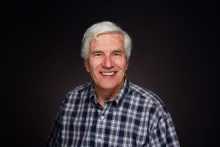
Steve Shafer was born and raised in Seattle. He graduated from Queen Anne High School in 1959 and later graduated from Ambassador College, Big Sandy, Texas in 1967, receiving a degree in Theology. He has been an ordained Elder of the Church of God for 34 years and has pastored congregations in Michigan and Washington State. He and his wife Evelyn have been married for over 48 years and have three children and ten grandchildren.
