
Steve Shafer
This transcript was generated by AI and may contain errors. It is provided to assist those who may not be able to listen to the message.
Well, today I want to ... I guess I'll meet Carl and Sandy and Mrs. Luca. We'll have to grid and bear it today because they heard this last week. But that's the way ... Mrs. Luca's used to hearing messages two, three, four times. But anyway, I want to continue our series of Bible studies on the calendar today in place of a sermon so we can kind of keep it caught up. I gave that last week down in Bellevue, and I kind of need to catch up here with that series so I can kind of wrap it up sometime by the feast or so. But I want to today primarily look at one key verse in the New Testament, which is a very, very interesting verse. And it's a verse that basically the Church of God have misunderstood. We misunderstood this for many years. In fact, most of the churches of God still don't understand this verse correctly. Back to only the United Church of God and the Church of the Great God, which is John Rittenbau, understand this verse correctly.
John Rittenbau understands it correctly because he had a friend who's now an elder in United who challenged him on this particular verse. And after Mr. Rittenbau looked into it, he proved that United's position on this particular verse is correct, so he changed his position. But other than that, I think all the other churches of God don't understand this verse correctly. But it's a very interesting verse to look at because actually when you understand all the ramifications of it, it actually does tie into the calendar because it shows what calendar the New Testament church was in all probability using back in the first century A.D.
Now, last time in Part 6 of this series on the calendar, we concluded by showing that the Hebrew calendar was being used by the Jews of the Old Testament. At the time the Old Testament was coming to a close, we showed how the books of Ezra, Nehemiah, and Zechariah, and Esther all used the present-day names. It's used by the Hebrew calendars and even tied in those names with the numbers of the month, their respective months.
So when you look at that, as we did last time at the end of that Bible study, there's no doubt whatsoever they were using the Hebrew calendar at the time the Old Testament came to a close. Time of Ezra and Nehemiah, and so on. But were they still using the Hebrew calendar at the time of the New Testament? And more specifically, when the Apostle John wrote his gospel, can you show from the gospel of John what calendar they were using?
Well, actually, we'll see in this next two Bible studies, we can show which calendar the New Testament church was using, or at least they were using at the time John wrote his gospel, which in all probability was written towards the end of the first century A.D. He wrote after Matthew, Mark, and Luke. All scholars agree to that, and most think he wrote probably somewhere towards the end of the first century A.D. But regardless of precisely when the gospel of John was written, is there any indication as to what calendar John was using? And then, just make sure it was using at that time when he wrote that gospel.
And indeed, there is. And primarily from two verses in the New Testament, actually in the gospel of John, both those verses are in John. But today I want to close the exam with just the first of those two verses. Scripture, again, was misunderstood and misapplied for many, many years. So today, in this Bible study, we're going to show how that Scripture should be understood and applied. So a title for my Bible study here this afternoon is The Calendar Part 7, John 737, 8th Day or 7th Day. So that's the Scripture we'll look at today as John 737. Very familiar Scripture to most of us. It's been in the church for many years because it is from this particular Scripture that we came up with the name for the final Holy Day in our calendar year.
The Holy Day that follows on the heels of the Feast of Tabernacles, which we call the Last Great Day. And we got that name from John 737 because we thought for many years that that's the day that this Scripture was referring to. Let's read it for ourselves to start off with. John 7 and we read verses 37 and 38. Again, very familiar Scriptures. John 737, on the last day, that great day of the Feast, Jesus stood and cried out, saying, If anyone thirst, let him come to me and drink.
He who believes in me, as the Scripture has said, out of his heart will flow rivers of living water. And again, as I can say, it's from this verse, especially from verse 37, that we derived the name Last Great Day, because here's called that Last Great Day of the Feast. The question is, is that referring to the last day of the Feast of Tabernacles, or is it referring to the eighth day Holy Day that follows the Feast of Tabernacles, as we've always took it previously?
Now, this day, actually, it's very interesting. Why did we come up with a name Last Great Day? Why didn't we derive a name for that Last Holy Day that follows the Feast of Tabernacles? Why didn't we pick a name for it from the Old Testament like we did all the other Holy Days? All the other feasts and Holy Days are very clearly named in the Old Testament, and there's also things that took place to associate meaning with that day as well. But why is it that we picked our name for this day from John 7, 37, rather than from the Old Testament?
Well, the reason is it's not really given a name in the Old Testament. It's simply called the Eighth Day. It's all it's called. There's no other name given to it.
It's kind of like you might say a Holy Day without a real name, at least no name in the Old Testament. It gives it real meaning or significance or understanding. And that is recognized by Jews themselves who observed that Holy Day. I have a book entitled The Tapestry of Jewish Time, a Scriptural Guide to Holidays. We would call it Holy Days, but they call it Holidays in the book. Holidays and Life Cycle Events by a rabbi, and it's a woman rabbi who received her credentials in 1988, but Rabbi Nina Beth Cardin, C-A-R-D-I-N. Her husband is also a rabbi. It's a very, very interesting book. In fact, I've given two or three sermons from information in that book, which I found very fascinating. But the day we call the Last Great Day, by the Jews themselves, they call it Shemoni Atseret, S-H-E-M-I-N-I-A-T-Z-E-R-E-T, which is simply the Hebrew words for Eighth Day solemn assembly, which is what's called in the Old Testament an eighth day, or an eighth day, unless there's to be a solemn assembly. So the Jews call it Semeni Atseret, or Eighth Day solemn assembly. It's translated into English. Now, the old King James says solemn assembly, and the new King James says sacred assembly, no other name is given to it, simply called in the Old Testament, simply called the Eighth Day. Rabbi Nina Beth Carden says this in regards to Shemoni Atseret, or in regards to the Eighth Day solemn assembly. She says, after the temple was destroyed, this is from page 90 of her book, Tapestry of Jewish Time, after the temple was destroyed, Semeni Atseret became a holiday, or a holy day, we would call it, without a cause, without a ritual. After the temple was destroyed, it became a holiday in search of a cause. This is what she writes in her book. In other words, the Jews themselves really don't know why they observe it, or what it means, because there isn't anything in the Old Testament to associate with it to really give it meaning. It's just called an eighth day, in which there was to be a sacred or solemn assembly, or Sabbath rest.
So the only thing they come up with is, well, it kind of ends one cycle on the calendar and begins a new cycle, but other than that, they really don't know what it means. Now, Rabbi Nina Beth Cardin also wrote this on page 88.
The last day or days of Sukkot, or Feast of Tabernacles, as we would call it, are really two additional holidays, because they add a ninth day sometimes.
Semani Atseret, or Simbaat, S-I-M-H-A-T, Torah. In Israel and many Reconstructionists and Reformed congregations in the Diaspora, Semani Atseret and Simbaat Torah are celebrated together on the eighth day. For others, Semani Atseret is the eighth day of the holiday, and Simbaat Torah is the ninth.
But the Torah tells us that immediately after Sukkot, or after the Feast of Tabernacles, on the eighth day you shall have a solemn assembly in Atseret. You shall not work at your occupations. Numbers 29, verse 35. And then she adds, this is all we know about this holiday or this holy day. That's all we know. That's all it says. Nothing else is given.
However, in addition to Numbers 29, 35, which I just quoted there, the eighth day is also mentioned in four additional scriptures. It's only mentioned five times in the entire Old Testament. Five scriptures. It's mentioned in, I said, November 29, 35. It's also mentioned Leviticus 23, verse 36. Leviticus 23, verse 39. Second Chronicles 7, 9. And Nehemiah 8, 18. So five places total is where it's mentioned, and five verses total. And in all five of those verses, it simply says, on the eighth day, you shall have a holy convocation. It is a solemn or sacred assembly. Or, some say it one over, says it's a Sabbath rest. And that's all it says. Nothing else is said about it or revealed in the Old Testament. So the Jews in themselves say it's a holy day in search of a cause, in search of meaning, in search of purpose.
Now, think about it, because in all the cases of all the other feasts and holy days, in the Old Testament, there is a name associated with it that gives it meaning, or this event that takes place on that day or during that feast that gives it meaning. Let's just review that just real quickly so you understand what I'm talking about here in the Old Testament. Passover. On the night of the Passover, the death angel passed over all the houses of the Israelites that had the blood of the slain Passover lamb on their doorposts. Obviously, that then spared their lives from that death angel. That gives that particular feast day tremendous meaning. Unleavened bread. During the days of unleavened bread, no leaven could be eaten, and no leaven could even be found in their houses or their homes because they had to leave Egypt in haste before the dough could rise.
And it was during the days of unleavened bread they fled out of Egypt with Pharaoh and his armies in hot pursuit after them seeking to destroy their lives and take their lives and return them to slavery. Obviously, that adds a lot of meaning to the days of unleavened bread, just from the Old Testament. Pentecost. On the day of Pentecost, it's traditionally understood that the Israelites were at the base of Mount Sinai to receive the Ten Commandments from God on the day of Pentecost.
Trumpets. On the day of Trumpets in the Old Testament, there was a new moon, because it always falls on a new moon. That gives Trumpets specific meaning, because the only holy day that falls on a new moon. And on the day of Trumpets, ram horns were blown, which would warn of impending danger, such as maybe an enemy that was approaching, or and ram's horns were also used to call together all the camp of Israel so they could move forward to whatever. It was the calling of the camp of Israel together. The day of atonement, of course, a lot of things are associated with the day of atonement in the Old Testament. Everyone had to fast, no food, no drink. And if they violated that, they were to be cut off from the house of Israel, it says. Also, it was only on once a year, on the day of atonement, the high priest could enter into the Holy of Holies behind the veil of the tabernacle or the temple. It was also on the day of atonement, but the Jubilee year began. See, all those events, all those things that took place on that day in the Old Testament give that day meaning a feast of tabernacles in the Old Testament. During the seven days of the feast of tabernacles, they had to dwell on booths, or they had to dwell on temporary dwellings, but only for seven days. It doesn't say they had to dwell on booths for eight days, they said they had to dwell on booths for seven days. We'll see that Scripture in a moment. But all those events and all those things that took place and the names associated with those feasts and holy days in the Old Testament, they all give each of those feasts and holy days meaning, but not so with the eighth day. There is nothing in the Old Testament to give any special meaning to the eighth day. The holy day which God commanded them to observe after the conclusion of the Feast of Tabernacles, which is why Rabbi Nina Beth Cardan calls it a holiday, or we would call it a holy day, in search of a cause, in search of purpose and meaning. They don't know why the observer. They just do it because it says to observe it. Now, that raises a question. Years ago in the World Wide Church of God, Mr. Armstrong, he came to give meaning to that day. Well, how did he derive meaning from that day if the Jews themselves can derive no meaning from it from the Old Testament? Well, he derived meaning from it from the New Testament. Now, the interesting thing about the eighth day is the only way you can really understand what it means is from the New Testament. You'll never understand what it means from the Old Testament. It's from the New Testament. If there's any holy day that's of New Testament holy day, it's the eighth day.
The eighth day, what we call the last great day, can only really be understood from the New Testament. In other words, in order to understand that eighth day, you have to accept Christ as your Savior as being the promised Messiah. And you have to accept the writings of the New Testament in order to understand the meaning of the eighth day, which is quite interesting, I think.
In the New Testament, all of God's annual fees and holy days take on, of course, added meaning. They reveal God's plan of salvation through Jesus Christ for all of mankind. And again, they've done certain events that took place on those days in the New Testament. They give much, much deeper meaning to tie it directly to God's plan of salvation through Christ. Passover. Christ died on the Passover day to become the real Passover lamb.
In Christ, it's through the New Covenant Passover with the disciples on that night of the Passover to symbolize His broken body and His shed blood. To symbolize how we come under His blood so our sins could then be passed over and forgiven. And so our lives could then be spared and saved so we could receive the gift of eternal life through Christ, having Christ's blood to cover our sins.
I'm Lev and Brad. In the New Testament we learn that Lev and Patrae is, you know, pride, vanity, sin.
Thinking too much highly of ourselves and so on.
And also shows us that we have to sin out of our lives and flee sin. And we have to flee the ways of the world, which are in hot pursuit after us. Like Pharaoh was in hot pursuit after Israel. Sin is in hot pursuit of us.
And the ways of the world they want to draw us back in and to make us slaves to sin, slaves to the ways of the world. And so on. Which are, of course, seeking to destroy us spiritually.
And then also from on Lev and Brad we understand in the New Testament that the only real way to put sin out of our lives is by putting Christ into our lives, by having the mind of Christ in us, by having Christ live His life in us. Symbolized by eating that unleavened bread during the days of unleavened bread.
And of course it was also during the days of unleavened bread in the New Testament that Christ was in the grave for three days and three nights. And it was during the days of unleavened bread that He was resurrected back to eternal life so He could become our living Savior.
And so He could also be the mediator of the New Covenant.
Pentecost. Of course, the day of Pentecost in New Testament, as we all know, was on that very day. He had to wait until that day. God didn't pour out His Spirit until that very day.
It was on the day of Pentecost that God poured out His Holy Spirit, made available to mankind.
So that adds tremendous meaning to the New Testament. And that's the only way then, it's only by God's Holy Spirit, that God's laws could be written in our minds and on our hearts, is where God wants His laws.
He doesn't want them on two tablets of stone. He wants them written into our minds and on our hearts.
And of course, that can only take place by and through God's Holy Spirit, which was given on the day of Pentecost.
Now, trumpets in the New Testament.
In the New Testament, the sounding of trumpets is associated, when you look it up, all the Scriptures were to use trumpets, associated with the return of Jesus Christ, to reign on the earth for a thousand years.
And it's also, you might say, a call to assemble all the saints, whether dead or alive.
To meet Christ when He returns.
Day of Atonement in the New Testament.
It's in the New Testament that the Day of Atonement is associated with Satan being bound and put away for one thousand years.
So true liberty, remember, the Day of Atonement, the Jubilee year, to perform liberty throughout the land, that was, began on the Day of Atonement.
Of course, when Satan is put away, that's when true liberty can be proclaimed throughout all the land, as it was on the Jubilee year. So the sins of the world can be atoned for and covered, and so all mankind can then have access to the Holy of Holies and to God's Tree of Life.
And of course, the New Testament already shows that Christ already has won victory over Satan and his demons, and that their plan is doomed to failure.
But David Atonement also still tells all of us that we still need to fast on that day. That's very important. Because we need to totally depend upon God and on the power of God to overcome Satan and the world we live in.
And it's only by the power of God and the power of God's Holy Spirit in us that we can overcome Satan, who is still trying to trip us up and get us to stumble, if he can.
Now, in the Feast of Tabernacles, the New Testament shows us that after Christ returns and after Satan is put away and bound, that Christ will then reign on the earth for 1,000 years with his saints.
After gathering all of his saints together at the return of Christ, and then he will set out at that time, once he's gathered all his saints together, and we begin the millennium, then God will set out to...
Christ will set out as King of Kings and Lord of Lords to gather in all the nations of the world to bring them in to understand God's truth.
Which is interesting because originally, the very first name that's associated with what we know, called the Feast of Tabernacles, at the beginning it was originally called the Feast of In-Gathering.
And that is going to take place when Christ returns. He's going to gather in his saints. He's going to gather in all the nations of the world once Christ establishes his kingship in Jerusalem.
And it's called the Feast of In-Gathering originally in Exodus 23, 16, and again in Exodus 34, 22.
But all those gathered in during the millennium are going to have to remember that they are still physical, that our physical bodies are only temporary bodies, and that we can only live so long in temporary dwellings or temporary bodies.
We have to fulfill God's plan and purpose in order to be given the gift of eternal life through Christ.
Now what about the last great day in the New Testament?
Here's the thing that's interesting. You look up eighth day in the Old Testament, you look up eighth day and you find five places where it's mentioned.
No events associated with it. Nothing to really give it meaning.
But if you look up eighth day, you won't even find it mentioned in the New Testament. There's no mission of the eighth day in the New Testament at all.
How then did Mr. Herbert W. Armstrong come to understand the meaning of the eighth day? Which he did come to understand it correctly.
But when you understand the roots, I'm going to talk about the next two Bible studies. You'll find it has much greater and deeper meaning than that, even.
But he basically came to understand it primarily from what is written in Revelation chapter 20, which tells us Satan is going to be bound for 1,000 years, as portrayed, as we know, by the Day of Atonement.
It then tells us in Revelation 20 that Christ is going to reign on the earth for 1,000 years with his first fruits, with his saints. When this calls that the better resurrection, those will be resurrected at Christ's return, and to be given the gift of eternal life then, that that's the better resurrection. They're going to reign with Christ for 1,000 years, and that's portrayed by the Feast of Tabernacles.
Then what happens next in Revelation 20? Well, then next the rest of the dead live again to appear before God and before God's great white throne, as it calls it there in Revelation 20. So they can be judged by what is written in the books of the Bible, and so they can then have the opportunity to have their names written in God's book of life, have their opportunity, once the books of the Bible have been opened to their understanding. All of that is kind of revealed in Revelation 20.
And Mr. Hobart W. Onksen then associated all those events with what we call the last great day, because that day follows the Feast of Tabernacles, follows right in the flow of events that are described there in Revelation 20.
But is there any place in the New Testament that really clearly tells us of events that actually took place on that eighth day, or that day we call the last great day? Is there any chapters that tell us some events that really took place on that day that really give us added, deeper meaning and significance to that day?
Now, I just want to mention, because some of you may have thought of this in the Old Testament, that while we do have one event there, we have Ezekiel 37 and the vision of the Valley of Dry Bones, when all these dead bones come back to life, and given the breath of life, and they're going to then have access to God's Spirit, that's true. That event does tie in with the eighth day, but there's nothing in that vision to tie that event to the eighth day in the Old Testament. It's just a vision of what's going to happen in the future.
So the Jews have a hard time trying to associate that with the eighth day. But if you understand Revelation 20, you then can tie Ezekiel 37 to the eighth day. But it's hard to do that without understanding the New Testament first.
But what about in the New Testament? Are there any events described in the New Testament that actually took place on the eighth day?
Well, indeed, there is.
There's actually more than a couple, two chapters of events that took place on the eighth day when we come to understand things. But the only way you can really come to understand that is by first properly understanding John 737. So let's read it again. John 737. On the last day, that great day of the feast, Jesus stood and cried out, saying, If anyone thirsts, let him come to me and drink.
He who believes in me out of his heart will flow rivers of living water.
Now it begins by saying, on that last day of the feast, well, what feasts are talking about? We can find out real quickly what feasts that's referring to by going back to John 7, verses 1 and 2.
After these things, Jesus walked in Galilee. For he did not want to walk in Judea because the Jews sought to kill him.
Now the Jews' Feast of Tabernacles was in hand. So this talking about, John 737 is talking about the last day of the Feast of Tabernacles.
What day would that be? How many days occurred during the Feast of Tabernacles? How many days was the Feast of Tabernacles observed?
Well, there are many scriptures that show that. And I'm going to turn them real quickly and just read them for you, because it's only about 6 or 7.
But it tells you in each of these verses how many days you have to observe the Feast of Tabernacles. And there's five places in Leviticus 23. In verse 34 it says, "...this fifteenth day of the seventh month shall be the Feast of Tabernacles for seven days." Dropping down to verse 39, "...you shall keep the feast," referring to the Feast of Tabernacles, "...of the Lord for seven days." Verse 40, matter part, "...and you shall be judged before the Lord your God for seven days." Verse 41, "...you shall keep it as a feast to the Lord for seven days." In the year. Verse 42, "...you shall dwell in booze for seven days." Not eight days, seven days it says.
So five places right there in Leviticus 23, it says, "...observe the Feast of Tabernacles for seven days." You can also alternative the number of 29, verse 12. "...on the fifteenth day of the seventh month, you shall have a holy convocation." "...you should do no customary work, and you shall keep a feast of the Lord." If you're referring to the Feast of Tabernacles that comes prior to that eighth day, "...you should keep that for seven days." Deuteronomy 16.13. You observe the Feast of Tabernacles seven days. Second Chronicles 7, verses 8 and 9.
At that time, Solomon kept the feast, referring again to the Feast of Tabernacles. He kept it seven days in all Israel with him, a very great assembly. And then verse 9, "...on the eighth day they held a sacred assembly, for they observed the dedication of the altar during the Feast of Tabernacles for seven days, and they observed the feast for seven days." And then he had his eighth day sacred or solemn assembly.
So again, it's seven days for the Feast of Tabernacles. One other verse, Nehemiah 8.18, "...which is also day by day, from the first day into the last day, he read from the book of the law," Nehemiah did, "...and they kept the feast," referring again to the Feast of Tabernacles, "...for seven days." So over and over again, it emphasizes the Feast of Tabernacles was to be observed for seven days. Which day then would be the last day of the Feast of Tabernacles? Well, it would be the seventh day.
Going back again to John 7, verses 1-2, it says, after these things, Jesus walked in Galilee, if we didn't want to walk in Judea because the Jews fought to kill him. And then it says, "...now the Jews' Feast of Tabernacles was at hand." Which raises an interesting question. Why did John call the Jews' Feast of Tabernacles? Why didn't you just call it God's Feast of Tabernacles? Well, there's basically three reasons you can come up with. One is because God only meant it for the Jews. We know that's not correct, because we have a prophecy in Zechariah 14 that says, if the whole world is going to come up to observe the Feast, if they don't, they're going to be compelled to do so. So it can't mean that.
Why then did God call the Jews' Feast of Tabernacles? Well, there's two other reasons. One, because it was the Jews who preserved its observance and who continued to observe it in the first century A.D., at the time of Christ, in the Oregon New Testament Church. They preserved it. They kept it. They kept preservation of it. In fact, it was also the Jews of the Sanhedrin who determined when it was to be observed and how it was going to be observed, which leads to the second, the second valid reason why it's called the Jews' Feast of Tabernacles. The Jews added certain additions to observing the Feast of Tabernacles that aren't really spelled out in the Old Testament.
So in that sense, it's the Jews' Feast of Tabernacles and that they added a number of traditions to its observant. There's nothing wrong with that. I mean, we have traditions that we have. We've incorporated into our observance of the Feast of Tabernacles. How many services we're going to have, when we're going to have services, you know, etc.
How the format for services. A lot of things we incorporate into our observance of the Feast of Tabernacles are traditions that we've just established and observing it. But here's what is significant in regards to the second reason, the second valid reason. John called it the Jews' Feast of Tabernacles. If you understand what the New Testament Church, not the Testament Church, but the Jews, the way the Jews observed it, excuse me, the way the traditions they incorporated it into the Feast of Tabernacles in the first century A.D., then you can understand better why it says what it does in John 7, 37.
Again, on that last day, that great day of the Feast, Jesus stood and cried out, saying, If anyone thirsts, let him come to me and drink. And out of his heart will flow rivers of living water. So John here says, and we need an old logic here, this has got to be the seventh and last day of the Feast of Tabernacles, but he says on that last day, that great day of the Feast.
So the question then becomes, why was it called that great day of the Feast? Why would the seventh day of the Feast of Tabernacles be called that great day of the Feast? Is there a reason for that that's tied into the way the Jews observed the Feast of Tabernacles in the first century A.D.? And why did Christ say at that point?
He said, If anyone thirsts, let him come to me and drink. And out of his heart will flow rivers of living water. Does that statement that Christ made there have anything to do with what the Jews incorporate into their observance of the Feast of Tabernacles, especially what they incorporate into their observance of the seventh day, and why they called it that great day of the Feast? I want to read what took place in the first century A.D. Let's see, make sure I've got my time here.
There's a book here I have that's been wrapped for a long time. It's called The Temple. It's Ministry and Services by Alfred Edersheim. And he describes what took place at the Feast of Tabernacles. Let's start here. On the day before the Feast of Tabernacles, the fourteenth of Tishri, the pilgrims had all arrived in Jerusalem. The booths are the roofs of the courtyards in the streets and squares, as well as on roads and gardens.
Within a Sabbath day's journey, you must have given the city and neighborhood an unusually picturesque appearance. When the early autumn evening set in, the blast of the priest's trumpets on the Temple Mount announced to Israel the advent of the Feast of Tabernacles. The ultra-burn offering was cleansed during the first night, for the first night watch. And the gates of the Temple were thrown open immediately after midnight.
While the morning sacrifice of being prepared, a priest, accompanied by a joyous procession with music, went down to the Pool of Siloam, where he drew water from a golden picture from the Pool of Siloam, and brought it back. Now, just to mention real quickly here, the Pool of Siloam, there were waters from springs outside the walls of Jerusalem, and during the reign of Hezekiah, he reigned right at the time Israel fell. He was the king of Judah, but he reigned right during the time Israel fell.
Israel had just been captured by Assyrians, and captured Samaria, the capital of Israel. And he wanted to... he knew that the Samaritans... I mean, the Samaritans... the Assyrians, excuse me... he knew the Assyrians were probably going to attack Jerusalem as well. So he wanted to divert the water from those springs into the inside the walls of the city. So they would have access to it in case of a siege, but he wanted to do it a way that the Assyrian army would not have access to that water on the outside. So he built a special tunnel. It's called Hezekiah's Tunnel.
It's about 1750 square feet long, which is like five football fields, a little bit over. And he went through solid rock, and he made this tunnel, and he diverted those springs into the... inside the walls of the city of Jerusalem, and he got them... he didn't know it was a way to be closed off to any army that laid siege to Jerusalem.
And he did that in order to protect Jerusalem from a siege. So they would have water, but the enemy outside would not. That's... that water emptied into, from those springs inside the wall. That was called the Pool of Siloam.
So you understand what that is. So what happened during the first century? And I'm just going to explain... rather than read all this, I think I'll just explain it to you, because it's easier. What they did on the first... every day at the Feast of Tabernacles, the priest would go out to the Pool of Siloam right inside the wall there, and he'd get a pitcher of water, fill it up, he'd bring it back into the courtyard, he'd go up to the altar of burnt offering, and they had two places in the altar of burnt offering where they could pour something in.
There was one place to pour in the wine or drink offering, the other place they poured in water from the Pool of Siloam. And so every day he would do that. Except on the seventh day. On the seventh day, that last day of the Feast of Tabernacles, the day they called the Great Day of the Feast, he would... the priest would go out there to the Pool of Siloam, fill up his pitcher of water, bring it back in, and pour it into the altar of burnt offering, and he'd do that seven times on the seventh day.
He did that seven times. And again, you can read all of that on pages 219 to 222 in the book, The Temple, and it's ministered by Alfred Edersheim. So you can think about it. Here they're doing this on the seventh day, and the priest is coming back, and he would time it so that just as they got back there to pour that water in there, they would sing a song from Psalm...
and let's see, I've got it marked here... from Psalm 118, verse 25. They sing actually Psalm 113 through Psalm 118 on every day in the Feast when you were pouring water in there during that time. But they would always get to the point they would culminate that song with Psalm 118, verse 25, as they were pouring that water from the pool of Siloam into the basin of the altar. When they said, Save now, I pray, O Lord, O Lord, I pray, send now prosperity. That's Psalm 118, verse 25. Save us now, God. Send to salvation. They were looking for salvation from the house of David.
They were looking for a Savior from the house of David. And when they poured that water, every day they were in the Feast, they would sing. They would conclude their song by singing, Save us now, O Lord, I pray. And think of it, they did that seven times on the seventh day. And think about it, Christ is right there, watching all this take place. And they're singing, Save now, I pray, O Lord, O Lord, pray now, send prosperity. But they sang Psalm 113 to Psalm 118.
There was this kind of conclusion here in Psalm 118, verse 25. But notice the verses before that. Well, they sang just prior to that, Psalm 118, verse 22. The stone which the builder has rejected has become the chief cornerstone. Well, I'm going to read verse 21 and 22. Verse 21, I will praise you, for you have answered me, and you have become my salvation. Well, the one who became their salvation was Jesus Christ. But then, verse 22, the stone which the builder has rejected has become the chief cornerstone.
That was Christ, of course. He was right there listening to that, them sing that, where they were pouring this water in the pool of Siloam. That seventh time, on the seventh day, and singing, O, save now, O Lord, I pray, main prosperity. And there was Christ right there hearing that. And now you can understand, at the end of the conclusion, when they sang that, Christ said, Look, if anyone thirst, come to me and drink.
I'm the one that has living water. I'm the one who can save you. I'm your Savior of the house of David. So, think of it. As they sang, on seven occasions, on that seventh day of the Feast of Tabernacles, they sang, O, work unto them now, salvation, O Lord. As they sang that, on their great day of the Feast, their true Savior was right there, among them, watching all this take place. And when they finished singing that, verse 18, Psalm 118, verse 25, he cried, Out, come to me and drink. I'm the one that can give you real living water.
So the true Savior of the house of David was right there, in the midst of them, and they didn't even know it. They didn't realize it. But all that took place on that seventh day, and that's why they called it the great day of the Feast. It was definitely the seventh day of the Feast of Tabernacles, and not the day that we called the last great day, or the Old Testament calls the eighth day. So as far as our study of John 7.37 is concerned, there could be no doubt whatsoever as to which day that was referring to.
It was referring to the seventh and last day of the Feast of Tabernacles, and not to the eighth day, Psalm assembly, or to what we have come to call the last great day. But that's the reason you understand that. All of a sudden, as you're going to see in the next Bible study, that's going to open your mind to tremendous understanding and tremendous depth of meaning to the events that took place on the eighth day, as recorded in the book of John. And we'll get to that next time.
We'll get to the next Bible study, which will be here. I'm going to do it here in place of a sermon on August 3rd. So I'll get the next part on August 3rd here in Cedar Woolley. So with that, we'll go ahead and have a clue to him, and then we'll have a little bit of a break before the memorial service.
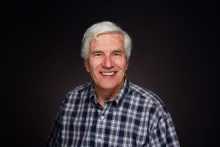
Steve Shafer was born and raised in Seattle. He graduated from Queen Anne High School in 1959 and later graduated from Ambassador College, Big Sandy, Texas in 1967, receiving a degree in Theology. He has been an ordained Elder of the Church of God for 34 years and has pastored congregations in Michigan and Washington State. He and his wife Evelyn have been married for over 48 years and have three children and ten grandchildren.
