

Steve Shafer
This transcript was generated by AI and may contain errors. It is provided to assist those who may not be able to listen to the message.
Well, today, actually, in place of a sermon, I want to continue my series of Bible studies that are given on the calendar. I kind of want to get this in place of a sermon because I think it's important that as many as possible get a chance to have an opportunity to hear it. The last time, on the last Bible study, I showed the John 737, which for many, many years, we associated with being the eighth day, holy day, after the Feast of Tabernacles, which we called the Last Great Day, based on what it says there in John 737.
But last time I showed that that is actually talking about the seventh and last day of the Feast of Tabernacles, and it's not referring to the eighth day, as we previously thought. And interesting, it still is most of the churches of God today still think. Last time, I also showed why the Jews at the time of Christ, and back in the first century A.D., I called the seventh and last day of the Feast of Tabernacles that Great Day of the Feast, as stated there in John 737.
And now that ties into Christ's statement in John 7, verse 37-38, about to come to me and drink, and out of his heart will flow rivers of living water. That all tied into what was taking place by the traditions of the Jews back in the first century A.D.
on the seventh day of the Feast of Tabernacles. I also showed last time that in every single place, you go look up the Feast of Tabernacles for it to be observed in the Old Testament, every single place without exceptions shall observe the Feast of Tabernacles for seven days. It's a seven-day Feast. It's never an eight-day Feast. It's always to be served for seven days, which makes the seventh day the last day of the Feast of Tabernacles as stated there in John 737, which then in turn makes the eighth day a separate and distinct feast day with a distinct and separate meaning from the Feast of Tabernacles.
The big question is, what is the real full meaning of the eighth day? And how can we know what its meaning is? That was also sold last time. The Jews call the eighth day. They actually call it a holy day or a holiday. They call it a holiday or a holiday or a holy day without a cause.
They call it that because they're looking in the Old Testament, they reject the New Testament, and they're looking in the Old Testament and there's nothing to associate with that day per se that's connected to it in Scripture that really gives it a definitive meaning. So they really don't know what it means.
They say it's a holy day without a cause, without meaning or understanding. Because there are only five Scriptures in the entirety of the Old Testament that refer to it, and none of those five passages record any event that took place on that particular day to give it real meaning. And the name, the only name given to it in the Old Testament in the entirety of the Bible is the eighth day. It's called the eighth day. That's it. So even that name doesn't give it a lot of meaning, like unleavened bread or trumpets or atonement and fasting and all that.
There's really no event, and the name itself is not really too descriptive to give it real distinct meaning. So it's kind of a holy day there. What does it mean? And how can you figure out what it means? From the Old Testament, you really can't.
Now we all know Ezekiel 37, Valley of the Dry Bones, but that event, if you just look at it from the perspective of the Old Testament and reject the New Testament, there's really nothing to connect the eighth day to that particular prophecy. But that's very undifferent. The eighth day is very different than any of the other feasts and holy days.
All the names of which or events that took place during those feasts or holy days give meaning to those days in the Old Testament. And of course, then you have added meaning from the New Testament. But today, in Part 8 of this series in, we will seek to discover the meaning of the eighth day as given in God's Word and is only really, really fully revealed in the New Testament.
I mean, it's quite interesting that the eighth day is a New Testament holy day, because the only way you can fully understand what it means is from the New Testament and by accepting Christ as your Savior and accepting the New Testament as the Word of God. So the title here of this Bible study or sermon, if you will, is the calendar as Part 8, the calendar Part 8, and then the full meaning of the eighth day as a subject, the full meaning of the eighth day.
Now first, let's look at what is revealed in the Old Testament regarding the eighth day. Let's look at the Old Testament first and see what it says.
We'll look at the eighth day in the Old Testament, the eighth day Holy Day, that is.
As a holy day, as I just mentioned, the eighth day is only mentioned five times in five scriptures.
I'm not going to turn there, but I'm going to quote them to you and give them to you. You can write them down and look them up yourself later. So I'll now quote what it says and all that it says in those five scriptures that mention the eighth day. First one is Leviticus 23 verse 36.
Leviticus 23 verse 36, where it says, on the eighth day you shall have a holy convocation.
It is a sacred assembly. That's it. That's all it says.
The second place is in that same chapter, a few verses later, Leviticus 23 verse 39, where it talks about observing the piece of tabernacle seven days. And then it adds, and on the eighth day a Sabbath rest. On the eighth day you shall have a Sabbath rest. That's all it says. That's verse 39 of Leviticus 23. Again, that's it. The third place it appears is Numbers 29 verse 35, where it says, on the eighth day you shall have a sacred assembly, New King James, and you shall have no customary work. Again, that's all it says there in Numbers 29 verse 35. The fourth place it appears is 2 Chronicles 7 verse 9, which is at the time Solomon finished building the temple. And 2 Chronicles 7 verse 9 says, at that time Solomon kept the feast, referring to the Feast of Tabernacles. At that time Solomon kept the feast for seven days. And then it adds, and on the eighth day they held a sacred assembly. And again, that's all it says in 2 Chronicles 7 and 9 in regards to the eighth day. And the fifth and final place it appears in the Old Testament is in Nehemiah 8 verse 18, which says, and they kept the feast, referring again to the Feast of Tabernacles, they kept the feast seven days, and on the eighth day there was a sacred assembly according to the prescribed manner. That is all it says about the eighth day and the entirety of the Old Testament. That's it. No events, no real descriptive meaning, other than saying it's an eighth day sacred assembly, a holy convocation, and a Sabbath rest. That's all it says. So how would you derive meaning from that little bit of scanning information?
So it's no wonder then the Jews call it a holy day or a holly, they call it a holy day, but I would call it a holiday, excuse me, no wonder the Jews call it a holiday or a holy day in search of a cause, in search of meaning, because it's hard to find meaning just from the Old Testament, because that's all it says, just those five scriptures. In the Old Testament, no real clear meaning is given to it. It's simply called the eighth day. Now, I want to mention something here, which is why, if you'll notice in our literature now, we're changing a little bit, unite what your God is, because only two groups understand this correctly, and that's the United Church of God and the Church of the Great God, which is John Reitenbaum. Understand John 737 correctly.
But that's the reason why now the United Church of God is calling it the eighth day. We no longer call it the last great day, because that's really, you can't use John 737 as a real descriptive meaning, because that's not referring to the eighth day. The only thing that's called in the Old, in the Bible, in all the Bible, is the eighth day. So if you notice now in our literature, we're referring to it in the United Church of God as the eighth day. In fact, if you've got your Festival Site Activity Announcement brochure, Festival Site Activity Announcement brochure, and the very cover says Festival Site Activity Announcements for the 2013 Feast of Tabernacles and Eighth Day. They're calling it now the eighth day, because that is the only name really given to it in the Bible. Now before proceeding, however, it's interesting to note what is recorded after Nehemiah 818, at the beginning of Nehemiah 9. Now we just noted that Nehemiah 818 is the fifth and final scripture that mentions the eighth day. Now let's turn there.
It is after some of the Jews had returned to Jerusalem, long after some of the Jews had returned to Jerusalem. Probably Nehemiah takes play written probably somewhere around 450 BC, just to give you a rough estimate. So it was actually long after the Jews had returned. In fact, by this time, they were already well on their way to Herod's Temple, was already rebuilt, the second temple.
Let's look at Nehemiah 8, verse 14. Nehemiah 8, verse 14, and they found written in the law, which the Lord had commanded by Moses, that the children of Israel should dwell on booze during the feast of the seventh month. Dropping down to verse 17. So the whole assembly of those who had returned from their captivity, and they hadn't done this for a long time, they made booze and sat under the booze. For since the days of Joshua, the son of Nun, until that day, the children of Israel had not done so, and there was very great gladness. And also, day by day, from the first day until the last day, he read from the book of the law of God, and they kept the feasts seven days, and on the eighth day there was a sacred assembly according to the described manner. Now, my question is, they're reading from the law to explain the meaning, they're keeping the fall feasts. We'll go back and see that in a moment.
Feasts in Holy Days. And they're reading, Moses and the other priests and Levites, they're reading from the law to give them meaning and understanding of what these feasts are.
I wonder what they read from the book of the law on the eighth day. They said they kept it. I wonder what they read. Because everything in the book of the law, the book of the law of Moses, the first five books of the Bible, pertain to the eighth day are found in three verses, in Leviticus 23, 36, Leviticus 23, 39, and in Numbers 29, 35. And all that says is that the eighth day is to be a sacred or solemn assembly and a Sabbath rest. That's all it says. So how do you use those verses then to give meaning to that day when they read from that on the eighth day? Now, I want to go back here because they begin by observing the day of Trump. Let's go back to Nehemiah 8, verse 1. All the people gathered together as one man in the open square that was in the front of the water gate because this is now Herod's temple had been rebuilt. They'd be built in temple. It was called referred to as Herod's temple because Herod later on remodeled it. It wasn't Herod's temple at that time. Herod wasn't born yet. That was perhaps several hundred years later, but this was the second temple that had been rebuilt probably about 450, 60 years before this. They started rebuilding it after the first one had been totally destroyed and raised by the Babylonians. So they came from the water gate and they told Ezra the scribe to bring the book of the law of Moses, which the Lord had commanded Israel. So Ezra the priest brought the law before the assembly of men and women and all who could hear with understanding on the first day of the seventh month or on the day of trumpets. So this is the holy day. It's the day of trumpets, the first of the fall, feasts, and holy days. And they're coming to read the book of the law to give understanding to what these days mean because they hadn't been kept for many, many years. Verse 3, Then he read from it on the open square that was in front of the water gate from morning until midday before the men and women and those who could understand. And the years of all the people were attended to the book of the law because, of course, there's quite a bit about the day of trumpets in there. Now, did Ezra and Nehemiah and the priests help the people then to understand the meaning of the day of trumpets? Laws drop down to verse 8. So they read distinctly from the book of the law of God, and they gave the sense and helped them to understand the reading. And Nehemiah, who was the governor and Ezra the priest and scribe and the Levite who taught the people, said to all the people, this day, referring to the day of trumpets that they were observing, this day is holy to the Lord your God, do not mourn nor weep, for all the people wept when they heard the words of the law. And they were probably weeping with gladness because it's been so long since they'd heard it. And then he said to them, verse 10, Go your way and eat the fat, and drink the sweet, and send portion to those to whom nothing is prepared, for this day is holy to our Lord, do not sorrow, for the joy of the Lord is your strength. So in other words, the point is here, they did help them understand the meaning, as they were reading from the book of the law. They helped them understand what the meaning of the day of trumpets was. Now, what understanding did they give the people from the book of the law in regards to the eighth day?
Well, they would not have been able to give them very much understanding because there's not much said. There's no real understanding of the eighth day given in the book of the law, which is probably why they stayed on and did what they did next.
I'm getting a little bit of speculation now, but this is interesting to look at.
Because what happened just after that? The eighth day of the Feast of Tabernacles, the Feast of Tabernacles, the first day is on the fifteenth day of the seventh month. So the eighth day would be the twenty-second day of the seventh month. Now, note what they did on the twenty-fourth day, Nehemiah 9, verse 1. Still all going home after the eighth day. They stayed on.
And look what they did. Now, on the twenty-fourth day of this month, the children of Israel were assembled with fasting, and they were in sand cloth with dust on their heads. Then those of Israelite lineage separated themselves from all foreigners, and they stood and confessed their sins and iniquities of their fathers. So they obviously were very glad to finally understand, boy, we have neglected God's laws. We've neglected God's holy days for all these years, and they were showing great repentance before God. But they also may have been fasting for another reason. I'm just in speculation now. I wonder if they might have been fasting because they kept the eighth day, and only in the book of the law, there's only three scriptures. They don't say much. And they were just wondering what the meaning of Trumpets and probably atonement as well. And now they're saying, okay, in the Feast of Tabernacles, but what about the eighth day?
I wonder what that means. Why do we observe that day? Why is that day a holy day? And maybe, in my mind, maybe they were fasting also in addition to repentance and having a contrite heart, depending before God. Maybe they were also seeking an understanding of what that day meant. I only say that for one reason, because the next remainder of this chapter, almost, gives a very long... the Levites, they stood out there, and they actually, what they're doing, they're giving a prayer to God. And it's very interesting to look at the very beginning of that prayer, because the beginning of that prayer was that prayer is obviously inspired by God's Spirit. Even though I'm sure they would not have realized it, it gives a little bit of a hint as to what that eighth day means, even though I'm sure they didn't pick up on it at the time. Let's begin reading prayer. Let's go on to verse 3, Nehemiah 9, verse 3.
And they stood up in their place, and they read from the book of the law of the Lord their God. This is, again, after the 24th day, and they were fasting. And they read from the book of the law, for one fourth of the day, and for another fourth they confessed and worshiped the Lord their God. Now, they're deep repentance. And then, just mention these different men, and these different Levites here in verse 4. And they cried out with a loud voice, the Lord their God. And then the Levites, and mentioned some more of them, said this. And then the prayer begins in verse 5.
They said, Stand up and bless the Lord your God, forever and ever.
Blessed be your glorious name. This is now actually a prayer, a public prayer that's being expressed here by these Levites. Bless be your glorious name, which exult above all blessing and praise. You alone are the eternal. You made the heavens and the heaven of heavens with all their hosts. You made the earth and everything on it. That would be the earth. That would include everyone on it, including all human life, millions of whom had already died and they were in their graves. And going on, you also made the seas and all that is in them, including thousands of people who have gone down in ships at sea, who are buried at sea, whose lives have been lost at sea or buried at sea. What did God then move the priests and the Levites to say next in this prayer to God? And you preserve them all. Wow!
I wonder how that came out. It's talking about all life on earth and all life in the seas and this prayer comes out and says, you preserve them all. You preserve everything. Everything is preserved by God, including the thousands who died at sea and went down in ships, including all who died on the earth. You preserve them all. Now, I'm sure they did not realize it, that that is by our statement given here in this prayer, while they're fasting and repenting and seeking God's understanding. That actually gives the bottom line meaning of the eighth day, doesn't it? All life is sacred to God. It was a sacred assembly and God preserves them all. I'm sure they didn't connect that to there, but it's interesting that that was part of the prayer, the beginning of that prayer that came out as they were fasting and seeking understanding. Two days after, they observed the eighth day because we know, of course, that God desires all men to be saved and come to the knowledge of the truth, 1 Timothy 2.4. Now, what else does the Old Testament say? I've been calling it an eighth-day sacred assembly in the New King James. What else does the Old Testament say occurred on the eighth day? It's interesting to look at several things that occurred.
In addition to being an eighth-day sacred assembly following the Feast of Tabernacles, there were three additional major things that were designated to occur on the eighth day, which is interesting to look at because I believe they all tie in to the meaning of the eighth day and give added meaning and depth of meaning to it just from the Old Testament. For brevity's sake, I will just tell you what they were. I'm not going to turn there. A, number one. All male children of Israel were to be circumcised on the eighth day. Now, we're all aware of that. That took place on the eighth day. All the male children were to be circumcised. In the New Testament, circumcision must be of the heart and of the mind. In other words, it must lead to repentance and conversion.
That's what's going to happen on the eighth day. Mankind is going to have to have their hearts circumcised to where their minds can be yielded to God so they can come to repentance and conversion.
Second thing that occurred in the Old Testament on the eighth day.
Animals that were to be offered to God, such as a bull, a sheep, or a goat, were to be with its mothers. With its mother, they were born. They'd be with his mother for seven days after they were born. And then on the eighth day, they could be given to God, Exodus 22, verse 30, or they could be accepted as an offering to God on the eighth day.
Leviticus 22, verse 27. Now think about that. On the eighth millennial day, all of mankind will have to have the opportunity, I should say, to dedicate or to give their lives to God and be accepted as a living sacrifice to God. So again, that just little thing that happened on the eighth day in the Old Testament ties into the meaning of the eighth day in the New Testament.
Third thing that occurred on the eighth day, the major thing that occurred on the eighth day in the Old Testament was any person who became unclean because of an unclean discharge or because of a disease such as leprosy, they had to go through a seven-day cleansing period before they could be declared to be clean on the eighth day. I'll give you several scriptures to point that out. I'll just give them to you. Leviticus 14, verse 2, and verse 23. Leviticus 15, verse 2, and verses 13 and 14 of Leviticus 15. Leviticus 15, verse 19, and verses 28 to 29. Those all point that out.
So on the eighth millennial day, you think about it, take that over to what it means we understand the thing we have today. On the eighth millennial day, all the mankind will have the opportunity to be declared to be, they all can be declared to be clean before God through the sacrifice of Christ and by partaking of the new covenant Passover. So again, all those things that I just mentioned here are associated with the eighth day in the Old Testament. Let's just review them quickly.
There's meals were circumcised on the eighth day.
Animals were offered and dedicated to God on the eighth day.
Those who were unclean could be cleansed, declared cleansed on the eighth day.
And they gathered together as a sacred assembly on the eighth day following the seventh day of the piece of tabernacles. What about the New Testament? What about the eighth day in the New Testament? Now here's the interesting thing. It's not even mentioned by name.
Look up eighth day, you won't find it in the New Testament.
But what does the New Testament say in regards to the eighth day?
Does the New Testament record any events that occurred on the eighth day that can give it meaning and understanding? Indeed, it does, is what I'll see. The New Testament is where you have to go to get the full meaning of the eighth day because there are some tremendous events that took place on the eighth day. But you'll miss it. You'll never understand it unless you first understand John 7.37 correctly. You'll miss it. Let's begin first with John 7.37, which we now know is referring to the seventh and last day of the piece of tabernacles. John 7, verse 37, on the last day, that great day of the feast, that last and seventh day of the Feast of Tabernacles, Jesus stood and cried out, saying, If anyone thirst, let him come to me and drink. He who believes in me, as the Scripture has said, out of his heart will flow rivers of living water. Now you think about that. There's going to be a seventh millennial day, isn't there? It's going to be a millennial day of rest when Christ is going to reign on the earth and bring peace on the earth for a thousand years. What Christ says here on the seventh day also applies to the seventh millennial day when Christ will reign on the earth for one thousand years, as we're told in Revelation 20, verse 4. When all who thirst spiritually will be able to come to Christ and receive the words which can lead to eternal life and can receive God's Holy Spirit, so out of their hearts sin can flow rivers of living water. Because it's God's Spirit that provides that. In fact, that's what he was referring to. Mr. Tephesus here in verse 39, but he spoke concerning the Spirit, whom those believing in Him would receive, for the Holy Spirit had not yet been given at that particular time. So all who believe in Him and who are baptized during the millennium, during the seventh millennial day, if you will, will receive the Holy Spirit once they repent and are baptized. Let's now look at what happened next on this seventh and last day at the Feast of Tabernacles as recorded here in John 7.
I'm not just going to review it a little bit here. You can go on and read the rest of it yourself, but I'll just review it. First, many said, this is the prophet, verse 40. This is all taking place on this seventh day. Others argued over who the... Others said, this is the Christ, verse 41. Others argued over who the Messiah would descend from, verse 42.
And then verse 43 says, so there was a division among the people because of Him, because of Christ and what He was saying, what He was teaching on this seventh and last day of the Feast of Tabernacles.
Which division involved Roman officers, involved the chief priests, and the Pharisees. And it tells us in verse 45 of chapter 7. In this scenario, on this afternoon of the seventh and last day of the Feast of Tabernacles, carries on to the end of chapter 7. Now, this is very interesting. Finally, at the end of the seventh and last day of the Feast of Tabernacles, what did everyone do? Let's read what it says, verse 53. And everyone went to his own house. Now stop for a moment. Think about everyone went to his own house. How many days during the Feast of Tabernacles did they have to live in booze? You shall dwell in booze for seven days. Leviticus 23 verse 42. Seven days. Didn't say they had to dwell in booze eight days. They had to dwell in booze for seven days. You should keep the feast for seven days. Leviticus 23 41. And you should dwell in booze for seven days. Leviticus 23 verse 42. Seven days, not eight days. At the end of the seventh day, according to instructions of Leviticus 23, according to the book of the law, they only had to dwell in booze for seven days.
At the end of the seventh day, they no longer had to dwell in booze. At the end of the seventh day, they could go to their own home, which is precisely what they did here at the end of the seventh day as recorded in John 7.53. They all went to their own home.
Where did Jesus go? John 8 verse 1. But Jesus went to the Mount of Olives.
Now, why did he go to the Mount of Olives? Well, he always wanted to be by himself, didn't he? He wanted to pray. He wanted to meditate. He wanted to be alone with his father and communicate with his father with prayer and medication. Maybe even thinking about what's he going to do on the next day, which is going to be the eighth day, a holy day, in a sacred assembly. What happened? Now, think about this. Usually at the end of the eighth day, what do people do? How? They all go home.
What do people do after the end of the seventh day here?
At the beginning of the eighth day, what did everyone do and why did they do it? Notice what it says. John 8 verse 2. But now in the morning, after Christ had been up on the Mount of Olives praying and meditating, the next morning he came again into the temple, and all the people came back to the temple. They all came to him, and he sat down and he taught them. Well, why did he do that? Why did they all come back to the temple? And why did Christ then sit down and teach them? Because it was the eighth day. It's a holy day. They wouldn't come back to the temple. Not all the people. They all came back because it's a holy day, and they're observing the eighth day, holy day. Now, to give the eighth day meaning and purpose, I think Christ then taught them. That's why he taught them, to give that eighth day meaning and purpose, which is for the most part missing from the Old Testament. Now, the very thing that's very, very interesting, as we'll see now for the rest of the sermon or Bible study, the events which are now recorded throughout chapters 8 and 9 and all the way up to John 10 21, if you look at them carefully and you pray about and think about it, you'll see that all these events from John 8 verse 2 now, all the way up, including John 10 21, they all take place on the same day, which we now can understand is the eighth day.
All these events take place on the eighth day, and they all add tremendous meaning to what the eighth day portrays in God's plan of salvation. Before we do that, though, let's first go to Revelation 20.
Turn to Revelation 20 verse 4. I saw thrones and they sat on them and judgment was committed to them. Then I saw the souls of those who had been beheaded for their witness to Jesus and for the word of God and who had not worshipped the beast or the image, did not receive his mark in the foreheads or hands. And they lived and reigned with Christ for a thousand years, but the rest of dead did not live again till a thousand years were finished. And of course, what we read in verse 4 was referring to the first resurrection. Blessed and holy is he who has part in the first resurrection, verse 6, over such the second death has no power, but they shall be priests of God and Christ shall reign with him for a thousand years. Then you go on read here, Satan is then loosed for a short while, and then he's put out a commission for good. And what happens after that, after Satan is put out a commission for good? Revelation 20 verse 11. Then I saw a great white throne, and him who sat on it from whose face the earth and the heaven had fled away, and there was found no place for them. And I saw the dead, small and great, standing before God, and the books were opened. And another book was opened, which is the book of life. And the dead were judged according to their works by the things which were written in the books. The sea gave up the dead who were in it.
Death and Hades delivered up the dead who were in them, and they were judged each at one, according to his works. So the question then comes up. This is talking about the second resurrection, as we know.
How will these in the second resurrection, who are going to stand before God's great white throne, how will they be judged? Will they be condemned? Or will they be told to go and sin no more?
What was the first thing that happened in John 8 on the eighth day? And what was the first lesson Christ taught on that day? Let's go back now to John chapter 8. John chapter 8 verse 2, early in the morning. It's early the next morning now, since early the morning on the eighth day.
Early in the morning, he came again into the temple, and all the people came to him, and he sat down and taught them. Then the scribes and Pharisees brought to him a woman who was caught in adultery. And when they had said her in the midst, they said to him, teacher, this woman was caught in adultery. She was caught in the very act. You have to wonder how they did that.
But you stop and think about it now. Think about the lesson how this applies to the eighth day.
See, everyone who is in that second resurrection, who will stand before God's great white throne to be judged, will be in the same boat as this woman. They will all realize that all of their past sins that they've covered up, that maybe nobody knows about but them, don't know that all their past sins are known by God. There can be no more cover-ups.
They will then all realize that, in essence, they have all been caught in the very act because all their sins are known by God.
How will they then be judged? They can be judged by their past sins.
That's condemned in the law of Moses, as the Pharisees wanted to do with this woman.
How will Christ judge them? We don't have to guess. Christ will judge them as He judged this woman, right here on the eighth day. John 8, verse 5. Now Moses in the law, they said, the Pharisees, they commanded us that such a beestone. Hey, the book of the law says if you're caught in adultery, you should be stoned. What do you say? They asked Christ.
This they said, testing Him, that they might have something of which to accuse Him, but Jesus just duped down and wrote on the ground with His finger, as though He did not hear. So when they continued asking Him, He raised Himself up and He said to them, He was without sin. Let Him throw the first stone at her.
Let Him throw the first stone.
And again He stooped on the ground and wrote, verse 8.
Now we don't know what He wrote. Whatever it was, though, whatever He wrote, it condemned all of them who were there that they all deserved to be stoned. They all deserved death. They all sinned. They all had things they were covering up.
Whatever He wrote, He exposed that to all of them.
And so then what happened? Then those who heard it, verse 9, being convicted by their conscience, by what He wrote on the ground, they went out one by one, beginning with the oldest, even to the last.
And Jesus was left alone with the woman standing in the mist.
And when Jesus had raised himself up and saw that no one but her, but the woman, He said to her, Woman, where are those accusers of yours? Has no one condemned you?
And she said, No one, Lord.
And so Jesus said to her, Neither do I condemn you, Go and sin no more.
And that is how Christ will judge the dead, small and great, where resurrectors stand before God's great white throne, beginning of the eighth day.
He will say, Neither do I condemn you, but go and sin no more.
Now think about it. What have all these people been resurrected?
Will there be any in this resurrection, this second resurrection, who will want to condemn others?
Oh, yeah, you bet there will. Just think about it. What if you are resurrected, and you notice somebody standing next to you, say, I don't know who that person is, and you know that that was somebody who terribly wronged you or terribly wronged someone you loved.
You would want to be like these Pharisees, wouldn't you? Say, Hey, look what she did. You know what she did to me? You know what she did to my children? Or he did to my children? He should be condemned.
That's what the Pharisees wanted to do.
Would you not want them to be condemned, even the Pharisees wanted to condemn this woman?
You know, only one problem, though, with that. Everyone in this resurrection have basically already condemned themselves by their own sins.
They're all in the same boat. They all deserve to be condemned. They all deserve death.
They're all in the same boat.
I'm going to stop and think about that. It really doesn't matter what others think or if others condemn you. What matters is Christ's judgment.
And on the eighth day, Christ will say, neither do I condemn you, but go and sin no more.
Even as he did on the eighth day for this woman, caught in the very act of adultery.
Now, on that eighth day, that eighth millennial day, if you will, at the time of the second resurrection, will Christ then become the light of the world?
To help the whole world define the light of life.
So what goes on here? Verse 12. Again, this is on the eighth day. John 8, verse 12.
Then Jesus spoke to them again and saying, and he's teaching them on this day, he says, I am the light of the world. He is going to become the light of the world on that eighth day as well for all those who are resurrected.
He who follows me shall not walk in darkness, but have the light of life.
As Paul wrote to Timothy, God desires all men to be saved and come to the knowledge of the truth, 1 Timothy 2.14. And on the eighth day, will he then be given the opportunity to know the truth? Are they going to have that opportunity to know the truth? I'm going to make them a resurrection on the second resurrection. What did Christ himself teach them in the temple here on this eighth day? John 8, verse 31. Then Jesus said to those Jews who believed in him, if you abide in my word, you are my disciples indeed. You can be my true disciples. If you abide in my word, what I say, and you shall know the truth, the truth shall make you free.
That's what's going to happen on the eighth day, all those resurrected. They're going to come to know the truth. If they abide by it, it will become free. Of course, by this time, Satan has been put away. I'm talking about the future eighth day fulfillment. They'll no longer be deceived by Satan. They're going to be free of Satan's deception, but they will still have to apply and abide in the word of Jesus Christ what he teaches them to be his disciples and to come to fully know the truth so they can truly be made to be free. That is, so they can be on the road to be free from the penalty of sin and from the death penalty. Now, what else do Christ teach here that everyone will have to learn on the eighth day? John 8, verse 34. And Jesus answered them, said, Most assuredly say to you, Whoever commits sins the slave of sin. They're going to have to learn that, aren't they? They're going to have to learn. If you follow your own way and you ignore God's laws, you're going to become a slave to sin. And a slave does not abide in the house forever.
If you want to be in God's family and God's kingdom forever, and this is your last chance, then you're going to have to put away sin. Because a slave does not abide in the house forever, but a son abides forever. Therefore, if the son makes you free, you should be free indeed. So they're going to have to learn how to allow Christ to live in their lives so they will no longer be slaves of sin, even as all of us have to learn today.
Then, after confronting the Pharisees again, as recorded in verses 39 through 57 here in John 8, Christ said this, John 8 verse 58, most assuredly I say to you before Abraham was I am.
Then they took up stones to throw at him.
Again, this all takes place in the morning on the eighth day.
So it's still the eighth day. But then he took up stones to throw at him.
But Jesus hid himself and he went out of the temple, going through the midst of them, and so passed by.
So he hid himself and he went out of the temple.
So he was in the temple all this time. That is, he wasn't in the temple proper. He was in the outer courtyard of the temple, outer compound, the temple compound in the outer courtyard. But he hid himself and he went out of the temple. He'd gone into the temple, as he read earlier. Now he comes out of the temple. It's all in the eighth day. So he's been in the temple, teaching him now he leads the temple. So here on the eighth day, he now went out of the temple. And all this time on this eighth day, Christ was teaching him everything recorded here in John chapter 8 within the confines of the temple compound in that outer courtyard.
Now on the same eighth day, he then leaves the temple, it says here, in verse 59.
He as he went out of the temple on this eighth day, what's he encountered? What does he see? John 9 verse 1. Jesus passed by when he was, he's left the temple courtyard, the temple proper. He saw a man who was blind from birth.
Whoa! Interesting that this takes place on the eighth day. I think how that applies to the meaning of the eighth day.
All the dead in the second resurrection, all the dead, small and great, who will be resurrected from the eighth day to stand before God's great white throne, all of them were spiritually blind from birth. They were all born blind, spiritually speaking, as all of us. We were all born blind, spiritually, until God and Raxley anointed our eyes and opened our minds. Whose fault was that? Was that our parents' fault? Was it something our grandparents did cause that?
We were born blind of some sin of the past by our parents or grandparents, or was it all to demonstrate the power and the miraculous works of God? John 9 verse 2. And his disciples asked him, saying, Rabbi, who sinned, this man whose parents that he was born blind? And Jesus answered, neither this man nor his parents sinned, but that the works of God should be revealed in him.
This is all done to reveal the tremendous and miraculous works of God are going to be revealed, works of God that will startle the entire world, because billions will be resurrected back to physical life to have the blinders removed from their eyes, so they can now know the truth and so the truth can make them free, free from the penalty of sin. Now, the remainder of this entire chapter continues talking about this, the events surrounding this blind man receiving his sight. In fact, it goes all the way up to John 10 verse 21, it's still talking about this blind man receiving his sight. This man who'd been, he'd been born blind, he's blind from birth, never seen, and all of a sudden his eyes are opened. They couldn't understand. The Pharisees, they argue about it, there must be some demon did it or something, they, you know, they argue about this all the way through chapter 9, all the way up to chapter 10 verse 21. It's all on the same day, all these events are taking place on the eighth day, and from here on out, they're talking about this man who was born blind from birth. So, the main to this entire chapter, they continue to talk about events surrounding this blind man receiving his sight and questions posed by the Jews and Pharisees. But before moving on, let's note one very interesting verse here, and I'll bring out this a little more later, but John 9 verse, oh, verse 14, let's refer to verse 13. John 9, 13, they brought him who formerly was blind to the Pharisees. Now, the notice is in verse 14, now it was the Sabbath when Jesus made the clay and opened this blind man's eyes. Well, of course, it was the eighth day. That's a holy day, it's a Sabbath day. But it says here, it was a Sabbath. We all know the eighth day is an annual holy day Sabbath.
Is that why this verse then says what it does? Or could it mean that this eighth day was also a weekly Sabbath? Because we'll see, in all probability, this particular eighth day was also probably a weekly Sabbath. As we know, the eighth day can often occur on a weekly Sabbath.
We'll see in the next Bible study that appears to be the case when we consider all the factors and we look at all these things in regards to how they could tie into the calendar and calendar issues.
At the end of John 9, the blind man who had been healed was confronted by the Pharisees who then cast him out. John 9, verse 35. Jesus heard that they had cast him out, and when he found him, he's the blind man, he said to him, do you believe in the Son of God? Now think about this, think about those resurrection, the second resurrection. They're going to have to come to believe in the Son of God. They're going to have to come to believe that Jesus Christ was the Messiah. He said, do you believe in the Son of God? And he answered, well, who is he, Lord, then I believe in him. You know, some people in the second resurrection may ask, well, who is he? And Jesus said to them, you have both seen him, and is he, it is he who is talking to you. Now Christ is going to be reigning on the earth after the millennium and into the eighth day, and people are going to be able to see Jesus Christ. They're going to be able to hear him. They're going to see their Messiah personally, even as this man did here. You have both seen him, and it is he who is talking with you. Verse 37. Then he said, Lord, verse 38, I believe, and he worshipped him. And I believe so also be for the vast majority of those who are resurrected in the eighth day. Most will come to believe and will come to properly worship Jesus Christ as the Messiah. For what judgment will Christ appear to everyone on the eighth day?
John 9, verse 39. And Jesus said, For judgment I have come into the world, that those who do not see may see, and that those who see may be made blind.
So Christ is going to appear on the eighth day, so everyone who knows that they have been blinded for those who do not see may see. In other words, true repentance and seeing themselves for who they really are and what they really are will be required in order for their minds to be open. It's going to require repentance, attitude, and a humble and a contrite heart. And then the latter part it says, And that those who see may be made blind. What did Christ mean by that?
He meant that those who do not have a repentant attitude and those who still think they know everything and who still hold to their own righteousness are going to remain blinded, just like people are today. They're going to hold to their own righteousness and have a judgmental attitude. They're not going to have their minds open to understand. If they retain a self-righteous judgmental attitude like the Pharisees, they will remain blinded to the truth. That's what Christ was saying. Verse 40. Then some of the Pharisees who were with them heard these words. They said to them, Are we blind also? And then she said them, verse 41. A difficult verse to understand, but very interesting verse. Verse 41. Jesus said to them, If you were blind, you would have no sin. That is, if you realize how blind you had been, you would have repented, and your sin would have been forgiven.
Thus you would no longer have any sin.
You would no longer be under the death penalty. But now you say, We see, therefore your sin remains. In other words, you still think you know everything. You're still holding to your own understanding. And as long as you think you see, and you think you know everything, and you're holding your own understanding, you're never going to come to real repentance.
You've not yet developed a contract or a pen and attitude, therefore your sin is going to remain.
Because you've got to repent. You've got to come to see who you are, what you are, understand with with your heart. So any day people will have to come to see that they were wrong and what they believed. They'll have to get to the place where they no longer hold to their own understanding.
And they'll have to come to true repentance. Now, the events surrounding the healing of this blind man continue on into chapter 10, all the way up through John 10, verse 21.
Will Christ be the only door to eternal life on the eighth day?
I'm going to go a little bit over time here, but I want to get this in because it's very, very fascinating and very interesting. John 10, verse 1. Most assuredly I say to you, He does not enter the sheepfold by the door, but climbs up some other way. The same is a thief and a robber.
Who is the door? Verse 7. Jesus said to them again, most assuredly I say to you, I am the door of the sheep. All whoever came before me, as they're going to have to understand in their resurrection, all those who taught you before who Christ was, they didn't teach the real Jesus Christ. All who came before me are thieves and robbers, but the sheep did not really hear them, not the true sheep. The true sheep realized that they were really false prophets, teaching a false message. He said, I am the door. Verse 8, verse 9. If anyone enters by me, he will be saved and will go in and find pasture. You know, you think about this when Christ said, I am the door. I just want to stop here for a moment. I want to take a little time here. I think it's very, very inspiring to understand. This really goes all the way back to Genesis 2 in the Garden of Eden. Why did God call the garden that He planted? You know, when He planted that garden of Eden, there was no life until He placed the man in the Garden of Eden. Why? When God planted that garden, why did He call it Eden? Where did that name come from? You know, in the Bible, words have meaning. The ancient Hebrew word for Eden is spelled with three letters, A-N, Dalit, and Nun, three Hebrew letters. A-N was drawn to picture a human eyeball, a human eye. It was drawn very similar to our capital letter O. In fact, it's very interesting, many of our English letters are derived from ancient Hebrew. But the letter A-N, A-Y-I-N, was drawn very similar to our letter O, and it pictured the human eye, and it therefore symbolized to see. It had a picture meaning of to see. The second letter in Eden is Dalit, D-A-L-E-T.
It was drawn to picture a rod with a curtain hanging from it. It's drawn very similar to our capital letter D. You take the letter D, and you take the vertical part, and you just turn it up like this, with the bottom part hanging down. It was like a rod with a curtain. As such, it pictured a doorway or a door. It symbolized a door or a doorway. So, A-N, Dalit meant to see a door or to see a doorway. Noon, the third letter in Eden, letter Noon, was drawn very similar to our capital letter N. If you take the capital letter N, you take this side of the N, you pull it down, take this side of the N, you pull it up, you've got a little zigzag line. That was drawn to symbolize a fish darting through water. As such, it symbolized life. So, what are those two letters? Picture. To see the door to life. Now, it goes further. The last two letters, Dalit, Noon, they are a separate word that meant by themselves. Dalit, Noon is the word Dan in Hebrew, and the Hebrew word Dalit, Noon, or Dan meant judge. That's the Hebrew word for judge. So, it also means, now, to see the door to life, it also means to see the judge. Who is the judge, and who is the door to life? Jesus Christ is the judge, and Jesus Christ is the door to life, as we just read here in John 10. I am the door. I am the door to eternal life. And Christ was their judge.
And as their judge, he's going to say, I neither do I condemn you, go and sin no more.
So, on the eighth day, the entire world will be also be the Garden of Eden. That's interesting. The whole world is going to be a Garden of Eden. In fact, you can go back. I'll just give you a Scripture reference. Ezekiel 36, verses 33 to 36 says that the whole world will be a Garden of Eden. Ezekiel 36, verses 33 to 36. And all who are resurrected on that eighth day will come to see the judge and will come to see the door to eternal life. They will come to see Jesus Christ, who gave his life for the sheep, as it says in verse 11. I am the good shepherd, and the good shepherd gives his life for the sheep. Notice especially what is recorded here in verse 16, which especially applies to the eighth day. Verse 16, and we try to understand this a day, but it really applies to the eighth day. I have other sheep which are not of this fold.
Them also I must bring, and they will hear my voice, and there will be one flock and one shepherd. That's not going to happen to the people in the world today until they're resurrected in that eighth day, that second resurrection. That's going to happen on the eighth day. All those who did not hear the true voice of Jesus Christ, who did not hear or understand the true gospel of the kingdom of God, will then hear Christ's voice, and they will be brought into the one true church of God.
Then there will finally be one flock and one shepherd, the shepherd being Jesus Christ.
So on the eighth day there will be no more divisions, no more different denominations.
There will only be one shepherd and only one flock.
In conclusion, then, the events of John 8, 1 through John 10, 21, all occurred on the eighth day. In fact, if you just recall the end of John last... just look at John 10, verse 19, 21 to show you. I'm still talking about this blind man here. All this still occurs on the eighth day up to John 10, verse 21. Therefore, there was a division again among the Jews because of all these things that Christ was teaching on this day. And many of them said, well, the advantage to Christ, he must have a demon. He must be mad. Why do you listen to him? But others said, verse 21, these are not the words of one who has a demon. Can a demon open the eyes of blinds? They're still arguing about Christ's healing of this man who was blind, which all occurred on the eighth day. It is still the eighth day up to verse 21. Then it goes on and skips up to the Feast of Dedication. But all these events in John 8, 1 through John 10, 21, all occur on the eighth day, and they give us the full meaning of what this day really pictures, that day pictures and portrays. They give us the full meaning of the eighth day. Now, it's noteworthy that the meaning of the eighth day can only be derived really from the New Testament. Otherwise, as it still does for the Jews, it still remains a holy day in search of a cause, in search of meaning.
It's also, I think, noteworthy. The New King James Version in the Old Testament, it calls it an eighth-day sacred assembly. The Old King James says a solemn assembly, but the New King James says an eighth-day sacred assembly. I like that translation. I like that word because at the beginning of the eighth millennial day, and again, when I say eighth millennial day, I'm not saying how long it's going to be. I don't know. We used to use Isaiah 65. It would be a period of 100 years. I don't know. It would be 100 years or 1,000 years. I don't know. I'm not just saying eighth millennial day. I'm calling it that. At the beginning of the eighth millennial day, all the rest of the dead whose lives are sacred to God is going to show that all those people, all lives are sacred to God because it's going to give them all, resurrect them all back to life. It shows that all life is sacred to God. So I like that term in the Old Testament, the New King James, a sacred, eighth-day sacred assembly, because all those whose lives are sacred to God are going to be assembled before God's great white throne on that eighth day. And they'll have their opportunity then to be saved and come to repentance so they can become members of God's family forever.
When the second resurrection takes place on the eighth day, tears of joy will abound as families are reunited with their loved ones.
Again, some hearts are going to be troubled because they're going to realize, wow, God is real. He does exist. There's His throne. He knows everything I did.
He knows everything I've tried to cover up all those years of my life.
And there has to be trouble to say, wait God's judgment.
But God will not condemn them. For as we read in John 3.17, God did not send His sign into the world to condemn the world, but that the world through Him might be saved.
And that hearts might be circumcised, that the unclean can be made clean, that lives can become dedicated to God, and that they can come to hear Christ's voice so there can be one flock and one shepherd. That then is the full meaning of the eighth day.
So next time in Part 9, we'll see how the proper understanding of John 7, 8, and 9, and 10, those four chapters, how that ties into the calendar and into issues surrounding the calendar.
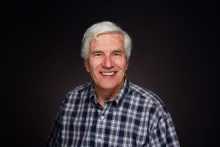
Steve Shafer was born and raised in Seattle. He graduated from Queen Anne High School in 1959 and later graduated from Ambassador College, Big Sandy, Texas in 1967, receiving a degree in Theology. He has been an ordained Elder of the Church of God for 34 years and has pastored congregations in Michigan and Washington State. He and his wife Evelyn have been married for over 48 years and have three children and ten grandchildren.
