

Steve Shafer
This sermon was given at the Panama City Beach, Florida 2011 Feast site.
This transcript was generated by AI and may contain errors. It is provided to assist those who may not be able to listen to the message.
Well, good morning, everyone! Looks like a beautiful crowd out there this morning. Thank you so much for that, not only offertory music, but very special music as well. Beautiful song. I've never heard that version before, but that's a very, very beautiful, beautiful, meaningful song, especially for this last great day that we've now come here to observe. And we are here now observing what we call the last great day, and it indeed is a last great day in God's plan of salvation for all of mankind. In all of God's feasting holy days, as we know, have tremendous meaning, not only for all of us, but for the entire world. But none have more meaning in this particular day we're now observing, especially for the world, many of which is pretty much hidden from the world. They don't understand the meaning of this day. They have no concept of it for the most part. It's interesting that even Orthodox Jews who observe all of the feasts and holy days that we observe, but only from the perspective of the Old Testament—and you can get quite a bit of meaning from the Old Testament for the feasts and holy days—but even the Orthodox Jews who observe these annual feasts and holy days from the perspective of the Old Testament, they really do not know why they observed this particular day. They can't really ascribe meaning to this day. To the world and even to the Jews, the meaning of this day is a mystery.
And I'll show you a momentarily from a quote by a Jewish rabbi who basically says that very thing, that this day is a mystery to them. Why can't Jews derive some meaning for this day from the Old Testament? They derive meaning from all the other holy days, some meaning at least. They don't have a full picture, of course, because you can't without the New Testament, but they do have meaning other than this particular day. In the Old Testament, no name is given for this particular day. It's simply called the Eighth Day, or is referred to as an Eighth Day solemn or sacred assembly.
If we look up Eighth Day, we will not find that expression of the New Testament.
There is no mention of the New Testament observing an Eighth Day after the Feast of Tabernacles, which really isn't mentioned as an Eighth Day sacred assembly, as it is in the Old Testament. That's not specifically mentioned in that terminology in the New Testament.
So, the world doesn't have any idea what this day means. If the Jews can't figure out a meaning from the Old Testament, and if it's not directly mentioned and explained in the New Testament in a direct way, then how in the world can we come to understand the meaning of this particular day we're now observing? How can we understand it? What's meaning can be understood, but it is a meaning which is now hidden from the world for the most part. The Bible gives us pieces of the puzzle, but you have to put those pieces together in the right order to really understand the meaning of this day. Of course, it's God and God's Holy Spirit that has done that for us and helped us to come to understand the tremendous meaning this day has. And when the world does finally come to understand this day, its meaning is going to be monumental to the world. It's going to startle the entire world when they really come to understand what this day portrays. So today I want to first show you the pieces of the puzzle that we can look at to put together to derive the meaning of this day.
And then we'll begin putting those pieces of the puzzle together to reveal the startling meaning of this eighth day or this last grade day, as we now have come to call it.
And we will look at one piece of the puzzle and then the one piece of the puzzle in the entirety of the Bible that really records events. There's really only one place in the Bible that clearly records events that took place on this very day to give it meaning. And we'll look at that towards the end of the sermon. My title for my message here this morning is, Unlocking the Mystery of the Eighth Day. Unlocking the Mystery of the Eighth Day. I want to first look at a missing piece of the puzzle. I'm looking at a piece of the puzzle. Let's look at a missing piece of the puzzle.
There's one piece that's missing. What is that?
What's missing in the case of this particular day that we're now observing?
Well, I want to quickly just review all of the annual feasts and holy days, just very briefly, just very touch the surface just so you can understand what's missing for this particular day. First, we have the Feast of the Passover. As we know, when the death angel passed over the children of Israel, of course, that name alone, Passover, gives meaning to that particular day. The death angel passed over the firstborn of Israel and spared their lives. That gives meaning to the Jews in the Old Testament. And for Christians of the New Testament, it asks that by telling us that Christ is our Passover, who has passed over our sins.
Conversely, the fact that he died for us and paid the penalty of sin for us and has thus passed over our sin because of our repentance and being under the blood of Jesus Christ. Second, we have the Feast of Unleavened Bread, during which time the Israelites were literally forced out of Egypt before they had time for their bread to rise, and during which time they were then delivered out of Egypt to embark on a journey to meet with God.
So, the name alone, the events alone, give tremendous meaning to the Feast of Unleavened Bread, even from the perspective of the Old Testament. And, of course, for Christians of the New Testament, for all of us, Christ shows us that unleavened, or leavened, I should say, portrays sin, and we have to put leaven with it, to put sin out of our lives.
And we have to then put Christ, who is the unleavened bread, and the mind of Christ, into our lives.
So, it adds tremendous more meaning from the New Testament for all of us, for the Feast of Unleavened Bread. Third, we have the Feast of Pentecost, or the Feast of First Roots, or the Feast of Weeks. When, according to the tradition, God gave His Ten Commandments to Israel from Mount Sinai. And when God gave His Holy Spirit, then, to the followers of Christ in the New Testament on the very day of Pentecost. So, those events, the giving of the law to the people of Israel in the Old Testament, and the giving of God's Holy Spirit to those God was called in the New Testament, gives tremendous meaning to Pentecost. Then, we have the Feast of Trumpets, which occurs on a new moon when the blast of a trumpet was sounded. And the timing of that particular feast and the sounding of the trumpet gives meaning to both Jews and Christians alike, especially since the New Testament is clear that trumpets were praised for the return of Jesus Christ. Then, we have the Day of Atonement. Again, I'm just covering just very briefly, I'm trying to go into any depth. Then, we have the Day of Atonement, on which we must fast.
And the name of that particular Holy Day has meaning both to Jews in the Old Testament and to all of us as Christians as well. The name alone gives meaning, and the command to fast, then, adds to that meaning. So, from those things, you can derive meaning for that day.
And the New Testament, of course, Christ's death atones for and covers the sins of the world, as it will when Christ returns. And, of course, Atonement also in the New Testament has tremendous meaning, but it shows that it's the time it portrays when Satan is going to be removed as deceiver of this world. And then, we have the Feast of Tabernacles, which we have just finished observing. The Feast of Tabernacles is reserved for seven days.
In the Old Testament, the Israelites had to live in temporary dwellings for 40 years. It was originally called the Feast of In-Gathering, as Mr. Martin brought out. God was going to gather them in and take them to the Promised Land, but they didn't have any faith. And so, they had to wander around for 40 years, live in temporary dwellings. So, it became the Feast of Tabernacles, the Feast of Temporary Dwellings. Of course, that gives tremendous meaning from the Old Testament. In the New Testament, we find that the Church is being tried. 40 is the number of trial and testing.
Israel was tried and tested for 40 years and had to be refined for 40 years. And to all those who had no faith died out, a new generation came in to inherit the Promised Land. Of course, in the New Testament, we find the Church is being tried and tested and refined so we can inherit the Kingdom of God, our spiritual Promised Land, to rule over the nations of the world with Christ.
And we come to realize and understand that our bodies are temporary dwellings.
We don't have so much time in order to fulfill the call that God has given us.
So, all those feasts—and you can go and add other things to that—all those annual feasts in Holy Days, by the name, by events that occurred during those things, have tremendous meaning, both from the perspective of the Old Testament and the New Testament.
But what about the Eighth Day? What about this day?
You know, you realize it's only mentioned five times in the entirety of the Old Testament.
It's only mentioned five times. I'm not going to turn there, but I'm going to quote the five places where it's mentioned. It's mentioned first in Leviticus 23, 36, where it says, it says, On the eighth day you shall have a holy convocation. It is the sacred assembly.
New King James. Second place is mentioned also in Leviticus 23, verse 39, where it simply calls the eighth day a Sabbath rest.
Thirdly, it's mentioned in Numbers 29, verse 35, where it just says, On the eighth day you shall have a sacred assembly, you should do no customary work. That's it. And then fourth, it's mentioned in 2 Chronicles 7, 9, which is at the time that Solomon finished the temple. In the previous verse, chapter 7, verse 8 of 2 Chronicles says, at that time Solomon kept the feast, referring to the Feast of Tabernacles, he kept the feast for seven days. And then 2 Chronicles 7, 9 adds, And on the eighth day they held a sacred assembly.
That's all it says. And fifth, the fifth place it's found in the Old Testament is in Nehemiah 8, verse 18, which states, And they kept the feast, referring to the Feast of Tabernacles, and they kept the feast seven days. And on the eighth day there was a sacred assembly, according to the prescribed manner. That's all it says. And that's it from the chart of the Old Testament.
It is simply called an eighth-day solemn or sacred assembly that was to be a holy convocation. And that about sums it up. There are no events specifically recorded directly associated with that particular day, as there is in the case of Passover, and Unleavened Bread, and some of the other feasts.
There's a Jewish rabbi. I got a very interesting book. A Jewish rabbi, actually, it was a woman. I didn't know if they had women rabbis, but I guess they do. Her name is Nina Beth Cardan, C-A-R-D-I-N. Her husband is also a rabbi. They're both rabbis.
And she wrote a book titled, The Tapestry of Jewish Time, in which she gives meaning to all the Jewish peace and holy days, and what they call other life cycle events associated with Judaism. A Jews call the eight-day sacred assembly Shemoni Atseret, S-H-E-M-I-N-I-A-T-Z-E-R-E-T, which is Hebrew for sacred assembly. So they call it Shemoni Atseret or sacred assembly. And here's what Rabbi Cardan says in regards to the meaning of this particular holy day. She says this, after the temple was destroyed, Shemoni Atseret became a holiday without a ritual. It became a holiday in search of a cause. We would say a holy day in search of a cause or a holy day in search of meaning. Even the Jews, they really don't understand why does God have them keep this particular day? What does it mean? They do it because God says to observe it, but they don't really know why. And they can't really associate any specific meaning to it.
To orthodox Jews, the meaning of this day remains a mystery.
They don't know what it means and why God commands them to observe it. Because no real meaning is given to this day in the Old Testament. You can really be directly associated with it in a direct way. It's interesting that of all God's peace in holy days, this particular day is a mystery and remains a missing piece of the puzzle to those who try to ascribe meaning to God's peace from the Old Testament. It's a missing piece of the puzzle. They don't really know.
And ironically, it is also a total mystery to the world's Christians.
They don't understand what it means either. They don't see it in the New Testament. They say, there's an eighth day that you should observe and here's why.
They can't find that. They can't put anything piece of the puzzle together. It takes God's Spirit to do that. But it's a mystery to them as well.
And I say ironically for the Christians of the world, it's ironic because the only place...
I mean, some people tell you, why do you observe those Old Testament Jewish feasts and holy days? Well, here's an irony. The only place you can find meaning for this day is from the New Testament. Without the New Testament, you cannot really understand the meaning of this day. You cannot be able to put pieces of the puzzle together. You get some meaning, as I'll show you in a moment, but it would pretty much remain a mystery without the New Testament.
Of all of God's feasts and holy days, this eighth day sacred assembly, or this last great day, as we call it, is almost exclusively a New Testament holy day.
Because that's where you have to go to understand what it means.
Let's begin looking at the pieces of the puzzle.
And I want to thank Mr. Eckman, who is a sermonette, because he already gave two pieces of the puzzle, one from the Old Testament, one from the New Testament, that I'm not going to cover.
So I want to thank him for that. Ezekiel 37 is obviously a major piece of the puzzle, but the Jews don't really take Ezekiel 37 and tie it in with the eighth day, because there's nothing really to tie it to the eighth day, unless you have some pieces in the New Testament you can put together to do that. Let's look at some Old Testament pieces of the puzzle.
Just think, if you didn't know what this day meant, and you were trying to figure it out, and you thought, well, it's called the eighth day, so wonder what it means?
Well, one piece of the puzzle we could look at is the name, eighth day. It's called the eighth day.
In the Old Testament, there are three main things that happened on the eighth day. So we can start there. This is the first piece of the puzzle in the Old Testament, but there's three sections to it. There are three things that happened on the eighth day in the Old Testament. If you look it up, number one, as we know, you're all familiar with this, all male children of Israel were circumcised on the eighth day. Now, that really takes on additional meaning when you go to the New Testament, you realize that real circumcision is of the heart. It's conversion. Let's get to that later.
Second thing that happened on the eighth day in the Old Testament is that animals that were to be offered to God, such as a bowl or a sheep or a goat, they were to be with their mother's milk for seven days after they were born, and then on the eighth day, they could be given to God.
They didn't have to be given to God on the eighth day, but they couldn't be given to God before the eighth day. They had to be with their mother for seven days before they could then be offered to God. You can read that in Ezekiel 22, or excuse me, Exodus, Exodus 22 verse 30.
And they had to move their mother for seven days before they could be offered to God or given to God as an offering. That's recorded in Leviticus 22 verse 27.
Now, third thing that occurred on the eighth day in the Old Testament, any person who became unclean because of an unclean discharge or because of a disease such as leprosy, they had to go through a seven-day cleansing period before they could be declared to be clean on the eighth day. And I'll give you Scripture references for that if you want to. You can find that in Leviticus 14 verse 2 and verse 23. And also Leviticus 15 verse 2 verses 13 and 14.
Leviticus 15 verse 19 and verses 28 and 29. All those verses show that. Any person who became unclean had to go through a seven-day cleansing period and could not be declared clean until the eighth day. So those three things occurred on the eighth day in the Old Testament. The male children and visitors were circumcised on the eighth day. Animals could not be offered or dedicated to God until the eighth day after their birth. And a person became unclean had to go through a seven-day cleansing period, could not be declared clean until the eighth day. So all those things are associated with the eighth day in the Old Testament. So let's end with just one piece of the puzzle. Those are the three parts of that piece, but that's one piece of the puzzle from the Old Testament. Second Old Testament piece of the puzzle is the fact that the eighth-day sacred assembly is the last holy day. It's the last holy day in God's feast days. And your feast in Hoida is the very last day. Rabbi Cardin picks up on that by saying this, is the day on which we finish the annual cycle and immediately start over again, making it, in essence, a day of new beginnings.
She tries to drive some meaning from that. And in saying that, she comes close to unlocking the mystery of its meaning, at least to a degree. It's a day when we start anew.
A third brother, Vad-Chi, is found in Nehemiah chapter 9. Let's turn to Nehemiah 8.
And I was going to start in verse 14, but I actually want to go back and Mr. Austin, his sermon on the weekly Sabbath, read Nehemiah 8 verse 8. I want to start there, actually, instead of verse 14, because I think that can also add to what I'm going to speculate on here in a moment. Nehemiah 8.8, of course, they just returned from the Babylonian captivity.
Some of them come back to Jerusalem after being in captivity to Babylon for 70 years, and some were then coming back to Jerusalem to rebuild the temple in the city of Jerusalem. And they're then now coming to realize why they had gone into captivity, because they had neglected God's Sabbath and God's feasts and holy days. And so, verse 8 says that they read distinctly from the book of the law of God, because they realized they had neglected that. That's why they went into captivity. And they gave the sins and helped them to understand the reading. In other words, tried to understand as these Levites and priests were explaining this to them, they were trying to give them the meaning of what they were observing in the context of God's annual peace and holy days here. Now I'll drop down to verse 14. And they found written in the law, which the Lord had commanded by Moses, that the children of Israel should dwell in booze during the feast of the seventh month. During the Feast of Tabernacles, they should dwell in booze or temporary dwellings.
Verse 18, very interesting verse, verse 18. Keep this verse in mind. It says, also, day by day, He's talking about the Feast of Tabernacles, or the Feast of Booths, which the Jews call the Feast of Sukkoth, or Booths. Also, day by day, from the first day until the last day, He's talking about the Feast of Tabernacles. From the first day until the last day, He read from the book of the law of God. And they kept the Feast from the first day until the last day, they kept the Feast for seven days, referring again to the Feast of Tabernacles. Any place you look up, observing the Feast of Tabernacles in the Old Testament, and you can do it for yourself and go through there, it says, you should observe the Feast of Tabernacles for seven days. It says that throughout the entire of the Old Testament, seven days. But then it adds here in verse 18, and on the eighth day, this is the fifth place in the Old Testament where it's mentioned, and on the eighth day, there was a sacred assembly according to the prescribed manner.
Now that would have been, if you want to go by the days of the month, the Feast of Tabernacles was observed beginning on the fifteenth day of the seventh month. So the eighth day would be the twenty-second day of the seventh month. It's interesting to see here then, we keep reading, what the Children of Israel then did on the twenty-fourth day, two days after the eighth day.
Nehemiah 9 verse 1, on the twenty-fourth day of this month, of the seventh month, the Children of Israel were assembled with fasting. They were fasting. And of course, one reason they were fasting was because they wanted to get back to God. They realized they had neglected the laws of God. They neglected God's Sabbaths and God's feasting the Holy Days. And they realized that's why they had gone into captivity and why Jerusalem and the temple had been destroyed. And so they were fasting to try to rededicate their lives to God. They were trying to make a new covenant with God to rededicate their lives to God. So they were fasting.
But I think there might have been another reason they were fasting as well.
What do we read in verse 8? It says, "...as they were reserving these feasts in the Holy Days, that the priests and the Levites, they tried to give them meaning, explain to them why they were observing what the meaning was, why they were important. And they just got through observing the eighth day. And all it says is, well, there's a sacred assembly for the prescribed men. Now, what meaning would the priests and Levites give to it? I mean, Jews today don't know. Could they have been fasting to also ask God for meaning of that day? The eighth day? Possibly. I don't know. On the 24th day of this month, the children of Israel were assembled with fasting. And they were in sackcloth and with dust on their heads, trying to repent before God from neglecting His laws and His feasts in the Holy Days.
Then those of the Israelite lineage separated themselves from all foreigners, and they stood and confessed their sins and their iniquities of their fathers. And they stood up in their place, and they read from the book of the law, the Lord their God, for one-fourth of the day." This is on this 24th day while they were fasting. "...and they ripped from the book of the law for one-fourth of the day, and for another-fourth they confessed and worshipped the Lord their God." So they fasted and humbled themselves and separated themselves from foreigners.
They deeply repented for neglecting God's laws and God's feasts in the Holy Days.
Then the Levites were moved to offer up a prayer to God before the entire assembly of Israel on this particular day, the end of this day.
We could say before the entire sacred assembly of Israel, they offered up a prayer.
And I have to ask, is it possible that during this day of fasting that they may have asked God to help them understand the meaning of the eighth day that they just got through observing?
Or we don't know, but we do know what the Levites were inspired to say to this entire assembly of Israel at the end of this day, and they were fasting. Deuteronomy 9, verse 5.
And the Levites, and I'm going to name some of them here, they said, by the part of verse 5, Stand up and bless the Lord your God, forever and ever.
Blessed be your glorious name, who is exalted above all blessing and praise.
You alone are the Eternal. You made heaven, the heaven of heavens, with all their hosts. And you made the earth and everything on it. And we could say, and everyone on it as well, including all human life.
Millions of whom, as was brought out in the sermon, had long died and then buried and are in their graves.
You made the earth and everything on it. And then he says, you made the seas and all that is in them.
Including thousands, as was also brought out in the sermon, who have died and been buried at sea, and went down with their ships.
What then did God move them to say to the children of Israel, to this sacred assembly of Israel, on this day they were fasting, trying to understand the meaning of God's annual feasts and holy days.
Going on in verse 6, you made the earth and everything on it, and the seas and all that is in them. And then they are aspired to say this, and you preserve them all.
Why did God aspire that to be said, and you preserved them all?
Although they may not have realized it at the time, that aspired statement given here in this prayer gives us the bottom line meaning of this last great day, or this eighth day sacred assembly.
God preserves them all, because all life is sacred to God.
All life. And God will preserve them all until they can then be assembled together on this eighth day to have their opportunity to be saved.
When their hearts then can be circumcised on the eighth day, according to a piece of the puzzle in the New Testament, and when their lives can be offered and dedicated to God as living sacrifices, again another piece we can add from the New Testament, and when they can be cleansed of their sins and declared to be cleaned by the blood of Christ on the eighth day, as we then could learn also from the New Testament, and when they can be given a new beginning to start over again, as Rabbi Cardan wrote him concerning this day they call Seminar Atseret, or sacred assembly. So those then are some piece, additional pieces of puzzle surrounding the eighth day in the Old Testament, which then brings us to the New Testament.
Which then really unlocks the mystery of this particular day, and which reveals the startling meaning of this day, which will someday reveal to the entire world. So let's take a look now at some New Testament pieces of puzzle. In addition to Matthew 10.15, which Mr. Edmund covered in his sermon, and that's a piece of the puzzle, I want to give some additional pieces of puzzle from the New Testament. And I want to find these pieces by asking certain questions that are clearly answered and addressed in the New Testament. Several questions. Number one, first question, does God want all men to be saved and to come to the knowledge of the truth? Well, we all know the answer, and you probably could turn to the Scripture with me. 1 Timothy chapter 2, beginning in verse 1.
1 Timothy 2 verse 1, where the apostle Paul wrote, therefore I exhort, first of all, that supplications that I have made for all men. Intercession, prayers, intercessions, and giving of thanks be made for all men. Don't just do it for your friends and people in the church, but do it for all men. Do it for kings and for all who own authority, that we may lead a quiet and peaceable life in all godliness and reverence. For this is good and acceptable in the sight of God, our Savior, who desires all men to be saved and to come to the knowledge of the truth.
God desires all men to be saved and comes to the knowledge of the truth.
Would that not also apply to everyone who had died prior to the first advent of Christ?
God does not respect our persons.
Does that not apply then to all those who really died and having no knowledge of Jesus Christ, who was the Son of God, and who died to pay the penalty of mankind's sins?
Second question, did God send his Son into the world to condemn the world or to save the world? You all know the answer, but let me just quote it. I won't turn there. I'll just quote John 3 verses 16 and 17. For God's soul of the world that he gave his only begotten Son, that whoever believes in him should not perish but have everlasting life. For God did not send his Son into the world to condemn the world, but that the world through him might be saved. Again, John 3 verses 16 and 17.
And against his God has no respecter of persons. Acts 10 verse 34.
Would that not also apply to all who died during the 4000 years prior to the time Christ came the first time? The first Advent of Christ? Of course, we have to.
Third question, when and for whom was Christ really slain?
Was he only slain for those who have lived during the past 2000 years, who had the opportunity to know the name of Jesus Christ? Or was he slain from the foundation of the world?
We all know the answer. Revelation 13 verse 8. All who go on the earth will worship him, will worship Jesus Christ, whose names have not been written in the book of the Lamb slain from the foundation of the world. If Christ was slain from the foundation of the world, then he died for everyone who has ever lived and died since the foundation of the world. Fourth question, all these have obvious answers. But is there any other name whereby men must be saved other than the that of Jesus Christ of Nazareth?
Oh, we can turn there and read it. You probably, a lot of you may already know that in the Scripture, Acts chapter 4. Acts 4, and I'll begin in verse 10. Let it be known to you all and to all the people of Israel that by the name of Jesus Christ of Nazareth, whom you crucified, whom God raised from the dead, by him this man stands before you whole. He's a man who had been slain from birth, and been healed by the Apostle Peter by God. Verse 11, this is the stone which was rejected by you builders, which has become the chief cornerstone, nor is there salvation in any other, for there is no other name under heaven given among men by which we must be saved.
Now, since Christ was slain from the foundation of the world, and since Christ desires all men to be saved and come to the knowledge of the truth, and since the name of Jesus Christ of Nazareth is the only name given under heaven whereby men must be saved, does that not then make it imperative for all men to be given the opportunity to know the truth and to understand who Jesus Christ was? To have that opportunity. Yes, it does. Fifth question, and finally, when will that opportunity come? When will that come? In the New Testament, there is a piece of the puzzle.
I should say I was going to ask this as a question. In the New Testament, is there a piece of the puzzle that can give us a clue as to when that will occur, when that opportunity will come for all men to be saved? Yes, there is. Let's turn to 2 Peter chapter 3. 2 Peter chapter 3 verse 8, where Peter writes, But beloved, do not forget this one thing, that with the Lord one day is as a thousand years, and a thousand years as one day.
And then Peter was inspired to add this in direct connection to what we just read in verse 8.
He has this in verse 9, The Lord is not slack concerning his promise, has some count slackness, but he is long suffering toward us, not willing that any should perish, but that all should come to repentance.
Of course, that would include everyone who lived and died prior to Christ's death and resurrection going all the way back to Adam and Eve. When will their opportunity to be saved come?
Well, Peter tells us here in verse 8, he says, One day is a thousand years, and a thousand years as one day.
How many thousand year days have we now had since the creation of Adam and Eve?
Well, we all realize it's pretty close to six one thousand year days have elapsed since then. Don't know exactly, but pretty close to six one thousand year days.
Will the return of Christ usher in a seventh one thousand year day?
And will that seventh day be a one thousand year day of rest?
As a Sabbath, so to speak. Let's go to Revelation 19.
Revelation 19 verse 1, After these things I heard a loud voice of a great multitude in heaven, saying, Hallelujah! Salvation and glory and honor and power belong to the Lord our God.
In verse 6, And I heard as a word the voice of a great multitude is the sound of many waters, and is the sound of mighty thundering, saying, Hallelujah! For the Lord God omnipotent reigns.
And dropping down to verse 16, And he has on his robe and on his thigh a name written, King of kings and Lord of lords.
And then going on to Revelation 20 verse 1, And then I saw an angel coming down from heaven, having the keys to the bottomless pit, and a great chain in his hand. And he laid hold of the dragon, that serpent of old, who was the devil of Satan. And he bound him for a thousand years, for a thousand year day, if you will. He is bound.
For the duration of the seventh one thousand year day, which he was bound, which will turn in, give the world a thousand year day of rest from Satan, and Satan's deception and influence. He can have a one thousand year day of rest from Satan.
He'll be bound for what, one thousand years.
Going on to verse 3 of Revelation 20, And he cast him in the bottomless pit, and shut him up, and set a seal on him.
So he should deceive the nations no more, till a thousand years were finished. But after these things, he must be released for just a short while. Verse 4, And I saw thrones, and they set on them, And judgment was given to them, committed to them.
Then I saw the souls of those who had been beheaded for their witness to Jesus, and for the word of God, who had not worshipped the beast or his image, and had not received his mark on their foreheads or on their hands.
And they lived and reigned with Christ for a thousand years. At this particular point, then, seven one-thousand-year days are now complete at the end of the millennium. And that takes us right to the dawn of the eighth day, if you will.
And when this eighth day dawns, will there be a sacred assembly of the rest of the dead? Revelation 20, verse 5, But the rest of the dead did not live again until the thousand years were finished, until the seventh one-thousand-year day was finished, and it was right at the beginning of the eighth day, if you will.
I know how long that day will be, but if you look at it the day is a thousand years, you're right at the beginning of the dawn of the eighth day.
What happens next?
Verse 7, When a thousand years have expired, Satan will be released from his prison, but only for a little while, as we just read. Verse 10, And then the devil, who deceived them, was cast in the lake of fire and brimstone with a beast and the false prophet, as it should be, were cast. And they will be tormented day and night, forever and ever. And then what did John say next? Verse 11. Then he says, I saw a great white throne with the dawn of the eighth day, and he sees this great white throne.
I saw a great white throne, and him who sat on it, from whose faith the earth and the heaven fled away, and there was no place found for them. John saw the throne of God.
Who did he then see standing before this great white throne, this throne of God? Who did he see standing there? Verse 12. I saw the dead.
Now, if you take this scripture here, you can go back to Ezekiel 37, and you can make some connections. You've got two pieces of puzzle you can kind of fit together. Well, without this scripture, you can't really fit Ezekiel 37. But I saw the dead, small and great, standing before God.
And the books were opened. And another book was opened, which is the Book of Life.
If one book was the Book of Life, what were the other books that were opened? It talks about here.
What books have the knowledge that can lead to eternal life?
What books must be opened to our understanding before our names can be written in the Book of Life?
Of course, as we all realize, the books of the Bible have to be opened.
People have to have their minds open to understand the Word of God.
Now, think of this scene, the subscribed yet. Can we even begin to imagine this scene? Millions, billions, as Mr. Ehrlich said, we really don't know, who have been dead.
Some for many centuries or thousands of years, even, are suddenly alive again. Their physical lives haven't been restored, as we read in Ezekiel 37. Children who had died, thousands of children just die prematurely, as babies or young children, or they're kidnapped. They disappear, and sometimes they're found, sometimes they're not. Some are still missing, never been found, like Natalie Holloway. And all of a sudden, children are going to be restored to their parents, parents of their children. Maria Garcia will be there. Her life will be restored.
And I was going up in Seattle, I had a good friend. I was going out to Issaquah School. I was sixth grade, I had a good friend, and he had an older brother who was in high school, and his older brother got together with five other kids, teenagers, from his high school. There's three girls and three boys in the car, and he was driving, and they were drinking, and he lost control of his car. He was driving me too fast, and he was under the influence of alcohol, and he ran off the road and hit a tree. The fellow who was driving survived, but the other five students all died. A terribly tragic occurrence that took place back when I was in sixth grade in the Seattle area. Those five children will be restored to life, along with their parents.
Here you'll have entire families now standing together before God's great white throne.
Can you imagine that? The tears? As parents see their children, they didn't know what happened to them?
Remember they did know what happened to them? There they are, restored to life.
Entire families now standing together before God's great white throne. I saw the dead, small and great, the known and the unknown. Those who were maybe of great age when they died, and those who were maybe very small when they died. Maybe small children.
One of the known, one of the great, who will be standing there before this great white throne, will be Richard Dawkins, author of The God Delusion. Can you imagine what? He's going to look!
He's going to look! What is that? That's God's throne! There's God the Father! There's Jesus Christ! They're real! He's going to realize he was the one who was deluded. Can you imagine how startled he's going to be? Will the dead, who have now been resurrected back to physical life, are they then going to be judged? Revelation 20, 12, and the dead were judged according to their works by the things which were written in the books. Again, Revelation 20, verse 12, to complete that verse. Things that are going to be judged by what's written in the books of the Bible. Depending on God's word, just as all of us are. Going on in verse 13. The seed gave up the dead who were in it, and death in Hades flubbered up the dead who were in them. And they were judged each one according to his works. But, judge each one according to his works. But here's the million dollar question. Whether they be judged by their past works, their past sins, and faults, and mistakes, and things they did. Or are they going to be judged by future works, once they have their minds open to understand what's in God's word. Once they come to understand God's laws. You know, I can imagine many that will come up there in that resurrection. They'll be seen, they'll see God, and there'll be tears of joy. But I imagine there will be a little bit of trepidation, too.
People realize, wow, God is real. He knows everything I did. I didn't think anybody knew that. I thought I got away with that. They're going to know they never got away with anything. They'll know that God knew every sin they ever committed. And some of them will stand there and think, whoa, what's next in store for me? They'll have a little bit of fear and trepidation. Some of them will be murderers there. Some of them committed terrible crimes. And can you imagine, as you come in that resurrection, you look over here and you see somebody who wronged you terribly.
And you say, oh, I hope God condemns him or her. See, what's it going to be like? Will they be condemned? Are they going to be judged by a God of mercy? Will they be judged by a God of mercy? We'll tell them to go and sin no more. We don't have to guess. We can read the answer from God's Word. Because the answer to that question is given to us by Christ himself and by events that occurred on this very day. The only place in the Bible we can read of events that occurred on this very day.
Let's take a look now at one final piece of the puzzle. Let's go to John 7. John 7, verse 37. On the last day, verse 1 talks about the Feast of Tabernacles. John 7, verse 1 says, they're reserving the Feast of Tabernacles. Any place you go about reserving the Feast of Tabernacles throughout the Old Testament, you can look it up.
It says, you should observe the Feast of Tabernacles for seven days. John 7, verse 37. On the last day, he's talking about the Feast of Tabernacles. On the last day, that great day of the Feast, and the Jews, you go back in the Jewish history, they called the seventh day of the Feast of Tabernacles, or the Feast of Sukkoth, the great day of the Feast. Many still do today. On the last day, that great day of the Feast, referring to and talking about the Feast of Tabernacles, Jesus stood and cried out, saying, if anyone thirst, let him come to me and drink.
He who believes in me, as the Scripture has said, out of his heart will flow rivers of living water. That is going to occur during the millennium. Christ is going to return in that seventh, one thousand-year day of rest that will come upon the world when Satan will be put away. All will have the opportunity to come to Christ. They'll be able to drink in spiritual strength and spiritual food. They'll have their minds open.
They'll have an opportunity to all those who live on into the millennium or are born in the millennium. That applies to the millennium. And if they believe during that time, they will have rivers of living water from God's Holy Spirit that will be given to them flowing out of their hearts. So that opportunity will come to mankind at the time of Christ's return and throughout the millennial reign of Christ, as the Feast of Tabernacles portrays.
As I said, in every place you look, a Feast of Tabernacles is said to observe it for seven days. The seventh day being the last day of the Feast of Tabernacles is also indicated by what we read in Nehemiah 8.18. If you recall, this was the first day, we talked about the Feast of Tabernacles, from the first day until the last day. They read from the book of the law of God and they kept the Feast seven days, the seventh day being the last day of the Feast of Tabernacles.
You can tell you Nehemiah 8.18 right here to John 7.37. It gives great fuel and support that this is talking about the seventh day of the Feast of Tabernacles in John 7.37 and not the eighth day, as we used to assume. But the last great day is still a very appropriate name. We derive from this, and we gave to this day, it's a very appropriate name. I'm not suggesting we change it. It's very appropriate because it is a great day, and it is the last great day in God's plan of salvation for all mankind.
I just want to quote, though, on page 52 of our united booklet, titled God's Holy Day Plan, we can read this on page 52 regarding John 7, verses 37 and 38. Here's what they say in our booklet under the last great day in God's Holy Day Plan, the book titled God's Holy Day Plan, page 52.
Christ's message recorded here most likely was given on the seventh day of the Feast of Tabernacles. The weight of evidence and the series of events indicate that John 7 describes incidents on the seventh day, while the setting moves to the eighth day in John 8 and John 9. That's for our booklet, God's Holy Day Plan, under last great day. And that indeed is the case. It's also the final piece of the puzzle when it comes to unlocking the mystery of the eighth day sacred assembly, or what we call the last great day, because John 8 and 9 then become the only place in the entirety of the Bible that records events that actually occurred on this very day that can add to the meaning of this day.
And indeed, John 8 and 9 in the beginning verses of chapter 10 do add to the meaning of this day. What happened as the seventh and last day of the piece of tabernacle came to an end? John 7, verse 53. Everyone went to his own house.
They all went home. They didn't say he was living in booths. They only lived in booths for seven days. They all went home, it says. They went home. Where did Jesus go? John 8, verse 1. But Jesus went to the Mount of Olives. Undoubtedly, they got some time to himself and to pray and to possibly contemplate this day, to contemplate the eighth day Holy Convocation. What did Christ then do on the eighth day? What happened? John 8, verse 2.
Now, early in the morning, he came again into the temple, and all the people, they came back. They'd gone home, but they all came. Why did they come back? The next day. And they all came back again to him, and he sat down and taught them. Why did Christ return to the temple? And why did all the people also come to the temple after having returned to their homes the night before?
Well, I would say it's because of the Holy Convocation. It was the eighth day, sacred assembly. Well, we call the last great day. What did I ask earlier? I asked, how will those standing before God's great white throne be judged? How are they going to be judged? By their past scenes and mistakes, or by what they do once their minds are opened to God's word? This is the very first event recorded here in John 8, which occurred on this eighth day. John 8, verse 3, Then the scribes and Pharisees brought them to a woman, caught in adultery, caught in the very act.
And when they had said her in the midst, they said to her, teacher, this woman was caught in adultery. She was caught in the very act. You know, you think about everyone who is in that resurrection at the great white throne judgment will be in that same boat.
They will realize all their sins are known by God, that in essence they have been caught in the very act. Everything they have ever done is known. How are they going to be judged? By their past scenes? As condemned in the law of Moses? How will Christ judge him? Well, we don't have to guess, because Christ will judge them as he judged this woman on this very day.
John 8, verse 5, Now Moses in the law commanded us that such should be stoned, they said. The Pharisees said, What do you say? The law of Moses said she should be stoned. She was caught in the act. This they said, testing him, that they might find something of which to accuse them. But Jesus just stood down and rode on the ground with his finger as though he did not hear. So when they continued asking, verse 7, he raised himself up and said to them, He was without sin among you. Those of you who have perfect lies never sinned, who have nothing that can be condemned, you fell the first stone at her.
You know, those standing before God's throne will again see others standing there who have wronged them. And their tendency might want to be to get revenge, to have them condemned by God, as the Pharisees wanted to do with this woman. But this will not be a time of condemnation. It will be a time of condemnation or a time to make accusations against others. Because everyone standing before God's throne on this day, on that great white-throat judgment day, will be guilty and deserve death.
Verse 8, again he stooped down and wrote on the ground, and those who heard it, being convicted by their conscience, they went out one by one, beginning with the oldest, even to the last, and Jesus was left alone and the woman standing there in her midst. Now, we don't know what he wrote, doesn't say, but whatever it was that made them all realize they all deserved to be stoned, every one of them deserved to be condemned.
Going on to verse 10, then when Jesus had raised himself up and saw no one but the woman, he said, to her, woman, where are those accusers of yours? Has no one condemned you? She said, no one, Lord. And Jesus said to her, neither do I condemn you, go and sin no more. Notice how Christ will judge the dead, small and great, who are resurrected to stand before God's throne at the beginning of the last great day. He will say, neither do I condemn you, go and sin no more. Will Christ then become the light of the world to all of them and to help them to find the light of life?
John 8 verse 12, then Jesus spoke to them in saying, think about what he's saying here, and think about him saying this on this eighth day, on this very day we're observing. He said, I am the light of the world. He who follows me shall not walk in darkness, but shall have the light of life. He knows who previously read, God desires all men to be saved to come to the knowledge of the truth.
And on this eighth day, on this last great day, will they then be given the opportunity to know the truth? That's what God desires. Will they be given that opportunity on this day we observe and call the last great day? What did Christ himself teach on this very day? John 8 verse 31.
Jesus said to those Jews who believed him, if you abide in my word, you are my disciples indeed, and you shall know the truth, and the truth shall make you free. Isn't that what this day is all about? The world having the opportunity to know the truth so they can be free of sin and free of the consequences of sin.
What else did Christ teach here that everyone will have to learn on the last great day? John 8 verse 34. Most assuredly I say to you, whoever commits sin is the slave of sin. The world is going to have to learn that. They're going to learn that on this day when they're resurrected and their minds are open.
Most assuredly I say to you, whoever commits sin is the slave of sin, and the slave does not abide in God's house forever, but a son abides forever.
Therefore, if the son makes you free, you will be free indeed.
In other words, they will have to learn how to put sin out of their lives so they can be free of sin, and they will have to learn how to put Christ in their lives so they'll no longer be slaves of sin, even as all of us have to learn today. And to abide forever, through Christ and the mind of Christ, they must become members of God's family, even as we must become members of God's household or God's family to abide forever by Christ living in us. And then, after confronting the Pharisees, as recorded in verses 39 through 57 here in John 8, Christ said this, John 8 verse 58. Most sure as they say to you, before Abraham was, I am. And then they took up stones to throw at him, but Jesus hid himself and went out of the temple. Remember, he was teaching at the temple all this time. All these events recorded in John 8. He is on the eighth day teaching in the temple. And then he went out of the temple. So, now he goes out of the temple. Still the eighth day, and he goes out of the temple, going through the midst of them, and so he passed by. So, all this time, Christ here on this eighth day was teaching within the confines of the temple. And now, on this same day, he leaves the temple. And as he leaves the temple on this eighth day, or this last great day, who does he see? What does he encounter? Think of this. This happens on this day.
John 9 verse 1. And as Jesus passed by, as he left the temple, he passed by, and he saw a man who was blind from birth. Think of that. Did you realize that he saw that man blind from birth on this eighth day, on this last great day? That's when that event occurred.
Think of all the dead, small and great standing before the throne of God.
You know, spiritually speaking, every single one of them was blind from birth, even as every one of us was spiritually blind from birth until God opened our minds. We were all blind from birth, spiritually speaking. Going on in verse 2 of chapter 9, his disciples asked him, and said, Rabbi, who sinned? This man or his parents said he was born blind. Think of it spiritually. Whose fault was it that so many people, they're born, they can't understand the truth. They're born blind. Jesus answered, verse 3, See, on this last great day, the works of God are going to be revealed.
Works of God that are going to startle the entire world, when billions are going to be resurrected back to life, to have their winders removed from their eyes so they can know the truth, and so the truth can make them free, free from the consequences and penalty of sin.
The man who'd been healed of his blindness was then confronted by the Pharisees, who then cast him out. John 9, verse 35. Jesus heard that they had cast him out, and when he had found him, he said to him, well, do you believe? Do you believe in the Son of God? Christ asked this man.
And he answered, well, who is he, Lord, that I may believe in him? And Jesus said to him, verse 37, You have both seen him, and it is he who is talking with you. And then he said, Lord, I believe, and he worshipped him. And so it is going to be for the vast majority who have their minds open to come to know the real Jesus Christ on the last great day. When they really know him, they're going to believe, and they're going to worship the true God and the true Jesus Christ.
For what judgment will Christ appear to everyone on the last great day? Verse 39, Christ said, he said, For judgment I have come into this world that those who do not see, those who have been spiritually blind, that they may see. Isn't that what this is all about?
He said that on this very day. For judgment I've come into the world that those who do not see may see, and that those who see may be made blind. In other words, that those who still think they know everything and who hold to their righteousness as the Pharisees were doing, they remain blind because you have to have a humble repentant attitude before your mind can really be opened up and those binders can be removed.
If they retain a self-righteous judgmental attitude like the Pharisees were doing here, they will remain blinded to the truth. To have their minds open, they will first have to repent even as all of us had to. The events surrounding the healing of this blind man then continue into chapter 10 down to John 10 verse 22. All the events from John 8-1 to John 10-22 all occurred on the eighth day, on this very day we're now observing.
Notice what it says in John 10. Also, recorded events that happened on this day. Will Christ be the only door to eternal life at the last great day? John 10 verse 7.
Jesus says that again, most of the truth I say to you, I am the door of the sheep.
In verse 9, I am the door. If anyone enters by me, he will be saved and will go in and out and find pasture. In verse 11, I am the good shepherd. The good shepherd gives his life for the sheep.
Now, if you think about this being said on the eighth day, on this last great day, notice especially what is recorded here in verse 16, which especially applies to the last great day.
John 10 verse 16. Another sheep I have which are not of this fold, them also I must bring. And they will hear my voice, and there will be one flock and one shepherd. And so it will be on the last great day. They will hear Christ's voice, and there will be one flock and one shepherd, Jesus Christ. That will happen on the last great day.
So John 8 and 9, in the first portion of John 10, all occurred on the eighth day, giving us the final piece of the puzzle to unlock the mystery of the eighth day, sacred assembly.
In conclusion, then, when this day is fulfilled at the beginning of the eighth 1,000-year day, a huge sacred assembly of men, women, and children whose lives are sacred to God, whose lives have been preserved by God, they're going to be resurrected back to physical life to appear before God's great white throne.
They're going to be reunited with their families and their loved ones.
Cheers of joy are going to abound as they all realize the truth of God's existence, and the God has preserved them all for this last great day, and they'll understand God's great love and mercy He has for mankind. Some hearts may be trembling as they await God's judgment, but God will not condemn them, for God did not send His Son into the world to condemn the world, but that the world might be saved, that hearts might be circumcised, and they become converted, and that the unclean can be cleansed, that their lives might become dedicated to God as living sacrifices on this eighth day, that those who do not see may see so they can sin no more.
As Christ said on this day nearly two thousand years ago, and they will hear my voice, and there will be one flock and one shepherd.
The world is going to be utterly startled when the mystery of the eighth day is unlocked, and when that occurs it will indeed become the last great day, for God desires all men to be saved and to come to the knowledge of the truth.
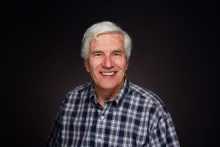
Steve Shafer was born and raised in Seattle. He graduated from Queen Anne High School in 1959 and later graduated from Ambassador College, Big Sandy, Texas in 1967, receiving a degree in Theology. He has been an ordained Elder of the Church of God for 34 years and has pastored congregations in Michigan and Washington State. He and his wife Evelyn have been married for over 48 years and have three children and ten grandchildren.
