
Greg Thomas
God has a personal plan for our lives, and we can trust the process; God isn't finished with us. He sees our potential as He did with Abraham, and He works for our good even while we wait. Instead of being driven by fear, we should be moved by the internal motivation the Holy Spirit gives. Like Paul, we can hold a balanced view of ourselves: very limited on our own, but valuable and confident in Christ. We should know our true worth to God and keep "becoming" and growing as His children.
For the first message given at the Feast of Tabernacles on 09/30/2026, you can view it under sermons tab on the Panama City Beach location.
This transcript was generated by AI and may contain errors. It is provided to assist those who may not be able to listen to the message.
Well, thank you, Mr. Mango. Happy Sabbath to all of you. I appreciate Mr. Skipper's comment that the average human life expectancy is my exact age. That was a real boost of encouragement. I appreciate that today. Great to see all of you. Recently, I gave a sermon at the Feast of Tabernacles. It was entitled, Called and Confident, Understanding Your True Worth in Christ, and it was very well received by the brethren in Panama City Beach this year, which I appreciate. Unfortunately, being a long-winded former pastor, I had too many notes, and I got a little waxed eloquent in some personal life experiences and ran out of time. What I would like to do today in this split sermon is cover some of the material that I left out during the Feast for the sake of time. Here's the whole main point of what the sermon was. It's that we are all God's work in progress. We are in the process of becoming. This means that if we're not satisfied with our life, we are allowed to begin again. We are allowed to become a new version of ourselves. You are allowed to outgrow old versions of yourself. You can change direction. You can set new boundaries. You can stop carrying some of the burdens that God never asked you to carry in the first place, which some of us do. You can take a look at your Christian walk at this point in time. You can keep the wisdom of the things that you've learned, and you can release the past. The emphasis of the sermon was that your best days are not behind you. There's a purpose for your life, and it's calling you. There are more wonderful things ahead than you can possibly see, and you don't need permission from your past to step into your future. Your next chapter will only require that you have the courage to leave the old chapter of your life behind. There was a scripture that I quoted at the feast from Jesus Christ. I won't have you turn to it. I will refer to it, though, Luke chapter 12, picking it up about verse 32. Jesus said, Do not fear, little flock, for it is your father's good pleasure to give you the kingdom. And I linked with that what Paul said in 2 Timothy chapter 1 and verse 7. God has not given us the spirit of fear. So why does Jesus say, Do not fear?
Because Jesus knows that there are three types of motivation, and fear is the least effective form of motivation. Think of Genesis chapter 2 and verse 17. God says to Adam, The day that you eat of it, speaking of the forbidden fruit, you will surely die.
How well did that work? That's fear motivation. Given a warning, this is what's going to happen if this occurs. The problem with fear as a form of motivation is there has to be a continual external force generating the fear for it to be motivating. Once that external force stops or relents, the fear generated within the individual slowly declines. And fear only motivates people to do the bare minimum. They comply. They don't grow under an environment of fear. A second form of motivation also is external. It doesn't come from the inside. This is called incentive motivation.
We receive reward or bonus or promotion. If we do something good, think of the term carrot and stick, or we receive something taken away from us if we don't perform. The problem with incentive motivation is it becomes an expectation and it becomes a minimum reward. Think of ancient Israel. They grew entitled to their blessings. Deuteronomy chapter 30, we call it the blessings and cursing chapter. How well did that work? How well did that motivate ancient Israel to stay on the right track? All the prophets, minor prophets in Jeremiah and Isaiah, Goan, Ezekiel, all that warning. Where's Israel today? Scattered throughout the earth. So it doesn't cause one to be motivated. Jesus Christ absolutely knew that. He understood that the third and best form of motivation is attitude motivation. This type of motivation is effective because it comes from the inside. There's not someone from the outside making us fearful or offering us a sugar cookie if we do something good or a whip on the behind if we do something bad. Attitude motivation comes from within because we want to. And that's a very important thing for us to understand.
And how do we get the want to? That comes from the gift of God's Holy Spirit. You see the same spirit that the Father and Son share. They give to us. It becomes internal. That is the motivator, not fear or the reward of a sugar cookie, not something that's brought from the outside to pressure us, to make us feel guilty, to make us feel ashamed of ourselves. It's something that's generated from within. And so, Joel chapter 2 and verse 26, what's one of the first things God does in the world tomorrow that we just celebrated the millennium? It says, It shall come to pass afterward that I will pour out my Spirit on all flesh. Verse 29, and also on my men servants, my maid servants, I will pour out my Spirit in those days. That's the game changer. That's why the kingdom of God will be successful when all forms of human government have failed. Because the change from the human race will come from the inside.
God's law will be written on their hearts. That's the change. And Jesus Christ absolutely can do that. And when we turn to Acts chapter 2 and verse 17, it reinforces the fact that the Holy Spirit is the internal motivator, the game changer. Not because God's Spirit is forced on people, but because it's offered to everyone who desires the gift of God. Didn't we desire the gift of God? Didn't we repent of our sins? Didn't we go through some kind of counseling? Didn't we go through baptism? And you say, yes, I accept Jesus Christ as my personal Lord and Savior, and here is my name.
And didn't we ask for that gift? And when you receive that gift, it permanently changes our lives forever. Let's talk about the second part of that statement in Luke chapter 12 and verse 32. For it is your Father's good pleasure to give you the kingdom. Jesus states here that the Father is excited. He's delighted to offer us eternal life in his kingdom. And a balanced spiritual life is all about setting our own priorities. The first priority is to be Christ-centered and to be kingdom-focused. That's the very first priority that was mentioned by Mr.
Scapura previously. And it means living a life of faith and spiritual growth. Fear, which Jesus said, fear not, little flock. That only focuses on what could go wrong. Faith focuses on God's promises, what he wants to give us. I want you to never forget that it is the Father's pleasure to call you his children. He was working to call us in this lifetime long before our existence even began. If he's the Alpha and the Omega, he certainly knows what happens between the beginning and the end.
And your life is no accident. And one of the things that I think is important for us to focus on is that our Father is constantly working behind the scenes to prepare us for eternal service in his family. When you receive the gift of God's Holy Spirit, from that point on, nothing in your life is an accident. God uses everything, the mold and change us to where he wants us to go and what he wants us to be. The good times, the bad times, the joys, the sorrows, he uses every experience, even those things we bring upon ourselves because of our own sin or negligence.
He uses those experiences to teach us and conform us in what he wants us to be and what he wants us to do. Our Father is working behind the scenes to prepare us for eternal service in his family. I'd like to mention something that I mentioned in the sermon at the feast as well. I think a common misconception that we have about prayer is sometimes we pray for God to change our circumstances, but the truth is that God allowed the circumstances to happen so that we will change.
God's not interested in changing the circumstances, our health, our job situation, maybe, our relationship challenges. God is using those circumstances to change us. Now, at the feast I gave an example of some health issues that I've had in my life. I want to use a totally different example this afternoon that I didn't have time to mention at the Feast of Tabernacles. In 2008, remember what they called the downturn in the economy? 2008, the Great Recession. Do you remember that? Many of you do. Well, I lost a job during the Great Recession. For decades I had a very comfortable corporate job.
Everything that anyone would ask for. Great salary, nice bonuses, company car, autonomy, five or six-day territory, matching 401k, pension, health insurance, everything that someone would ever pray for in an ideal job I had for decades. But the Great Recession hit. I was 55 years old when the company that I had worked for for about 15 years let me go. Months earlier, I was actually training my replacement, someone who was less than half my age and receiving about one-third of my income.
I even had fellow employees come to me and say, can't you see that they're having you train your replacement? Say, I'll just leave that in God's hands. I'm not going to worry about that. But essentially, that's what I did. And I was terminated at 55 years old. And let me tell you, there is age discrimination in the workplace today.
And when you're 55 years old, or older, it's much more difficult to find a job if you're let go, or a good job even, a well-paying job at 55 years old. Most employers see increased need for sick days off.
They see someone who's going to be hard on their health care program because they're getting older.
They see a lot of negatives in people that are 55 or older. There is age discrimination in the workplace. So here's how I wanted God to solve the situation. As he had done previously in my career, help me to land another comfortable corporate job. Have someone else send me a paycheck every two weeks for me doing what I did very well. That was my solution. That's what I wanted God to do. I even called people who the previous year had tried to recruit me.
Okay, I'm available now. You tried or you called me? You wanted me to work for you? I'm available now? Oh, I'm sorry, Greg. Don't you know there's a recession going on? We've recently let people go.
I'm so sorry about that, but we don't have a place for you now. So after six months, I had to resort to the last option, the thing I wanted to do least. Because one thing about Mr. Thomas is he's a gutless wimp and doesn't like risk. The last option was to start my own business.
And I'm sorry, I'm used to a very comfortable corporate job where I work hard and every two weeks a paycheck mysteriously shows up in my mailbox, who has dropped into my bank account and life is good and money is easy and all the perks and bennies and everything are poured on you. That's what I wanted, but I ran out of options after six months. So I started my own coaching and consulting and leadership business and it was very hard. But it ended up being the most fulfilling work that I have ever done. I coached and consulted with hundreds of individuals and organizations. It gave me the freedom that I needed when I wanted to. I didn't have to ask okay to get the Sabbath off. I could get the holy days off without any hassle or problems. Personal days off, I could take those without any issues because my time was my own. It was my own business. I learned things about running a small business I never learned before or could have learned any other way. Accounting, which isn't one of my more favorite things. Invoicing. Collections, when the client that I had didn't pay. Marketing. Business fees. Taxes. Quarterly advanced taxes. Clients' relationships. Customer service. All of these things I went through and experienced, including the joy of building something from absolutely nothing. And you know what? God didn't change the circumstances. I never got the comfortable, cushy corporate job.
What I got was the opportunity for me to change and grow and learn brand new things I could have learned no other way but by going through these experiences. And I think I've been a very good small business coach simply because I was thrown to the wolves and I had to learn a lot of these things I know what a small business owner experiences and the struggles that they face.
And then something else happened. Totally unexpected. Two years later after I started my business and it's building and it's growing, the United Church of God had a challenging situation exactly two years later to the month and immediately needed new pastors, including needing one here in Cleveland. And I had the ability to serve here the next 15 years and I can tell you that that never ever would have happened if I had maintained my comfortable corporate career or rolled over into another comfortable corporate job because the job that I had requires a lot of overnight travel. It required a lot of responsibility. I would not even have considered being a pastor if I had still been in a corporate world. Wouldn't have even made it a consideration.
But God knows what he's doing even though we may flounder and we may wonder why and we may ask God to change the circumstances which he may not. God is in control of our lives and he knows exactly what he's doing even if we feel like we're lost. Philippians chapter 4 and verse 10.
Paul writes here this is one of the prison epistles. He's in prison. He says, but I rejoiced in the Lord greatly and now at last your care for me is flourished again though you surely did care but you lacked opportunity. But now he's in prison. They're providing him aid, comfort, communication. He really appreciates that. Verse 11. Not that I speak in regard to need for I've learned in whatever state I am to be content. He obviously never visited Ohio in February when he wrote that. But he says I learned to be whatever state I am to be content. What does he mean there? Well, you see, his motivation for contentment was something from the inside that made him content. Not from the outside. If he experienced joy, that's generated from the inside. It doesn't matter the craziness and the stuff going on outside. It matters how we perceive life and how we translate trials and problems and situations, how we interpret those things in our mind, and we have internal joy. The same is true of having peace of mind. It transcends all the noise, all the white noise, all the stuff going out in the world and on the outside because inside we know we have a relationship with God. We know his promises are sure, and that gives us contentment. Verse 12, I know how to be abased and I know how to abound everywhere and in all things I have learned, both to be full and to be hungry, both to abound and suffer need. I can do all things through Christ who strengthens me. I'm going to read this from God's word for today. I can do everything through Christ who strengthens me. Now, does Paul have an ego problem here? He uses the word I eleven times in that scripture. It isn't that he's vain or he's cocky. He simply understands and believes something that we should understand and believe, and that is with Christ in him he's able to achieve or adapt to anything, even if he is given leukemia.
Even if he does lose that corporate, comfy job. Whatever we face and whatever we experience with Christ in us, we can achieve or adapt to anything. Paul knew that of himself he was nothing. He said in 1st Timothy chapter 1 and verse 15, he said, I am a chief sinner. I am the worst, he says in 1st Timothy chapter 1 and verse 15. He knew that he was weak, of himself carnal, of himself very limited. But as the Son of God with the Spirit of Christ in him, he was valuable and of great worth to God. He was confident of his value to God.
How do we feel about our relationship with God? You know, Paul had a physical thorn in the flesh, and he said he prayed about it for three times, and he was not healed. But you know what? With the Spirit of God dwelling in him, he was transformed into a passionate disciple, despite of his disabilities. They didn't stop him from doing the things that he needed. Now many scholars say the sword in the flesh was eye issues, perhaps from the many beatings that he took. He may have been hit in the face, and there are some indications in some of his writings that he's struggling with his sight. And he even has people write some of his epistles, and he implies that he has some eye problems in his epistles. So they think that may have been the case. But you know what? Again, God didn't change his circumstances. Paul's eyes, if that's what the issue was, were never healed.
They never got better. Paul used the circumstances to change himself, and keep himself humble, to keep himself close to God. Brother, do we feel the same way that Paul did? He had a balanced perspective on his own life and on his own worth. With God's Spirit in you, you can do almost anything, but you can't do everything. You have to choose the right things to focus on and let a lot of stuff go that might be attractive, but it's very time-consuming and really will take you no place. Growing up, I would love to have the hundreds of thousands of hours that I played baseball as a young boy, and it never made me a nickel. All the times, playing first base, all summer long for years and years and years and baseball leagues. And yeah, it was a lot of fun, but you know what? I wish I had that time back. I really do. God isn't finished with you yet. He sees what you don't see. He hears what you can't, and He's working all things out for your good. If you've been waiting for a prayer to be answered and you're waiting, God is working.
God's timing is never late. Romans chapter 4 and verse 16. Romans chapter 4 and verse 16.
The context is Abraham, and here's what Paul says. He says, I'm going to read this from the translation. God's word for today. Abraham believed when he stood in the presence of God, who gives life to dead people and calls into existence things that don't even exist. Hebrews 11 and 12 says this about Abraham. He was as good as dead from this shriveled up old man who far exceeded the life expectancy that Mr. Scapura mentioned. From this shriveled up old man who, according to Hebrews, was as good as did. God did a miraculous thing through his lineage he created. Magnificent nations who have positively influenced the whole earth. Far more important than that. It resulted in Jesus Christ himself, who became savior of the world. When God looks forward into the future, he sees a big picture and the conclusion of all earthly events. And when he looked at Abraham, he didn't see this shriveled up old man he saw what he could be, what he will be in God's kingdom. When God looks at you, he doesn't see this struggling carnal piece of flesh, weak, struggling with our own personal weaknesses, difficulties, challenges, and trials. He sees you and he sees your future. He sees your potential within his family and within his kingdom. Do you know what Abraham was before he became the father of the faithful? He was only becoming. For example, he lied for his personal protection. Twice he told kings that Sarah was his sister in Genesis 12 and 20. Why? Because he didn't have faith that God would protect him. That's why he lied. He forced the birth of Ishmael in Genesis chapter 16.
Why? Because he didn't have faith in what God had promised to give him a son. Now, it's interesting. God must have been very disappointed that Abraham brought forth a son named Ishmael, Genesis chapter 16, because in both in Genesis and Hebrews chapter 11 it refers to Isaac as your son, your only son. He wasn't his only son. Ishmael was born before him. God says, sorry. That's Abraham doing it his way. The son of promise, the one that I promised him that required faith is Isaac. And that's why I consider Isaac his only son. What's my point here? Another example, in Genesis 12, he was told, get away from this land, get away from your family. And he took his nephew Lot with him. Lot caused him nothing but a bunch of problems after that. First, there's an argument over the land. Then Lot gets himself kidnapped, and Abraham has to raise up an army and go and get his son. Then Lot moves to degenerate town somewhere outside of Cleveland, probably. And he causes a number of problems. God has to listen to Abraham, try to intercede to save Sodom and Gomorrah. And Lot caused nothing but problems for Abraham. Why? Because Abraham was told to leave his family, and he took his nephew. That's why. What's my point? He became the father of the faithful, and before that he was a human being struggling with his own carnality, with his own personal weaknesses, with a lack of faith. Again, you see, when God looks at us, he doesn't simply see us as the limited people we are today struggling with our own issues and our own carnality. He sees us as we can be, as we shall be. During the Feast of Tabernacles, I was talking to a gentleman on the opening night about his son. He obviously knows his son well, and I know his son well, too. And I said to the man, I think your son is a fine young man. And he said to me, you know what, Mr. Thomas, he said, I'm very proud of my son. And I thought, that's the same attitude that God has.
We both know his son. We know he's not perfect. He's a young adult. He's struggling with the same issues and pressures and concerns and worries that anyone his age would have. Yet the way his father looked at him was the growth that his father had seen in him. He saw in him his potential.
He was pleased with the development and growth that he has in his life so far.
And God feels the exact same way about us, brethren.
So, in conclusion, let's believe in God's personal plan for our lives. Trust the process.
Yes, sometimes things aren't pleasant. Sometimes we feel lost. Sometimes we feel like God isn't hearing us. Sometimes we want God to change the circumstances like a magic wand and make the bad go away. And we fail to realize that God allowed the circumstances because he wants to change us.
Be motivated by the right kind of internal motivation generated by God's Holy Spirit.
Let's know our own true worth to God. Let's continue to develop the fruit of the Holy Spirit. And let's continue becoming and growing as a child of God.
I wish all of you a wonderful Sabbath day.
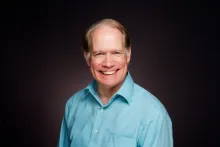
Greg Thomas is the former Pastor of the Cleveland, Ohio congregation. He retired as pastor in January 2025 and still attends there. Ordained in 1981, he has served in the ministry for 44-years. As a certified leadership consultant, Greg is the founder and president of weLEAD, Inc. Chartered in 2001, weLEAD is a 501(3)(c) non-profit organization and a major respected resource for free leadership development information reaching a worldwide audience. Greg also founded Leadership Excellence, Ltd in 2009 offering leadership training and coaching. He has an undergraduate degree from Ambassador College, and a master’s degree in leadership from Bellevue University. Greg has served on various Boards during his career. He is the author of two leadership development books, and is a certified life coach, and business coach.
Greg and his wife, B.J., live in Litchfield, Ohio. They first met in church as teenagers and were married in 1974. They enjoy spending time with family— especially their eight grandchildren.
