

C Mitchell Knapp
This sermon was given at the Pewaukee, Wisconsin 2020 Feast site.
This transcript was generated by AI and may contain errors. It is provided to assist those who may not be able to listen to the message.
And here we are at the Feast of Tabernacles, the opening night. I've been to quite a few. I think most of you have been to quite a few, too. They're all different, but they're all the same. But this is really different. It's the same, though. It's the opening night of the Feast. It is the Feast of the Eternal. And so we are welcomed here by the host, who is throwing the feast, as it were, providing the dinner.
The feast is generally a dinner, plus other, we call them, festivities. And it's our feast for sure, but it's his most because he's the host. We're not the host. We have quite a privilege, as we've already heard a couple of times.
I thought I would start here with Psalm 122. I usually mention the Psalms of Degrees. It's so absolutely relevant, descriptive, and deeply, spiritually applicable to the feast. And so I'll do it again. That's 120 to 134. But just look at 122, if you will. Jerusalem is used in the Bible as a type of the church.
So we're talking about Jerusalem, when they prayed way back then. We're talking about the Jerusalem to come in the millennium. It's going to be the premier city, the capital city of the whole world. And it even has shades of the coming great, spiritual Jerusalem, the new heavens and new earth. So this is kind of a broad poem, or a very broad spectrum of meaning here in this. I was glad, which is an understatement. We talk about feast fever.
I was just, what, relieved, happy, joyous, pleased, and all those exultants. I was excited when they said, well, it's time for the feast. Let's go up to the feast. Which, as I say, most of us have gone many times now. Our feet, they're just going to be translated differently as far as the tense, but here we are, our feet are standing at and in you, O Jerusalem. We're here with the church. David talked in other psalms about, well, actually, sad that he couldn't go to the great assembly of the feast.
So he's talking about people being exultant. Finally, here we are at the feast. Now, speaking of the church, he says, pray for the peace of Jerusalem, not just the physical city, but remember the people of the church, the saints, become the city. Transitions of spiritual, which we can't explain well, if at all, is different and is great, but we can't be that articulate about it. Pray for the peace of the church. Whatever stage in history and prophecy we are, pray for the peace of Jerusalem or the church.
May they prosper who love you. Peace be within your walls, prosperity within your palaces. In the Bible, the word prosperity is a different emphasis. Generally, it means your life works. Prosperity. We usually are talking about making a lot of money, that type of thing, but it's much broader than that, and that's not the emphasis. It means your life works. You have this deep satisfaction and contentment, the joy that underlies all things.
Happy times, sad times, up and downs of life. The joy is consistent, because you have that basic foundation, which is a relationship with God, knowing things are right there. So, prosperity within your palaces. For the sake of my brethren and companions, I will now say, peace be within you. It's a matter of all those personal relationships.
The people that you love don't get to see very often. Sometimes they're embarrassed. You've got to ask for names. At least last ones or first ones. Sometimes the whole name seems to be happening more these days. And a lot of people, of course, comment on that. Because of the house of the Lord, because the house of the Eternal, the church of God, I will seek your good. Just a super interesting comment on the feast and approach to it.
Psalm 147, if you please. Praise the Lord, for it is good to sing praises to our God. It's a good thing. It's pleasant. It's great, we might say. It's just pure joy to sing praises to our God, for it's pleasant and praise is beautiful.
The Lord builds up Jerusalem. God builds the church.
He gathers together the outcasts of Israel. That's certainly a prophetic about the physical people of Israel. But it speaks of, as Isaiah does, pulling in outcasts of those people who were not a people, making them a people. Those people who were not a nation, making them a nation. He's talking about the church, which becomes the kingdom of God, the new spiritual Jerusalem.
So, it's just a fabulous thing to be here. As an introduction, just the...it's already referred to here, appreciated the opening prayer.
Mr. Levistinare, it's just we just have this...well, Mr. Merriman, too.
So, better not...probably everybody's been up here, and probably everybody that is here, period. Just realizing the fabulous opportunity it is to be here. We'll have some more, I think, tomorrow. Usually the first day and the Sabbath, and the Feast of the two biggest days. Sorry that we don't have everybody, but then in general, this is a very low attendance feast all around the world, just because of the current distress. Taste of what's coming, I think the church is going to have a lot of trials, period, in general. And, you know, I feel kind of bad when I think of how many people aren't coming. It's a disappointment, and of course, those that aren't here certainly feel bad. So we're going to have a lot of, you know, the downs as well as the ups as far as emotionally. So we've got to make sure that the spiritual foundation is there. But usually we address, traditionally, we say, why are we here? That's been done for at least 75 years that I know of, and said that many times. So I'd like to ask the same question, maybe from a different point of view. I think it was last year that I gave a sermon on the seven big reasons or purposes of the feast, the definitions of the feast, and they are. I'll review them real quickly. Why are we here? Well, there are seven big reasons, a lot of others that aren't quite as overarching. It's a command. We're here to obey God. This is a matter of giving obedience to God. It is worship, sacrifices, and praises. We're giving the sacrifices that we give our will over to God, our whole selves, pictured by the holy offering, which we'll give tomorrow and on the last day as well.
It's the School of Tabernacles. It's education. We're coming to learn about His will. So it's the same thing, in other words. It's a celebration, and this is a matter of giving to everybody. Everybody in on this celebration is building the joy for everybody else. It's the Feast of Booth's temporary dwellings. We're showing and learning how to give up the physical and transfer over to the spiritual. It all works together. It's the same thing, different aspects.
And this picture is of the millennium, a great harvest of souls. It would be followed by an even greater one. But a taste of the world tomorrow we have. So that's a matter of giving it to everybody, the gifts God has given to us. And I use the word pattern. That might have been two years ago. I can't remember. I think it was two years ago. It was a year ago. But anyway, use the word pattern. And it's a pattern of practicing living God's way of give.
And I talked about service and sacrifice and such. And so today, what I'd like to do for this evening to open the Feast is have a brief look at, to focus on one of those points, the last one. Take it from a different angle and emphasize that. Give you a key to keeping all the other purposes. Those, and I just mentioned seven great ones, but there are many other purposes as you study through it. One key, and this key makes the difference as to whether it's a spiritual feast or not.
You know, it's a great party, no doubt about that. Lots of food, lots of laughter, visiting and such.
But it is a spiritual feast. This is key to doing that.
And it's also, just put it another way, it is the key to observing this Feast, the Feast of Tabernacles, in a way that you gain spiritual growth through the experience. Every single holy day, especially the, well, the multi-holy days, spring and fall we have when they're multi-day holy days, we're supposed to walk away from this a lot different, or at least some different, than we were to wrap it up a little bit and spiritually be stronger, more knowledgeable.
And this is the key to that. Not to hold you in suspense, this key is simply, we're practicing the way of give, how do you do that? By serving and sacrificing for each other.
That is central to the meaning of the Feast. I heard this as a child. I didn't disbelieve about it, I sure didn't understand it. Then I heard it as a teenager, maybe a little more young adult, a little bit more. And as the years gone along, I believe, I understand more later, want to continue to grow, but I think I really get it. It's just the key, because it's taking action on what we're learning. It's the action part of giving. So, to serve and to sacrifice, how we give. Our overall purpose, this is when I numbered the points, you know, then I kind of left off number, they kind of faded out towards the end. So, don't search too hard for numbers. Real, real, real important understanding for us, as far as understanding the Feast and how to walk away different, which we earnestly pray about. And we want to do. Jeremiah 9 verse 23 and 4 are over all purpose for keeping the Feast.
We have seven points that it just gave, but they all fold into this, to get to know God more closely and vice versa. So, he knows us better. He knows what we're thinking, so it's on our part, it's one way. We want to get to know God. Thus says the Lord, other translations, this is what the Lord says, other translations, to you. So, it's an emphasis here. 9 23 Jeremiah, let not the wise man glory in his wisdom, neither let the mighty man glory in his might.
And if you're wise or smart, well, you probably want to show it off. If you are strong, you want to show, make sure people know that in whatever way, muscles or other ways. Or if you're rich, you kind of want to show off your riches and buy stuff for people and make sure everybody knows you have the high status, but God says don't do that. But let him that glories or exalts or shouts for joy. This is an exalting expression of excitement. Or some people, some translations are brag. I kind of don't like the negative connotation there, but it's brag without any negative attached to it. If you're going to be shouting for joy and exalting and glorying, then glory in this, that he understands and knows me, says God, that I am the Lord.
He knows that I am the Lord. You can't go bragging to others. I know I'm in you don't, which some people have done. And that doesn't, by the way, it's not how to win friends and influence people, usually. It's resented. But in your own exaltation and the joy, and sometimes able to express it to others, just that we know who God is. A lot of people don't. And then he says, which exercises loving kindness, that is being kind, merciful, in all the ways there are to be kind, careful to help others. In judgment, so the Lord who exercises loving kindness and exercises judgment, that's discerning what the truth is. Finding truth, searching it, and finding it with God's blessing on your search. And righteousness, which is doing and acting on truth in the earth, finishing that phrase. For in these things, God says, I delight. Now what was that again?
I'll read the second one first. Start with judgment. Discerning what the truth is, He doesn't have to do that. He has it. So He's delighting in giving it to us.
And we're trying to understand more and more of God's truth. And then in righteousness, and God does righteous and saving acts, wants us to practice that. The serving and giving and sacrificing thing. That's what we're talking about just now. And then comes the payoff, the real joy, just the pleasure. God just loves exercising loving kindness, being kind, doing things that are good. Have you ever noticed you're praying for something? You're probably, oh, I prayed about this five years ago. I forgot all about it. And it happened. God is faithful. Or something you never even realized. My, my, Father, you've been doing this for me for years.
And then that's when the thanksgiving happens and the praise, which is what He wants us to do. Okay, now, this, of course, this principle is referenced in other places. Paul quotes it in references 1 Corinthians and also to the Philippians. So what does God tell us that He is like? In other words, He wants us to get to know Him. What is He like? If you take one word, how would you describe God? And of course, you probably know what I'm talking about. 1 John 5-8, 1 John 4-8, I mean. So love. God describes Himself in many ways throughout the Bible. But if you had only one word, the summer is love. Everything is outgoing. And we describe God's kind of love as outgoing concern. God is always outgoing, concerned for others.
Before there was time, which is not possible for us to imagine, I think, because I just said before, but Paul did too, so I'm okay there. But just in the unimaginable past, there were two.
And their character was to give, serve, help, and build up the other.
And we know some really big things, but very little detail.
Some of the things they said to each other, and they decided to become a father and son, change that relationship for our benefit and reproduce this great joyful life, this attitude of love. That's 1 John 4, verse 8, just a quote, says it twice, for God is love.
It's just His way of thinking is concerned for the other. And when Christ was on earth, He said in the present tense, the Father, His goal is to build up the Son, magnify, glorify the Son.
And Christ then, of course, showed that His goal was to glorify the Father, which He did a lot, especially in John in that book. So God is love, and He's giving us the opportunity to be free from our own nature, dragging us down, to come to a kind of thinking that creates just pure joy.
His life is just pure joy. So we come to the face then to practice doing and being like God.
Because we have the example of the Father who gave everything He could, the most He could give, His Son, and the example of Christ who gave the most He could give His own life.
And we come to serve and sacrifice following those general examples. We have a lot of specifics that we're told about too, but just to practice His total love to each other. Now, this part of it, we say it's the way of give or giving, learning to treat others like God to each other because we think like God thinks. This is the key to making it a spiritual feast, because that's the action part of these seven points that I mentioned, the seven great purposes for the feast, giving to God. That's the action part that mimics God's example, which is to give to others, to take action on it, to see a need and fill it. That's a good phrase, very descriptive, useful.
Find a need and fill it. And so that phrase I heard so many decades ago, I believe I actually have come to understand it now. It is the key. It's not all of it. There are a lot of things we're told, really important, great purposes for the feast and for human life. But that's a key because it's a matter of after we've learned it, been told to come to understand it, taking advantage of it and taking action and actually helping, giving, serving and sacrificing for other people.
As a matter of fact, serving and sacrifice make it a spiritual feast. Without the service and the sacrifice, you're doing a lot, you know, coming to the feast and working and studying and giving yourself to God. But that's the key, to turn it into action, to mimic God's example and serve, be concerned in an outgoing way, help and serve others. So I guess I could just fold up my book and walk off the stage. I would be done with the point, but just a couple of more things to add to that.
Our example shows, everybody that we contact, what our God is like. Our example shows, and our worship, it shows what kind of a God we're worshiping. In some ways, all peoples of the earth do that, whatever their worship, whatever they worship or think is most important, that comes out.
But when graciousness and goodwill to all others, whether or not you've been insulted or slighted, and we all have been insulted, slighted, sometimes even attacked and so on, but turn around and turn the other cheek. That's not a well-understood phrase, but there's a lot of meaning behind it. But to take an extreme insult and just turn the other cheek, just ignore it and keep doing good, is amazing. And it tells how our God is, because we choose whether we live by a spirit of get or give. That's our choice. So we are here to do as God does, to serve and actually to become sacrifices to God in serving other.
And in doing that, we come to know God well, and He us, but He knows already, so we're coming to know Him. Okay, there are two great benefits to serving others. You might have thought of them, maybe you hadn't thought of it this way. Two big benefits. Our example to others is encouraging and inspiring. Christ said, even if you give a cup of water to somebody who's thirsty, that shows the whole principle there. Don't be without a reward, even small things like that. But if you buy a meal for, if you encourage or give comfort to somebody else, they're helped.
You know, if you buy a toy or you provide transportation, all those things, then they're helped. It makes people feel like they are at home with us at the feast in the church family.
And it says, welcome to the family. You're an important part of the family. And this is God blessing others through you. That's how that works. So that's a huge benefit. You actually are benefiting other people, which we want to do. There's a second reason, which is also huge. And that is, the second benefit, I should say, God's great benefit to those who do serve. When we serve and help, Scripture and Deuteronomy, which I didn't look up for this sermon, is that when you help the widows or those in need, and that would really the spirit of it means to anybody, it's almost like you're going on God's payroll. He pays you back so much. Peter was kind of in a doubtful mood one day, apparently, Matthew 10, 28, three or four verses there. And he said, well, you know, he had his great wisdom and jumping out before he had thought it through. You know, we've given up everything to call you. I mean, I had two fishing boats. I had a thriving business taking stinky fish out of the sea, and you know, and it was really coming up in the world. And you can go on with a little humor there, very little, I know. But it was kind of funny looking back on it. And Christ knew what He was thinking, and didn't chastise Him for being selfish. It's a question we've all asked. What are we going to get out of this? There are sacrifices. Some of them are hard to make, to follow God. And Jesus said, well, you know, if you've lost your house, your brothers or sisters or father or mother, or lands and money and business, whatever, for my sake, you're going to be paid back a hundredfold just for that. What's that? That's the fellowship and the tight-knit relationships of preparing for the family of God. And then He sort of said, and by the way, don't forget, you know, in the judgment, eternal life, huge! So when we are helping each other, we need to remember Peter's little example there. It doesn't say what I don't think Peter said anything back to him, but it goes on to another story. Matthew 10 there. As followers of Jesus, we learned that our personal gifts, our health, our skills, abilities, talents, our time, our life, we all have gifts. We're happy we have. We want to use them for God's purposes and so on. Everything they weren't given just for our use. It's a lesson we all know. Good to review. Our strengths, the ability that we have to do many, many, many things, and our blessings are also for the benefit of others, because God wants to serve others through me. That's the idea. He could just bless them way better for Him to have somebody He's dealing with and training to think like Him and give that person a blessing through you or through me. It's the way God does things. He's thinking, outgoing, in every department. In this case, there's where He... and of course, He has such intricate plans that they're beyond us.
Now, why does God then want us to serve so much? Because there is a lot said in the Bible about serving and helping, giving, and so on. Matthew 5 and verse 44, if you please. And 45 is the one I'm after. So verse 44, but I say unto you, love your enemies. So He says an incredible thing to the vast majority of everybody when you first learn about it. Somebody's mean to you while you'd be nice to them. Everybody knows, playing on the playground, you don't do that. Even on the living floor before school time, before you get into school, somebody just probably is a sibling, you know, steals your little play car or your dolly. Well, you go get it. You know, be nice to that enemy. And so He said, love your enemies, bless them that curse you. Do good to them that hate you, and pray for them which despitefully use you and persecute you. This is opposite. It makes your skin crawl if you're in the situation. It's the opposite of what we want to do. So, but God wants us to do that. And then He gives us the reason, which I've already mentioned in other words.
Verse 45, so that you may be the children of your Father, which is in heaven. For He makes the sun to rise on the evil and on the good and sends rain on the just and on the unjust. If you love them, which love you, big fat deal. Everybody does that. That's not being converted.
Show love to everybody, just to your friends or your little clique, or just to the church. And so God is always thinking, outgoing, beyond greater. And that's what He wants us to do as well. So this, actually, is so important because that's us taking action. And that's how God then uses our actions when we're in obedience mode and thinking like Him, striving to think like Him, and taking the action. That's why it's the key. That's when God makes the changes.
Now, you'd probably like to know, how does He put little buttons and knobs He turns inside our brain? It's spiritual. And so it's beyond us. I'm not prepared to tell you that, but that's what happens. When we act like Him, when we're thinking like Him and therefore are truly concerned, we become more concerned. We become like God. That's what we call the spiritual creation that He's doing. Physical is done, and that's the spiritual. And that's why it's so important. One of the greatest reasons, kind of an overarching reason, why it's so important to serve and sacrifice for others. It's just a major key to being converted, or in other words, spiritually created yourself in God's image. It's just absolutely, over-arkingly, powerfully important that we serve. And sometimes it's easy, and it's a lot of fun there sometimes when there's sacrifice involved. Well, I wanted to do this fun thing. I need to help old so-and-so over here. He is having a tough time. So, and we know that. Okay, so that's a little more explanation on the point. I had a lady ask me, a long-time friend, ask me, how can I have the best feast ever?
When I am hurting, when it can't possibly be the best feast ever.
I said, very good, very, very good question. And she said, you know, it's irritated me for years.
Have the best feast ever, you know. That just irritates me, because it can't possibly be. And I confess, I said, frankly, it's irritated me at times as well, because you keep a few feasts, and the first few, they're probably really great. If you're, you know, five, six, seven, eight, nine, right there, you're fifty-five, six, seven, eight, nine. Whatever, the first few are probably pretty good. But then you're going to have times that aren't a lot of fun. Inconvenience is actually one of the big, say, results or requirements of the feast. Get that many people together, you're going to have inconvenience. We have the example of Israel. And, you know, you're on a time schedule, there are more pressures, and that's part of it, too. A little duress that God adds to help us to overcome our own nature. So, a great question, I thought. I need to talk about it. And, of course, it comes out that you can't have the best feasts ever all the time if you're looking at the physical, like Solomon, that whole lesson in Ecclesiastes. Spiritually, yes, it's possible. Although sometimes the feast is really hard to get through, attitude-wise. So, even then, it's not guaranteed, but it's something that can be true spiritually. And, hopefully, in some ways it is. You get through a trial and you passed it, even though you had a bad attitude for four or five days. Hypothetical, of course. I know that that's never happened to you, but anybody in this crowd, of course.
Silence. It must be the spacing or else guilt. That's possible. Boredom, maybe, because you heard it before. But, spiritually, yes, it's possible to have the best feast, or just a great feast. Not always, physically. And that's sort of the answer to it. It kind of full enough explains it. So, how can I be happy when it's not the best feast ever? Well, if you look at it spiritually and you pour your heart into it, get your mind off yourself, onto others. That is how. Now, God has this perfect feast plan. If you look in area after area of your studies and experience, and you look at God's plan, you will find excellence and perfection. He thought of it all out in advance, and we come to understand it as we grow through life. Well, that was just perfect. In this case, each Holy Day is just perfect for teaching the lesson that is designed for it. Feast is a great example of all seven, you know?
And it has to do with God giving rain to the just and the unjust. How does God make us give us the opportunity to be generous? Let's say you are poor. And I spent quite a few years early on being poor. We weren't poor. We lived in America. But my parents had gone through the Depression, and they thought we were poor. So I thought we were poor. I didn't know how much we had. But we didn't have a lot of money, and so we thought poor in those years. And so how does God take people that think they're poor or else they really are and help them to be generous? Well, He makes them save second tithes, which makes them even tighter. But He blesses you, and then you're supposed to spend it all in one week. That's general spiel. Spend it for the few days.
Doubling your average spendable income in some cases, you know, it increases it at least. And so you learn through prosperity, speaking of economic prosperity, particularly in this sentence, you learn by having a lot more so you can afford to give more. How does God do this to the whole world? Well, He lets a man have his way. The whole thing ends up in a burned-out, wrecked world. He saves us at the last minute because of a thousand years of enormous prosperity so that people can learn, and then they're able to pass that on to those who come up later. It's a principle you wouldn't think. It's just brilliant that God does it in that way. The feast as you go along changes you. And I can speak from the personal example of growing up in the church. That was five and six, and started really seven, you know. Each year was better because I was a little bit older, and so each year more toys, bigger. You could run faster. You could whatever. And then, you know, you hit teenage, and then puberty, and then the feast turns golden. All those girls at the feast, you know.
And there were, in Squall Valley, where I was during the years, there's like all everywhere, there are a lot of boys and a lot of teenage girls about the same age. It was absolutely wonderful.
And so then, you know, follows marriage, and then kids, and you go on through, and somewhere around 40 or in the 40s, you begin to start getting a little tireder than you used to be, and you start more seriously. And so God, in his brilliant wisdom of the slow and painful aging process, slower, more painful age, getting older, in his wisdom, gave us a natural, just a natural experience where you automatically become smarter, older and smarter. And it's the same if you keep the feast through those years. But here's the thing. God's way gets better and better and better and better. That's what God's way does.
And no matter at what age you start keeping the feast, you begin to learn these same lessons.
And some are, you know, ahead of the game because they're older when they're baptized, start keeping the feast. So in that sense, you can take a measure of yourself, a snapshot, if you will, about your own conversion, by looking at your attitude towards the feast.
Joy, joy, joy, great joy, even more joy than, and then it's kind of hard and a lot of work during those years. And then this happened to me for a few years. I really had to fight. I always wanted to go to the feast, but I had to fight an attitude of just having to work, work, work, work, work.
Because that is true for a lot of us, you know, families and so on. And the ministry and in certain areas of service, that's true. There's a lot of work, but there's a lot of work to life. It's supposed to be that way. And then my hard head finally began to soften. I began to see God's wisdom in that whole process. So the feast is very valuable and can be used like a snapshot. What do you think your view towards the feast? What's that compared to other times you've had? And what do you want to have next year? What's great about the feast is definitely the spiritual values. It's not the physical stuff. It's the relationships. That's what really turns out to be great about the feast. If you aren't serving, then as I say, it's not really the feast. It's not the spiritual. It doesn't have the full meaning that God intended. Okay, 1 Corinthians 16 and verse 13, watch you stand fast in the faith, quit you like men and be strong. Verse 13. Verse 14, let all your things be done with charity, everything done with love.
And then he gives an example. The family that was the first one in that area, I think it's northern Greece, is Achaia. I beseech your brethren, and you know the house of Stephanus, that is that he's the firstfruits of Achaia, the family of Stephanus, and that they have addicted themselves to the ministry of the saints. Well, addiction is a bad word, I thought.
So you probably have done this too. Look that up in the Greek. And what it means is addicted. It means exactly what the English word means. There is something about God's laws, His way of life, doing things His way, His way of thinking in an outgoing way, rather than incoming, that is addictive. God's love is addictive, this outgoing concern.
And it is powerful and it is life-changing, and that's the key to changing not just yourself, but the feast. This is a key all through every area of our life, concern for others, and taking action on it and really helping others where they need it.
It's a key to conversion, which we've heard in other ways many, many times.
It's not automatic for you to grow spiritually because you have to continually obey God and exercise the service and giving and sacrificing for others. Or, in the words of Jeremiah, you have to continually try to discern what the truth is, learn more about the truth, and continually practice righteousness, which is the action phase. And Jeremiah actually mentioned this first. And when you get to the exercising of loving-kindness and being kind to people and good to people, like God, giving rain to the unjust and to just as well. And it doesn't hold off for years and years. You've been baptized for 35 years, and he finally says, well, okay, you're good enough. I'll give you a little something. He gives us way more all along, makes it available, and blesses us. When you finally come to that point after judgment and righteousness and our exercising, loving-kindness, there's something addictive about that. And that is just pure joy. That's where it comes from.
Thinking like God creates just pure joy. With practice, we come to be like God and delight in the same things that he does. And that's the means by which God creates his Spirit in us.
It's just life just turns golden and delightful when you have God's Spirit. That's what he's been trying to tell us. I'm sure he's going to say that to, oh, well, I think, you know, I don't know how it'll be. But I think he might say, that's what I was trying to tell you for 20 years there, you know. But I don't even think he will... By then we'll know it. So I'm anxious to hear. I want to hear the full story about me, and I'm kind of interested in you, too. Just the wisdom with which God brought us along all these years. And the feast, as I say, can be a snapshot. We can learn a lot about ourselves in stepping back and looking at how we're keeping the feast and the attitudes we have. So I started a list of service, different ways you could serve. One family said, well, when our girls were little, we had an adopt, a grandpa or a grandma. And each day of the feast, they go over and they visit. And they built these relationships with parents. Well, that's a good start. A lot of us started our service in the church with carrying songbooks, but we don't need to do that this year.
But we got to have a pretty long list. You probably know that. The idea is to see a need and fill it. And so I dropped my idea of the list. You probably have your own. And if you ask God for help, that's when you'll help me to see the needs and just determine that you're going to keep this feast especially giving by serving and even sacrificing when necessary. Actually, I know that a lot of us are already doing that in many ways. But it's important to understand the principle behind it. And I just suggest what my wife and I are doing is setting goals to plan.
And we have some, and we're going to be doing that the first couple of days here, plan for the rest of the time. We are called to the feast for those purposes that I mentioned and others. But to boil it down, we are called to serve and to sacrifice, to practice living and thinking and doing like God so that we can become like God. So that He has more to work with in changing us because we take the action. That's our part. And He does the conversion, which He is most certainly going to do. That's why we're here, to answer that question. That's one way to answer it. Try to give the general point of view and then the key, which is that outgoing concern like God has, serving and sacrificing others, giving in that way. So let us give through serving and sacrifice and make sure that we do that, this feast, brethren.
Let's do that. Give God that pleasure, which He talks about, the pleasure of His children, loving His children. Amen. Let's help Him in that way. Let's serve and sacrifice and make that key item, a main item, in our keeping of this feast. And may God bless you and bless all of us with an excellent, wonderful feast of the Lord. Maybe even the best one ever.
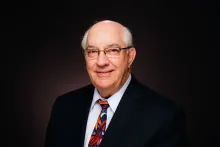
Mitchell Knapp is a graduate of Ambassador College with a BA in Theology. He has served congregations in California and several Midwestern states over the last 50 years and currently serves as the pastor of churches in Omaha, Nebraska, and Des Moines, Iowa. He and his wife, Linda, reside in Omaha, Nebraska.
