

C Mitchell Knapp
This sermon was given at the St. George, Utah 2022 Feast site.
This transcript was generated by AI and may contain errors. It is provided to assist those who may not be able to listen to the message.
Good morning, everyone. It is lovely to be here. This year we have some personal reasons for being even happier to be here. But it's just great. It was great to be able to walk in and after some difficulties we were delayed by a number of things. I heard Mr. Tom's sermonette about these verticals and one thing after another and learning the same lesson. And that was me, for mainly me, for three days there, as we were delayed more and more. And saying, oh no, the opening night is gone. It's no longer a hope. Oh no, the first day is at least we got those online. And so we were delayed just by three days, different things. Not to be detailed on that. That's not important. But I thought it would be worth just mentioning, just for the lesson of it, I should have first mentioned thanks very much for the beautiful music the choir just sang and other music we've heard previous really very inspiring. It's much appreciated, not missed, and very much enjoyed. Sorry, I didn't mention that at first. But just being here, it's a little bit different if you have not ever had that experience. This is the first time I missed an opening night. And that was a strange feeling. I wasn't overwhelmed with grief and so on. But I said, truly. And then I had a selfish thought. I said, rats. I had a string going there.
And this is the 72nd feast, which is a tribute to my parents, you know, holding my mom's hand, you know, reaching up when I was doing it. It wasn't my volition. But just as an honor to them, who both have died in the faith, faithfully, their lives. But I thought, you know, I didn't want to mess up my record. And then, you know, rats. Just an opening night. And then it wasn't just that. It was three days. And then I thought, you know, cut that out. What a selfish thought. Am I attending the feast for my glory? It's supposed to be God's glory. You know, sorry again. Kind of that one, too. You know, the many things that come around. So there were just all kinds of emotional and spiritual thoughts and feelings just dealing with that and not being able to make it. And then a welling up of desire to, we need to get to the feast. And that's Psalm 120, the first of the Psalms of degrees. You would think it would be a glorious introduction to the 15 Psalms there, specifically on the Fall Holy Days. And it's not. It starts out, whoa is me? You know, I need to get out of this world. I got troubles. I need the feast, the feast. The great blessing of, we say the feast, the Fall Holy Days go together. They have to go together. So we walked in and had to find the place and had to find a parking lot and this and that, having just arrived late the previous night. And walked in and here were a couple of gentlemen. I said hi, happened to know them, you know, Mr. Foster. And then, hi, how you doing? And he said, boy, I'm really glad to see you. I said, boy, we're glad to be here. And, you know, a hug and go on. And I thought later, he has the alternate sermon tomorrow when I'm supposed to speak. And I thought, no, no, no, no, that's selfish. It's just all love and concern and spiritual kindness. And actually, I really believed that. The other was a convenience. But, and then right behind him, Mr. Dowd, and we're looking around where to sit and we didn't want any steps, but we didn't know where. And Mr. Dowd was right behind him. He said, say, do you need a paddy? You know, greetings. Do you need a seat with almost no steps or no steps at all? I said, my wife said, yes. So we just got right in here and then we were walking and the singing started. And it reminded me of the psalmist, you know, how great it was to go to the great congregation. And at times, one of the psalms talks about just feeling so badly because he couldn't get to the temple. That was one of the later psalms. Asaph, or a son of Asaph, wrote it.
And all those feelings washed over. And I heard the music. And I almost, I didn't blubber. I didn't cry. But I kind of felt it a little bit. Just so good to be where God's people are supposed to be. We're supposed to be here. It's the truth, you know, and we've been called. And it's such a special opportunity. So there are lessons to learn, even though, even when you have a trial of not being here, and I don't want to go on about that at all. But it's worth repeating just to remember what a blessing the feast is, and how valuable, and what a loss it would be not to be able to come.
We were stuck in North Platte, Nebraska, for three days. Almost, you know, got to know people around town. Got to know the people at Luigi's Restaurant. You know, Italian. Really good. A lovely little town. And we also got to know the urgent care and the emergency room. Quickly taken care of, but much needed. And that reminded me that the town doesn't matter, except that it does. Anybody know what North Platte, Nebraska, is famous for? Just a hand. Any old hand will do. Maybe somebody's waving. Thank you for waving there, fella. Not nine years old, I think. Good to see you.
North Platte, Nebraska, and the—right when the draft started, after we began to send people, a lot of soldiers into the war. Massive effort. Everybody from Chicago and west, in the northern part, at least, went to the trains and gathered in Omaha, or even before that, in the headed west. And about that time, they got about four hours out from there, so eight hours from Chicago, or more than that, actually. There was a need to have just stop and, you know, full meals, not just snacks, and get all these young men fed. And North Platte heard about it and contacted whomever. And they said, have them stop at North Platte? We'll have food waiting. And so, they did. And by the tens of thousands, the troops stopped there for a considerable time. And you have this whole train full—a couple of cars each—no, no, several cars, pardon me.
Well, that's not important, but a number of trains with many cars. And I've forgotten the number, trying to think of the number. But they stopped there, and they were welcomed. And given some warm food, a warm meal, they had a lot of attention. The townspeople came out and had sandwiches and homemade soup and a lot of good things. Now, these are boys—many of them were from off the farm. They were 18 and 19 and 20, and some of them hadn't been out of—a lot of them hadn't been out of their county ever yet. And they were going off across the seas to be—they were being trained for war. And they were scared, and they were unsure of themselves and butterflies in their stomach, the whole ordeal. They weren't prepared for this, but they were going to have to grow up fast and go fight another army. And, of course, when the townspeople came out, the soldiers appreciated the young girls about their babies. They came up willing to serve, help out. But, you know, they almost appreciated their mothers and their fathers and their grandparents more because they were scared, not feeling all that romantic. And the town gave them comfort for a long time. What happened for several weeks or even a couple of months, as they were moving—more than a couple of months, but as they were moving out. And they kept it up. Thousands and tens of thousands of relationships were started. And during the war, and even after for many years, people would get—in North Platt—will get mail thanks to individuals or just the town, thanking them for the comfort and strength and encouragement that they had given to their son or their grandson or brother, whatever. Just tens of thousands, yet affected a certain small portion of the population for two generations' worth—the parents, maybe the grandparents, and then the soldiers in that generation. And the whole town just stepped up and blessed the troops. You know, blessed—filled some very great human need. They comforted them. So that's what they're famous for. And you can just go online, North Platt, Nebraska. It was called the Canteen. They called—they named the town the Canteen. And so, very interesting—there's an interesting story and fascinating. And so, I just thought I'd bring that up, not because that's where we were for three days—it doesn't matter. We're here now and we're all happy about it—but because it fits with the sermon. So I'll come back to that a little bit later. I have a question for you. I entitled this, How important is it to serve at the feast? Or, the spirit of the feast? Kind of go together. And it goes perfectly with Mr. Hill's sermonette. Thanks very much for that. The culture—that's the whole idea of what I'm talking about, but specifically focused on the culture. And so, that's happened so many times. And also, this fits right into Mr. Dowd's sermon and Mr. Tom's sermonette yesterday. I presume you'll see how in just a little bit. But that's the title. How important is it to serve at the feast? Or, the spirit of the feast? So, how important is it? And how would you answer that? We can study that. God's answer to this question is super important. Just rather quickly, I hope, you know, certainly simply, very, very deep, but simply stated.
First, note the genesis of this original sermon in Omaha and Des Moines, in those churches. We had a pre-feast Bible study, and we were going to go to Deuteronomy and Exodus and anywhere, but mainly there, and look for the specific requirements, or what God says specifically. When you go to the feast, do this. Like in the first place, go there. You've got to move and get there. And secondly, you know, stay for all the days and bring your second tithe and bring a holy day offering. And there are several others that mention money, and it talks about including. There's a whole list of specific commands, and you look at it, and there's a lot to do to keep the feast. The way God wants us to keep the feast is not a vacation. That's a hint. There's a lot to do. So there are times when you can get out and maybe do something that the community offers. Well, we do that quite a bit in the afternoon. If you don't have cars and you're keeping it in Jerusalem in Nehemiah's time, you don't go canyoneering in the afternoon and get back in time for dinner. You know, it's a different time. So we have some of those opportunities to get out in this beautiful area. But there's just a lot to do to fulfill these specifics. And we can...
We saw that there were many of those. We lost track after about 20 specific, do this and do that. But then there were a lot of implications, and the list grew long. So that was what began this. That's a very interesting study. Just look through those areas and look at what God says to do.
But that then led to further study, naturally. We saw that they take time, and we reviewed the reason that we're supposed to keep the feast. Why are we here? Well, it's so that Deuteronomy 14, 23 tells us, to learn to fear the Lord and thy God. Always. It's an all-year thing. The lessons learned here are supposed to last all year. Learning how to fear, in that word, you know, it's a healthy fear, not a terror, unless you do wrong, you know, unless you rebel against God. But it's a healthy fear, and that grows into a desire to serve God. And then a devotion, and finally you're just totally worshipping God. It turns into fear, or that kind of fear of God turns into love. It's stated both ways in the Old Testament. More fear in the Old Testament, New Testament.
Love is emphasized. But that's the same thing. This attitude of just total devotion that develops from fearing and then loving God. So the idea then is that we learn how, and we do our best, to keep the laws, the intent of the spirit of the law, during the feast, special focus time, to duplicate the spirit of the whole world, which is coming. The world tomorrow, which is supposed to be and must become, and actually is, the spirit of the church now. The spirit and attitude and approach to life, and that's what you could call the culture of the coming world, the culture of the church. So it's just exactly what Mr. Hill said, and much appreciated for that explanation. It's the spirit of the feast, too. It's the way of give, we've called it that. This powerful principle of this outgoing concern, where your concern is outgoing, not focused, incoming. Absolutely opposite. We have to have that, or we can't have the kingdom. That is a must. It's the spirit, the Holy Spirit, of the church in the kingdom, and we can't have the opposite. So that's the first point. That's why we're here, to learn the culture and the spirit of the kingdom, which is our culture now. Now let's go to Deuteronomy 12, because there was kind of a contradiction in our study. It was an interesting study, but there are some things that seemed irrelevant. But there they are. You're supposed to do these things. And so let's look at chapter 12 of Deuteronomy and read starting in verse 5. But, unto the place which the Lord your God shall choose, out of all your tribes, put his name there, even unto his habitation, where he would habitate or where he would live, shall you seek and you shall come. Mr. Daud mentioned that as far as the most important, the emphasis put on the place. It actually is not just the place, it is the religion in which God you're worshipping, because there were different places. And specifically, he chose Jerusalem. And in the New Testament, Christ said, well, there come time when you don't have to go to Jerusalem, because we'll be all over the world. And so that specific, that one location, became many where the feast would be kept all over the world. So God has, we use this term, it's absolutely biblical. God has placed his name here. After we leave, the day after it won't be a church, it'll be kind of an empty hall. I don't know if you've ever experienced that kind of empty feeling. I went to the Del's for years. The next day, it was just a wonderful time into the feast, you know. The next day, it was just this little commercial town, and not inspiring at all. But when God is here, it's like Moses in front of the burning bush, where there was holy ground. When God is here, this is a holy, that is a sacred, a place being used for a sacred use, definition of holy, or one definition of sacred and holy. At any rate, so that's emphasized.
It has to be at the right place with the right, you know, the right people who are called. And there shall you bring, verse 6, your burnt offerings. Okay, that's money. We don't, but we're not doing sacrifices this year, and so we just, we're gonna do money. You shall bring your burnt offerings and your sacrifices and your tithes and your heave offerings. Don't forget the heave offerings of your hand and your vows and your free will offerings. We're talking money here, there's several different things that involve money. And the first things are your herds and of your flocks, and there are more. So there's a lot about wealth and what you produced during the year, what God has blessed you with. And therefore, you shall eat before the Lord your God, and you shall rejoice in all that you put your hand unto, you and your households wherein the Lord your God has blessed you. Okay, so you're, we know this, we've read these things, these are specific things to do at the feast, and that kind of seemed, some of those seemed irrelevant. I don't even know what a heave offering is, I kind of do, but you know, that would have to be, have to do with why you're giving it, and how you're giving it, and what they do after is a festal meal that you enjoy with the priest and his family and your clan, or is a personal offering that is just between you and God, and all kinds of varieties of other things, different kinds of gifts. So I'm getting ahead of myself. Verse 11. And then there shall be a place which the Lord your God shall choose to cause his name to dwell there, as we emphasized over and over in this important chapter. There shall you bring all that I command you, your burnt offerings and your sacrifices, your tithes, the heave offerings of your hand, and all your choice vows, it's kind of a choice vows, that's a different minor category, which you vow unto the Lord. And so there's a little more added to that. And verse 12. And you shall rejoice before the Lord your God, you and your sons, your daughters, and your men servants, your maid servants, and the Levite, who is within your gates, for as much as he has no part nor inheritance with you. So there is inclusion. Psalm 68. God takes the singles and puts them in families. So that would be one application of this basic law here in Deuteronomy. Include others. Invite people. As we walked into services, when we got here, it was so heartwarming, we had service immediately answering the questions we needed. After services, we stood up and looked around, and somebody walked by that we recognized. They recognized us. They invited us to lunch.
We just felt like strangers wandering in off the prairies, you know, and here we were finally home looking around and service immediately. How wonderful! How good! I can't think of any other fantastic words. Wonderful and good. That's wonderful and good enough. It's just great to be here and receive some of that service. Now let's drop down to verse 17 here.
You may not eat within your gates the tithe of your grain. Don't eat it. Don't use second tithe at home. And this is second tithe here. Or of your wine, or of the oil. The first things are the herds of your flocks or any of your other of your vows, which you vow your free will offerings, heave offering of your hand. Now I just probably will not ever actually offer a real heave offering in my life. You know, you probably won't either. We don't do that. That's not part of it.
So what does it mean? Well, there's there's it seems irrelevant. But what we have here is a list of several types of gifts of love, peace, and fellowship with God and with people. So the fellowship meals and so on at the feast. In a week-long celebration, these are symbols of gifts of various kinds of things. Some of them are money. Food, transportation, a lot of money. Food, transportation, companionship, babysitting even. That's one of the things you can do. So I threw it in here in this list.
But these things mentioned here are not the way it would be for the next, you know, 3,500 years until Christ comes. Of which we're pretty close to that right now. But these are, they typify a whole balanced way of being a living sacrifice to God through serving others. That is an important point and part of the sermon.
By the way, speaking of service, I'll come to that in just a minute. We received, and several of you also received, a nice lovely little note. This one has a variety. Thank you to the young ladies who handed him up to us. Very young. Appreciate it very much. And their sisters and mothers, I think, were with them. Some kind of female adults don't know the relationship. But anyway, this is just lovely. Little hand crayon, happy feast from tabernacles. I know one thing used to be, I used to be blind, but now I see, John 9.25, a little strawberry.
How nice. And thank you very much for that, girls, and all the others that you handed out as well. So I had a promise to read it, to get it. So I read to all of you. How sweet and how nice. It's within the culture of the church in the kingdom, within the spirit of the feast. And we can read verse 18 and 19.
I think probably I'll come back to that, but just note that you shall surely rejoice before the Lord your God in all that you put your hand into. It's not limited to the feast, in other words. Same lesson. So these basic gifts and vows and services and so on are symbols of what we can do today. There are a lot of things having to do with money, but there is a lot that didn't have to do with money. But money involves even going out to lunch, which we were treated to lunch. And so some money was involved in that, but the biggest thing is the fellowship and the personal recognition and the providing of comfort that rings a bell, as in North Platte, young soldiers.
See, there's a providing of human comfort and strength and lifting up that is so important. It's the spirit of the feast that Mr. Hill was just mentioning. Not our attitude. Me first, me first. I really identified with that one. I suppose you did. But it's the spirit of God who's interested and others first. And we have to be concerned about our responsibilities. God doesn't have to. He's not in danger of, you know, He doesn't have to put Himself together every morning and wake up and take care of a lot of those needs.
And He offers that to us. We'll never have those kind of personal needs. We'll always be able to give and have the strength and the wisdom to lift up and encourage. So that's the idea. I can just walk off the stage and relax and be done right now, but there's some other things we'll add to that. But that's the idea. Okay, now. So God really emphasizes serving and giving and sacrificing.
And these things that are mentioned are the symbols of what we should do as we grow in living this way of life, God's way and I are way. There are so many examples of serving in the church. I'll tell you one thing. This is not an exhortation. You people better start serving better. This is saying, thanks for the service. This is a serving group. We're a bunch of servers and just come to the... if you want proof, attend any fee site. People are running around a lot of activity really helping others. We can all do better. And actually that's part of the sermon, too. Just thinking about this and considering it, we can do better. We can raise the standard and raise our level of service to God by serving each other. Now, why does God emphasize service? Because service builds relationships. Just a real quick tagline there. Good thing. Easy to remember. Service builds relationships. The people in World War II that were going across the seas, they remembered those nice people for a long time. All their lives, actually. And a lot of people have gone back to the North Platte just to see it from all over the country. So we are servers and we serve because service builds relationships. That's what God has us busy doing. Do I have time for a side point? No, I don't. Sorry. Wish I did.
I'm going to say it anyway, but I'll say it quick. In Revelation, the city is like a bride adorned. How does that work? Well, the city isn't buildings. It's the people. But there aren't people anymore. They're spiritual beings. Likened by God to jewels that shine forth each jewel unique, shines forth light that identifies that person, that lived the life and struggled through and learned, and that God glorified. It's the relationships and the structure. You think of a wall. It says the walls were filled with the jewels. That's his jewels. And the temple, those were the two. God the Father and Jesus the Son. They are the temple, and the city is the saints. It's a metaphor. It's a comparison. So we can get some idea of the unity of the family that God has. So that was the side point. Now I'll hurry. Well, let's just ask the question. Why does God emphasize giving and sacrificing and serving, which he does all through the one unified book, the Bible, his book? Let's read Matthew 5 verses 44 to 45. This is one of the main... I just keep coming back to this in my own personal thinking. There are just so many wonderful scriptures, though you run out of room in your brain, I think.
Not really true, but... Okay, 545. Fabulous scripture. This book is made of fabulous scriptures.
544 first. Well, you've heard it said, You shall love your neighbor and hate your enemy. But I say unto you, verse 44, Love your enemies, bless them that curse you. It can be done. I've... I guess I have done that. I know of examples of others that were cursed out and blessed them rather than, you know, repaying in kind. Bless them that curse you. Usually sets them back pretty well.
Bless them that curse you and do good to them. They hate you. That's hard, but we do that. There are rare occasions when it's obvious, but we're... that's part of our... that's part of our life. And pray for them who despitefully use you and persecute you. Well, we probably... probably most everybody has done that one anyway. Pray for... to have God's attitude toward them instead of your own attitude toward them. That is conversion. That really goes deep and basic. That's what that is. Verse 45, that you may be the sons of your Father who is in heaven, for He makes His Son, S-U-N, He owns the Son, to rise on the evil and on the good and sends rain. That is... helps them prosper. Rain gives life to your crops and food on the just and the unjust. Well, I kind of read right over that, but let's get to the main point, which is the first. So that do these things.
They're contrary to your own nature. So that you may be the sons of your Father who is in heaven, because you'll be doing like He does. And you can do that all day and not become converted and do all kinds of good things. And by your efforts, you won't change yourself. But when you do God's things and think His thoughts, taking His actions, He will make those changes in you. He will convert us in the areas that we can't change. We can see it. We want to be different, but He does the conversion. But we have our part. And that's all these things that are against our own nature. And that is it takes the power of God in your mind. It's not thunder and loud and lightning and that other people can see. It's this huge storm in your own brain where you're choosing right or wrong constantly. The war, they say. So we'll be practicing what God does to be like Him, to be like them, the Father and Jesus Christ.
He, they love seeing us practice and become like they are all the time. And there's something really special about the feast for them, too. And here's the thing. There's no other way we can have the kingdom. We have to have this active part. Not that we can make any spiritual changes ourselves, but we have to do that so that God then can join us in a partnership and that way make us real children in His kingdom. It's a fabulous plan. You think about it, look at the details. God has this wonderful, fabulous, just tremendous program of glorifying us. That was his goal in the first place. Now, I want to go to Philippians 2 verse 3. And the whole book of Philippians is just fabulous. Well, when you read it, the Bible becomes a deep book of fabulous, wonderful sayings, instructions, explanations, encouragements, and so on. So Philippians chapter 2, and let's just note, breaking into it into the context here, having the same love, being of one accord, being in unity. Verse 3, let nothing be done to strive for vain glory, but that's what we always do. Like, you know, missing the first day, the opening night for the first time ever.
For me to think of, breaking a record is not my record, you know? But, and I had to juggle, Mr. Hill was talking about this, that really, that message struck me, it really helped, appreciated it, but it's the same. We just, I find myself, I'm sure you do, you go back to normal, okay? You're not thinking, when you're not thinking of anything, what do you think about? You know, there's a default, you go back. I heard a spokesman's club speech in 19 and 71, I think it was, and he, I don't remember that many spokesman's club speeches, but he says, when you go back to your default, what do you go to? Because that is your God, that's the most important thing, and that hit me like a lightning bolt. Well, that's true, right then, that period of my life, I was going back to my finances and worrying, and I was, instead of having faith, like Mr. Thomas was talking about, and just waiting, and having relaxed faith, relaxed faith, after it happens, you're all relaxed, relaxed faith is, you're all relaxed before you get the answer. When normally thinking of yourself, you just be all worried and upset. These are constant things we fight. So let nothing be done through vainglory, but in lowliness of mind, let each esteem others better than themselves. Verse 3, well, Christ said to love your neighbor as yourself, and I could understand that, you know, as a young man, even as a teenager.
I think I was 12 one time I had that explained, so I thought I got that. It's an ideal. I couldn't, but it's an ideal. You could love people, others like yourself, but this says, esteem them better than yourself. How can you do that? You'd have to have outside help, like Christ, the mind of Christ. And this helps me. I didn't understand this for decades, but I think God gave it to me one time when I was studying.
How can you do that? How can you esteem others better than yourself? Well, in the first place, if you repent and hang in there and God gives you opportunities to repent and shows you what you need to repent of and all those things for long enough time, you will come to think less of yourself and realize you need more and more help. And you need it all the time. It's just that you didn't know it that well. But that'll happen, a natural period of growth that God helps us with. But how can you... what's something we can look at for an example? How about the Father and Jesus Christ? Both of them, in their individual ways and together, have treated all of mankind. We're the first roots, so we can see this more clearly and directly.
They have treated us as though we were better than them. You know, you go to the Father and Jesus Christ... you can't go by yourself, so He's always there praying to both of them.
And you think and sometimes pray about this specifically. You've had so much mercy and you've blessed me in so many ways. And then added on to that, you've treated me like I was the Master and you were the servant. And of course, that's exactly what Christ said. It's kind of a back way of coming to it, through my own thinking processes. I don't deserve it at all. And I thank you. They treat us, they treat you and I, better... as though we were better than themselves. Oh, it's not true. And we have no way of knowing who is better than we are. You know, we can't judge hearts. What's more, it doesn't matter we're on the same par. We're on the same level in God's sight, which is what matters. It's not a matter of what is. It's a matter of our attitude and how willing we are to sacrifice and serve and help the other guy, like North Platt did. Plant the seed, I'm coming back to it. Okay, so that to me was a fantastic realization some years ago, that they have treated me better, as though I were better than they are, which is not true. Okay, let's drop down to verse 13, if you would. We're just not trying to cover everything because we can't. So verse 13, wonderful verbiage in between, which we could read it. Verse 13.
Well, it says, work out your own salvation with fear and trembling. How? Through serving, through acting like God, through doing our part. Side point, perhaps. Verse 13, because it is God who is working in you. It's not because we need to do better on our own because we're, you know, we can't. We strive and we're supposed to struggle. We've got to give God all we have.
But it's really God who is working, accomplishing in you, both to will, helping us to decide to do right as we do constantly all the time. And both to will or to decide, to set our will to be God's will, and to do the action part of it, to actually accomplish it, deciding it, and then pushing together through. And He will help us in both those two steps in the process. And He says this is both to will and to do of His good pleasure. This is a super important verse for at least three reasons, but to do of His good will and pleasure. And there are other scriptures talking about how what great pleasure He gets from us. But just to use this one, we as children, and this is good to understand, it helps with point three yesterday, have confidence. Obey the rules and be humble and have confidence. Point four is this sermon. That's from Mr. Dowd. This turns out to be at point four. That's the action part. You have confidence, and he said go out and work with confidence. This is the work, attitudes towards other people that God has towards those other people. That's hard work, but it's His good pleasure. Why? Because we're becoming like He is. It's His whole purpose. Our success is His success. So we should have confidence, absolute confidence, in what God is doing in us. It's His good pleasure to help us with decisions and the will to go forward, remembering the joy and the hope that we're picturing here, and all year around, but especially here, the shining glory of light that God is bringing to the world and to each one of us in our hearts, Paul said. So we have the ability to give God a unique pleasure, His children, His child, responding to what He wants us to do and doing it, relying on Him. You have to do that repeatedly every time there's a vertical, a cliff, to use that excellent analogy. Then, okay, that's good. One of the definitions of God's people in the Psalms, in the Bible, is the person who goes to God when he's in trouble. And David prayed, I'm in trouble! Help me! Well, he had people with real spirits pointed at him with evil attitudes in their eyes and swords coming after him, as well as spiritual things. But we have spiritual ones after us, the dark side. We have that to fight. And when we fight and we choose God's way, that gives Him immense pleasure. We have so much pleasure out looking at our children, or even looking at somebody else's kids. They're always funny and endearing. And so, it's wonderful to actually have all these stuffed animals here. Although Mr. Malieer was very discouraging, I was hoping for something, you know. So you just have to put up with it, I guess.
You know, somebody needs to come up. I was thinking of this yesterday. Somebody needs to come up with some things to say about him. Go ahead and just take your time, let your mind roll over that. You know, a way to serve at the feast and help him to understand more. I'm sure he'll appreciate it. And now I could be in trouble, but I'm not speaking after this, so I'm okay.
Now, this unique, this attitude that God has toward us is astounding to us. It's more than we can do, but we have to do it. But He will, He does help us. He has been. This is a group of servers I'm talking to telling Him to serve more. What do you know? But God tells us this. But this brings up an important scripture in the Bible that you don't usually think of, and this has to do with addiction.
And of course, that's a bummer, talking about service and good stuff and bringing up addiction, but it's true. And you really need to understand this principle, because this will help you in this very thing, following God's admonitions and His guidance to learn to serve and give and sacrifice and have an outgoing attitude towards others. And so if you turn to 1 Corinthians 16 and verse 5, I'll read them, breaking into a fairly short chapter, his final chapter here in this book. But 16 verse 15, I think I said 5, verse 15, I beseech you, brethren, you know the house of Stephanus, for example, he said, who is the first fruits of Achaia. They were the first family in that area, that part of Greece, and that were called into the church, that they have, my Bible has changed it to devoted, but the word, if you look it up in the Greek, does mean addicted themselves to the ministry of the saints, to serving other people. Now, how can you do that? You know, addiction, you've got a real good feeling, coffee maybe, or heroin, I hear, and a lot of other things that are just tremendously addicting, which unfortunately we hear about a lot in this society, but it makes you feel good. It really gives you a lift, and it's energizing, and you feel on top of the world, and all those other things. You get a high from some of those things, and you like it so much, but it's definitely your God now, or one of them, and you go after more. So you go back, you get hooked on it, and you're going back to whatever you're addicted to either taking substance abuse or doing. Pride, you know, some of those things, self-will, all those things are included in, to thinking, doing, or taking. But that's what addiction is, and it applies weakness, and demonstrates weakness to others. Lack of self-control. And so what could he mean here? Because God is not weak, He's not proud, it's not a matter of... He's not addicted in that sense. What does it mean? It means that serving gives you a high. Serving empowers you and lifts you up, and strengthens you to come back for more. And rather than weakness, though, this is the personal, determinate will of God. He made it this way. It is wonderful, He knows, to help and serve and give, which He does to us all the time. And when you give, you receive that benefit, and you want more of it. Not weakness, because this is good. It's only weakness of His bad. And God has set it up so that we can become more and more joyful and happy and satisfied and joyous in all those things, because of devoting our lives to the service of the saints. In the end, everybody. So that's really a big, important principle to understand, that service is addicting. It will give you such a high, you will want to serve much more. Okay, I wanted to bring one other thing that is just a powerful principle. The relationship between the Father and Christ is like, it sets an example for marriages. We always said, marriages can't be 50-50, because somebody is always deciding, now that 50%, now you go the rest of the way. And we have different estimations of where 50% is. It has to be 100% devoted to 100% devoted both people in the marriage that's successful. Marriage, 50-50, that's a failure of a marriage to some degree.
And God and Jesus Christ, like always, have set the perfect example so we can understand this, what He's asking for. So, here is a spiritual principle of God's neighbor, nature, sorry, that was just a flub of the tongue, not a Freudian slip or something. Proverbs 16.3, commit your words or commit your thoughts to the Eternal and your thoughts will be established. Commit your works to the Eternal and your thoughts will be established. Some people say, well, that means your plans. Well, it can be translated that, but it does mean that you will be established in your thoughts, in the thoughts to plan. And so, when you commit yourself to serving, to being like God and thinking like God, you're going to become stronger and stronger. Your thoughts will be stabilized every time. I would like to read, in connection with this scripture, I like to read Job 17.9. We think of Jeremiah 17.9. Here's Job 17.9. The righteous also shall hold on or stick to his guns, hold on to his way, keep his eye on the goal of righteousness. And he that has clean hands, who would that be? Well, that's the person who is repenting every day. You know, we have to repent daily. He that has clean hands shall be stronger and stronger. It's something just grows. You become, you want to desire, you want to serve more. You're being changed by God as you obey him. The feast actually is like a laboratory. We have eight straight days of focusing on serving each other, on developing the culture of the kingdom, of living with the mind of Christ, which is the same as the thoughts of God, the law of God. And so this is something that we should walk away from, just really lifted up and inspired with.
God gives us many gifts of understanding during the feast. We have all these sermons and sermonettes and so on. And then when they have all these conversations, opportunities to build up like God does and encourage and give strength to and appreciate and do all those things, give comfort to and build up our brothers and sisters.
So we have this laboratory, as it were, to preparing for the kingdom. So when it comes to doing all these things that I mentioned in Deuteronomy 12 and what they symbolize, all these many different kinds of gifts. I have a list of gifts. I've heard other lists given it, these tabernacles. I wanted to add babysitting. One time somebody offered to keep our kids for a night and we went out. That was really great. And that's now on the official list, I think.
I'm not sure. I hope so. At any rate, all these many different kinds of services and encouragement and so on that we give to each other. The feast is just a huge blessing. It's a lesson of learning God's laws, which show us how to live. And this is learning how to serve, as I mentioned, all year around.
In Deuteronomy 12 and verse 18—I won't turn there just now—but it's like the earlier verse, the red, that has to do with 1423, which is that we come here to learn to love the God, love the Eternal, and obey Him always, all year round. This is a learning experience. It's the same way with this attitude of addicting ourselves to service.
We might as well take advantage of it. You got to anyway. So you might as well enjoy it. And tap into that joy that comes from serving. God wants us to do that—serving, sacrificing, and giving.
This goes to the core character traits of our conversion. It's what we're doing. And we practice all this at the feast. Now, I've got one other story. I mentioned North Platte, and that probably reminded you of a town on 9-11 in Canada, in Newfoundland, called Gander. New York City, the governor asked President Bush at that time, George W. Bush, to shut down the airspace all around New York, New Jersey, and the president responded by closing down the country.
So all those planes in the air that were headed for New York City had to either turn back, or if they were more than halfway or almost there, they had to be sent somewhere close because of the need for fuel. And so Gander, Newfoundland, which is up the coast of ways in Canada, has a small town of around 7,000 or so, or eight or nine with 10 with kids, I don't know, but somewhere in there.
But they had this huge airport which would accommodate jumbo planes. And as they started sending them there, and the people at Gander, you know, the townspeople began to say, boy, there's a lot of airplanes out there. During the day, I think it was 38 planes arrived holding just under 7,000 people. That was just a little bit less than the population of the town. They effectively doubled the adult population of the town. And when it got about, you know, stacking up, and they realized what was happening, the whole town pulled together and said, we're going to have to put up 7,000 people. They can't sit in those planes much longer, you know.
And so they did. The schools were called. They cleared out the gymnasium and other large classrooms, and they got ready. They called out to the townspeople, and there was one main DJ there that was kind of the reporter. And police would call him, or then he would tell everybody. And so they were supposed to bring bedding that they could spare down to in several locations across the town. And they just began to work together. The entire town, which you can imagine, was somewhat overwhelmed. And they pulled together basic supplies, you know, water, toilet paper, was an important one, bed clothes. As a matter of fact, at one point there was a call.
The one school was getting low on toilet paper, and anybody had some extra. And so from all over town, these cars, and finally there was a second call a little later, stop the toilet paper! It reminded me of Moses calling out for golden earrings, you know, or, you know, the material to build a tabernacle with. Stop the earrings! Too much gold! So they had to divert not only planes, but toilet paper to other areas.
People brought their own bedding. This one nurse took a woman home and her husband, who just couldn't get enough in the hospital. Too much noise. And so she rested and was well in two days. But her husband said, I looked into the door of other bedrooms as we were walking back to theirs, and there was no bedding. They had given all their bedding. They were sleeping just on bare mattresses. The whole town put up 7,000 people for five days, fed them by 7 a.m. the next morning. There were snacks that night, 7 a.m., a hot breakfast for 7,000. And they'd been working on lunch since midnight, and they just all pulled together. And it was like North Platte. And like North Platte, relationships were made. They even had a 20th anniversary, not long ago, on September 11th. You might have seen that in the news. It was just, you know, a fabulous, wonderful thing to see. Humans can come together and give of themselves because we want to!
Why do we do that? Why are people so willing to sacrifice voluntarily and jump into something? Well, I think there are several reasons. One of the big reasons is that we want to be relevant and important, to be part of something bigger than ourselves. We're all children in our minds, to some degree. And we need God to be there and know that He's there telling us, you're important. I'm still answering your prayers. I want to see you here. I've been waiting here. You're a little late here this morning. I don't think that kind of stuff goes on too much. But, you know, I look forward to seeing you. I want to see you come to the tabernacle, door of the tabernacle. Next to verse 34, it's a command to us. Make sure we get here to meet God to the feast and just to services. And that's explained throughout the Bible. That is, you know, the places in the Bible. There is a need to know God and to be part of something that's greater. And so many people lack this and are empty. They have empty gas tanks in this area. And so when something comes along that's an opportunity to do good and to help genuine good that cannot be denied, we want to have a part in it. We want to give. There is a... it's a good addiction. It gives good benefits to us to give. And whole towns are excellent examples. But it turned out to be just about like North Platte. It had a huge effect on the town. People had, you know, for years they've been writing back to friends they made. Even, you know, the specter of romance reared at his ugly head. There are a couple of marriages, I understand, that ended up from that experience. It was just fabulous. And it demonstrates what God has put in us. Eternity. We have a desire to be with God. We can tap into that through serving other people and giving and thinking like God and acting like God. So how important is serving at the feast? Well, it's about the same as serving in our lives. But it's a concentrated time when God set up so we could focus on this, on His way of life and learning about it.
Not that important, you know. It's just the main purpose for the creation of mankind, that's all.
The spirit of outgoing love and concern and the desire to build up others, build and create and give God's attitude towards all creation. That's all! Okay, so I just like to ask you, I just can't remember the answer. What was that now? Is it important to serve at the feast?
And I'm out of time. I've got to run. You'll just have to figure it out for yourself. Well, brother, we have four more days, less than four days, and we have this opportunity before us. Let's just throw ourselves into serving and giving and sacrificing.
Throw ourselves into the spirit of the feast.
It's been lovely. Happy feast!
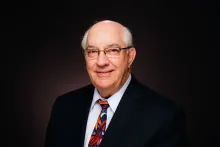
Mitchell Knapp is a graduate of Ambassador College with a BA in Theology. He has served congregations in California and several Midwestern states over the last 50 years and currently serves as the pastor of churches in Omaha, Nebraska, and Des Moines, Iowa. He and his wife, Linda, reside in Omaha, Nebraska.
