

Don Ward
The sermon explores how Christ related to scripture and its importance. Scripture reveals the mind and will of God and Christ. From scripture we learn how to understand prophecy by knowing the scriptures and that line must be upon line, precept upon precept and here a little and there a little and use sound reasoning according to scripture in drawing conclusions.
The title of the sermon today is The Authority of Scripture. Mankind has always had a problem when it comes to the concept of authority. Who is in charge here? I want to know who is in charge. Historically speaking, the Bible oftentimes looks to us as the final authority. Some look to religion, some look to the culture. We currently have a culture war going on in the U.S. We actually have what would amount to a civil war with those who are protesting about everything that you can name and those who are, on the other hand, trying to support what is the current administration. And so we have a civil war of types. It's a war of words in one way. Not all that long ago I gave a sermon, The Clash of Two Ideologies, in which really you cannot reconcile, you cannot unite ideologies that are so far apart that there's no resemblance to each one of them. We're living in an age that's called the existential age. Existential in the ultimate sense means if it's an existential threat, it's a threat for the very existence of humankind. But existentialism is a philosophical term that is used for really what was initiated in the Garden of Eden, do your own thing. Of course, the populace goes by the slogan, do your own thing as long as it doesn't hurt anyone else. What is the moral weakness of that statement? What is the logical fallacy of that statement? The logical fallacy is as long as it doesn't hurt anyone else. So you become the judge of what hurts someone else, and that is the logical fallacy. Does blowing smoke in the face of your neighbor hurt him or her? Yes, it does, and a lot of studies have shown it. The Catholic Church has placed its church ecclesiastical authority above the Bible. During the Reformation, led by Martin Luther, John Calvin, and also the father of Presbyterianism, Knox, and others developed a slogan, Sola Scriptura. Sola Scriptura means Scripture only. In other words, if a scripture doesn't support it, then it is not correct. It became one of the principal rules of the reformers of what is called a Protestant revolt for reaching decisions. By contrast, the Protestant traditions of Anglicanism, Methodism, and Pentecostalism uphold a doctrine of prima scriptura, with scripture being illumined by, or enlightened and enhanced by tradition and reason. Of course, you have to supply and employ reason in order to reach valid conclusions when it comes to spiritual matters. We'll turn to scriptures that support that in just a moment. The Catholic Church officially regards tradition and scripture as equal, forming a single deposit and considers the magisterium. Magisterium is a Latin term. From magisterium, we get the word. In Latin, it really means teacher. So the teaching of the Church is what the Catholics look to as the final word on that which is right or wrong.
Many Protestants want to distinguish the view that scriptures is the only rule of faith with the exclusion of other sources.
Just the Bible, and that's called nuda. Nuda means nothing but scripture. Nuda scriptura.
From the view taught by Luther and Calvin that the scripture alone is infallible without excluding Church tradition in its entirety. A lot of things we do is by tradition. When I was pastoring Big Sandy back in the late 1970s, it might have been early 80 or 81, somewhere along in there. Instead of singing three songs at the beginning of services, we sang two for a few Sabbaths, and there was an outcry from the congregation that you wouldn't believe. Who do you think you are changing the tradition of the Church? We've always sung three churches, three songs, so we insist that we sing three songs. Now, Mr. Armstrong established that way back. My reasoning was we'll have more time for instruction in the sermon and so on.
Sermon sin ran generally an hour and fifteen to an hour and a half. And of course, now we're running about 45 minutes, except when I speak, it's longer. But, so we say that Scripture is the ultimate and final mediated standard and the criterion for judgment and evaluation, but reasoning must be employed in arriving at a conclusion. Now, let's turn to some Scriptures that show that reasoning must be employed with the Scriptures in order to reach a valid decision. First of all, let's go to Isaiah 28, verse 9. Isaiah 28 and verse 9. In Isaiah 28, verse 9, whom shall he teach knowledge? Great question! Whom shall he teach knowledge? And whom shall he make to understand doctrine? Those that are weaned from the milk and drawn from the breast. For precept must be upon precept, precept upon precept, line upon line, line upon line, here a little and there a little. So, precept upon precept, line upon line, here a little, there a little. You turn to Isaiah chapter 1. Isaiah is sometimes called the fourth gospel. Just about every subject that you can name is covered to some degree in the book of Isaiah. In Isaiah chapter 1 and verse 18, Isaiah begins beseeching them to come together. This Isaiah 1 18, come to it now and let us reason together, says the Lord. Though your sin be as scarlet, they shall be as white as snow and though they be red like crimson, they shall be as wool. If you be willing and obedient, you shall eat the good of the land. But if you refuse, of course, and rebel, that's another matter. Now we go to the New Testament and see what Paul did. Paul, of course, was one of the great teachers of all time and in Acts chapter 17, Acts 17 and verse 1, we'll begin. Acts 17 and verse 1. Now when they had passed through Amphibilis and Apollonia, they came to Thessalonica and there was a synagogue of the Jews. And Paul, as his manner was, went in under them on the Sabbath day, three Sabbaths, and reasoned with them out of the Scriptures. He reasoned with them out of the Scriptures, precept upon precept, line upon line. Here, little there, little.
Chapter 18, across the page there. After these things, Paul departed from Athens and came to Corinth and found a certain Jew named Aquila, born in Pontus, lately come from Italy with his wife Priscilla, because that Claudius had commanded all Jews to depart from Rome and came under them.
And because he was of the same craft, a tentmaker, he abode with them, Paul did, and wrought, for by their occupation they were tentmakers. And he reasoned in the synagogues every Sabbath. He reasoned. He reasoned out of the Scriptures, as we read from chapter 17, and persuaded the Jews and the Greeks. So we have to employ reasoning, line upon line, here, little there, little, precept upon precept, before reaching a conclusion.
A lot of people want to read one verse and say, well, and oftentimes even commercials on television, they'll say, well, follow, say this statement, if you believe that Jesus Christ died for your sins and you repeat this after me, then you'll be born again and all of that. So, but we know that it's not true. By employing valid exegetical rules, and exegetical is a word, is a fancy word, that means by explaining thoroughly and following consistent rules, we can say that all authority ultimately rests with God. The inspired word of Scripture originated with God and is revealed by Him.
All Scripture is revealed by God. Now, we want to go to 2 Timothy 3.16, 2 Timothy 3.16, and we'll see here that Scripture is revealed by God. 2 Timothy 3.16. In 2 Timothy 3.16, all Scripture is given by inspiration of God. Remember, in the book of Revelation chapter 1, a lot of people say, well, it's the revelation of Jesus Christ.
Now, it says that the revelation of God, that God gave to Christ, and Christ gave it to John, and John gave it to the pastor of the church at Ephesus, and so on. All Scripture is given by inspiration of God, and it's profitable for doctrine, for reproof, for correction, for instruction in righteousness, that the man of God may be perfect, thoroughly furnished unto all good works.
So, we see here that it is inspiration that comes from God. God is the ultimate source of authority and of revelation. Now, we go to John 1717, which is quoted. We all know it. John 1717, sanctify them through your word. Your word is truth. Once again, John 1717, sanctify them through your word. Your word is truth. Now, concerning revelation, we go to 1 Corinthians chapter 2, verse 9 says, I have not seen here, is not heard, neither has it entered into the hearts of man what God has prepared for those who love Him. And then we come to 1 Corinthians chapter 2 and verse 10.
1 Corinthians chapter 2 and verse 10. But God hath revealed them unto us by His Spirit, for the Spirit searches all things and the deep things of God. For what man knows the things of a man save the Spirit of God, or except through the Spirit of God, which is in him? Even so, the things of God knows no man but the Spirit of God. Now, we have received not the Spirit of the world, but the Spirit which is of God, that we might know the things that are freely given to us of God.
So we can safely say that all authority comes from God. God is the source of authority. It is the source of authority that Jesus Christ used, and we gave the hand out there that shows the many references that He made to the Old Testament. The church, let's go back to, let's go in this case, 1 Timothy chapter 3 and verse 15, a very important scripture that we need to remember. 1 Timothy chapter 3 and verse 15. In 1 Timothy 3.15, But if I tarry long, that you may know how you ought to behave yourself in the house of God, which is the church of the living God, the pillar and ground of the truth.
So the church is given the responsibility of preserving the truth. And of course, God gave authority to the disciples and apostles when He gave the Great Commission. And Matthew 28 says, Teach them to observe all things whatsoever I have commanded you. So Jesus Christ has given the responsibility of preserving the truth to the church of God, the pillar and ground of the truth. If God doesn't give that to the church, how will the church continue to preserve the truth?
So we are vested with the truth. It is like you put your savings, you put your money into a vault, and you place it there for safekeeping. God has committed His truth to us for safekeeping. It is placed in sacred trust with us.
So the church is the pillar and ground of the truth. The current situation with regard to world affairs and that which is happening in Iran. If you turn to Ezekiel 38, Ezekiel 38, where we have in verse 5, Persia, which is modern day Iran, Persia, Ethiopia, and Libya with them, all of them with shield and helmet, Gomer and all his bands, the house of Tigarma of the north quarters, and all the bonds, all the bands, and many people with you. So they're going down to take a spoil in the Holy Land because they're going to the land of unwalled villages.
Now, if you had just read the scriptures, there were miniatures of many of the mega churches on the Sunday after the invasion of Iran by the U.S. and Israel back on February the 28th, in which, take for example, John Hagey Cornerstone Church in San Antonio, one of the great large mega churches in the nation, was praising the action of the U.S. because he thought it was a fulfillment of prophecy. Now, the only way that can be the fulfillment of prophecy, if the U.S. and Israel completely obliterates Iran and other nations that might join in with Iran, and they come to some kind of peace agreement that allows the Jews to build a temple and to institute animal sacrifices and so on. Many times, you have given sermons over the years in which we talked about the placing of the abomination of desolation. The abomination of desolation is placed in the holy place. We see that it marks—we'll turn to the scriptures in just a moment. I'm giving a verbal overview. We will see that it marks a countdown to the end of times and the battle of the great day of God Almighty. So, we look down further in this chapter, verse 10, thus says the Lord God, it shall also come to pass that at the same time shall things come into your mind, and you shall think an evil thought. That's talking about the nations we read from verses five and six. Persia being the first one listed or modern Iran. And you shall say, I will go up to the land of unwalled villages. Well, Israel is not the land of unwalled villages. In fact, they started the war with the U.S. So, you know it's not that time because of that. Exactly when it is in the last sermon that I gave, I said it may be before the millennium. It may be after the millennium because after the millennium Satanist lives for a season and goes out and deceives the nations and they come against Jerusalem and God strikes them and destroys them.
I will go to them that are at rest that dwell safely, all of them dwelling without walls and having neither bars and gates to take a spoil. That's not the condition of the world right now. So, that war that is being waged is not the war unless it turns into a much broader war and all the enemies are obliterated and a restoration, a peace treaty is set up that allows Israel to build the temple and to restore sacrifices. We read from Matthew 24-15 that Daniel the prophet spoke of the abomination that makes it desolate, once again lending veracity to the scriptures and to the book of Daniel in Matthew 24 and verse 15.
Matthew 24-15.
When you therefore shall see the abomination desolation spoken of by Daniel the prophet, stand in the holy place and the holy place the temple has not been built, whosoever reads let him understand. Then it begins to begin tribulation. And then you look at verse 21, for then when after the abomination desolation is placed, then shall be great tribulation, such as was not since the beginning of the world to this time, nor ever shall be. Now we go to Daniel 11.31 and we'll see there in Daniel 11.31 where the abomination of desolation is being placed. Daniel 11.31 says, when you therefore shall see the daily sacrifice taken away, so the entire supeponies fulfill this in type. That is the abomination of desolation in type, but a final fulfillment of it is going to take place in the future. And after the abomination of desolation is placed, then it marks a a countdown to the end of the age.
Let's see, we're going to pass Jeremiah Ezekiel.
We come to Daniel chapter 11 and verse 1. No, 31. Daniel 11.31.
An arm shall stand on his part, talking about the beast power, and they shall pollute the sanctuary of strength. In other words, to place the abomination of desolation, and shall take away the sacrifice, and they shall place the abomination that makes desolation. Then we go to chapter 12 of Daniel and verse 1. And at that time shall Michael stand up, the great prince which stands for the children of the people, and there shall be a time of trouble. Well, we read from Matthew 2431. There shall be a time of trouble, such as never was since there was a nation, and to the same time, and all that time, your people shall be delivered, every one of them, that shall be found, written, in the book of life. Everyone that's not in the book of life, according to Revelation 13.8, will be deceived. Now you continue in Daniel chapter 12, verse 7, and I heard a man clothed in which was upon the waters of the river, when he willed up his right hand and his left hand unto heaven, and swore by him that lives forever and ever, that shall be for time and times and half-time, when he shall have accomplished the scattering of the power of the holy people, all these things shall be finished. And I heard and I understood not, and I said, Lord, what shall be the end of these things? And he said, Go your way, Daniel, for the words are closed up and sealed to the time of the end. Many shall be purified and made white and tried, but the wicked shall do wickedly, and none of the wicked shall understand, but the wise shall understand. And from the time that the daily sacrifice shall be taken away, because there was a question asked earlier in the chapter, how long will this be? So here's the answer to it. How long will this be? From the time that the daily sacrifice is taken away that we read about in Daniel 1131, and the abomination that makes desolate set up, there shall be a thousand two hundred and ninety days. And blessed is he that comes to the thousand three hundred and thirty-five days, well over a year, almost a year and a half or so. So if you read the scriptures, the authority of scripture, you know that this war is not that war, per se, unless there is some kind of great peace agreement that allows Israel to build the temple and to begin sacrifice.
And we go once again to 2 Thessalonians chapter 2. We are doing this just to show the authority of scripture, that if you really understood the scripture and knew what you were talking about, you wouldn't make such statements as were made on April 1st, that Sunday after the invasion on the 28th of February. In 2 Thessalonians chapter 2, verse 3, let no man deceive you by any means, for that day shall not come, except they are coming, falling away first, and that man of sin be revealed, the son of perdition, who opposes and exalts himself above all that is called God, or that is worshiped, so that he is God, sits in the temple of God, showing himself that he is God. Well, none of that has happened. As I said in that sermon a few weeks ago, that the Jews don't even have control of the temple mount, much less have they built a temple. So some kind of peace treaty has to be signed and reckoned with. Remember, we read from 1 Thessalonians chapter 5, that is, at a time of peace shall the yin come. And Ezekiel says in Ezekiel 13, that the way of peace they know not. So peace is not going to come in the ultimate sense until Jesus Christ is placed over the nations and the kingdom of God begins. In view of what is at stake, it is important that we understand the authority of Scripture and Christ's relationship to the authority of the Scripture and our relationship to the authority of Scripture. If we really understood the Scripture, it would take a lot of the fear and anxiety away from a lot of people. We often say that Christ is the head of the church, but we do really mean that statement. God works through humans and all His works are done in truth.
Psalm 33 and verse 4, if you'll turn there, Psalm 33 and verse 4, there's a verse you should remember. It's a verse that should be memorized and thoroughly known to all of us. Psalm 33 and verse 4. I mean, Isaiah, that's not quite yet. Psalm 33 and verse 4. For all the word of the Lord is right, all of His works are done in truth.
All of His works are done in truth. You know, there's a scripture in Matthew that talks about whatsoever is bound in heaven is bound on earth. Do you think God binds error? God does not bind error. God only binds what is true, and the scriptures are true. Your word is truth.
So if we really want to speak with authority, we must know what the scripture says.
The authority of scripture rests firmly upon the authority of God and possesses all the authority which He possesses, since it came from Him. Look at 2 Peter chapter 1 and verse 19. 2 Peter chapter 1 and verse 19. In 2 Peter 1 verse 19, we'll see that all scripture is given by inspiration. We have already read that from 2 Timothy, but here it is again, beginning in verse 19. 2 Peter chapter 1 verse 19. We have also a more sure word of prophecy, where until you do well that you take heed, as unto a light that shines in a dark place. You want light. You want to know what's going to happen. You want revelation. Well, take heed to the Word of God. Know what it says. Be familiar with it.
As unto a light that shines in a dark place, until the day dawn, until the day dawn and the day star arise in your hearts. Christ is the day star.
Knowing this first, that no prophecy of the scripture is in any private interpretation. In other words, it did not come through any private means. Holy men of old were moved as, by the Holy Spirit, when the Bible was produced, when the Bible was written. For the prophecy came not in old times by the will of men. There wasn't that Isaiah said, well, I'm going to write this or that or the other. Isaiah was inspired to write what he wrote, and all the other prophets were as well. Holy men of old spoke as they were moved by the Holy Spirit. So we can say, of course, that the Bible is inspired of God. The Father sent Christ, and Christ's authority comes from God and the scripture. God recognized the authority of Christ. Let's notice where this is very important, where God recognized the authority of Christ. We talk about what's there witness of men. There was witness of men, but there was also recognition by God the Father of a greater revelation, and that was the very words of the Father Himself. In Matthew 3, Matthew 3 and verse 17, after Jesus Christ was baptized, he came up out of the water. Let's read 16 into 17. Jesus, when he was baptized, went up straightway out of the water, and lo, the heavens were opened unto him, and he saw the Spirit of God descending like a dove, the Spirit of God descending like a dove and lighting upon him, and lo, a voice from heaven saying, This is my beloved Son, in whom I am well pleased. So he singled him out. God the Father singled him out after he was baptized and said, This is my Son. Now, another place is in Matthew chapter 17. Go forward to Matthew 17, and we'll begin in verse 1. This is more significant in one way with regard to the sermon. Matthew 17 verse 1. And after six days, Jesus took Peter, James, and John, his brother, and brought them up into a high mountain apart, and was transfigured before them. He was in a semi-resurrected state, and his face, shown as the sun and his raiment, was white as light, similar to the description that is given in Revelation chapter 1. And behold, there appeared unto them Moses and Elijah talking with him. From this, a lot of people theorize that the two witnesses will be Moses and Elijah. Of course, we don't know for sure who the two witnesses are. Well, Moses and Elijah being resurrected and fulfilled that. I personally intend to doubt it, but I don't know for sure.
Then answered Peter and said unto Jesus, Lord, it is good for us to be here. If you will, let us make three tabernacles, one for you, one for Moses, and one for Elijah. So the second coming of Jesus Christ in his resurrected state was immediately connected with the face of tabernacles and the kingdom of God. While he yet spoke, behold, a bright cloud overshadowed them, and behold, a voice out of the cloud which said, This is my beloved Son, in whom I am well pleased. Hear you him! Hear you him!
So we will see two announcements from God the Father. Jesus Christ had this authority. These two announcements made through the voice.
And we know the voice was not the actual voice of the Father. There's a scripture in the New Testament says no one has heard the voice of God at any time, but a voice that God spoke through that said, This is my Son, identifying him in Matthew 3, and identifying him as my Son, and also the command to hear him. These are two announcements at a critical stage in the ministry of Christ, unequivocally proclaimed for all time that Jesus is the Son of God and is indeed clothed with supreme divine authority.
The scriptures declare Christ's authority over all things. We now look at John 1.16. There are several scriptures that we could turn to here. I probably just turned to one. I have about six written down, but in the interest of time, in John 16—not 16—John 13 and verse 1. John 13 verse 1. We read John 13 generally on Passover evening. Let not your heart be troubled, you believe in God. That's chapter 14.
1.13.
Chapter 13. 1.13.
Chapter 13 verse 1. Now before the peace of the Passover, when Jesus knew that his hour was come, that he should be a depart out of this world unto the Father, having loved his own, which were in the world, he loved them unto the end, and supper being ended, the devil having now put into the heart of Jesus's chariot, Simon's son, to betray him. Jesus knowing—this verse—Jesus knowing that the Father had given all things into his hands, that he was come from God, and he was going to God. Coming from God, he came from God, and is going to God. As I said, there are several other scriptures. I'll last turn to one more. Matthew 28.19. Matthew 28.19. I've referred to Matthew 28 once already. Matthew 28 verse 19. Matthew 28.19. Go ye therefore into all nations, go ye therefore and teach all nations, baptizing them in the name of the Father, and of the Son, and of the Holy Spirit, teaching them to observe all things whatsoever I have commanded you. And lo, I am with you always, even unto the end of the world. And now you notice verse 18. And Jesus came and spoke unto them, saying, All power, not some, all power, is given unto me in heaven and in earth.
So the Father gave all things in the hands of Jesus Christ. In the New Testament, it may be concluded that the references which Christ made from the Old Testament fall into two classes. One, He magnifies the Scripture and provides the spiritual intent. Go to Isaiah 42.21.
Isaiah 42 and verse 21. Very important Scripture. You should begin the memory pack that we gave out at Ambassador to the Church one time. 42.21.
The Lord is well pleased for His righteousness sake, and will magnify the law and make it honorable. So Jesus Christ knew that He was coming to magnify the law and made it honorable. And you'll find in the New Testament where it says, You have heard of old time it was said, such and such, but I say unto you. And then there's a body of Scripture in which He endorses what is written. So we go now to Matthew chapter 4. In Matthew 4, 7, and 10, Jesus uses the expression, It is written. Matthew 4 and verse 4. And He answered and says, It is written.
It is written. Man shall not live by bread alone, but by every word that proceeds out of the mouth of God. And we oftentimes quote that Scripture ourselves. Then we go to verse 7. Then Jesus said, It is written again. You shall not tempt the Lord your God. Then we go to verse 10.
Then Jesus said unto them, Get you hence, Satan, for it is written.
You shall worship the Lord your God, and him only shall you serve. Of course, the devil tried to entice him with the lust of the eyes and showing him the kingdoms of the world.
He provided food, the kingdoms of the world, and his own physical safety.
Each time he responded with, It is written.
So the New Testament presents Christ as Lord and the final authority under the Father.
As noted, the Father has placed all things under Christ. Jesus was also a prophet and prophesied of future events. He was, he is, and will be a prophet and king forever and ever. We go now to Exodus 18, verse 15. Exodus 18, verse 15, a passage that we should have committed to remembering.
Exodus 18, verse 15. I said, Exodus, I meant Deuteronomy. Sorry, Deuteronomy 18, 15.
Deuteronomy 18, 15.
In Deuteronomy 18, 15.
The Lord your God will raise up unto you a prophet. So Jesus Christ was a prophet. He's a king.
He's our intercessor. He's our high priest. He will be a priest, a prophet, and a king in eternity. You don't go through eternity. It's in eternity. The Lord your God will raise up unto you a prophet from the midst of you, of your brethren, like unto me, unto him you shall hearken. You'll listen to him. Then in Acts 3.22, quickly to Acts 3.22, I hope it's quickly, in Acts 3.22, we see that this is virtually quoted for word in Acts 3.22.
For Moses truly said unto the fathers, Acts 3.22, A prophet shall the Lord your God raise up unto you your brethren, like unto me him shall you hear, and all things whatsoever he shall say unto you. And it shall come to pass that every soul which will not hear that prophet shall be destroyed from among the people. Jesus Christ so was a prophet. He's a priest. He's our high priest, making a recession for us, and he is coming back as King of kings and Lord of lords. Let's go to Revelation 17 and verse 14. Jesus Christ comes back. This is where we want to be part of this party in Revelation 17 and verse 14.
Revelation 17 and verse 14.
These shall make war with the Lamb, and the Lamb shall overcome him, for he is Lord of lords, King of kings, and they that are with him are called and chosen and faithful.
So Jesus Christ is Lord of lords, King of kings. He's a priest. He's a prophet, and he will always hold those offices.
Once again, we've already noted that the scriptures declare that Christ has authority over everything. Jesus claimed absolute authority by his words and works.
He not only claimed authority, he exercised it.
In the New Testament, Christ is recognized as the son of David. You might want to write these down, because I'm not going to turn and read them, but I'm just going to refer to them.
It'd be good. He's recognized as the son of David, Matthew 1-1.
That's not the only place, but Jesus Christ is the son of David. He's also recognized as the son of Abraham in Matthew 1-1, also in Luke 19.8-10. He's also recognized as the Messiah of Israel, Acts 13-33.
He's recognized as the herald of the Good News, Mark 1.14-15. He was full of the Spirit and worked in his power. Luke 4, verse 1.
The apostles recognized Christ's authoritative teachings, Acts 1. The apostles worked through his guiding authority, Acts 3, verse 1, and following verses.
When the prophets spoke, they used the term, Thus saith the Lord. They did not dare speak in their own name.
In the Jewish literature, the words truly or verily was placed at the end of the discourse.
That's what was prevalent in Jewish literature. Yet Christ placed at the beginning. He would say, verily, verily, I say unto you.
Verily, verily, I say unto you. That's what Christ did at the beginning of his discourse.
Or he said most assuredly. Let's go to John 5, verse 24. John 5, verse 24.
John 5, verse 24. Let's see what Jesus says here.
In John 5, verse 24, verily, verily, I say unto you. He didn't. He said it up front. He was the spokesman. Verily, verily, I say unto you. He that hears my word and he that believes on him that sent me hath everlasting life and shall not come unto judgment, but is passed from death unto life. Verily, verily, I say unto you. The hour is coming and now is when the dead shall hear the voice of the Son of God, and they shall hear his voice and they shall live.
Jesus clearly distinguished between his physical sonship and spiritual sonship. Everyone is a physical son of God, but everyone is not a spiritual son of God. This is a very important distinction. We go back to John 1 and verse 6.
John 1 and verse 6. There was a man sent from God whose name was John, the such John the Baptist.
The same came for a witness to bear witness of the light and all men through him might believe. He was not that light, but was sent to bear witness of the light. That was the true light which lights every man that comes into the world.
He was in the world and the world was made by him. Jesus Christ was the agent of creation. The Father does all his works through Christ.
He came to his own and his own received him not. Here's our key verse.
He distinguished between various ones, say, in today's world. Well, we're all children of God by creation, but we are not all children of God in the spiritual sense. Christ claimed authority over the kingdom and the church.
Let's go now to Matthew 7 and verse 21. Matthew 7 and verse 21. Not everyone that says unto me, Lord, Lord, shall enter into the kingdom of heaven by the he that does the will of the Father, which is in heaven.
Many will say unto me in that day, Lord, Lord, have we not prophesied in your name, and in your name have cast out devils, and in your name done many wonderful works. And then I will profess unto you that I never knew you. I will profess unto them that I never knew you, and depart from me you that work iniquity.
So he has the right to refuse, the authority to refuse those who would enter into the kingdom of God. Now we go to Matthew 16 and verse 8. Matthew 16 and verse 8. Matthew 16 verse 8, which when Jesus perceived, he said unto them, O ye of little faith, why reason you among themselves, because you have brought no bread?
That's not really the verse I want. I want verse 16, chapter 16 verse 16.
And Simon Peter answered and said, You are at the Christ, the Son of the living God. And Jesus answered and said unto him, Blessed are you, Simon Barzona, for flesh and blood, if not revealed unto you, but my Father, who is in heaven. And I say unto you that you are Peter, and upon this rock I will build my church, and the gates of the grave shall not prevail against it. And I will give unto you the keys of the kingdom of heaven.
And we talked about the keys of the kingdom of heaven recently. That is, how do you enter into the kingdom of heaven? That was given to the church. And whatsoever you shall bind on earth shall be bound in heaven. Remember we said that all of God's works were done in truth, and God does not bind error. He only binds the truth. And whatsoever you lose on earth shall be loose in heaven. God does not honor that which is not of the truth.
So Christ claimed authority over the kingdom of God, who enters, who doesn't enter. And the same thing with the church.
Human kind can only approach God through Christ. In view of all these scriptures, we see that Christ claimed absolute authority over everything in heaven and in earth. The miracles that he performed shows his sovereign power. One can readily see that the authority he claimed for himself and the authority of scripture is interwoven. You can't have one without the other. To reject one is to reject the other. To receive one is to receive the other. Christ never judged the scripture, but always obeyed it and tried to obey it and live by it.
The authority of the scripture would not be known apart from the authoritative record of the scripture. How do we know anything about God or Christ? As we read from 1 Corinthians 2, verses 10 and 11, it is revealed to us by the Spirit and Word of God.
As noticed earlier, Christ recognized the ultimate authority rests with God. In John 14, 28, he says, "'My Father is greater than I am.' The divinity and indestructibility of the scripture verifies that God and Christ are who they say they are." Christ would have denied his divinity and authority if he had denied the authority of scripture, because the scripture is that which testifies of him. His divinity and authority stems from scripture.
He upheld and defended the authority of the Old Testament, and you have a handout that shows his references to the Old Testament. He also understood the order and validity of the Hebrew calendar, of the Hebrew canon, the canon is the official rule of the books that are valid books in the Hebrew and Greek Bible.
So Jesus Christ accepted the Word of God.
As we noticed in the handouts, he mentioned several events, several historical events in his ministry.
So all in all, we can say that Christ accepted the words of the Old Testament and the authority there in the historical circumstances. If Christ did not believe in the historical accuracy of the Old Testament, he would not have used so many examples and events from the Old Testament in his ministry. For example, he says, in the days of Noah, in the context of the world, talking about at the end of the age, will be like it was in the days of Noah. If Noah was not real, then Christ was not real.
So let's notice and close with this scripture. We go to Luke 24 and 44. Luke chapter 24 and verse 44. It is very interesting from this scripture to learn that even after spending three-plus years with Jesus Christ, that the apostles still didn't really understand what his mission and his goal really is. I started the fundamentals of theology class when I taught it with this question. What is the theme of the Bible? The theme of the Bible is God is bringing sons and daughters to glory in the kingdom of God. As I have said so often, people don't understand.
We have had, I would say, at least 90 percent of those who once attended church to fall away from the church because they thought that prophecy was going to be fulfilled almost immediately. We have been in this chronological church for years and years, for decades. In fact, for nearly all the existence of what we call this era of the church, that the end is right around the corner. The end is right around the corner. As I mentioned earlier, in 1975, in prophecy, we would have known that book was not true if we had just read and understood the scriptures. I read it and thought it was true, and I made my way to Big Sandy as quickly as we could. I said, I'll give it six years. So we came in 69, six years before 1975. We'll have six years to get ready for 1975. Well, here we are in 2026, and we're still looking for the return of Christ. It's really quite a ways off. In some ways, I know a lot of people don't want to hear that. They want to think, well, things are so bad, and they are bad, but it can get a whole lot worse, and it will, and it will.
So, in one way, we can hope. There's a scripture in Amos that says, woe unto those who desire the day of the Lord. If you're alive during the day of the Lord, there's a lot going to go on. So if Christ denied Noah, he would deny himself. So, brethren, we're living in the days in which our faith will be challenged from many sources, and we must be able to meet those challenges as Christ did with the Word of God, for it is written, Man shall not live by bread alone, but by every word that proceeds out of the mouth of God.
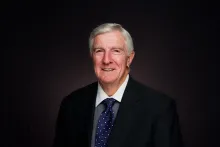
Before his retirement in 2021, Dr. Donald Ward pastored churches in Texas and Louisiana, and taught at Ambassador Bible College in Cincinnati, Ohio. He has also served as chairman of the Council of Elders of the United Church of God. He holds a BS degree; a BA in theology; a MS degree; a doctor’s degree in education from East Texas State University; and has completed 18 hours of graduate theology from SMU.
