

Robin S Webber
This transcript was generated by AI and may contain errors. It is provided to assist those who may not be able to listen to the message.
Second part of a mini-part series. I'm not sure how far it's going to go. What we're doing right now, the series is called Christ in the Old Testament. And I'm not sure how many of you are going to go right away. We might go up to the Holy Days and then might take a break.
It's one that you can always kind of come back to because it's kind of compartmentalized. I'm hoping you take it three or four and we'll see how you do with it, see where we're at, see if it's profitable. If not, we'll move to something else. But what we're doing here is we're basically looking at a study that focuses on types and anti-types. The one thing that we recognize is that when we have the Holy Scriptures before us, which are really one book set within two covers, they're not two books, they're one book and they're one revelation which progresses and expands.
Christ is the key to what God has been pointing into all the history of God's people from the very, very beginning. Let me use an example when Christ is the key. Why do you say that, Robin Weber? Because the very first prophecy that was given was a statement of God to the serpent as man was about to leave the Garden of Eden.
In Genesis 3.15, right at the beginning of the book, it says, by the way, get this, your seed shall bruise the seed of man and man's seed will bruise your head. So it set up immediately two thoughts, conflict, but the ultimate good news that the seed of the woman in Jesus Christ would triumph and that man would be rescued from himself.
So Christ is the key to what God has been pointing to throughout history to all of God's people. And one way to understand the fullness, and I do mean the fullness of Christ's existence, is to examine parallels between Old Testament people, events and things, and the life of Jesus Christ in the New Testament. Now, this is very important because this was often how the early church made the study of Christ and came to understand Messiah having come, was by understanding the parallels, the types, the antitypes of what had been before and what had come.
That's how they learned. That's how they spoke to one another. They used that which was familiar, both the good and the bad example of the individual, and saw the parallel in Christ either as to what was similar in the good or what was greater in the Christ that had come. The Bible is full of these parallels.
For those that weren't here, they are called types. We had this discussion. I have to share something because this is good. We got to join Bob and Paul and I the other day. Maybe Jim was in on this one too about, oh, you're out of this one. Okay. Because I had said, good, I've been talking about types and antitypes. Sometimes you think the antitype comes before the type, or the type comes before the antitype. If you think the type comes before the antitype, you're right.
Type comes first, and then comes the antitype. Some of you probably thought that the antitype came before the type. How do you all type? Anyway, so we'll talk about that for a moment. The study of types is called typology. A very familiar one would be Adam. Adam is the type. He was the first man. Jesus, in that sense, is the second Adam, and or he is the new man. And so you begin to draw those parallels. As I mentioned last time before we proceed, as we begin to explore the study of Noah and Christ, I thought, let's be aware of when we discuss typology or those parallels.
There are benefits. There are also limitations. And we must understand both of those if we're to use this means of studying the Bible properly and use it as an effective instrument. Because typology focuses on specific events and character traits of certain rather than on the person as a whole, certain events. So we need to understand that. And what we're looking at here, which is interesting as we go from Genesis forward, the purpose of this study, a couple of thoughts, is to show that down through the ages, God has been hinting and giving clues to the need of Jesus Christ as well as showing in types what he would be and not be.
And as I said, typology was a very common way to interpret the Old Testament in the early church. When we use types, why are we doing this? When we use types or parallelism as a form of study in Bible, it does open windows on God's activity. That's the major thought I want you to get.
It does open up windows on God's activity as to what otherwise we would miss. Another thing I want to share, Susan, I had a conversation about this this morning. We have many conversations. And that is that we want to make sure that what we're giving in this study on types and parallelisms is not just simply informational. Any study, any message, any sermon is of no value if we simply deal with information and it does not lead to transformation in our own lives. That's very important. And so, I think we will, at the end of this study today, which you're going to contribute to, we're not just simply going to be collecting information kind of here and kind of there and kind of there, but we're going to ask how do we utilize this as we go out in the week?
What lessons do we learn from Noah? What lessons do we learn from Christ to transform our existence to glorify God? Okay? Now, who remembers last time? Who do we discuss last time, anyway? Is anybody here? We discussed Adam. Good. We discussed Adam. And what was really neat is, again, one of the reasons why we do this is that what we're sharing here is not the conclusion, but just the beginning of your study because where is Victor?
Where is Victor? Is Victor here? Victor, could you please stand up for a moment? Because Victor got into it big time and he said, well, you left this out. I said, well, yeah, but we could have gone three hours, but Victor used a parallel that I actually put in your notes that I sent out on computer.
If you got those and you've gotten some... You're not off my list again, are you? Okay. No, but I said, I said, I said, did everybody get the notes? Have I sent out the notes? Yeah, okay. Skip reads them voluminously. Okay, good. But Victor, go ahead and share with an interesting parallel that you went from the lesser Christ to the greater Christ, from the first man to the second man.
Okay, so it's very interesting. The parallels that God continues to bring us into that right there in Eden and it all right there and it kind of started right there. That's why Mr. Armstrong used to go back to the garden, is that it was in that garden setting that Adam and Eve said, no, I'm going to reject your way. I am going to do my own thing. Now, the second Adam comes along because again, remember, parallelism or types and anotypes in the Bible are not always good-good. There can be bad and the other, especially with Christ, shows what no man of and by ourselves can fulfill, that Christ had to come. There is no good man. There is no worthy person to be our sacrifice, to be our Messiah, to be our Passover. When we think about it coming up to the spring festival season, God had to send His Son. God at times did send good men, did send industrious people, did send servants of His, sent prophets, sent boat builders, as we'll be discussing today. But even so, they were human beings and had their faults. They had their types as Christ, but they also had weaknesses. So we learn from that. And the parallel brings us to the reality that there is no answer on earth other than the Father's answer, and that answer comes through His Son, Jesus Christ. Now, I sent out some word. This is where you start going, Doug. I wanted to see what you came up with when we think of Noah. We're talking about types and what's the other word, Bob? Antitypes. Okay, types and antitypes. Parallelism. We're now moved from Adam. We're now going to go to Noah. Let's think about this for a moment. Noah is the lesser Christ, and Christ is what? He's the greater Noah, right? Type and antitype. Didn't mean to confuse you. Let's see what you come up with for a moment. I've got about 15 things I came up with, along with some help from commentaries, but I also added some of my own because I'm a little bit like Victor. Once you start sliding down that hill, it kind of starts to get voluminous here. Let's see what you came up with. Who can give me some types and antitypes out of your study or your thoughts? Who's willing to go? Anybody got one? Sandy. I can have a cup of coffee. This is going to be long. Go ahead. I had thought of that one, but I had not gotten there. That is excellent, isn't it? Turn up your hearing aid, Bob. Sheila? No. Sandy, please rise. It'll help. That is excellent. See, that's where it begins. Okay, that's very good. And do you have an adjoining scripture for us?
That's wonderful. Let's put it this way. Here's what we're looking at to get excited about the Bible. When you've got some good news, it's really hard to keep to yourself, isn't it? You want to tell somebody, even if somebody kind of signs and seals you under all declarations. When there's good news, it's hard to keep it to yourself. And that's kind of the beauty of parallelism to a degree. God had some really good news that He wanted to share with humanity all the way along. You know, six thousand years is a long time to keep a secret, you know, or even four thousand years when Christ came the first time. So God kind of gives these hints, and that's what you have to think about. There are hints. They are hints of what is coming in a greater order. And this goes through Adam, it goes through Noah, it goes through Abraham, it goes through Melchizedek, it goes through Joseph, it goes through all the different... God was hinting all along the way, kind of like a trail. You've seen these movies where, you know, somebody's been taken by the... in this day and age, I'll say the Native Americans. And so, you know, they're going through the woods, and you know, they'll kind of tear off something and, you know, kind of... because somebody's going to come along after them, and they kind of break a leaf or break a branch. You're kind of leaving hints as to where they're going. And that's exactly the beauty of parallelisms, is God is through individuals down through 6,000 years leaving hints as to where He's going. Well, okay, thank you, Sandy. That's great. You got that down, Doug? That's going out into the notes. Somebody... Hey, boy, now it breaks loose. Mr. Clark. Okay. A little bit louder so they can hear down there rolling.
Okay, that's absolutely correct, and that is one of those that I had on my list. One second, please, so we don't repeat ourselves. Oh, what?
Yeah. You quoted from Genesis what? Yeah. Although Noah was not perfect... this is how I translated my notes. Thanks, Mr. Clark. Although Noah was not perfect, he is described as a righteous man. He was blameless among the people of his time. And it's interesting that it also says in Genesis 6.9... what's the last part of Genesis 6.9? Okay. What is really neat... and Susan and I had this discussion coming down. It says Noah was righteous, and the last part, which is really neat... what a compliment! What's it say? Go ahead, Marlene. And Noah walked with God. How many people are mentioning the Bible having walked with God? I can think of one other. Go ahead. Enoch walked with God. Noah walked with God. Abraham was called the friend of God, but these individuals walked with God. What is the parallel? Noah was not perfect. He's described as a righteous man, and he walked with God. Here's the Christ. Here's the anti-type. Jesus was perfect. Hebrews 4 and verse 15, along with the verses that Mr. Clark has given us, Hebrews 4 and 15 says, For we do not have a high priest who cannot sympathize with our weakness, but was in all points tempted as we were, yet without sin. So Jesus was perfect, blameless. And he not only walked with God, which is a very neat attribute, which we need to ask ourselves this coming week, are we walking with God like Noah did?
Are we performing God's will as he gives it to us? And I'm not talking about building a boat.
We're asked to develop other things. And not only that, but to think about it, Noah walked with God, but Christ walked as God on the earth. And not only that, but Christ chooses to walk in us this day, if we will allow it. Mr. Coelwell, you had one. Go ahead.
Okay.
Wonderful. Now, how do we translate that, Mr. Coelwell, from just simply information and types and parallels into being transformational in our life?
Right. And not only that, but let's think about this. Just use the word preserve that you used. As God comes into our life, how are we dealing with the life that is around us?
Are we a preserver? Do we handle things in a fragile manner? Do I move them to the next tier?
Are we a preserver and or are we a destroyer? Are we an upper or are we a downer? Could God entrust His purposes, which He is, into our charge, knowing that we will get from point A to point B as we do His will His way?
Very good. Let's go with another one. Thank you very much. Bob. Okay. Let's go to 1 Peter 3, please. What is the first word? Let's start with the type.
Well, or is the type mentioned in 1 Peter 3 as well? Maybe it is. I'm sorry. Pardon me.
Oh, Bob was relishing this last week with Paul. He got him.
1 Peter 3 begins, 1 Peter 3 seems to. Will Christ also suffer once again? Just for the end.
Just for the end, yes. But in my opinion, is God being the example of the type of people? He is a wise by the spirit. By whom also He's like the priest of the spirit of the spirit, He's totally in disobedience. And once along, something is God's way of being a pillar of all the art that's being prepared and with the two, that is, Jesus Joseph was saying, he was. There is also a van Dr. de Sainz it's now things will be monumental and pots will be a little bit quite Vaughn Dea's Excellent. I actually had that on a list that you will get, That nozark was delivered from the flood waters. That's Genesis 7-7, and again mentioned here in 1 Peter. Christ's body, the church, was delivered from death through baptism. Again, you have that element of water found here in 1 Peter 3 and verse 21. Very good! Somebody else! Got another thought? Chris? Nice and loud, please.
In the beginning, though, it was sacrificed many years ago to build a park which was not an office, which it may not be a real perspective. Basically, it was sacrificed by a park's life to be a visitor, and by a new house, it was sacrificed by a visitor. Okay, that's very good. And here's another thing I just thought about. I could throw it out. There's no type, but have you ever thought that maybe you're just getting too old to do things?
That life has kind of passed you by? That there's nothing out there in your future? Am I talking to the right audience, some of you? When did God begin to work with Noah? How old was he? How old? Yeah. Don't count yourself out, Mel. There's more happening, man. And I'm serious about that. So often we think, oh well, I've done this, I've done that.
You know, I was in the church before... I've been in the 40s, the 50s. I was there in the 60s. I was there in the 70s. I was there in the 80s. I was there in the 90s. What does God have left for me to do? How can I possibly serve God? None of us are ever old before He who is ageless and has new purposes to work in us every day of our life. If we are willing and if we're desirous to do the sacrifice.
Now, what's very interesting about sacrifice, and I'll mention this, if you'll join me in Genesis 8.20. In Genesis 8.20, here's the type. Then Noah, this is after the flood, built an altar to the Lord and took of every clean animal and of every clean bird and offered burnt offerings on the altar.
And the Lord smelled a soothing aroma and Noah offered up the sacrifice. That is the type. Noah offered a sacrifice to God. That was pleasing. That sacrifice was of other living beings. What, then, is the anti-type? Remember that type and anti-type are not always parallel. What is the type? Whereas Noah, who was the lesser Christ, offered other living beings as a sacrifice to God. On the other hand, Jesus, who was the greater Noah, the second Noah, offered himself.
Now, those sacrifices, as we know, whether it be the Noatian sacrifices or the sacrifices in the wilderness, were all ultimately pointing to God's great sacrifice and the Lamb of God. But again, that shows us why there is indeed a difference between Noah, that just man, who was willing to offer other items to God. And yet, here is the new man, Jesus, who offered nothing else other than himself. In that, then, while we compare, there is indeed what? No comparison between the type and the anti-type.
And that's why types and anti-types show ultimately the need for no less than the Son of God to be visited upon human history. Let's go to another type or anti-type. Go ahead. Yes, Mrs. Clark. Go ahead. I thought maybe there was a common to know, and of course, the name of the Lord. Hebrews 1320. Let's all look in Hebrews 1320. Hebrews 1320. Okay. That's good. Yeah, I like it. That's very, very good. And again, if you've ever read our book on the Covenant, you have to go through the different Covenants. And one of the first great Covenants is what is called the Noatian Covenant. It's a pattern of the covenants.
The Noatian Covenant basically sets the pattern for all the other covenants that do come along. And so, whereas Noah was a recipient of a covenant relationship, that greater Noah is also the bringer of that covenant. Okay, got that down, Doug? Let's go to somebody. It's kind of interesting once we get our mind swirling skip. If not, I might. We'll see how the audience goes. Okay, go ahead.
Hard audience skip, and other tough. Let's go to it, folks. You shall take for yourself all food of all food that is eaten, and you shall gather for yourself the food for you and for them, so everybody knows that they have a heat. Okay? So far. Okay. Now we go to John. Did you say so far? No, so far. Okay, go ahead. John 635. In John 635, Jesus says to his disciples, actually, to the back of the 33, who was talking about the two bread by the students at the academy, that in John 635, Jesus said to them, I am the relative. Even from the age of never coming, I continue to believe in the church.
No one in the status of the relative has to be again, but the Christ Jesus, if we partake of the Catholic community, that will regenerate life and take the truth. And again, yeah, and again, I think a part of what we're talking about, too, which is interesting about the aspect of gathering the foods and everything, is that Noah did not really know what lay ahead.
And there's even all sorts of speculations, which are speculations as to what the world was before the noation flood. I'm sure you've read different books on that as far as oceans, water, rain, you know, etc., etc. And they are speculations. But God, the good God, and I don't say that as swearing, is the aspect that he sees ahead and gives us provisions or provides a way to rely on him. And as we do that, which he asked us to do as Noah did, and as Christ followed that, that we have a sure future. There's another thing that I'd like to draw upon where you're at. Genesis 6. Come with me if you would, back to Genesis 6, which is interesting. Genesis 6, 19, right where Skip was. Notice what it says a little bit further. And of every living thing of all flesh you shall bring two of every sword in the ark to keep them alive with you. They shall be male and female of the birds after the kind of animals after the kind of everything after its kind. Two of every kind will come to you to keep them alive. What is interesting is as you move up to verse 19 is that of every living thing. That is a type. Noah's ark provided refuge for all animals, and yes, both clean and unclean were brought onto the ark. The antitype through Christ would be Christ's body. The church provides salvation for all, both Jew and Gentile. All races, all people, all ethnic groups, all tongues. Join me if you would for a moment in Romans 11, 11. I say then, have they stumbled that they should fail? No, certainly not. But through their fall to provoke them to jealousy, salvation has come to the Gentiles. That's not really the one I really want. Let's go to Galatians 3. I think we'll do better. Galatians 3. Pardon me. I'm going to scratch that one on my notes. Galatians 3.28. There is neither Jew nor Greek. There is neither slave nor free. There is neither male nor female. For you are all one in Christ Jesus. And if you are Christ, then you are Abraham's seed and heir, supporting the promise. The concept of all, that all clean and unclean, of course those were animals back in the type, but the greater Noah, in him, all become one. And all are given presents before God, and all have the ability to be saved. Another type, any type. Go ahead. Yeah, Chris.
Yes. Okay. Acts 10.34. For God shows no part. I think it's Acts 10.34. Somebody can look it up. I think it says, where there God shows no partiality. Okay. Okay. How about another? Dennis, go ahead, please. Nice and loud. Sometimes those are the most profound.
That is very interesting. It is interesting that Christ Noah, I don't think he was, I don't think U.S. Steel was invented yet, so the boat was wood. So, he was a handler of wood and a carpenter. Christ would come along and build with wood. You know, it's very interesting when you think about it, is that in the life of Jesus, when you think about just wood, as we know that God created all things through him, that he is the one who created wood, who worked with wood, and would die on wood.
Kind of a big concept to think about as we come up to the Passover. Christ, in his seamless existence, as he who is, was the Creator, made wood, in this human framework he worked with wood, and as the Lamb of God, he died on wood. For our salvation, going back to Noah being a type of a Savior, Christ being the ultimate Savior. Very good. Oh, a tandem! Oh, a tag team back there! Go ahead! Then, a little bit louder for everybody so Sandy can hear all the way over there. Okay, we've been kind of hitting on that. That rehearses the theme I think we've been hitting on. Anybody else here on the right? Yeah, give me one more. Sandy, then, Skepton, I'll give you some. So I've got about 15, which will actually probably engender more thoughts on you in Dennis. Okay, go ahead, Sandy.
The 70s made a 7th month, being a 70s day of first month. It happened to be the same thing in the resurrection. So Noah was essentially saved from one of my presidents from his blood on that same day in the resurrection period. It's a bit odd, but it was something I was going to write on the last day. I remember it the same. The type would be that Noah's Ark came to rest on the mountains of Ararat in the biblical month of Nisan.
And while we may not quite, you know, it's interesting that Christ's resurrection occurred during that same period of time, corresponding to the months of either Mark's rape or whenever. Dennis, do you have another one?
I like that one. I was thinking about that one, but I hadn't quite put it down. Yeah. Noah, as the lesser Christ, gathered those that the Father had sent him. Remember how God directed the animals? I don't think Noah was a big zookeeper for 120 years and going all over with cages. The animals came to him. God brought those animals to him. No man can come unto me unless what? First God, the Father, draw and bring. So I think what is interesting, if you want to use that analogy, get this one down, Doug. I was thinking, you know, I couldn't get off the word this morning of collected. I just went collector. I was thinking of a bill collector, and right now that's not really big on my mind with the crisis. So, gatherer. I would gather you. I like that. Very good. And that God, the Father, draws. Somebody else over here? Tag team. Go ahead, Linda. A little bit loud for everybody. Yeah, a preparatory phase. Okay, good phase. Yeah. Anybody else over here? Bob, then Roland, then I'll go into my list for a while, which will spark some things. Go ahead. Okay. Typed. Yeah. Right. Right. And that'll be on the notes that go out to you. That's one that I handled. Let me just give you a few. And this has really been neat, having it move around. Let me just give you a little list. I'm going to send this all out to you. And it's been late in the day. I just want to spark your curiosity. Victor's left. He must have been... He likes this stuff. He had to go, I guess. So anyway, but it might spark your curiosity. And then if you want to give me some more, let me just go down through a few. And I'm not going to go into totality here, but the first one that I had was typed Noah. Noah was a kind of a second Adam himself. Since all living human beings come through Noah. So often we think of Mother Eve and Father Adam. Noah himself was a second Adam because all life ultimately came through him. What's interesting, if you'll join me in 1 Corinthians 15. In 1 Corinthians 15. And let's take a look at verse 47. Where again it says, the first man was of the earth made of dust, and the second man is the Lord from heaven. And so there's this first type and this second type of all living. Another thing that is very interesting, if you want to put it this way, if you'll join me in, is it Isaiah 9? Let's go to Isaiah 9.
In Isaiah 9, and we don't often think about this, but join me at the bottom where it says, very familiar out of handles Messiah for unto us a child is born unto us a son is given and the government will be upon his shoulder. His name will be wonderful, counselor, mighty God. And then notice, everlasting Father.
Jesus, we normally think as what? The Son. But the concept everlasting Father is that he is the originator. He is the beginning of all living. And really in that sense, when you recognize that Christ is the new man, he is the Father. Just like George Washington is the father of our nation, Jesus Christ is the father of all of those in that type of being the beginning of being the new man. For those that are under the new covenant. I had another type here, Noah. This will be on the notes I'll give you. The days of Noah were evil. In Genesis 6, we know about that. We know about the sons of man. And we know about the Rephilem and the Nephilim and the giants were upon the earth, which really means these were those that confronted God and were anti-God and wanted to be in place of God. And the world was so evil that God repented and said, why did I even make this? The type is found before Christ's Second Coming, Matthew 24, verse 35. Matthew 24, verse 35 tells us that, . . . heaven and earth will pass away, but my words will by no means pass away, just as Noah did not pass away. But of that day and hour no man knows even the angels of heaven, but my Father only. But as the days of Noah were, so also will be the coming of the Son of Man. For as in the days before the flood they were eating and drinking and marrying and giving in marriage, until the day that Noah entered the ark. The parallelism there is that with the type, the days were evil and the day of the Lord came rapidly upon that generation. The anti-type is that Christ's Second Coming. It is going to be as in the days of Noah.
And it's going to be rapid. And so we see that type. I've already talked about Noah offering harbor for all animals.
We've already talked about the concept of water, with Noah being saved from the water, with the aspect of baptism. I think, Bob, you're the one that brought that up. We talked about Noah, the sacrifice. We've got that one down. Very interesting. Join me in Genesis 6.14. Now, any time if you have another one or want to add on, please do. Genesis 6.14. I've used this one for many, many years, especially as we come up to the time of the Passover, the discussion of Christ's sacrifice. In Genesis 6 and verse 14, let's notice what it says here. I'll have ... who's got ... Noah, could you please read that for us? Genesis 6.14. Do you have your Spanish Bible or English Bible? Good man. Go ahead. Genesis 6.14. I think you're still in the right place. I think you're still in the right place. I think you're still in the right place. Okay, thank you. Very interesting here. Powerful concept to think about. It says that Noah pitched or covered both the inside and the outside of the ark to do what? To seal it tight. To seal it tight from what? The judgment of God that was to be visited upon the world because of the sins of man. The word there is covered. What's the word for cover in the Hebrew? Kepur. Right. This actually is one of the most powerful types and anotypes of the Noah-ation experience. That ark was in a sense sanctuary from the punishment of God for sin upon earth. And they pitched it. They sealed it inside and out to keep the punishment of God away from the sins of man. What keeps at bay the punishment of God from we today? What is it? What are we sealed by? What are we sealed with? What covers us? The blood of the Lamb. Join me if you would in Romans 4-7.
Blessed are those whose lawless deeds are forgiven and whose sins are covered. Now, we're not talking about the pitch that Noah used, but we're talking about the sealing that comes from Christ's blood. Chapter 5, verse 8. But God demonstrates His own love towards us in that while we were still sinners, Christ died for us much more than having now been justified by His blood, we shall be saved from wrath through Him. That pitching of the ark of old, sealing inside and out, held at bay the wrath of God. Today, we have a different covering. So you see the type and the anti-type there.
Talked about that one. You guys brought out all sorts of good stuff today. Look, the one that Roland brought up about Noah being righteous. Oh, here's an interesting one. Oh, I'm sorry. Who's up? Yes, Doug, we're waiting for... How many like that one? Well, I know. Doug got it, nailed it. Look up the verses, send them to me. Okay, that's good. There were many rooms, absolutely. Okay, but you know, it's kind of fun and we all have these kind of aha, what Susan calls an aha moment. That's Native American talk for got it. Aha, okay. But this is serious too, isn't it? Like I said, why are we going through this? This is how the early church read the Scriptures and came to understand them through the parallels of that which had come before and the resonance of that which had come in full through Jesus Christ. And that Christ alone could really fill the bill, whether it was an Abraham, a Noah, a David, etc. That Christ alone was the one that filled the bill. That was excellent, Doug. Thank you very much. Genesis 9, join me there for a moment. Very interesting. Genesis 9. And let's take a look at verse 12. Again, this is after the... And God said, this is the sign of the covenant which I make between me and you and every living creature that is with you. For perpetual generations I set my rainbow in the cloud, and it shall be the sign of the covenant between me and the earth. And it shall be when I bring a cloud over the earth that the rainbow shall be seen in the cloud. And I will remember my covenant which is between me and you and every living creature of all flesh, that water will never again become a flood to destroy all the flesh.
Now, that is a neat promise, and I think of that all of the time. Whenever I see a rainbow, it takes me back to Noah. But are rainbows mentioned elsewhere in the Bible? Are rainbows mentioned elsewhere? This is the type. Do you think God said, you know, I haven't made a rainbow yet. Good case to bring it in, and I'll make one for Noah, and this will be a part. Have there been rainbows anywhere else mentioned? Susan, you're going to... Absolutely. Sheila's nodding. She says, where there's...
Okay, in the Bible. That's why I'm here. That's why I'm your instructor. Join me... Let's just do a little quick walk here for a moment. Did you realize that rainbows are also associated with our Savior and with His Father? Ezekiel 1.28. Ezekiel 1.28 is very good because Ezekiel is basically about the Son of Man. Of course, when you go into Ezekiel, Ezekiel is often called the Son of Man. Ezekiel is also a type of Christ because Son of Man was the favorite title that Jesus used of and by Himself. But we also recognize that Jesus was, in that sense, if I can use this phraseology, carefully, the God of the Old Testament. That's the one that humanity dealt with. Notice in Ezekiel 1.28. You're already there. I'm talking too much. Where's Ezekiel when you need it? Okay. Who's going to read Ezekiel 1.28 for me? Let's have Lance. Ezekiel 1.28. Ezekiel 1.28.
So? So? When I saw it? Go ahead. Simverse. Did you read that already? Good. I'm sorry. I wasn't trying to say so. It's not so. I was trying to get you to read the next word, Lance. Like I always told people, the first time I ever come to church, do not take me personally. Take me humanly. You've got problems. Actually, this is talking further up about a description about the voice that comes from the firmament. It gives us a whole likeness and description in verse 27 of the appearance of his waist. It's talking about, in that sense, a theophany, a God appearing, God on his throne, God appearing. We know that God was, in that sense, Christ who became Christ in the Old Testament. And you see this association with rainbow. Go ahead, Susan.
Well, that's right. We're going. Let's wait till our day comes, Susie. Then you can read it. And you know what? Your best verse is on my notes, honey. Go ahead. Okay. We're just getting the audience excited about this. We're ready to go to Revelation 4. Go ahead. Revelation 4 and verse 3.
Right. And that has been there always. It's always been there. That rainbow in that sense. Remember those things that are below are but a copy of that which is above, right? That which is below is but a copy of that which is above. And that rainbow is there for one purpose. And it's not to count the colors, but it is to understand God's faithfulness. The rainbow is an emblem and a symbol of God's faithfulness. Join me if you would. Thank you, Susie, to Revelation 10 and verse 1. If you like Revelation 4.3, hopefully you'll like Revelation 10.1. And I'll have Walter, you're turning there? Oh, okay. Who's turned there? Who's at Revelation 10.1? Somebody. Mel, go ahead. Mel, I'm sorry. There's a post between me and you. There you are. Go ahead. I saw a number of people in the room. They were there. They were there. They were there. Okay, there's that rainbow again. I said, well, that's an angel, but let's understand who the angel serves. Let's understand whose revelation it is. It is not the revelation of St. John the Divine. I have no issues with John, but it was the revelation that was given to the Saint, was given to John. Revelation, the superstar. You know that song that came out of the 60s? Jesus Christ, superstar. He is the superstar of the book of Revelation. So often when I go out and I talk on these prophecy seminars, I say, who is the major personality of the book of Revelation? Everybody kind of thinks you see all these rules turning out there. You know, hands kind of, you know how I like to interact. And what happens is, well, is it the beast? Is it the false prophet? Is it the two witnesses? Is it the great whore? You know, this or that? You know, all these things that we kind of get focused on? Is it the four horsemen of the apocalypse? You know, the first four seals? Because these are all the things that we kind of fill up the marquee of our mind with. There's only one great personality in the book of Revelation. It is so much like man to want to focus on the four horsemen of the apocalypse, rather than the great fifth horseman that rides and comes behind them. You know, the one on white, the white robes, with the sword that goes out of his mouth, that conquers all before him. But we humanly always want to get focused where God is not. We can spend a lot of time and a lot of energy down here, rather than the major focus of who is the superstar of the book of Revelation.
The rainbow represents the faithfulness of the greater Noah. And not only that, when we understand the faithfulness of God, remember how you always wonder what's over the rainbow? We don't have to wonder. What's coming on the other side of the rainbow of faithfulness is the kingdom of God. It's not a pot of gold. It is the kingdom of God. So that's very important. Let's do a couple more here.
Here's an interesting...Genesis 7.15.
I think...
And they went into the ark to Noah, two by two, all of the flesh in which is the breath of life... Is that what I want? Wait a second. Let me find where I'm going here. One second. I think it's what I want.
Ah, yeah. And they went into the ark to Noah, two by two, all the flesh in which is the breath of life. So those that entered, male and female of all flesh, went in as God had commanded him. And notice what it says, And the Lord shut him in. Very interesting when we look at that. What is that telling us? The one thing is to recognize this. Let me find my...place my notes here. Close my notes. One second.
It's coming.
One second.
I have to share something with you. I took a fall today, just to let you know, I took a really bad fall. And it's kind of, you know, sometimes when you're taking a fall, it kind of shakes you up several hours later. So I'm kind of disconnecting. You have to kind of stay with me. I don't fall often, but when I fall, I take a fall. And so I'm just a little disconnected up here, so bear with me just a second.
If I fall again up here and faint, come get me, okay? But I took a pretty bad fall today, and it just...I can't quite think real well today.
I just had it here. I'm sorry.
I don't usually get this discombobrated.
Yeah, I'm sorry. Is that...Genesis 7.15, I'll just go off top here, is that to recognize that God was active from the very beginning, and to recognize that it was not Noah's boat building that saved him. That when it was all said and done, that it was God that sealed Noah and the Ark. Noah could have built the greatest boat of all, and that would not have rescued him. God tucked Noah and his family into that boat, and God was there just as much as he is with us, and he cares for us, and he tucks us, and he does the touches that we can't do. Another thought that I'd like to share with you, because I can't really go off my notes. I'm sorry, is that the other point that we want to remember, a type and an anti-type, is simply this. Noah preached...the type is Noah preached for 120 years. He had a ministry. He was known as what? A preacher of righteousness. And that'll be on the notes that I'll send out to you once I get Doug's notes on top of this, that he was a preacher. 120 years! And how many people were on board with him when it was all said and done? How many, Chris? Seven. Thank you. Just seven. And I think that was mercy by God to bring the family along. Jesus, the Greater Noah, after three and a half years, Son of God on earth, how many people were there at the cross with him at the end that he knew? There's four that are mentioned. Three women. There you go, gals. Go, girls. Three women? One of his mother. Mothers will always be there. Three women? One man? John, the Apostle.
Now, in all of this, let's wrap up for a second. And I can wrap up because I'm on one page. You know what happened? I was taking a shower and I slipped. I went right down. I took kind of a body blow. And what happens is, in any of you ever taken a body blow in sports or whatever, it doesn't always affect you immediately. It's about two or three hours later. So I'm just kind of explaining that, just so you kind of know where I'm at. I'm trying to move through this all right. Let's finish with this because I need to finish. I can see it. What have we done today? And it's just kind of exciting you with your study. Bible study is not an end. It's the beginning of your study. But we do want to move from simply information and being a jigsaw puzzle and being cute. Here's the lesser type. Here's the greater type. What do we bring? How do we take this information and make it transformational? How do we become spiritually aware? Our focus must move from the lesser Christ, Noah, to the greater Noah, which is Jesus Christ. Why? Because Noah was human. And even after the flood and after all of God's intervention, just as he's intervened in our life as well, Noah sinned. We know about that sin, and we will sin. And that's why we have to have that greater Noah. We come to appreciate these types and anotypes that become that we realize that Christ is the everlasting Father. He is the beginning. He is the originator of the new man, just as much as an Adam, just as much as a Noah. We go through these types and anotypes to be alerted today, friends, today, that there are challenging times ahead. And they are going to come upon us just as it says, birth comes upon a woman, suddenly and without notice. And there is that type and that anotype that we need to recognize, and that we need to rely on God's grace alone to show us the way, to be aware of the timing. Again, as we come up to the Passover, that Christ offered no animal sacrifice. He offered Himself. That's what makes Christianity Christianity. And because of that, then we are sealed. We are pitched from the ramifications of God's judgment regarding our sin. We have the privilege of not merely following a good and a faithful man like Noah, who walked with God, but to follow the one who walked as God and desires to not and desires to walk in us. We are reminded, and we may yet see a rainbow. It's only the beginning of March. About one more month of rain. And if we see a rainbow, what do we remember? That the rainbow is not only what God has done in the past, but what God is doing. There is a perpetual rainbow in heaven. And let's not just focus on the rainbow, but recognize who the rainbow symbolizes. And that is our faithful Heavenly Father.
Also, another thing we want to remember. But God's rainbows come in all shapes and sizes. Thus, we must be looking for them just as much as we look for a rainbow after a storm. God fills our current horizons with people and books and events and scriptures and sermons and experiences that add color to our spiritual life. A rainbow is not always in the sky, and it's not always after the rain. It comes in the form that God believes that we need at that time.
And we are reminded that following God and performing His will at this time in the age of man is lonely business. When you think about Noah, seven people, 120 years.
Jesus Christ, after three and a half years, three women, one man, on top of the Mount with Him.
God's way, humanly, is a lonely way, but it's a rewarding way. And I always remember that God said that it would never be easy, but He promised that it would be worth it. Think about this thought as we conclude. I thought it was very interesting, Dennis brought it up about wood, and I kind of added to it. As we're coming up to Passover, because I won't be with you for a couple of weeks, but maybe stay with this thought. The God who made wood as a human worked with wood and sacrificed Himself on wood for you and me. I think that's a good way to wrap it up. And if we do that, and if we remember that, this will not only be information, but it will be transformational as to how we walk into this coming week. That's it. Thank you very much.
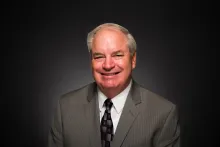
Robin Webber was born in Chicago, Illinois, in 1951, but has lived most of his life in California. He has been a part of the Church of God community since 1963. He attended Ambassador College in Pasadena from 1969-1973. He majored in theology and history.
Mr. Webber's interest remains in the study of history, socio-economics and literature. Over the years, he has offered his services to museums as a docent to share his enthusiasm and passions regarding these areas of expertise.
When time permits, he loves to go mountain biking on nearby ranch land and meet his wife as she hikes toward him.
