
Robin S Webber
This transcript was generated by AI and may contain errors. It is provided to assist those who may not be able to listen to the message.
We're not only seeking after information, but we are looking for, ultimately, how does it apply to us? Where's the transformation factor in our life as we look at the examples of old, that parallel Jesus Christ? And then, as Christians, how we parallel that as well in our life. And we're going into set number three today. We've already covered Adam. And, of course, when we're dealing with Adam, there are a lot of, shall we say, opposite parallels. Because when we're dealing with the types and the anti-types, there's often an example of, really, actually opposites.
Adam was like this, and thus, Christ is like this on, shall we say, the positive end. But we're going to continue with what we did with Adam. We did Noah last time. Did you all get your notes on Noah? Did you see what you all contributed? Five pages. Did you all get that? What church did I send that out to? Maybe the First Baptist Church got that one. Oh, good.
Okay. Just checking. Wasn't sure. I always like to know if I'm talking to the right group or not. So, anyway, we got those out. And most of those were your contributions. I'd say at least half of them. I had enough of them. And Doug did a lot of writing. And Doug, I'll kind of look at you sometimes, so you don't have to write and write and write. Because I'll get these notes. See, you're not probably going to write as much now, because you've got to figure it out that I'm going to send you the notes anyway, right? That's what I used to do with my students with the foils out, because I would give them outline study guides.
Because I know it doesn't do me any good to be up here for 45 minutes or 50 minutes, and everybody go away wondering what I spoke about. I'd like to get it right in their hand, and then hopefully they can take it with them.
Why are we doing this? Let's go back for just a moment. This is how the early church often studied the Bible. This is how they came to understand what God was doing through Jesus Christ, and that they would see these parallels and come to recognize that Jesus Christ was the ultimate fulfillment and actually God's gift, the only true gift that was granted them as being the head of the church.
Let's just go for a moment for some of you that were not here before. We're basically using two or three different sets of terms. We're dealing with the word parallel. We're dealing with the words type and anti-type. And again, let's just look at that for a moment. Join me if you would in Romans 5 and verse 14 to understand what a type is first.
A type is that which came first, which proceeds. Actually, the Bible itself gives us that definition. If you go to Romans 5 and 14, Nevertheless, death reigned from Adam to Moses, even over those who have not sinned according to the likeness of the transgression of Adam, then notice, who is a type of him who was to come. So the type comes before the anti-type. I don't know if I can remember that or not.
I'll show you another way. Always remember the short word comes before the long word. Now, if you don't know what the short word is from the long word, then we've got problems. Type is the short word. Anti-type is the longer word. Allow me to draw you to 1 Peter 2 for just a second to again show a Bible definition of this. 1 Peter 2. Let's take a look at verse 20. 1 Peter 2 and verse 20. Is that what I want? I wonder if I did the right one here.
1 Peter 2. 90 second Peter 2. Bob, where was that scripture that you used last time? That you went to add? Because my eyes are not... I think I've got the wrong... You know what it might be? I think I've got the wrong word. Bob, do you remember where that was?
Where it mentioned any time? I thought it was 2 Peter 2. Yeah, that's what I think it is. 2 Peter... My apologies, folks. 2 Peter 2.
My eyes are not falling on it, unfortunately.
I had it down there this morning. I have a wandering scripture. 2 Peter 2. Peter uses the term type, and I can't find it right now. Well, let's lay that aside. Let's not worry about it right now. Type precedes anti-type. We're talking about parallels. We're also using the phraseology lesser and greater. In other words, we used Noah last two weeks ago. Noah would be in that sense what we call the lesser Christ, whereas Christ would be in anti-type the greater Noah. Today, what we're going to do... Let's get right into it because we want... Yeah, got it? Ah! 1 Peter 3. Thank you. 1 Peter 3. Yeah, thank you very much. It's talking about the aspect of baptisms. It picks up the thought of, again, in the days of Noah, verse 20, while the ark was being prepared, in which a few, that is, eight souls were saved through water. So the concept is the days of Noah, the type, water being a type during the flood, which is a type. There is also, now notice, an anti-type, which now saves us. The people of Noah's day were saved in the ark, saved from the water, in the water. Now there's an anti-type. There is a later fulfillment, a later parallel to that which was. So thank you, Bob. I appreciate that. Let's move right into today. I know you've been eagerly busy studying. And what we're going to look at today is somebody who is utterly fascinating and somebody that we all respect. And that is the patriarch, Abraham. And I could tell you everything that I have here, but I'd really like to hear from you, the different parallels that you have come up with between Abraham and Christ. Now we're going to do this, but then at the very end of this study, then we're going to tie it all together because we just don't want to read something. And we kind of like a jigsaw puzzle, put pieces together. From that, we need to ask, where do we move out during this week in our life? And what are we going to do with what we are? Because after all, aren't we also, if Abraham is the type, Christ is the anti-type. There's one other parallel fixture in this. What's that? We are to parallel the example of Jesus Christ on the other end of the stick, as it were. So let's talk about some of the things that you've come up with. I'm ready to hear from your...
We're ready to go?
Okay. Yes. Hi, Julie. Go ahead, please. Okay.
You're probably looking at the sense of Romans 4. This seems to be what you're calling to mind, if I'm correct. Romans 4. For what does the Scripture say? Abraham believed God, and it was accounted for righteousness. Okay. So Abraham believed God. His faith is what approved him before God. What is... Now, that's the type. Where he could take him to the gospel, and show him the anti-prite, the parallel of Christ, who lived with the greater Abraham. We can help Julie out.
Where is a verse in the Scriptures that specifically focuses that Christ took God at his word and believed? Okay. I'll tell you what. I'll be back in about 10 minutes. Oh, I'm sorry. Yeah, go ahead.
Okay, but that's a different parallel track. Okay? I know you tried to go for it, Julie, but it's a different track. Okay? I thought you'd know. We're having fun with that. That is... That is exactly what God is. Which means that we believe in the good God, and all the components and the art surrounding it will bring all the... to go on them. Anybody else going to help me? Where is the statement of the Gospel of speaking that Christ took God at his word? Where's the parallel? Why don't we hold on to that thought so that we have this Bible study keep on progressing? How about another parallel? I've got a very easy one. Do you want me to start you out? Kind of get your... ...duck? Oh, you want me to start you out? Oh, thank you, Dennis. Okay, fine. Join me if you would in Genesis 12 and verse 1. In Genesis 12 and verse 1. Here's Abraham, and he is the type. Genesis 12 and verse 1. Let's note who it says. Now the Lord had said to Abram, chapter 12, verse 1, Get out of your country and from your family and from your father's house to a land that I will show you. What was Abram asked to do?
He was told to leave all of that which was familiar. All that had been. Everything that he had always experienced.
Okay, now you help me. If that is the type, what is the anti-type, where would I go to understand what the greater Abraham did? The greater Abraham being who? Abram. Who's the greater Abram, Doug? Who's the greater Abram? Okay, help me.
Well, let's go to Ephesians 5. Not that I don't take your word for it, but let's... Okay, you're getting close, but I don't think you want Philippians 5. I'll do this. Yeah, that might be a double anti-type. That might pair... Okay, Philipp. Philippians 2 and 5. Okay, why don't you read that nice and loud for me, okay? Nice and loud so they can hear over here. Okay, we know, and actually it talks about... There's a verse in the Bible that's actually in Hebrews, I believe, that talks about a heavenly country. So we're talking biblical language, if we can use the words of the author of Hebrews. We understand that Jesus came from that, what, heavenly country. We use the words of the Jesus. And he left that. He was part of that, and went to where God had come to. He came up all that, that, that. What's another verse in the scriptures that would solidify that thought, that Jesus left that which he was following where God wanted him to go? Excellent. Who said that? Okay, which... Are you going to read that off your computer, or just... Okay. John 1.
Okay.
That's fine right there. You've hit the points. Is that that Christ, in that sense, left that existence as the one that had always been with the word and with God. And that's very important. How does that parallel us as we're coming up to the Passover? Would you join me over in Luke 18? Let's kind of get ourselves in the middle of this picture for a moment. Let's go to Luke 18. Because the call of a Christian is not just simply reading about a Brahm or understanding what Jesus Christ did, but where's the parallel in our life, especially as we're coming up to the recommitment at Passover 2009. And notice what it says here in Luke 18, verse 27. But he said, The things which are impossible with men are impossible with God. Then notice verse 28. Then Peter said, See, we have left all, left everything, and followed you. That took faith. That's the faith that a Brahm exhibited. That's the faith that the word demonstrated as he departed from that heavenly country. That is the statement that Peter made. Then notice the promise that comes back from Christ. And he said, speaking of Jesus, Said to them, Assuredly I say to you, There is not one who has left house or parents or brothers or wife or children for the sake of the kingdom of God, who shall not receive many times more in the present time and in that age, notice, to come eternal life. But you know, when you say that, Jesus was speaking about it. It had not come to fruition in Peter's time. And even when you go back here to Genesis 12, which I'm rapidly going back to in my Bible, notice what it says here in Genesis 12, that initial statement. Genesis 12, when it says, Get out of your country and from your father's house to a land that I will show you. He talks about being made a great nation. So Abram departed as the Lord had spoken to him. Well, actually, I was thinking what I was saying in Hebrews, which we'll get to later. So right now, the first major type, Julie, yours is still over here on the board. We're going to get back to you. But that we notice that Abram set the principle that he left everything. He divorced himself from that which had been rich and well and prospering in his life to follow God. Jesus, the greater Abram, left all to come to this earth for you and for me. Let's use another type. Anotype. Who's got another one here? Because I've got about nine or ten. So let's see what you have. William!
How many like that? How many of you think that was on Mr. Weber's notes? That's very good. That's excellent. Whose kid is that? Oh, okay. William, excellent. Drop that one down. That's interesting. Parallel. Don't quite know where to take that. Anybody have a... I don't know if there's... No, it's just it's interesting that there's that parallel between Abram and Christ going... Bob, do you have some big thought on that? Okay. It is interesting that Abram went into Egypt, and later on Christ himself also visited Egypt. That's a minor parallel. That's good, though. It's got your thinking cap on. What do you think, Susie? Okay. Watch. My wife's eyes always have a thousand words, each pupil. That means at least two thousand words. So anyway, go ahead. Skip. Got another one? Okay. Let me take you to my... Well, you're thinking, how about this one? How about this as a type? Abraham is called the father of the country. What's he called? He's called the father of the faithful. Join me if you would in... Let's start in Genesis 15. Let's go to the historical example for Genesis 15. Genesis 15, and let's take a peek at verse 5. This is this very famous story. We can't always do this in a metropolitan area, but out in the desert, you can. Then he brought him outside and said, Look now toward heaven and count the stars if you are able to number them. And he said to him, So shall your descendants be. And notice, and he believed in the Lord. Who brought that up earlier? And he believed in the Lord. But, Julie, while we're working on this, you've got to find the counter one in the Gospels. And he believed in the Lord, and he accounted it to him for righteousness. And so what we see here is that Abraham took God at his word and believed him. Therefore, let's notice what he's called over in Romans 4. Actually, Julie, this will probably stay enough with your point. In Romans 4, verse 3. Again, I already read that, but I'm going to go to another verse here in Romans 4. In Romans 4, it says, And Abraham believed God. And then let's pick up the thought in verse 16. Therefore, it is of faith that it might be according to grace, so that the promise might be sure to all the seed, not only to those who are of the law, but also those who are of the faith of Abraham. Notice, here's the famous verse, Who is the Father of us all? You combine those two phrases together, and that is where we get the phraseology that Abraham was the Father of the faithful. Faithful because he believed God. Where is the anti-type? Join me if you would in Hebrews 12. In Hebrews 12, if Abraham is called the Father of the faithful, he might say the beginner and or the originator. Then notice what it says in Hebrews 12 here about Jesus himself. 12 and verse 2, looking unto Jesus, the author, the author, he's the anchor, he's the beginning, he's the originator. But what is different? What is the difference between him and Abraham in this verse? It says that Abraham was the Father of the faithful. It says that Jesus is the author, but wherein lies the difference between the lesser. Ready this? Stay with me.
He finishes the faith. That's where the parallel is different.
It's more than all the patriarchs combined. While Abraham started something, the difference between this human figure of old and the need for Christ to come, he not only begins, he not only establishes the faith, but he is there with us to the very end. He concludes it. He signs off on the check, as it were. He is always with us. He's always there to establish us, to take care of us. Good! It's very good chalk, yeah, Lance.
Let's take a look. Get ready, Doug. This could be a note. Hebrews 2.13. Okay, and again, I will put my trust in him. Yeah. Okay, which is always... Let's go to Isaiah 8, because you never know quite how these are pulled out of Scripture. Have you ever noticed that in the New Testament, where they're pulled out of the Old Testament? They get the sequence. Isaiah 8.17. And I will wait on the Lord, who hides his face from the house of Jacob, and I will hope in him.
There's some inspired reckoning there. I always enjoy how they pull some of these things out of the Old Testament. I'm going, oh, okay, I've got to kind of figure this one out here a little bit. Let's go to another one here. Let's talk about the women that were in the lives of Abram and Christ. Where are the parallels? Doug? Are you staying on this one? Are you... Okay, good. Yeah, please. They're watching the eyes of your peers. I don't have to be like the gladiator ring here. That's true, yeah. I've got a different idea, though, Doug. Well, don't lose that thought. Come to Genesis 1717, okay? Because I think this is probably... Doug, I'm glad you're thinking. That's good, though. Can't see Genesis 1717. How about this one? Genesis... Because to me... How old was Sarah? Yeah, go ahead. Oh, you were just going to go there, now that we're there. Okay.
Okay, that's good. That's right. Let's talk about that for a moment. Genesis 1717. We're talking about the women that were in the lives of these two individuals. Notice Genesis 1717. Then Abraham fell on his face and laughed, and said in his heart, Shall a child be born to a man who is one hundred years old, and shall Sarah, who is ninety years old, bear a child? At that age, Sarah, Sarai, was beyond the age of childbearing. Her womb was dry in that sense of life. Isaac was, indeed, a miracle. Absolutely. And it begins to establish in your mind, and trying to think, probably this is the beginning of showing coming down to the church, which is one of God's favorite miracles, and that makes it a wonderful thing. And then that time, there's the idea of the day, to put God's power on our hands, and then it's a fucking special. That's what he's done for us. And he's given us a birth. You know, really, when you think about it, aren't we children of promise? Aren't we sons and daughters of promise to recognize that God took our nothing, our zero base of nothing, and said, I'm going to make you something, just like we go through and rehearse the Passover, and how God took slaves, and took that nothingness, which was toiling on the banks of the river Nile, and said, I'm going to make you something. I'm going to make you what? I'm going to make you a kingdom, a priest, and I'm going to be your God, and you're going to be my people, and I'm going to birth a nation out of a bunch of slaves. It's kind of exciting. Let's go to this thought, then the parallel thought. Let's go to Isaiah 7, 14.
And, no way? Get ready. I'm going to have you read this, okay? Isaiah 7, 14.
Do you have a Bible or your English Bible? No, you're making me nervous. What do we have? Which one do you have? Good! Okay, go ahead.
Okay, your translation says, a young woman, and that's often where it's gone. The other definition is that of, and a virgin shall conceive and bear a son. That young woman translation is often used, other than we have to go to understand the fullness of this, we need to go to Luke 1, verse 34. We could leave that as is, other than you've got to go to Luke 1, 34, too, as Paul Harvey used to say the rest of the story. I miss his voice. Luke 1 and verse 34. Then Mary said to the angel, how can this be as it came up that you're going to have a child? How can this be seeing, I do not know a man? She had not had relationships with a man. It was impossible for her to have a child. Nada! Is that the word I want to use? No, nada? Nada good? No, I'm asking you. Nada? Nothing? No, can't have it. Not. And so what we recognize here, this is more than just talking about a zero-sum base. This is talking about a miracle of God taking that which is nothing and saying, nothing doesn't bother me. I am going to perform my will. And you know what's amazing when you think of the book of Isaiah, which was basically written about 700 years before Christ, God called the shot 700 years ahead of time. That's kind of cool. You know, some of us right now are kind of worrying about tomorrow.
And the encouragement of this fact, folks, is simply this.
I'm just doing this with a story I just forgot here. It would be a parallel of what was going to happen with Mary over here, another son of promise being offered up, and at the same time calling out, you know, are they all you could defend about any birth?
You know, everybody always gets excited about today. You know, we want to hear that.
He calls the shot, right?
They called the shot. That's what he's going to be next. But think about that for a moment. Here's God Almighty. He's not calling home runs. He's calling about the Savior of the world coming 700 years ahead of time. And not only that, a thousand years before that, he uses this parallel type of taking something that is dead. The Sarah eyes womb was dead. It could not be fertilized. It could not be life in there. And he says, that's okay with me. Nothing's going to hinder my purposes because this is not about your works. It's not about what you're doing. It's not about your connections. It's about what I'm going to do. All we have to do, friends, sometimes is get out of the way. So often we're worried about what we have and what we're doing or what we don't have, where we're all dried up, where we don't have what it takes. And here's the powerful example that God takes nothing and he makes something out of it. Let's go with another parallel. Let's have another parallel. We're actually staying with this thought. Let's stay with this thought because we're on track here because, okay, this is actually we'll stay in point. We talked about the women, but what were their sons known as then? What were their sons? What were their children known as? Have you got that thought in their mind? Join me for a moment in Genesis 1715. Then God said to Abraham, As for Sarai, your wife shall not call her name Sarai, but Sarai shall be her name. And I will bless her and also give you a son by her. And then I will bless her and she shall be a mother of nations. Kings of people shall be from her. And then we read that part about verse 1715. And then we read that part about verse 1715. And then we read that part about verse 1715. And then we read that part about verse 1715. And then we read that part about verse 1715. And then we read that part about verse 1715. Basically what we have here is that God made a promise to Isaac. That is why Isaac is known as a son of promise. Acts 7 and verse 5 builds on this. Acts 7 and verse 5.
And God gave him no inheritance in it, not even enough to set his foot on. But even when Abraham had no child, he promised to give it to him for a possession and to his descendants after him. So the thought of son, of land, of inheritance, brings us to the thought that Isaac was a son of promise. Christ, as the anti-type, was a child of promise. Again in Isaiah 9 and verse 6. Let's go over there for a second. Isaiah 9 and verse 6. For unto us a child is born, and unto us a son is given. And it talks about all that he would be. God prophesied and he promised that this would come about. That Christ would be that son of promise. Let's go to some other thoughts. Who's got some other thoughts? Chris, go ahead. Then we'll go to David.
That's good. Okay, that's good. Let's draw on another parallel. Thank you, Chris. That's good. Let's draw on another parallel here.
What about... I've got so many. I just want to follow on some specific ones here.
Let's go into... Get your mind focused here. What about some of the parallels that we were hearing with Abraham, Isaac, and the sacrifice? Let's deal with some of those. Because there are several parallels here. Abraham, Isaac, sacrifice. Yeah, Bob.
Okay, he's the type of Christ. Okay, good. What about location? Interesting. Where was... And I'm actually passing these out in the notes, but just to get the...
I'd say virus is the word that I would use. Remember that... No. Let's go to... I tend to use the classification in the environs. Join me. Let's go to...
Genesis 22, verse 2.
Genesis 22, in verse 2.
Then he said, Take now your son, your only son, Isaac, whom you love, and go to the land of Moriah. We also pick up the thought in... And let's see where it is here. I might have lost the verse, but it also mentions Moriah again. The key concept there is Moriah, though. You know what? Actually, I've got... You know what? I'm actually looking for... Yeah.
There's another mention of Moriah there, but we find that in John 19. Let's go to John 19. In this pick up the thought in verse 17. And he bearing his cross went out to a place called the Place of the Skull, which is called in Hebrew Golgotha, where he was crucified. We at least know that Moriah was in the... I think it's safely saying that Moriah is one of the hills of Jerusalem. Christ was killed on the outside of the city, but it's well within that. Moriah is normally considered more where the temple is, but he is in that general environment. So you see the location spot. Let's go to a basic thought here. Let's go to Genesis 22 in verse 2. In Genesis 22 in verse 2. You find something. Then he said, Take now your son, your only son Isaac, whom you love, and go to the land of Moriah, and offer him there as a burnt offering on one of the mountains of which I shall tell you. Abraham was willing to sacrifice his only son. And also we know that through the account that Isaac was ready to do what his father said. Look at verse 9. Then they came to the place of which God had told, and Abraham built an altar there and placed a wooden order. And he bound Isaac his son and laid him on the upon the wood. Isaac was not a baby. He was not just a little boy. He was probably a very, very young man. And what is very interesting when you understand the parallel is that Abraham was not only willing to sacrifice, but Isaac was willing to lay down his life as a sacrifice. Probably the best example I have is this. Well? Yes. I'd have to go now.
Here's a father. Here's a child. We really do love him now. He's a good son. And, but, those are two figures. He's very American to be bigger than God. He's always God. Not that you're not a child. But anyway, then, one of the back-end people who helped me think that, you know, that God has a perfect relationship with me. I am a sacrifice for it. And you are the sacrifice for it. And that, you know, oh, okay. No, we're just talking about that. That's why we have to turn that page. But, can you imagine that, you know, if you take a big, abstract, rattling will and you lay them down on a fire, and you're ready to sacrifice them. And each one of them, a visualization of the abstract, and the second one is the... ... ... ... ... ... ... When you look at that, then, let's look at the... ...the greater parallel. John 3 and verse 16. John 3 and verse 16. Where it says, For God so loved the world, that He gave His only begotten Son, that whoever believes in Him should not perish, but have everlasting life. The parallel from 1800 years before was that a man took a son, but he didn't have to sacrifice him. He was willing to sacrifice him. And the son as well, it was a team effort. There was a relationship there. And he was willing to do that. But then, come with me to John 10. John 10 and verse 17. Which is very powerful as we come up with the Passover. And I think we'll just conclude with this today. We've had enough. I'll send you out some of the other items. There's many, many more to go. I think we've had a full day. Notice what it says in John 10.17. Here is the... ... ...the greater Abraham. The greater parallel. Therefore, my father loves me, notice, because I lay down my life that I may take it again. No one takes it from me, but I lay it down of myself. I have power to lay it down, and I have power to take it again. And this command I have received. Here's a thought that I'd like to kind of pin into your heart. Not your head, but your heart right now as you come to the past.
We do not worship somebody that is a God. He does not hug him. He goes to the city gate. He is ready to what? Lay down this life. Just like Isaac, another son of Thomas, was willing to lay down his life. Let me just use a few thoughts here. There's four or five more that we could get into, but time is fleeting. What do we gain out of this? Abraham was truly a spiritual pillar. He was the father of the faithful, but he was human. He had his foibles. Probably Abraham's biggest foible was what? He was a people pleaser. He looked for the easy way out. He was more concerned about people than at first he was concerned about God. He had a way of stretching the truth. Remember when he went down to where? Who told me about Egypt? Who was that, David? Remember when Abraham went down to Egypt? There was Sarai who was beautiful.
I'd like to share the book. Here you go. God gave you the land of the beautiful land of the homeless land of the rich. There's a lot of what part do you want? A lot of what part do you want? And so Abraham was more of a people pleaser rather than a God pleaser. Christ always, his desire and his will was to please God. What did we learn about this, about the greater Abraham? Christ never wavered in seeking God's will. Never wavered. Very important. And I think that's where we go away. And also that he was willing to be the sacrifice. You know, I'll tell you what's kind of interesting here is that when you look at this is that we know that Abraham was called the father of the faithful. We know that Jesus Christ had incredible faith. Let's conclude just this allows us to go out and walk this week. Matthew 25, 21. We'll conclude here. Matthew 25, 21. We know that Abraham was the father of the faithful. We know that Jesus exercised incredible faith when he said, I commit myself into your hands, my father. Then notice Matthew 25, verse 21. In Christ speaking, in his Lord said to him, Well done, good and faithful servant. You were faithful over a few things. I will make you ruler over many things. Enter into the joy of the Lord. We notice the example of the father of the faithful. We recognize the example of our faithful savior, who is the author and the finisher of our faith. And to notice that we bring this full cycle to our parallel, that that's what God wants to say about us. Well done, thou good and faithful servant. So let's hold it for there. I said we go about 45 minutes. We went about 47. We've had a full day. I'll send you out some notes. I'll see what Doug has added.
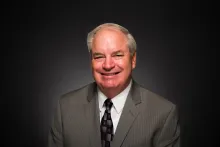
Robin Webber was born in Chicago, Illinois, in 1951, but has lived most of his life in California. He has been a part of the Church of God community since 1963. He attended Ambassador College in Pasadena from 1969-1973. He majored in theology and history.
Mr. Webber's interest remains in the study of history, socio-economics and literature. Over the years, he has offered his services to museums as a docent to share his enthusiasm and passions regarding these areas of expertise.
When time permits, he loves to go mountain biking on nearby ranch land and meet his wife as she hikes toward him.
