
Robin S Webber
This transcript was generated by AI and may contain errors. It is provided to assist those who may not be able to listen to the message.
I'd like to begin by offering a definition from Webster's dictionary. The definition goes like this. The red fluid circulated by the heart throughout the body that carries oxygen and nutrients into all parts of the body.
We're talking about blood. I just want to share a thought with you to maybe have you put on your seatbelts and your airbags deployed here. The next three times that I speak to you, we are going to be discussing the subject of blood, which is very important as we come up to the New Testament Passover. With the thoughts about blood, over the ages, men have shed blood aplenty, even to this day as we read in our newspapers or we watch on internet. At times, not in war, but just around the home when there's an accident or in a hospital, people have shriek and at times fainted from its sight. Full-grown, big men just faint and they drop on the ground from the sight of blood. But on a very positive note, we are also nourished, when you think about it, daily in our own bodies. Bit by bit, we are nourished and to recognize that others have been rescued when in need by a supply of blood from somebody else. If I may for a moment, and you're a captive audience to a degree, unless you walk out, let's talk about blood for just a second.
How would you describe blood? Well, this is my description. It's red. It's normally warm.
It spreads and it covers. And without it, we die. Without it, we die.
Moses understood this 3,500 years ago, and if you'll join me, let's see how he understood it in the book of Leviticus, Leviticus 17, verse 11. In Leviticus 17, verse 11, breaking into the thought here, it simply says this, for the life of the flesh is in the blood. Let me make it clear.
Life is in the blood, and I have given to you upon the altar to make atonement for your souls, for it is the blood that makes atonement for the soul. But what I want you to capture and just kind of put there in a bumper sticker on your mind for a moment is simply this. Life is in the blood.
Now, with all of that stated, this particular message, though, is not designed to be a biology course and or simply another episode of fear factor if they're still running that, which I don't think I've ever seen other than an advertisement, but I realize that it keeps people poised on the seat of their couches. The intro was specifically designed to grab and to arrest your attention to one of the most powerful themes embedded in scriptures. And, brethren, if I I'm going to be putting time into this, researching it and developing it and bringing it to you, and for you to recognize how important and how thematic the subject of blood is in both the Old Testament and the New Testament and in the Old Covenant and the New Covenant. Let's just put it this way. The subject of blood is embedded in the scriptures. Simply put, and as you know in the Church of God community, we look at the scriptures as one given, divinely ordained thought from God, from cover to cover, from Genesis through Revelation. It is a continuous expansion towards the ultimate fulfillment of God's purpose for all of those made in His image and in His likeness. It's one book from God above. And what you notice, though, that in that book, from the book of Genesis to Revelation, you might just want to jot this down because this is the trail we're going to be going down. There is a trail of blood from Genesis to Revelation, and it flows from one end of that book to the other. Some refer to the Bible as a book of covenants. Others call it a book of life. We might also say, when we recognize that, both in the Old Testament, like I said, and in the covenants, they both talk about blood. And again, you might just simply say it's a book about blood. And ultimately, not just about anybody's blood, but somebody very special that came and died for you and me. That we might have more than just simply physical health, physical nutrients, physical well-being, but eternal life. That somebody gave their blood on a day that we might live with God forever. So that's what we're going to be covering. Whenever we open the scriptures, we must ask ourselves a question. Are you with me? And it is simply this. What is God telling me?
That's it. When we open the scriptures, God is talking to us. What is God saying? What is He telling us? Because what we call revelation is simply God sharing what is in His heart towards us.
Let me just bring you down singularly to you and to me. When we open up the Bible in the morning and we're reading it, we're saying, what is God telling us? What is He sharing that He wants us to grow in and to understand? And in part, that's one of the reasons why this message.
In His word, God comments on some things loudly. Some of the men that have just recently been in the hermeneutics class that we just completed. They've been very patient with me. When we look at God's word, there are some things that He speaks about loudly. There are some things that He addresses quietly. There are some things that He doesn't say at all. Some items are simply foundational.
They are primary to understand. And again, especially as we begin to prepare for the New Testament Passover, understanding the role of blood and God's putting it there for us to understand is utterly foundational to understand what the purposes of God are for you and for me. Now, my goal over the next three messages, including this one, is to bring you systematically, guide you systematically, with one outcome in mind, with one outcome in mind, that there is no single scriptural reference from Genesis to Revelation. More consistent, more prominent, kept before the reader and or do I dare say believer's mind and heart than expressed by the words, the blood.
And so I hope this is going to help all of us understand this. I'm just kind of taking some time in the intro to encourage us to understand how very important this is. So here's my specific purpose statement. This is where we're going to go. This three-part series of messages begins, lays a cornerstone, a foundational scripture, and all the three messages are going to be entitled to this. And it does come off of Hebrews 9 and verse 7. Join me if you would there for a moment. And this is a thought about the Day of Atonement, but I think it speaks about all in all what we're going to be dealing with here.
Join me if you would for a moment. And this is what I really want to plant in your mind and in your heart and in the way of life that we live. In Hebrews 9, I'm picking up the thought if we could. And verse 7. In Hebrews 9 verse 7, speaking again of the Day of Atonement, but into the second part of the high priest went alone once a year.
In other words, there was the Holy Place, but then beyond the veil was the Holy of Holies. Went into once a year, and not without blood, which he offered for himself and for the people's sins, committed in ignorance. So the title of this entire series, portion by portion, is going to simply be this, not without blood. Now, I'll give you another translation, and it's simply this. It comes out of the New Living Translation, always with blood. I do want to share with you that I'm going to be using some source material from a book entitled The Practice of God's Presence. The Practice of God's Presence.
It was written by a gentleman named Andrew Murray about 130-140 years ago, edited recently by William Douglas. Murray was a South African preacher at the turn of the 18th century into the 1900s. Here's where we're going to be going, just so you kind of where I can pace you, where we're going to be going through the three messages.
First, we will look at several accounts from the Old Testament, and that's going to be today's subject. We're going to start in the Old Testament, remembering that the New Testament is concealed in the Old Testament, and the Old Testament is, are you with me, revealed in the New Testament? Today, we're going to center on the Old Testament. Secondly, we will reflect what Jesus Christ expressed regarding blood and whose.
Later, third, we will note what the apostles taught based upon their experiences. And then, fourth, what does heaven above tell us, and what does the book spell out to us about the subject of blood? And as we do, here's the big point. Are you with me, please? And as we do, we will come to understand that blood is synonymous with God's love.
Blood is synonymous with God's love. So let's go all the way back to the beginning and start down that trail of blood. That brings us to the present day. And ultimately, we're going to come to understand that the preponderance of evidence supporting my statement about blood being foundational to our spiritual vocabulary and well-being is right here in what we're going to be going through today. So we all set. We all take a deep breath. Ready to go? Good. Number one, we begin with the trail of blood going back to the beginning.
To Adam, to Eve, to Cain, to Abel, which we heard a little bit about in Mr. Cora's message. You always want to start at the beginning. You don't, you know, you don't want to go into the movie house halfway through because it's normally right there in the foundation. And so we need to understand what happened in Genesis. Join me if you would in Genesis 3. In Genesis 3, in picking up the thought if we could.
In verse 6. So when the woman saw that the tree was good for food, that it was pleasant to the eyes, and a tree desirable to make one wise, she took of its fruit and ate. And she also gave it to her husband with her, and he ate. And then the eyes of both of them were opened, and they knew that they were naked, and they sewed fig leaves together and made themselves coverings. Notice what they did here. They sewed, when you look at what happened here, it says, and they sewed fig leaves together and made themselves coverings.
Kind of interesting, just as we heard in the sermon at before, they took some vegetable matter. And originally, you know, we always hear about cover-ups and politics or cover-ups and big business.
This was the first cover-up, and they used fig leaves. Now, Mr. Miller, I know you have a fig tree. Don't go there with this, okay? It'd be too much to behold, okay? So you notice this? They tried to cover up with fig leaves. Very interesting. They covered up with vegetable matter, but it was a vain attempt.
They—stay with me a second. Let's think this through. I'm going to be doing a lot of going down deep here, a little bit. They were covering themselves up by the works of their own hands, by the works of their own hands, not what God ordained, but what they thought might pass by by the works of their own hands. Interesting.
It was a vain attempt. And also to recognize that they were covering up with fig leaves, they were dealing with what we call externals. How often do we, even in this life, as members of the body of Christ, do we continue to try to cover up by working just simply with the outside, what people see rather than the internals? And to recognize, especially as we come up to the New Testament Passover, especially what Jesus declared in the Sermon on the Mount, which is the Constitution of His kingdom yet to come, it was about the internals. Not what men see, but what the Father above sees, and what we ought to be offering up to Him as an offering based upon the grace and based upon the beauty that He sets before us today, as much as He gave paradise initially to Adam and to Eve. God made it different, and He made a dramatic statement. Join me if you would in verse 21 now, going down chapter 3. In verse 21, He says, let's pick up in verse 20. And Adam called his wife's name Eve because she was the mother of all living. Also for Adam and his wife, the Lord made tunics. Now, stay. Some of you are newer to the Word. You may have never heard this before, but notice it says that He made tunics of skin, and He clothed them. It wasn't vegetable matter. It was a living animal.
This is the initiation of what we see happening here, that because of the sin of man and breaking the holiness compact between God, something living, stay with me, something living died. And that's what God gave them. For sin came death, and that there might be, in a sense, some form of reconciliation. Throughout Scripture, God declares that He is holy.
The realm of His creation, of paradise, that's what Eden means, paradise. The holiness of that paradise had been pierced and shattered by sin. And what we learn from Father Adam and Mother Eve is that sin has consequences. Holiness has impact. Sin also has impact. God despises sin.
Ezekiel 18 and verse 4. Join me if you would for a moment. Ezekiel 18 and verse 4. Again, perhaps the Scripture we know, but maybe some of us are not acquainted with it. Ezekiel 18 and verse 4.
Ezekiel 18.4. Behold, all souls are mine. The soul of the Father, as well as the soul of the Son, is mine. We are all before God's presence. The soul who sins shall die. So right from the very beginning, we understand that man was offered paradise. That's what Eden means. We offered that he did have access to the tree of life. God didn't say he can't have the tree of life. He said don't touch the tree of good and evil. But man wanted to become his own God and goddess Adam and Eve. They wanted to make the rules. And because of that, there was sin. And because of that, something living died. Plant that on your mind for a moment, okay? Adam and Eve had cut themselves off, would die. But for now, God required an innocent animal. Stay with me. An innocent animal. An innocent animal to be slain for the guilty party. Here's what I like to share with you as students of the Bible. It's a term I'd like to use. We begin to see the term, we begin to see the factor of what we call substitution.
Substitution. Something had to be substituted because something had happened. Cause and effect.
Here God tells us that sin, and let's think of ourselves, not just Adam and Eve, but that sin has a price tag. It cost. It has a price tag. In Romans 6, 23, just jot that down. For the wages of sin is death. Sin comes with a price tag. It will cost. And to factor somebody's relationship becoming atoned and united with God again meant that something had to die and it begins in Genesis. It is the first biblical hint of the framework for the future covenant relationship. And beyond that, the new covenant. The new covenant. Remember how Adam and Eve thought, oh, God doesn't know. You ever done that? Something you've done? God doesn't know.
So they went and what did they do? They went over to Skip Miller's fig tree over there in East San Diego and got some figs. See, you're going to feel really bad that you showed me that, Suzy and me that fig tree a couple weeks ago at the wonderful outing. But they did that. And to recognize that rather than just fig trees and to recognize that there was a substitution of a living animal that the tunic came from, jot down as we go towards the New Testament Passover, just jot down and passing Galatians 3.27. We're not to be clothed with fig leaves unless you're in Hawaii or whatever. And God willing, more and more, we all have to draw upon the blood of Jesus Christ and say in Jesus' name, knowing what that means. But also recognize rather than being clothed with fig leaves, we are to be, as it says in Galatians 3.27, we are to be clothed with Christ.
Clothed with Christ, as it says in the NIV, and not merely our own good works of what's natural and humanly reachable. All of this has major implications. The theme of not without blood flows forward to Abel outside the Garden of Eden. And Mr. Clore covered a lot of that, so I'll go quickly. All that occurred in Eden can at some times be metamorphized, allegorized, perhaps not as simple and clear. I think that is very simple and clear myself, but people try to take, well, what does this really mean in this and this and this and this? But the story of Abel's pleasing sacrifice is plain, loud, and clear. Join me again in Genesis 4 for a moment. In Genesis 4.
And let's take a look here in the peak. Genesis 4, and picking up in verse 4.
Abel also brought out, excuse me, Abel also brought of the firstborn of his flock and their fat.
And the Lord respected Abel and his offering. He offered up something out of his flock, most likely sheep. You know, it wasn't pigs. You didn't say, I got something out of the herd.
And he gave his offering, and Cain was very angry, and his countenance fell, because God didn't respect his offering. So the Lord said to Cain, why are you angry and why has your countenance fallen?
And so we go on there, and we recognize what happens then in verse 8. Now Cain talked with Abel, his brother, and it came to pass when they were in the field that Cain rose up against Abel, his brother, and killed him. None of us are the fly on the wall, but let's factor this in.
Cain had been righteous. Based upon what had occurred with his parents, and based upon the caribim guarding Eden, he still desired that relationship with his Creator. And this is the first offering that we see. We don't see offerings by Adam and Eve, but in the child of Abel, we see that. And it's incredible. And he offered up a living thing, a substitution as it were. But beyond that, we also recognize something else. Hebrews 11. Join me if you would there for a moment. Hebrews 11. We're probably going to give you some scriptural whiplash today, okay? Hebrews 11.
Notice incredible verse. I mean, this is like, wow! By faith, Abel offered to God a more excellent sacrifice than Cain, through which he obtained witness that he was righteous in God testifying of his gifts. And through it, being dead still speaks. Sometimes when you are pleasing to God, when you are obeying God, when you want relationship with God, down through the ages and down in our lives, at times it will cost us personally, just like it did Abel. He received and gave us a witness of righteousness, closely connected, again with what? Sacrificial blood, significance. In light of later revelation, this lays foundation that there can be no approach to God. Here's the first human being that is trying to be at one with God. There can be no approach to God, no fellowship.
Brethren, this is serious. There can be no fellowship with Him, no enjoyment of His favor in life without blood and sacrifice. Here God tells us, faith is pleasing.
But again, the relationship is not without blood. Let's go to, I'll put this as number three. We'll make Adam and Eve number one, we'll make Abel number two. Number three, Noah and the new earth.
A new beginning. Approximately 1600 years had passed and God passed a judgment on this earth.
It's a frightful type of baptism. There is an immersion because humanity was completely engrossed and impacted by sin.
They did not elect to follow the preachers of righteousness that followed Abel down to Methuselah. Again, man rejected God's way of life and so there was something that was going to have to happen. But we will also likewise note what we might call a baptism with blood.
With new beginnings, we notice something very special. Join me in Genesis 6. In Genesis 6, and let's pick up the thought in verse 8. But Noah first mentioned of grace in Scripture.
But Noah, so he might say, oh, is grace spoken about in the Old Testament? Absolutely. But Noah found grace in the eyes of the Lord. That's a good place to find grace and favor. And this is the genealogy of Noah. Noah was a just man, perfect in his generations. Noah walked with God. So we notice then that Noah was a man that God wanted to deal with. And now in chapter 8 and verse 20, let's notice something. After the flood recedes, after the waters come down and they are in what is called the mountains, it's plural, it's not singular, the mountains of Ararat, we notice what happens here. And we find it where it says here in verse 20, then Noah built an altar to the Lord, and he took of every clean animal and of every clean bird and offered burnt offerings on the altar. And the Lord smelled a soothing aroma. Then the Lord said in his heart, I will never again curse the ground for man's sake. Although the imagination of man's heart is evil from his youth, I will never destroy another living thing. And then we have the what we call the Noatian covenant. Now here's what I want you to think about. Again, this is a which will ultimately come to our story as we get through this series. This is, you might want to put this down, new beginnings, new beginnings, a new start, no longer chained to Eden and Adam and Eve, a new start, a new relationship. And this covenant is there. And you notice that it is compacted by an offering of blood, an offering of animals. This is quite amazing. It's transitional. It's a transitional miracle. Stay with me for a second. It's a transitional miracle from the world of old to the new that God presents to those that are made in His image and likeness. And it's exactly what we have done. We that are baptized, we were in the old world. And then we offered, we offered ourselves to God and we accept the blood sacrifice of Jesus Christ for you and for me.
And that is what gives us new beginnings. That's what gives us hope. That's what allows us to venture out into our world as much as Noah and his children ventured out into the new horizons of a brand new world. The old world was no longer. Noah had made compact with God. There was a union and it came about by blood. Again, you see this down through the Scriptures, this trail of blood, not without blood. Number four. Number four, the man of faith and sacrifice.
The man of faith and sacrifice. We know who that was. He's the father of the faithful, Abraham.
The preparation for God's kingdom took a new and expanded form that would come by family. God had basically been dealing with individuals. Now a family was going to emerge. A family, generationally, that would be a family of faith. When you think of Abraham, Abraham, Isaac, Jacob, and Joseph.
Interesting. But it starts with Abraham. Abraham was already in covenant with God. He'd made that in Genesis 12. He had already humanly been challenged to the hilt in beliefs towards God as he turned his back on Ur of the Chaldees and went by God's compass and not his own into the wilderness. But now, Isaac, think this through for a moment. You may want to jot this down to stay with the analogy. The son of promise. He that holy belonged holy to God. Remember, are you with me? I'm getting stirred up just talking about this, thinking about it. I'm excited. I hope you're excited to recognize that God has touched your life and given us all of these examples. That Isaac was a type of Christ. He was the type. Christ is the anti-type. Isaac is the lesser Jesus. Jesus is the greater Isaac. And to recognize that Isaac would not be unless there was a miracle. Is a miracle? Are we all great? Am I talking to the right audience?
Yes or no? Okay. Yeah, a miracle. He basically came out of nothing, as we say. April, are you ready to have a new baby? Huh? Oh, you're laughing like Sarah. You just did. Can I start calling you Sarah? Yeah. Okay, I can. Okay, from now on, you now have a new name. No, just joking. No, it's a miracle. I mean, April's a good foot. April? I know. Nine days. Okay, yeah, I know. You've already been there, done that. Okay, she had nine children. But what I'm saying is, here was a womb that was empty, that was closed, that at her age could not have a child. This was a miracle of God. This was a portent of what God would do with the young Jewish named Mary. So here's a center promise.
He wholly belonged to God, could be surrendered to God only by this death that God said, Abram, you will go up and you will sacrifice your son Isaac. For Abraham, as well as Isaac, only by death could freedom from the self-life be obtained. And that's what we continue to struggle with is learning to be in the freedom that Christ brings that the Heavenly Father imbues us with and getting rid of the, are you with me? The self-life. The self-life. The life that we heard about Mr. Kaur talk about, about Cain. It was about him. It was about his pride. It was about the self-life.
It was only when he went up that Mount and was willing to give up the promise of God and the dearness of that son that he could touch and that he could see and that he could feel.
Abraham was given that directive to sacrifice Isaac. The command had purpose.
It was a revelation of a divine truth that only through death is life consecrated to God. I want to share that with you. I'm going to say that real carefully again. I want you to think only through death can life be consecrated to God.
You say, well, where's that going, Mr. Weber? That's what we did at baptism.
Which is a type of a funeral. It's a watery grave. But too often, I think we leave it simply as a grave. It's also a type of resurrection because we are then raised to new beginnings into a new life. But it's only because we have already submitted and have faith in the blood of Jesus Christ and that He is atoned for us before our Father.
But Scripture also tells us Isaac life was spared. He and the people that sprang from Him, as He Himself sprang from the altar, were not without blood. All of those descendants of Isaac being Jacob and Joseph and later the Israelites, later the seed of Abram, were brought into a new beginning in a new life because of the sacrifice that Abram was willing to go through about his own son. Interesting.
Let's think this through for a moment. But blood was shed on Mount Moriah.
But blood was shed on Mount Moriah.
Abram and Isaac had gone up. In fact, it's very interesting that that Isaac himself carried the wood up. Think that through for a moment.
He carried the wood up for his own sacrifice. Who is that like? Who also carried wood up into the environs of Moriah, which is Jerusalem, for his own sacrifice. But something had to be sacrificed to continue in relationship with God.
And Abram said, God will provide. And he did. He provided a goat. Poor goat got caught in the thick head. That makes you want to stay out of the bushes. And they sacrificed that goat. They sacrificed, excuse me, that ram. And God said, you will call this mountain the mountain in which I will provide. And that's why the Jews, down to this age, they used the shofar. What is a shofar?
It's a ram's horn. And when they blow that shofar and it goes up to the heavens, they are witnessing that they believe that God will provide. Is that how we feel as we're coming up to the Passover of 2022? Do we have the faith of a brahm and Abraham that God will provide?
Maybe not the way that we would provide, not the way that we would go about it. For God's ways are not our ways. And sometimes, like the Jews, we have to leave some things to God. But do we have that confidence? The same confidence that we find later on that the author of Hebrews says that Abraham was willing to go through that because he knew that was the seed. That was going to be the line that was going to go through. And in faith, he went up to the mountain. But all of this foreshadowed a greater sacrifice yet to come. Number five. We're getting close here. Number five. There's only eight more points to go, but we'll get through them. Just joking.
Israel and the Passover. Israel and the Passover. You might want to put those out now, James.
And Bert. I'm an old teacher, so I've got paperwork. Okay. Israel and the Passover.
What blood accomplished for one person had to be broadened and experienced by many as God went from dealing with a family and to a new birth of a people that had not been a people that were going to become the nation of Israel. By command of God, there was, as they came up to that Passover of old, there was to be a sprinkling on the door frames with the blood of a partial lamb that would institute the Passover. What's the point here? God places a clear focus on what grabs his attention as he judges between who lives and dies. I want you to think that through for a moment.
If you haven't been paying attention at all in this message, I'm going to repeat that.
Simply this. That what grabs God's attention as he judges between who lives and dies is that blood. Join me if you would in Exodus 12 verse 14.
Notice what it says here. Breaking into thought about the initial Passover. So this day shall be to you a memorial and you shall keep it as a feast to the Lord throughout your generations.
Excuse me, that may not be the right verse. Let me just take a look here a second. I did have Exodus 12. Okay, yeah. One second. Ah, verse 13. Pardon me. Now the blood shall be a sign for you on the houses where you are. And when I see, notice what? When I see the Kool-Aid?
When I see Diet Pepsi? No, it says, when I see the blood, I will pass over you. That is a promise.
And the plague shall not be on you to destroy you when I strike the land of Egypt. Let's understand two things happened on that eve long ago in ancient Egypt. God passed over a people because of the blood that was on the doorpost. At the same time, something else happened that night.
He passed through the greatest nation on earth at that time. They did not have blood on their doorpost.
Think about this as we move forward in the messages that I'll be bringing.
Who is the gate? Who is the door to God?
Not with somebody else's blood, not with the blood of a little lamb, but the blood of the one that was the creator, the one by whom God the Father made all things Jesus Christ. So you begin to see these similarities.
You begin to see these build-ups between the Old Testament and the New Testament.
That's why it's so important to thank God. Susan and I always wonder what we're talking about in the morning. We are so thankful that as young persons growing up in this way of life, we began to see the beauty of the wholeness and the entirety and the seamlessness of God's plan working with one another from Genesis to Revelation. Let's really think about that as we move into the spring festivals. What a blessing that is!
What a blessing that is! It's just so incredible.
Israel would come through that night and the siege of God's wrath on Egypt and be offered a land of promise, but it was not without blood. Last one I'm going to go through and then we're going to wrap up. Yeah. Israel at Sinai.
When Israel left Egypt, this lesson about not without blood was enforced in the striking manner. Israel had reached Sinai, the mountains thereof. God had given his law as the foundation of a covenant relationship. The covenant now had to be established. I'm just trying to stack the deck here for you. But as it is always stated in Hebrews 9 and verse 7, not without blood. Join me if you went in Exodus 24. In Exodus 24, and join me if you would, friends, in verse 3. So Moses came and told the people all the words of the Lord and all his judgments, and all the people answered with one voice, and said all the words which the Lord God has said we will do.
Read the rest of the book. But for the moment, they were going to do it. And Moses wrote all the words of the Lord, and he rose early in the morning and built an altar at the foot of the mountain, because God's presence was on the mountain. And when you think of the tabernacle later as it would be built, there was an altar in front of that to where the sacrifices would occur, especially in the courtyard of the tabernacle complex later on the temple complex in Jerusalem.
And it says, he built an altar at the foot of the mountain and 12 pillars according to the 12 tribes of Israel. Now, you've maybe never read this before, but I want this point and every pun intended to stick. Then he sent young men of the children of Israel who offered burnt offerings and sacrificed peace offerings of oxen to the Lord. Oh, not fig leaves, oxen, slaughter, death, blood. And Moses took half of the blood and put it in the basins, and half of the blood he sprinkled on the altar. Now, maybe some of you that are especially younger have maybe never been informed or acquainted with this verse. Then notice verse seven, because, you know, God is the master teacher. Okay, I mean, you cannot out God. God, forget it. Then he took the book of the covenant and read it in the hearing of the people, and they said, all that the Lord has said we will do and be obedient. Now, notice verse eight, and Moses took the blood, sprinkled it on the people, and said, this is the blood of the covenant which the Lord has made with you according to all of these words. I want you to think about this for a moment. You know, normally, if you're a little bit like me, we're squeamish about blood, right? Even men can be squeamish. They just have to act like they're not effective, but they can squeamish. You know, normally with blood you go like this.
But here are hundreds of thousands of people out there, and they're pressing up against Moses.
And now, I do know that we have some ex-Catholics in this room, and or maybe orthodox, so you know, a little dab will do you, you know, the holy water, right? Are you with me? The holy water.
And I'm, please, I know they're sincere. I'm just saying we're acquainted with that. For, skip, because he grew up that way. Forget the water. Now, wonder if, here I am, and I'm not Moses. I'm just a minister of Jesus Christ, the second Moses. But wonder, wonder if I were here, and let's do this. Okay, so we're gonna, this is fun. Got a member of an old teacher, so here we go. Are you ready? And we're gonna, we're all gonna say we, now you know what's going to be coming.
Raymond, are you ready to bring up the red stuff for me? Okay, so we're going to do this on the count of three. I want everybody, because you're really excited, because you're following God almighty, and the presence is up there. We're all going to say on the count of three, we do. Okay, one, two, three. Oh my, you're not that excited about having a covenant with God. One, two, three, we do! Okay, and that's just echoing through the the wilderness, the hills, resonating.
And then all of a sudden, you talk about sealing a covenant. You know what dried blood can do if you don't wipe it off? It sticks. Boys probably know this better than women, because we get bruises more than you do, other than through childbirth, but that's a whole other subject. But that, you know, and you're, you're splattered with this red stuff that just a few minutes before was warm inside of a living animal. And God is sealing and putting into the minds of us today, not only ancient Israel of old, to have relationship with Him. That something greater than a turtle dove, greater than oxen, greater than a lamb, for people that had not been a people, that are now the spiritual Israel of God, that to have relationship with Him because of sin, which is the breaking of God's holy and righteous law, something living had to die through that we might live.
Think about that. And to praise God, that something greater than that which is below came from above to ultimately be the ultimate great anti-type of all of these types that we find in the Old Testament. Let's begin preparing now, and I know as good Christians that we're we're striving every day to live and love before God.
But let's prepare as we come up to the New Testament Passover. And what I want to just share with you again is simply a synonymous bridge between two words, blood and love.
You think about that until I come back into Fortnite, and we'll go into the second part of the series.
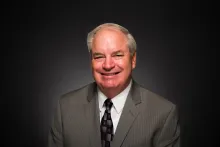
Robin Webber was born in Chicago, Illinois, in 1951, but has lived most of his life in California. He has been a part of the Church of God community since 1963. He attended Ambassador College in Pasadena from 1969-1973. He majored in theology and history.
Mr. Webber's interest remains in the study of history, socio-economics and literature. Over the years, he has offered his services to museums as a docent to share his enthusiasm and passions regarding these areas of expertise.
When time permits, he loves to go mountain biking on nearby ranch land and meet his wife as she hikes toward him.
