
Mario Seiglie
This Bible talk will look at how most of Christ's ministry centered around the Sea of Galilee. It was the ideal place to train HIs disciples with the five cultural groups there and the lessons that can be learned.
This transcript was generated by AI and may contain errors. It is provided to assist those who may not be able to listen to the message.
So the title of this Bible talk is Christ's Incredible Galilean Mentorship of His Disciples. And this is such exciting information. I didn't know this a year ago, but I came across information and I just kept digging and digging. And so here's the result that we can share. And this is all for the glory and honor of God the Father and Jesus Christ. God the Father and the Word, the one whom became Christ, had a big challenge ahead of them. That Messiah would only have a three and a half year ministry to thoroughly train His disciples to go into all the world with the precious gospel. How could Jesus do this in such a short amount of time to properly train His disciples and accomplish it? He took quite ordinary men, yet it was a rousing success. Here is how they did it. First, they chose the primary area of Christ's preaching as being around the Sea of Galilee, where He could chiefly train His disciples. Around the year 750 BC, they inspired the prophet Isaiah to say in Isaiah 9, 1, 2, and 6 that the Messiah would go from the land of Zebulon. And so here we have in the map, you can see here in the gray, that's the tribe of Zebulon, that's where they settled. And one of its towns was Nazareth. And Naftali was higher up, as you can see here. This is the area of Naftali, which includes the area of the Sea of Galilee and Capernaum, one of its major towns.
So this was a prophecy that the Messiah would go from the land of Zebulon, and this was in Nazareth, to the area of Naftali in Galilee, where He would set up His headquarters in Capernaum to set up His home base. Notice what Isaiah prophesied. This is in Isaiah 9, 1 through 2, and verse 6, and reading it from the New Living Translation. It says, nevertheless, that time of darkness and despair will not go on forever. That land of Zebulon, you can see it there, where it was with Nazareth and Naftali with Capernaum, will be humbled. This first took place in 732 BC by Assyria. Remember that Isaiah prophesied from 750 approximately down to an earlier time. It says, but there will be a time in the future when Galilee, in this zone around the Sea of Galilee, when Galilee of the Gentiles, because that's where the Assyrians settled, and a lot of them become the Samaritans, which lies along the road that runs between the Jordan and the Sea. This is the road that they would take. Let me check here. Okay, I'm going to be using this marker here. See, they had the coastal route, which was called the Way of the Sea, and then it would go up into this area. So Aftali and Zebulon were on this way of the sea, the main highway.
It says, it will be filled with glory. This area will be filled with glory. The people who walk in darkness will see a great light. For those who live in a land of deep darkness, this was an area of many captivity, beginning with the Assyrians, and then the Babylonians, and then the Persians, and then the Greeks, and then the Romans, which they were under at this time. It says, a light will shine. And then it says, for unto us a child is born. He will be called Wonderful, Counselor, Mighty God, talking about Jesus Christ, around 750 years before the birth of Christ. And then in Matthew 4, verse 12 through 14, just to see that we're not speculating about this, we see the fulfillment of this prophecy. It says, when Jesus heard that John had been arrested, he left Judea and returned to Galilee, this northern section of Israel. He went first to Nazareth. That's where he grew up, beside the Sea of Galilee, in the region of Zebulun and Naftali. This fulfilled what God said through the prophet Isaiah 750 years before. So God had worked out the details of his plan of salvation way ahead of time.
The aim of this Bible talk is to better understand the Gospels through geography, history, and the five people groups around the Sea of Galilee, where Christ mainly had his ministry. Hence, Jesus' ministry began when John the Baptist was arrested, thus ending John's ministry.
Christ patiently waited for John the Baptist to fulfill his role, his prophecy, and ministry. So when that ended, then Christ stepped up. Christ then went to Capernaum. The town is named after the prophet Nahum. Capar means village. Capernaum means the village of the prophet Nahum, where about 90 percent of his ministry would be around its lake. Now, Christ didn't spend much time in other places. In Judea, he went for the feasts, and then he had to come back because they were always persecuting him. But in this area, there was more tolerance. He started with his own funds, with no support, even from his own family, who really thought he was, as it says in Mark 3, 21, out of his mind. So he didn't even have backing from his own family. As the Lexham Geographic commentary notes, Jesus' ministry base in Galilee prepared his disciples to take the gospel into all the earth. The training ground Jesus chose for his disciples was a politically, culturally, and economically diverse region. A wide array of people lived in Galilee. Jesus' travels and encounters with various population groups prepared the disciples to be sent out into the world to share the gospel with all nations.
And so there were five basic people groups in Galilee that were a microcosm of the world at last. This is what God the Father and Jesus had prepared around this area. It was an ideal, educational immersion for all of these disciples. First, we have in the north the towns here of Capernaum, Bethsaida, and Coruscant, and it's called the religious triangle, because these three towns were the majority of where Christ went to preach.
Then you had number two, Magdala. This is the financial support group that Jesus found at Magdala. Then we have further south, Tiberius, the politically compromised group of the Herodians. The Herodians were Jews that were supporters of the Herod's. There were two Herod's that were at that time in charge of part of the country with Tiberius, which is right over here, as the northern capital. Then we have the fanatical zealots of Gamla. See, they're kind of more distant because that was kind of a mountainous area. Then, on the opposite side in this area, the eastern side of the Sea of Galilee was the Decapolis. This was a Greek area. There weren't that many Jews living there. Basically, it was almost like a transplant of Athens that was taken into this area of the Decapolis. It's called the Las Vegas of the region.
So, let's go to the first group. You see there the triangle again at the top on the northern coast of the Sea of Galilee.
The strongly religious group's triangle. In this triangle of these three towns, much of Christ's ministry and miracles took place. In Capernaum, there were 13 New Testament accounts, by far the largest.
In Bethsaida, there were two accounts, the feeding of the 5,000 and the healing of a blind man. Bethsaida was the one that had a very large coastal area with a lot of grass where you could have a lot of people gathered together. In Coruscant, there was only one account, but there was still close by. So, these people knew Jesus Christ intimately. He would go into this very strong religious triangle. This is why Christ, after all the miracles he did there, finally condemns the three towns for their lack of faith. Let me read to you, Luke chapter 10 verse 13. Luke chapter 10 verse 13.
It says, Woe to you, Coruscant! Woe to you, Bethsaida! For if the mighty works which were done in you had been done in Tyre and Sidon, they would have repented long ago.
Sitting in sackcloth and ashes, they would have repented. But it will be more tolerable for Tyre and Sidon at the judgment than for you and you, Capernaum, who are exalted to heaven, being the physical headquarters of Jesus Christ on earth, will be brought down to Hades, to the destruction, to the tomb. It says, He who has ears, you hears me. He who rejects you rejects me, and he who rejects me rejects him who sent me, because they were still mostly unbelievers.
Phariseeism, which means the religion of the Pharisees, largely dominated there until the resurrected Christ appeared to his followers, mostly in Galilee, where once 500 witnesses, at one time, saw Christ. And there are the scriptures about how Christ, after he was resurrected, said, I'm going to Galilee. Now those are the people that are better prepared, not in Judea. And so he went up there, and that's where he was for those mostly 40 days, appearing to them, and at one time 500 witnesses, that Paul in 1 Corinthians 15, 6 says, many of them are still alive. You can go there, and they will tell you that they saw the resurrected Christ. So of course there was a big base in that area of Galilee. It took the resurrection of Jesus Christ to wake them up, but it did. And here we have the town of Capernaum. This is kind of like what you call the center of the town, with a population at that time of Christ, about 1500. It had a large synagogue, which you can see here, but this one is around the fourth century synagogue. The interesting thing is that underneath it has the base of an earlier synagogue, made of basalt, and that was the time of Jesus Christ.
And there's also this round shrine on the top of what was probably the remains of Peter's house. So they did archaeological studies, and they found this house which was enlarged to become sort of a meeting place. And it probably was Peter's house, and then the Catholic Church put this shrine on top of it. How many have seen this Capernaum? A couple? Okay. So I went there in particular to see the first base of the synagogue, the foundation, and it was the same size. So when that was destroyed probably by the Romans, they built up this white one on top, but it was the same dimension, showing that in Capernaum there was a big synagogue there.
Bethsaida was the second main place of preaching. So here you see the lake of Galilee, Capernaum. You see Bethsaida, and it has this large area of grass, and then you have Corosun up a little bit more on the top, but they would cross. This is about 12 miles across by about seven miles. So they call it the harp because it's shaped like a harp.
Bethsaida means place of fish. This is a big fishing village where Christ miraculously fed over 5,000 at one time. You see here this area, Bethsaida, and this is a very appropriate place to in that grassy area to feed the people.
Had some 1,500 inhabitants about the size of Capernaum over here. Corosun was much smaller. And from Bethsaida, at least three of the apostles came from there. Peter, Andrew, and Philip. John 1 44 tells us this. So what lesson can we learn from this first area? Anybody want to tell me what you've learned? Any real fast comment? What have you learned from this group? Nobody wants to volunteer. I'll go ahead and mention it. But the religious triangle of Capernaum, Bethsaida, and Corosun had a lot going for them. Being the main areas of preaching of Christ, the pre-existent word, in other words, God in the flesh, being among them.
Yet, their set ways, influenced by Pharisaism, did not allow them to have an open mind, even with the miracles, even with the teachings. They were still locked into the rabbis and all of this tradition, Jewish tradition of that time, they could not break, open their minds. The parable of the wineskins applies primarily to them, where this new teaching from Christ, God in the flesh, it could not penetrate them because of their traditions. And up to this day, the Jewish, although wonderful, dedicated, they were still close-minded about accepting Christ as a Messiah. They were not like the Bereans, examining Scripture for themselves to see if it was so.
Acts 17, 10 through 12. Some of the source material I've used for this presentation, the Lexum Geographic Commentary of the Gospels, and also the lectures from the archaeologists a good friend of Brad Gray. So let's go to the second population group around Galilee, Magdala. This is a little further south from Capernaum. It's a city of around 30,000 people. In other words, 20 times larger than Capernaum, by far the largest Jewish population around the lake. It was an industrial hub for smoking and salting fish. This is where most of the fishermen, after they went at night, they would bring their catch, a lot of them, here.
Because here was where they exported these delicious tilapia, lake fish, and other types. They would smoke them, put them in vats, and then export them out to the Roman Empire. And also the salting of the fish. They manufactured the boats around this lake. And also they had metals, industrial metals, that they had. They had at least two synagogues that have been found. It was a religious and financial powerhouse. And guess what? In fact, it was from there that Jesus received much of his financing during those three and a half years of his ministry.
How many knew that? Let me see, how many hands? Okay, we're learning something new. Wonderful! Here's the archaeological ruins of Magdala. You see here, they had synagogues. And it was much larger than this, but this is where they had even... they found where they had aquariums where they would bring live fish and put them in the aquariums so that they could have the fresh fish ready to salt afterwards. And you can still see that there. Jesus received much of his financial support from there. Notice, this is in Luke 8, 2-3, New Living Translation, it says, and certain women.
Mary Magdalene. This is where she came from. Mary is from the town of Magdala. That's what Magdalene means. Joanna, the wife of Chusea, Herod's business manager. So here's a lady that was financially rich, and unbeknownst to the husband, she was funneling some of that money to support Jesus Christ.
And here, this guy was supporting Herod and doing everything they could to suppress it, and Chusea was out there funneling the money. Women have a lot more tender hearted, and so it was from here. And also, it says Susanna and many others, talking about many other women who are contributing from their own resources to support Jesus and his disciples. So what lessons can we learn from this second group?
Anybody want to volunteer? Okay, well, it's pretty obvious. Yes.
That's right. Women just didn't sit around and say, well, I guess this preaching is pretty good, and these miracles are pretty good. They said, no, this is the Messiah. We're gonna back him up. So they have the privilege of having their names here written, not only now, but through the millennium. People are gonna know those ladies that were unknown at that time for what they did. So the second lesson we can learn from this second cultural group, the financial supporters at Magdala, who were mostly women, took up the challenge and found their role in Christ's ministry by supporting him economically. The word who had created the whole universe that had all the riches, and he had these women supporting him. A very important role they carried out. Thus, from the beginning, we see the humility of God in the flesh. Christ was placed in a manger, not in a golden cradle. Many times he slept on the ground and not in a house, because people wouldn't invite him and his disciples. His funds were limited, and he had to have the support from women. And when he died, it was not as a glorious king, but on a humiliating cross. What an example for us of true humbleness.
So now we go to the third population group around the Sea of Galilee, the Herodians. This was even farther south than Magdala. This is Tiberias. This was the northern capital of that area. It had some 15,000 inhabitants. Many of these were politically compromised. This is almost like living in Washington, D.C., with the Herods and the Romans, you know, putting first their politics, riches, power, and prestige instead of God. But Christ's disciples were being trained to deal with these groups, how to get the gospel to them. Tiberias was named after the reigning emperor Tiberias, who lived a good part of Jesus Christ's life. From about 14 to 31, that was roughly about 17 years of Christ's adult life that Tiberias was in charge. Tiberias was built over a Jewish cemetery, so some Jews would not visit it because they viewed it as ritually unclean. You can see here, I mean, it had a special gate. It had what they call here the promenade, which was a roofed area. It had their big stadium here and just very rich population.
It reflected the height of Greco-Roman culture. Christ directly avoided it and yet exposed his disciples to the Herodian's political viewpoint, common and Galilee, so they would know how to deal with them and their type in the future. In fact, Christ faced the Herodians in Matthew 22, 15 through 22 over whether to pay a tribute or a tax to Caesar. This was an annual census tax paid by Jews since 86 when Judea became a Roman province. The tax was unpopular because it showed that the Jews were under the Roman rule and were being financially exploited. Christ had said, render unto Caesar what is Caesar's and to God what is God's. What lesson can we learn from this group? Here you see the coin with Emperor Tiberius's face.
This is the third lesson about the Herodian. Now, the Herodian is the third cultural group. His disciples learned the need for balance about being faithful to God by being a good citizen and paying taxes, Romans 13, 6 through 7. But when having to choose between obeying God or man, be it a powerful ruler or not, we have to obey God and His word first, Acts 5, 29.
That takes us to the fourth group. This fourth group was a fanatical Jews known as the zealots from zeal. Some of these were called Sicarii or dagger wielders, who often assassinated Romans and their Jewish supporters. They didn't want anything to do with the Romans or the supporters of the herods and whatever. So in their clothes they would carry this curved dagger and they would come and just all of a sudden among the masses of people they'd come and stab them in the back or the throat and run. And they would end up in their headquarters in Gamla. This is Gamla around also a sea of Galilee but to the north. These were the religious fanatics. Gamla with its caves high on the cliffs was their base. One of these, Judas of Galilee even appears in the Bible. And according to Josephus, it was in Gamla. And it's named in Acts 5 verse 37. Yet Christ called one of them to be an apostle. Now not everybody was a Sicari, right? And I think Simon Dezialat certainly wasn't because that would have basically eliminated him. But he was a zealot. He really was so patriotic he was willing to assassinate the Romans and their supporters. Luke 6 15 it says that one of those 12 apostles was Simon Dezialat. Jesus showed his disciples how to deal with a fanatical people group and had some converts. What lessons can we learn from them?
Lesson number four. God can use people from extreme viewpoints if they repent and truly change their perspective to God's point of view about issues and life in general. I always remember a case when I was doing some plain truth lectures in Santiago, Chile in the mid 80s. And we had this gentleman come up and he says, I got your magazine. I came to see what you're talking about. But I want to tell you I am an atheist. I am a fanatical atheist. And I looked at him and said, congratulations! At least you've unproven all of these religions are wrong. You just haven't discovered which religion is right. So at least you're halfway there. You've got your whole mind clear of all of this salad, right? All of this mixture of religions. And guess what? He came to church and he became a faithful member. And he was one of the men that helped me, just like a deacon. And so you never know what kind of background a person can come from. The fifth and last people group was the Decapolis. But if I would have told the kids, this is like the Las Vegas, I would have them all over here, right? But no, Decapolis means the ten cities in Greek. From Deca, ten, Polis City. It was founded in the third century BC, you know, after Alexander the Great established and took over this area of the world as a Greek colony and was very worldly and rich. The Harrods did not govern this area. This was independent. A lot of them were retired soldiers, Greek soldiers. So they had their own lifestyle, separate from the Jews. And it became the principal Las Vegas of the Gentile region. And you could see from Capernaum, over here, Capernaum in the north. You look down here, and these are some of the cities of the Decapolis. And in particular, they had one hippos, hippos, which was the big, beautiful, gleaming, marble and granite town. Gambling, horse racing, all kinds of businesses, and a lot of sin. It was sin city for the Jews at that time. You could see from Capernaum the nightlights of this famous city, hippos. Christ visited the area, but not their cities. He did not go in. His ministry included people from this region of the Decapolis. So some of these are more Greek speaking, but they were attracted to Jesus Christ and the message. And so it says that there were followers of Jesus from the Decapolis, Matthew 4, 23 through 25. It was here in the there's a small town, one of the Decapolis towns, called Gergasa, and you can see it in this area of Gergasa.
See, this is where Capernaum is. So it's just a couple, couple miles down. Sometimes it's confused with Gadara, with Gadarenes, one of the cities of the Decapolis, where Jesus healed a possessed man and cast the demons into a herd of swine that ran off the cliff and perished. There they are all falling off the cliff. There's a big cliff there in Gergasa that apparently that's the best description. That man, who had been demon-possessed, later went to the rest of the Decapolis, all the Greek cities, and witnessed about Jesus, and they all marveled. So some of these people eventually followed Jesus. And finally, we have the parable of the prodigal son. It's a story of a young man who goes to a Gentile region. He's got all his father's inheritance money, and then he squanders his inheritance. And probably it was the Decapolis, because there's hardly any place that fits that description. As the archaeology study Bible says, Jesus' listeners likely would have imagined the younger son traveling to the Decapolis and easily fallen into debt and reckless living. You know, that was the forbidden zone. But boy, for the young kids, and if they were a bit rich, they wanted to taste. Their curiosity was always there. The Lexum commentary adds, when Jesus referred to the distant country region district, Cora in Greek, it doesn't mean just, okay, a far away country. No, it means far away region. It was a distant area. In the parable, the prodigal son, it is possible that he's referring to the Decapolis. We can't be 100% sure, but that fits the bill. It was outside the predominant Jewish settlement. So remember, a prodigal son takes his inheritance and ends up in poverty where the pigs are. That's where all the pigs were in the Greek region because they ate ham. And then he comes back repentant. And the father forgives him, just like God the father forgives us when we do dumb things. And so, lesson number five, there will always be a quote Decapolis waiting to trap us with its glitter, as it did many young Jews, which we should avoid. That example, Romans Revelation 18.4 says, come out of her. This is the gleaming, these are all marble and granite. What's left of the town of Hippos? So let's not become one of those victims, such as Demas, whom Paul said he was a minister, and yet he left the church. He left the faith. He says, Demas has forsaken me, having loved the present world. It's always the glitter, always that gleaming area of sin. Hopefully, now we can better understand the Gospels by knowing more about Galilee's geography, history, and its peoples. For just as Christ trained his disciples then, and at this feast, he continues to train us. Just one last lesson, one of my favorite quotes regarding the disciples above all. It was Christ's love that grew in them as time passed as it should in us. In the book The Training of the Twelve by A. B. Bruce, it explains, quote, throughout the New Testament miracles are described in a sober, almost matter-of-fact tone. How is this to be explained? It is because the apostles had seen too many miracles by Jesus to be excited about them. Their sense of wonder had been deadened from being sated, just saturated. But though they ceased to marvel at the power of their Lord, they never ceased to wonder at His loving grace. The love of Christ remained for them throughout their lives a thing surpassing knowledge. And the longer they lived, the more did they graciously acknowledge this truth. It's been wonderful to be with you. And now remember to pick up your kids, those that are in the Sabbath classes.
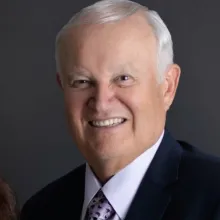
Mr. Seiglie was born in Havana, Cuba, and came to the United States when he was a child. He found out about the Church when he was 17 from a Church member in high school. He went to Ambassador College in Big Sandy, Texas, and in Pasadena, California, graduating with degrees in theology and Spanish. He serves as the pastor of the Garden Grove, CA UCG congregation and serves in the Spanish speaking areas of South America. He also writes for the Beyond Today magazine and currently serves on the UCG Council of Elders. He and his wife, Caty, have four grown daughters, and grandchildren.

