
Don Ward
This transcript was generated by AI and may contain errors. It is provided to assist those who may not be able to listen to the message.
Greetings, everyone! Good to be here. Long time. Since I've been in Dallas to speak. And I don't guess this is Dallas. I didn't know Mr. Welch was such a comedian, but...
Thanks very much to the teen singers there. I love that song. Disappointed they didn't ask me to sing with them, but... Many of you remember Roger Bryant. He started off in Dallas, Fort Worth area. Had quite a wonderful tenor voice. And when he was standing behind me singing, I thought, I really sound good today. So... So one time, we were quite good friends, so one time he was standing there in the auditorium in Big Sandy, and... Oftentimes, the students, I'd go up and give them a little forearm in the belly here, and Mr. Bryant was not lacking there. So I gave him a little forearm and turned around, it wasn't Mr. Bryant, so... Shocked for both of us.
I want to thank Mr. Welch for inviting Wanda and I over today, and good to see all of you, so many familiar faces from really all over the nation. We had a record attendance at our regional weekend this past weekend, and not past weekend, but President's Day in East Texas with 300 in attendance. Looks like he might have more than that here today with the overflow. Of course, I don't know how many are down there. I remember Mr. Welch as a student there at Ambassador, Fuzzy Herrod, but I don't remember him being so comedic. But he was a great student. He was basically a straight-A student. So good to be here. We have an early spring, of course, the earliest spring I've ever seen. We have the birds, the bees, and the trees are all confused, but it's good to have this early spring. And speaking of the teens, I was so impressed with our teens at the regional weekend there in Big Sandy. I think we have one of the finest groups of teens in the church and youth coming on that we have ever had. So I hope they continue, and they mine the two winds of temptation. Well, they say I've been asked here to give a sermon, so I guess we'll do that. I've been teaching at ABC this, well, not at ABC, but teaching through Webcam and have quite a few students there whose parents were students at Ambassador years ago, so it makes you feel quite young. The title of the sermon today is Control Your Future Now. You might remember Doris Day. Doris Day was a singer many years ago. She recorded a classic song that was on the hit parade for quite a long time, Ksara-sara. That literally means, whatever will be will be. So here are the lyrics. When I was just a little girl, I asked my mother, what will I be? Will I be pretty? Will I be rich? Here's what she said to me. Ksara-sara, whatever will be will be. The future's not ours to see, Ksara-sara. What will be will be. When I grew up and fell in love, I asked my sweetheart, what lies ahead? Will we have rainbows day after day? Guess what my sweetheart said? Ksara-sara. Whatever will be will be. The future's not ours to see. Ksara-sara. What will be will be. Now I have children of my own, they ask their mother, what will I be? Will I be handsome? Will I be rich? And I tell them tenderly, Ksara-sara. Whatever will be will be. The future's not ours to see. Ksara-sara. What will be will be. Do you believe that is the way that life works? Is our life programmed for us? Or can we, to a large degree, determine where we're going to go and where we're going to wind up? Time and chance happens to everyone, as it says in Ecclesiastes, and we can be a victim of circumstance. But in the ultimate sense, we determine where we will end up. One of my favorite poems by William Ernest Henley is titled Invictus. Invictus is a Latin word which means unconquered. Out of the night that covers me, black as the pit from pole to pole, I think whatever gods may be for my unconquerable soul. In the fell clutch of circumstance I've not wintzed nor cried aloud. Under the bulging means of chance my head is bloody but unbowed. Beyond this place of wrath and tears looms but the horror of the shade, meaning the grave, and yet the menace of the years finds and still finds me unafraid. It matters not how strait the gate, how charged with punishments the scroll. I am the master of my fate. I am the captain of my soul.
So we could ask ourselves here today, young and old, are you the master of your life? Are you the captain of your life essence? Or are you a pawn on Satan's chessboard of life, being easily swayed by the spirit of the times and throwing caution to the wind? We're in a period of time that might be called the perfect storm, a time in which it will take great conviction, commitment, and courage, what I call the three C's, and every student's attendant ambassador for the past several decades. I have heard that conviction, commitment, and courage to remain true to yourself and to your beliefs. Now let's look at Proverbs chapter 30 and verse 11, talking about the perfect storm. The spirit of the times is sweeping the peoples of the world away, and every day I say, well, it can't get any crazier, but by sunset, yes, it has gotten crazier. In Proverbs chapter 30, we read about generations, and it seems that all of these generations have come together at once in our time, and that's why I refer to it as the perfect storm. There is a generation that curses their father and does not bless their mother. There is a generation that are pure in their own eyes and yet is not washed from their filthiness. There is a generation how lofty are their eyes, and their eyelids are lifted up. There is a generation whose teeth are as swords and their jaw teeth as knives to devour the poor from off the earth and the needy from among men. So we have all of that present and more in our world today. Do you know what the future holds for you? Each one of us could ask ourselves that question. Do you have any control of your future? Yes, you can be a victim of time and chance or a victim of circumstance. We heard about Joseph in the sermonette. Joseph was one who seemingly was a victim both of time and chance and circumstance, but he remained faithful through it all. He winds up in a role that God uses to save Israel from destruction. There we see the great providence of God. Let's turn to Genesis 45, verse 8. You know the story of the coat of many colors. He was his father's favorite son. He had a dream in which he would rule over all of his brothers. His brothers were so jealous of him because of Jacob's special treatment of him and because he had dreamed the dream. They couldn't wait to get rid of him. So one day out hunting, they decided they were hunting, maybe they were shepherding, looking for a lost animal. But they decided to kill him, and they put him in a pit, and then Judah comes to his rescue and says, let's not kill him. There's a band of Midianites coming there. Let's sell him. And so they did. And Joseph went into slavery with the Midianites, winds up in Potiphar's house, and eventually Pharaohs. When Jacob's sons came down to buy grain, they were so afraid because they thought that Joseph would wreak revenge upon them. They couldn't believe that Joseph could forgive them. And when Joseph saw them, he wept, but they were so afraid. But look at Genesis 45 and verse 8.
Even if you're a victim of time and chance and circumstance, you can be as Joseph. So, let's start in verse 6. For these two years has the famine been in the land, and yet there are five years in which there shall remain neither earring nor harvest. And God sent me before you to preserve you of posterity. God sent me. You didn't send me. You thought you were bigger than God? No, you're not bigger than God. None of us is larger than God to preserve posterity in the earth and to save your lives by great deliverance.
So now it was not you that sent me here, but God. And he has made me a father to Pharaoh and for the house of and for all of his house and a ruler throughout all the land of Egypt. So even in these circumstances, you see, you can, to a large degree, control your future by how you respond to whatever it is that you have to face.
So do you have a plan to serve as a guide for reaching your goals. I remember as just a little boy that I had a plan. I was going to do this and I was going to do that. By the time I was a certain age, I would be playing professional football. By the time I was a certain age, I would be coaching. By the time I was a certain age, it just went on and on and set about from an early age to reach these goals. And you can do the same thing. So do you have a plan? To a large degree, the past is the key to the present and the present is the key to the future.
The past being the key to the present and future has to do with what have you done with your life so far. Have you been diligent? Have you made the most of the talents and the opportunities God has given you? Or have you gone along with the crowd and floated along in life? Some say, well, I thought we should take no anxious care thought for the moral.
Well, the key word there is anxious care. Yes, we should think about tomorrow. We should think about goals. And of course, going back almost 100 years, we in the Church of God have yearned for and longed for the kingdom of God. We remember the radio broadcast of the wonderful world tomorrow, the magazine The Plain Truth, also a magazine Tomorrow's World. And today we have a magazine Beyond Today and a telecast Beyond Today, knowing that there is a great future out there. And we, to a large degree, are going to determine whether or not we will be part and parcel of that future. So the key words there is take no anxious thought.
It would be foolish to conclude that the decisions that you and I are making now today have no bearing on tomorrow, because they do. The thoughts you're having today will affect what you do today and tomorrow. Thought is a precursor of action. Thought and action will, to a large degree, determine where you wind up in life. So a thought reaper in action. So in action reap a habit. So a habit reap character. That's what you become.
Research shows that thoughts result in chemical changes in the body. Now this is something really that you should seriously contemplate and consider. Your thoughts can change your heart rate, your blood pressure. You've heard the expression, well, the blood rushed to my face or my head. I was so embarrassed or whatever it was. It can affect muscle tonus, your thoughts, and a host of other things. Just as the food you eat affects your state of health, so does the spiritual and intellectual food that you partake of will affect your mind and your heart and attitude.
In short, your spiritual and psychological well-being. We must not be zombies. We must not sleepwalk through life. Now what is presented before us, the glamour and the glitz of whatever it is this world presents, the lust of the eyes, the lust of the flesh, the pride of life, is set before us. And the perfect storm is there, and you have the transmission of all of that, as never before, through the mass media.
More specifically, the books you read, the movies you watch, the video games you play, the texts you send, the words you hear, the music you listen to, the social interaction you engage in, the thoughts you have, the meditation of your heart. David said, Oh, how love I your law, it is my meditation all the day. Your word is a lamp into my feet and a light under my path.
The activities you engage in, the food you eat, the response to the instructions you receive, the actions you take will determine your future. What do you want to be? It's laid out there before you. Look at Proverbs 23, verse 7. Proverbs 23, verse 7. For as he thinketh in his heart, so is he. Eat and drink saith to thee, but his heart is not with you. You want your heart to be with God. You want to fulfill the two great commandments. You shall love the Lord your God with all your heart, with all your mind, with all your soul, the second is like unto it. You shall love your neighbor as yourself. And then verse 40 in Matthew 22, that we so often, well, most people read those two verses and go on. But verse 40 says, On these two hang all the law and the prophets. As a man thinketh in his heart, so is he. Proverbs 4, verse 23, back a few pages there, Proverbs 4, verse 23, is this admonition written by Solomon, probably inspired of God. Keep your heart with all your diligence. In the Old Testament, the heart represented the seat of thought and emotions, the center of your very being. Keep your heart with all diligence. For out of it flow the issues of life. And once again, the Proverbs 20, 37, as a man thinketh in his heart, so is he. The choices that we make in each of these areas will, the choices that we make in each of these areas will, to a large degree, determine where we wind up. So God tells us what action to take, what to think. Look at Deuteronomy 30, verse 19. This scripture has probably been read, I would say, in the top 50 or so in the church through the years. In Deuteronomy 30, verse 19, have we become dull of hearing? Paul writes an epistle to the Hebrews just before the temple was destroyed. In chapter 5, he talks about, for the time that you ought to be teachers, you have need that one teach you again what be the first principles. So we must not be dull of hearing, not at the times that we're living in. In Deuteronomy 30, verse 19, I call heaven and earth to record this day against you, and I have set before you life and death, blessing and cursing. Therefore, choose life that both you and your seed may live.
And of course, one of the things that is so often forgotten in today's world with the Hedonistic Society of Eat, Drink, and Be Merry, what I do is my own business. And so you make choices for others who will come after you. And Joseph said, God sent me here to preserve of posterity. Verse 20, that you may love the Lord your God, and that you may obey his voice, that you may cleave unto him, for he is your life. The reason that each one of us was created, the reason Adam and Eve and then the human family was created, was because of God's love and grace in that he wanted to share who he is, what he is with each one of us. He wanted to share that in a family setting. So he's made it possible to have sons and daughters, as it says in the last verse of 2 Corinthians 6, of sons and daughters in his kingdom. So he is your life. And people, it seems they just can't grasp that God is our Creator. He is the one that made us. He in the Word planned out this great plan of salvation. The plan of salvation in and of itself is so mind-boggling, the intricacies of it and all the details that are involved in it. For he is your life in the length of your days, that you may dwell in the land which the Lord God swore unto your fathers, Abraham, Isaac, and Jacob, to give to them. So we are bound for a Promised Land that far exceeds anything physical that the Israelites might have been promised. We are bound for the kingdom of God, a kingdom without end, a kingdom where we can live forever in eternity. Forever never ends, and eternity never ends. Eternity has no beginning, eternity has no end. In Hebrews 3, so now is the time to prepare. If you're not satisfied with your life today, you can start right now. Anyone in here, young, old, middle-aged, or whatever you might be, to turn your life around. Now is the time to not be dull of hearing. Now is the time to open your hearts. One of the things that I do as I begin to teach an ABC class at the beginning of the module is, quote, Isaiah 28 and 9, to whom shall he teach knowledge? Those that are weaned from the breast and drawn from the breast and weaned from the milk. Line upon line, precept upon precept, here, there, little. And then it talks about in Hebrews 5, the last couple of verses, that God is going to teach those who have their senses exercised to discern good and evil. Then James says, receive the engrafted word with, it says in the Old King James, meekness, the Greek word is prautes. And it means a perfectly teachable heart. A perfectly teachable heart. You're not here to resist. You're here to receive. But ever is the admonition of the Berean. Search the Scriptures daily whether these things be true. So in Hebrews 3.6, but Christ, I'm having trouble with these glasses, but Christ is a son over his own house, whose house you are if you hold fast the confidence and the rejoicing of the hope, the hope firm and to the end. Wherefore, as the Holy Spirit said, today, two day, not tomorrow, today, if you would hear his voice, harden not your heart. Harden not your heart as in the...
I'm sorry, I'm having trouble seeing. Harden not your heart as in the provocation in the day of the temptation in the wilderness, when your fathers tempted me, proved me, and saw my works for forty years. Wherefore, I was grieved with that generation and said, they always err in their heart, and they have not known my ways.
So it goes on talking more in Hebrews 3 about, harden not your heart. Anybody can harden their heart. Anybody can resist. It takes no courage to resist.
So, today is the day. The choices that you make will, to a large degree, determine your future. Over the years, I reviewed hundreds, I'm sure probably thousands, of applications from students from all over the world who applied to Ambassador College and University. At one time, we had forty-three countries represented on campus. What do you think was the best indicator of whether or not they would succeed? I said earlier that, to some degree, the past is one of the keys to the future, because the past is written there. You know what to expect. But the good news about God and Christ and the Word of God and the Holy Spirit and the whole package is that you don't have to remain where you are. The best indicator of whether they would succeed in Ambassador centered on their high school GPA. Of course, there were exceptions. There were some who fought to get in because their GPA was marginal, but then excelled because they were determined to do it. The GPA was a more accurate indicator of success than their SAT. A lot of brilliant minds go to waste. And so it doesn't matter what your IQ is or your state of education or socioeconomic status. You can do things that you never dreamed that you could do. And the second greatest indicator of their success was the recommendation from teachers and ministers. A good name will go a long ways in helping you weather the great storms of life. A good name and people will come to your rescue.
A good name is just like the Holy Spirit in one sense. It cannot be bought. You cannot buy it. You cannot buy a good name. You cannot buy the Holy Spirit.
You know the parable of the ten virgins in Matthew 25. Both of these, a good name and the Holy Spirit, are attained through a prescribed process. A prescribed process. There are no shortcuts. Let's look at Proverbs 7 in verse 1. How valuable is it? Well, how valuable does the Bible say that it is to have a good name? And oftentimes, people don't even think about having a good name. One of the greatest diseases, I call it a disease, in our society is that people have come to the point of embracing what you might call, I don't careism. I don't care. And when you come to the state that you don't care, then you are pretty much hopeless.
In Proverbs 7, Proverbs 22, 1, Proverbs 22, 1, and then I'm going to Ecclesiastes. Proverbs 22 in verse 1, Proverbs 22, 1, A good name is rather to be chosen than great riches. Which would you rather have? Well, the world is showing you what they would rather have. They would rather have great riches. They would rather have fame, fortune, celebrity. We are a nation of celebrity worshippers. Oh, so-and-so is going to be here. I was going to say about any worship. Some of these celebrities come out on the talk shows, and you would think they need to build an altar right there. So the audience could worship.
A good name is rather to be chosen than great riches, and loving favor rather than silver and gold. Now, Ecclesiastes 7 and verse 1, I transpose those two there. In Ecclesiastes chapter 7 and verse 1, once again Solomon writing here, I transpose those two there. In Ecclesiastes 7 and verse 1, a good name is better than precious ointment. And the next one, and the day of death than the day of one's birth.
It is better to go to the house of mourning than to go to the house of feasting, for that is the end of all men, and the living will lay it to his heart. So, a good name. And of course, one of the things about a good name, it takes a long time usually to develop it, and it can be destroyed almost overnight. So we have to continually be diligent.
God gave parents the charge for helping youth lay this foundation. In Proverbs 22 verse 6, almost every parent in here could quote it, Train up a child in the way that he should go, and when he is old, he will not depart from it. So God ordained parents to be the principal influence in a child's life, and socializing them, and teaching them right from wrong, how to interact, teaching them the principles of morality that lead to success, hard work, diligence. However, current research shows that parents are no longer the major socializing force in the life of youth. In an agrarian society, parents and children work side by side, and they learn the basics of life firsthand.
I grew up on a farm, what they call a dirt farm. When my parents got married, they were sharecroppers in southeast Mississippi. At the age of 10, my dad got a job in town, finally, and I was left to do the plowing, so day after day, you get up at about 5.30 or 6, eat your breakfast, and you go to the stable, and you put the bridle on the mule. So you're 10 years old, the mule, the head's way up here, and you've got to put the bridle on, and you go in that stall by yourself. You have to learn not to ever let yourself be pinned to the wall. And then you put the harness on, and you hook up, hook the mule up to the plow.
In the agrarian society, people work side by side. They learn how to work. They learn the work ethic. But the world today is much different. Some parents will play a significant role in determining the future of their children, but the influence of parents on children in the Western world is diminishing day by day. Parents are now oftentimes intimidated, sadly, by their children, from two major perspectives. One, they're afraid to exercise discipline that they should, for fear the child will just sulk and move farther away from their influence. They try to walk a fine, tenuous line between some semblance of discipline and giving in to their child's misbehavior, or whatever it is. And of course, the media and the peer group is playing a powerful role. Many are literally afraid that their children will do them physical harm. And you read almost weekly of children killing parents, and you read of parents killing children. That's where we are today. Look at Isaiah 3.12. Isaiah, this whole prophecy, I'm not going to read the whole prophecy, but all especially Isaiah 3, should be noted by all of us, and especially parents and youth. And I guess everybody in between. In Isaiah 3, verse 12, As for my people, children are their oppressors, and women rule over them. O my people, they which lead you cause you to err and destroy the way of your paths. It's almost like fathers have advocated their God-given responsibility to be the head of the household, to teach the children, to be the spiritual leaders. So parents, and especially you fathers, you have a great challenge before you. Today, the media and one's peers are the principal socializing forces in the lives of our youth. Now, from the evidence that I've seen in recent times at gatherings such as this, it seems that we are turning this around in the Church of God, because obviously if you have teenagers doing the right things, some parents, in general terms, are also doing some right things, and we really appreciate that.
But sadly today, many parents have been conditioned to worship youth and beauty. And that's what the whole advertising world is generally pitched to, is youth and beauty. So the parents desire to stay in a perpetual state of adolescence. Oh, nobody can grow old. You want to stay young, beautiful, sexy, all of that. Just look at the magazines at the checkout counter. In too many cases, the parents are the children's friends, their playmates, and they relive their youth through their children. And by a carriest way, they become enablers instead of parents, living in a state of perpetual adolescence. Recently, as I waited in the car in front of Walmart entrance while Wanda was shopping, I saw the various customers coming and going. I saw the mothers in their overall shorts sporting their ankle and other places' tattoos, and they were pretty much still in a state of adolescence. So in many cases, their behavior is only a little more mature than that of their children. And contrary to the poem Invictus, remember I read up front, Unconquered, our lives have long ago been conquered, and our people are no longer masters of their fate. They have become pawns on Satan's chessboard.
They are now indeed tossed to and fro like helpless pawns on the chessboard of life.
They have traded their freedom and dignity for the pleasure of sin for a season. Yet, as I watch the faces of so many, as they come and go from Walmart or any other place you want to name, you see people are at one of three or four places today. They're either at McDonald's, at the hospital of Walmart, or the bogging. And those who aren't are on their way. That's why you see all the traffic. Those four places.
You know, when you look at their faces, you ask, well, are they really happy? There seems to be very little inner joy springing up from within. There seems to be very little satisfaction with their lives. Just look at Romans 6. Romans 6 is what we call the baptism chapter, having to do with burying the old man, coming up to live the new man, the resurrected man.
And Paul gives us a reminder here. You know, you could write a book, the enslavement of the Western world. How has the Western world been enslaved?
It hasn't necessarily been by guns and bullets.
It's been spiritual and psychological warfare. In Romans 6, verse 16, Know you not, that whom ye yield yourselves servants to obey, His servants you are, to whom you obey. All people think they're free today. I'm free to do anything that I want to do. You can't stop me. If I want to do this or that, I'll do it.
Whether of sin unto death or of obedience unto righteousness. You know, the scripture Romans 6, 23, later here is, The wages of sin is death, but the gift of God is eternal life through Jesus Christ our Lord. But God bethinked that you were the servants of sin, but you have obeyed from the heart that form of doctrine which was delivered unto you. Being then made free from sin, you become the servants of righteousness. You're not the servants of this current evil age. You're the servants of God and the living Christ and the Word of God.
No, my friends, God is not the author of Ksara.
If that were the case, God would have laid out our lives for us in advance. He would be responsible for the fear, the anxiety, the chaos, the confusion that abounds in our world, ironically for some, if things don't go well, then they say, well, it's God's fault. Why did God allow this to happen? Why did God allow those people to be gunned down in whatever terrorist attack it was?
And for so many, when they find themselves in difficult straits, they say that it was meant to be, it was meant to be. Whatever will be will be, Ksara, Ksara. And I know people who have been close to me, or in some cases close to me, who have made bad choices. And then they turn around and say, everything happens for a purpose. As if to say, my bad choice is a good thing. No, your bad choice is not a good thing. It may work out, but it's not a good thing.
Sorry, that is simply not true. People can learn from bad choices, but they made the bad choice, not God. The reason why the world is in the condition that it's in, it dates back to the Garden of Eden. Adam and Eve made the wrong choice. We don't want to follow in the footsteps of Adam and Eve.
My mother and daddy slipped off, got married. They had $10 to their name.
They were able to get my mother's aunt, my great-aunt, to take them to town, get the marriage license, so they could get married. They knew that my grandfather would never give his permission for my mother to marry my dad. You talk about a contrast. My mother was valedictorian of her class. My dad had a third-grade education at best, but he had a heart of gold. And he knew how to work. He knew how to put his hand to the plow.
And within six or eight years, through sharecropping, they owned their own land and their own house. You see, what can be done, if people set their minds to it, they have the right kind of attitude and framework within which to work. They loved each other deeply. They thrived on the kind of values and moral principles that lead to success. So they made it. But we could not say, well, it was just meant to be. There were so many variables in it. To a large degree, they made it through a strong belief in doing the right thing, working hard, doing the best they could with what they had. So what about each one of us? We come back to that time after time. If you're not satisfied with your life, what are you going to do about it? Will you continue to be swept along by the Spirit of the Times? What the Germans call the Spirit of the Times?
Are you a victim of SMS? Now, you could make SMS stand for a lot of things. I recently gave a sermon, probably been two years now, at least a year in East Texas, in which the title was, Are You a Victim of SMS? SMS means Survival Mode Syndrome.
Survival Mode Syndrome is where you just live your day, every day, with the same goal of just, I'm just treading water, living from one day to the next in a survival mode, and you just can't seem to get off the treadmill. You, in essence, become addicted to a low quality of life, and you don't have to stay there. The good news is you can get off life's treadmill. You can take control of your life. God can and has changed his mind about personal situations based on the heart and attitude of people involved. Let's look at this somewhat ironic story, 2 Kings 20, verse 1. In 2 Kings chapter 20 and verse 1, this story here is Hezekiah. In Hezekiah, what he did, look at 2 Kings chapter 20, verse 1. In those days, Hezekiah was sick unto death, and the prophet Isaiah, the son of Amaz, came unto him and said unto him, Thus says the Lord, Set your house in order, for you shall surely die and not live. God said to Hezekiah, you're going to die.
Does God ever change his mind? Would you say that he's going back on his word? What would you say? Well, look what happened. Then Hezekiah turned his face to the wall and prayed unto the eternal, saying, I beseech you, O Lord, remember now how I have walked before you in truth with a perfect heart, and have done that which is good in your sight. And Hezekiah wept sore. He poured out his heart. He poured out his being. Will it make a difference? And it came to pass before Isaiah was gone out of the middle court that the word of the eternal came to him, saying, Turn again, so go back and tell Hezekiah, the captain of my people. He was a king. Thus says the Lord, the God of David, your father, I have heard your prayer. I have seen your tears. Behold, I will heal you. On the third day, you shall go up into the house, into the temple of the eternal. I recently gave a sermon about the close of part of it. Hezekiah and his leadership, how in one month or so, he turned the nation around and restored true temple worship of that day. One of the most often quoted promises, repeated over and over in the Bible, is, His mercy never fails. His mercy endures forever. We know from Psalm 139 that His thoughts are ever tortoise. We know from Psalm 103 that, He upon repentance will remove our sins as far as the east is from the west and remember them no more. One of the great paradoxes of our time is that Satan has to see the people into thinking that they are free to do anything that they want to do. But we know that, and we've read Romans 6, 16 through 17, to whom you yield yourselves servants to obey, His servants you are.
So the advertising world and behavioral technology have teamed up with media so that people march and lockstep with their social behavior, with their social media, thinking that they are free in what a wonderful world. And yet, people grow more lonely, more distant from one another in the truest sense.
If you're going to be in the end crowd, you have to do certain things in today's world. Today's crowd only think that they are free to do as they please their servants, and we don't want to be servants. Let's turn to Galatians 6 as we begin to wind down here today. In Galatians 6, in one sense, it basically summarizes everything that's been said here today, both in the sermonette and the sermon. In Galatians 6, verse 7, Be not deceived, God is not mocked. For whatsoever man sows, that shall he also reap. For he that sows to the flesh shall of the flesh reap corruption. But he that sows to the spirit shall of the spirit reap everlasting life. Remember, thought is a precursor of actions. If the thoughts are wrong, cast them out, as you heard in the sermonette, when the temptations arise. Paul writes in 2 Corinthians 10, we don't war after the flesh, we war after the spirit, casting out vain imaginations. Every thought that exalts itself against the knowledge of God. And before acting, ask yourself, if I choose this action, will it honor God? If you're a young person, ask yourself, if I choose this action, will it honor God and my parents? And ask yourself, will it bring honor to my name? Will it help me have a good name? Will it help others to succeed? And does it help me to do my best and become the best I can be?
Or, you can ask, does it violate a specific command in the scripture, which would cause me to sin? Am I only thinking of myself, or do I truly care about other people? Am I acting without going concerned, or am I acting selfishly?
So will you be a victim of ksaraa, saraa? If you don't think for yourself and make choices for yourself that are based upon the true values that are revealed in the Bible, your life will be ksaraa, and you will be a victim on Satan's Great Chessboard. So focus on those things that are above. Whatsoever things are lovely, whatsoever things are pure, whatsoever things are of good report. If there be any virtue, if there be any praise, think on these things, writes Paul. In Philippians 4.8, God never forces us to make the right choice. He teaches, he guides, he gently tugs on our heartstrings, but He doesn't force. He doesn't want robots. He wants obedient, loving children who are willing to embrace His love for them. So today, if you would hear His voice, harden not your heart. Don't leave your life to chance. Don't embrace ksaraa, saraa. I leave you today with this poem by Robert Frost, The Road Less Traveled. I remember several years ago, in a graduation ceremony at Ambassador College, that the Ambassador College chorale closed. Well, they didn't close the ceremony, but they sang this song. If everybody can access YouTube today, there's a beautiful, haunting kind of melody that's been set to The Road Less Travel. Two roads diverged in a yellow wood, and sorry I could not travel both and be one traveler. Long I stood and looked down one as far as I could, to where it bent in the undergrowth, then took the other as justice fair. And having perhaps the better claim, because it was grassy and wanted wear, though as for that the passing there had warned them really about the same. And both that morning equally lay in leaves, no step at trodden black. Oh, I kept the first for another day. Yet, knowing how way leads on to way, I doubted if I should ever come back. I shall be telling this with a sigh, somewhere ages and ages hence. Two roads diverged in a wood, like the sermonette of two ships, one sailed east, one sailed west. What determined the course? How they set their sails. Two roads diverged in a wood, and I took the one less traveled, and that has made all the difference. The poem is reflective of Matthew 7, 13, 14. Enter you in at the straight gate, for wide is the gate, and broad is the way that leads to destruction. And many there be which go in there at, because straight is the gate, narrow is the way which leads unto life, and few there be that find it. Choose the road less traveled, and control your future now.
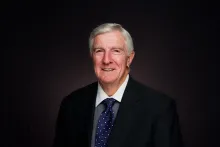
Before his retirement in 2021, Dr. Donald Ward pastored churches in Texas and Louisiana, and taught at Ambassador Bible College in Cincinnati, Ohio. He has also served as chairman of the Council of Elders of the United Church of God. He holds a BS degree; a BA in theology; a MS degree; a doctor’s degree in education from East Texas State University; and has completed 18 hours of graduate theology from SMU.
