

Robin S Webber
This transcript was generated by AI and may contain errors. It is provided to assist those who may not be able to listen to the message.
The message today, the title thereof, and we'll see how far we go because I've got to go to Redlands today. And that is simply this. Counting sheep or scriptures? Counting sheep or scriptures?
The elongated term of that would be, are you counting sheep or counting scriptures?
What do I mean by that? Well, I'd like to share some of the experience that I've been through since last Sunday. Because it was as much a surprise to me as to the rest of the general conference. In that sense that I was selected as a council member and all of a sudden a lot starts going through your mind and you recognize that to a reasonable degree or to a measured degree, God is granting you a new opportunity.
But are you going to be able to do it? And are you going to be able to serve Him? And are you going to be able to serve God's people? I know that I went to bed, oh, probably about midnight that night.
And you know how the time changed. It's three hours and so you just never get right until you come back. And then some people say, you're still not right. But anyway, that's getting back on Coast time, you're still not right. But anyway, other than being in an unfamiliar bed and you know how that goes, there's just a lot in my mind, a little restless and tossing back and forth. And I woke up about four o'clock and couldn't sleep because it was just beginning to sink in with some of the responsibilities that have been placed on me by my brother ministers.
And I know that many of us at times when we can't go to sleep, you wake up at two or three or four in the morning and maybe it's just restlessness. Maybe it's just being a woman. I know sometimes women can't sleep at night for one reason or another. And or you've had a had a really bad dream and you know you don't want to go back there. You ever done that where you're dreaming a bad dream and some of you say, I don't want to dream that one again. And soon you go back and you're right back, running away from the dragon that doesn't really exist. But boy, it seems like it exists in your dream. I've been watching too much televisions. And then we try to go through that proverbial counting the sheep, you know, up and down and up and down. You know, your eyes have to kind of go up to really get into it, you know, get that sleep motion. And we all know about counting, counting sheep at times to try to get back to sleep. Well, that was going to work for me. And the one thing that came to my mind hasn't always, but it certainly did on early on Monday morning was I began counting scriptures that were going to be a lamppost and a guide to this new opportunity that was going to come our way. And I'd like to talk about that a little bit, because counting sheep can and does put you back to sleep. Counting scriptures, though, can awaken you to God's direction. Counting scriptures can awaken you and enliven us to God's direction and really recognize that that's why the God has given us the Bible. And that is to remind us that we read to know that we are not alone. And I'd like to just read some scriptures. I told somebody today I haven't really had a large chance to develop some big biblical subject this week, but sometimes the Bible just tells us about life one day at a time or the challenges that are coming our way. And I'd like you to know what I either I'll move beyond react, but acted to as I woke up. And I'm glad that God flooded my mind with some of these scriptures. I've added a few along the way because, well, you know me, I can't just speak five minutes.
But I'd like to share some scriptures with you. And it relates to me as a pastor, as a council member to be. It can relate to you as a husband, a wife, a Christian, a student in school, a boss on the job, an employee that may be having frustration to allow us to render ourselves to God Almighty and to His Christ as a living sacrifice and look for their direction. And I woke up in that that room alone because Susan had gone that evening. Susie came down for a day and a half, which I really enjoyed. She's been back with her folks for a whole week and a half in the promised land called Ohio home. And she had a wonderful time celebrating her folks' 60th anniversary and then came down with one of our elders there and their wife that we've known for years. So that was nice. And so she was able to be there. It's the first time in nine or 10 years that she's been to the general conference. That's why we call her hard to get Susie. It comes every 10 years, whether she should or not, just teasing. Anyway, but it was very special to have her this year. But I'd like to share some of the verses that literally did flood to my mind at four o'clock on Monday morning. Would you please join me? And let's open up our Bibles because whenever we open our Bibles, it means that we want to open our hearts and expect a blessing from God from Scripture. Let's look at 1 Kings 3. 1 Kings 3. And let's pick up the thought in verse 4.
And when I say this, let's recognize that we are dealing with principles out of the Bible, not situations. All analogies do break down here. What has happened this week with different men and their ladies, because we do operate as couples. And what's happening to you in your life? No, not all of us are being coordinated a king. And let's please understand. All analogies break down. But let's just ask, are we like this in the opportunities, the challenges, the blessings? And sometimes some of the tough times that come our way. And sometimes it's just good to read Scripture. And we notice in verse 4, now the king, speaking of Solomon, went to Gibeon to sacrifice there. For that was the great high place. And it says that Solomon offered a thousand burnt offerings on that altar alone. And at Gibeon the Lord appeared to Solomon in a dream by night. Now, we recognize as Christians that today we don't go up on a high place. We don't go up in a mountain and offer a thousand bullock or a thousand lambs or two thousand turtle loves. Turtle doves. St. Paul, turtle loves. That's a new word. It's like Paul. We don't go up and sacrifice animals.
Our responsibility as sons and daughters of God through Christ is that we're to be a living sacrifice. We're to give up ourselves. We're to give up our lives. We're to give up setting our own life's course and decisions and say, God, show me. And so the sacrifice principle continues that we're to be a living sacrifice. You know, a lot of people are living sacrifices, but when Paul mentions that in Romans, he says a living sacrifice. You can try in Romans 12, 1 through 2, a living sacrifice, but, comma, holy and acceptable. There are many people that are living sacrifice. Okay, you want me to do that? Okay, I'll do it if nobody else does it. Well, that's not the kind of living sacrifice God wants. It's not the kind of living sacrifice, oh God, you just want me dead. You just want me miserable.
Well, that's a living sacrifice without the conditions.
Holy and acceptable. That means that we are to be not only available to God showing us His will in whatever we're doing, but also willing to do it. You know, there were many people that came into contact with Jesus Christ in the Galilee, but there were only 12 that followed Him.
There's a difference between contact and surrender to God. Many people come into contact with God. Many people come into contact with the precious Word of God. But how many people? And are we surrendering our lives to what God wants us to do? I would suggest the difference between the 12 and the many in the cities of Capernaum and the other cities of the Capilas and those villages that surrounded the Galilee were two main qualities. Those disciples and that you and I need to be available and not only available, but the difference is to be willing to follow wherever God wants. Well, let's see what Solomon said here. And in giving the Lord a prayer to Solomon a dream, and God said, ask, what shall I give you? And Solomon said, oh, you've shown great mercy to your servant David, my father, because, well, he walked before you in truth and in righteousness. And notice what it says here, in uprightness of heart with you. It wasn't on his own. It was not by his own power. He was not a lone ranger. You see this unique coupling of scripture that David walked with uprightness of heart, but it was because of who he was walking with. And it says, God speaking to Solomon, you have continued this great kindness. No, excuse me, just a sentence. You have continued this great kindness for him, and you have given him a son to sit on his throne as it is this day. And then this incredible thought, now, oh, Lord, my God, you have made your servant king instead of my father David, but I'm like a child, and I do not know how to go out or to come in. You know, babies are just hopeless. They need all the help that they can get. They can't do anything when they're first born. And that's why it's nice to be touched with the newness of life, with new people. I know we're going to eventually see little Gabriel in here that was just born to Omar and Natalia. And this kid's going to be helpless. I'm sorry. I know he's Mario's grandson. The kid's going to be helpless anyway. Okay, helpless. He's going to need all the help that he can get and the guidance. And we forget that all of us, in that sense, are helpless. And I don't know how to go out or to come in. And your servant is in the midst of your people. They were not Solomon's people.
They were the servants that called out generation before God. They belong to God, whom you've chosen. It's a great people, too numerous to be numbered or counted. Verse 9, Therefore, give your servant notice an understanding heart to judge your people, that I may discern between good and evil. For who is able to judge this great people of yours? Now notice verse 10. And the speech, call it the speech, pleased the Lord that Solomon had asked him this thing. And we recognize that God granted him all that he asked and more. But you've got to be careful what you ask God for sometimes, because then God put him to the challenge. Because there were a lot of things and a lot of happenings that came to Solomon that you know. And I know that later on he didn't make the right decisions. But let's focus on verse 9. Give to your servant an understanding heart. Last Monday morning, about 4 a.m., as I thought about this, I prayed, God, give your servant an understanding heart towards you and towards your people. Because there's so many things. That's going to be my responsibility being on a board to the thoughts, the words that I give are a small flock and indeed a small organization nonetheless can affect thousands and thousands of people's lives. And that is very, very humbling. Now I've in a sense dealt with hundreds and thousands of people over my lifetime as a man and as a minister. But this is a unique chapter. And I had to go to God and say, God, you're going to have to give me understanding as to what is of you and what is of this world. What is the activity of the church and what is your activity that you want for the church? There is a difference between being involved in the work of God and doing godly work. We have to recognize that. And to recognize that just because we have activity does not always mean activity does not always equate with godliness. We will make sure that all of those things come together to serve Him. Join me if you would in another reading of Scripture. 2 Samuel 23.
And let's look at the words of David. This is another verse that came. I had a choice. I could have counted sheep and gone back to sleep. Or I could have counted Scripture and awakened myself to the mission of God. And again, we read to know that we're not alone. These are the last words of David.
Thus says David, the son of Jesse. Thus says the man raised up on high. And in all of this, please understand, all analogies break down. I've just been simply given an opportunity. But the principles remain the same. The anointed of the God of Jacob, the sweet psalmist of Israel. The Spirit of the Lord spoke by me, and His words were on my tongue. The God of Israel said, the rock of Israel spoke to me. He who rules over men must be just, ruling in the fear and or perhaps better rendered in the respect of God or what God is doing.
And He shall be like the light of the morning when the sun rises, a morning without clouds like the tender grass springing out of the earth by clear shining after rain. You know, when I look at verse 3 and it says, He that rules over men, when we understand the New Testament context of the word rule, much of that is really dealing with how a shepherd guides and moves his flock. Susan and I are having a lot of experience in this right now because for those of you that are visiting, we have about 500 sheep behind us right now.
And the Basque Shepherd is moving them from good spot to good spot in that pasture. So we have this living panorama. It was so beautiful this morning with the clouds in the sky and cool and crisp and just nothing like seeing about 500 sheep move from left to right out your bedroom window looking down on them. And that Basque, he isn't cracking a whip, but he knows exactly what he's doing.
And it's a way of guiding a family, of guiding the people of God to what he wants for them. So I looked at this, he who rules over men must be just. That means fair. That means not to be settled in mind. We can all have our own opinions, but let's make sure that we're not too subtle to not allow room for God and for God to bring something to open ourselves up to God.
Remember that wonderful story about Joseph? I don't have my mic on, so I can't wander. I feel constricted. Somebody gave me my mic. I just didn't put it on. Remember that story about Joseph when he had that challenge? What am I going to do with this gal who seemingly has walked out on me and came up to me and said, guess what? I am a child of the Holy Spirit. Did any of you ever have that conversation over the last 30 years with your fiancé? Don't raise your hand. Don't do it. Don't go there. We'll talk about it afterwards. But it says that Joseph was a just man. He could have done this.
He could have done that. He could have put her away. He could have even had her stone for that matter. It wasn't until that third option that he had not even thought about came to him. When the angel came to him, and it came from heaven, he said, Marrier, you're already betrothed, which was a very close relationship in that society. But the angel said, get on with it. Run. Let us run. You and Mary, you have a purpose. It's what I call the third option. I hope that, God willing, in the years that I have right now, ahead of me in this new position, that some of the third option thoughts will come to me.
Maybe right now you need some third options in your life. Maybe you're looking at a situation. You see it this way. You see it that way. But maybe we haven't opened up our lives enough or surrendered ourselves. Say, God, I just simply don't know what to do. I don't know where to go. I need your thoughts. I need your understanding regarding my job, regarding my marriage, regarding my relationship within the body of Christ. I've been a pilgrim. I've been wandering. I need to know what to do, Father.
Reveal it to me. Can we have the confidence as Christians that when we surrender ourselves and don't sacrifice turtledoves and lambs and bullocks, but we surrender ourselves saying, sometimes surrendering ourselves just simply means, you know what? I don't know. I don't have it within me. Help.
I'm in the wrong place. I've been going in circles.
Or I think I've been making progress, and I'm still stymied. It's just like the situation with the party that was on safari, and they're hacking through the jungle. You know, right behind Johnny Weismuller, for some of you that are older with the Tarzan and the jungle gym movies. You know, movies that Kevin used to watch, just teasing, is that they're hacking through the brush, and they're going to the machete, and you know, hours and hours, and you know, mosquitoes off of them, sweating, and rats nibbling at their toes, and anything else that Mr. Weber can think of.
And finally, he said, oh man, this is so one guy, there's always one bright guy, one eager beaver, and he says, I know what I'll do. I'll go up to the palm tree. I mean, you know, goes up the palm tree and gets on top there at the monkeys and is looking around. Man, I can't believe it. And he yells down to the guys, guys, you won't believe it. Wrong jungle!
Wrong jungle! What are the guys down below saying? Oh, come on down, let's keep on going, we're making progress anyway. Sometimes as Christians, we are just simply in the wrong jungle. We're expending God's life that he's given us, the knowledge that he's given us, the doors that he wants us to open, the doors that he wants us to go through, but you know what? We're in the wrong place. We're in the wrong jungle. Because we've said that God is there, we've decided we're weak in boxing God rather than allowing ourselves to be open to his will. Just a question nobody needs to raise their hand. Are any of you in the wrong jungle today?
Are we just moving through life like a hamster wheel, going around and around and around? And sometimes we just have to count the cost and say, is God here? Join me in another verse that came to my mind at four o'clock as, rather than counting shape, I wanted to awake myself to God's invitation to serve you and more of God's people. We're in Deuteronomy 17.
In Deuteronomy 17, for those of you that are new to the Bible and awakening to it, that means the second giving of the law. It's part of the Torah, the books of the law. And it's very interesting what is inserted in here in Deuteronomy 17. It's written to those that would have responsibility over God's people.
In Deuteronomy 17, and let's take a peek at verse 18.
And also, it shall be when he sits, speaking of when Israel would have a king and make that choice, and it shall be when he sits on the throne of his kingdom, that this king shall write for himself a copy of this law in a book.
From the one before the priest, the Levites. Kind of interesting, even when he became king.
He still had to do what God was telling him to do. There's always somebody over you, isn't there? Am I the only one that's earned that lesson in his lifetime? There's always somebody in charge. He not only had to write for himself a copy, but it had to be a particular copy that came from the Levites. And notice verse 19, and it shall be with him. And he shall read it all the days of his life. So he had to write the book. He had to write it from a special book. He had to copy it himself. And that was to be with him every day, and he had to read from it every day. But why? See, what we have to understand is that when God gives us a rule, it must always be coupled with a relationship. For those of you that are just awakening to the Scriptures and getting your nose and your heart in the Bible, let's understand something. Whenever God shines his light on a rule in the Bible, the rule, if you only look at the rule, is a dead end. The rule goes searching for a relationship. Rules without a relationship are like a postcard without a stamp. You get the picture, but it's not going to go anywhere. So when you're studying the Bible, and God says, thus thou shalt do this, and thus thou shalt do this, or no, don't do that. Look for the relationship, either with him and or with our brothers and our sisters. Let's see how this works. Why? And be careful to observe all the words of the slaw and these statues. Here comes the relationship, following the rule, that his heart may not be lifted above his brethren, and that he may not turn aside from the commandment to the right hand or to the left. You know, God's pretty picky the way he wants to be. Do I dare say the O word? Obeyed. And that he may prolong his days in his kingdom, he and his children in the midst of Israel. The reason why the kings of Israel were to read from the Bible, frankly, friends, is to center them.
All of us need to be centered every day of our lives and the challenges that God gives us and the opportunities that God gives us. The Word of God is a centering force, and the life of Jesus Christ is a centering force. The Word of God is the written Word. Jesus is the living Word with a capital W. And when we center our lives on the Bible, and who the Bible proclaims as the king of our life, Jesus Christ, we are centered as a woman, as a man, as a congregation, as a church organization, that when our focus goes on to the Father and to His Christ, it will bring us together and keep us together. As Mr. Smith mentioned, at times, though, people can get into what I call substitute activity or substitute gospels, all of which might flow from godly activity, but are not the trunk of the tree. I find that most things that are probably going to be brought to me in the next three years are, to a degree, going to be things that are on the periphery. And I hope that I can, in my own way, as well as be reminded at times when I go off on the periphery, that why are we here? Who lived? Who died? And who is resurrected in glory? And where should our focus as a church of God be today? When we have that focus, then I as a pastor, or our elders here, and our pastors everywhere, they're going to treat their congregations in a very certain and in a very loving way. It is going to be noticeable that we not only have the truth of God, but the love of God residing in our church halls. You know, when I go back and I think of those last words of David where it says it's like the dawn coming up over pasture, and Susie and I, for the moment, get to see that where we live. Well, one day it'll be 1100 houses instead of a pasture, but that it awakens in my mind that that beautiful verse that's in Proverbs 29 and verse 1 through 2, you can look at it this afternoon. It says, when the righteous bear the rule.
And you've heard my comments about what it means to rule. It says that the people rejoice.
It's like that waking up in the morning and seeing those kindly rays of the sun, not that harshness of noon, but the kindly rays of that that morning orb coming over the hills and beginning to bring light into that which has been dark through the evening.
Are we doing that as husbands in our families, as married couples before our children?
Are we doing that in the communities that we move and exist in, as friends and as companions and in whatever capacity? Do people see that difference in us?
That's very important. Allow me to move out of the Old Testament. Let's look into the New Testament a second. Join me if you would in 1 Corinthians 1. In 1 Corinthians 1, this was another verse that came to mind. This is the only last big one, and then I just want to make a few comments on it.
1 Corinthians 1 and verse 30. Because we've looked at David, we've looked at Solomon, etc., but again, let's look at the the head of our life. In 1 Corinthians 1, and let's pick up a thought in verse 30. 1 Corinthians 1 and verse 30.
But of him you are in Christ Jesus, then notice this, who became for us wisdom from God and righteousness and sanctification and redemption, that it is written, He who glories, led him glory in the Lord. I love that. This is a definition of Jesus. He is the wisdom of God. If God were a human being on this earth on two legs, with a brain and a heart, this is how God would be. Facts lead to understanding, but understanding can only be purified or truly illuminated by the wisdom. Facts to understanding, understanding to wisdom, to slice it the right way. When I thought about this, I thought, what is some of the wisdom that Jesus Christ imparted over the years to show us as leaders of our own life or leaders of our family or leaders in our school or leaders on the job or, as we are all preparing to become kings and priests under the reign of Jesus Christ? Just think a few things and things that I'll need to be thinking about as a council member on your behalf. Just jot down John 8 and verse 7. This is going to go real quickly.
It's interesting that, remember Jesus is the wisdom of God. It's that story about the woman that was caught in adultery. I'd like you to go through that story. This is called homework or heartwork. Homework leads to heartwork, hopefully. It's very interesting that in that story of the fallen woman, of course, what about all the fallen men, right, ladies? Why is it always the woman that gets in trouble, gals? I don't know. Susan's smiling. She's heard this before. In that story, in a very deliberate and unique way, Jesus validates the law. He extols the law because he says that the woman sinned, and yet he exacts mercy. It is the classic case, and I'd like to share this with you. You can jot it down if you want to. It is here that we see the power of wisdom to be conservative, God's law, but liberal with God's love. Is that how you are as a budding Christian disciple, training for the wonderful world tomorrow and how you're going to serve Jesus Christ? Are you conservative with God's law, but are you equally conservative with God's love, the liberality, and the loving to share it and the mercy that comes by it?
I hope to be able to do that on behalf of the church over the next three years, to be conservative with God's law, to be liberal with his love. What about Luke 12 and verse 13? Remember the two brothers that come to him, and they say, hey, Christ, we've got a problem. We've been left with this inheritance, and you look like you're a pretty smart guy. We need all the help we can get.
And what did Jesus say? What is it to me? Why am I getting involved?
He laid forth a principle, and then he moved on. It's very important in Christian leadership, and we can take heart and example through Jesus Christ, that there are things that we are to be involved in and things that are not our business, be it as a pastor, be it as a board member, be it as a man or a woman in our congregation, that sometimes, well, you know, I've got the Bible, and I think I understand the Bible better than anybody else, and I know you've just been waiting for me, and can we sit down, and I'm ready just to figure out your whole life for you. Jesus, God incarnate on earth, at times said, this is not my business. It was not only for those two men that were listening to him, but to set us an example that there are things for us to solve, and not to solve, and to leave alone. Again, what about the example of, and I'll leave you with this, because Jesus being the wisdom of God, what about that marvelous example? Would you please read through Luke 10 this week, the wonderful story of the good Samaritan? Because the wisdom of God was not to tell people who was the good guy in the story. Have you ever noticed that? About the story of the good? Have you ever had a chance to read that one recently? As a leader, as the wisdom of God, Jesus used a lot of out-of-the-box thinking to the religious folk that he was dealing with in that day. Because, after all, what did he do? He brought in the story of who? This, well, well, creep this Samaritan, as they would have thought in that day, this half-breed, this repugnant offshoot of spirituality that's kind of like us, but not like us.
And Jesus brought in this story of the Samaritan, and he is not only leading them down the path to Jericho, but he is also leading them up the mountain of God to understand that God operates on a much bigger plane, that new wine and a new wineskin, as Mr. Smith brought out.
And, inductively, then, he convicts the audience listening, because, at the end, as the good Jewish rabbi that he was, he asked a question. Here's the question. Who, then, is neighbor?
And it is they alone. The leadership style is not to figure it all out, but to bring the audience with you to where, all of a sudden, you've got them in the moment. You've brought them through the story. You've acquainted them with all of the parameters of what lies before them, and then they alone must make the decision. It's called, are you ready? Buy-in. Buy-in. And aren't we always happier when we have a little bit of buy-in to any decision in our marriage, in our family, in our church, and in our congregation? And that's where we get the term, good Samaritan. It's never mentioned in the Bible, good Samaritan. The question is simply asked, who, then, is neighbor?
This is how I pray to God, and I hope you'll pray for me, that I can be with our friends around the world and those that I'll sit around a table with for at least the next three years, that I can look at the examples of Solomon and David, men of God, to understand what they went through, and in principle then recognize that we read to know that we're not alone, that I can exercise the wisdom of Christ. It's humbling. And I hope that I've offered you a solution that next time when you can't go to sleep at night, it's two or three in the morning, I hope that rather than just simply counting sheep, that you, like me, and some of those big moments in your life, that you will count Scripture.
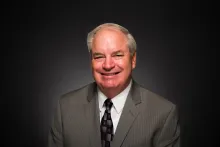
Robin Webber was born in Chicago, Illinois, in 1951, but has lived most of his life in California. He has been a part of the Church of God community since 1963. He attended Ambassador College in Pasadena from 1969-1973. He majored in theology and history.
Mr. Webber's interest remains in the study of history, socio-economics and literature. Over the years, he has offered his services to museums as a docent to share his enthusiasm and passions regarding these areas of expertise.
When time permits, he loves to go mountain biking on nearby ranch land and meet his wife as she hikes toward him.
