
Robin S Webber
This transcript was generated by AI and may contain errors. It is provided to assist those who may not be able to listen to the message.
I want to welcome the audience that is here before me, and as well, I'd like to welcome those that will be partaking of this message in the days, the weeks, the months. And sometimes it happens to be the years down the line. But God's Word is always new and fresh and exciting whenever it comes to us. I want to bring a message that I hope will be personal to each and every one of us. It'll make us think. It'll make us open up our lives, open up our hearts, open up our Bibles, and understand what God has in store for us.
I'd like to begin by asking a question. It's a question that will demand a response from each and every one of us. How often have you and I smashed up against that proverbial brick wall of life until we are forced to a grinding halt?
We all know what that proverbial brick wall of life is like, and we come at it. We come up against it, and there is a thud. And then we have to confront ourselves with the big question. Look what I've done! Look at what I've become! Look at this mess that's all around me! And then finally, the big question comes. What do I do now?
Perhaps even in this very moment, some of us are still banging our head against the wall. Perhaps some of us feel we have to be punished in this way. Perhaps we think that this is the only way to perchance live life. To live it accidentally. To come up against that wall and thud again and again and again and experience endless frustration. Thinking of the question I just asked you, what do I do now? I remember as a teenager saying, what do I do now?
It was normally about 11 o'clock or midnight on a Saturday night when I'd had an accident with my parents' car. I'm probably not alone in that story with some of you here or some of you that are listening to this message down the line. But some of my challenges since, and perchance some of the challenges that you're facing now, are different than the challenges that I had in repairing my parents' automobile.
Metal, plastic, replacing the rubber on the tires. That can take a few days, a few weeks. There's a little stress, especially when you have to pace your folks with the car when you bring it home. And it doesn't look like when you took it out. But some of the stress and some of the challenges we have are different today. Some of us want to have a hope for a new lease on life. A life that seems lifeless. A life that, perchance, doesn't seem worth living.
Some of us want to gain back a heart, want to live, want to live fully, want to have desire to move forward. Some of us just don't want simply a heart back. We need a heart that, perchance, we've never had before. Some of us are frustrated because of what we've done. And not only what we've done, but who we are. Knowing that with all of our good intentions, all of our best intentions, all put together, that we've come up with a big fat zero when it comes to a worthwhile existence.
To where we can wake up in the morning and look forward to the day. It's challenges, it's tasks, it's opportunities. What lies ahead of us. Again, none of us, at one time or another, have been alone in this story. Perhaps today you might be asking, well, is there a possibility that there's any purpose for my life? Why am I breathing? Why am I living? Why am I drawing breath? Why am I going through what I'm going through? Am I simply the end result of evolution? Am I simply the end result of two lovesick amoeba in a swarming pond, many millions of years together, coming together under the power of photosynthesis?
And life came forward and developed, and there's evolution. And this is all there is. I live, I breathe, I die. Life has basically been designed by accident. Or is my life for a purpose? Is there a higher being? Is there a higher calling?
What do we do now? What do you do now is one of the great questions of the Bible. I don't know if you realized or not, but it was one of the first recorded questions in the book of Acts. In fact, the first recorded sermon in the Bible in the New Testament, after Jesus ascended, asked this question. Join me if you would. Let's open up our Bibles, and whether it's here or whether at home, you can go run and get a Bible. We want to open up the Bible, because until we open our Bible, we can't open our hearts. And an open Bible will lead to an open heart, and an open heart will lead to an open understanding of what our God wants us to understand. Here were men that had come up against a brick wall, a brick wall of their own making. And they had just been informed of the intersection of life that they had run through, and the brick wall they had. And it was simply this, as we find it in Acts 2, verse 36, Peter speaking, the Apostle. Therefore, let all the house of Israel know assuredly that God has made this Jesus whom you crucified, both Lord and Christ. The audience that was assembled there, all the same came to the grand realization that they had killed the Messiah. They had killed the promised one. They had been a part of the action of squelching the very promise of God, that they hadn't recognized it when it was square in front of them. Now, when they heard this, the audience was cut to the heart. And they said to Peter and the rest of the apostles, men and brethren, what do we do now? What do we do now? Here they were, helpless, hopeless, frustrated, recognizing that they'd come right up against God and not recognizing what God intended for them. And then notice verse 38, one of the great entries of hope in the scripture.
Then Peter said to them, repent, that every one of you be baptized in the name of Jesus Christ for the remission of sins, and you shall not maybe, not later, but you shall receive the gift of the Holy Spirit. For the promise is to you and your children and all who are far off, as many as the Lord our God will call. So here it was, at a time when the people of Jerusalem had smashed and dashed against this brick wall of life. And it seemed hopeless. The weight upon them was so very heavy once they came to understand what they did. It was just as heavy as that stone that was across the tomb of Jesus Christ. A stone that was so heavy that no man could lift it.
But God is used to dealing with heavy things. And God told them that if they repented, and if they believed, that He would remove that which is seemingly unmovable. He would remove their sin. He would remove their shame. And He would, as the good God, remove their guilt.
He would take away their past. He would even remove what is presently happening. And God would give them a future. It's very interesting as the book of Acts opens up on this audience who ask, what shall we do that baptism and the subject of baptism enters Christian history? And as it enters Christian history, we too need to recognize that it is the opening chapter of every individual follower of Jesus Christ. Because experiencing Christianity without baptism is going to take us absolutely nowhere. Can you imagine being given a beautiful car? Just a, you know, just a dream boat of a car. And you're told it's yours. So you step in. It's got a great feel. It's got really comfortable seating. It's got great tires. But there's no... You're in, but you're not going anywhere. Because the ignition has not been switched on. Baptism is that important when it comes to experiencing the Christian journey. Does it really matter whether you are baptized or not? Now, I realize, as I mentioned and ask this question, there are those in this room that are not baptized.
Those that have been around the Bible and the Word of God and the people of God for many, many years. There are those of you that are listening to this message right now in the comfort of your home or your car or in your office. And you've been to church. You've been around God-fearing people. You know that the Bible is the Word of God, but you're not baptized.
What do we do? Where do we go? Well, that's why today I want to answer that question for you, as we touch on the subject of baptism. And as we do, I want to mention to this audience, as well as those that are listening, that I don't even pretend that I'm going to be able to cover all of the different scriptures that deal with baptism. That's going to be your job.
That's the job God will give you. My hope, and from my heart, I hope that God will direct your heart and open your mind, guide you by His Spirit, to allow you to consider this sacred doorway to eternal life called baptism. So, as we can see then, baptism is important. It was at the very beginning of the story in the book of Acts. As we move into the discussion of baptism, it's always important as a communicator to know your audience. That's one of the first points that they will give you in a Toastmasters club. Know your audience. But while I have many people here, many others will be listening down the line, I understand that I'm not just simply dealing with one audience. Let's talk about all the different factors that might be in this audience and all the different groups. Some here today at church, perhaps some of you that are listening to this message at home, are thinking and considering and preparing to be baptized right now. That's great and that's wonderful. But with that said, there can be a different group. Some may be running from baptism. Some may think that baptism is out of reach because of what we've done.
You may not feel worthy enough. You may not feel good enough about being baptized. You're still going down your own list of perfection. Kind of, I'm going to get this done, then I'm going to get this done, and then I'm going to get this done, and then we get, oh yeah, I'm going to get, oh yeah, God knows about that. Maybe the preacher does too. And I'm going to get this done. So we're developing our own standard of righteousness and our list keeps on growing and growing and growing. You're holding off because you don't think you're good enough. And you know what? With that, you're right. You're not. But who said that you had to be God before you're baptized? And that really holds off individuals at times, thinking that somehow they have to be perfect before they're baptized.
But baptism is not for God. It's for sinners. It's for people who come up against that brick wall and recognize that they can go no further on their own. What happens is, at times, people will develop what I call a focus problem. They'll be focusing on themselves and what they've done, rather than focusing on God the Father and Jesus Christ and what they've done. And how you focus. How you focus makes all the difference in the world. And it will continue to make all the difference in your life as we begin to recognize that it's not our story, but the story of God and Jesus Christ that they want to write in us. On the other hand, we still have some members of the audience that we need to go through. On the other hand, some of you may have considered baptism, but you've placed it on the shelf. No big deal. After all, I grew up in a church, spent time with Grandma, and she'd read the Bible to me. I believe in God. I keep the golden rule pretty good. Sort of. Well, I'm a pretty moral, law-abiding person. I haven't had a ticket in over a year.
Lightning hasn't struck recently. I'll get around to it someday. Unfortunately, some individuals treat baptism as if it's some kind of elective course. Something that they'll get to, maybe like we used to in college in our junior or our senior year, rather than recognizing that the sacred gateway of baptism is essential, essential for receiving salvation.
Again, another part of the audience. Some of you might be looking around, and I know this happens at times. Some people will look around. They'll look around and say, if that person's baptized, then I'm not going to be baptized. I know what that person's like. They don't practice what they preach. So if that is what baptism is all about, then I don't want to be baptized. Or, I can't stand organized religion. And that's humanly understandable.
When we look at what's happened over 2,000 years of history, how churches and organizations have at times fallen short of the example of Jesus Christ. Humanly, that can be a fair statement, but who said that baptism is about a human church organization? Baptism isn't about joining a spiritual club, but it's about entering the family of God, and it's Christ that has paid the dues, and nobody else. I have now been ministering for over 35 years. I have never, in my experience, I have probably now baptized hundreds of individuals. I have never baptized an individual into a church, an organization, a sect, or a creed. In all those years, I've only asked two questions.
They're very simple. They're very direct. I asked the questions. The individual in the pool with me asked to supply the answers. That's simply the questions I ask is, have you repented of all of your sins? Who and what you are? And the person answers. And then I ask, and have you accept it, Jesus Christ, to be your personal Savior. And once again, they answer.
Baptism is not about joining a church. It's about being invited into the family of God. It's about being invited into the most worthwhile, exciting, dynamic, growth-developing journey that any human being can possibly take. Again, some people may be holding out because they don't know if they can spiritually succeed once they do commit. I find that today as a minister that minute or... and have you noticed, too, how hard it is for people to commit to anything today? Just think of yourself on your easy chair at night when you have the controls to the television. How committed are you to watching one program just for half an hour? Everybody wants to flick and flick and flick and flick. Some can do it two at a time, or they've got, you know, like Wyatt Earp. You know, both are going at the same time. Boom, boom, boom, boom, boom, boom, because they're watching more than one television to make sure they don't miss out on anything. Commitment is challenging today.
And though you can't succeed by yourself until you receive what comes with baptism by the giving of God's Holy Spirit, that Spirit is going to grant you strength and purpose, love beyond what your eyes can even see or begin to imagine, and wisdom to convict us of sin, and wisdom to embrace righteousness. Now, with all of that said, I think we've covered every aisle of this group and probably those of you at home. No matter how many human approaches we have for baptism, God has only one approach to all of us. He wants us to be His children. He wants us to be a part of His family on the inside looking out, not on the outside looking in. And that can only begin with baptism. Before we go any further about the subject of baptism, we need to ask another question. What is God doing and what is He about? Where is baptism ultimately going to lead us? Well, let's go to the very beginning of the Bible. Let's go to the book of Genesis, which literally means beginning. And God makes no secret with what He wants to do with us. See, the book of Genesis should be considered a book of understanding, a book that there is a creator, that in the beginning there was a God. And He created this earth for a purpose. He created man and woman for a purpose.
And we find that over in Genesis 1 in verse 26.
Then God said, let us make man in our image and according to our likeness. God said, here's what I want to do. He says, let's make man in our image. Now, we've made cattle, we've made reptiles, we've made the plants underneath the sea, and we've made the mountains, but they're not in our image.
There's more to creation than what we see. There's a purpose that's being worked out here below.
He said, and according to our likeness. Notice verse 27. And so God created man. In His own image, in the image of God, He created a male and female. He created them.
Now, God was not just simply a first cause. A lot of people today will believe that, well, there's a sovereign being, that deity abroad, that kind of start of the universe, wound it up, and since then has been an absentee cosmic landlord. But that's not the God that your Bible reveals. God had a purpose. He placed the man. He placed the woman in the garden of Eden, and He gave them some choices to make. He planted in that garden. He planted the tree of life.
And that tree of life was given to humanity to be a gift. There were two trees, the tree of life and the tree of good and evil. It was not the tree of life that was out of bounds. The tree of life was a gift. God said, here, you imbibe of this fruit, and if you do, you will have, number one, you'll have a right relationship with me or creator. Number two, you'll have a right relationship with your fellow man and your fellow woman. And beyond that, you'll have a right and responsible relationship with the world around you. You'll be able to not be a success on your own, but because of what I've given you, this tree of life, you will have a rich and you will have a full existence.
But in Genesis, we find out that Adam and Eve had a mind of their own. Do you ever notice that about people? They got a mind of their own. If you don't believe me, just get on the freeway.
People have a mind of their own. They want to go around. They want to take shortcuts. They just want to, well, cut you off. People have a mind of your own. And there was a freeway that was running right through the Garden of Eden. And it was one lane to destruction out of there, because Adam and Eve made a decision. They rejected the relationship. Let's understand. Are you with me? Let's understand something about the Bible. While the Bible has many rules, rules without a relationship or like a postcard without a stamp. They're not going to go anywhere. And God grants us a picture in the Bible that what he was calling us to was not just rules, but he was creating a relationship with the creation. He wanted to be a father. He wanted to be a family member. He wanted to be a guide. He wanted to create a family. Didn't have to. God is self-sufficient of him by himself. He doesn't need company to be happy, because he is all in all. So it's not like he gets lonely.
But from the beginning, he had a plan. A plan of love that he wanted to extend and expand his family. He wanted to share what he and the one that is revealed as the Word have had forever.
And that's more than just simply playing a harp on a cloud. That's more than just simply singing in a choir, singing heavenly tunes. God is calling us to something much greater than just simply being spiritual paths or spiritual automatons or robots. He didn't create man to be angels. He's already got them. He created you and me to be a part of his divine family. And that's exciting when you think about it. He called us to a relationship. Join me if you want in Ephesians 3. In Ephesians 3, we see more definition about what God intended. From the very beginning, in the Garden of Eden, Ephesians 3 and verse 14, perhaps you've never been in the book of Ephesians. It's written by the Apostle Paul. It's called a prison epistle. Paul was in prison when he was actually writing this.
But he had such a grand vision. He had such a grand hope that was bigger than any set of bars that was shutting him in, at least as man saw it. In Ephesians 3 and verse 14, Paul speaking, writing, For this reason I bow my knees to the Father of our Lord Jesus Christ, from whom the whole family in heaven and earth is named, and that he would grant you according to the riches of his glory to be strengthened with might through his Spirit in the inner man. You know, a lot of us today come out of families that are broken. Some of us don't have families. We don't have a structure of fathers and mothers, cousins and uncles and aunts. More and more, unfortunately, in America today, the family institution that God designs the beginning is broken. A lot of people don't understand what family is anymore. They don't understand the strength and the the security that a family can bring. And God says, I want you to be a part of my family. You may not count out there. You may not think you're going anywhere other than by yourself, and you're not. But because of my grace, because of my design, because of my invitation, I want you, who nobody else is looking at right now, who nobody else cares about right now, I want you to realize that I care about you, and that you can be strengthened with might through the Spirit in the inner man, that Christ may dwell in your heart through faith, and that you, being rooted and grounded in love, may be able to comprehend with all of the saints and what is the width and the length and the depth and the height, and notice to know the love of Christ which passes knowledge. What I'm sharing with you today is not shared in the schools of society today. It's not even shared in many of the pulpits of today.
Not everyone understands the width and the depth of God's love that He is calling us to a relationship that is far above anything that we can imagine, that He wants us literally to be a part of His family. Join me, if you would, in Hebrews 2. In Hebrews 2, one more defining verse in this regard, because this is the goal. This is the gift that is laid out before us. In Hebrews 2, in verse 10, we notice more definition regarding this family. For it was fitting for Him, for whom are all things, and by whom are all things, in bringing many sons to glory, to make the captain of their salvation perfect through sufferings. For both He who sanctifies and those who are being sanctified are all for one, for which reason He is not ashamed to call them brethren. So we notice here that He's calling us in this family setting. Those that we might all be one, as it says in verse 11. Look at that. Paul might be one. It's interesting in the the NIV translation. It says that we can all be a part of the same family. So what are we being called to? What does God want to invite you towards through the process of baptism? And what does it entail? Well, let's begin by going to John 6 in verse 44. In John 6 in verse 44 is one of the most exciting scriptures in all of the Bible.
In John 6 in verse 44, we come to understand that the head of the family, that's God the Father, is the one that's calling you, calling you. Let's notice what it says in John 6 and 44. And this is Jesus speaking.
No one can come to me unless the Father who sent me from them, and I will raise him up on the last day. Jesus plainly says it like it is. No one can come to me unless first God the Father calls him.
That's such an important fact that it is, again, stated in John 6 in verse 65. Sometimes the Bible mentions something just once, but that's important. But when it's mentioned twice, we ought to stand up and take notice. Now, what does that mean? Let's think about this for a moment. Can you imagine maybe being on a summer tour of the White House and you actually get into being on the lawn of the White House and the President comes out for one of those photo ops? Very busy man, most important person in the world. Here comes the President down the stairs of the White House. Big crowd, thousands and thousands of people. And he says, Walt, come over here. I want you to be in my cabinet. Sandy, come on up here to the steps. I've got something I want you to work on for me.
Well, what do you think you would do? Do you think you wouldn't call your wife if she's not with you on the vacation and then you are in trouble? But anyway, don't you think that you would not get on the phone immediately and say, do you recognize who noticed me? Do you know who has called on me? Do you know who wants me to be a part of the government? That'd be the most exciting thing that probably ever happened to your life. I notice right now with the political season that everybody, you know, trying to get into these photo mugs, the different candidates, get an autograph, get in there, push their way in there. You know, I'm here, you know, and waving their hand.
That'd be exciting! Jesus says, do we recognize that the one that is calling us that begins our spiritual journey, partnering with us, is none other than God the Father? It's a personal invitation.
God's calling children. God's not doing it through somebody else vicariously.
God's not having grandchildren. He's having children, and He wants you to be a part of His family. Let's understand what the other member of the Godhead does. Join me if you would in Romans 5, because this is where it becomes up close and personal, because there is not only God the Father, but there's also God the Son. And a decision was made from the very beginning of time.
That because of what Adam and Eve had done, and the course and the way and the direction and all those brick walls that we've had ever since, that there had to be a way back to God. There had to be a connection. And so a plan had to go into play to serve the purpose. The purpose is that many sons might be brought to glory, made in His image, His likeness, His similitude. But a plan had to go into play to serve that purpose. And the bottom line is simply this, is that the one that had lived forever would die for you and for me. It's incredible just to think about it, but this is what the Bible reveals in Romans 5 and verse 6, and so does what it says. For when we were still without strength, in due times Christ died for the ungodly. And that's why I say throw away your list.
Don't try to work your way up to God by what you're doing, by somehow thinking that here on this earth, by what we're doing, or by our accomplishments, that somehow that we can earn what is only God and His to give. For when we were still without strength, in due time Christ died for the ungodly.
And for scarcely for a righteous man will one die, yet perhaps even for a good man some would even dare to die. Think about sometimes if you're out on a hiking trip and you're near a ledge, you're near a high cliff that's over one of these streams.
Now, if our dog Shelby, the wonder dog, jumped over the cliff, some of you know Shelby, and you know that there's no wonder about Shelby, so I'm laughing back. But that if Shelby went over the cliff, I'd say, dog gone. I would not jump over the cliff. My wife would jump over the, not just teasing.
I'm not going to jump over and give my life for this dog.
But if one of our daughters or our granddaughters, those little precious fives, somehow stumbled over that cliff, grandpa would probably jump right over and go after them one way or the other. Or if my wife tripped and went over the cliff, I would go over. These are people I know, I love. They're a part in that sense of my empirical self.
I love them and am loved by them. I know them and they know me. But the power of Scripture is that it says that while we were without Him, not knowing Him, in sin, we notice what God demonstrates in His love towards us. In verse 8, in that while we were still sinners, Christ died for us. Christ was willing to go over that cliff when we didn't even know Him. We didn't deserve it unless and still He did it. Much more than having now been justified by His blood, we shall be saved from the wrath through Him. For if when we were enemies, we were reconciled to God through the death of a son, much more having been reconciled, we're going to be saved by His life.
And therein demonstrates the love of God, that while we were yet in sin, Jesus was willing to be able to do that. That again raises my point for some of you that have perhaps been wondering or speculating about baptism. You come to recognize that baptism is not for the sinless, but it's for sinners. It's not for the perfect. It is for the fallen. It's not for always the good guys that were in the Bible, but it's for people like Samson, blind and beaten and lonely between the pillars when he had everything and walked away from God. And yet at that moment of prayer, that moment of surrender, God came back into His life and refused Samson.
It's the story of the thief on the cross, not the one that shied at Jesus at his end, but the one that hung up there maybe six or seven feet above the ground with them. And they had this conversation, one of the great conversations in the Bible where the thief said, I know why I am here. I know what I have done. And talking to the other TV says, but this man hasn't done anything. Jesus had that conversation with them. And He said, here is an individual that I can do business with. It's not about who and what we are, but what God has chosen to do through His merciful invitation. Join me if you would in 2 Corinthians 5 and let's notice verse 17. It's interesting that for those of you that may not be aware of what the church was like in Corinth, it wasn't a star-studded church. It wouldn't be the kind of church that you'd say, boy, I'd like to be the pastor there.
Now there's a group I can deal with. This was a cosmopolitan fort town. And I mean, whatever was in society came through its doors and became a part of its church roles.
Looking from the outside in, you'd say, I'm not going to invite them over to dinner.
I wouldn't want to meet them in a dark alley. But God had a different plan. Because so often we see where people are, God sees by what He's going to do with the Spirit where He wants to take them. 2 Corinthians 5. Notice what God says here, that He wants to give people and where they're going. Therefore, if anyone is in Christ, and being in Christ means that we have accepted a life that was lived perfectly, a death that was given humbly, a resurrection that was offered grandly. If anyone is in Christ, He's a new creation. Old things have passed away, and behold, all things have become new. When you're baptized, your past is taken away. Your present is only present. God is giving you a future. But before you gain that new identity, you must die figuratively. We surrender ourselves. We say, look, I know I was going up against that brick wall. Thud, thud, thud. Father, I've been running away from you all of my life. All of my life.
I'm tired. I'm willing to surrender. I'm willing to give myself to you.
I want to be yours. I realize I'm not worthy. I realize that there's nothing I can do of and by myself. But the one thing I can do is accept your gift of the sacrifice of Jesus Christ.
And I do accept Him as my personal Savior. I do accept the reality that He was an eternity with you and gave up everything and came to this earth and dwelled in this physical tent. Became a part of my neighborhood, as it were. So you could know what it's like to be a human being. And I accept that. And I accept that not only that, but I realize that He not only died for me, but you raised Him up. And He now lives for me. And He is at your right hand. And He is there as my personal comforter in heaven. And that when Satan comes and reminds you, Father, of everything that I have done, Jesus is there as well. And He doesn't say, Hey, Father, they're innocent.
No. Jesus, as the one that defends us in heaven, isn't proclaiming our innocence. He knows what it's like to be a human being. But He is reminding our Heavenly Father what He did for us. His vicarious work on our behalf. That He took upon Himself the death that we also richly deserve, because we have sinned. And Jesus took that upon Himself. He took it upon Himself just like the man that was about to go into the electric chair at midnight. The governor was not calling to repeal a sentence. The man was having his last supper. And all of a sudden, there was somebody at the cell door that he'd never seen before. And that man began to have a conversation with him. He said, Sally, you're going to die unless something happens. And you're going to die because of what you have done. But I tell you what I'm going to do. This door is going to open. This door is going to open. And I'm going to walk in. And I'm going to take your place. And I'm going to take the penalty that you so richly deserve. And I'm going to die in your stead. I don't deserve that death by myself.
But I'm going to take the penalty of what you've done and put it upon myself and die. But before I do that, before this cell door opens, before I walk in, before we trade places, I've got something that I want you to look at. And figuratively, he holds out a sheet. And you know what? It's written in red. Because it's written in his blood. He says, you accept this. You follow the instructions here.
To the best of your ability. And when you can't, and when you fall, you recognize, I'll be there.
I'll pick you up. You will be restored. And when you are restored, you will even be used more fully.
That's what baptism is. The individual that was at that door sells none other than Jesus Christ.
And he is knocked on each and every one of our doors and continues to knock on the doors of those individuals that will open up, read that contract, written in his blood, and accept it.
It's an incredible story. We find more of it mentioned over in the book of Colossians.
Because before we can live, we must die figuratively. Join me in Colossians, and let's take a look here for a moment. Colossians 2, in verse 11.
In him, and again the him there is Jesus, you were also circumcised with the circumcision made without hands by putting off the body of the sins of the flesh by the circumcision of Christ.
Paul is addressing a situation that was about in that day. The community of Israel, for 1500 years, one of the great identifying signs, had been circumcision. The altering, that is, of the male organ, of cutting away of the flesh, which was an identifying sign to all and to them that they were being worked with by God. But now we understand something new is transpiring, that God has chosen no longer to work from the outside in, but desires to work from the inside out. So it talks about this circumcision made without hands, and that God's work goes into being as he begins to work with an individual. It's begun by God. As many as are led by the Spirit of God, the same are the sons of God. God starts the process, and it says that we are buried with him in baptism, in which also you were raised with him through faith in the working of God who raised him from the dead. So the working of God is not only about watery graves or funerals or death, it's also about living and living for God, just as Jesus Christ was raised from the tomb and now lives for God. It's interesting when you look at this, the students of the Bible, it talks about here, if you'll notice in verse 12, in the working of God. What is the working of God? And this is sometimes, I think, where people become frustrated because they're still trying to do it on their own. Long ago, the Apostle Paul said that Abraham was not justified by what he did, but he was justified by faith. And so sometimes I think what people do, even though they've heard of God and they know God, they say, I don't have faith.
And so they begin to, in a sense, go to the basement of their mind and they get out, in a sense like the old counterfeit machine that we used to see in the cartoons, where the machine starts whirling, it's not money, but we're trying to develop and we're trying to create faith. Let's understand something, friends. We cannot work up faith here below.
Faith is not something that is homegrown. Join me, if you would, in the book of Ephesians.
Ephesians 2, verse 8. It says, For by grace you have been saved through faith, not by what we've done. Now, our faith is, indeed, demonstrated by our works, and our works are evidence of our faith. But it does begin with faith, taking God and his word, and that not of yourselves, because notice then, it is the gift of God. A gift is a gift. It's not something that you can buy. It's not something that you can purchase. It's something that God gives us. If right now, some of us are stymied because we're operating with our eyes and we're not operating on faith, ask God to grant you faith. Ask him to give you that gift, which is the starting point of a relationship. The relationship that Advent Eve rejected, because they did not take God at his word. They added to his word. They broke his word. Take God at his word. Join me again, if you would, in discussing the works of God over in Romans 2, verse 4. In the book of Romans, again, we find more about the workings of God.
Romans 2 and verse 4. Because again, if faith is not an issue, then perhaps coming to repentance is an issue. I try, I try, I try, I try, and I'm fried. Everything I don't want to do, I do. Father, what do I need to do? And it's given the answer here in Romans 2 and verse 4. For do you despise the riches of his goodness, forbearance, and long suffering, not knowing that it is the goodness of God that leads us to repentance.
We don't lead ourselves to repentance, friends. Again, repentance is a gift of God.
Faith is a gift of God. If we could crank out repentance on this earth of and by ourselves, if we could crank out faith on this earth of and by ourselves, then it would be by our works and not by God's grace. We would be earning our way into the kingdom of God, rather than that door opening to us by the invitation of God and by the sacrifice of Jesus Christ and by the coming of the Holy Spirit upon us. Let's solidify this thought by going to Romans 6 and verse 23.
In Romans 6 and verse 23, notice what it says. For the wages of sin is death.
At the end of broken law, that's what sin is, is death. In other words, what we buy into, what we work towards, is what we receive. And of and by ourselves, apart from God, yeah, we would be dead. But the gift of God is eternal life. And in whom? Through Jesus Christ, our Lord.
And when you think about that, and when you accept that as an individual, when you're considering baptism, and when you get to being tired of going up against that brick wall of life again and again and again, you throw yourself on the mercy of God and say, Father, save me.
Father, give me your gift of faith. Give me your gift of repentance.
God is more than willing to do that and forgive you. You already know that in that sense, in that story, that Jesus in that sense already went over the cliff for us, already entered our cell of life for us. You say, well, that's not very pretty.
Well, Jesus, from the very beginning, has been in places that aren't very pretty. Just think about when he was born. Where he was born in that dark manger, with the smelly stink of cows or camels or ghosts, was not a very pretty spot. Because there was no room at the end for him. At the same time then, let's understand that Christ and the workings of God can go into the darkest places of our heart, our imagination, our life, this world that is here between our ears.
And that's where he does his best work, is he brings his light into our darkness. There's nothing that cannot be touched by him. Come with me to 1 John 1 and verse 9. Sometimes there'll be people that think, but you don't know what I did. You don't know how dark my life has been. You don't know what kind of a guy or what kind of a lady I was. I wasn't a lady.
That's the problem. You don't know what I've been like. And I don't know if there's enough blood to forgive my sin. Notice 1 John, the epistle thereof, verse 9, chapter 1. If we confess our sins he is faithful. He doesn't go, maybe, maybe not, maybe, maybe not, maybe she loves me, he loves me not. No. It says he is faithful. He really is. And just forgive us our sins and to cleanse us from all unrighteousness, no matter what we have done, no matter what we've been like, the blood of Christ is always greater than our greatest sin. And he takes that sin at baptism. He takes what we are as we surrender ourselves to Him. And he takes that and proverbially, figuratively, it's like he goes to the deepest trench in the biggest ocean in the sea and he drops that heavy weight of our sin, our guilt, and our shame. He puts an anchor on it and it goes to the very bottom, not to be seen by anybody. And then he puts a big sign on there. Envision this. You know what that sign says? No fishing allowed. When we are forgiven by Jesus Christ and by God the Father and we have that atoning sacrifice placed in our life, nobody can catch us. It's forgotten. You know what? Know who that no fishing sign applies to also? You and me. We can't go back either. Why then should we be baptized? As we begin to conclude, a few thoughts I'd like to share with you. Perhaps you think, well, you know, the Bible is kind of a spiritual book, so why should I go through the ordinance of baptism? Because God is the master teacher. And God knows exactly what it is to bring us to spiritual point sometimes in the exercises that He has that's due on earth.
Let's understand that baptism is an outward expression of an inward intent.
Baptism is saying to God, my life is over and I want Jesus Christ living in me by the power and by the presence of the Spirit of God. Think about this for a moment. Number one, have you ever thought number one is simply this. Jesus said, follow me. Now, if Jesus said, follow me, that's the first assignment that He has to be baptized. Because what did Jesus do? What was the first thing that He did at age 30 as He began His earthly ministry? He was baptized. And when you go through the Gospel accounts, it says that He went down into the water and He came up out of the water. The Greek word there is baptism. It means immersed. He wasn't rinsed. He wasn't sprinkled. He wasn't given a little die job. He wasn't a little dabble, do you? Jesus was making a point that He was surrendering Himself to the will of the Father. He didn't need to be baptized for sin because He was perfect. But He did it as an example for us, that we might follow Him. He did it also because in His ministry, He not only came to be our Savior, but He came to be our High Priest.
A High Priest would always wash himself as he made ready for sacrifice.
You realize that you and I are being called to be a kingdom of priests. If Jesus is the great High Priest, a part of our calling, our future for eternity is going to be a kingdom of priests.
We begin with Washington. Number two. Again in Acts 2.38, we cannot receive the Holy Spirit unless we're baptized. It goes like this. Repent and be baptized and receive the Holy Spirit. While we can't earn salvation, God does ask us to do certain things to show that we love Him, that we honor Him, that we're willing to follow His way. Again, an interesting verse I'd like to draw your attention to is over in Romans 8. Join me there for a moment in Romans 8. In verse 8. Notice what it says here.
So then those who are in the flesh cannot please God. We might have the best looking flesh around.
If you think so, then you do need to repent because you've got pride. No, just please. Okay. But we can't please God in the flesh. But you are not in the flesh, but in the spirit. Speaking of those that have come into this covenant relationship. If indeed the Spirit of God dwells in you. Now, if anyone does not have the Spirit of Christ, He's none of His. The Spirit of Christ is synonymous with the Holy Spirit. If we don't have the Holy Spirit, if we don't have the Spirit of Christ, we're not members of the family. It's very important then to be baptized.
4. Understanding from God's Word with explanation by His servants needs to be followed by action. Join me if you would in Acts 8. Last verse that I'll have you turn to in Acts 8.
Some of us have been looking for purpose in our lives. Some of us have been reading the Bible for years and years. Some of us have been hitting a brick wall, and we wonder why. Maybe because well, we thought that we had to develop enough faith to be baptized and not recognizing that it was the gift of God. Perhaps we were cranking away on our little wheel down in the basement of our heart or our mind trying to work up repentance. We didn't realize that God wants to grant us the Spirit of repentance. He's on our side. He's working for us. Now it's all coming together.
You can recognize that you can have a life of purpose. You can have an existence that's worthwhile. You can live for a cause that's worthy of all of your life's devotion.
This was the story that is found in Acts 8, as this gentleman from Ethiopia was going back to his country from Jerusalem. He was reading the scriptures. He was reading this where it talks in verse 32 of chapter 8 of Acts, speaking of, he was led as the sheep to the slaughter and as a lamb before it shears the silence. And so he opened up not his mouth. And in his humiliation, his justice was taken away. Who will declare his generation before his life is taken from the earth? And so this eunuch, this Ethiopian government official, answered Philip and said, I ask you, of whom does the prophet say this of? Himself or some other man? And then Philip opened his mouth and began talking the scripture to him and preached Jesus to him. And now as they went to water, excuse me, now as they went down the road and they came to some water, the eunuch said, see, here's the water. And what hinders me from being baptized?
When God begins to work with your mind and when God opens your heart, and the scriptures come alive and they are speaking to you and speaking at you, and you know that God is working with you as the apostle Paul brought out, then is the time to respond. Then is the time to act. Then is the time to come maturely, not just based on emotionalism, not just based on an altar call, not just based upon being a baby and you wanted to have your baby baptized so Grandma could see it while she was still alive, but as you count the cost, as you recognize that the creator of the universe gave his life for you, that you might have life forevermore, then is the time to act.
You say, though, but wonder if I act and wonder if I keep on sinning. What do I do then?
God knows you're going to do that. That's what makes him God.
It's like the little child that said, Mom, I thought you got baptized.
Why did he still slip up from time to time? I thought you wanted to be like God. I wanted to be holy.
And Mom looked at the little girl and said, Sally, before baptism, I was running towards sin. But now that I'm baptized, I'm running from sin. But it doesn't mean that I won't stumble.
I stumbled before. I'll stumble again. But I have a father that invited me.
I have a Savior that died for me. I have a spirit now inside of me that tells me that no matter what I've done, if God be for me, what can be against me?
Remember how we started this message? We started with a question.
Question maybe you've been asking. A question I asked when I had that auto accident as a teen. The question that was asked by the men and the women in the book of Acts. What shall I do? Through this word, God has given you his answer. And now it's time for you to give him your answer.
Baptism. Sacred gateway to eternity. Yours. Just ask.
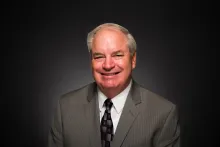
Robin Webber was born in Chicago, Illinois, in 1951, but has lived most of his life in California. He has been a part of the Church of God community since 1963. He attended Ambassador College in Pasadena from 1969-1973. He majored in theology and history.
Mr. Webber's interest remains in the study of history, socio-economics and literature. Over the years, he has offered his services to museums as a docent to share his enthusiasm and passions regarding these areas of expertise.
When time permits, he loves to go mountain biking on nearby ranch land and meet his wife as she hikes toward him.
