


Robin S Webber
This transcript was generated by AI and may contain errors. It is provided to assist those who may not be able to listen to the message.
I like to just talk with you, because we are going through a very, very unique time. And it's a time that, well, it's one that we want to ask for. It's one that we don't want to waste. And that's going to be a little bit about what I want to share with you today. You know, humanly, none of us like to be interrupted. I'm sure all of us at one time or another have been talking and discussing something, and we wanted to share something.
And then somebody just came in out of left field or right in front of us or dropped in and just changed our train of thought. We normally look at interruptions as being something negative. But today, I want to turn that, which is negative, and talk about some of the interruptions that have been occurring in our life the last two or three weeks. Now, number one, we don't like being interrupted, but also, I think I can speak for all of us.
We find it very hard to change our ways. Changing our ways does not come naturally. So this is kind of a reality check time, that number one, we don't like to be interrupted, and number two, it is really, really hard to change our ways. But being a Christian, changing and being interrupted, is all a part of the experience that God the Father and Jesus Christ have called us to.
So that's our reality check. I'd like to tell you a little bit, seeing you're seeing the office here, and you see that door that's behind me. That door, my office is actually in a, it used to be a single garage with a three-car garage. Then that door is behind me, and then the two-car garage, and then the rear door, the garage door that goes into the house. Now you say, well, we didn't really want to have this whole tour of your house understood, but it's going to kind of come to fore what I'm talking about.
I normally let pumpkin the cat, and some of you have met pumpkin the cat. I normally let pumpkin the cat come out of the door that is in my office. It goes out to the backyard. Pumpkin comes in from the back door, and then I call pumpkin into the garage to get the cat.
I call it sometimes when I'm frustrated, the cat. To get the cat from one place to another. Well, in the garage, Susan has her car parked. What I would really like to do, so I can get on with my business, is just to have pumpkin go from point A to point B, which would only take about 12 feet. Those are human feet, but 12 feet from that door to the door that leads into our house.
But lo and behold, no, no, no, no, not the cat. Pumpkin the cat. Pumpkin the cat has a path that it must take. It never changes, no matter if there's an earthquake. The cat will go all the way down the side of the car in cat speed. CS. Cat speed. Then go behind the car, and I'm waiting at the door back, and then come all the way up the car. I think, I think pumpkin kind of majored in math or whatever.
The cat never forsakes the rectangle of the car. All of us are a little bit like pumpkin. We have a path that we have tread, that we have prod, that is familiar to us, and it's a very, very, very hard kid to break up our our life's routine. We all have a little bit of cat in us, don't we? Because, you know, we're not subject to change.
We don't do change real well. We kind of keep on going down the same path of life, and yet this kind before us right now has changed everything around the globe. We've got to kind of get rid of the cat, and we've got to kind of reorder our lives, and we've got to recognize that we are in something that is bigger than us, and that God Himself did not put cat in us, but He put, as it says in Ecclesiastes 3 and 11, it says that He's put His Spirit, that Spirit of eternity, that spark. There's something there in us that begs us in that sense almost to search for the meaning of life, to look at something that is transcendent, that moves beyond our familiar paths, that challenges us to change when we are not necessarily creatures of change, to look at a new way of being.
And that's what I'd like to talk to you about a little bit, and that is what do you and I do with life's interruptions, and where do they come from? Now, what's going to be happening here, and first of all, let me go back a second. Let me just define the word interrupt. The term interrupt means to stop. It means to stop or hinder the uniformity or the continuity of something. In other words, we would like life—that's my hand, by the way—we would like life just to kind of just go like this.
Even Stephen, straight across, just like a ruler, no indentions, nothing. But is that life? And is that the life that God has called us to? What we are humanly experiencing right now with the coronavirus, and what we are spiritually preparing for as we come to the New Testament Passover, have a meaningful commonality. And we don't want to allow this time to go without learning some powerfully connected lessons. What I hope to share with you out of God's Word and some of the examples out of God's words is simply this. We will come to see that God is the great interrupter.
He is the great interrupter of both human history and also our own personal lives, our own personal stories. So let's get that right out there. So we're all on the same page, okay? The same picture right now. God is the great interrupter.
And there's a purpose for this that I want to share with you as we're going through this life. As we don't even really necessarily know what's going to transpire tomorrow or the next day or the day after. And yet sometimes we pretend that everything is happening to everybody else but ourselves. You know, death and taxes happens to everybody else. No, it doesn't. We are a part of this life and we are under God.
And he has some lessons for us to learn as to interruptions and the need to change, and perhaps the need to reorder our lives. So the title of this message is simply this. The God who interrupts us. The God who interrupts us for His glory, for His glory, and for our good.
When we think about it—and Mr. Smith alluded to this in his opening prayer—we're coming up to the New Testament Passover, the Passover. And when you think about it, the times that we're in right now, a couple of weeks out, a week and a half, a couple weeks out from the Passover, if we go back 3,500 years, that Israel, a nation of slaves in Egypt, was going through the plagues with ancient Egypt. This was the time of when God was knocking on the door of Egypt. He was about to reorder human civilization, as it had been known for hundreds and hundreds of years. Egypt and its history was as long as the Nile, going into the recesses of Africa, further and further and further, just as the Nile goes into the very heart of Africa, that the history of Egypt, the civilization of Egypt, went back and back and back and back. Always had been, seemingly always would be, always will be. But God had different plans. He was about to shuffle the deck. He was not only going to interrupt into the history of the greatest civilization in Western Civ, but he was going to interrupt into the lives of a people who were not a people, a people that were slaves, a people that were the walking dead every day of their life, and was going to grant them freedom. You and I worship the God who interrupts human history, interrupts our personal lives, those that he's working with, that he might be glorified and for our good. So we want to talk about that a little bit.
And it was not only in ancient Egypt, but to recognize that when you think about history for a moment, it would be just not going to turn to a whole lot of scripture right now just that you'll stay with me, but it was not only Egypt, and it was not only the slaves, the Israelites that were in Egypt. But later on in human history, that God intervenes again and again when we think about the story of Babylon. At the end, after Nebuchadnezzar, with his family member that was then on the throne, and in that night when that message was put up, the handwriting on the wall, many, many, many people, you fire some. In one night, and the wise man Daniel was called out and what did that mean? In one night, what did it mean? And he interpreted that. He said that that kingdom had been weighed in the balance. It had been found wanting, and that it would depart from that king. It would go to another, and that very night, that very night, that king died. In Babylon, those walls in Babylon that were so great, and that the people always thought would be there to protect them, Herodotus, the father of history, records that the walls of Babylon were about 100 feet high, 100 feet high, and that you could actually ride six chariots side by side along the walls at top. Nothing possibly could come over those walls. Nothing possibly could destroy them. Babylon would always be. But God had a different thought. The interrupter of human history, and to recognize that, rather than going over the wall, the Persians would dam up the river, and they would go under the wall. That which had been the greatest empire in that Mesopotamian plain would be vanquished. It would go down. Join me if you would for a moment in Matthew 24. I'm going to open up my Bible on this one. Just share some thoughts. In Matthew 24, in all of that prophecy. Because humanly, we always think that everything is going to go on and on and on.
In Matthew 24, Christ reveals this. He speaks about an event that occurred long before him, the story of the noation flood. Now, notice what it says in verse 36, But of that day and of that hour no one knows, not even the angels of heaven, but my father only, but as the days of Noah were. So also will be the coming of the son of Manbe. For as in the days before the flood, they were eating and drinking, marrying and giving in marriage, until the day that Noah entered the ark. Life was just going on like it was always going to go on. Just like we thought our lives were going to go on, just as they've always gone on about a month or two months ago, when they began to hear about this germ that was over in China at the time. Well, it's over there. That's over in Asia. That's over there. That's with those totalitarian governments over there. And probably not going to come over here. Our lives are going to go on. We're going to eat. We're going to drink. We're going to go to our jobs. We're going to go on as if everything has always gone on. Well, as my good friend John Garnett would say, thinking of John, and you're over Linda right now, how's that working? Life has changed forever, in a sense. Forever. And we have found more and more that we've been squeezed into a new order, a reordering of how we relate with one another, how we protect one another, how we are concerned about one another, the role of the federal government, the role of the state government, the role of the county government, the role of the city government. All of this has come down to us that today I'm in this room. You're in your room, and we're having to find that necessity is the mother of invention. Life was going on. In America, the economy was booming, booming, booming. Unemployment was at historical record lows. Stock market was doing incredible, and yet God has, for one reason or another, allowed this to occur. But not only to occur, but for we, the people of God, to learn some lessons out of this. We don't want to be in denial. We don't want to be in denial. Don't want to be like Pumpkin the cat. And I do love Pumpkin, by the way. Pumpkin be very lovable most of the time. We don't want to be like Pumpkin the cat. We don't want to be like Egypt. You know, after the third plague that hit Egypt, even the wise man could not match what God was doing as he interrupted that society. And they said, Faro, excuse me, don't you understand that this is the finger of God. The finger of God can't fight it. We're going to have to reorder, but Faro's heart will be hardened. And we know the rest of the story, and perhaps some of you are reviewing that now as we prepare for the New Testament Passover. Well, the finger of God right now, dear friends, is touching our hearts. Not a finger of oppression, not an interruption of negativity, but an interruption for us to come into more alignment with His love, with His vision, with His understanding of the role that He wants us to play right now as we prepare to be members of His family, and to recognize that we have some lessons to learn from here.
Let's talk about the aspect—I want you to think about the aspect of interruption for a moment, for it to be interrupted. I've talked about Babylon, I've talked about Egypt, I've talked about the world at large, but as I keep on trying to say that God is an equal opportunity provider, and I want to share with you as fellow New Covenant Christians, simply this, that when we were baptized, that in our first years of growth and development in the ways of Christ, it's not over. God is going to continue to actually interrupt the lives of His beloved elect as He begins to mold and to shape us further into the development of what He can use for eternity. I'd like to just share a real quick kind of a rolodex of how God has interrupted the people of God's lives down through history, and then ask yourself, would you have been prepared if God had interrupted you at the time? Let's think about that just for a moment. There was a man who was 480 years of age, he had a wife, and he had three sons, and he was a senior citizen. By the way, he was 480 years of age. His name was Noah, and one day—not the day before, but one day—God came to him and said, I'm going to interrupt your life. You're going to build a boat. You talk about, you can't teach an old dog new tricks. He's 480 years of age, and God says, this is the assignment. This is what I've given to you. And it's quite a long interruption. It was 120 years—120 years of interruption, because he was not only building a boat, but he was also called a preacher of righteousness. I wonder how Noah handled that.
Must have been a challenge. But God nonetheless said, but for Noah. And Noah found grace in the eyes of God. To go a little bit further, what about Abram? Abram, who was a citizen of the Ur of the Chaldees, the very repository of the civilization of the two rivers. A man that was surrounded by a civilization, much like Egypt that had been. And then in Genesis 12, it says that the Lord said to Moses, get up, get out, get going. And in Genesis 12, verse 2, it says that Abram departed. And he went out from Ur of the Chaldees. And as you've heard me say before, sometimes that it's like there was all of civilization was coming towards Ur. You are Ur of the Chaldees. And it's like there is one car going out on a freeway, kind of like right now, as you go to the freeways, even in LA. They're pretty light. Here's one car going the opposite direction. It's all of humanity's coming into Ur. But God said, get up, get out, and get going.
Let me get ahead of the story for a moment, if I could, for a moment. That wasn't the first time that God told—that would not be the last time, pardon me—that God told Abram to get up, to get out, and to get going. What about Moses? Moses had a, in his mind at least, a permanent timeshare in Midian. He'd once been a son of Pharaoh. He'd been a commander of the armies as they conquered Ethiopia, but we know the story. And he had to flee for his life, and he figured the rest of his life was going to be working with sheep in Midian. He's going to be a shepherd.
All of a sudden, God interrupted his life.
And he said, you're going to be going back to Egypt. I've got a job for you. You know, you can kind of get used to the shepherd's life after 40 years out there in the pasture. The rhythms of nature—spring, fall, winter—God interrupted his life. What about Balaam? What about Balaam? Deal with good old Balaam here from one, who was a rogue, in a sense, working both sides against the middle. But remember when God interrupted his path? He was on that donkey, and they were going down that path. And you know what? The donkey, or the mule, saw the angel, but Balaam didn't. Three times! He was going to take it out on the donkey. Now, please understand. I talk about pumpkin. I don't take it out on pumpkin. But Balaam was going to take it out on the donkey. The donkey saw the finger of God. He saw the angel, and things were going to change. What about little Samuel in the household of Eli? At nighttime, God interrupted his sleep, there was a calling. And it wasn't just once. He kept on calling in the night. Remember how Samuel went to Eli? God was calling him. God was interrupting this little special boy that had been promised to him, and was now going to give him the rest of the story of how he was going to serve him. We worship the great interrupter, and we've got to personally be prepared for his interruptions to allow us to be molded and to be shaped into his service, and in his way, and not in the way that we would like to be. What about Amos? What about Amos? A-M-O-S. Amos. He was a shepherd, and God came to him and said, your shepherd days are over. You're going to be a prophet for me. What about Jeremiah? His life was interrupted. God said, you're going to prophesy for me. Jeremiah comes back, says, I'm too young to die. I can't do this. I'm too young. God comes back and interrupts his doubts and his fears and his worries and says, by the way, when you speak for me, don't look at their faces. I'll be there for you. What about Nebuchadnezzar? God, let's go back to Nebuchadnezzar. God interrupted his life big time, as we say. He was walking the walls of Babylon one night, kind of nice summer breeze, and he says, mirror, mirror on the wall, who's the greatest beast of them all. Just teasing. He's looking at Babylon. He says, oh, look at Babylon. Look what I've created. It's always going to be here. There's the great ziggurat. There's the hanging gardens. There's the river going right down the midst of the city. This is incredible. I am incredible. God says, you're going down. By tomorrow, you're going to be eating grass. You're going to be on the outside. People are going to say, scoop, go away.
All in one night, an interruption. What about, in this sense, again, what about Daniel's prayer? God interrupted Daniel. Daniel is praying up a storm in Daniel 9. He's praying for himself. He's praying for his people. He's praying and praying and praying, which is an incredible example of prayer. God sends Gabriel, the great communicator, angel, and says, Daniel, come out. Come out. I know you're down here praying up a storm, but I want you to understand something. As soon as you began praying because of your prayer, God heard the death, and the answer was already in the making, even though you didn't know it. Thanks for praying, but we've connected, just like we're connecting today over these many states. God's connected, and he knows what you're going through. What about a young Jewish girl? Young Jewish girl. From Bethlehem, at the line of David. Going about her business, probably an older teenager, probably 20, 21. We don't know, but most likely that. All of a sudden, the angel Gabriel came to her and interrupted her life once and forever and said, you are going to have Messiah. You're going to have Messiah. You're just going to be a unique life because while you will be the mother, you're going to see that child born, you're going to see that child die. Because this interruption is even bigger than you. It's for all humanity. Messiah. How did Mary handle that interruption? She said, let it be. The very famous words. How do we do with our life's interruptions? Can we hear the echo of Mary in our hearts as we respond to God, let it be? What about the story of the Apostle Peter? Christ had a habit of needing to interrupt Peter on occasion, as you know. Remember in John 21, where Christ says, do you love me? Peter says, sure I do. But he kept on interrupting and interrupting until Peter got the point. That he was being prepared for something beyond that moment. As frustrating as that interruption was, and as frustrating as thinking that he was already prepared. The clay was set. It was cast. What more could God want of me? God wanted more. God doesn't want us for a moment. He wants us for eternity. God is not making trinkets. He's making jewels. That's what Malachi 16-17 tells us. God's not in the trinket business. That's why he will keep on interrupting our life. What about the story of the Apostle Paul, then Saul, on the road to Damascus? All of a sudden, he is a very religious, zealous person. His heroes must have been Phineas. His heroes must have been Elijah of old. This is what a Jewish lad would grow up with those examples. Whatever he did, he did with your mind. He was persecuting the Christians, these followers of Christ. He was going up to Damascus. Oh my, God interrupted him big time, didn't he? And blinded him. I'd say that's quite an interruption.
And yet the rest is history. Interesting.
The point is simply this, friends. You and I have got to get used to the interruptions of God in our lives. We absolutely do. Let's think about this for a moment, if you would. Stay with me if you could. And that is to recognize that as we come up to the New Testament Passover, and it is the Passover of the New Testament, the symbols have been changed. We're not sacrificing a lamb, the Lamb of God, very God, that came in the flesh, lived, died, was resurrected, and now is sent to the right hand of God.
On that night of nights changed the symbols. You and I, in days ahead, are going to be taking those symbols. We're going to be taking the symbols of the bread. We're going to be taking the symbols of the wine. The bread being his experience and totality of what he is, God in the flesh, and yet flesh, fully God, fully man. And what happened there was that once Jesus was and is, as the Christ now ascended, is to recognize that his purpose to come into this earth, his purpose to come into this earth, was that God himself might be touched by man, that man might be touched by God, and he is that bridge, he is that unit, and he is our example.
He said that my will is to do the will of the Father. Not what he wanted, not the course that he would have taken as a man, but whatever God asked. See, when you and I partake of that bread, and as you and I partake of that wine on that evening, what a blessing, but what a responsibility. And it is a festival of faith, because you and I are coming before God, renewing a covenant, renewing a relationship of which he's in charge of. He's our Father, and what we're saying, whatever comes our way as we partake of that bread, and as we partake of that wine, that you and I will be about our Father's business. We may not understand it. We may even want certain cups to be passed away, as Jesus mentioned, if God would. But God won't always, because God's not making crickets. He's making jewels, living jewels with hearts, to experience him and the Christ forever in eternity, to come face to face with him and exist.
And it doesn't come by fiat. It doesn't come by living in a vacuum. But understanding that God is going to interrupt our lives again and again and again at times, in his time and in his way. And so, when we partake of that bread and we partake of that wine, we're saying, God, you are the potter, and we are the clay. And we're saying also that you and I have read the book of Isaiah, that God's ways are not our ways. His timing is not going to be our timing. So we can't be like pumpkin the cat. Oh, we can be. Now I am at times, but Susan can tell you that, okay? I'm a creature of habit. We all are. But to recognize that what we are saying is that we are going to give our lives to you as clay, and that your hands, your molding, your timing, in a way that we can't even necessarily understand and yet to obey, and to be like a brong, the father of the faithful, that when your finger touches us, when your will touches us, when perhaps we are in a rut of life and a continuity that seems very, very comfortable with us, that by the Spirit of God provoking us and prompting us by His word, by something that might be coming over and over again in our heart, that we will break our track, that we'll recognize that we will go down the path that Jesus Christ said for us. That's why we're partaking of the bread and the wine. We are by faith saying that, yes, you are the way, you are the truth, you are the life, you are the one that says, even in this time of global challenge, to follow me. To follow me.
That can be challenging, especially when our knees are shaky, especially when we've never experienced anything like this, that what's happening right now with the coronavirus, it's here a little, there a little, over here, over there, then we think, well, it's only affecting the older people. And then we find somebody middle-aged or even younger that comes to it. It's an invisible foe, as it were. But we have a God on his throne. We are in his hands. And no matter what comes our way, as we partake of that bread and as we partake of that wine at the Passover, that what we are saying, we are committing ourselves, we are renewing our lives to ultimately mouth the words and lift the words that Jesus said from the cross, even when everything humanly seemed to be taken away from him, and he's about to die. He said, Father, into your hands I commit my spirit. That's what we're doing. That's what it's about. I have a couple more thoughts I'd like to share with you. And that's simply this, that right now we're dealing with some new terms that didn't even know existed three or four weeks ago, so trying to stay up with it. We talk a lot about social distancing, social spacing.
At the store the other day, I was in line and trying to get through with something, and all of a sudden the woman came back to me, and I've been trying to be very, very, very good, as all of us have been, and I didn't realize that I was three feet probably away from her. I thought that was fine. And she said, no, look at the tapes on the floor. They actually had tapes to show six feet of distance. I said, I'm sorry. I step backwards. Social spacing, social distancing.
Isn't that what, in a sense, that we are recommitting ourselves to during the New Testament Passover is spiritual, social spacing, spiritual, social distancing, that we have considered what God has to offer? And we have said that at baptism and every day of our life that God, I'm yours. Teach me your way. And to recognize that right now that we have a twofold responsibility to understand social, not social distancing, but spiritual social distancing. I'd like to share a thought with you right now. I'm going to go back here a second. I don't know if this is going to work. I'm going to try it here. But see right here? Oh, there's my copier. Okay, see? See this right here? Now, what basically has been happening, I held that doorknob. I held that doorknob. And when I'm out in public right now, I'm very careful, and I think you're very careful, but you're touching. And then if you touch something, then you get your rubbing alcohol, or you get your special soap, or this or that. They said, keep on washing your hands, washing your hands. But you know, as we're coming up to the New Testament Passover, it talks a little bit about spiritual social spacing. Join me if you would, moment. Let's come over to 2 Corinthians 6. 2 Corinthians 6 for just a second.
Let's take a look here at 2 Corinthians 6. Now, this in 2 Corinthians 6 says this. This is talking about things that were not to touch, not to touch. And maybe think of spacing in the sense that maybe we have been too close to things that we ought not to be that could create a challenge to our spiritual lives that aren't good for us, that can spread in us or also affect others. Notice what it says in 2 Corinthians 6. Do not be unequally yoked together with unbelievers for what fellowship has righteousness with lawlessness and what communion has light with darkness and what accord has Christ with Baliel or what part has a believer with an unbeliever. What agreement has the temple of God with idols? For you are the temple of the living God. And as God has said, I will dwell in them and walk among them and I will be their God and they shall be my people. Now, let's look at verse 17. Spiritual special spacing. Therefore, come out from among them and be separate, says the Lord. Do not touch what is unclean and I will receive you and I'll be a father to you and you shall be my sons and daughters, says the Lord Almighty. Don't touch that which is unclean. Interesting. A really good thing about this first last couple of days. I can be so cognizant of going to a marketplace after washing my hands, keeping distance from people, keeping distance from things. Susan knows I've got a plastic bottle of rubbing alcohol in the car. If I've been handling this or that, perhaps at a service station or whatever. Trying to do what we've been advised to do. But God, the master healer, the master spiritual healer, says don't touch those things that are not good for us. Why? Because again, as we roll into the lessons of the days of 11, the lesson of one of those lessons is a little 11. 11 is the whole life. So don't even get started. Be cognizant of where we're at. You know, I think this whole thing has been as challenging as it's been. And we hurt for every person that has been affected, people that have been separated from loved ones, people that have even died. Every human being's life is precious. And yet there's lessons that we can learn to reorder our lives. Join me if you went to Philippians 3 on the flip side, on a very positive side. And you talk about one individual's life that was reordered. It had to be the apostle Paul, for example, in Philippians 3. And remember that Paul is also writing this from prison. But let's notice what it says here. His life was reordered. He was a young Jew, a Benjamin, a Benjaminite background that was going places in the world that he had grown up. And all of a sudden, God interrupted his life. Nothing would ever be the same. How about us? Has this time, this last month, two months, with what's going on, are we reordering our life, not to save our skin, not just to exist in this physical existence, but to the glory and to the honor and to the commitment of God the Father, and to the sacrifice of Jesus Christ? I remember back in 2001, with 9-11, people saw the Twin Powers go down. That's something that we also can never get over. I had people starting to call me. I said, Mr. Weber, what's going on? Is this what we used to talk about years and years and years ago? And you probably had some of those same questions. And, you know, they became, in a sense, a good boy scout or a good girl scout for three weeks. And then they went back.
Went back.
Like Pumpkin. Like us, at times. Back to the life of continuity. Back to what was treading the same path. Going around like just like Pumpkin the Cat goes around the car. Own way, own time, own speed.
Are we going to wake up? Do we see that God is reordering, perhaps, our life? Bringing this, especially right before the New Testament Passover, that we can see the finger of God working in our lives for some of us to wake up. And what to grab a hold of. We know not to grab a hold of a doorknob without washing our hands right now, but let's notice what it says here. Join me, if you would, Philippians 3, verse 7. But what things were gained to me, these I have counted lost for Christ, yet indeed I also count all things lost for the excellence of the knowledge of Christ Jesus, my Lord, for whom I have suffered the loss of all things, and count them as rubbish, that I might gain Christ, and be found in him, not having my own righteousness, which is from the law, but that which is through faith in Christ, the righteousness which is from God by faith, that I might know him, and the power of his resurrection, and the fellowship of his suffering, being conformed to his death, if by any means I might attain the resurrection of the dead.
Now, stay with me, verse 12. Not that I have already attained, or am already perfected, but I press on that I may lay hold of that for which Christ Jesus has also laid ahold of me.
He understood that God the Father had interrupted his life through the Savior.
He had been grabbed ahold of, and now he had to grab ahold of what God offered salvation to Christ, and a way of life. A way of life that would be subject to the ongoing interruptions of God, the Master Potter, as he worked with us and love. Even we didn't understand it. Maybe we didn't even understand his love, because of the pressure that was upon us at that time. But remember in Malachi 3, verse 16 through 17, God is not making trinkets, he's making jewels, and diamonds are coal under pressure. Do any of us like pressure? No. But God knows what he's doing.
That's what Jesus said, as he was that ultimate lamb on that altar of Golgotha. As he was dying. Very hard to humanly understand. And he said, Father, into your hands, I commit my spirit. And it says that he may lay hold of that for which Christ also laid hold of me. And brethren, I don't count myself to have apprehended, but one thing I do, forgetting the things which are behind and reaching forward to the things which are ahead.
Well, Paul was actually saying, you've probably seen that at times where you've seen these bumper stickers and it basically says, Be patient. God is not through working with me.
Paul was basically telling you and me, 2000 years ago, that his life yet needed to be reordered, to come into that completeness that is in Christ.
Kind of interesting when you think about it, that talk about interruptions, disruptions, as a word. You think of Jesus when he entered the temple. Jesus entered the temple. He did it twice. No, it's enough just to experience once you recognize the righteous signification that Christ had, dealing with those money changers that were in the temple courtyard. He overthrew those tables. He did that at the beginning of his ministry, but as much as we understand the scriptures, he also did that at the end of his ministry. He overthrew tables.
He overthrew that which people ought not be touching and set us an example of being first true to God and His holiness, and to recognize where we are at.
Paul tells us that in his metaphorical sense that he uses that we are the temple of God. I have a question for you as you come up to re-offer and to re-covenant with that grand covenant of God. Are you ready for Him to interrupt your life this year, to come into completion of Christ? Are you ready to have the tables of your heart overturned?
Develop further that we might do it to God's glory, that we might be a blessing to other people?
A lot of lessons to learn, isn't it, during this time. You've got to take advantage of it. Show me if you would over in Revelation 3.
This is the end of the statement of Christ to the churches, and it says, and it does speak to the churches. Notice what it says in Revelation 3, verse 20. Behold, I stand at the door, and knock. If anyone hears my voice and opens the door, I will come into Him, and I will dine with Him, and He with me. To Him who overcomes, to Him who is willing to allow my spirit and my example and the grace of the Father, to reorder their lives and to come into alignment with that eternal existence. It says, I will grant to sit with Me on my throne. But those that overcome, overcome our routine habits of nature, overcome at times that path which seems comfortable to us. Is it scary? Is it scary to change? Is it challenging to reorder our lives as Christians?
I probably look, brethren, I've been in this way of life, along with Susie, for about 50 years. I've been baptized nearly 50 years. I look at the greatest disruptions and interruptions yet to come in my life. And I would suggest Susie, who's right upstairs above me watching, would probably share that same thing. Will I be ready? Are you going to be ready? Can we in our minds think that, again, as David said, the Lord is my shepherd, in whom I shall not want? He makes me to lie down in green pastures. He leaveth me beside still waters, he restoreth my soul, he leads me in the paths of righteousness, not necessarily my past, but his paths of righteousness, for his name's sake, for his glory.
Yea, though I walk through the valley of the shadow of death, I wilt hear no evil, for thou art with me, thy rod and thy staff, they comfort me. We read to know that we're not alone. Yea, preparest a table before me in the presence of mine enemies, my cup runneth over. It's going to be okay. Surely goodness and mercy shall follow me all the days of my life, and I will, as I commit, through that bread and that wine and through that renewal that God graces us with in a couple days, and I shall grow in the house more forever. For many years, coming up towards 50 years eventually, I've been one shepherd, a human shepherd in Southern California, and I will come and I will go. But each and every one of us that are tuning in here today, we worship the great shepherd, the shepherd of the sheep. Susie and I live out here in part of the Riverside County where we have sheep.
And right now, because the grain with those beautiful rains that we've had and the grass has grown up, where the winter wheat has been harvested, so the rubble, the stubble, etc., is up there, so the sheep are out in the field. We had a flock up here, oh, about four miles up above us on the 215. There had to be about 700-800 sheep out in the field. What we've learned living out here for about the last 16 years is simply this.
You see a green field, and even if you see some dust, because when sheep move, there's a dust cloud. Some of you know that. But you see the sheep. If you see the sheep, you start looking around and you'll find a little gray teardrop trailer. And the shepherd is usually outside that little gray trailer, and you see his sheepdog with him. Where there are sheep, there's the shepherd. They go hand in hand.
Now, if you're traveling, and first of all, you see the little gray trailer, then you start looking for the sheep, because the little gray trailer is never going to be alone. The shepherd and the sheep come along together one by one. And that's my encouragement to you, brethren, that in this current plight, this current plague that we have, global in nature, it's really out of our control. We can do our part. Be responsible Christians, be responsible citizens. But I'm just sharing this with you as we are refreshed by the Word of God to remind you that we are not alone. I'm going to conclude. If you'll join me, please, if you'll come to Ephesians 3. Ephesians 3. Excuse me, did I say Ephesians 1? Pardon me. Ephesians 1.
Ephesians 1. Let's pick up the thought in verse 17.
Ephesians chapter 1 is basically one gigantic thought about praising God. The apostle Paul begins by praising God in his first prayer of just glorifying God. As a Jew, he would have had his hands raised up for a Jewish practice. His hands would have been raised up, and he would have been extolling, and he would have been praising God, giving God glory. But then notice what it says in verse 16. I would like Paul's words, Paul's praise to God, the secondary prayer within Ephesians 1. It would be my prayer and my thought as your local shepherd in these five congregations, and an encouragement and a prayer to God on behalf of each and every one of you. Paul says, I do not cease to give thanks for you, making mention of you in my prayers. All we can do right now, as Paul did with the Ephesian elders, is to commit them to God, because he was not going to come that way again. At times, because of time and distance, we are not able to meet you or be with you as much as we would like in this day and age. But I am here with this prayer of Paul to commit each and every one of you to our Father above through Jesus Christ. I do not cease to give thanks for you, making mention of you in my prayers. That the God of our Lord Jesus Christ, the Father of glory, may give to you the Spirit of wisdom and revelation and the knowledge of him, that the eyes of your understanding might be enlightened, that you may know what is the hope of his calling, what are the riches of the glory of his inheritance in the saints, and what is the exceeding greatness of his power towards us who believe according to the working of his mighty power, which he worked in Christ when he raised him from the dead and seated him at his right hand in the heavenly places. Paul always associated the power of God with the resurrection, with the one of his Son, Jesus the Christ, the one who has experienced both life and death, both worlds, and has existed in both worlds, and now owns both worlds as he has the keys to both life and death.
Far above all principality and power and might and dominion, and that every name that is named not only in this age but also in that which is to come, and he put all things under his feet, and gave him to be head over all of the church, which is his body, the fullness of him who fills all in all.
Dear brethren, fellow pilgrims, let's be about our Father's business.
Let's allow him to reorder our lives, to come before that evening of the New Testament Passover with humility.
As we partake of the bread, we partake of the wine.
And so very grateful that at this time, not by our works, not by what we are, but by God's favor, by God's grace, that we can be called his children, that we can come into union with him, and to recognize that which is before us, and to be ready for it, to recognize that God will never allow anything to come before us, that he will not make a way of escape, that the peace that passeth understanding, that doesn't mean an absent free, a conflict-free life, but that he will give us the strength, he'll give us the wherewithal, that we'll recognize that we're following Jesus Christ, that he is the way, he is the truth, he is the life, he is the good shepherd, and that we will never be alone. Let us praise God. Let us be ready for his finger to come into our lives. Let us be ready for Jesus Christ to be knocking on the door of our heart, to allow us to become complete in him, that we might again glorify God and be a blessing to our fellow person. And if I might conclude simply with this thought for a moment, this is the time in which we are not only to do good for the household of God, but for all man, as it gives us an opportunity and a reason to do so. Jesus always met people in his path. We're going to have a lot of people in a lot of situations come into our life and into our path over the days, the weeks ahead. Let's be ready to be a light. Jesus said that by this will all men know that you are my disciples if you have love one or another. Let's not be stingy with the love of our Father. Let's not be stingy with the love of Jesus Christ. Let's experience, let's feel that joy which they have given us. Let us imbibe of that sustaining grace that is ours through them, and let's spread it to others to let them know that for that moment and in that time they've come to something different than they've ever experienced before. That's our calling. May God bless you. May God keep you. And thank you for joining us today for this special service.
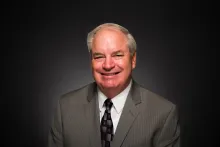
Robin Webber was born in Chicago, Illinois, in 1951, but has lived most of his life in California. He has been a part of the Church of God community since 1963. He attended Ambassador College in Pasadena from 1969-1973. He majored in theology and history.
Mr. Webber's interest remains in the study of history, socio-economics and literature. Over the years, he has offered his services to museums as a docent to share his enthusiasm and passions regarding these areas of expertise.
When time permits, he loves to go mountain biking on nearby ranch land and meet his wife as she hikes toward him.
