
Peter Eddington
This transcript was generated by AI and may contain errors. It is provided to assist those who may not be able to listen to the message.
We've got one verse, but then we're going to look at a second verse. Then I'm going to tell a story. We're going to share the story, a story that happened long ago, and one that is yet to occur in the future in type. Then we'll go back, and at the end, and then we'll read the two verses, and that'll be the message that I bring you today.
Join me if you would. Let's open up our Bibles today and turn to Ecclesiastes 8. In Ecclesiastes 8, and let's understand the words of one of the wisest men that ever lived. Because the sentence, against an evil work, is not executed speedily. Therefore, the heart of the sons of men is fully set in them to do evil. And that's a part of human nature. And then God makes comment through Solomon, and though a sinner does evil a hundred times, and his days are prolonged, yet I surely know that it will be well with those who fear God, who fear before him.
Verse 13, But it will not be well with the wicked, nor will he prolong his days, which are as a shadow, because he does not fear God. Many of us have read this scripture over the years. Many of us have probably used it to encourage others. But when it looks as if God has turned a blind eye, or has not acted speedily, we begin to doubt and our hearts begin to go down.
There's another verse that I'd like to share with you, People of Faith, and it's mentioned over in Revelation 6. In Revelation 6, and let's notice verse 9. Let's understand that the book of Revelation, and or the Apocalypse, that means the unveiling in Greek, which was actually its original name, was and is a book of wisdom. It's written in an apocalyptic style. Allow me to share that with you. For those of you that may not be aware of what apocalyptic style is. That is a common form of writing that occurred between about 200 BC and 200 AD.
It is very figurative. There's a lot of pictures. There's a lot of imagery. And it's normally written to people that have been dispossessed, that then through this literature are given future hope. It's called apocalyptic. You might consider the book of Daniel in that style. We might consider the book of Revelation in that style. With that thought in mind, we see a figuration, as it were, of a scenario that occurs in the future in verse 9. When he opened the fesil, which means during the tribulation, I saw under the altar the souls of those who had been slain for the Word of God and for the testimony which they held.
And they cried with a loud voice saying, How long, O LORD, holy and true, until you judge and avenge our blood on those who dwell on the earth. And that has been a question offered by the saints of God down through the ages. God, where are you? How long is it going to take? Have you forgotten? Will you be smitten by the actions of the pagans and the unbelievers and the carnal people of this earth?
When will you intervene? Well, with these two verses mentioned, I'd like to take us to a story in the book of Daniel to allow us to have confidence and assurance that God has not gone away. He is not simply a first cause. He does choose to intervene in human history. And we pick up that thought in the book of Daniel in chapter five. Join me, if you would, please, in Daniel 5. And we're going to look at a story, but it's more than a story.
It's a guideline, actually, as to what's going to occur in the future in incredible ways. And in Daniel 5, we pick up the story of what is commonly called the handwriting on the wall. Now, sometimes we've asked people, well, have you seen the handwriting on the wall? Well, here's a court, and here are people that literally did see the handwriting on the wall.
And what I want to do is make it even clearer that we can see more than the handwriting on the wall, but understand how it elects to write upon human history and the history that's before us. We pick up the story in Daniel 5 and verse 1. Belshazzar the king made a great feast for a thousand of his lords.
That's a lot of people. And he drank wine in the presence of the thousand. This seems, by connotation, to have been a very special group because it's mentioned twice, thousand and thousand. So these were perhaps his closest associates. And while he tasted the wine, Belshazzar gave the command to bring the gold and the silver vessels, which his father, Nebuchadnezzar, had taken from the temple, which had been in Jerusalem, that the kings and his lords and his wives and his concubines might drink from them.
And then they brought the gold vessels that had been taken from the temple of the house of God, which had been in Jerusalem, and the king and his lords and his wives and his concubines drank from them. And they drank wine and praised the gods of gold and silver, bronze and iron, wood and stone. And in that same hour the fingers of a man appeared. Now, I'm going to leave it right there because what we want to do now with some extra-biblical literature and thought is to kind of fill in the blanks where we are here.
Can we do that, please? Let's understand that Belshazzar, when it says his father was Nebuchadnezzar, that's a terminology. Belshazzar's grandfather actually was Nebuchadnezzar. It's just a term of ancestor. Belshazzar was a co-regent of Babylon. Actually, it was a two-fold reigning scenario between Belshazzar and his own father, Belshazzar. Here we have this scenario that here is this king and he actually goes into the shelves that are in the palace and draws out the trophies of past wars.
Let's understand what is going on here. We pick this story up in extra-biblical literature about this particular night. It comes from Herodotus, the famous Greek historian, and it comes out of his writings called the Persian Wars. What he mentions here, which is interesting, it says that a battle was fought at a short distance from the city, that being Babylon, in which the Babylonians were defeated by the Persian king. That would have been Cyrus. Whereupon they withdrew into their defenses, and here they shut themselves up.
They made light of the siege, having laid in a store for many years in preparation for this attack. Now I think all of us that are in this room, students of the Bible, recognize that Persia ultimately conquered Babylon. But at times we don't really understand the sequence of events. Most of us, as students of the Bible, recognize that Persia and Medea, which was its co-allies, was to the east of Babylon.
In other words, let's put it this way, in today's world, Babylon would have been in Iraq, and Persia would have been in Iran. What many people don't realize is that as things developed, as the Persian Empire began to develop and increase, it didn't just simply go through Babylon on its way to the west. Actually what had happened by 539 BC is most of the world had been already conquered by Persia and by King Cyrus. By this time, Persia stretched basically towards the east, towards what would be Pakistan today, which was then called India, and it already conquered the area of what is now today Turkey and or what was known as Asia Minor.
It actually stretched all the way to Ionia, which is that western tip of Turkey, which is where the Greeks were at that time. So basically, Persia stretched from the Aegean Sea all the way to India. There was one thing that remained. Babylon. The big prize. Babylon was completely surrounded. All other kings, all other systems, all other empires had succumbed to Persia, but not Babylon, because Babylon had been there for seemingly forever. Babylon was known for its great walls. Walls had been put up by this gentleman's grandfather, Nebuchadnezzar. Walls that actually were by Herodotus' account actually went up 90 feet into the air. That'd be like a nine-story building. And that the walls were so broad that six chariots could ride on the top of those walls side by side.
Not only that, but the walls actually went down into the sand, almost 30 to 40 feet. That's a lot of wall. And that wall was the amazement of the ancient world. Nobody thought that they could go up against Babylon. And not only that, but the Babylonians put great security in that wall. Now, may I make a comment as a semi-historian, and one that has read Herodotus? Maybe some of you have, too. Let's put it this way. Sometimes Herodotus didn't know what he was talking about, and sometimes Herodotus was given to exaggeration. But whether he didn't quite get it right, or maybe that wall was a little bit shorter, let's put it this way.
That was still a lot of concrete that blocked in the Babylonians and kept them safe from the rest of the world. Building on the thought that Herodotus shares with us out of the Expositor's commentary, hear this, please. Although the Babylonians were aware of the Medo-Persian threat outside their magnificent and unassailable city, they knew beyond a doubt that no army could penetrate the fortress walls. They were secure in the knowledge that their walls had not been stormed for such a long time.
And actually, Babylon had not succumbed to anybody for ages. It's like it had always been there. Always been there. Babylon! Who could possibly attack it? How could it possibly come down? Well, that's what the Babylonians thought. Now what's going on here? The Babylonians suffered from what you and I and our neighbors in San Diego County suffer from often. And that is that human nature is incredibly delusional. You know, as we often say, is that death and taxes, or we get this thought that death and taxes happens to everybody except us. In other words, death, well that happens to everybody else but us.
Taxes? That happens to everybody else but us. And we in our human nature, we set up to be the exception and not the rule. So rather than face the facts, we enter into Daniel. Here is Belshazzar. He is in a sense delusional. Here's this gigantic army outside those walls. And so what he does, he chooses to bring out these vessels that are holy instruments from the Temple of Old in Jerusalem that Nebuchadnezzar, his grandfather, had taken at the fall of Jerusalem.
Those vessels that had been not necessarily in the holy place but in the holy place. Those items, the vessels, the cups, the gold. He goes to a museum shelf and drags them out. In other words, if you can't deal with the future, let's get lost in the past. If you can't deal with the future, well let's kind of gloat over the victories of old. And that's what he did. He brings these cups out. And incredibly, in a brazen act of sacrilege, here he is with all of these pagans, all of these people in confrontation against God.
He takes those vessels, he's drinking out of them, most likely in some form of drunken orgy, as a festival might be in that society. And it's no more than an unadulterated abomination. There is, and I want to share a thought with you, there is a disdain for the holy things of God, not recognizing that they're holy to God. Now, this story is much bigger than just simply caught in a time freeze in 539 BC. We're going to find this out again in the future. So what happens here now with this sacrilege? Now we go to verse 5. Notice this.
And if you want to be students of the Bible and you're brave enough and you want to circle a little bit in your Bible, I would suggest maybe start circling here a little bit. When I say circle, you might want to circle. If you don't want to circle, that's all right. Just make sure you have a circle in your mind. Notice what it says here. In the same hour the fingers of a man appeared and wrote opposite the lampstand on the plaster of the wall of the king's palace, and the king saw the part of the hand that wrote.
Now it's very important that you begin to pick up the language of Daniel because I'm just going to kind of give you a hint. We're going to see it once again in the book of Revelation. God doesn't change his mind and he acts the same way whether it is in yesterage or whether it's in the future.
In the same hour. Now notice what happens as this handwriting begins to occur. This hand appears. Remember that hand in the Adams family? Remember the thing? Any of you ever see that?
That little hand that just kind of... Here it comes again. All of a sudden there's this hand writing on the wall. Now we kind of read this story. We know about the story, but I wonder if you were at home and all of a sudden you saw a hand begin to write on your living room wallpaper. That would really catch our attention. Notice verse 6. Then the king's countenance changed and his thoughts troubled him so much that the joints of his hips were loosened. There's all sorts of thoughts there. And his knees knocked against each other. It's not only that his teeth were chattering. His knees were chattering. Here was one of the great men of the earth reduced to a shaking bowl of jello, as it were. And then the king cried aloud to bring her to the astrologers, the Chaldeans, the Susaers. And the king spoke, saying to the wise men of Babylon, whoever reads this, and he goes on with the story, that I'm going to reward you. Tell me what it is. Tell me who it's from. Excuse me. Tell me what it's about. Verse 8. All the king's wise men came, but they could not read. They couldn't read it. And so the king was dumbfounded. He didn't know what to do. Verse 9. He continued to be greatly troubled. His countenance was changed, and his lords were astonished. He was, if I can make this comment, he was like the living dead. This guy was drained. Then the queen, because of the words of the king, came forward and said, Oh, king, live forever. You know, whenever you're approaching one of the greatest people on earth and they're troubled, that's always a good thing to say. Oh, king, live forever. Kind of keeps your head on your shoulders at least a moment longer. And notice what she said here. There is a man in your kingdom in whom is the spirit of the holy God. And she reminds them that in the days of Nebuchadnezzar, light and understanding and wisdom, like the wisdom of the gods, was indeed found in him. And Nebuchadnezzar, your father, the king, made him chief of the magicians and the astrologers, the Chaldeans and the soothsayers. Inasmuch as an excellent spirit, knowledge and understanding and the ability to interpret dreams, solving riddles, and explaining enigmas like this was found in this man whom the king named Belteshazzar. So let Daniel be called and he will give the interpretation. Now, it's very interesting. If you'll stay with me, let's look at verse 11. This is like a study today. Verse 11, very important. Even by a lady who most likely was a non-believer, what we might call a pagan, nonetheless she recognized that there was something different about Daniel. And she said, in him is the Spirit of the Holy God. Now, not only that, but let's drop down now to verse 12 and center and focus. Inasmuch as an excellent spirit, something different, a different spirit, one that is excellent. Well, basically what happened once this came, they brought in Daniel. I'm going to paraphrase here for a moment to make this a little shorter. The king basically said, hey Daniel, glad to see you. You tell me what's happening here.
I'm going to make you a rich man. I will give you one-third of the kingdom.
But you know what's interesting is that Daniel did not go there. People of integrity cannot be bought. I'm sure all of us at one time or another, as we were growing up, either our grandparents or our parents taught us a very simple phrase. You take the king's shekel, you have to do the king's bidding. Daniel was of a different kingdom. Even though he was captive, even though in a sense he was imprisoned, even though he had been put on the shelf for years, all of a sudden he is called back on the stage of empire. Not to placate or to soothe a worldly king, but to speak the words of the universal king. And so he noticed then what Daniel says in verse 17. Then Daniel answered and said, let your gifts be for yourself. He says, I'll read it and I'll tell you what it means. Verse 18, O king, the most high God gave Nebuchadnezzar your father a kingdom and majesty, glory, honor. And because of the majesty that he, speaking of God almighty, he gave him the entire world trembled and feared before him and he was basically able to do whatever he wanted to do. Now, if you want to notice something, as students of the Bible, look at verse 18 and let's look at verse 19. If the Bible just mentions something once, that's usually pretty important.
I think we're all in agreement, but when it mentions it twice, that should catch our attention. Notice what he says. It says here, the most high God gave, gave Nebuchadnezzar the kingdom. Now we know the story. We'll share it a little bit. Nebuchadnezzar thought he'd done it all by himself. Nothing happens on this earth, but that God does not allow.
That God has a purpose. That God has a plan for the life of nations, for the life of empires, and yes, for our own individual existence. Then notice again, verse 19, and because of the majesty that he gave him. So we begin to see something here. Here's an older man, Daniel, who has been around, seasoned, and he begins to go back and to remind and to tell the story about Nebuchadnezzar that he gave. But we notice that something happened here. Verse 20, but when his heart was lifted up and his spirit was hardened in his pride, he was deposed from his kingly throne, and they took his glory from him. And then he was driven from the sons of men, and the heart was made like the heart of beasts, and the dwelling was with the wild animals of this world. Keep your hand there. Let's just go back a page, if you would, for a second. Join me, if you would, in Daniel 4, and let's focus our attention on verse 28 to capture the significance of the story.
All of this came upon King Nebuchadnezzar, and at the end of 12 months, a year, he was walking about the royal palace of Babylon, and the king spoke, saying, is not this great Babylon that I have built for a royal dwelling by? My! I'm stretching those pronouns. Pronouns are important.
You might think about that when you're writing a letter, of how many I's and how many my's are in it. That my mighty power, and for the honor of my majesty.
Well, here's King Nebuchadnezzar going around, basically doing what the wicked witch did there, and what was it? Sleeping Beauty? He just needed a mirror. Mirror, mirror on the wall.
Who's the greatest beast of them all? You know, he was just enamored with himself.
I'm so wonderful! Just look around. It's just so obvious. Now, notice, important now in all seriousness, verse 31, while the word was still in the king's mouth, a voice fell from heaven, King Nebuchadnezzar, to you it is spoken, the kingdom has departed from you, and they shall drive you from men, and your dwelling shall be in the beast of the field. Verse 33, then let's drop down. That very hour the word was fulfilled concerning this man. Now, let's begin to develop a scene through what we're sharing with you this morning. We remember, as Belshazzar did his wickedness with the holy cups, bringing them in into the face. It says that in that same hour, the handwriting appeared. Now, we go back and we notice with his grandfather, while he was still speaking. Then we notice again, in that same hour. Interesting what is happening here. Now, let's go back to Daniel 5 and continue to build on this thought. Because Daniel basically tells him, you knew this. You, his son Belshazzar, have not humbled your heart, although you knew all of this. You have that same spiritual disease that not only runs in your family, but runs in all humanity, actually, that Babylon depicts. That which is in confrontation to God. You knew this. You had an opportunity not to do what many years later the historian Santana would say. Those that refuse to learn the lessons of history will repeat them. And here we go. And you have lifted yourself up against the Lord of heaven. They brought these vessels of the house before you, you and all that is in your household. And you dishonored them. And then drop down to the bottom of verse 23, which do not see or hear or know you're worshiping gods that are just made out of earthly material.
And the God who holds your breath in his hand and owns all your ways, you have not glorified.
This is an abonition that is up close and personal. And then the fingers of the hand were sent from him and the writing was written. And this is the inscription that was written, Many, many, Tekel, Eufarson. Now, I'm not sure what happened there. It says that the other wise men could not read it. Many, many Tekel Eufarson is basically out of the Aramaic language. The Aramaic language was the Langua Franca of its day, which was basically spoken throughout all of the Middle East area. Actually, Aramaic is what Jesus himself spoke. It was the common language of that day.
I will take it at scriptural value. That's always first that they didn't understand it. And or, perchance, they looked at it. They didn't understand it. And or they were just scared to share what the meaning is. Let's look at verse 25. Many, many, Tekel, Eufarson. Just four words. This is the interpretation of each word. Number one is many. God has numbered your kingdom, finished it.
Now, it's interesting for a fact that many is mentioned twice. Like I've said so often, if God says something once, he should stand up and take notice. Well, he also does this with the non-believers as well. He repeats this twice for effect. God has numbered your kingdom. You are not alone. God is not only a first cause. He is the great disposer of events as well. He is not an absentee cosmic landlord that wound up the universe, started the earth in the beginning. No!
God continues to be involved in the kingdoms of men. It is His glory and it's His honor to be able to do so. Tekel, you have been weighed in the balances.
You've come up short. You have been found wanting. Verse 28, Peres, your kingdom has been divided, it's been given to the maids and to the Persians.
You thought you were secure in your walls? You thought you could hide behind them?
You thought that you could thumb your nose at me by using the sacred vessels that had honored me for hundreds and hundreds of years? I'm just going to turn my back on that. I'm not going to notice that. Oh yes, just like in Ecclesiastes, you think you can go on and on and on? Or my people can say that they just go on and on and on? It doesn't seem as if God's going to intervene, that God's not going to act. Well, guess what? Now is the time. Then Belshazzar gave the command and they clothed Daniel with purple, put a chain of gold around his neck, made a proclamation concerning him that he should be the third ruler in the kingdom. Now, it's very interesting when you think about the aspect of scales. It is of note that being weighed in the balance was a terminology that was very common in the world of antiquity. The concept of fixed numbers and or measurements assigned to life circumstances was a very known manner of communication. Join me if you would, just for a moment, to show this to you out of your Bible. Join me in Job. You know Job was written about 3,500 years ago, and it's interesting. That's the oldest piece of literature that we have. So, it kind of goes right back into the times of ancient Egypt. Notice what it says in Job 6 and verse 2 to kind of illustrate this. Job 6 and verse 2. Oh, Job speaking, oh, that my grief were fully weighed and that my calamity laid with it on the scales. So, you gain that sense of how attitudes or life scenarios were actually, in a sense, figuratively or literally put on scales. It's interesting that in ancient Egypt there are murals that depict the dead being set before scales to be measured. What is kind of interesting when you think of this scenario of the handwriting on the wall, and as this is being interpreted, basically what Daniel is telling Belshazzar is simply this. You have been weighed in the balance. You have been found wanting. You are basically living, but you are dead. Your kingdom is going to be departing from you. You, sir, are the living dead. You're a zombie on a throne. Get ready to meet your judgment. Notice what happens in verse 30. Let's drop down again. Notice again to stay at point. That very night Belshazzar, king of the Chaldeans, was slain. What I want to share with you is begin to see how God operates, and sometimes we can think that this goes on and on and on. Like the saints in Revelation, you say, oh Lord, how long? How long? How long? And then to recognize that when God intervenes, it suddenly, even when we have obstacles like the walls of Babylon. So we begin to see a sequence of how God does act. Now, where does this take us then, friends, into the future? Because we've shared a story, but the story has legs that actually moves into the future. It'll be the same cast of characters. Number one, there'll be an Almighty God. Number two, there will be a worldly ruler. And number three, there will be an end-time Babylon. Join me if you would. Come over to the book of Revelation, and let's pick up the thought here in Revelation 13.
In Revelation 13, and let's begin in verse 1. John, speaking in that sense in the Spirit. I stood on the sand of the sea, and I saw a beast rising up out of the sea. That's very interesting when you recognize that long ago that Nebuchadnezzar was defined as being given over to living the life of a beast. And it says that it had seven heads, ten horns, and on the horns ten crowns, and on a blasphemous name. So this beast is also associated with blasphemy. Blasphemy is that which is in confrontation to God. And now the beast which I saw was like a leopard, and his feet were like the feet of the bear, and his mouth like the mouth of the lion. And the dragon gave him his power, his throne, and great authority. Always very important for those of you that are just becoming students of the Bible, that sometimes what happens is our vision gets locked onto that which is happening here below. We just kind of get trapped like a goldfish in a goldfish bowl, looking at the world and looking at the headlines around us, rather than recognizing that there's a spiritual world that we need to really be aware of. That there is a confrontation between God and one that is adverse to him called Satan or the dragon. While all of this is occurring in the book of Revelation, never forget that while the world in the future is going to be focusing on a beast, it is Satan and it is the dragon that is actually in charge of this. Notice the bottom of verse 3. And all the world marveled and followed the beast.
So they worshiped the dragon. Why? Because they followed the beast that Satan has set up, who gave authority to the beast. And they worshiped the beast, saying, notice this now, it's come to point, who is like the beast? Who is able to make war against him?
So they're kind of like, are the people of old just looking at those walls as they went up in Babylon? Wow! Double wow! And so if you can't beat them, join them.
Now that's not what the Persians did because we know the rest of the story. And that very night when the kingdom was taken from Belshazzar, the Persians didn't go over the wall. They went under the wall. The water was lowered. They went through the river, chest deep, came up on the other side. They didn't like that Greek idea with the horse. That wasn't the way to get into the city.
They went under and then one night Babylon was taken. Now we notice here who is like the beast and who is able. So it's going to be the system again that it's going to seem like this system that is one more time going to emerge on this earth. A system that is actually seated all the way back to the Garden of Eden when Satan began to inspire Adam and Eve to be in confrontation to the ways of God. It's going to find its finality here. And what is interesting, join me if you would in Revelation 17 because the word beast does not only come up but the word Babylon.
Beast and Babylon go hand in hand and heart and heart. Why do I say that? Because they have the same heart. It's a heart that is, frankly, brethren, it's a heart that is opposed to that which we are for. We have already, as Christians, surrendered ourselves to the kingdom of God the Father and Jesus Christ that Mr. Luhan brought out in the opening message. Prophecy has already occurred in us. Christ has already landed in our lives on the mountain of our heart. We've surrendered.
We want to be with you, Father. We want to follow Jesus Christ. That kingdom is in that sense, not in its fullness, but in its beginnings, is in our heart, and we have surrendered. Thus, you and I are opposed to this confrontational system that continues throughout human history. A system, then, that is shown in chapter 17, notice what it says, then one of the seven angels came down, and it says at the bottom of that, I will show you the judgment of the great harlot who sits on many waters. This harlot is one who commits fornication with the kings and the inhabitants of the earth and is made drunk with the wine of a fornication. Again, you have this aspect of, in a sense, spiritual orgy or drunkenness. And so, he carried me away and showed me this woman, verse 4, the woman, which is biblical language for a church, both the false church and the elect of God, two different women. The woman was arrayed in purple and scarlet and adorned with golden precious stones and pearls. And notice in verse 4, interesting, after having read the book of Daniel, and having in her hand a golden cup full of abominations and the filthiness of her fornication.
It is interesting that, in a sense, this system will have a veneer of religion.
It will have holy instruments that will be defined as holy, but there is an abomination that is within. And there is filthiness within. It's not the cup. It's the spirit of the holder of that cup. And what is in the cup? Then notice, verse 5, God defines this system, this religious system, mystery Babylon the Great, the mother of harlots and the abomination of the earth. Beast, Babylon, golden cup.
Where do we take it from there, then? As hard as it is for us to imagine, and sometimes you think that this might be a far-fetched tale, can you imagine that if you told the average person at 6th and Broadway in Los... not Los Angeles, excuse me, wrong town, 6th and Broadway...
I do know where 6th and Broadway is in San Diego, Wharton Square area, okay, is that...
And you got talking to the man on the street, and you go up to him and say, hello, I'm taking an interview today, and we're taking a poll. And you just started talking to them, and you said, how many of you think that the world is actually going to turn its sights and its guns on the returning Jesus Christ? Now, realize that as you're doing your man on the street, kind of, you know, going back and forth, you're going to be talking to many people that are of a religious persuasion, and you're going to say, can you show me in the Bible where this world is actually going to defy the second coming of the Son of Man? Oh, no, no, no, no, no, no, no, no, that can't be. That's silly. I've never seen that before in my Bible. Join me, if you would. Let's go to Revelation 19, verse 19. Notice what it says here about a future event that is going to occur. And I saw the beast. Remember the beast and Babylon is not buried underneath the sands of the desert in Iraq. This system is not simply about a city that has now lost to time. This is talking about an attitude. This is talking about citizens of a spiritual kingdom, a spiritual kingdom that is diseased, one that has not gone away, one that is still in confrontation to God, one that has the heart of a beast.
And I saw the beast, verse 19, the kings of the earth, and notice their armies gathered together to make war against him who sat on the horse and against his army. When it talks about the one that sits on the horse, this is Jesus Christ. And you can do your own study in the book of Revelation and recognize that Christ is shown to be coming back on a horse in the apocalyptic language that is used. He is the one in white, on the white horse, what we classically say in America of the good guy coming over the hill of the heavens to rescue the earth from itself. And yet, it says here that the beast and the kings of the earth. So this is not just a secluded act, because everybody says, whoa, whoa, who is like the beast? What is like those walls?
Who has the strength? Therefore, we will join him. But its destruction is going to be just as swift as Babylon of old. Join me in Revelation 18. I want to show you a few verses here. Interesting. In Revelation 18 and verse 9, the kings of the earth who committed fornication and lived luxuriously with her will weep and lament for her when they see smoke of her burning.
Speaking of Babylon, standing at a distance for fear of for torment, saying, alas, alas, notice that great city, Babylon, that mighty city. Now, notice the echo of yesteryear into the future for in one hour your judgment has come. Have we heard that before?
In one hour your judgment has come. Drop down to verse 17, if you would, please.
Again, remember what I've said that when God says something once, we stand up and take notice. Yes, sir. But when it's twice or thrice, God is trying to reach deep into the beyond the skin of our heart to give us encouragement. Let's understand if we can talk about this for a moment. The book of Revelation being written in apocalyptic style is a book, not only of facts and figures, it's not only a book that demands wisdom that comes from above, it's a book of encouragement.
This was, in a sense, being written for real people worshiping a real God with real problems around 90 AD because they were facing a Domitian of the Flavian line that was persecuting them.
And to them, it was seeming like, where are you? Where are you? When are you going to intervene, God? This is always, how long, O Lord? This continues to encourage us because, if I took a straw poll here right now and we said, how many of you would love to see Jesus Christ land today? All of our hands would most likely go up. But God and His wisdom continues, and He is not only the creator of time, but He's the master of timing. But when it comes, and it's going to seem like so long, it's going to be just like that. And no matter how strong, no matter how great, no matter what is happening here on this earth, the one that is beyond time and space, the God of the heavens is going to crush His opponents. Verse 17, For in one hour such great riches come to nothing. Again, drop down to verse 19, Elast, Elast, in the middle of the verse, that great city, in which all who had ships on the sea became rich by her well, notice, for in one hour she is made desolate. Interesting.
The encouragement that God gives to us as the people of God is that, no, we do not know the day or the hour. That's only reserved to God. There are things like we'd like to do with our own hands, or let's get it over right now, but as Christians we've got to leave that to God.
But when He does intervene, it's going to come so quickly. Let's learn a few lessons off of this.
What can we take home with us today from this story? Number one, we do need to recognize that, friends, there is an hour of judgment upon this world. It's just not going to go on and on and on.
If you want to do some homework this afternoon, can I give you some homework as an old teacher? Go to Acts 17 and read the story of Paul on Mars Hill, otherwise known as the Areopagus.
It is that Paul, in dealing with the Hellenic community, tells this community that judgment is upon them, and by the righteous judge being Jesus Christ. That was incredibly fascinating to the Hellenic mind because in their eschatology, in their scope of the future, there was no thought of judgment of their actions. Here was the Hellenic community that was basically very humanistic.
Paul gets up in the midst of them and says, by the way, there is going to come a day of accounting. You are being weighed in the balance. You do not have to be found wanting. There has come one to live his life in you. So we need to recognize that. Sometimes, though, you know that, I know that. In modern-day America, people are saying, this is what I'm going to do. I'm going to do this. I don't care what anybody else thinks. I'm my own person. This is my own body. I'm going to, for those of you out of the 60s, I'm going to do my own thing.
And that's fine. And maybe you don't think there's a day of judgment. If you don't think there's a day of judgment, I have a suggestion. Just ask Belshazzar. He'll tell you a different story. Point number two. Let's appreciate that there is judgment on the household of God. There is judgment on the household of God. Isn't that what the words of Peter tell us in 1 Peter 4 about verse 17?
Not only this world is being weighed, but we are in that sense being weighed as well, as to God's grace and revelation in us, as to our response to that and what we'll do with it.
God is watching. And sometimes we say, well, maybe God has forgotten me. Sometimes you say, well, I just have not been used for years and years, months and months, days and days, or it seems like forever and nobody is noticing. We must always be prepared to be used. Daniel was for perhaps decades put into mothballs. I think we understand mothballs in San Diego. San Diego Harbor with the Navy where we put ships and decommissioned them, and we we call it being put into mothballs. Just go down to the southern portion of San Diego Harbor. You'll see ships that have been decommissioned. It doesn't look like they're ever going to be used again.
Going to be put into metal and sent over to Japan. Daniel could have felt that way, but he didn't.
We must, like Daniel, understand that judgment remains on us. Not a judgment to fear, but a judgment of faith that God is on our side. Number three. Because of that, let's understand that you and I possess, by God's grace, the same excellent spirit, the same spirit of the most high God that Daniel had. We are not alone. God gives us that spirit. It produces light in the darkness. It gives wisdom in the confusion of this world. It allows us to understand the future. We may not totally comprehend it, but God gives us enough to consider, perhaps even to help others to measure their ways, to mend their ways, to consider their ways. Number four. We talked about those walls earlier. The size of the power that is yet to come that Revelation talks about. Friends, just a note of encouragement. This is what God wants us to center on on the Sabbath day. It's not the size of the walls. It's the size of our heart. It's not the size of the walls. It's the size of the heart that God is developing inside of us. We need to understand how to measure like God measures. Point number five, as we begin to conclude. Let's appreciate that here was a man like Daniel, and he got up, up close and personal, and took the beast of yester-age on one-on-one on the stage of empire. And he said, you have been found wanting. You have been measured, and your kingdom is going to be taken from you. Join me if you wouldn't aim as three. Let's understand that men and servants of God like that are something that we can look forward to in this day and in this age. We need to recognize that God has not changed his ways. He wants us to understand his ways in the book of Amos 3 and verse 7. I want to read this to you as a note of encouragement. Let's notice what it says here. Surely the Lord God does nothing unless it reveals his secret to the servants, the prophets.
Prophets are servants of God. And while we may not understand everything, and while we can understand the general outline of world history, we can understand the promises of God, we can understand that God is going to intervene. We also recognize that from age to age and time to time, God is going to raise up individuals to cry aloud, spare not, and also to offer his servants wisdom and enlightenment and to know what is coming. I want to share something with you. I first became associated with this verse almost 44 years ago. First time I ever had it read in services. It's one that I put in my pocket and I bring out many a time, friends. It gives me great encouragement as we move through a world of darkness. So I've given you a story. Let's go back, if you would, please. Let's go back to where we began Ecclesiastes 9.
Book of Wisdom.
Let's say Ecclesiastes 8, pardon me. Verse 11. Because sentence against an evil work is not executed speedily, therefore the hearts of the sons of men is fully saddened them to do evil. And though a sinner does evil a hundred times in his days are prolonged, yet I surely know that it will be well with those, that you and me, brethren, those who fear God and who fear before Him. But it will not be well with the wicked, nor will he prolong his days which are as a shadow, because he does not fear God. Revelation 6. Pick up the thought in verse 9. In that time of tribulation of the future, that fist seal, I saw under the altars of the soul those who had been slain for the word of God, and for the testimony of which they held, and they cried with a loud voice, saying, How long, O LORD, holy and true, until you judge, avenge our blood on those who dwell on the earth? I do not know the day or the hour, friends, but I do know this, that when it comes, it will just take your breath away, because that which has taken 6,000 years of human history to build up is obviously going to come down, just like the walls of Jericho. It's going to come down, and if we are building up God's Spirit in us, we're going to see that. We're going to be there. We're going to be a part of the other side. You and I may actually be that army that comes with Jesus Christ coming down from the heavens. What an exciting thought, and it's just noon on the Sabbath day. I'll let you continue to consider that thought as you have the afternoon to contemplate what a tremendous and wonderful God we have the privilege of serving.
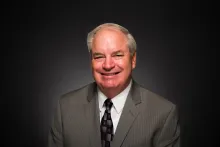
Robin Webber was born in Chicago, Illinois, in 1951, but has lived most of his life in California. He has been a part of the Church of God community since 1963. He attended Ambassador College in Pasadena from 1969-1973. He majored in theology and history.
Mr. Webber's interest remains in the study of history, socio-economics and literature. Over the years, he has offered his services to museums as a docent to share his enthusiasm and passions regarding these areas of expertise.
When time permits, he loves to go mountain biking on nearby ranch land and meet his wife as she hikes toward him.
