

David Mills
I walked into the Feast of Tabernacles for the first time, and a voice boomed across the room: "Why are we here?" It was a simple question, but it hit hard. 11,000 people gathered in one place — but do they know the real reason they're there? This message unpacks that question through three words that shape everything: desire, relief, and rejoice. Why do you desire to go? You might crave it like chocolate-dipped cashews — a deep, genuine want for something good. Or you might need relief — escape from the pressures of home, connection with people who understand you. Or you might be ready to rejoice, to celebrate alongside thousands of God's people from around the world. But there's something deeper happening. The Feast of Tabernacles isn't just a gathering. It's a foretaste — a week-long taste of what the kingdom of God will feel like. God doesn't command rejoicing lightly. He knows what it means to rejoice: He rejoices over His people like a bridegroom rejoices in his bride. So what's keeping you from tasting it? What keeps you from saying yes?
As of a week ago, at the Feast of Trumpets, we launched into the fall holy day season. Now we just have a short time before the Day of Atonement, and then a few days later we're going to jump into the Feast of Tabernacles.
A title for today's message is "Desire to Keep the Feast."
That was many years ago when I started keeping the biblical feast. I tried to figure it out — it was all new to me, 1973. And I asked, what is the order of these days and what's the meaning of each one? And I remember going to my first Feast of Tabernacles. And I heard this booming voice that said, "Why are we here?" I thought, well, that's silly. There's 11 or 12,000 people here in this huge meeting hall. And if they don't know why they're here, what are they here for?
But this is a theme throughout the Bible regarding the feasts of God. And it answers the question as we do that research as to why we're here.
And I want to approach this question with a different emphasis than perhaps we've heard in the past. And so there are three remarkable words that we can use to explain why we're here at a feast or why we will be at the Feast of Tabernacles coming up in a week. And those three words are — in other words, what makes us do things — the three words are desire, relief, and rejoice. Desire, relief, and rejoice.
So why do we look forward to the Feast of Tabernacles? Is it desire, relief, or to rejoice?
If we turn to Deuteronomy 16, verses 13 through 15, it talks about observing the Feast of Tabernacles. And then in verse 14 it says, "You shall rejoice." Well, that's a kind of interesting thing. You're instructed to rejoice. Doesn't that come just naturally as a feeling? But in other words, make arrangements so that you can rejoice, so that you shall rejoice.
And some of the times when we go to the feast, we're motivated by desire. Which is an intense feeling of need or want for something. I looked it up and in the King James and New King James versions, there are 190 verses that have the word "desire" in it. So we'll be here a while today, right? Actually, I'm not going to use them all.
But desire is an intense feeling of need or want for something. An example would be food cravings — an example of a common desire. I desire chocolate-dipped cashews. And I have a particularly strong craving for those chocolate-dipped cashews, so I look for a store that sells them. And then I search in the store until I can find them. And if I can't find the chocolate-dipped cashews in the store, I'm disappointed.
However, when I locate the chocolate-dipped cashews in the store, I'm relieved because I find those things on the shelf and I know my desire will soon be satisfied. And then I place this chocolate-dipped cashew in my mouth. And I bite down. And there's a pleasant feeling of satisfaction. And that's when I can rejoice that I have fulfilled my desire for a delectable delight.
So sometimes we're motivated by desire. And there's something that we really want very much. And there's also a desire to avoid a bad thing. It isn't always to get something that's good. And that can motivate us as well. The desire may be a little or maybe big, but desire can power our actions.
Sometimes we're motivated by relief. We're simply glad to be out of a difficult situation. We're pleased to be relieved from a problem or responsibility that we really didn't want. In that sense, the Feast of Tabernacles can be a relief for people who are happy to get out of a personal situation and are able to gather together with church brethren for a week.
Now, Winston Churchill, many years ago — who was at the time a future Prime Minister of Great Britain — when he was a young soldier during the Boer Wars in South Africa. Now the Boer Wars involved Great Britain and South Africa from 1880 to 1902. And as a young soldier, Winston Churchill, in his biography, wrote about his wartime experiences.
And the context of the story was that as a young soldier he was running away from a battle in an attempt to save his life. Churchill later made this observation, and I'm going to paraphrase his comments: "There's nothing quite so stimulating or thrilling as when the enemy has done his best to kill you, but missed."
Well, they missed him, okay? He felt a lot of relief. He was motivated by a desire to stay alive. He was relieved to have escaped the battle with his life. And then later he rejoiced in the wisdom that he gained from the experience.
We can ask ourselves, what keeps us from speeding as we drive down the highway — going over the speed limit when we drive a car? Are we motivated to follow the law? Is that our desire? Or is it the fear of the consequences of getting caught if we drive too fast? Our fear of bad consequences can be a motivating factor for not driving over the speed limit. But is the motivating factor that causes us to drive within the limit that we want to be safe and we don't want anything bad to happen to us or to anyone else either?
So what motivates us each day? Especially now, what motivates us to attend the Feast of Tabernacles? It's coming on soon. And in Deuteronomy 16, we looked at verses 13 through 15. It talks about observing the feast for a week and keeping that as a sacred feast to the Lord in a place that He chooses. And there are a number of places — as we read, 55 places of regular sites, I don't know about satellite sites — around the world.
Now, there's a prophecy that you will likely hear about the Feast of Tabernacles during the feast. And that's in Isaiah 2, starting in verse 2. Isaiah 2, verses 2 through 4: "Now it shall come to pass in the latter days that the mountain of the Lord's house, meaning the government of God, shall be established on the top of the mountains, meaning above all other governments, and shall be exalted above the hills. And all nations shall flow to it. Many people shall come and say, 'Come, let us go up to the mountain of the Lord, to the house of the God of Jacob. He will teach us His ways, and we shall walk in His paths, for out of Zion shall go forth the law, and the word of the Lord from Jerusalem.'"
Now, I don't know about you, but when I hear the word "flow," it says all nations shall flow to it. I think of water flowing downhill. But in this case, the flowing goes up the mountain. When God's kingdom is set up on earth, it's symbolized by being on the mountaintop. And people will flow towards God's government because they want to. They have a desire to live a happier way of life.
Let's turn to Hebrews 11. Hebrews 11:16. "But now they desire a better, that is, a heavenly country. Therefore, God is not ashamed to be called their God, for he has prepared a city for them."
The Feast of Tabernacles pictures a time and a place when we will have an opportunity, as it pictures, for the coming kingdom of God. So for this short period of time, it will allow us to get just a little — what we call a foretaste — of the kingdom.
But you know, not everybody keeps the feast. You may have noticed that. Okay, there are people who do not desire to come to the feast and worship God. In Zechariah 14, I have in my notes verses 16 through 19. I'll just pull a comment out. But what happens to Egypt if they do not keep the Feast of Tabernacles at that time?
Zechariah 14, verse 16: "It shall come to pass that everyone who is left of all the nations which came against Jerusalem shall go up from year to year to worship the King, the Lord of hosts, and keep the Feast of Tabernacles. And it shall be that whichever of the families of the earth do not come up to Jerusalem to worship the King, the Lord of hosts, on them there will be no rain."
Well, we know what no rain is like, having gone through a drought this summer.
Verse 18: "If the family of Egypt will not come up and enter in, they shall have no rain. They shall receive the plague with which the Lord strikes the nations who do not come up to keep the Feast of Tabernacles. This shall be the punishment of Egypt and the punishment of all the nations that do not come to keep the Feast of Tabernacles."
This is a prophecy in the future. And countries like Egypt have to learn the hard way — no rain, because they didn't come up to celebrate the feast. And of course, in the case of Egypt coming to worship God, eventually they will, but it's a grudging choice, okay?
Well, I suppose if we have to, since we're all suffering greatly from a drought, their motivation will be relief from the lack of blessings. But it's better to worship God and keep the feasts of God with enthusiastic desire rather than to come to God with grudging acceptance as the only way to obtain relief.
Let's turn to 1 Peter 2, verse 2. There are benefits when we go to the Feast of Tabernacles. And 1 Peter 2:2 reads: "As newborn babes desire the pure milk of the Word, that you may grow thereby."
So at the feast we will be fed milk — meaning that's healthy for us — where we get knowledge and information and inspiration.
Now, it was ten years ago we were at the feast in Estonia, Eastern Europe, and it was a small feast site. We had maybe 50 people. And there were — oh no, that one was a little bit bigger there. That went all the way up to 80-some people, I think, in 2016. But there were three sets of newlywed couples there that year, which is unusual for a small feast site.
In Isaiah 62, verse 5: "As the bridegroom rejoices over the bride, so your God will rejoice over you." This is a very celebratory time to come to the feast because God rejoices over those who come there. It's a joyful time.
Now, sometimes it's said that it only takes two people to have a wedding — a willing bride and an anxious mother. If you have a willing bride and an anxious mother, there's going to be a wedding because men are just easy. Just flash a little ankle and bat the eyelashes and men just fall right in line, like the proverb says, like an ox to slaughter.
But as Isaiah 62:5 says, a bridegroom rejoices in the delight that he has in finding a new bride. Now, the bride also rejoices on her wedding day, and the bride spends time making herself ready for the marriage. Similarly, so does the church prepare itself for the return of Jesus Christ.
Now, the wedding party and the hosts and the guests, they're all excited over the forthcoming wedding. So it is when God rejoices over us as He welcomes us into His family in the kingdom of God.
Well, God has provided a way for us to be prepared to keep the feast, and we read this preparation in Deuteronomy 14, starting in verse 22. In Deuteronomy 14:22, we read this instruction that helps us be prepared: "You shall truly tithe of the increase of your grain that the field produces year by year. And you shall eat before the Lord your God in the place where He chooses to make His name abide — the tithe of your grain and of your new wine, and of your oil, the firstborn of your herds, and of your flocks — that you may learn to fear the Lord your God always."
Another word for fear would be respect.
Verse 24: "But if the journey is too long for you, so that you are not able to carry the tithe, or if the place where the Lord your God chooses to put His name is too far from you — when your Lord, the Lord your God, has blessed you — then you shall exchange it for money, take the money in your hand, go to the place which the Lord your God chooses."
And here's the real fun part. Verse 26: "And then you shall spend that money for whatever your heart desires — for oxen and sheep, meaning beef and lamb — for wine or similar drink, for whatever your heart desires, you shall eat there before the Lord your God, and you shall rejoice, you and your household."
So rejoicing is something that we look forward to. We desire then a good thing.
Now, we can read in Acts 18:21 about the Apostle Paul. He heartily desired to keep the spring feast of unleavened bread in Acts 18:21. And Paul said to his congregation: "I must by all means keep this coming feast in Jerusalem, but I will return again to you, God willing." And he sailed from Ephesus.
It was his desire by all — in other words, I really, really want to go there to Jerusalem.
Now, and of course, earlier we read about taking your tithe, putting your tithe into money and going where God directs. Well, I got a letter from Cincinnati that says go to Scotland. On my dime, of course. So we went to the bank and exchanged dollars for pounds sterling in Scotland because you've got to have that so you're all ready to go when you get there. Credit cards will work too, but they don't cover everything. So we had an overnight in Amsterdam, and that's not pounds sterling — that would be Euros. So that means three different currencies to take to be prepared to go along the way.
And so being prepared. But if so, that's just being prepared, and God provides a way to do that.
If we read in Psalm 34, verse 8, about how our desire to please God is likened to our sense of taste. Psalm 34:8: "O taste and see the Lord is good. Blessed is the man who trusts in Him." In other words, if you never go to the feast and sample it and you don't try it, how will you know that the taste is good? I mean, it's even better than chocolate-dipped cashews, I can tell you that.
In Proverbs 16, verse 24, this reinforces this: "Pleasant words are like a honeycomb, sweetness to the soul, and health to the bones." Isn't that nice? Warm, comforting words? Or do you prefer those hostile, irritating ones? But usually we hear the warm, comforting ones where people are rejoicing together at the feast.
Now, at the feast, we want to partake of things that we particularly enjoy. But sometimes we come across things that aren't pleasant to the taste. We have a biblical example of that in Exodus 15, verses 23 through 25.
And this is the context. Moses and the children of Israel were coming out of Egypt. They crossed the Red Sea and they went out into the wilderness. And they didn't have anything to drink. Now you can make it for about three days without drinking, and then you're going to tip over. So they came across a place called Mara, and they could not drink the waters of Mara because they were bitter.
Ever taste something really bitter? Ungood? And the people complained, "What should we drink?" And Moses cried to the Lord, and the Lord showed him a tree, and he cast it into the waters. The waters were made sweet. Much more fun to have something that's pleasant to the taste — that's sweet and welcoming.
So the people of Israel desired a good thing — good water. And they got it.
And if we turn then to Revelation 22, verse 17: "And the Spirit and the bride say, 'Come,' and let him who hears say, 'Come.' And let him who thirsts come, whoever desires, let him take the water of life freely."
And that's what we'll be hearing about at the Feast of Tabernacles. We'll be able to drink in the truths of God — the messages that will have been prepared while we're rejoicing together. And these people will be from around the world. We don't know who will meet — from where — and whatever feast site that we'll be at.
So, some of us heartily desire to go to the feast because we want to taste and see the Lord is good. Some of us are greatly relieved to go to the Feast of Tabernacles because being gone for a week gets us away from the life circumstances at home.
But once we're at the Feast of Tabernacles, we can embrace the opportunity to rejoice with the many others of God's people from around the world who also desire to keep the feast.
And as we look forward then to the annual holy days that picture the coming kingdom of God to earth, let us welcome the days with enthusiastic desire, a sense of relief, and the happiness of rejoicing.
Desire, relief, rejoice.
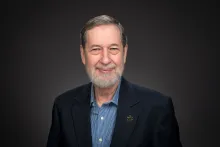
Tim Martens is the pastor of the Northwest Arkansas and Springfield Missouri congregations. Prior to becoming a pastor, he has had successful careers in business and education as well as being a newspaper columnist.
