

David Mills
This transcript was generated by AI and may contain errors. It is provided to assist those who may not be able to listen to the message.
Good afternoon, everyone, and very good to see you all. I hope that you're having a good Sabbath day, that you've had a good week, a good productive week. We welcome you here this afternoon.
Just a couple of things I might mention before getting into the sermon. We were able to have 74 visitors that came to the Cincinnati public appearance campaign this past Wednesday night.
We're very happy about that. Mr. Gary Petty gave the presentation on Why Were You Born. Steve Myers acted as the host, and the guests were very, very attentive. One said, very inspiring, surprisingly well done, gave me a lot to think about. And another said, this is a lot to think about, amazing what's in the Bible. So we're very happy for the results of the public appearance campaign there this past Wednesday night. Mr. Holliday wrote that Mr. Petty did a masterful job last night with the Why Were You Born presentation. Several visitors up front were nodding their head in agreement with the major points he was addressing. And Mr. Holliday goes on in his right up to say that we were explaining about man's destiny, and it is the pearl of great price.
God has revealed that answer to the question, why am I here? Why was I born? And we can certainly be very thankful about that. One other comment is that we are very, very happy that our president is coming to visit us for the Feast of Trumpets, which is less than two weeks away. Let's be ready to welcome him and his wife to our area, and we'll have all four churches there, Roanoke, Greensboro, Raleigh, and Jacksonville. So it's going to be a very, very exciting day. That's on Thursday, September the 25th. Now to the sermon. Are you ready? Ready for the Fall Holy Days.
You know, it doesn't take long to see that we in the United Church of God do things different than most churches. Most churches go to church, of course, have their services on Sunday, and they also keep the holidays of common holidays, traditional holidays of the world, such as Christmas, Easter, Halloween, and Valentines. But instead, we come to church on Saturday, the seventh day of the week, and we rest from our work and we worship God. And we come to services and fellowship. We hear a sermon, and we show reverence and respect and great honor to our God as we do so. And then we keep the seven annual Holy Days. That sets us apart as very different.
Most people believe these are ceremonial. They believe they are done away. We don't, Christians don't need to keep these today. They are steeped, the world's churches, in the non-biblical days that have their origin in ancient false religious worship, such as Christmas and Easter. But Jesus never kept Christmas and Easter, and neither did the early New Testament church.
Jesus Christ and the early church kept the biblical Holy Days. It's very easy to see, Passover, Feast of Unleavened Bread, Pentecost, Trumpets, Day of Atonement, Feast of Tabernacles, and Last Great Day. And we follow their teaching and their example today. You can read in the Gospels about the example of Jesus Christ. You can also read in the book of Acts and the letters of the Apostle Paul about the early church keeping Passover, keeping the Feast of Unleavened Bread, and keeping Pentecost and the Day of Atonement. Why, the church itself, the church Jesus said He would build, began on a Holy Day, on Pentecost, in Acts chapter 2 and verse 1.
So we follow their teaching and their example today, not the custom and tradition of a world that is deceived and does not really understand even that they are deceived yet, but one day they will. Earlier in the year, we kept Passover, the Feast of Unleavened Bread, and Pentecost.
And now we come to the Fall Holy Days. I want us to turn our attention today to the days that we will be keeping just ahead. The Feast of Trumpets on September the 25th, less than two weeks away, the Day of Atonement on October the 4th, three weeks from today, will be the fast day. And the Feast of Tabernacles on the Last Great Day, October 9 through 16. The title of the sermon today is, Oh Come, Let Us Worship and Bow Down. It's time for us to come and worship and bow down as we keep God's Fall Festivals. God is the host of His festivals. How are we to come before Him in a manner that is pleasing to Him? I want us to think about that this afternoon. What kind of heart and attitude must we have? How can we keep these days in spirit and in truth? We read in John 4 that those who worship God must worship in spirit and in truth. How can we grow at the Fall Holy Days? Let's begin by noticing a scripture that shows that a Holy Day will be required of people, and by extension we can certainly say all the Holy Days will be kept by people when Jesus Christ sets up God's Kingdom on the earth. Let's go to Zechariah chapter 14. This, as many of us will remember and know, is a chapter showing the powerful and dramatic Second Coming of Jesus Christ. What an event this is talking about! We ourselves might have heard it so many times we maybe need to back away from it and realize what a turning point this will be in human history. When mankind, who has been allowed to be on his own, nations have been free to develop their own governments and their own society and their own educational system and their own way of life.
And look at today what it has led us to. We're in trouble today. The world is in trouble today. It is very obvious. We're beginning to see the results of one of our articles a few years ago in the Good News magazine was what would a world or the world be like without the United States?
The United States has really been retreating on the world scene and we're beginning to see nations stepping forward and what a troubled world it is becoming. Well, all this is prophesied in the Bible and Jesus foretold of a time of great tribulation, a time when mankind would even come to the point that he would be ready to destroy human life on this planet. Well, in Zechariah 14, God is not going to let that happen. The Good News, he's going to step in. Jesus Christ is going to come back and beginning in verse 1, the day of the Lord is coming and your spoil will be divided in your midst. I will gather all nations to battle against Jerusalem. In verse 3, the Lord will go forth and fight against those nations. So Jesus Christ returns fighting against the nations which are gathered and are really about ready to destroy human life on the earth. In verse 4, in that day, his feet will stand on the Mount of Olives. Brethren, interesting, that's the very same spot where his feet left the earth almost 2,000 years ago. He ascended to heaven from the Mount of Olives and he's been there at the right hand of God ever since, serving as high priest day and night to all of those people that God has been working with for almost 2,000 years.
Building that church, he said he would build, and preparing the people to reign with Christ. Well, he's going to come back to that very same spot, the very same place where his feet left. He's going to land down or light down on the Mount of Olives. And notice who's going to be with him in the last part of verse 5. Thus the Lord, my God, will come and all the saints with you. Yes, we read in Matthew 24 that the elect are going to be gathered by the angels to the returning Jesus Christ. And so they're going to be with him. They will not be human. They will be immortal. Their physical bodies will be changed to be immortal spirit bodies. They will become sons of God and members of the family of Almighty God. And they will accompany Jesus Christ.
So Jesus left the Mount of Olives alone, but he will not return to the Mount of Olives alone. The saints of God, thousands and thousands and thousands of saints, are going to accompany him, ones that God has been working with all during these 6,000 years. God's been very busy. He's been preparing people to be with Christ at His return and assist Him in setting up God's Kingdom on this earth. Well, in verse 8, in that day it shall be that living waters shall flow from Jerusalem. And verse 9, the Lord shall be king over all the earth, all over the earth. There's not an island. There's not a continent or landmass anywhere or nation or people that Jesus Christ will not become king over. In that day it shall be the Lord is one, and His name one. Just one way of life, just one true religion. We won't have all these various denominations that we have today. And notice that there's going to be safety and peace in verse 11. The people shall dwell in it, and no longer shall there be utter destruction, but Jerusalem shall be safely inhabited. And other verses show that there's going to be peace all over the earth. In Isaiah chapter 2, we read that nations are going to beat their swords and the plowshares and their spears into pruning hooks, and they will not lift up their arms against a nation anymore. And they won't learn war anymore. When you think about it, it doesn't make any sense at all for people to sit in a classroom situation similar to right here and learn the art and the science of killing other human beings. And yet that's exactly what is happening in military academies in our country and other countries as well. The art and the science of killing other human beings. And yet this time that is coming will not have any more military institutions like West Point or Annapolis or the Air Force Academy. We won't have that in any country all around the world. So this is going to be wonderful. Jerusalem, and by extension the whole earth, will be a place of peace and safety.
But the verse I wanted to really come to is in verse 16, pertaining to the Holy Days. And it shall come to pass that everyone who is left of all the nations which came against Jerusalem shall go up from year to year to worship the King, the Lord of hosts, and keep the Feast of Tabernacles. So all the people in every nation that remains will come to worship Jesus Christ, and they will keep the Feast of Tabernacles. This is one of the Holy Days that we will be keeping very shortly in the future. And they will come to worship. Notice their purpose for coming is to worship Jesus Christ, and it will be to keep the Feast of Tabernacles for seven days. And it goes on to say in verse 17 that if there is any nation that will not come up, then they will have no rain.
In verse 18, for example, if a family of Egypt will not come up and enter in, they shall have no rain. They shall receive the plague with which the Lord strikes the nations that do not come up to keep the Feast of Tabernacles. So we notice that the Feast of Tabernacles is not presented to the nations. Jesus Christ will get the Word out to them in some manner. They are to start keeping the Feast of Tabernacles down in Egypt and up in Germany and in China and India. Every nation will be instructed to keep the Feast of Tabernacles. He'll get the Word out to them, and he won't say, well, we'd like for you to, if you don't mind. He's going to say you are to begin keeping the Feast of Tabernacles. And if any nation will not do it, then they just have no rain. And another message, no doubt, from Christ will go out. Now, anytime you change your mind and you want to start keeping the Feast of Tabernacles, you can have rain again. You're not going to have it until you do.
And so it's one of those things like when I grew up, my parents would sometimes tell me to do something, and if there was the least bit of resistance, they would say, add two words, or else. Now, maybe you never had that said to you, but I didn't want that, or else. And God is going to tell the nations that they are to keep the Feast of Tabernacles, or else. And the nations learn that they don't want the or else, because they begin to go hungry. And so, you know, it probably will take some correction of that type. That's what it means that we'll be ruling with a rod of iron. We're not going to just take anything but obedience. Obedience is going to be not only requested, you might say, or taught, but it's going to be required. Now, it's like us today, keeping the Feast of Tabernacles, then will not be optional in the millennium, and it's not optional for us today, either. God says, come up and keep the Feast. And so we have the Feast of Trumpets. It's not optional.
That's God's command. And you know, all of God's people, you're on the honor system. If somebody doesn't go to the Feast of Trumpets, we, you know, I'm not aware of everybody that comes.
And then the Day of Atonement, I'm not aware. Or the Feast of Tabernacles, if somebody doesn't go, you're on the honor system. It's between you and God, but it is required. And God doesn't say, come to the Feast and maybe leave. You can leave a little bit early. We've known people that did leave early. Now, sometimes there may be a reason, either health or maybe financial reason, possibly, that someone could not stay the entire time. Or God doesn't say, well, if you want to go and you know, on the way, you can take a little side trip and miss a day or two at the beginning and then come on in, maybe on the second or third or fourth day. No. How does that look to God when He says that we are to appear before Him eight days and we only appear before Him, say, for maybe five days or maybe four or maybe six? So God expects us to, He leaves that up to us between us and Him that we don't compromise on His Feast. He does command us. Those are appointed times we have. He does expect us to be there and it's not optional, but God, you know, does then expect us to keep His Feast and be faithful to Him. Notice in verse 16 that they will come to worship the King, the Lord of Hosts. What does that mean, the Lord of Hosts? Well, the meaning of Hosts is that the Lord is the Lord of a mass, a mass of people, a huge company or an army, or a multitude. You look up the word hosts and it means that God is a God of a multitude, just a lot of people. When you go to the Feast of Tabernacles, you get that idea. We are in much larger groups of people. Some of us were remembering days of old that we may have had five, six, seven, eight thousand people and you just had a sea of faces. Talk about the Lord of Hosts. You really got the message. But even now, we'll go to meetings where there may be several hundred people, maybe a thousand or more, and you're going to see a lot of faces. And God is the God of a multitude, a host, a large host of people, masses of people who come to worship the great God.
The word worship here in the Hebrew, sheka, means to bow down. It means to do reverence. It means to show honor and obedience. It means to prostrate in homage to God. That's what we're going to be doing. That's the attitude in which God expects us to come, an attitude where we come to worship and to bow down. And that must always be the first and primary reason that we keep the Feast, and that is to worship and bow down before our great God. That's why we come before Him. He's our creator. He gives us every day of our life, every breath of air, every bit of food we eat. Everything we have and never hope to be comes from God. He's the source of it all, and He wants us to come to worship Him. Yet, as we come to worship, He wants to bestow every blessing upon us. He wants us to have a good time at His Feast. He's the host. He doesn't want us to come and have a bad time. How do you think it would look to God if we came and did not enjoy the Feast? Here we are, melancholy. We can hardly wait to get away, or maybe we arrive late, or whatever it may be, and there's no reason for it. How does God look at that? He wants us to come and to enjoy the whole time that we come to worship and bow down before Him. Let's read a few verses back in Deuteronomy, Deuteronomy 12.
Deuteronomy 12, and beginning to read in verse 10. Deuteronomy 12, verse 10, But when you cross over the Jordan and dwell in the land which the Lord your God is giving you to inherit, and when He gives you rest from all your enemies round about, so that you dwell in safety, then there will be the place, the place, where the Lord your God chooses to make His name abide. At first that was Shiloh in ancient Israel, and later it was Jerusalem. So there would be a place that God would choose to make His name abide. There you shall bring all that I command you, your burnt offerings, and sacrifices, and tithes, and heave offerings, and your choice offerings, that you vow. And verse 12, you shall rejoice. Oh, we're going to see that word time and again. You shall rejoice before the Lord your God, you and your sons and your daughters. Brethren, God does not want us to come with a sad face to His feast. That would be a shame, wouldn't it? To come with a sad face to God's feasts. Here He wants us to appear before Him. He wants us to come into His feast. He's the host of it. He's the one that is, I hate to use the word party in a way, but you know, who throws the party, throws the good time, but it's a good time with a purpose. And maybe we shouldn't use the word party because sometimes that has the wrong connotation to it, but who is actually the one who is sponsoring this time of great joy and festivity.
Well, let's read on down in Deuteronomy 12 here, same chapter in verse 17. You may not eat within your gates the tithe of your grain of your new wine or your oil, or the firstlings of your herd or your flock and offerings. You're not to eat within your gates.
But in verse 18, you must eat them. Here is a tithe that was eaten by the people, obviously different than from the tithe that went to the Levites. This tithe the people ate, but not in their own gates. You must eat them, verse 18, before the Lord your God in the place which the Lord your God chooses you and your son and daughter and your maid man servant and maid servant.
And last part of verse 18, you shall rejoice. Here's that word again before the Lord your God and all to which you put your hands. So I want to challenge all of us this year to make sure this feast is one where you rejoice more than any other other feast you've ever been to. And you can begin with the Feast of Trumpets. And we've got every reason to rejoice with our president and his wife coming in, then rejoice at the Day of Atonement and the meaning of that day.
Even though we're fasting, we rejoice at the meaning of the Day of Atonement. And then as we go on to the Feast of Tabernacles, let's be sure that we rejoice. That's not asking too much, is it? Let's rejoice more than we ever have before. And notice that God provides a way for us to go to his feast and be able to, for most of us, we're able to go and to have sufficient to take care of all of our needs.
In Deuteronomy 14 in verse 22, he has us to save a side for his festival so that we can have the means, financial means, by which to go. Deuteronomy 14 in verse 22, you shall truly tithe all the increase of your grain that the field produces year by year.
And this is talking about that different tithe other than that which went to the Levites, because it goes on to describe it. You shall eat before the Lord your God in the place which he chooses to make his name abide, the tithe of your grain and your new wine and oil and firstlings of your herds and flocks, and that you may learn to fear just a deep love and honor and respect to word God, the Lord your God always. If the journey is too far, then they could change it into money. Verse 25, and take the money and go to the place which the Lord your God chooses.
And verse 26, spend the money for whatever your heart desires for oxen, sheep, wine, similar drink, yes, alcoholic beverages in moderation, but you know food in moderation as well doesn't mean that we go and gorge ourselves and become a glutton. It doesn't mean we go and enjoy alcohol and become a drunkard. Not at all. God condemns gluttony as he does drunkenness. We're just not, we're to learn the principle of moderation. And I'll say something else as well. It's all too easy to go to the feast and and begin to have a have maybe too many sweets and soft drinks and desserts and things in your diet. And lo and behold, you come down, you weaken your immune system.
It's been shown that as you get sugar into your body, then you do weaken your immune system. And so you come down with a cold or you begin to feel bad. Well, it's possible for you to go to the feast and not come down with a cold and not come down and be sick and just enjoy the feast. And you'll have to really be careful, then, to eat the good things.
You know, other foods other than sweets and soft drinks and junky type foods, even the world calls these things junk foods, other foods have taste and taste very good in fact. So you don't have to have all that many sweets. And you can you can go and have a good feast and maintain your health as you do. But notice the last part of verse 26. You shall eat there before the Lord your God.
Brethren, that's what we'll be doing. We'll be there sitting at God's banquet table. Just picture yourself sitting at God's banquet table and hear God, the Father and Jesus Christ are hosting this feast. And here you are sitting at their banquet table, eating spiritually. You shall eat there before the Lord your God and you shall rejoice you and your household. I'll tell you, just picture if you ever have been to a wedding banquet or we had one over not too long ago in the Raleigh area and just a big host of people that were eating and they were rejoicing.
It was after a wedding. But so this is the feast is that type of happy occasion. And so, you know, we will be just having a good time God's way. But God has us to save 10% of our income. Now, how do you reckon that? We believe that you can reckon your tithe on the net income. You know, the government reaches right in and takes their big old chunk of money.
Both the federal and the state governments reach in and local. They take their money out and so you don't even see a pretty good portion of your income. But we believe the net income, what you do see, is what you would then tithe on. Though we leave that up to each individual, you yourself are responsible for determining your titheable base and how much your tithe should be.
We leave that completely up to you. But we do believe that tithing on the net income is appropriate.
So 10% of your income, then, is to be saved aside so that we can go to God's festivals and rejoice before Him. The festivals, then, are intended to be occasions of joy, rejoicing with a purpose.
I'd like to read from the book, The Temple, Its Ministry and Services, by Alfred Edersheim, pages 212-215. This is the beginning of the chapter about the Feast of Tabernacles, and it says this, and this is interesting because they really basically say what we know the Feast means.
The harvest, Thanksgiving of the Feast of Tabernacles, reminded Israel of their dwelling in booths in the wilderness while it pointed to the final harvest when Israel's mission should be completed and all nations gathered unto the Lord, which is what we believe will happen during the Feast of Tabernacles, the Millennium. Thus, the sanctified nation could keep a holy feast of harvest joy unto the Lord, just as it will be in that day when the meaning of the Feast of Tabernacles shall be really fulfilled. Interesting. This hits right at the heart and the core of what we know the Feast of Tabernacles represents. Here's an interesting quote from the Expositor's Bible commentary on Leviticus 23, the commentary on the portion about the Feast of Tabernacles. The Feast of Booths was an occasion of joy, a Thanksgiving Day. Indeed, it is clear that when the Puritans proclaimed their Thanksgiving Day in New England, they had in mind the Old Testament Harvest Festival, the Feast of Tabernacles. I didn't know that until I read this sometime back from the Expositor's Bible commentary. So, yes, the Feast of Tabernacles certainly is a feast of Thanksgiving and a feast of rejoicing. That's free from Deuteronomy 16, and again, it just underscores that assignment I've given to you. That's a tough one. Go to the Feast and have a good time. Rejoice. Now, I don't think we'll have any trouble with that. Let's just make sure that we do it. Don't let any things come up. I think obstacles and things could develop.
Try to leave your worries and cares behind. Try to leave your job and everything you can behind and just enjoy being at God's Feast and rejoicing before Him. In Deuteronomy 16 in verse 13, you shall observe the Feast of Tabernacles seven days when you've gathered from your threshing floor and from your winepress, and you shall rejoice in your feast. You and your son and your daughter. Look at the word again, rejoice. And you're maidservant and manservant and maidservant and stranger and fatherless and widow within your gates. Seven days you shall keep a sacred feast to the Lord your God in the place which the Lord chooses because the Lord your God will bless you in all your produce and all the work of your hands so that you surely rejoice. So again, rejoice, rejoice, brethren. Let's enjoy God's Feast. That's one of the important things.
I'd like to mention that Smith's Bible commentary has some interesting things about the value of the festivals of God to the nation Israel. It gives three basic benefits the festivals granted to ancient Israel, and we can see them carry over to the church as well. Religious. By keeping the holy days, the Israelites preserved the religious faith of the nation and also the religious unity among the people of the nation. In other words, that kept them all on the same page as far as their religious faith and their beliefs. They all had the same beliefs. They were unified in their teachings and their doctrine and religious faith and understanding. And also, in a second way, the benefiting the nation, keeping the feast, then brought unity of the nation itself because the 12 tribes were brought together. There was a fusion of the intermingling, you might say, of the 12 tribes, and they stayed in touch with each other. They weren't just all out in their individual areas. There was a fusion of coming together that helped to promote national unity in Israel. And then, number three, keeping the feast helped the Israelites in development of their social relationships because there was a lot of friendly intercourse among the peoples in the nation. And isn't that what happens to us as well? We come together, we meet people from different church areas, different parts of the country, different parts of the world even. We meet people, and keeping the feast helps to promote friendly intercourse in our relationships as well with one another. So there are these benefits, and maybe more, that we could say there are in keeping the festivals of God. The Holy Days also picture God's great purpose and plan, and they help us to come to see how God is working it out. How can we get the most from the feast this year? We want to have a little portion of the sermon on that. First of all, certainly be faithful with your festival tithe. It'd be so easy in a time of financial stress to dip into that, but that money has been set aside. It does have a sacred purpose, and God commands us to save it. So don't dip into it. Don't compromise. God will bless you if you resist doing that. Be faithful with saving aside your festival tithe 10% of your income. Number two, certainly plan ahead. I know that for myself, I get a calendar of the new year ahead in the fall. This fall after the feast, before too long, I'll get a calendar of 2015. And the first thing I put on my calendar are the Holy Day dates for next year, Passover, Feast of Unleavened Bread. Well, beginning night to be much observed. And first Holy Day of Unleavened Bread, last Holy Day, and then right on through the year. So be planning ahead. And this is the outline in a way. It begins to provide a rough sketch of the new year of what is coming up. It helps in our planning. Number three is to be sure that when the Holy Days do come along, that you be there. Show up. Because God, these are appointments with God. They're not optional. And we should be there. And we should fulfill the entire time, not just part of it. All eight days, for example, at the Feast of Tabernacles and eighth day. Go to worship.
That's the primary reason why we are to keep the feast. We go to worship God, to bow down before Him, to honor Him and thank Him. He gives us life. He's worthy of our worship and our obedience.
Go to appear before God. Of course, at the same time, enjoy fellowship with brethren. But our first and foremost fellowship is with God. Determine that you will grow at the feast.
Bring your Bible, study verses in the Bible about the meaning of each Holy Day as it comes along during the year. You're in the Feast of Tabernacles. Read that chapter on the Feast of Tabernacles. Read verses. I'll tell you, there are a lot of Old Testament verses that you can read, prophecies about the millennium. You can read these during the feast.
You can then be sure that you do come with a heart that is full of Thanksgiving and rejoicing, and ask God to fill your heart with joy and thanksgiving. I want to spend a few minutes then encouraging us to examine ourselves individually as a member of God's Church. First of all, consider the times in which we are living today. We know that many, many events are being fulfilled in the world right now. Well, it's frightening to see all that is happening. When you see that there are terrorists in the world that would have no qualms of ending the whole world, Jesus said the time would come that man would be ready to destroy himself. You can see that there are people that would think they were doing their God's service if they were to destroy the world. They'd be willing to do it if they had the weapons of mass destruction. And right now our country is very much afraid that some of those people might do harm and damage to our homeland. They might somehow, and there may be some of them already in our country, some of them may be American citizens, and what's going to happen down the road? We are in a dangerous, dangerous situation. Our world, as we know it, could turn around or down so rapidly. We just can't begin to realize how fast it could happen.
So we just need to be alert to world conditions, very alert to what is going on.
And knowing that we don't need to worry, God is in control, and He's not going to let things go to the ultimate of man destroying himself. We know that, but it is going to get bad. We know there's great tribulation, and except those days were cut short, no flesh would be left alive. We know that it's going to come to that. We still don't worry because it's in good hands. It's in the hands of Almighty God. Jesus did say, let not your heart be troubled. And He did say that we should look up and know that our salvation is near as we see these things happening.
But something else to make sure is that we in the Church of God are close to God, and that we are growing and have our spiritual vision sharp on the kingdom of God. You know, as we go along, it's just like any regular binoculars, but you put them in the back seat of your vehicle and bounce along, and you check after a while, and they've kind of gotten out of focus when you try to focus on something, and they have to be adjusted so that the focus is crystal clear. Everything comes up when you look at something in the distance, so there it is just really clear. Well, our spiritual focus can get out of line, too. Scriptures indicate that in the end time, many would be offended, and that there would be those who betray one another. Could that ever happen to you or to me? To be offended? Could we betray somebody?
Maybe somebody's done us wrong, so we might even think we have a reason for turning on someone or hating someone. You know, I think we've seen some of these things. There is to be a falling away, according to 2 Thessalonians 2, and also scriptures that indicate that some would lose heart and that maybe some would become lukewarm even, and their love would grow cold. Those who would be smug and self-righteous and have need of nothing. So we have these prophecies in the Bible that we have to be aware of and make sure that we do not somehow become less committed or lose our zeal and love and our closeness to God and loving His truth and His way of life. So be careful then, and realize that God will continue to let us be tried and tested even till the end. Trying and testing for the Church is not over, but in the end many will be purified and made white and refined.
So in view of our situation in the Church, it is more urgent than ever that we examine ourselves as we approach the fall festivals this year. An article came out some time back in the United News that had this statement in it. Converted people are expected to examine themselves often to be sure they are pleasing to God. I would say at the Feast of Tabernacles, let us do that. Converted people are expected to examine themselves often to be sure they are pleasing to God. So let's examine ourselves. We start the Holy Days in the spring of the year with some self-examination, and it's certainly appropriate to have some self-examination as we end the Holy Days at the end of the year. Let's make sure that we come to the fall Holy Days to worship, to bow down. Again, the Hebrew word is shakah, means to bow down, to do reverence to God. That's what we should make sure that we do and worship Him and think about Him and how great He is, how great and how wonderful our God is. We can grow in our love and our honor and our respect.
There are three places in the New Testament where we find the expression, Abba Father. Abba Father means the Abba is Aramaic and the other is in the Greek, Abba Father. And it just simply means Father, Father. Abba is Aramaic for Father, Father, Father. And it's an intimate expression. Do we feel that kind of relationship with God, an intimate relationship? What could you describe your relationship as? Abba Father with your Father? And if so, that's great. I hope we can, that we have a close relationship with God, our Father. Abba Father. And that we can grow in that closeness at the feast this year. Why not even use that expression when we pray? At least at times. Abba Father. When we think about all that God has done and continues to do for us. So think about ways that even at the feast that we can have that type of closeness to our Father. Brethren, we're very blessed to be able to understand the Holy Days, to understand what they mean. Each of them picturing a wonderful step in God's great plan of salvation. Since we keep the fall Holy Days, may we be more committed than ever to our high calling, be more zealous than ever, have the flame burning in our hearts more brightly than ever before, be closer to God our Father, and closer to one another, more teachable and childlike than ever before. And may we rejoice with thanksgiving and joy in our hearts as we appear before our God to keep a feast to Him at His appointed time. Let's turn to Psalm 95. We're going to read a few verses here as we end the sermon. Psalm 95 in verse 1. Psalm 95 in verse 1. Oh come! That's what we're going to be doing as we enter now the fall Holy Days. Oh come! Let us sing to the Lord! We're going to be doing a lot of singing.
You know, during the feast, we're going to probably, and if you include trumpets and atonement, I'd have to figure this out exactly, but it'd be somewhere probably around two and a half hours. Congregational singing. Just congregational singing, because it takes, you know, roughly about 10 minutes for the congregational singing at the beginning, then it takes another, you know, there are actually six songs, and so it takes at least maybe 15, 18 minutes, every service. So let us sing to the Lord, and let us think about the words.
It's so easy to let our minds wander off, and here we're supposed to be singing to God.
So think about the words as you sing our songs. Let us shout joyfully. Here's that rejoice again to the rock of our salvation. Let us come before His presence with thanksgiving. Let us shout joyfully to Him with psalms, for the Lord is the great God. He deserves all of our worship and all of our obedience and homage to Him. And the great King above all gods, in His hand are the deep places of the earth. The heights of the hills are His also. The sea, which covers 75% of the planet, is His, for He made it, and His hands formed the dry land, the other 25%.
And so what should we do? O come, let us worship and bow down. The title of the sermon, O come, let us worship and bow down. Let us kneel before the Lord our Maker, for He is our God, and we are the people of His pasture and the sheep of His hand. Yes, O let us come and worship and bow down at the fall holy days.
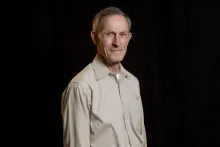
David Mills was born near Wallace, North Carolina, in 1939, where he grew up on a family farm. After high school he attended Ambassador College in Pasadena, California, and he graduated in 1962.
Since that time he has served as a minister of the Church in Washington, Florida, North Carolina, South Carolina, Oregon, West Virginia, and Virginia. He and his wife, Sandy, have been married since 1965 and they now live in Georgia.
David retired from the full-time ministry in 2015.
