
Robin S Webber
This transcript was generated by AI and may contain errors. It is provided to assist those who may not be able to listen to the message.
Thank you, Mr. Smith. It's been said that a man can counterfeit hope, love, faith, and many other graces, but it's very difficult to counterfeit humility.
It's difficult to counterfeit humility. I have a question for you this afternoon, friends. Why is that so? Let's allow the words of Andrew Murray, writer from South Africa nearly 110-120 years ago, begin to establish something in our hearts and our minds on this day, both to the challenge and the opportunity in developing humility. Murray writes, Humility is perfect quietness of heart. It is for me to have no trouble, never to be fretted or vexed or irritated or sore or disappointed. It is to expect nothing, to wonder at nothing that is done to me, to feel nothing done against me. It is to be at rest when nobody praises me and when I am blamed and or despised. It is to have a blessed home in Christ where I can go in and shut the door and kneel to my Father in secret and be at peace, as in a deep sea of calmness when all around is trouble. It is the fruit of the Lord Jesus Christ, redemptive work on the cross, manifested in those of His own who definitely subject themselves to the Holy Spirit.
That is a mouthful. That is indeed a heartful. But if you will allow me, let's take it a step further now and allow Murray to add a little bit more, both to the challenge and to the opportunity that lies ahead of each and every one of us regarding the topic of humility. The humble man feels no jealousy or envy. He can praise God when others are preferred and blessed before Him. He can bear to hear others praised while he is forgotten. Why? Because he has received the Spirit of Christ, who pleased not Himself and who sought not His own honor.
Therefore, in putting on the Lord Jesus Christ, He has put on the heart of compassion, kindness, meekness, longsuffering, and humility.
Now, again, a mouthful, a heartful, makes our minds begin to look and see ourselves in the mirror. I have a question for each and every one of you, please. How are we doing so far when it comes to the topic of humility? I might ask another question. Do we have a ways to go yet? I would most assuredly say, number one up here, absolutely. There's no most likely about it. But here's what I want to share with you. The good news on this, the Sabbath day, is don't be discouraged. Don't be discouraged with what Mr. Murray just told us. We have to have the weight pointed out. The reason why we do not need to be discouraged on the Sabbath day is simply this. There is a crisp, there is a clear, there is a clarion call that comes out of the Scriptures, that was alluded to in the first message this afternoon, and it is simply this. It comes from none other than our Lord and Savior, Jesus Christ. Two words. I like that. That way I can remember it, especially as I'm getting older. I'm having more seasoned moments. So the words come to me a little easier.
Just simply two words. Two words that are the bookends of the work of Christ in us, that He speaks to every disciple when He first meets them as He met Doug, as he was talking about many years ago, or the last word of encouragement that He will give them. The same words that He gave the Apostle Peter in his lifetime. Are you ready? Just two words. Follow me. Follow me. The call is always the same. It never changes. It never will change. But here's the thing that happens. There's a lot that occurs along the way between those two calls. We discover, and for some of us come to rediscover, what the footsteps of humility look like. Join me, if you would, in the book of Philippians, for it is in Philippians this epistle of joy that speaks so much as to what humility truly is. Philippians is a prison epistle, fascinating, that hear Paul stripped of everything physical, everything that externally might make him happy. All things stripped from him that would titillate his senses. It is in this prison epistle that he speaks about joy, because joy does not come from external devices. Joy does not come from the senses of this world. Joy is something that is internal. Joy is having a smile on our heart because we have an assurance, we have a confidence that God has called us, that Christ has died for us, that Christ lives for us, that the Father is coming back to this earth, and that we are in that process of salvation that we heard about in the first message, and that if God has begun a good work with us, he will see it until its end. Thus, the book of Philippians is about joy. And the core teaching of this epistle regarding joy, and the core understanding of what the practice of humility is all about, is discovered in chapter 2, verses 1-11. As we go through this text this afternoon of Philippians 2, 1-11, what is my goal in leading you as a congregation? It is to pinpoint five specific footsteps of the humility of Christ, five specific footsteps of the humility of Christ, as outlined in this passage. Now, these points in part were gleaned from the MacArthur Daily Study Bible. Suzy and I read that daily. It's kind of a way of being able to get through the Bible in the course of a year, and it's on MacArthur's commentary on how did Christ humble himself for our salvation. So that's kind of the basis, but I'm going to take those points and expand upon it, because we're not going to use his points, we're going to add my points. Because as we look at the humility of Christ towards us, we must understand something about Christianity. You might want to jot this word down. It's a transaction. God does something for us, and thus we do something for God. That is the only way that we can begin to develop and move from simply transaction to transformation. So we're going to be looking at what Christ did for us through these footsteps of humility. Therefore, then, what can we do for him as we follow him and heed that call of follow me? Finally, the title of today's message, just to nail it out there for all of you. So we're all together. You that are on the left over here, you that are on the right over here, and those in that dark, dark room over there where the babies are sleeping, here's the title of our message, Developing the Humility of Christ in Us. Let's begin as we look at Philippians 2.
Philippians 2, and we're going to begin right in verse 1, because it allows us to understand our responsibilities. Therefore, if there is any consolation and or we could use the word comfort in Christ, if any comfort of love, of any fellowship of the Spirit, if any affection and mercy, it says, fulfill my joy by being like-minded, having the same love, being of one accord of one mind. Now it's going to go deeper. Put on your seatbelts and have your airbags ready to be deployed.
Here we go. Let nothing be done through selfish ambition or conceit, but in lowliness of mind, lowliness of mind, let each esteem others better than himself. We begin to hear the echo, don't we, of Murray, written 110 years ago, in this given nearly 2,000 years ago. Let each one of you look out not only for his own interest, but also for the interest of others. As mentioned by my opening quote that humility is hard to counterfeit, when we look through our responsibilities given to us, we recognize that humanly, naturally, we have some tough sledding ahead of us.
That's why God gives us verse 5. Verse 5 is the core. It is what we might call the anchor verse of Philippians 2. It anchors all that precedes it. What we've just read, verses 1-4, are you with me? And then what's going to follow? So thus it is in the middle. The best part of the sandwich is always what? It's in the middle. It's what we ask for. It's what we need. So we're going to look at it to see what Christ did, so then we can ask ourselves, and if Christ did this in the transaction, then what are we in turn to do?
But before we plunge any further, very important, notice what it says here. It talks about lowliness of mind in verse 3. Important. You might want to jot that four-letter word down. Mind. Because it talks about lowliness of mind. That's important. And we need to understand something here. Let's look at verse 5. Let this mind be in you, which was also in Christ Jesus. The big verse. Let this mind be in you, which was in Christ Jesus.
What is really important to understand here before we take these five steps and look at them is simply this. God, in dealing with New Covenant Christians through Scripture, promises us, number one, He promises us a new heart. Are we all in agreement with that? He promises a new heart. You can go to Jeremiah, you can go to Ezekiel, you can go to other verses in the New Testament. We also know that He promises us a new spirit.
Are we all in agreement with that? We are given a new heart. We are given a new spirit. There is one thing that it says that God does not give us. He does not give us a new mind. Why is that? You say, oh rats! Why didn't I get the full load right off the top? Well, we need to discuss that for a moment. He gives us a new heart. He gives us a new spirit.
He does not give us a new mind. In other words, we are stuck with some earthly devices. We still have some of the old hardware. That's why it's very important, if you'll keep your finger in Philippians 2, join me if you would in Romans 12. In Romans 12, God tells us what to do with that mind that He has not yet replaced. Romans 12 and verse 2. And do not be conformed, formed with, that is, to this world, to this society, this culture, but be transformed by the renewing of your mind.
That you may prove that which is good and acceptable and the perfect will of God. So we have a responsibility given to us by Scripture, the living Word of God. We are to renew our minds. Vine's commentary is interesting. It puts it this way through Vine's commentary. Renewing means the adjustment of the moral and spiritual vision and thinking to the mind of God, which is designed to have a transforming effect on our life.
Have we ever adjusted something, taken a screwdriver to where it fits, kind of get it in, jimmied in there, get it adjusted, so it's firm, so it's fit, so it stays in place? Well, that's what God says about the responsibility that He gives us to renew our mind. Also, it's of note that adjustment, if you go to the dictionary, means this, to fit, to shape, to conform, to come to agreement.
Now, you go back to this verse. Now join me back in Philippians 2. The thrust says that we are to come into agreement with Jesus Christ. We're to have the same mind that He has. It's interesting that the New Living Bible Translation puts it this way. Your attitude should be the same that Jesus Christ had. The same attitude. How often do we run into people on the street or out on the freeway sometimes, and what do we say about them?
Boy, there's an attitude. But when people notice us as Mr. Smith led us in song, by this shall all men know. What? The attitude. That is an agreement with Jesus Christ. Now, with all that behind us, let's now plunge into what the heart of humility is. Verses 6 and 7.
Who, being in the form of God, did not consider it robbery to be equal with God, but made Himself of no reputation, taking the form of a bondservant, and coming in the likeness of men. I remember when I was a young boy and first attending the Church of God in about 1963, and the minister would read through that, and he'd talk about this robbery that was going on. I always knew that when we went to the book of Philippians, we'd hear about the robbery.
And I thought, Robbery? What does that mean? Is that like a spiritual heist? What's happening up in the kingdom of heaven? What's going on up there? It's really actually made much clearer by looking at other translations, like the New Living Bible translation. Allow me to read it for you. Though He was God, He did not demand or cling to His rights as God.
He made Himself nothing. He took the humble position of a slave and appeared in human form. Allow me to go back now for a moment. Stay with me if you would. This is important. Though He was God. The word in the King James says, Though being. That being there is very important to understand in the original Greek. It's very important to understand about the nature of Christ. That though being, that means that there were unalterable elements of the Godhead that did remain unchanged.
But it says that He took on no reputation. It says He took the humble position. The word there, He takes the form. He takes on the schema. The scheme is the Greek word. He took on certain elements of humanity. That's very important to understand. What is the great thrust of this verse? It means that He emptied Himself. He emptied Himself, which is the best rendering. He emptied Himself. Jesus, while fully God, emptied Himself of certain divine privileges associated with being the Word that had been with God from the very beginning. Very important. And it's going to be important as we look at our role in humility. He voluntarily renounced or set aside certain aspects of divine privilege.
Not total divinity. For indeed, the Christ was both fully human and fully God in a way that God alone fully understands. And yet, the most important thing is that He literally, conscientiously and deliberately put off certain elements of the Godhead.
Here's the important part, because this is what humility is about. You must literally do it. You must conscientiously do it. And you must be deliberate in putting off certain elements of our humanity to be able to match what Jesus Christ did by putting off elements of divinity. The big thought here is that He humbled Himself. We need to ask how. And then how do we humble ourselves? When you look at this, it says that He did this. Therefore, we are confronted with a declaration. It says, the Word did not cling, but put off elements of the divinity. We are left then with an inquiry. How? And then we must personally examine ourselves.
Allow me to give you five quick points, and they are quick. Number one. Number one. He relinquished and emptied Himself of His heavenly glory. Of His heavenly glory. That means He voluntarily did it. He relinquished. He put off. He emptied. You think of a pouring of water going down and emptying the glass. He emptied Himself of His heavenly glory. What can that mean? Why? John 17 and verse 5, let's take a quick look at the Gospel.
That last night of our Savior's life in the flesh, it mentions something very important here. And now, O Father, verse 5, chapter 17, glorify Me together with Your Self. Glorify Me with Yourself, with the glory which I had with You before the world was.
That shows us, because God loved us, and because Christ voluntarily humbled Himself, emptied Himself, poured Himself out, that He relinquished His glory. What does that mean? We don't have the time to go through it right now, but imagining that Jesus was the Word, no less than God, eternal in scope, a member of the Godhead, full glory. What is full glory like? It's very hard to describe what full glory is like to we that are caught in time and space.
God gives us enough to at least consider, if not totally comprehend. You can jot down Ezekiel 1 and consider the throne of God moving through the heavens. You can go to Revelation 1, Revelation 2, Revelation 4, where it speaks of the heavenly court and what it is like and the spiritual realm and the divisions of the angels. You can think of 1 Timothy, where Paul speaks of approaching the unapproachable light.
What do you mean unapproachable light? What does that mean? How glorious is that? We don't even begin to have the hardware, humanly, to comprehend the glory that Christ relinquished. Yet he wants us to know that he did empty himself because he loved us. He humbled himself. Fascinating thought. Have other human beings followed that model? I think so. There's some encouragement. It's always nice to know that there's others on the trail with us. Of course, Christ said in the prime example, join me if you would in Philippians.
Again, another writing of Paul. Philippians 3. And let's pick up the thought in verse 4. Though I also might have confidence in the flesh, you might say, though I have glory in the flesh or where I have been, if anyone else thinks he may have confidence in the flesh, I'm going to give you the Rolodex of the greatness that I was. That's basically what Paul is saying here. Circumcised the eighth day of the stock of Israel, of the tribe of Benjamin, a Hebrew of the Hebrews concerning the law of Pharisee. And you can just see it just pumping up, you know, just like a balloon. Here I am. Look who I am. If I wanted a glory, this is what I could tell you about.
Concerning zeal, persecuting the church, concerning the righteousness, which is in the law, blameless. He had a pedigree. Paul was not a mutt, like we that are Americans, where we have a whole cadre of whatever we are. We call ourselves American. Paul knew exactly where he came from. He knew exactly what he was. He knew exactly what he had been like. He was an exact dude. He had a lot to glory in, physically. But what things were gained in me, to these I have count at loss for Christ.
Same echo of Philippians. I didn't cling on to it. No robbery involved here. I didn't cling. I didn't hold. I didn't grasp. Yet, indeed, I also count all things lost for the excellence of the knowledge of Jesus Christ, my Lord, for whom I have suffered the loss of everything, and count them as rubble that I might gain Christ, and be found in him, not having my own righteousness, which is from the law, but that which is through faith in Christ, the righteousness which is from God by faith, that I might know him, the power of his resurrection, the fellowship of his suffering, and being shaped and fitted in an agreement, as it were, to his death, if by any means I may attain to the resurrection from the dead.
Now, I want you to stay with me, because let's focus on verse 12. Not that I have already attained or am already perfected. He's still following. Follow me. Yes. I press on that I may lay a hold of that for which Jesus Christ also laid hold of me. Have you ever thought about this way, friends? God the Father commissioned the great shepherd to grab ahold of you. He grabbed ahold of Doug, we heard, back in the early 1980s. God the Father motivates the great shepherd to lay ahold of us, to grab us. That's what shepherds do sometimes when they're sheep.
They grab them. They shepherd them. But notice then that for which Christ has also laid hold of me, that I may lay hold of. There's a transaction. Christ lays ahold of us, that in turn we might lay ahold of something else. Thus, when Christ has entered our life through the call of the Father, we are not to remain the same.
There's to be a difference. Here's the question. Jesus Christ relinquished His glory. The question comes down to us. What are we holding on? I'm talking to we that are in San Diego right now. What are we holding on of our former glory that we used to come face-to-face with every day? Jesus, the Christ, the Word, was forever in the presence of the Father, forever. We'll use the physical term face-to-face.
There were things, and He said it was not robbery. He did not cling to it. He released it. If He released that face-to-face exposure to the Father and set us the example of humility, the question begs us, what have we turned away from that we used to be face-to-face with on a daily basis? What are we holding on to that at one time we considered precious, but now willingly, gladly give it up as the Christ did and or as the example of the Apostle Paul? We know that we come to face-to-face as the book tells us with the lust of the eyes, the lust of the flesh, with the pride of life.
What are we holding on to that our Master above said, I did not hold on to because I loved you. Thus, what are we holding on to to in turn transact and show our love towards God? Big question! Just putting it out for you there.
Let's go to point number two. He relinquished or emptied Himself of His independent authority. He relinquished, emptied Himself of His independent authority. You see, Christ was not a lone ranger. Let's appreciate that during His walk in the flesh, He humbled Himself. He completely submitted His will to that of the Father. Matthew 26, 39 shows us this in action during the earthly ministry. Matthew 26, join me there if you would. Matthew 26, 39 And He, speaking of the Christ, went a little farther and fell on His face.
And He prayed, saying, O my Father, if it is possible, let this cup pass from me. Nevertheless, not as I will, but as You will. Let's remember this is the same that had been with God, later revealed as the Father forever in eternity. He subordinated Himself to that which is a perfect will.
John 5 and verse 30, another verse that we can reflect on for a moment. John 5 and verse 30, fascinating. I can of myself do nothing as I hear I judge, and my judgment is righteous, because I do not seek my own will, but the will of the Father who sent me.
How about our footsteps behind Jesus Christ, who humbled Himself, emptied Himself of self-will? Can we say the same? It's time to think about it. The path is clearly set as we come under the authority of Jesus Christ living in our life. Not only the authority of a personage, but the living Word, but the written Word being the authority of our life. The written Word of God, the mind of God, print, is the authority of our life.
Matthew 4 and verse 4. Here's a verse. Let's look in the mirror. Are you ready? Everybody ready to look in the mirror? Here's a mere verse. Matthew 4 and verse 4. But He answered and said, It is written, Man shall not live by bread alone, but by every word that proceeds from the mouth of God. If we are walking in humility as Christ walked in humility, we are going to be living under the authority of not only the living Word, but the written Word. And abiding by every word that proceeds from the mouth of God, the mind of God, the heart of God, that is established within Scripture.
Oh my, there were things that came Christ way that could have pumped up His pride balloon, especially as He was tempted by Satan here in Matthew 4. But what did He say every time that He was tempted? Tempted to go back. Tempted to say, It's been a long time since I had my glory. It's been a long time since I had my own independent authority. It's been a long time since there's that He said, Jesus Christ, like a hammer on an anvil, with a steady rhythm that had to drive Satan batty. He just kept on saying what? It is written. It is written.
Abiding by what is written and allowing the authority of not only the living Word, but the written Word in our life allows us to become humble.
Galatians 2 and verse 20. Let's take a look at this for a moment. Galatians 2 and verse 20 before we move to the next third point.
We've already discussed a little bit about Paul putting off and learning the lesson of humility. Galatians 2 and verse 20.
Here is the anthem of a humble individual that moves into the transaction with Jesus Christ that because you have done this for me, thus I will do this for you and your Father. And thus begins to become a transformed individual. I have been crucified with Christ. It's no longer I who live, but Christ lives in me.
And the life which I now live in the flesh, I live by faith in the Son of God who loved me and gave himself for me.
Who's directing our footsteps? Who are we following?
Point number three, the third footstep.
He, speaking of the Christ, relinquished, emptied himself of the voluntary display of his divine glory.
He relinquished himself with a voluntary display of his divine prerogative.
You know, can you imagine if you had total power and that if you were the Son of God on earth, you would say, you want to see what I can do?
I'm Superman. Just stand by. I don't even have the cape and look what I can do. Faster than a speeding bullet.
Able to jump over buildings at a single bounce.
For those of you that grew up in the 50s and watched George Reeves with me, he divorced himself, he emptied himself, he humbled himself by doing this.
Thus he followed the guidance of the Spirit.
Imagine being the Godhead always forever in eternity.
Not holding on to that, but emptying himself for a purpose, for a reason, for you and me.
That we might, A, have salvation and that, again, that we might have an example before.
Join me in Luke 2.27.
So, here he is as a young person. Imagine being ageless and then being young and being under the tutelage of a human father and mother.
But now notice what it says. So he came by the Spirit into the temple.
Jesus voluntarily and responsibly followed the guidance of the Spirit.
Matthew 4, verse 1. We're just going to whiplash the Bible real quickly here.
Matthew 4 and verse 1. Notice what it says here.
Then Jesus was led up by the Spirit into the wilderness.
The Spirit does not always take us to happy places, green spots of life.
Because we don't always learn how to follow God, just simply being in green spots.
Sometimes the Spirit will allow or take us into deserts, into wildernesses, so that we can know that God alone is God.
Join me if you would in Luke 4.18. Just another chapter over.
Luke 4.8. Did I say another chapter over? Pardon me. Luke 4.18. I've got a book over. 4.18.
The Spirit of the Lord is upon me, because he is anointed me to preach the gospel to the poor, and he begins the thought of Jubilee, as he speaks to his hometown congregation in Nazareth.
But the Spirit was upon him. The Spirit led him into the temple. The Spirit led him into the wilderness. Matthew 24 and verse 36. Matthew 24 and verse 36.
Here, Jesus had been no less than the Word. God. God had. Eternally with the Father.
He knows what he says here. But of the day and the hour. No one knows.
Not even the angels of heaven, but my Father only.
Jesus had divorced himself, emptied himself of being all-knowing, of being all, and subordinating himself to the guidance of the Father and the lead of the Spirit.
Luke 23 verse 46. It says, "...into your hands I commit my Spirit." Question. Do we relinquish, empty ourselves when God's Spirit teaches us, guides us, leads us, prompts us?
From a sermon? From a conversation? From our own personal Bible study? Do we sense? Do we humble ourselves? Do we recognize that God is speaking to us? I know today, and I'll just use a personal example. I'll get in trouble later. It's about my wife.
But I never cease to be amazed, neither does she. So I'm on safe territory. I can take off my seatbelt. That whenever we need answers in our life, and when Susie in particular needs an answer, I have never seen it go without fail that guide God, direct her to the source, to the book, to the paragraph, to the author, to the Bible. I mean, folks, if you were with me living with this gal, it's scary. No, it's not scary. It is sensational to see how God's Spirit opens up doors when there are people that are willing to walk through them. And that just when you don't think you can do one more thing, that you don't have the energy or the wherewithal, or maybe something in life has passed you by, and then you are directed to a book. And I mean, it's smack dab there as if it's just written for you today, even though it might have been written 50 years ago. Brethren, if we want to be alive spiritually, we're going to follow the prompting and the lead and the guidance of God's Spirit. Join me if you would in John 16 for a second. John 16. I want to show you how it works. John 16 and verse 7. God's Spirit, folks, is neat. It's a comforter. It does things. It's not just a blob. It really does things that are exciting. Notice, Nevertheless, I tell you the truth. It is to your advantage that I go away, for I do not go away. The Helper will not come to you, but if I depart, I will send him to you. And when he has come, he will convict the world of sin and of righteousness and of judgment of sin, because they do not believe in me, of righteousness, because I go to my Father, and you see me no more, of judgment, because the ruler of this world is judged. I still have many things to say to you, but you cannot bear them now.
However, when he, the Spirit of truth, has come, he will guide you into all truth, for he will not speak on his own authority, but whatever he hears, he will speak, and he will tell you things to come. Jesus, in his lifetime, in this physical framework, followed the lead of the Spirit. It convicted him of sin. It convicted him of righteousness, and it led him in perfect judgment.
It does no less than for you and for me, as we are prompted by God's Spirit, as we subordinate ourselves to that lead, as we throw away our prerogatives, our how-to's.
God says, I'll fill up the space. I'll show you the way, but you have got to humble yourself. Point number four. He relinquished and emptied himself of eternal riches.
He emptied himself of eternal riches. Here is the same one that as, I'll use a phrase, God of the Old Testament, Jehovah, God of the Old Testament, speaking to Isaiah, said that the, look, look, the earth is but a footstool to me. The heavens are mine, all powerful, all knowing, all wise.
Universal wealth, the stars were his. He humbled himself. He gave that up. Second Corinthians 8 and verse 9. Second Corinthians 8 and verse 9.
For you know the grace of our Lord Jesus Christ.
And that grace is only made possible because he humbled himself. So he might say, for you know, through the humility of our Lord Jesus Christ, that though he was rich, yet for your sakes he became poor, that you, through his poverty, his humility, might in turn become rich.
Luke 9 verse 58. Further describing what that humility is like, and Jesus said, whom foxes have holes and birds of the air have nest, but the Son of Man has nowhere to lay his head.
Again, how is this done on the human plane? How do we renew? How do we adjust this human gear where we have the new heart, the new spirit, but we're working on this mind to transform it? Hebrews 11 gives us a human example. Hebrews 11.
Let's pick up the thought in verse 23.
It speaks of the first Moses, Jesus being the second Moses, that greater Moses. But let's look at the example of that first and lesser Moses, but quite a guy when you talk about it. In Hebrews 11 and verse 23, by faith, humility does take faith. Moses, when he was born, was hidden three months by his parents because they saw he was a beautiful child, and they were not afraid of the king's command. By faith, when he became of age, refused to be called the son of Pharaoh's daughter. He did not the robbery thing. He did not grope for it. He did not cling to being Egyptian royalty. Choosing. And humility is a choice. It doesn't just happen, friends.
Choosing to suffer affliction with the people of God, then to enjoy those passing pleasures of sin, esteeming the reproach of Christ greater riches. Remember, Christ gave up the eternal riches, became poverty for us. Moses gave up the riches of Egypt, that he might lead a people, seeing him who is invisible. When we humble ourselves, friends, let's understand something. Christ is in the business of changing our comfort zone. And I believe that as the body of Christ matures, individually and collectively, our comfort zones are really going to be pressed in the months and the years ahead. There's nothing cushy about being a Christian. Put on your seatbelt. Make sure your spiritual airbag is deployed. It's all throughout the Bible. Because being a Christian is not about being comfortable in this world of time and space. What are we clinging on to? That the Christ and Moses threw overboard because of the joy that was set before them. That brings us to point five. He relinquished a favorable relationship with God. He relinquished a favorable relationship with God. Wow! For we that have had parents, do have parents, and one that has been a rich and abundant and a loving relationship, I didn't say easy. Relationships are never easy. But even with their own flesh and blood, to relinquish that. Jesus relinquished a favorable relationship with His Father. You see, friends, I'm here to remind you on this, the Sabbath day, that our Savior felt the Father's wrath for human sin while on the cross. He who had been forever with the Father face to face, heart to heart, one heart, always. The connection was so deep and so real and so fantastic and so wonderful. You and I can't even begin to explore it in our human minds. We can maybe consider it, but not totally comprehend it. And yet we come to this forever moment in Matthew 27 and verse 46. Join me if you would there for a moment. Matthew 27 and verse 46. When on the cross, Jesus understood that the Father for the moment had, in that sense, divorced Himself from His Son. Matthew 27 and verse 46. And about the ninth hour, when the sins of the world were placed on Him, He had understood it intellectually. I am sure that the Father and the Word had gone through it. The plan was set. They knew what needed to be done. But there's one thing talking about it. There's another thing doing it. It's another thing getting it up in the mind. It's another thing going through it. As Shakespeare said, it's He that just at the scars never felt the wounds.
And it is in this forever moment that Jesus did not hold on to that favorable relationship with God.
That you and I who were abased might one day be exalted to the Father through Him. 2 Corinthians 5, verse 21. 2 Corinthians 5, verse 21.
For He made Him who knew no sin to be sin for us, that we might become the righteousness of God in Him. Where and what question does this lead us to as we have now examined that fifth footprint of humility?
Let's ask ourselves, what are you like or what are we doing that is not in the form of Christ? Because we are not humble. Because we are more concerned about what people think than what God thinks. That we want a favorable relationship with a boss or a pastor or an elder or family member or a neighbor.
Or whoever that is in a human frame, or rather than pleasing the Father above.
The apostles of old, the disciples, the followers said, we must obey God rather than man. Jesus, in His own words, said that we must love less. Didn't say that we ought not love, but to love less. Father, mother, and the whole cadre of individuals that we have been. Are you with me? Familiar with. That's humility.
As we conclude, there's a page over here, and that'll be another sermon.
But as we conclude, there's no mystery to what comprises the humility of Christ that can and should be in us.
I'm not going to be with you for several weeks, and I know I've not been with you for a while.
And it's very important that I share this with you. Hear these words, that this is what humility is.
It is denying that which was formerly glorious to us, and holding on to God's purposes.
When we understand that and experience that, we've just stepped into the first footstep of humility following Jesus Christ.
Number two, it's abiding by and performing His will, and throwing ours overboard.
Throwing it overboard, and in faith following God. When we've done that, we've gone into the second foot of humility.
Number three, it is following the guidance of God's Spirit wherever it leads, and not our own human inclinations.
Oh my! Can I do that? Yes, we can.
The example set before us, the Spirit can guide us, the Father loves us, all things are possible. When we do that, we've stepped into the third footstep of humility.
It's recognizing that not all that glitters is gold, but to maintain our eyes on God's promises, like Christ did, like Moses did.
And remembering the Psalms, it says that God exalts the humble.
If we do that, yeah.
We've stepped into the fourth footstep of humility. Number five, it's always setting God's favor above the favor of others.
Let me conclude where we began this afternoon, about an hour ago.
It's been said, a man can counterfeit hope, love, faith, many other graces, but it's very difficult to counterfeit humility.
I conclude with a question, you know, that I like to ask questions, and only your life will fill in the answer. But allow me to share a platform and a diving board for you. Because there's nothing passive about humility, that's why it's so hard. There's nothing passive about humility, not at all.
To have it live in us, we must die.
To grasp it, we must let go.
To maintain it, we must keep our eyes on the one above, and not the other ones that surround us here below.
When we do, we can then remember the words of Murray.
Humility is perfect quietness of heart.
And may I add, even in the storm, Christ had such quietness on the cross.
The book says that we are to have His attitude, His purposes in us.
Let's us have humility as we follow Him.
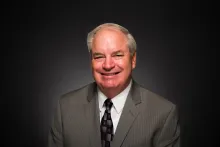
Robin Webber was born in Chicago, Illinois, in 1951, but has lived most of his life in California. He has been a part of the Church of God community since 1963. He attended Ambassador College in Pasadena from 1969-1973. He majored in theology and history.
Mr. Webber's interest remains in the study of history, socio-economics and literature. Over the years, he has offered his services to museums as a docent to share his enthusiasm and passions regarding these areas of expertise.
When time permits, he loves to go mountain biking on nearby ranch land and meet his wife as she hikes toward him.
