
Robin S Webber
This transcript was generated by AI and may contain errors. It is provided to assist those who may not be able to listen to the message.
Yesterday, the official observance of the festivals of the New Testament Passover and the days of Unleavened Bread concluded. But, and as Paul Harvey of Old, that gentleman that was on radio, would say, and now the rest of the story for that ongoing exodus, that drawing out of a divinely elected people from this world, and the ongoing drawing out of the worldliness that continues in us as our pilgrimage towards that ultimate promised land.
Not just the land of milk and honey, but that land of living water, that refreshing water that is spoken of in Revelation 22 exists. We always want to make sure that the goal that God intends for us is the goal that we are established on. So, what steps will we take as we move forward from the days of Unleavened Bread? Again, what steps will we take, not with our feet, but with our hearts?
For where the heart is, the feet will follow. I would suggest, while there are many steps for our hearts to consider today, I'm going to just simply focus on two steps. Kind of what you call the old one-two, the two-step. We're going to focus on two, but we're actually going to center on one. So, let us step back for the moment on the other side of the sea that we sang about today.
We're going to go back for a moment. We're going to rewind. We're going to go back so that you and I might go forward on this ongoing Exodus, this ongoing pilgrimage that you and I have been invited to. If you would join me in Exodus 14. In Exodus 14, I was reading this, probably as many of you were this past week. There's something that I had never seen before that I'd like to share with you, which is kind of at the heart of this message.
Everything that proceeds from this message will actually come off of Exodus 14. We know the story in that sense. We think we know the story, and that's why year in and year out we observe the feast again and again, read the Scriptures, tell the story, read the story, share the story. There's always something that we find that we've never quite looked at before.
Maybe it's just my mind and sorry I missed over it. But notice, and Moses said in verse 13, to the people, do not be afraid. And then he gave an instruction. Stand still. And you've heard me preach on this many times about standing still. And see the salvation of the Lord, which he will accomplish for you today. For the Egyptians, whom you see today, you shall see again no more forever.
And the Lord will fight for you. And you shall hold your peace. In other words, if he had a mule in front of you, you'd go, whoa! You're going to hold your peace. And the Lord said to Moses, why do you cry to me? Tell the children of Israel to go forward.
Now, I've shared this story with you on Zoom studies and sermons over the years. So we know that in one sense, God first of all told Moses, tell the people to stand still. Stop! Behold! And then the next thing he says to move. So when God says to stand still, be still. When he says to move, get the moving. But something I had never centered on before. Maybe it's just me, but I get to share it with all of you. Okay. It's simply this. The Lord will fight for you and you shall hold your peace.
It's very interesting in that, that in the New Living Bible translation where it says, you shall hold your peace, it says, just stay calm. Just stay calm. Interesting. Now, I started pottering on that. What do you mean, just stay calm? Well, think about it for a moment. We can know people, they can be as still as still can be, but their heart can be beating on and on and on and on, pumping and pounding and everything like that. And there was something that spoke to me at least that I'd like to share with you about staying calm.
Because sometimes we can look like, you know, we have that perennial poker face not expressing, but we can be as edgy as a cat on a hot tin roof inside of us.
And we got to remember that maybe humanly we judge books by their cover, but God doesn't. He judges us from the inside out. And he hopes that as we work with our insides, that the outsides will reflect and that will be one spiritual creation before Him. So I kind of look at that, and I think there's something deeper for us to explore as we continue our journey away from this, the Days of Unleavened Bread. Especially the personal exodus that you and I are on, and he calls us to move forward. So I mentioned that there's two steps. The first step is simply this. You might want to jot it down. This will be short. The first step as we continue our pilgrimage is faith.
Is faith. And that is so very important. The second step, then, is humility.
The first step is faith. God says to the apostle Paul that we are saved by His grace and by faith.
True, living, dynamic, sincere faith. That's where it starts, and we'll be going at verses looking at that later on. But then today, I'd like to center on the thought of humility, and you'll see in a moment why. Because the calmness that God desires in us on our walk today centers around so much, not only on faith, but on humility and that calmness that is generated by having a true humble spirit. We could say simply this, that as we march towards the promised land of God, that we are saved by faith but clothed by humility. I want you to think about that for a moment. That you and I are saved by faith in God through Jesus Christ. But as we walk in faith, we are to be clothed with humility. And the humility I'm talking about runs far deeper than a 10-word definition in Webster's dictionary. Join me, if you would, for a moment in 1 Corinthians 5. 1 Corinthians 5 has probably been read here during this recent festival because it is a major thought in the New Testament about these days. In fact, Corinthians is written around the Passover days of the 11 bread season. And notice what it says in 1 Corinthians 5 and verse 6. That your glorying is not good. Do you not know that a little leaven leavens the whole lump?
A little leaven integrates itself into the whole lump, and also that leaven causes a certain rising. We might say a puff and being puffed up. Therefore, purge out the old leaven that you may be a new lump since you truly are unleavened, for indeed Christ our Passover was sacrificed for us.
Why is there this emphasis given during the Passover season, given during the festival on leavened bread, regarding this aspect of leaven and the rising and the puffing up? When you think of rising or you think of puffing up, we generally would like to think of pride. I'd like to center on the word pride for a moment. It is so important to understand pride in relationship to, frankly, the entirety of the Bible. Let's remember that pride is the original sin. Pride is the original sin.
In the Old Testament, it says that Lucifer was that anointed carob until that day in which he rose up.
It was that pride that was in him in which he tried to exalt himself over God, and in a sense, there was the original cosmic battle between Lucifer and his minions against the host of heaven and God and the Word. God won, Saint lost. God won, dragon zero. But that doesn't mean that he still has not rid himself of that pride. Not only in the spiritual realm, but in the physical realm, Adam and Eve, their first sin was pride. Pride that they knew better than God. Pride that they were smarter than God. Pride that they had a better plan than God.
And they extended beyond the bounds that they were due. They trespassed where God was, and they too exalted themselves. They said, well, you know what? We can be just like God. Let's understand something. Pride is not marginal to the human experience.
It's central. It's in each and every one of us. And even when you don't think you have it, you gots it. As moms, maybe they once said many years ago, I gots it. Remember the story about the man that was praying to God, he said, God, thank you so very, very much for the humility that you have put in me. Well, right there, that's underlined with pride.
So where do we go with all of this? And what do we do? I'd like to share the title of this message today with you, and it's called the Unleavened Essence of Humility. The unleavened lesson of humility, because when you think of something unleavened, you think more against probably some of what you ladies made during this week. Flatbread. It's flat. It's not puffed up. It's not rising.
The unleavened essence of humility. It's been said, I quote, that a man can counterfeit hope and love and faith and many of the other graces, but it's very difficult to counterfeit humility. Why is this so? Well, again, allow me to share a definition with you for a moment, more than just simply what Mr. Webster could give. This will be a tad long, maybe for about a minute of reading, and then we'll go forward. And this is from a gentleman named Mr. Andrew Murray, who is a South African Christian writer about 120 years ago. And first, he's going to define what humility is. And then second, he's going to share humility's challenges.
So let's look at the gentleman's definition that lies before us. He said that humility is perfect quietness of heart. Perfect quietness of heart. Think of what we spoke about with the Red Sea. Hold your peace. Be calm. It is for me to have no trouble. Never to be fretted or vexed or irritated or sore or disappointed. It is to expect nothing, to wonder at nothing that is done to me, to feel nothing done against me. It is to be at rest with when nobody praises me, or when I am blamed or despised. It is to have a blessed home in Christ where I can go in and shut the door and kneel to my Father in secret and be at peace, as in a deep sea of calmness when all around is trouble. It is the fruit of the Lord Jesus Christ's redemptive work on the cross manifested in those of his own who definitely are subject to the guidance of the Spirit.
That's a definition. A lot more. A living definition, an active definition of how it really plays out in life. It's not just a bumper sticker. It takes some real doing, doesn't it? The doing that we don't have oven by ourselves. Now, let's allow Mr. Murdi to take us a step further into finding both the challenge and the opportunity. Because of the first entry that I just read didn't capture your attention, I hope maybe the second one will. The humble man feels no jealousy or envy. He can praise God when others are preferred and blessed before him. He can bear to hear others praised while he is forgotten because he has received the Spirit of Christ who pleased not himself and who sought not his own honor. Therefore, in putting on the Lord Jesus Christ, he has put on the heart of compassion, of kindness, of meekness, long suffering, and humility.
Now, these are words by our friend. But what's the scriptural basis? Join me if you would in Romans 13 for a second. In Romans 13, as we begin to explore the unleavened essence of humility, in Romans 13 and verse 11. Let's notice what it says here.
And do this knowing the time that now is high time to awake out of sleep. For now our salvation is nearer than when we first believed. The night is far spent, the day is at hand. Therefore, let us cast off the works of darkness and let us notice, put on the armor of light. Let us walk properly as in the day, not to revelry and drunkenness, not in lewdness and not in lust, not in strife and not in envy. But put on the Lord Jesus Christ and make no provision for the flesh to fulfill its laws. So what's this have to do with humility? Well, just look at some of these words where it says about the aspect of strife and envy. In our mind, how come? Don't they know?
And it all kind of goes back to where in kindergarten or first grade, do you remember in kindergarten or first grade where we first started doing this? I don't know if that's a girl thing because I was hanging in with the boys back in first grade, but you know that, you know, it's like this and the next one goes like this and the next one goes like that. Nobody's going to top me. I'm better than you. I'm going to have the last thing. We're going to do this. You're not playing fair. You're cheating now. I'm not cheating. I'm better than you. And it just goes up and up and up. And that's kind of what happens with life. And it's in us when we are not close and connected with God the Father through Jesus Christ. And you notice what it says put on the Lord Jesus Christ. If you're taking notes, it's really telling us to be clothed with Jesus Christ. You won't find that in the wardrobe sections down on Rodeo Boulevard in Beverly Hills. To be clothed with Jesus Christ. Join me in another verse in Colossians 3. In Colossians 3, Colossians is right behind Philippians, Colossians 3. And let's take a look here at verse 12. Therefore, as the elect of God, holy and beloved, notice what it says, put on tender mercies, kindness, humility, meekness, long suffering, bearing with one another, forgiving one another. And if anyone has a complaint against another, even as Christ forgave you, so also you must do. But above all these things, put on love. Put on love. Be clothed with Christ, as it were. Put on love, which is the bond of perfection, and let the peace of God rule in your hearts, to which also you were called into one body. And be thankful. It says to put on. Now, I want to share something with you. You know I'm an old teacher, so I'm going to take this off so the microphone doesn't go dead. It says to put on. Before you put something on, you've got to take it off, right? Boys and girls, they do the same thing. Okay, right. This is how I came today.
That's what I came in today with. But what the Scripture is telling us is simply this. We're to put on a new wardrobe.
We're to put on a new wardrobe.
But this is a physical example towards a spiritual end.
When you partake of that bread and when you partook of the wine on Passover evening, you were saying that I'm not only going to imbibe of the symbols of Jesus Christ's sacrifice, but I'm going to put him on as I leave the Lord's table that night. And I go out into the world. I go out into my family. I go out amongst my co-workers. I deal with my congregants here. I'm to wear a new wardrobe. Do you kind of think that way when you wake up in the morning that I have been called to wear a new wardrobe? I am a new creation. I am a new man. I am a new woman. I am a new individual. I am a part of a new community called the Spiritual Body of Christ. And I am to put on something that I've never put on before and not take it off. Because I need it. Because I can't do it by myself. I've seen that. I've acknowledged that. And I cried out in repentance and said, Father, save me and allow your son to dwell inside of me. So we see that. This is little stuff. A picture is worth a thousand words. Remember Carl Malton? Don't leave home without it. Put on.
Back to the old man here now. For a moment.
So it's time to take our temperature. And where do we stand as we continue the pilgrimage that is before us? Let's explore the example of Jesus Christ. Best way to go about it. Join me if you would in Philippians. In the book of Philippians, and Philippians is about joy. Joy is not what's happening on the outside. Joy is what's happening in the inside of us, no matter what is happening out there. In Philippians 2, let's explore this together. In Philippians 2, therefore, verse 1, if there is any consolation in Christ, if any comfort of love, if any fellowship of the Spirit, if any affection and mercy, it says, fulfill my joy. Now let's notice the setup of verse 1. Therefore, if there is any comfort in Christ, and if any comfort of love, and this fellowship, this konaya, this intimacy, this interaction, this interconnection to God the Father in Christ with the Spirit, if any affection and mercy fulfill my joy by being like-minded, having the same love being of one accord and of one mind. Now we're going to go deeper. Let nothing be done through selfish ambition or conceit. Nothing. Not like a salad bar where you go, I'll take this, I'll take that, I'll skip this, I'll skip. No, it says, let nothing be done through selfish ambition or conceit. But in lowliness, lowliness, not swelling, not puffing up, let each esteem others better than himself.
And let each of you look out not only for his own interest, but also for the interest of others.
Well, you'd say, you know, I'm kind of there. Most of the time, part of the time, but then the rest of the time. Brother and I, I truly believe, and I'm speaking to myself, that we as human beings, we even as the elect of God, on that journey towards the kingdom, and I say this through God's word, need to become a more humble people.
I need to become a more humble pastor. I need to become a more humble husband.
Need to become a more humble instrument in God's hands. I think all of us, as we go through the days of 11 bread, taking stock of ourselves, recognize that oven apart from apart from God, we are all inoculated with pride that needs to go.
If you don't think you have it, just wait until it flares up, because pride is the handle that fits every sin. It doesn't miss a one. It doesn't miss a one. And not only myself as an individual, not only ourselves as a congregation, but ourselves as an instrument, the United Church of God within the body of Christ, that as we humble ourselves, even humble ourselves in the aspect of sharing God's truth in a sense of, yes, wonderment, and yes, of boldness, but always the humility that apart from God's grace and God's revelation, we'd still be out there. It's not about us. It's about God.
And yet, in His patience and His mercy, He continues to work with us. I'd like to give you four specific footsteps of the humility of Christ for the remainder of this message. And we're going to take a look at it here. With all of this, it has just been mentioned as far as God's definition further of humility in Philippians 2. Then notice what it says here, let this mind be in you, which was also in Christ Jesus. It says, let this mind.
The New Living Bible translation says, let this attitude, this way of being. You know, we talked today about attitude. You know, it gets the Valley Girl talk going up where I grew up, you know, attitude, attitude. I don't make a very good Valley Girl. Okay, good.
We're talking about to hold something from not around here. The attitude that God wants us to have is the attitude of Jesus Christ that is in us. I'd like to give you very four specific points. Number one, when we notice number one, he relinquished and emptied himself. You might say, he went flat. He poured himself out of his heavenly glory. Bottom line, point one, Jesus emptied himself of his heavenly glory. Notice what it says in verse six. And if you'll bear with me, I'm actually going to read it out of the New Living Bible translation, even though most of you have the New King James, because it makes so much more sense in the New Living Bible translation. Though he was God, John 1, 1 through 3, though he was God, he did not think of equality with God as something to cling to. Instead, he gave up his divine privileges. In the New King James, which you may be looking at still, it says he gave up his reputation. He took the humble position. He took the humble position as a slave and was born as a human being.
Again, as the New King James says, likened unto men. The word that was God from the beginning, he voluntarily renounced or set aside certain aspects of his divine privilege. He literally, consciously, and actively and deliberately put off being God.
He wasn't kicked out of heaven.
He was on that proverbial branch on the side of the cliff that you're holding on. And the voice says, as you're crying out up above, help! And the voice comes down, let go of one hand. Okay, what else? Let go of the other hand.
Is there anybody else up there? That was not Jesus' mode. He voluntarily, from the beginning, with that great decision that had been made, decided to let go. And he poured himself out of all of that glory that he had. He humbled himself. We've got another prop up here.
What do you mean he poured? No, so often we read these words. This was the word, capital W-O-R-D, a-la, John 1, 1-3.
The one that came and dwelled in the flesh. And what he did, he did not have a gun to his head. And let's please remember, being uncreated, life-inherent, and perfect.
And yet he was willing to come down here for you and for me and for all that are made in God's likeness and in his image. And he poured himself out of all of that glory that was his and the other that he loved so dearly and had always been intimate with.
All of it. Oh, no, all of it. All of it.
All of it. Down to the last drop.
He humbled himself for people like you and me that had no future and had no hope. When we partook of the bread and of the wine the other evening, we said we wanted to be like our big brother. We wanted to be like Jesus Christ.
We didn't want to be transfixed on ourselves, but we wanted to be transformed into his image and after his manner and after his likeness. Did he have glory? Oh, sure he did. Join me if you would in John 17. Keep your hand there, John 17. And he's looking forward to that glory coming back again in that Lord's Prayer in John 17. He says, And now, O Father, verse 5, glorify me together with yourself with the glory that I had with you before the world was. Oh, he had glory.
And he gave it all up. He humbled himself. So how does that affect us on the human plane and where we need to renew and adjust and fix our minds and have a mind that is fit to experience God? Join me if you would in Philippians 3, a case example here, Paul speaking, in Philippians 3 and in verse 3. For we are under the we are the circumcision who worship God in the Spirit, rejoicing Jesus Christ and have no confidence in the flesh.
Though I also might have confidence I can I can swell up like a bullfrog in the swamp on a summer night. You ever heard one of those puppies launch off with a croak?
If anyone else thinks he can have confidence in the flesh, I more so. You know, circumcise the eighth day of the stock of Israel of the tribe of Benjamin, the kingly line going back to Saul, a Hebrew of the Hebrews, not just a Hebrew, a Hebrew of the Hebrews concerning the law of Pharisee, concerning zeal, persecuting the church, concerning the righteousness which is in the law, blameless, at least on the outside. But what things were gained to me? These I have counted lost for Christ. Yet indeed I also count all things lost to the excellence of the knowledge of the Christ Jesus, my Lord, for whom I have suffered the loss of all things and count them as rubbish that I might gain Christ. And being noticed, dear friends, being found in Him, not having my own righteousness, but that which is through faith in Christ, the righteousness which is from God by faith, that I might know Him and the power of His resurrection, the fellowship of His sufferings. And a part of that is the humility, which is part and parcel of the unleavened one with a capital O. What is Paul doing here? As he's speaking to the world about where he was and where he knows that God the Father and Jesus, this is the time we look up again, what was he doing in Philippians 3?
He poured himself out of the life before God the Father called him, and Christ touched him on the road to Damascus. And he said, I want to be an empty vessel. I want to be an empty vessel that God might be able to use, not for my purposes or how I think the Almighty should use me, but allow me to be an empty vessel in the hands of God. I'm going to give myself away. I'm going to toss the pride out the window. And I know I'll trip over that pride again, but my heart, my heart is that to be humble. My heart is not to be worldly. My heart is not to return back to Egypt. My heart belongs to God. Point number two. He relinquished and emptied himself of his independent authority. During the time of his flesh, he completely submitted to the will of his father. Not just in the fun times, not just in the joy times with the boys on the sea of Galilee rowing and doing a little fishing with Peter and Andrew and John, but when it counted most, he said that my will is to do the will of the Father. He said in that incredible garden scene, right in the middle of the scriptures, he said that, again, not my will, but your will be done.
What happened at Gethsemane is so crucial because it ties in the other two gardens, the Garden of Eden and the Garden mentioned in Revelation 22. And if our Savior had had pride, self-pride, and not sacrifice, and said not my I would love to have this cup taken away, Father, that that's the son of man in that I am a son of man too, and I know what crucifixion is like. But not my will, but your will be done. And he did that for you and for me.
He gave away any independent authority when he was in the wilderness, and the adversary came against him at a weak moment after 40 days of fasting. Jesus wasn't just quoting his own words, but he went right to Scripture, the eternal Word of God, as it is written. He humbled himself.
He lowered himself, and yet he also elevated himself because he was leaning on his father above. Let's ask ourselves the sentinel question as we continue in this message for a few more moments as to, what are you putting off and what are we putting on?
We went through an exercise for seven days of, in a sense, practicing humility.
One thing I want to share with you, and it's kind of been knocking in my head and knocking in my heart, rocking around in there, is that humility is a beautiful thing, but it's not just an event, it's a way of life. It's not just a happening, it's an existence. Humility is something that we are to display and to portray as we are the image bearers of God, as we carry his name and bear his name, that we are to portray it moment by moment, day by day, person by person, heart by heart, word by word, deed by deed, and give it to God. Basically, our language, whether it be verbal or body language, of which body language is about 70% of communication, it either betrays or betrays what's really inside of us, as whether or not we are calm, that we are humble, and that we are not waiting on ourselves, but waiting on the Lord as he first instructed on the other side of the Red Sea.
I'd like to give you point number three. He relinquished and emptied himself of the voluntary display of his divine prerogatives. He relinquished and emptied himself of the voluntary display of his divine prerogatives. He followed the guidance of the Spirit again. He was led up by the Spirit. It says the Spirit led him up to the wilderness, and he followed. God's Spirit doesn't always take us to green pastures, because we'll not always learn about God in green pastures. We can enjoy God in green pastures, but we often learn more in the wilderness, don't we? Because it's only when we learn in the wilderness of life that then we're able to come out of that wilderness and be more effective in the public. If we never have a wilderness, if we are never alone with God, and crying out, him, Father, it's you and me, and I need you. I don't have the noise of civilization around me. I no longer have my own answers. I don't have it.
And that is when God is gracious. That is when we no longer have the big eye.
Just sounding out of us. It's no longer that we demand being on the front row, but we're just willing to stand in the back of God's kingdom and be a gatekeeper, just to know Him.
That takes daily practice.
I remember one time there was a gentleman that I worked for that if you wrote him a letter, this is a good exercise, if you wrote a letter, he would start circling in red pencil all the eyes that were mentioned to circle them. It was quite revealing. I knew he did that, and I had to write him a letter one time, so I knew ahead what was happening, but he found he still found too many eyes.
Sometimes the eyes are just simply me, me, me too, right?
You might know who that individual is. I'll tell you during my this chat.
Let's go to point number four. He relinquished and emptied himself of eternal riches. He gave up that glory. Being up there, he gave up everything that you and I might experience him, that he lived, excuse me, he died on one day that you and I might be able to live forever. Again, how is this done on the human plane? Join me if you would in Hebrews 11.
Hebrews 11 23.
This is where faith and humility come hand in hand. This is in what we generally call the faith chapter of verse 23. Notice this. You know, sometimes this is incredible. This is, if I can put it this way, this is incredible communication because it's like a hammer that keeps on hitting the nail down, down, and down, and down, until it's firm of where you and I need to go when it comes to that incredible unleavened essence of humility. By faith. Remember how I told you that faith and humility go hand in hand, heart in heart? By faith, verse 23, Moses, when he was born, was hidden three months by his parents because they saw that he was a beautiful child and that they were not afraid of the king's command. By faith, Moses, when he became of age, refused to be called the son of Pharaoh's daughter, choosing rather to suffer affliction with the people of God than to enjoy the passing pleasures of sin, esteeming the reproach of Christ's greater riches than the treasures in Egypt, for he looked to the reward. By faith, he forsook Egypt, not fearing the wrath of the king, for he endured as seeing him who is invisible. And, notice, by faith he kept the Passover and the sprinkling of blood, lest he who destroyed the firstborn should touch them. Oh, oh, wait a minute! And by faith they passed through the Red Sea, as if dry land, whereas the Egyptians, attempting to do so, were drowned.
We will strive to humble ourselves by the magnificent, incredible, and leavened example of Jesus Christ. When we truly have the faith that God the Father and Jesus Christ want us to have, as we read in that Lord's Prayer on Passover evening, where Jesus said, Jesus said this, he said, Father, take care of those who believe that you, the Father, sent me, that I, Jesus of Nazareth, I am the one, I am the Messiah, I am the door back to Eden, I am that gateway, I am the one that led Israel out of Egypt, and I continue to say in John 14.6, I am the way, I am the truth, and I am the life. Bolster their faith, because we don't truly believe that Jesus was not only sent by God, but represents how God wants us to be and to be transformed, and to put on a new manner of garb, and to throw out the old man, to throw out, I do need to throw out this suit, and to throw out this suit, no, not throw out this suit, get my suits, and to consider that everything that went before that calling is nothing. Paul said that, Moses said that, and God invites us to do this thing. Allow me to bring this down to about two more minutes. We kind of started really late with that film, so let me just finish this up for a moment. Here's what I want to share with you in conclusion. This is going to go rapidly. Remember what I said, humility is not just simply an event, it is an existence, and pride will be washing at the ankles of humility, trying to take it down. There is no mystery to what comprises the humility of Christ that can and should be in us. No mystery. There is no denying that it is denying that which was formerly glorious to us, and holding on to God's purpose. There's nothing passive about humility. It takes great muscle of the Spirit and great awareness and great focus to be the humble servant of God. It is denying. We don't like to deny. I'm a coffee drinker, as some of you know, after services. I don't want to deny myself that little fix.
But I need to do more. I have two the two witnesses here looking at me down here to serve me coffee. But I'm just using that as one example.
With pride. We don't want, we kind of want to get rid of it, but every so often it's kind of good, especially when the circumstance comes up and people need to know that.
I've got something to say about this, and I'm right. It comes up when we earn a conversation, maybe even here in this hallowed hall, to where somebody kind of shares something and says, you know, I am really looking forward to going to the beach this weekend. It's been years since I've been able to go to the beach because of COVID, and I'd like to just go over to the cove and La Jolla and just enjoy it. And they start talking, and maybe they're a widow. They don't have that much money, even have gas with what gas costs to go there. And they say, well, you know, that's interesting. You know, I'm going to the Riviera next week. I'm going to be over there for a month.
And you take somebody's story, but you've got to add your story. They're just wanting to go to La Jolla Cove, and all of a sudden you're on the Riviera for a month.
And maybe in this lifetime they're never going to be able to do any more than go to La Jolla, which is more than a lot of midwesterners can do. Just joking out there if you listen to this later. But I mean, to go to La Jolla Cove, and all of its beauty. But how often do we take somebody's story just when they're in half breath, and all of a sudden it becomes our story, and our aggrandizement, and what we're doing. Or we share, somebody comes and shares a verse with you of something that they're studying. And then we come back and said, well, I've actually been reading the whole book of Jeremiah. And then you launch. They just started talking about a little verse, and then it's launch time 10. Now you know it's going to come 10, 9, 8, and we overwhelm them with what moi is doing. Brethren, to be very honest, and I is one to use bad English to make a point. It's in us. And we've got to guard our minds, keep our hearts, stay calm, let other people praise us.
Let other people ask us without always volunteering all the wonderful that we're doing.
Let God know. And if you're doing something that's wonderful, God says that what you've done in darkness, that He'll bring to the light in His time and reward you. It is abiding by and performing His will and throwing hours overboard. It is following the guidance of God's Spirit and not our human inclinations. It is recognizing not all that glitters is gold, but to maintain our eyes and God's promises. It's always setting God's favor above others' demands upon us.
Think of those words. Denying. When I just shot them down, you can. Denying, abiding, following, recognizing, setting.
This is the power of the Spirit in us if only we will allow it to to imbibe of it. God welcomes it to take hold of something and not just be transfixed on ourselves, but to be transformed in Christ to God our Father.
Let me conclude as where I began this afternoon. It's been said, a man can counterfeit hope, love, faith, and many other graces, but it's very difficult to counterfeit humility. The one that led Israel through the wilderness remains the way, the light, and the life. And we will continue to stumble more than once, probably many a time ahead, but God will know our heart. And what Jesus always says to every disciple of his, no matter our stumbles, just like Peter, his first words to us are, follow me. That's the invitation to follow me. And in the middle of our discipleship for him and towards the end, he will never give up on us. And he'll simply say, follow me.
And not only follow me, but as that great heavenly rabbi, to be like me, to be that unleavened essence, the one that truly represents the unleavened experience.
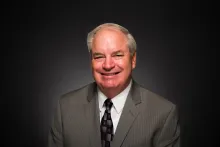
Robin Webber was born in Chicago, Illinois, in 1951, but has lived most of his life in California. He has been a part of the Church of God community since 1963. He attended Ambassador College in Pasadena from 1969-1973. He majored in theology and history.
Mr. Webber's interest remains in the study of history, socio-economics and literature. Over the years, he has offered his services to museums as a docent to share his enthusiasm and passions regarding these areas of expertise.
When time permits, he loves to go mountain biking on nearby ranch land and meet his wife as she hikes toward him.
