
Robin S Webber
This transcript was generated by AI and may contain errors. It is provided to assist those who may not be able to listen to the message.
Last time, we discovered that there were tremendous parallels between the Olivet Prophecy of Matthew 24, that we are using as a guide during this series, and the Book of Revelation. Why is that? That's a very important question to ask. Why is there that striking parallel of events that Christ recorded during His earthly ministry, and then those events and those descriptions that were given 60 years later during His ascendant, heavenly ministry?
That is a very important question to be able to answer on this day. To understand that, as Jesus gave the Olivet Prophecy, just days before He died, is to recognize that He was not having a bad day. Some of us today, in this day and age, we have what we call a bad hair day. We are frustrated, or we say things that we don't really mean to say, nor we want to take back.
But this was not the case with Jesus Christ. We want to remember, especially when we are dealing with prophecy, if you will join me for a moment, let's go over to the book of Hebrews 13. The book of Hebrews, and let's look at chapter 13, and let's focus on verse 8. Very important verse, where it says, Jesus Christ is the same yesterday, today, and forever. God has a purpose. That purpose is backed by a plan. The plan is backed by promises.
The promises are backed by provisions. God has not changed his mind. Neither God and or human nature has changed over 6,000 years. The message that we just heard about the first family and what they did, and when that did occur, God set a plan in motion that mankind might be redeemed and might fully be restored. But a lot is going to happen between now and then. As we open our Bibles and move to the Olivet prophecy in Matthew 24, for those that weren't here last time, allow me to share a thought with you, if I can, for a moment.
And to recognize that so often when we open up the Bible to chapter and verse, we've got to be careful that we don't miss where the story really begins. Because the story doesn't really begin in Matthew 24 and verse 1, but really began in Matthew 23. It really began as Jesus was witnessing to the covenant individuals of that day. Individuals that, frankly, should have known better. And He offered them a stunning indictment of all that they had put their trust and put their confidence in was going to be taken away from them. And then we begin to move into Matthew 24. And here now He's not only dealing with the religious folk of His day, but now He's having to deal with His own dear and trusted disciples to bring them in, to help them to see a real worldview that only He could be able to offer because they were kind of stuck in the world of sight and sound and what they could touch and what they could taste and what they could feel.
Because there it was before them. There was the temple. And they were saying in their Galilean accent, Wow! I'm in Disneyland! This is incredible! And of course, you've got to understand what it was like for these 12 Galileans to be in Jerusalem and to see the big city. And not only that, but surely one of the great artifices of the ancient world being the Second Temple and or otherwise known as the Herodian Temple.
And Jesus wanted to get their attention. Have you ever done that with people where they're kind of, you know, off? Not like any of you during the course of a message. Just teasing. But you have to kind of grab their attention. You've got to bring them back in, reel them back in to really get the point. And we find that in Matthew 24 when we come to this point when they are oohing and they are awing. And then he comes down to verse 2 and he says, Do you not see all of these things?
Surely I say to you, not one stone shall be left here upon another. That shall not be thrown down. Now, we discussed the size of those stones last time, and we don't have time to go back to all of that. But Jesus was really making a point that no matter how grand, no matter how great, no matter how big, man makes things, they are all but dust to God. And to recognize that beyond that, to understand that the principle really moves beyond just simply the religious covenant community of that day.
But when we come to really understand it, that all, all is ultimately going to come down before God Almighty and Jesus, his Christ. That everything that we get so dazzled and so amazed by in this world is ultimately going to become dust. And thus we are left then with a conclusion or a statement that Peter makes in his epistle. With all of this yet then going to be occurred, and as sure as is, the question comes in, therefore, what manner of man ought we to be?
Prophecy is not simply about facts. It is not simply to inspire us but for a moment or a day or in the course of a message. Prophecy and prophecy alone has one mission, and that is the transformation of the individual. To move us from what we were in this world of distortion and distraction and distance from God, to becoming Christ-like, to becoming one of his children, as was mentioned in the message. To become a part of his family and to separate us from this world and all that is.
So we need to understand that. That's a background. And Jesus is basically saying, as not one of these stones is going to stand. It leaves you and me then with the thought on this Sabbath day, 2009, what are we building upon? What foundation is secure? What foundation is going to, after all, stand the test of time?
As we did that, we began to move down then into Matthew 24, and we centered on verses 5 and 6. Verses 5 and 6, which speak of a religious deception that would come, and then with that religious deception would come wars. We found last time that this religious deception and wars correspond with the first two seals that we find in the book of Revelation in chapter 6.
Now, it's very important when we consider all of this. For those that weren't here last time, let's go back for a foundation just a moment, then we'll all proceed together. Oftentimes, when you can go to Matthew 24, Luke 21, or Mark 13, which are the corresponding gospels regarding the all of that prophecy, or you move into Revelation, it seems like there is just fireworks that are occurring. Sometimes you say, well, what is going on, and from which direction is it coming? That's why I have to kind of understand a little bit about the course of prophecy.
You might want to just take this down. Take a note if you want to stay engaged in the message. There are three elements of prophecy that roll one into another towards the grand finale, if you want to call that. We have what is called the time of man. There's the time of man. The time of man can be capitalized in the first four seals. That is humanity and its history apart from God, in confrontation to God. That is the time of man. Basically, human nature left of and by itself.
Now, let's take the second step. Are you with me? Then there is the fifth and the sixth seal. That is basically the time of Satan's wrath and or the tribulation and or the time of Satan's wrath. This is an accelerated time with new influences, new drama, new dynamism that we need to understand. Then, lastly, there's the sixth and the seventh seal, as mentioned in Revelation 6. This is basically the announcing and the coming of what is called the day of the Lord.
This is the time of God's judgment upon humanity. That is very important for us to understand. It is like when you go to a ball game and you are in the ballpark. You don't know who the players are unless you get the program and read it. It is very important because when all of this starts happening, you start thinking, Whoa! From which direction and from whom is this coming? The first thing that Jesus does in the Olivet Prophecy is basically describing to us the events that are going to occur from his ascension until his return and what we call the Second Coming.
He lays out slowly the first four major items which correspond to the first four seals. Join me now in Matthew 24. Let's move forward. Notice verse 6. I'm using this to guide you in being Bible students and noticing sometimes how God makes comments.
Notice what it says. And you will hear of wars and rumors of wars. Then notice what it says. See that you are not troubled. For all of these things must come to pass, but the end is not yet.
It's somewhat of a parenthetical encouragement. It's kind of a time out to allow the reader back then as well as now to take a pause and understand what God is doing. You will oftentimes find this in the Bible. You find it especially in the Luke in writings, the writer Luke, and how he speaks in the book of Luke and or in the book of Acts. There are three things that are happening here. Let's notice it.
First of all, it says, See that you are not troubled. That means troubles are along the way. Humanly speaking, in Christ says, See that you are not troubled. He gives an encouragement and he gives a warning up front. See that you are not troubled. 350 times in the Scriptures it says, Do not be afraid.
Why is that? Has God lost his mind or is his tongue on overdrive? Or does he maybe know what we are like as human beings when we don't reflect on his plan, his purpose, his promises, and his provisions? All we do is we see ourselves in the goldfish bowl without anything else around. So God says here, number one, Do not be troubled.
That's the encouragement. Now there's some bad news, humanly speaking. These things must come to pass. And human nature of and by itself is not pretty. And for every cause there's an effect. Then notice the good news. It's subtle, but it's there. But the end is not yet. Now let's understand something. Two things are happening. That means more is to come. Oh, that's not good. But at the same time, what was so encouraging to the early audience and for us in this room today is understand.
The most powerful word in it is there is an end. There is an end to humanity apart from God. It is not going to go on and on and on. Have you ever had that kind of thought going through your head sometimes?
How long, O Lord? And you echo the sentiment out of the book of Revelation. How long, O Lord? How long? When is this ever going to end? Is it going to end? It doesn't seem like it's going to end. And God firmly states through Jesus Christ, there is going to be an end to man's machinations and man's doings. And the coming kingdom of God is going to come about.
And so we understand that. Now we're going to be moving. As we notice that, we're going to be moving forward. We're going to discuss the third and the fourth seal for a moment. Touch the fifth as we go forward. Notice what it says here in... Let me pick up the thought here.
For a nation will rise against nation, kingdom against kingdom. Again, speaking of that second seal of war and destruction. And then notice what it says, and there will be famines and there will be pestilence and earthquakes in diverse or different places. Now, as we look at that, we begin to understand that Jesus said, from the time that I leave until I come back with the cycle of human history, these things are going to occur. And he does mention that there would be famine.
Now, when you think about it, when there is religious deception and or eruption in world history, war often follows. You can think of it in the course of history, the wars that have occurred, the religious factors that lead to war, that lead to famine, as it were. You can think of the great wars between the Latin Roman Catholic community against the German Aryan tribes that were coming over the Rhine and over the Danube. You can think of the great wars that occurred between 10 hundred and 1200 as the Frankish Latin Catholic people of Europe began to go down, and they would war against the Eastern Orthodox and Constantinople.
They would pillage against the Jewish communities and the Eastern cities of Europe, and then to come right up against the Turks and the Arabs with their Islamic ways that there were gigantic clashes. And you can go on further when you go into the Thirty Years' War that devastated Germany, that more people died of hunger than actually died in war, the massacre of cities, that it is this cycle that occurs between religious deception and war and famine, and that this would follow. And not only that then, but when you understand famine and you understand war, you also understand that sometimes famine is just caused by human nature, by human greed, by mismanagement.
All you would have to go back is 150 years, 160 years, to the time of the Irish famine in the 1840s, to recognize that that was basically a mismanaged famine from the home office in London, in which hundreds of thousands of Irish died, and then to recognize that they had to go to other shores, of which many of your parents came over to this country. And, or what occurs in Africa and Asia on a daily basis as the world sins relief, world sins aid, but because of the greed of political leaders, their people starve.
Jesus said it was going to be this way. Join me if you would in Revelation 6 for a moment. Look at the parallel here in Revelation 6, defining that as the third seal. In Revelation 6, and picking up the thought in verse 5, And when he opened the third seal, I heard the third living creature say, Come and see. So I looked, and behold, a black horse, and he who sat on it had a pair of scales in his hand.
And I heard a voice in the midst of the four living creatures saying, A quart of wheat for a denarius, and three quarts of barley for a denarius, and do not harm the oil and the wine. And so there's a prophecy about famine and what would occur. You think even in our own century, sometimes you think you have to go way, way back to understand man's inhumanity to man or the mismanagement, but to recognize for and end the living memory of some of you, to think of the great famines of our age, to think of during the 1930s with Russia and with Ukraine, where over 20 million individuals died due to the mismanagement of the wheat harvest under communistic collectivism, and or during the Great Leap Forward in China, where 20 to 30 million people died under the administration of Mao Zedong.
And or you think of today as you and I are well and fed and here in America to recognize the famine and the plight that is occurring over in Darfur, over in Africa. But this leads on to another aspect of man's history and what man reaps apart from God, and that is the story of pestilence and to recognize that that would occur. Look at what it says here in Revelation 6 and verse 7, where again it says, And when he opened the foresail, I heard the voice of the fourth living creature, saying, Come and see.
Now when you and I read, Come and see, it says, Well, come and see. It's basically the angel has an eagerness in his voice. I come over here. You've got to take a look at this and understand what is going to be coming.
And you find this in Revelation 6 and verse 7, where it speaks of, And when he opened the foresail, I heard the voice of the fourth living creature, saying, Come and see. And so I looked, and behold, a pale horse. And the name of him who sat on it was Death. And the grave followed with him. And the power was given to them over a fourth of the earth, to kill with sword, with hunger, and with death, and by the beast of the earth.
What we sense here, then, is the aspect of disease and of pestilence. Where there is war, there is famine. Where there is famine, there is disease. Disease is one of the great contributing factors of history. That when you think of war, more people have died of disease and pestilence than actually are killed in the war. We just have to go back to our own history in the Civil War to recognize how many people actually died in the nursing tents versus on the battlefield.
And what is interesting here is, as Jesus was mentioning this on the Mount of Olives, which is really incredible because that's the mountain of peace that overlooked Mount Zion and the temple. I don't think it gave Christ any joy mentioning this to his disciples. There may even have, in that sense, been tears in his eyes, thinking of what humanity's history could have been if it had only accepted God and accepted him. And yet Jesus looked down, and down through 2,000 years of history could see the great smallpox epidemics. How many of you have a smallpox? Little confession is good for the soul. How many of you out of the 50s, 40s, 60s have a smallpox vaccination on their arm?
Yeah, a little circle, right? A little circle. Remember the old little pinprick? Remember standing in line and the nurse telling you it's not going to hurt? Yeah, sure. One little mark on your arm. But smallpox has been the scourge of humanity for 2,000 years. To recognize that smallpox literally devastated empires and civilizations, took one civilization out and made another empire happen when smallpox would go through a community. It's just smallpox. And or the Black Death during the 13th and 14th century, actually the 14th century, and it's at its height that basically knocked out one third of Europe that had its grip on Europe actually until the 1800s, that there would still be outbreaks of what we call in one term, the plague.
Christ saw all of this, and this would be history apart from God for humanity. Back to Matthew 24 now. In Matthew 24, Jesus makes another comment. The comments are almost as important as the details. Let's notice verse 8. Having now, in a sense, shared what the next 2,000 years would be like, now comes something very important for us to understand. All of these are the beginning of sorrows. It's almost as Jesus being the kind and loving teacher that only he could be, almost sets the gauge, gives us an informational pause.
But what he's really telling us, the reader, and the Bible student is this, take a deep breath. Make sure you've got your seat belt on. Airbags deployed. Because now history is going to begin to accelerate. Notice verse 9. Then they will deliver you up to tribulation, kill you, and you will be hated for my name's sake. Probably one of the most important words, there's no just most important word, but if you want to be daring with your Bible today and with your pen, you might want to circle the word then.
Then is very important. Then is almost like putting your hand on the gear shift. Something is occurring here. There is a dynamism that is now going to move us out of history, of humanity alone, and spiritual elements are going to increase their presence here on earth. Then they will deliver you up to tribulation and kill you, and you will be hated by all nations. I would suggest that this portion of the Olivet Prophecy coincides and or parallels with what we find in Revelation 6.
Let's go back there now. In Revelation 6, because the Bible does interpret the Bible, in Revelation 6, let's pick up the thought in verse 9. And when he had opened up the fifth seal, I saw under it the altar the souls of those who had been slain for the word of God and for the testimony which they held.
Notice verse 10. And they cried with a loud voice, saying, How long, O Lord? Holy and true, until you judge and avenge our blood on those who dwell on the earth. There's this plea. There's this passionate calling out.
God, we can't take it. It's almost as if the pressure is seemingly too great. And as you see here, we see that it's the fifth seal, and the fifth seal corresponds with what is called the Great Tribulation. We'll pick up that terminology in the next time that we're back here. But what we see here, we see we now enter the second stage in Matthew 24 and verse 9. And it's very important to understand. Again, let's put this down as students of the Bible. So we speak the terms of the Bible. The fifth seal is the time of tribulation. It is the time of what can be called Satan's wrath. And the question comes out, How long, O Lord? Now, this is very important. And before we go forward, I've got to take you backwards for a moment. Because this, how long, O Lord, is actually the crescendoing apex of two different ways of life that are now on a collision course. When I have the opportunity to go around and conduct seminars on prophecy, I simply call it this. You might want to jot it down. I call it the thread of two. The thread of two. I'm sure you, ladies, maybe some of you gentlemen that are given to stitchery, know a little bit about thread and winding it through a piece of cloth. Call it the thread of two because there is a winding all the way through the Bible of this parallel between two different ways of life. We heard a little bit about it in Mr. Luhan's opening message. Let's consider for a moment from the very beginning, the book of Genesis, which means beginning, that from the very beginning we understand that there was a confrontation between two forces, two gods, one with a capital G and one with a little G. The God of creation versus the God of this age. God with a little G. God of this world, cosmos from the Greek, meaning society or culture and or way of life, that there is this budding going back and forth, a confrontation. These two gods have two different ways of life. We find them in Genesis, too. In Genesis 3, there are two ways of life depicted from the very beginning by two trees. The tree of life producing the way of give and outgoing concern and the tree of good and evil, of experimenting, of rooted in self. Seeing is believing. I do my own thing, even though I know that you've offered me Eden. These two ways of life also, in a sense, bring forth two ages. Because of the choice of Adam and Eve, there is indeed this present evil age.
This present evil age from the time of Adam, this other force, brings us a different age. The ageless kingdom brings us a world without end. So we have two gods, two ways of life, two trees, two ages, two cities, Babylon, Jerusalem.
There's really only two cities that count, and I'm sorry it's not La Mesa in the Bible, maybe, and or Imperial Beach, and or Chula Vista.
There's only two cities that are on the marquee in the Bible. One is Jerusalem, the other is Babylon.
Babylon, whose system and culture and religion has festered, found itself moving down through the channels of history for over 4,000 years.
And it's predominant at this time, but there's another city. Paul calls it Jerusalem, which is above. Galatians 4, verse 26. Which city wins? Well, that's why you have to read the end of the book. But understand that there's this force between two cities.
These two cities also have an extension. Let's put this down, please. There are two churches that are mentioned in the Bible.
Two churches. There's a great, worldly church that is given definition and color in Revelation 17. It's called Babylon.
And there's another church found in Revelation 12, a small flock, a little flock. A flock that finds itself figuratively in the wilderness.
Many people at times don't know that it exists, but God knows where it is. And the great church, the worldly church, that system does know where it exists and wants to stamp it out.
Ultimately, then, friends, as we come to the end of this thread of two, there are two outcomes. Two outcomes.
Salvation and destruction. Be it momentary. Be it eternal. God only knows who. God only knows when. God only knows what.
Why do I mention that to you today here in San Diego, California? Please hear me. Very important.
The way that the Bible is written, it comes to us in a thread of two. There are two choices, two ways, two gods, two trees, two cities, two churches, two outcomes.
Human nature wants to triangulate that and go with what we call the third option. Kind of like Frank Sinatra's song. I know. I'll do it my way.
I'll put one foot over here. This is the PowerPoint presentation I'm giving you, and I am the PowerPoint for a moment.
Look. One foot over here. Yeah. Feels good. And then I'll put one foot. I'll straddle. I'll straddle both. I'm not going to stay here too long this way, or something dangerous is going to happen.
I'm going to straddle. I'll put my foot over here in this world, but just in case, I'll put my foot over here in this world. It's called the third option.
Too many people today that call themselves Christian and just don't think of those outside of this room are playing with the third option. And they are not grounded. They are not embraced by the God that is creator under the shade of the tree of life, choosing the way of give, recipients of being citizens of the Jerusalem that is above, of being a part of the body of Christ, and having assured their salvation.
Because of their choice. That they put their marbles in one place. And they see what Jesus said that this world would be like apart from them in the four seals and say, I don't want any part of that. But even as we do that, we recognize what it says in Revelation that they go, how long, oh Lord, how long? And that's human too. Because we get a little nervous. We're human beings. That's what we can do.
And our knees might be shaking, but those that are truly in the body of Christ, oh, I used to get through this way, we may have shaky knees, but we will not have shaky hearts. There is a difference. Humanly, our knees will shake, but our hearts are firm. Jesus gave us the roadmap to what would come along the way. And yes, it does come. Join me if you would in Revelation 12.
In Revelation 12, we find that Revelation 12 gives us the color of what occurs during the time of what is called the Great Tribulation. In verse 7, And war broke out in heaven, Michael and his angels fought with the dragon. That is a biblical term for Satan, who is the adversary. And the dragon and his angels fought. There's this conflict that has been since the very beginning of time, since that time that is revealed in Ezekiel 28, when the one that was Lucifer rose up and tried to ascend to the heavens, and yes, was thrown back to this earth. This is not something that has gone away. It has passed, it is present, and yes, it will be future. And so the great dragon was cast out, that serpent of old called the Devil and Satan, who deceives the entire world.
He is the God of this age. And he was cast to the earth, and his angels were cast out with him. And then I heard a loud voice saying in heaven, now it's salvation and strength. And the kingdom of our God and the power of his Christ have come, for the accuser of our brethren, who accused them, before our God day and night, has been cast down.
Notice verse 12. Therefore rejoice, O heavens, and you who dwell in them. Woe to the inhabitants of the earth and to the sea, for the devil has come down to you, having great wrath. Because he knows that his time is short. That's why we call the fifth seal, the fifth seal, is the tribulation, and is also known as the time of Satan's wrath. When things start happening down here, as the saints of God, we've got to know who is the author of what we are receiving, or what's happening around us, so either we can blame the source or to praise the source. You don't want to praise the wrong source, and you don't want to blame the wrong source. Christians need to know what is occurring here.
Now, what's very interesting, if you'll focus now, let's join together in verse 12. Three things are happening in this verse. It says, Heaven's rejoice. So there's some really great news. Satan has been thwarted from heaven. Now, why he even thinks that he can do it, I'm not sure. I think at times, if I can say this, I think he's spiritually insane. How can that which is created, create it? Remember, O Lucifer, on the day that you were what?
Create it. How can the created think that it can overthrow the uncreated? Just think that through a little bit, and when the rubber band snaps, you've got it. And yet, the rubber band has already snapped in Satan to think that he can thwart God. So the good news is he has been thwarted. Now, here's the bad news. Woe to the inhabitants of the earth. Who lives on earth? Hands up. Yeah, that's us. Bad news. Now, notice one more point. For the devil has come down to you having great wrath because he knows that he has short time.
Great news, bad news, good news. The good news is that Satan's time is short. Now, let's understand something for a moment. We understand that the book of Revelation, written about 85-90 AD, was received by real people that had real challenges that were going through a real tribulation under a type of the beast of the Flavian house of the rulers of Rome known as Domician. He was one beastly individual. And this was one of the great persecutions against Christians, the greatest since the time of Nero.
When people were reading this in 85 or 90 AD, they were in a sense, and in a type, a parallel type, going through tribulation. And the encouragement of the ascended Christ to them through John was, do not worry, your life has meaning, no matter what you do go through, and you might go through it, just as did the head of the church who died. Didn't get transferred somewhere, died. It's going to be short. As God looks at things, it's only going to be a while until that ageless kingdom comes. This time on earth of Satan is given word in Revelation 13. It seems that there is an acceleration during this time of the fifth seal to where, literally, Satan, if we want to put it that way, literally moves into the realm of man in a way that has never been seen before.
You can go to Daniel 12, verse 1 through 2. I'm not going to do it right now. 600 years before Jesus Christ, God inspired Daniel, saying that there is going to come a time such as has never been. If any of you know any little small measure of history, that is saying something. Where do you want to begin and where do you want to stop when you think of man left to himself?
What battle, what war, what crusade, what plague, etc., etc., etc. And yet, God inspired Daniel to record that. There's going to come a time that has never been. Daniel 12, 1 through 2 is given breath and life through the words here in Revelation, where it talks about, I stood on the sand of the sea, verse 1, and I saw a beast rising up out of the sea, having seven heads and ten horns, and on his horns ten crowns, and on his heads a blasphemous name. And now the beast, which I saw was like a leopard, and his feet were like the feet of a bear, and his mouth like the mouth of a lion, and the dragon gave him his power, his throne and his great authority.
And I saw one of his heads, as it had been, mortally wounded and his deadly wound was healed, and all the world marveled and followed the beast. Now, what I want to share with you, if you're only now beginning to develop an interest in prophecy, it's very important. You might want to circle the word beast if you want to use your Bible as a workbook. Beast is very important. Beast is what God calls this future system. It's not what the San Diego Union calls it. In whatever area you put in the year, it's not going to be the San Diego Union, or the Orange County Register, or the Modesto Beacon.
That's right, the Modesto Bee. The Modesto Bee is not going to say, Dateline Europe, the beast, has decided to do that today. It doesn't work that way. Why is that? Because God looks at the heart. God sees things as they really are. He calls a spade a spade. Remember Nebuchadnezzar? Back in Babylon, as he's walking along the walls of Babylon, saying, Mirror, mirror on the wall, who's the greatest emperor of them all? I don't think that's quite biblical, but you know what I'm saying.
He's walking along and he's saying, Who built this? Oh, I did. I built Babylon. I'm so wonderful. Aren't I great? But God looked beyond that and he said, No, no, no, Nebuchadnezzar. You are a type of all of that which is going to come. And I do not look at your beard, and I do not look at your golden-glittered garments.
What I see underneath you is the heart of a beast. And because that is your heart, that is what you will become for seven years. You will be a beast. See, the power of the book of Revelation is to give us a guide and to give us a heads up. Kind of a, you might call it, inside trading. But don't take that too far. You don't want to be an inside trader. But I'm saying, it gives us the future ahead of time to allow us to know what's coming, that there is going to rise a system that is going to look golden.
And everybody's going to say, oh, who's like the beast? Long live the beast. This is wonderful. Everybody's happy. After all, you know, there's so few rules anymore. And we can just be how we are. And after all, the economy is great. And everything has been solved. And so, let's just follow the beast. But I want to show you something very important. Maybe you've never focused on this. Let's look at it, where it says, verse 2 at the end, The dragon gave him his power, gave him his throne, and great authority.
Then come down with me to verse 4. This is chilling. So, they worshiped the dragon who gave authority to the beast. I believe that humanity, unbeknownst, and not recognizing the source and the power behind this system that is going to rise, God calls it just like it is as spade as a spade. And they are actually going to be worshipping the dragon. Can you imagine that? Worshiping the creation rather than the creator.
Now, it's only going to be a short time that this system emerges. Just like if you want to use a historical parallel, the Holy Roman Empire, which for any of you who have ever read Voltaire, who made a comment on the Holy Roman Empire, said, it is neither holy, Roman, and or an empire. And the Holy Roman Empire would kind of come and go, just as the resurrection of this bestial system over 25 years would come and go. Most of the time, it would go. But, oh my, when it came, it came with great splendor and great power.
When you think of just the revival of this system under Charles V in the 1500s, that his was an empire that stretched from Tierra del Fuego at the bottom of South America, right into where we are today as a part of the Spanish Empire, all the way through Europe, right to the very gates of the cities of the Turkish Empire. But it came and it went. While it was there, it was powerful. And then it would go. But there is one more system yet to come. And just like Brigadoon, Brigadoon, not every hundred years, but in God's allowance.
That time and that system will come. Now, let's go back to Matthew 24, verse 9, during this time. We're just going to take about 10 more minutes. Matthew 24, verse 9. Let's notice what it says here. Now, during this time, when those that understand who that beast is and do not succumb to it and give its allegiance to it, when that system does come, the people of Christ are going to have to stand up.
It says, then they will deliver you up to tribulation and kill you, and you will be hated by all nations for my name's sake. And then many will be offended and will betray one another and will hate one another. And then many false prophets will rise up and deceive many. Because lawlessness will abound, the love of many will grow cold.
Now, even as Jesus is sharing this message with 12 individuals on the Mount of Olives, he's describing a new people that are in the making. He is discussing a new loyalty that has not been. He prophesies of those who would have what I call the new loyalty, a supreme loyalty to the God of Heaven and recognizing that Jesus Christ is His Son. And that loyalty makes all the difference. That new citizenship, that new devotion, that new loyalty, divides them from those whose hearts are different, that follow that other God, that follow that other tree, that are a part of that other religious system, that are a part of that other way of life.
And have you ever noticed at times that when people don't understand something, when people don't want to join something, they lash out? If they can't be happy, nobody's going to be happy. And so the citizens of the kingdom of God at that time are going to be persecuted. And at times, some people are going to be doing it thinking that they are serving their own religious system. Well, thinking that they do God a favor by what they do.
Notice again in verse 11, Then many false prophets will rise up and deceive many, because lawlessness will abound, and the love of many will grow cold. Or the love of many will wax cold. There are those whose love will wax cold during that time, due to the incredible external violence and roadliness that will abound.
And when I read such verses, I don't think we're too far away today, friends. Are we kidding ourselves in this room? That we are not a part of a world that is like Sodom and Gomorrah? When we go through the book of Romans, when I come back, and we begin reading through the book of Romans, and Romans 1, and we see what a world apart from God is like, or a world that wants to say they know God but doesn't acknowledge God, to understand our world isn't too far apart.
Modern-day America. Here we are coming up to July 4th, in a time that in the Declaration of Independence we said that as a people, that we recognize the laws of nature and of nature's God.
And yet how far have we moved from that? And what is incredible is when you look at Western society, that America is at this time the most religious nation in the West. And that is scary, because our religiosity is so skin deep. Because even in modern-day America, where we have this conflict between the two cities that we came from, Manhattan of the Dutch and Plymouth of the English, we straddle that. We've done a good job in America, because even on our money, and money is what makes America tick, we put in God we trust.
So we put Manhattan of the Dutch and Plymouth of the Puritans all together on the same paper, and we all say, all is well and good, and I can now do what I want to do. No third options in the Bible, friends. And Jesus said that those that are going to be a part of the new loyalty, that are going to stand out, that are not going to be affected by the culture that is around, by the exterior forces, are going to be persecuted.
Why did Jesus say that? Because it's the same Jesus that in his ascendant heavenly ministry, spoke to John about the seven churches in the book of Revelation. And he spoke about churches like Ephesus, or Smyrna, or Thyatara, or Laodicea. And each of them were affected by very real, world events that occurred in their community, or external forces that were affecting those local churches. Those churches, to a great degree, took on the characteristics of that, which was happening from them on the outside. The only difficulty is, with that picture, is, this, friends, Christianity does not work from the outside in.
It works from the inside out. And that is very important to understand. We need to appreciate, friends, that as these challenging times, not in the future, but even right now, to stand up for Christ, and to be a Christian, to be pure, to be unadulterated, and to be a light in this world, takes real confidence and real belief. The true Christian is the man who holds to his belief, when belief is at the most difficult.
The true Christian is the man or the woman that holds to the belief, when belief is most difficult. And Jesus Christ never said it would be easy. He said it would be worth it. But these times are going to accelerate in the future, and we need to appreciate that, and we need to understand that. I want to share a thought with you in the book of Jude for a moment. In the book of Jude. Join me there for a moment.
Jude is that little book right before the last book of the Bible, Revelation. And Jude is the smallest book that has a lot to tell us. And notice what it talks about here in Jude 3. Let's take a look at it. Beloved, while I was very diligent to write you concerning our common salvation, I found it necessary to write to you, exhorting you, to contend earnestly for the faith which was once delivered to all of the saints. To contend is a fascinating word. To contend for the faith. And that is what the people with the new loyalty and the expanded devotion are going to have to do. They're going to have to contend for the faith. The word contend there comes from the Greek word diakono, diakrono, pardon me, with an R. And listen to what it says. The definition of the vine's commentary means to separate thoroughly, to separate thoroughly or wholly, and or as to distinguish, and or as to make a decision. That is why the threat of two is so powerful as it runs through the Bible. Two ways. Two gods. Two trees. Two cities. Two churches. Two outcomes. God says as people in the body of Christ, we can't straddle. It's good for horses, but not for religion. You can't straddle. You've got to either have your foot here and contend, or if you want to contend in the ways of this world, but remember, Jesus Himself said, not one stone is going to stand. It's all coming down. Whether by those that are on the outside with the deceit, and are those that are even religious and have not accepted Jesus Christ, who is the rock, who is the foundation, Jesus says it's coming down. So whose world do you want to accept? This contending is very, very important to understand. Join me now in Matthew 24. Two last thoughts.
With all of this. See, one thing about Jesus Christ and the way He taught as the rabbi is simply this. He was brutally honest. Brutally honest.
And He puts the measuring rod so high that none of us can reach it of Him by ourselves, and that's why He promised to comfort her. We cannot do it on our own in this daily life or that which is yet to come in the future.
And yet He gives encouragement here throughout all of this. Notice verse 13. But He, ladies, may I say She too?
But He, and I'll add She, just to bring in the audience, who endures to the end, shall be saved.
Let's remember that when it's all said and done, that prophecy, friends, is not simply about physical deliverance.
The end game, if I can use that term loosely, regarding prophecy is salvation. It is salvation.
Prophecy is not about personal transference of problems. It is about transformation on our inside with the new loyalty to God the Father through Jesus Christ.
Very interesting as we read that because when you see these words, He who endures, the word endure there from the Greek is hupomino, which literally means to abide under or to bear up courageously. Let's read it with that sense. And those who abide under and or bear up courageously, the same shall be saved.
Well, let's allow the Bible to define the Bible. Join me if you would for a moment in Revelation 14. Revelation 14. What are they abiding under? What are those that are with the new loyalty?
Abiding under. Revelation 12 verse 11. This is what they are abiding under. And they overcame Him by the blood of the Lamb and by the word of their testimony.
And they did not love their lives unto death. What are they abiding under? What are they courageous about? They abide and they overcame that to overcome doesn't mean to undercome. It means to overcome. It means that they faced that which looked humanly scary. Are you with me? Humanly scary. Their knees are shaking, but their hearts not shaking. And they recognize that to overcome the fear that is before them, that their recovery is on the other side of that which is in front of them. And they have the confidence in the blood of Jesus Christ. That as Christ died in that blood, His Father above resurrected Him.
And that's the rest of the story. That death is not an end. Death is not an end. The power of Jesus Christ's tomb is the truism that if His tomb is empty, ours can be empty, no matter what comes our way. That's what we abide under. Any and all of us that have been baptized, and most of you have.
We were not simply baptized into water, but baptized into His death. And if baptized into His death, and as we are raised up from that water, we are in a sense raised up into the newness of life. That is what the people of 85 and 98 D took to them as perhaps they were martyred.
The people in 1095 and Bosnia, as the forces of the Empire came after them, because they would have no man between them and their God. They would not have any sacrament that was not mentioned in the Bible. They were a people of peace and not of war, like the religious forces that were coming towards them. They abided and understood and lived out Revelation 12 and verse 11.
One last thought. Join me if you would. Finish up here today, Matthew 24. I hope this has been hopefully informative as well as encouraging to recognize who is on our side, our champion. We'll talk about that in a moment. But I want to conclude with Matthew 24, verse 14. Very important verse.
And this gospel of the kingdom will be preached in all the world as a witness to all nations, and then will the end come. Now, this is a mouthful, and I'll try to make it simple. Historically, in our culture, we oftentimes look at this as what might be called a commission, as some form of divine commission.
When we actually read it in the context, there are two powerful thoughts that come out. You might want to jot these down as students of the Bible. It is a prophecy, because this is a chapter about prophecy, and it is an encouragement. It is not so much saying, go forth. That's a commission when you commit to somebody to do something. Rather, it is prophetic, and it is an encouragement. Let's look at it.
There is an end to humanity's inhumanity to humanity. There is an end to religious deception, to war, to famine, to pestilence, and to the fifth seal of Satan's wrath.
There is an end. It is coming. Whether you're going to be there or I'm going to be there, that's not the point. There's going to be an end. And this message of the Gospel of the Kingdom will go out. Now, what does that mean to you and me? Let's think about it for a moment. Join me with our brothers and sisters in 85 or 90 AD in the cities of Bithini or Galatia or Cappadocia. You're in the city of Philadelphia, and you're being persecuted. Domicene is there.
You see somebody that you thought that you might have risen up in the air with, following the words of Paul. All of a sudden, that's taken away from you. Why, then, have I given myself to God the Father and Jesus Christ all of these years? This verse is put by Jesus, who is the Master Comforter, to encourage us that no matter what happens in our life and to our life, that this Word is going to go forward, that God's plan, His purpose, His provisions, and each and every one of His promises that He stated are going to be carried out. We might miss a few of them, but they are going to be carried out. That it's not about us. It's about God. It's not about us. It's about God. And as Jesus thought of those words that He said in Matthew 16, 18, that the gates of hell will not prevail. I want you to think about that verse. How many have heard that verse before? Gates of hell. Okay. When you look at that verse, let's think about it for a moment. It is Satan that is on the defense. It is Satan that is being pushed back. You ever seen those Sandal and Toga movies where the guys had the battering ram? They go up, and they are going, boom, boom. That's until the oil comes down out of the castle holes. Ah, that's going to be good. And then the star of the movie always is in the front, but he doesn't get burnt by the oil. He makes it through the gate. Have you ever noticed that? Anyway, that's Hollywood. But what Jesus is saying is what looks so formidable right now, this world of first and second and third and fourth and fifth seals, it's coming down. It will not prevail. Christ, the fifth horseman on the white horse, the great horse, the great horseman, the champion of revelation, is going to win. He is going to be victorious. And this gospel, this good news of the kingdom, shall be preached. It will be preached by men and women as they go from city to city. It will be preached on the airwaves, the television waves, on the internet. It will be preached by the two witnesses in the future, on the streets of Jerusalem before, yes, they die, before they are resurrected. And yes, it will be preached by that angel that rides across the sky with the everlasting gospel, saying, Fear God, worship God, and know that He is the judge of all. All humanity is going to know. Revelation 24, 14 is given to us as a prophecy. There is nothing, nothing that is going to stop God from fulfilling His purposes. And to give us the encouragement as human beings that want so very much to have the kingdom of God to come to this earth, that nothing is going to hold it back. As we conclude today, and we've covered a lot of history, we've covered a lot of scripture, let's always remember, the key to prophecy is to what lens you will look through. Whether we look at prophecy through the lens of fear, and or we look at it through the lens of God's great love. Whether we look at it to, oh, those four horsemen, they're fairly scary, and yes, they are. And or as to whether we focus on the great horsemen of the book of Revelation, Jesus the Christ. Next time we see you, we'll pick it up in verse 15.
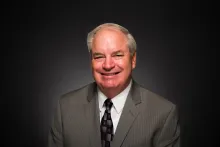
Robin Webber was born in Chicago, Illinois, in 1951, but has lived most of his life in California. He has been a part of the Church of God community since 1963. He attended Ambassador College in Pasadena from 1969-1973. He majored in theology and history.
Mr. Webber's interest remains in the study of history, socio-economics and literature. Over the years, he has offered his services to museums as a docent to share his enthusiasm and passions regarding these areas of expertise.
When time permits, he loves to go mountain biking on nearby ranch land and meet his wife as she hikes toward him.
