

David Schreiber
Public prayer can be meaningful, but Scripture shows that true revival requires more than a public appeal to God. National repentance includes a genuine turning from sin, a return to God’s commands, and visible change in the life of a people, as seen in biblical examples such as Nineveh, Josiah’s Judah, and Israel in Samuel’s day. Prophecy does not point to modern nations turning to God before Christ’s return, but instead to increasing distress and the need for God’s Kingdom. Our hope is not in national renewal through human governments, but in the return of Jesus Christ and the coming Kingdom of God.
The title of my message for today, for those of you who like titles, some of you do, does national prayer equal national revival? Does national prayer equal national revival? You might be wondering, this seems like it's coming out of left field. Well, maybe maybe it is, but I I did receive an email here a few weeks back from uh someone that we met at the feast last year in Australia who saw the uh advertisements for the Rededicate 250 event.
You might remember, some of you at least may remember that that was the big prayer event that was held on May 17th. It was uh at the Washington Mall, so in Washington DC and it was quite well attended, big stage. All the kind of like all the main uh Christian leaders that you might expect were there giving speeches, reading scriptures, offering prayers.
Mr. Trump uh from the White House was videotaped or not video, he was actually live fed in and read a scripture and the the the the event was advertised of course as a as a sort of nudge to the nation to turn back towards God to to think about our Christian roots as a country. So the question that I was asked was, do you think that this is the beginning of a revival in the country in the United States would of course been their question because they're from Australia.
I gave an answer and I'll I won't give you the answer I gave them the way that I gave it to them. I will walk you through methodically the answer itself. I want you to understand. I want us all to understand how to view those kinds of of events. It isn't to in any way disparage the effort, the people who were there, the the well-meaning that was behind it, maybe their desires, their interest.
I have no problem with any of that. The question was narrow. Does this indicate a revival of the country? Are we seeing a turn? Is that how we should view an event like that? To be fair, those kinds of events are they have a kind of attraction to them. We as a church, we sent representatives to it to in essence report on it because it is it made national news and so amongst Christian communities and this country still is largely Christian in identity.
It identifies, if you look at polling after polling, the country largely still identifies the people as Christians. Though practices have been, I would say, diminished over the years. And what people say who say they're Christians that they do might in our eyes equal less Christian behavior than we would think you would see.
lower church attendance among one of the chief issues that we see repeatedly uh in those kinds of pollings. So, I just wanted to stop then and take a look at this thing that's look, it's very appealing for a reason. Don't we want to see this country turn from the direction that it's going? I think we do. I think people pray about that regularly is what I suspect.
partly because we live here. You know, I don't like the idea that we go out, you can't go to downtown Portland, downtown Seattle without some worry. I bet you you don't want to go to those places because there's reason to have worry. They're not risk- free anymore. I don't even want to go down to to to Pike uh what is it called? Pike Pike Market.
Somebody say the name. Pike Place. I we used to go down there. We used to meet the Reeves and others down there. You'd take the ferry across from Breton and you'd have a great time there. I wouldn't even want to do that now. I'd like to see our country turn. But is that what this means? That this is the beginning of a turn? How would we know if that's what it meant? Well, I want to try to walk through three questions today.
What does it look like when a nation turns to God? What does it actually look like? I want to I want to see if we can see a pattern that would reflect that and then I want to look at what prophecy has to say about where we're going. So we put all that math together, we should have a better understanding of what this revival really meant, what it really signified and what we should understand about it.
I want to begin with this idea. Prayer is not the same as repentance. Prayer is not the same as repentance. At the heart of a revival, you would have to think there would be repentance. So, we see a prayer event. And I immediately begin with is prayer equal repentance? It's certainly a I think a part of repentance, but it is not repentance itself because we know what repentance is.
We know what repentance looks like. But let's go where the president went. I want to begin there. 2 Chronicles chapter 7. for an event which presents itself as a revival for the country. It makes sense that the president would have gone to this scripture as he did which would be 2 Chronicles 7 verse14. 2 Chronicles 7:14.
If my people who are called by my name will humble themselves and pray and seek my face and turn from their wicked ways, then I will hear from heaven and will forgive their sin and heal their land. I imagine all of us as we read through that can understand why it would be read at an event which presents itself as attempting through prayer to turn the country that if we would do as the scripture says is that what happened? Did the country turn because of a prayer? Is it prayer enough? Prayer is not a part of the verse.
I mean, it says if they pray, yes, absolutely, if they pray. But notice that there's some action in here. This is what I want to draw our attention to. Prayer absent of action is not repentance. Prayer absent of action is not repentance. Repentance requires a change. Turning, that's literally what it means.
So it says, "Yes, pray, but seek my face and turn from their wicked ways." Turn. That's the very word we use when we talk about what is repentance. It is turning from your evil ways, from what you know you've done wrong, from the sins that are behind you. Now, turn where? It says, "Seek my face." It's not just turning away and going any random direction.
It's turning directly and deliberately towards God to seek what he wants. And he says, "If you do that, that I will hear from heaven and will forgive their sin. Can a group of people which in 320 what what what number are we up to here in the in the United States? 300 let's just round it up to 350 million people. 350 million people if 1 million people were there at that event.
That'd be a massive number, wouldn't it? Would it represent the whole of the United States? If every person there genuinely prayed, would it represent all of America? Would that be all of America is praying in the same moment and then therefore all of America is turning to God? I mean, I'm looking at the event itself and there are protests that were videoed and people interviewed right outside the very event who were saying this is racist.
It's not inclusive because where are the Buddhists? Where are the Muslims at this Christian event? I say tongue and cheek because it does make me smile that you're it doesn't matter. It's just exclusive and that's enough of a reason. And so in the midst of that, but here's God's attitude about prayer alone. Isaiah, if the whole nation did pray on that day but did not turn.
That's what Isaiah's point is. Isaiah here is talking about Judah prophetically because here he is in Israel. He's dealing with in real time God disciplining, verbally chastising, and about to punish Israel by sending them away into captivity to Assyria. And in the midst of that, Isaiah here is looking across to Jerusalem to say, "What are you doing, sister?" And he notices verses 15 to 17.
This is what God was observing about Judah. And it says, "When you spread out your hands," why would they be spreading out their hands? That's in prayer. "When you spread out your hands, I will hide my eyes from you. Even though you make many prayers, I will not hear because your hands are full of blood. Wash yourselves. Make yourselves clean.
Put away the evil of your doings from before my eyes. Cease to do evil. Learn to do good. Seek justice. Rebuke the oppressor. Defend the fatherless. Plead for the widow. Still today, the number one cause of death in this country is aborted fetus fetuses. Nothing comes close. Who's defending the babies? We don't have a problem with that.
If you don't agree with it, something's wrong with you. A nation that allows this and our younger brother does the same. Is this a nation turning towards God? Is that what we see when we see prayers that say, "God, please forgive us and please help us and please be merciful to us and bless this country." What does God see? The blood on our hands.
That's like one example of it. Many examples exist because of how this country is behaving that does not tell God we repent as a nation. There's no turning here. So, I think we need to be careful when we see a public prayer event, not criticizing the individuals that participated in any way, not diminishing the the depth of the meaning or or how they felt about participating at all, worthy of respect in my mind.
Is this an indication that the nation is turning? The answer is no. It is not because the nation is not turning. And they don't speak for the nation. They speak for the people that agree with them. And apparently that's a minority, a significant minority. So as I think about, okay, well, what does a national revival, what does national repentance look like? We can easily turn to the pages of our Bible and find wonderful examples of what national repentance looks like.
Then when we fully understand what it looks like, we just have to step back and look at our society and analyze. Do they look the same? That's what would tell us we're seeing a revival. Jonah, there you are. Jonah, you remember I'm going to turn here to make this point. This is to me, this is a really good example for us to look at first because Jonah went where? He went to Nineveh.
Nineveh was the capital of what state? Assyria. the tool and the weapon God used to send Israel forever out of the promised land. Here Jonah is sent to them. We get to chapter 3 and we've been through the belly of the great fish now. So this is lap number two for Jonah and we get to the first verse and it says, "Now the word of the Lord came to Jonah the second time.
He'd spent three days and three nights in the belly of the great fish, whatever that fish was. And he's had enough time to percolate now that God says, "All right, Jonah," the second time, and he says to him, verse two, "Arise, go to Nineveh, that great city, and preach to it the message that I tell you." So Jonah arose and went to Nineveh, according to the word of the Lord.
Now, Nineveh was an exceedingly great city, a three-day journey in extent, which is pretty long. I mean, I've walked across, we live in Vancouver, Washington. I've walked across from one end of Vanc because we lived in downtown. I've walked from one end to the other of that city in like six hours. It's a decentsized town, 700,000 people, I think, by now.
Nineveh is quite a bit larger than that. If it takes three days to walk from one end to the other, if you walked the whole day, so verse four, and Jonah began to enter the city on the first day's walk, then he cried out and said, "Yet 40 days and Nineveh shall be overthrown." So he has a message to the people of Nineveh. You got 40 days and you are going to be overthrown.
Are people of Are the people of Nineveh the people of God? Are they in a covenant with God? No, they're not. No, they're not. To both questions. Yet the people who are not the people of God, who are not in a covenant of God, respond excellently, unlike the people of God who were in a covenant with God. Verse five, so the people of Nineveh believed God. Want you to push pause on that.
What is the name used here of God? Do you remember? You have it in your it. We read it in the English and we see the name God. Correct. We're in verse 5. Just double checking for you here by opening up my own eword to see the word. It's Alohim. You know that people of Nineveh had their own gods. It was not Alohim.
Alohim is the God in Genesis chapter 1 who created, who made man and fashioned him in his own image. It is the plural word of the family name for God. If this is not God, if this is a God that they believe that they worship, Jonah would have written the name of the God that they worshiped. if that's who they thought was going to curse them.
But Jonah is an Israelite. They know that he's preaching on behalf of his God. They know that. So the name is purposeful, meaningful. We know then when we pause here that they know that this is Israel's God. It isn't their God threatening them. It's Israel's God. They know the power of that God, and they believe the power of that God.
more than Israel believed in the power of that God. It's very important for us to connect these two ideas. This is not God's people, but they believed God. So much so, it says that in verse 5, so the people of Nineveh believed God, proclaimed a fast, and put on sackcloth from the greatest to the least of them.
putting on sack sackcloth, excuse me, and and sitting in ashes is is the symbol for mourning, for repentance, for grief. Notice that it did not single out a group that meta together at the capital of Nineveh to pray for healing and mercy and blessing. The entire nation, from the greatest to the least of them, fasted and put on sackcloth, a show of repentance.
the next mark of their repentance as a nation because we're looking at this example because we're asking the question, what does national repentance look like? Verse six says, "Then the word came to the king of Nineveh, and he arose from his throne and laid aside his robe and covered himself with sackcloth and sat in ashes.
" This is the leader who clearly did not hear Jonah himself, didn't hear the warning, but saw the reaction of the people fasting, putting on sackcloth, repenting from the greatest to the least of them. And what did the king do? He got off of the seat of his authority and humbled himself. To who? To his God? No, the God.
the god of all gods, Alohim. Verse 7 says, "And he caused it to be proclaimed and published throughout Nineveh by the decree of the king and his nobles, saying, Let neither man nor beast, herd nor flock, taste anything. Do not let them eat or drink water, but let man and beast be covered with sackcloth, and cry mightily to Alohim, not their gods. Cry out to Alohim.
Yes, let everyone turn from his evil way and from the violence that is in his hands. Notice this is not just prayer. It's prayer with action. turning from what? Violence to what? Alohim, the God of Israel, the God of all gods. Notice what his motivation was. Verse 9 says, "Who can tell if Alohim will turn and relent and turn away from his fierce anger so that we may not perish?" He understood better than Israel.
He understood what God could do to Nineveh. What God's prophet Jonah said would happen in 40 days. He sees the only possible solution. The same as the people see it to turn from our wicked ways. This is what national repentance looks like. Do you think the king went through all of Nineveh into every home to validate that everybody fasted? Do you think Jonah did? How is it that God accepted this? There's only one way that you know.
It's that every heart turned to God. The actions show what's in the heart, turning from their evil ways. But who's policing that? The point is, how do we know that it happened? That they all actually did that? And the answer is verse 10. God saw their works that they turned from their evil way. God watched them do it.
He saw every man, every woman, every child. Oh, I doubt it's every single one to the numbers, but the vast majority turned from their evil ways and prayed to that God. And it says that he relented from the disaster that he said he would bring upon them and he did not do it. Why I asked the question or pointed out the fact that Nineveh was not in a covenant relationship with God.
It had no promises. It couldn't look to the scriptures and say this is us to our God of covenant with us. They had no such covenant. Why is that important? Because if that people could turn and repent and be forgiven and spared, we don't need to look to ask the question about whether this nation as modern Israel could do the same and also receive forgiveness.
Yes, it can. If it would turn, who's watching? God. If the nation turns, God's watching for it. A prayer at the National Mall is insufficient to justify a nation turning to God. At best, it's a group of people who sincerely hope that that would happen. That's what that means. Because this is what national repentance looks like.
Turning from our evil ways. Well, what would happen if we did that? If we all turn to to God, wouldn't that begin with everyone, every family picking up their Bible and starting to read it, seeing those ten commandments which talk about things like murder and theft, talk about adultery, lying, how we treat our parents, how we should actually worship God, wouldn't we begin to see crime declining? Wouldn't we see our jails emptying over time? Because a nation is turning to God.
It is yielding to what the scripture says we must do. If we saw that, wouldn't we then see the results of that? Yes, we would. Are we seeing that? No, we're not. Under any analysis, we are getting worse. We are worse today than we were on the 17th of May. We are going to continue to get worse. That's undeniable.
We'll walk through that. I want to walk through another example first. Judah gives us the example I want to follow next in 2 Kings chapter 22. Okay, I'm going to I'm going to read. We're going to read and then I'm going to jump ahead. So verse three, just to catch context here. Verse three says, "Now it came to pass in the 18th year of King Josiah.
" So now we know who's in who's in power. It's King Josiah. Now he sent Shaan the scribe, the son of Azeliah, the son of Melchum. Mashulum, sorry, son of Mishulam. Hyphenated right in the wrong place. It says, "To the house of the Lord." Now, let's skip forward here to verse eight. Then Hilkaya the high priest said to Shaan the scribe. Okay.
I have found the book of the law in the house of the Lord. What's the book of the law? I hope you're going to say Torah. I hope you say that. the first five books. That's the book of the law. We went through that series. It was a kind of foundational. And now it has some meaning for us right now because we can look back and remember what we studied. It was the book of the law.
The book of the covenant. Okay. He finds this. Hilkaya finds this. He's the high priest. I mean, I'm trying to picture that. Is he stumbling around in this place? He's looking because he was sent to he was told to look around for something. He does. and he finds this book of the law. This is amazing. And Hilkaya gave the book to Shaan and he read it.
So Shaan the scribe went to the king bringing king the king word saying your servants have gathered the money that was found also. So they were looking for the money in the house and have delivered it into the hand of those who do not work who oversee the house of the Lord.
Now in verse 10 it says then Shaan the scribe showed the king saying Hilkaya the the priest has given me a book. It's not just any book it's the book of the law and Shaan read it before the king. Now verse 11. Now it happened when the king heard the words of the book of the law that he tore his clothes. Then the king commanded Hilkaya the priest, Ahikam the son of Chaan, Akbore the son of Micaiah, Shaan the scribe, and Asa a servant of the king, saying, "Go inquire of the Lord for me, for the people, and for all Judah, concerning the words of this book that has been
found. For great is the wrath of the Lord that is aroused against us because our fathers have not obeyed the words of this book to do according to all that is written concerning us. Josiah simply looks at the nation, sees the disobedience, the high places, the worship of Baal, Ashtareth, even Molech. This is what's going on in his kingdom.
He looks around at that kingdom, hears the words of the book of the law which forbid everything he sees. And this cuts him to the heart. This is why he tore his clothes. It's shame, anger, frustration at what he sees in the disobedience of Judah, of Judah. And he believes God's wrath is upon them as a nation.
Over in chapter 23, the very next chapter, verse one, it says, "Now the king sent them to gather all the elders of Judah and Jerusalem to him." All right, there's a gathering now. All the leadership. Bring them all to me. Verse two, the king went up to the house of the Lord with all the men of Judah and with him all the inhabitants of Jerusalem, the priests and the pe and the prophets and all the people, both small and great.
That language echoes right out of Nineveh, doesn't it? all the people with him, both small and great. And he read in their hearing all the words of the book of the covenant, which had been found in the house of the Lord. Then the king stood by a pillar and made a new covenant before the Lord.
He recognizes the covenant in the book of the law and he says, "Okay, a covenant is an agreement. I'm going to make a new agreement right now." made a covenant before the Lord to follow the Lord and to keep his commandments and his testimonies and his statutes with all his heart and all his soul to perform the words of this covenant that were written in this book.
And all the people took a stand for the covenant. Did Josiah go through every household to make sure that everyone was on board? have everybody sign on to his new covenant. We're going to honor the o old covenant with Israel. No, he did not. How do we know that the people repented? Because God inspires the record.
Who's watching? God is watching. When a nation repents, it is God who is watching the repentance. It is God who decides that it is in fact repentance that he is seeing. It isn't the decision of the king. See, we've repented, God. How much is that just the same as a bunch of well-meaning people at the National Mall praying to God? There's no difference.
If the people, all the people are not in it, there is no national repentance. Here we see an example again of national repentance. Drop down to verses 24 and 25 of the same chapter 23. It says in verse 24, "Moreover, Josiah put away those who consulted mediums and spirits uh spiritists, the household gods and idols, all the abominations that were seen in the land of Judah and in Jerusalem, that he might perform the words of the law which were written in the book that Hilkaya the priest found in the house of the Lord.
" Now before him there was no king like him who turned to the Lord with all his heart, with all his soul, and with all his might, according to all the law of Moses. Nor after him did any arise like him. It's just a way of saying that Josiah was effective as a king in leading the people to repent. It is God who decides that that's actually what happened.
It is God who blesses them because they repent. It is God who has recorded of Josiah this reputation. One more example a little earlier from Samuel's time. 1 Samuel chapter 7. Israel wanted help against the Philistines. Naturally, they think they could go to Samuel and have him beseech God on their behalf for help in their time of need.
So Samuel says, "Okay, this is the test." Chapter 7 verse three. Then Samuel spoke to all the house of Israel, saying,"If you return to the Lord with all your hearts, then put away the foreign gods and the ashareths from among you, and prepare your hearts for the Lord and serve him only, and he will deliver you from the hand of the Philistines.
" Do you think Samuel went throughout all the tents, all the homes of the Israelites to validate that they had put out the idols, had put away all the false worship? Not possible. And yet verse four says, "So the children of Israel put away the bales and the asteriths and served the Lord only." How do we know that? Because God is the inspirer of the scripture that records it.
Samuel didn't go to every home and validate this. Samuel was the writer. God is the inspirer. So therefore, God is the one who saw what the people did in their hearts and then followed what was in their hearts by taking action to put out the idols, to set aside their false worship, and to turn to God. You cannot fake that.
God is the one who's watching, judging, evaluating, and deciding whether what he's seeing is indeed repentance. This is a case of national repentance. Israel repenting as a nation and God hearing them because it is genuine. This is what we know when we look in the scriptures to ask and answer the question, what does national repentance look like? If somebody genuinely wants to know, does a even a massive very large prayer event constitute revival? I'm going to go here.
I'm going to look at what revival looks like. Then I can step back and I can honestly analyze what I'm seeing and answer, "No, they're not the same. You can do the same math that I can. We can respect the people who desire it, who would attend, who would fly from across the country, and many did to attend such an event because they truly believe and hope in their hearts that a people would turn.
That's not sufficient to speak for the nation. The nation has to speak for itself. Every man, woman, and child has to know and understand they're making a choice to turn from their way to God. It isn't just about stopping. It's about turning to something. So yes, turn away from your evil, but turn to something.
Not randomly, not some weird direction. To God. Everyone has to do that in their heart as a nation. I'm not even saying every single man, woman, and child. I mean the bulk that's what we would have to see. I bet you you recognize this instead from Isaiah chapter 5 and verse 20. Woe to those who call evil good and good evil.
Who put darkness for light and light for darkness, who put bitter for sweet and sweet for bitter. I would tell Miss Winder that those who put goat cheese for cheddar, you're not getting away with it. Go. It's the same. It's going on the tongue. I'm going to know. I teased her this morning in Olympia about that.
It's like we're we're we're talking about goat cheese and cheddar right now. It's the same thing. One is not the other. You can't say that one is the other. And I, you know, I've got a sensitive pallet. Some of you may have heard that. Sweet for bitter resonates with me, right? Food for decorations. Some of you would eat it called kale.
Whatever. So I Anyway, I get that. The light for darkness. Same thing. Like the other night I came in kind of late. Beck was asleep. The lights are all out and I open the door and it's, you know, whatever. Shut the door. It is black. She We have the dark the blackout curtains and our if it is dark, you cannot see a thing.
So I have to get my phone out and I'm fumbling for it to get the light on so I can see to just walk over to the bathroom. Darkness for light. That's easy to understand, too, isn't it? If you've ever stubbed your toe in the dark, you you know exactly what I mean. and good for evil. What is right for what is wrong.
When we're told things that we know are blatantly wrong are actually right. We're watching it all the time. It's in the news all the time. There's no turning from it. There's an effort to ramp it up to go even farther. And maybe it's polarizing because some are saying finally they've had enough. Okay, good. I applaud that.
Is the nation turning to God because some of the people are getting fed up? No. Because the nation has to turn in their hearts towards God and stop doing Isaiah 5:20. The answer for us is simply watching the direction the country is going. So we can have a public event in which scripture is read and in which genuine prayers are offered up to God, but they do not represent the heart of the nation, the heart of the people themselves.
Who's watching that? We know God is watching that. It is God who decides that what he sees is repentance and therefore worthy of blessing, forgiveness. The last point I want to make to you today is there's simply nothing in prophecy that indicates that the nation will repent. That's not what prophecy foretells. While we pray for it, while we hope for it, and I certainly believe we all do wish for repentance because we live here and we would like to see this nation turn, yet there's nothing in prophecy or scripture that tells us that it's going
to happen. In fact, the opposite. Jeremiah chapter 30, Jeremiah is in Jerusalem at the time that Jerusalem is being overthrown by Babylon and the people taken into captivity. We get to verse 30 and there's a prophecy about the restoration of Israel and Judah. And let's let's notice what it says here.
It says, 'The word that came to Jeremiah, verse one, from the Lord, saying, Thus speak, thus speaks the Lord God of Israel, saying, write in a book for yourself all the words that I have spoken to you, for behold, the days are coming. They're not here. People are being dragged off into captivity right then in real time. But he says, "The days are coming, says the Lord, that I will bring back from captivity my people Israel and Judah, says the Lord, and I will cause them to return to the land that I gave to their fathers.
" Israel has been in captivity for 130 years plus. They're not in the promised land anymore. They were scattered throughout the lands of Assyria. He's talking about bringing them back to the promised land. That clearly had not happened by the time Judah went into captivity. Says, I will cause them to return to the land that I gave to their fathers and they shall possess it. Verse four.
Now these are the words that the Lord spoke concerning Israel and Judah. For thus says the Lord, we have heard a voice of trembling, of fear, and not of peace. Ask now and see whether a man is ever in labor with child. And still today, despite what you may have heard, a man cannot get pregnant. So, we should never have heard of a man in labor with child.
But we know women who have gone through this, and they can attest to what that's like. God says prophetically, "So why do I see every man with his hands on his loins like a woman in labor and all faces turned pale?" Men, I think the closest we're going to get to that is if we've ever had kidney stones. That's probably as close as you're ever going to get.
I've heard women say kidney stones are worse than labor. Those who've had both, you don't want kidney stones. I've watched old men with kidney stones on their hands and knees rocking like a child because of how much pain they were in. He says, "You're acting like that. This is what I see in the future." Verse 7 says, "Alas, for that day is great, so that none is like it.
It is the time of Jacob's trouble." Who's Jacob? Israel. This is future. And this is talking about the future of Israel. A scattered people. Yes, but they're alive. They're well. They're going to be brought together, which is what we read at the first part of chapter 30. They will be returned to the promised land. But notice he says here that before we get to the end, it will be a time of Jacob's trouble where men will be like this in suffering.
But he shall be saved out of it. That takes us all the way to Revelation to see what happens in chapter 7 before the day of the Lord. and all of those Israelites named at the beginning of that chapter which are called out of tribulation spared from that last great day of God's wrath. That's what this is referring to.
They will finally be spared. Some of them, not all of them, but also a great multitude of Gentiles will also be spared who turn at that time to God. Yes, there will be a great calling that comes out of the tribulation of gentile people who genuinely understand and turn towards God. Very surprising. We might think that this could happen, but then we've never been through what they're going to go through and it might be worse than kidney stones.
Let's go back to Deuteronomy. You know, Moses is called a prophet. And here's one of the reasons why. Deuteronomy chapter 4, our prophet Moses gives a prophecy. I'm going to begin in verse 26. Moses says, "I call heaven and earth to witness against you this day." Now, he's talking to Israel. He's talking to them where? before they enter the promised land.
This is the children whom the parents used as an excuse not to go into the promised land whose parents wandered for 40 years in the wilderness whom God would not allowed to inherit the promised land. But here is their children. And Moses says, "Even of the children, I call heaven and earth to witness against you this day that you will soon utterly perish from the land which you cross over the Jordan to possess.
You will not prolong your days in it, but you will be utterly destroyed. That's a prophecy, isn't it? Because this is exactly what happened right around 720 BC. Verse 27 says, "And the Lord will scatter you among the peoples." Is that what happened? Yes, it is. And you will be left few in number among the nations where the Lord will drive you.
And there you will serve gods, the work of men's hands, wood and stone, which neither see nor hear nor eat nor smell. But from there you will seek the Lord your God and you will find him if you seek him with all your heart and with all your soul. When you are in distress, not peace and happiness and all good times, distress. And all these things come upon you in the latter days.
We now have the end time prophecy fully placed before us. That is what it means when it says the latter days. When you turn to the Lord your God and obey his voice, a people living in this world today at some point is going to turn towards God and repent. For the Lord your God is a merciful God. He will not forsake you, nor destroy you, nor forget the covenant of your fathers, which he swore to them.
Hosea adds just a little bit more to this. So, we see words like distress, not happy times, not a nation turning. We see Jacob's trouble, distress, and Hosea adds one further layer. Hosea 5. Make sure I'm in Hosea chapter 5 verse 15. He says, "I will return again to my place until they acknowledge their offense.
" Have we acknowledged? Has this nation acknowledged its offenses to God? Does a prayer group at the National Mall constitute the people of this nation acknowledging their sins before God? Because God isn't looking for a prayer group. He's looking at the hearts of every American that we would say constitutes repentance and revival in the nation.
It is God who's watching that. He says, "I will return again to my place until they acknowledge their offense. Then they will seek my face. In their affliction, they will earnestly seek me." Again, when when do we see that happening in the future? And I would say Revelation chapter 7. Before the seventh trumpet, before the seventh seal, before Christ returns, before the day of the Lord, there is a repentance that happens, a people genuinely turning to God.
So, prophecy does not show us Israel turning back to God today. There's nothing that we can find in scripture that would say you need to look for and expect a revival in this nation before the return of Christ. You won't even see that before the tribulation. Tribulation is going to come because there is a lack of repentance in this world.
This is what we know. So instead of having our eyes on and thinking about and meditating on whether or not we're seeing a genuine revival in a nation that is prophesied not to do so, our eye needs to be where it's always been on Christ's return. That's the government we're looking for. That's where the government of peace is coming from.
It isn't going to come from here. Daniel chapter 2, Daniel chapter 2 verse 44, Daniel writes, "And in the day that he's he's prophesying, and in the days of these kings, the God of heaven will set up a kingdom which shall never be destroyed. And the kingdom shall not be left to other people. It shall break in pieces and consume all these kingdoms and it shall stand forever.
That is the kingdom we're looking for. That is what we're watching for. That's what we are anticipating. That government which is coming, not any government on this earth which could become that. They will not become that. Revelation 11. This is before that seventh angel. Here we go. Verse 15 of chapter 11. Then the seventh angel sounded, and there were loud voices in heaven, saying, "The kingdoms of this world have become the kingdoms of our Lord and of his Christ, and he shall reign forever and ever.
" That's the government we're looking forward to. That's that perfect government of God that's coming. And every government on this earth, no matter where they are, will come under rule of that government. That's where our eye needs to be. That's what we need to be focused on. Not on any government of this world turning to God. Matthew chapter 24.
I'm going to end on this scripture. Matthew chapter 24. Notice what it says. This has to be our focus. Verse 14 of Matthew 24. Verse 14 says, "And this gospel of the kingdom of God will be preached in all the world as a witness to all the nations and then the end will come." Has the end come? No.
So guess what's going on right now? What's supposed to be going on right now is preaching this message of that kingdom which is coming to this world. We preach that message as a church collectively and we preach that message in how we live our lives as Christians today as God's children in this world living his way by example so that the world when it sees us in the day when Christ returns remembers.
I knew someone who truly was a son of God, truly a daughter of God. Rededicate 250 raised the question that I've tried to answer from scripture today. Did it point to a revival of this country? And the answer is no. It did not. well-meaning people, no question about it, with a great desire to see this country turn.
We understand that. I respect that. It's not going to happen. Nothing in the scripture tells us that this country is going to turn to God. Instead, we read of affliction, distress, we read of sin. We read of a time in which good for evil and evil for good. And we are watching it in real time happen. There's no collective effort to turn to God, to repent of our sins, and to follow his way, to open the pages of our Bible and all of a sudden truly live the way God intends us to live.
You're not seeing it, and neither am I. But that's okay. We don't need to see that. What we need to see is the return of Jesus Christ. And in order to do that, we need to be doing our best to live that kingdom today. Our hope is not in the repentance of this nation or any other. Our hope is in the return of Christ and the kingdom of God.
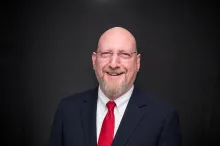
Ken Loucks was ordained an elder in September 2021 and now serves as the Pastor of the Tacoma and Olympia Washington congregations. Ken and his wife Becca were baptized together in 1987 and married in 1988. They have three children and four grandchildren.
