

Robin S Webber
This transcript was generated by AI and may contain errors. It is provided to assist those who may not be able to listen to the message.
Well, here we are. Many of us have just returned from the autumn festivals. This may be the first week back for some of us because we needed to rest up from all the good living and all the spiritual food that we received here a couple of weeks ago. By and large, I'm sure that most of us came back to one degree or another with a spiritual high. And hopefully we still have some of those fumes that are in us. Why do we have that spiritual high?
We have, in a very real sense, experienced the wonderful world of tomorrow in a very interactive sense. That's what the Feast of Tabernacles and the Eighth Day Festival is about. It is a workshop of experiencing the blessings of God, the goodness of God, the deliverance of God, and in Thai portray what the entire world is going to experience one day in the future. Beyond that, we've lived out and typed the words of Isaiah as we have figuratively gone up to the mountain of the Lord. We have been taught his ways, and we have most likely, being the people that you are, made resolutions that we are going to walk in his path.
In a very real and tangible setting, we have lived that wonderful world tomorrow. That is that millennial experience today. Now we are back home. And why can't we just stay at the Feast? Perhaps for some of us, it was so much easier being at the Feast. So take me back, beam me up, Scotty, wherever you might have been. Why aren't we at the Feast still?
Bottom line. I'm a bottom line speaker. God has more homework. God has more heart work towards his perfecting process in each and every one of us, inside of us, to make us into his spiritual image. Christ-owned words speak to this spiritual reality of why we are no longer in Hawaii, or in Puerto Vallarta, or in beautiful downtown Escondido, or wherever we might have been.
There is a reason. There is a purpose that is being worked out here below. Join me if you would. Let's open up our Bibles. It is the Sabbath day. Let's open up God's Holy Word. Join me if you would in John 17.
This was very much on Jesus' mind on that last night of his physical life, in that prayer that is enshrined in John 17. Let's pick up the thought in John 17 and verse 13. But now I come to you, and these things I speak in the world, that they may have my joy fulfilled in themselves. I have given them your word, and the world has hated them because they are not of the world, just as I am not of the world. I do not pray that you should take them out of the world, but that you should keep them from the evil one.
I always read that. And humanly I say it would be so much easier to be beamed up, not by Scotty, but by God. Once we come to the understanding of who God is, that it would be so much easier to, as we say in the old cowboy westerns, leave Dodge. But that's not God's will. Then notice what it says. I do not pray that you should take them out of the world, but you should keep them from the evil one. They are not of the world just as I am not of the world.
Sanctify them. That is, set them apart by your truth, your word. Your word, what I hold in my hand, is truth. As you sent me into the world, I also have sent them into the world, not out of the world, but into the world. And for their sake, I sanctify myself. That they also may be sanctified by the truth. So let's notice what Jesus said in that prayer to our Heavenly Father. Keep them in the world. Send them. Now again, I realize, initial audience, we're talking about men that were given the calling of apostleship, but there's still a principle to all disciples that they too are sent into the world, not out of the world.
And lastly, most importantly, that we're going to build upon today, is to set them apart by the word, by the word, by the words of God, by what we read in the Bible, which is the truth. The truth. And nothing but the truth. Truth, back in the time of the Hellenistic world, in the Roman world, was variable. It was optional. It was kind of elastic. It was all over the place. There were no absolutes. God says here, set them apart by the truth. Now, the question I want to ask you is simply this. How then do we maintain a sense of spiritual purpose when we are continually in a place that is not home to the heart of a Christian?
That's what we're going to answer today. How do we remain spiritually vibrant with purpose when we are continually in a place that is not at home in the heart of a Christian? We're going to appreciate, hopefully, the biblical reality that we are often the most vulnerable when we have experienced spiritual highs. We just came off of a spiritual high. A lot of energy, a lot of, what's the word I want? I'm looking for it right now. It's coming, coming, coming, coming.
A lot of spiritual adrenaline, a lot of oomph, a lot of ah. And what we need to recognize sometimes is that when we are at those heights, to recognize coming back that we need to be careful lest we fall and to keep that balance and how to keep that balance.
Well, that's why I want to bring this message to you today. And the title of this message is simply this, Doing God's Will in an Ungodly World. Doing God's Will in an Ungodly World. I've already mentioned here that we have been sent back to a place that of and by itself is not home to a Christian heart. This world, its ways are not home to me. I live in the world. I have a love for the people in the world, but it's not home. And so to that end, that's what I want to speak about today.
And as we move forward, let's realize we are not alone. Let's appreciate the clear and present challenges and opportunities that will lie ahead of us and the certain future God has in store for us. Now, remember Christ's words about keeping them in the world but set apart. To give further substance to this, I want you to join me in 1 John. In 1 John. I'm going to do a lot of just reading of the Word today. Let it sink in here. Because here we are. Jesus said, Father, you keep them down here. So what's the assignment that's set before us? 1 John 2 verse 15.
I'm going to read through it, then we're going to go back. Do not love the world or the things in the world. If anyone loves the world, the love of the Father is not in him. For all that is in the world, the lust of the flesh, the lust of the eyes, and the pride of life, is not of the Father but is of the world. And the world is passing away and the lust of it. But he who does the will of God abides forever. Little children, it is the last hour.
And as you have heard, that the Antichrist is coming. Even now, many Antichrists have come by which we may know that it is the last hour. They went out from us, but they were not of us. For if they had been of us, they would have continued with us. But they went out that they might be manifested, that none of them were of us. But you, speaking of those that would read this, have an anointing from the Holy One. And you know all things. I have not written to you because you do not know the truth, but because you know it and that there is no lie, that no lie is of the truth.
Who is a liar? But he who denies that Jesus is the Christ. He is Antichrist who denies the Father and the Son. Whoever denies the Son does not have the Father either. He who acknowledges the Son has the Father also. Now, there are a lot of underlying scenarios here that would be a whole Bible study in itself, even further down to what is germane as he is talking about the Antichrist and the last couple of verses. But I want to just use the overall general principles here for a moment to help us to understand something, to set the stage for what you and I are going to do in October, in November, in December, in January, in February, and in the course of the time set before us.
Let's understand the purpose for the epistle of 1 John. John's epistle is inspired to create two things, certainty and contrast, that God's promises and God's ways are certain. And he does this by using contrast. There are three major themes in 1 John. One is light, one is love, and the other is life. And there are other sub-themes that he uses that we're going to talk about here in a moment. But contrast is the best way of bringing something into our focus and as to what we're going to do here.
We find that as we come back up here to verse 15. He says, Do not love the world or the things that are in the world. If anyone loves the world, the love of the Father is not in him. Now, what is this talking about? Because in John 3.16 it says, For God so loved the world that he gave his only begotten Son. So is there some form of contradiction here that is going on? Let's answer that from him. No, there is not. We need to understand what is being spoken about here. And that is, do not love the world.
The word there, you might want to jot it down. Just an easy Greek word. It starts with a K. Cosmos. K-O-S-M-O-S. Cosmos, where we get the word, you got it. Cosmos. What does that word mean? And what can be gained from that? The word in the Greek means the arrangement and or the order. When it is used in the New Testament, what is being talked about is an arrangement and or an order. What is in confrontation? That is opposite of God's order, God's ways, God's solutions. And we need to understand that. It's God's rival. It's another way of putting it. God's rival. This world, this cosmos, this culture, this arrangement.
And this is the world that we're going into. I wasn't going to use this verse, but Susan and I were listening to a program and I think it's very important that we understand that the world that surrounds us right now. It's called, are you ready? Called a reality check of the world that we have stepped back into coming off of the face. Join me if you would in Romans 1. Because this is indeed, brethren, the world that we are in this time in our nation, in our communities. What is coming over our airwaves?
What is coming over and through entertainment? What is coming through conversation at the workplace? What is coming out of comedians' mouths? What is coming out of political parties? To recognize the world that we live in. Verse 18, For the wrath of God is revealed from heaven against all ungodliness and unrighteousness of men who suppress the truth in unrighteousness. Because what may be known of God is manifest in them, for God has shown it to them. For since the creation of the world, His invisible attributes are clearly seen, being understood by the things that are made, even as eternal power and Godhead.
And so they are without excuse. And because all, though they knew God, they did not glorify Him as God, nor were thankful, but became futile in their thoughts, their foolish hearts were darkened. And professing to be wise, they became fools. Now let's understand that Paul's initial comment here is towards the Hellenistic world of his time. It's speaking to those that were in Alexandria or at this or in Athens. It was speaking to those that had been tutored on the steps of the academy in Athens. It spoke to a whole system, but it also speaks to our system today.
Notice what it says, professing to be wise, so smart in their own eyes. They become fools. I must confess, when I hear politicians today, when I hear what certain people are advocating for when it comes to life and death issues, when it comes to issues of life and the womb, when it comes to issues of what and what not is marriage, this is the world that confronts us. This is the world we're stepping back into. And you listen to them long enough, and they keep on using airspace, and they think they are so smart and so above it all, and that everybody should think like them.
God calls them fools. They're not wise. In America, and I've studied American history most of you have, and I'm also a history major, is to recognize everybody who said, well, the Constitution or the Supreme Court. But to recognize that our founding document is not the Constitution. The founding document of the United States of America is the Declaration of Independence, which speaks of a Creator, God, that gives us unalienable rights, protects life and protects the pursuit of happiness.
And yet, we live in a world, at times, when people are so concerned about porpoise and fish. They're swimming around in a rice delta up in central California, but they're not concerned about the life that is in the womb, life that should be in the safest spot on earth, that is violated. And any culture, in any nation, that does not protect the sanctity of life, not the sanctity of choice, but the sanctity of life, is a culture that is headed for the dustbin of history. Israel, of old, sacrificed their children before Moloch. Carthage, a Phoenician society in northern Africa, did child sacrifice, and they were eliminated by the Romans.
It is a law of history that any nation that does not protect the least amongst us, the little ones, and protect them, is a nation that is not going upward but downward. Now, understand, this is a society that we're going back into. A society that feels privileged to have their own wisdom in their own way.
Professively, be wise. They become fools. Changing the glory of the incorruptible God into an image made like the corruptible man, and birds, and four-footed animals, and creeping things.
And therefore, God has also given them up to uncleanliness in the lust of their hearts to dishonor their bodies amongst themselves. Notice, who exchanged the truth of God for the lie, and worshipped and served the creature rather than the Creator, who is blessed forever. Amen.
The ultimate creature in their eyes, the ultimate God with a small g in their eyes, is man.
Man becomes God in their book. I think so, therefore I am. This is the world that you and I are surrounded by that is not a home to the heart of a Christian that is seeking the God, the true God, that is above.
Now, it's very interesting when you turn back to 1 John 2. Let's go back to 1 John 2 here a second.
In 1 John 2, it's very interesting because John's Jewish background comes back to the world. John's Jewish background comes out in this writing. It says, Do not love the world or the things that are in the world. If anyone loves the world, the love of the Father is not in him. And he talks about this world that is passing away.
John's impression is one of a Jewish impression that there is the present evil age and, secondarily, the world that is to come. In the mind of John when he is writing this, in the heart of a Christian, they are already existing in the world that has come, are you with me? While they stride in this present evil age. I'll use an easier definition. That's why I said earlier on, we live the world tomorrow today. We just don't put it off in the future. But as a Christian, we are living with those values, with those laws, and creating that society and our life today. Because we're honoring the God that is going to rule that wonderful world tomorrow and rules us today. Now, here's something that's very important I want to share with you. And I can only encourage you. I'm going to kind of go on and off my notes.
What happens in the epistle of John is it is very stark. John is kind of a black and white guy.
So you kind of know who you're dealing with.
And in his black and white, and he's using this contrast, it's simply this.
And that is that in this contrast, to recognize that there is not a third way.
Now, that's what I want to share with you as my dear friends here in San Diego. I don't have, but once a month now to be able to talk to you, but I just have an opportunity to plant some thoughts in your mind, whether you're younger, whether you're older, or for all of those that are in between. This coming year, what kind of way are you going to live? Are you going to live God's way? Are we going to live the world's way? Or are we going to live a third way and try to do a third way and try to do it in between? The epistle of John is written specifically to get rid of the muddled middle of our life and trying to have it both ways. You either worship God, you either plant his culture into your life and his ways into your life, or you have the ways of the world. You cannot straddle the stream. Your legs will hold out only so long, and you are going to fall derriere first into the stream, and all of you will get wet. You can't have it both ways.
And that's why he talks about these people that were with us, but they're not with us. They were of us, but not of us, because they did not have a love of the truth. They did not have a love of the truth, and we need to understand that. There's a very good verse on that I want to share with you for a moment. If I can find it in my notes, it's over in 2 Thessalonians, but I've got a second Thessalonians 2. Let's go to 2 Thessalonians 2. There we go. And let's pick up the thought in verse 8. Now, again, there's a principle underlying a prophetic statement here.
Here's what I want to share with you. Verse 10. Whether it is today, whether it is tomorrow, or whether it is in the future with what confronts us, because they did not receive the love of the truth that they might be saved. That's very interesting. That they might have a love, that they might have an abiding affection for God's way of life. Not just to have knowledge, not just a cerebral Rolodex that goes around and around like a jigsaw puzzle, but a love of the truth as it begins to interact with us and change us and brings God's kingdom experience into our life today. Now, not waiting until Christ lands on the Mount of Olives, but as He lands in our hearts and our minds and our lives today, a love of the truth. And that's really what I'm going to try to, in a sense, if I can say this, gently pound away today, that as we move forward, let's have a love of the truth. Join me again in 1 John 2. Let's notice what it says here about some of these different things.
Because this love of the world is then defined. For all that is in the world, the lust of the flesh, the lust of the eyes, and the pride of life is not of the Father, but is of this world.
Now, it's interesting when you look at that. What God is saying through John is, look, you're going to be in this world and you've got to kind of recognize what's coming your way.
Where is the foe? Where are you going to target?
He says the lust of the flesh. Now, lust is a very strong word. It's a four-letter word, and maybe it's a good word. It's very, shall we say, King James. Very Anglo-Saxon word that kind of lust or craving or pulling or strong desire. He says there's a lust of the flesh. He says there's a lust of the flesh. So oftentimes we think, well, the lust of the flesh must be something that merely just deals with sexual matters, fornication, adultery, wrong thinking, unpure thinking. But it really deals with not only fleshly sins, but more so is speaking to a life that is dominated by the impact of the senses, and it causes us to judge all that comes into our sphere of influence by purely material standards. And in the moment, I'm going to show you how this works in a little bit.
The commentator, Barkley, puts it this way. When it comes to the lust of the flesh, it is a domination of the senses, regardless of the presence of God. The commandments of God. The standards of God. Or the judgments of God.
Notice what it said here. It says, the domination of the senses, regardless of the presence of God. Very interesting that in one of the political conventions, it was noted that the name of God had been left out of one of the political conventions. But when you recognize what the platform was about, a platform that endorsed the paying for abortion, then it was a double folly to put God's name back into it and to stamp God somehow into something that is an abomination. God somehow into something that is an abomination in God's eyes.
Now, brethren, I'm just kind of telling it like it is here. Because this is the world that you and I go back into. And we're to be wise the serpent, the harmless of lambs, but also to understand the culture of this world that it is mixed up. Looks like a lamb, speaks like a dragon. There's a false dichotomy that is going on here, and you and I need to understand that.
It also talks here, notice what it says, about the lust of the eyes, the desire of the eyes.
What's that mean? That means seeing nothing without wishing to acquire it. There's no filter. Seeing something, nothing without wishing to acquire it. No restraint. Everything becomes irresistible, other than that which is eternally valuable. Can we talk? We look at what has happened to this nation over the last eight years with the financial folly that has beset our nation.
I know that everybody wants to blame Wall Street. I know others would like to blame Pennsylvania Avenue. I say, let's blame Main Street and let's blame the street that you live on, that people saw something and there was no restraint, there was no filter, there was no reason.
They had to have it. I remember when Susan and I first moved into the home that we live in now, eight years ago, and as we were looking through the models, we had kids, if I can use that phrase for a moment, 35 to 40 years. No, it wasn't that then. It was 30 years younger than we were at that time, looking at the same house that we lived in after our lifetime of saving and expenditure.
And they were going in, oh, we're going to have this and we're going to have that and we're going to have this and we're going to have that. And they had to have all of this at age 23 or age 24.
Now, if you have it at age 23 and age 24, fantastic! Go for it! And if you have that savings in the bank and you're not going into deep debt, fantastic! But most 23 and 24-year-olds don't have it, unless you're playing for an NBA team. And so they bought, because somebody said that they could, and that it would be all right. And that, oh, by the way, there's a balloon payment in five years, like those ads at the end where they start, you know, they say, this is really going to cure you.
I love these ads. This is really going to cure you. That is said really slow. And then after that, you know, they start blurting out, you may have suicide, you may have this effect, you may have that effect, you can never think about having kids again, and if after a week something happens, please call emergency, but, you know, you know, www, get it right now. Am I talking to the same group? If you watch the same thing, shame on you. Anyway, there's no filter. No filter.
Going back to this condition, people do not take responsibility for their lives. Age 22, 42, or 62. There were people that were our age, my age, over 39, that in the midst of what was an economic boom, they used their house like an ATM machine with no thought, no filter.
But then they want to blame everybody else. They want to blame a president. I don't care if it's Republican or Democrat. A president. They want to blame Wall Street. Nobody wants to take responsibility for the... There's a story in this. It all goes back to Eden, and we're going to get there in a moment. What about the aspect of the pride of life? The pride of life. The pride of life is a spirit that sees nothing without wishing to acquire it again, and having acquired it flaunts it without regard. The pride of life bonds itself with things that are not its own, exalting itself beyond all reasonable measure, just like a Banny rooster with a double extended chest cock-a-doodle-dooing.
This is our challenge. This is the world that surrounds us. This is the world that you walk into at the office. This is the world that comes into you through the internet, through television, on the radio, what you see on the billboards, what you see in the street, what people think is really cool to talk about so that they can be in, and they're surprised when you're not in, because your heart is not at home in their world, in their cosmos. Now, you say, wait a minute. Why me, and why now?
Well, let's understand something. It's always been. Come with me, if you would, to Genesis 3.
In Genesis 3. Back to the beginning. For those of you that are just becoming a queen with the Bible, that's what Genesis means. It means the beginning. So, we're kind of at the end of the movie, so we have to see how the movie started. That's where we go to Genesis 3 in verse 1.
Notice what it says, Now the serpent was more cunning than any beast of the field, which the Lord God had made. And he said to the woman, Has God and Dean said, You shall not eat of every tree of the garden?
Here's Satan doing some God talk. He's quoting God.
I hear a lot of people on the radio, and I even hear politicians quote God, but I suggest they don't come up with the same suggestions at the end of their speech or the end of their sermon that God does. Notice again, this is going to be important for you and I to kind of get our spiritual moorings here as we come off the feast. We're going to hear a whole lot of people talking about God or some portion of what God has said, but not giving you the real deal.
And the woman said to the serpent, Well, we may eat of the fruit of the tree of the garden, but of the fruit of the tree which is in the middle of the garden, God has said, You shall not eat it nor shall you touch it, lest you die. Then the serpent said to the woman, First lie recorded in the Bible, You will not surely die.
God doesn't really mean what he says. Can I interpret it for you, Eve? Can I make it more modern for you? Can I contemporize it and kind of get it down to where we can be in agreement and do your own thing? See, I understand do your own thing. I come out of the 60s, as do many of you, about doing your own thing. We thought it was new to the 60s. It's been happening since Eden.
For God knows that in the day that you eat of it in your eyes, you'll be open and you will be like God.
You'll be like God. You'll be God with the small g, knowing God good and evil.
Now notice verse 6, very important. So when the woman saw that the tree was good for food, that it was pleasant to the eyes and a tree desirable to make one wise, she took of its fruit and ate. And she also gave it to her husband with her, and he ate.
And then the eyes of both of them were opened. Oh, they knew a whole lot now, and they knew that they were naked, and they sewed fig leaves together and made themselves together. Now, I have a question. We're going to go interactive. Get ready. Let's go back to verse 6.
So when the woman saw that the tree was good for food, which one of the three elements of 1 John is being spoken about here? Okay. No? We'll save that for another one.
Okay, we already moved one. This is not hard. There's only two left.
Sandy. The lust of the flesh. You know, within humanity, I'm not saying this is wrong, but it has to be tempered. We have a tremendous desire for survival, for food, for intake.
Kind of starts when you see a little youngster, about six or seven months old. I'm sure Omar and Atali have gone over recently in their life, that when the little one started crawling, what happens is, you know, everything is going in their mouth, whether it should or not, whether it be pens or sharp pencils, whether it be dog food, whether it be dog something else, whatever might be on the kitchen floor. You see? There's no filter. You take. It moves into the mouth. Desire.
Desire on the kitchen floor by a half-year-old person. Yes. Now, we're all laughing, but how many of us at times have succumbed to being children growing up or recycled teenagers that we look, we see, we take, we fill without understanding God's presence, without understanding God's commandments, without understanding God's standards, and or considering God's judgment on the matter. Let's take another look here. So, we saw the tree was good for food. Now, the tree of good and evil did not look like a cactus out in Enza Borrego. It probably looked like a swaying palm down there on Shelter Island with coconuts. And then it's good for food. And then you notice that it was pleasant to the eyes. Now, we've already got one down, so which one would this be?
The lust of the eyes without filtering. And then notice, and a tree desirable to make one wise.
Which one would that be? Pride of life. God said that in the day that you partake of that tree of good and evil, it's over. Satan comes in with his cosmos, with his culture, with his order, and his arrangement of things. He says, you're not going to die. Basically, what Satan was saying is this. One plus one equals three. God will never do that to us. Are you with me? I was not a math major.
One plus one equals two. Now, some of you might be able to break that down into whatever. One plus one equals two. Not one plus one equals three. That's what's happening in today's world. People want to have their rights, then they're going to determine what they're going to do with their rights and try to prevent the effect. This is what's happening in the world today, even when you look at some of the issues that are out there right now with the aspect of sexuality and with the aspect of what is called reproductive rights. The aspect of, well, nobody's going to be in control of me. Nobody's going to tell me what to do. And thus, I can go around and I can sleep around with whoever I want to sleep with. But then the government, and who supplies the government other than you and I with taxes, then the government is going to be responsible for taking care of what I did and what I don't want because I did it. Wait a minute, you did it, but you don't want it. Does that make sense?
This is not rocket science. This is foolishness. This is the cosmos that you and I are stepping back into. I know people say, oh, they're cavemen. They're from another world. That's prehistoric. No, it's not prehistoric thinking. It's godly thinking. You take responsibility for your life. For every cause there is an effect. One plus one does not equal three. One plus one equals two in God's book. Now, they found that out. So when the women did it, then the eyes of both of them were open and hooked. They're there naked as a blue jay. But notice what they did, and they sewed fig leaves together and made themselves coverings. Now, this is very important.
They sewed fig leaves together to make themselves a covering. This is called thickleaf religion. This is called thickleaf theology. Another work... I know you're laughing. You say, well, that's not much of a theology. It's kind of small. No, okay. It's figleaf theology because they were trying to deal with the effect from the outside in. They were not dealing with the effect from the inside out. Some of us, if we dare be honest with ourselves, too often practice figleaf theology. Something has occurred, and we're trying to deal with it on the exterior rather than in the interior of our lives. I'm going to bring you to point on this in a moment.
And you can't deal with it on the outside. It has to come from the inside. It's not what you're wearing on the outside, but it's what you're wearing on the inside that is going to change your course. Now, with all of this, having gotten so wise, they took a bite of the fruit, then what happens? God comes walking, and God says, hello, where are you? Hello, anybody home?
They're cowering. And, of course, we know what Adam did. Adam blamed the woman.
The woman made me do it. Don't you love that, ladies? The woman made me do it.
It's the bad woman down through history. It's not the guy. It's the bad woman. It's the fallen lady.
He didn't take responsibility for his own actions. It's right there in the beginning. What all of us do at times, we do not take responsibility for our own actions. We want to shift it, just like we've seen in the nation from Main Street to Wall Street to Pennsylvania Avenue. Everybody is blaming everybody else rather than taking their shared responsibility in the matter. Now, I have a question for you because I'm not here to entertain you. Are you, as we come off the Feast of Tabernacles, having gone to the mountaintop, having been taught his ways, and then now going to walk in this past, are we going to take responsibility for our actions this coming year in how we live our lives? Because we are in the presence of God. We know the commandments of God. We know the standards of God. And we know that there is judgment upon the household of God. Now, if you look at this story, it looks pretty bleak. John's a warning in 1 John. You see the historical episode where it's linked. The Bible is linked together. Join me now if you would in Matthew 4. In Matthew 4, in Matthew 4, we have the story of Jesus in the wilderness. Let's set the story for a moment. There's been high points in Jesus' life already. He has started his earthly ministry. He has been baptized by his cousin John. He has gone into the Jordan. He has been in that sense cleansed as a high priest for us in that sense. There's a typology there. Now he's coming out. His father, the dove, comes down and says, This is my son in whom I am well pleased. Can you imagine? He started the ministry. He is validated by his father. And now he goes into the wilderness.
In Matthew 4, verse 1, That means to be tested by the devil.
When the tempter came to him, he said, If you are the son of God, command that these stones become bread.
Now let's understand in the Judean wilderness, this stretch of land that was probably like 20 miles by 35 miles east of Jerusalem. It was very foreboden. And in that Judean wilderness was these rocks. And they're very shallow rocks and sometimes very rounded. So you could almost sense to a degree that these rocks almost looked like the kind of bread that they used to make in days of yore, not like you pick up on the shelves today. So he said, Look, you're hungry. He says, If you are the son of God, command that these stones become bread.
What was the tempter appealing to here? What tool was he using with Jesus?
Jesus' life was on the line. His flesh was on the line. He'd been out there for 40 days and 40 nights. So what are we talking about here?
Pardon? No. No, this is not hard. This is the lust of the flesh. His flesh was probably crying out. He was hungry. I find it hard to go 40 hours, much less 40 days. Whoa!
But notice what he came back with. But he answered and said, It is written, Man shall not live by bread alone, but by every word that proceeds from the mouth of God. Now, if you're taking a note or you want to be daring enough to circle your Bible, the key thought here is, It is written.
It is written.
It is written. And the key word there in verse 5 other than that is then.
Then. Do you know when then is going to be? Then? Is it going to be after church? Is it going to be tonight? Is it going to be on Sunday? That when the then sentence comes into your life, when you have to be prepared? We can't plan then. We can and we can't.
We can be prepared, but we don't know the time of when then is going to come. Then.
Now, so often life is going well. I know there's many times when it's like when I come down to, when Susie and I come down to church. Oh man, look at this. It's so great.
There is no traffic. Then.
Then, right at the interchange of Temecula at the 15 and the 5. Then.
You don't know what then is. So there's something that we need to do. Jesus gives us a key as to how to deal with this cosmos that you and I are in. It is written. Let's continue here for a second.
Then. Okay, we did the then. Let's go to the next step here.
The devil took him up into the holy city, set him on the pinnacle of the temple, and said to them, If you are the Son of God, throw yourself down, for it is written, He shall give His angels charge over you, and in your hands they shall bear you up, unless you dash your foot against a stone. Then Jesus said to him, It is written again, You shall not tempt the Lord your God. Which one of the three would this be? We've already dealt with the lust of the flesh. We only have two less, pride of life, and the lust of the eyes. Which might this be? I would suggest it's the pride of life.
He's being asked to exalt Himself above something that He has not at this point been granted. He's being asked to want Himself to do His will over the will of His Father. He comes back to the tempter, to this one that is the ruler of this cosmos, that Jesus said to His Father, You keep them in. He says, It is written, You shall not tempt the Lord your God. Now, let's go to verse 8. Again, the devil took Him up on the exceeding high mountain, and He showed Him all the kingdoms of the world and their glory. And He said to them, All these things I will give you, if you will fall down and worship Me. He gave Jesus a visual smorgasbord of all the realms and all the kingdoms that were around. Then Jesus said to Him, when we look at it here, Then Jesus said to Him, Away with you, Satan, for it is written, You shall worship the Lord your God, and Him only shall you serve. Away with you. Now, there's something I want to share with you, which is interesting. You might just want to jot this down real quickly.
Three key words come out of this paraphrase, and sometimes I like to center on words. There's now. There's now that comes up. Now, when the tempter came, there's then that comes up.
And then there's the word again. What we see in the example of Jesus Christ is to remind us that Satan does not just have one time with us. He's going to come back again and again and again.
He does not give up. You know, it's very interesting later on in the account of the gospels, when Jesus was sharing what God was going to do. Let's go to that as a matter of fact.
I want to take Matthew 16 21. Matthew 16 21.
In Matthew 16 21, let's take a look. From that time, Jesus began to show to his disciples that he must go to Jerusalem and suffer many things from the elders and chief priests and scribes and be killed and be raised the third day. He was the Son of God. Then Peter took him aside and began to rebuke him, saying, Far be it from you, Lord, this shall not happen to you. But he turned and said to Peter, Get behind me, Satan, you are an offense to me, for you are not mindful of the things of God, but the things of men. Peter wasn't filtering right. And he said, Satan, get behind me. We need to understand that. Jesus, and this is the point I want to bring to you, was locked into something that is very important that we're going to conclude with. Psalm 119. Join me here for a moment in Psalm 119. Psalm 119. And this is my encouragement to you, dear brethren, if we are going to fulfill our Father's will as we stay down here in this world to serve Him. Psalm 119. Let's pick up the thought in verse 10. Notice, verse 9, How can a young man cleanse his way by taking heed according to your word? Now, notice this. With my whole heart I have sought you. Oh, let me not wander from your commandments. Your word I have hidden in my heart.
Your word. I've hidden. I've tucked away. I've packed that baby in there.
I've loaded up. You know, to get anything out of computer, you've got to put something in. For those of you that have email addresses, you just don't push a button, they come up. You've got to put them in, right? You can push that button all day long and you're going to have fun with your family. No. What you put in comes out. If we are going to fulfill Jesus' prayer this year, and be kept in this world surrounded by this cosmos, surrounded by the lust of the flesh, the lust of the eyes, the pride of life, then we are going to have to in bed hide in our hearts the laws of God. Psalm 119, verse 173. I'm just going to read through the Psalms here for a second. Let your hand help me, for I have chosen your precepts.
I long for your salvation, O Lord, and your law is my delight.
Let my soul live where? Down in this world, surrounded by this cosmos, and it shall praise you. Not praise myself, but praise you. And let your judgments help me.
See, when we hide God's Word in our heart and do the heart work and do the homework, notice what it says in verse 173, Now God's hand helps us because we have chosen your precepts.
We have our role. God has His role. God doesn't come in before we have done our part. He's got to see that desire that is in us. Psalm 119, verse 97. Going back to Psalm 119, going back. Let's just read this.
Oh, how I love your law! It is my meditation all the day.
You, through your commandments, make me wiser than my enemies, for they are ever with me.
I have more understanding than all of my teachers, for your testimonies are my meditation.
I understand more than the ancients, because I keep your precepts.
I have restrained my feet from every evil way.
That I may keep your word. I have not departed from your judgments.
You yourself have taught me how sweet are your words to my taste, sweeter than honey to my mouth. Through your precepts, I get understanding. Therefore, I hate every false way.
Your word is a lamp to my feet and a light to my path. Why do I mention this? Brethren, this world is getting murkier and murkier.
It does not stand for absolutes.
It wants to have all of us, even the people of God, in this muddled middle.
Murky.
God's ways are not murky.
There is the Father in heaven, and there is the God of this age.
That's not murky.
There is the heavenly Jerusalem, and there is Babylon.
There is the tree of life, and there is the tree of good and evil.
There is a large, worldly church, and there is a little flock.
There are not threes in the Bible. It's about twos, and it's about contrast.
Psalm 119, verse 33. Let's just stay here and be encouraged by God's Word.
Teach me, O Lord, the way of your statutes, and I shall keep it to the end.
Give me understanding, and I shall keep your law. Indeed, I shall observe it with my whole heart.
Make me walk in the path of your commandments, for I delight in it.
Incline my heart to your testimonies, and not to covenousness.
Turn away my eyes from looking at worthless things. Revive me in your way. Establish your word to your servant who is devoted to fearing you. Turn away my reproach, which I dread, for your judgments are good. Behold, I long for your precepts. Revive me in your righteousness. Brethren, some of us in this room, I dare say, I speak to myself.
I need to be revived to the beauty and the clarity of God's Word, to the strength, to the life, to the love of God's Word.
We need to fall in love again, all over again with God through His Word.
The true God, the one God. This is where we're going this year in our congregations, in this circuit. Let's always realize that when we come to church, the most important thing is that we open up the Word of God. Right? Open God's Word. Never take it for granted, whether you're in your home, your bedroom, on your bed, at your workplace, on a sofa. When you open up the Word of God, expect a blessing. Expect a blessing.
An open Bible is a powerful instrument. When we come to church, we open the Bible, we open our hearts. There's nothing that's familiar in the Bible. It can all be new again and again, just like fresh-driven snow, right after the storm has come through. Let's look at God's Word anew this year. This is going to be the lamp that's under our feet. When we come and we have our Bible check groups here before church, or when we're meeting at the millers, or we're meeting up at the coal wells. Wow! We're getting to be under the shade of the tree of life. God's law, God's statutes, God's ways. We're opening up the Bible. We're discussing it. Because you're either discussing God or you're discussing yourself. Right? I didn't say you're disgusted with yourself yet. But you're discussing yourself. What will keep us vibrant as a church community is keeping the Word of God open. You say, yeah, but there's so much to remember, Mr. Weber. You know, I study and I study. Remember what God promised us through the Holy Spirit. He said, the Spirit will bring to remembrance the things that you need. Didn't say it's going to bring to remembrance everything that's in the Bible. It's going to bring to remembrance what you need for that moment in your daily bread. In your marriage. Child-rearing. On the job. Problem with the neighbor. Problem with the brother. How do I go to the pastor? How do I tell the elder? How do I deal with the stranger that's within my gate? How do I deal with the homeless person that's on the corner that I keep on passing? And I think, but by the grace of God, there go I. And I keep on passing and I'm not looking him in the eye like Peter did. All of these things are in the Bible. The Bible is life. God's Word is life.
So how do we do God's will? How do we do God's will in an ungodly world? Well, there are many more sermons into it. But the first thing I want to register with you today is, as we go through this year, let us use... Let's make it a motto in the San Diego church.
It is written.
Open the Bible. Turn to the Bible.
It is written. What did the Apostle Paul say? What saith the Scripture? You can argue with one another until the cows come home.
But when a person argues with the Bible, then he's got to find himself.
The Bible, the Bible, the Word of God, the commandments of God, that's our strength.
That's the tool that God wants us to use.
In this cosmos that he has said, I will keep them in, but I will keep them.
And Jesus said, I have sanctified them by what? By your Word and by the truth.
We'll look forward to talking more about the Bible after church.
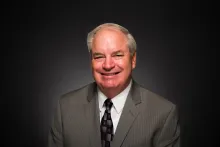
Robin Webber was born in Chicago, Illinois, in 1951, but has lived most of his life in California. He has been a part of the Church of God community since 1963. He attended Ambassador College in Pasadena from 1969-1973. He majored in theology and history.
Mr. Webber's interest remains in the study of history, socio-economics and literature. Over the years, he has offered his services to museums as a docent to share his enthusiasm and passions regarding these areas of expertise.
When time permits, he loves to go mountain biking on nearby ranch land and meet his wife as she hikes toward him.
