

Don Ward
This transcript was generated by AI and may contain errors. It is provided to assist those who may not be able to listen to the message.
Our title today, That Don't Impress Me Much. Perhaps you've heard Shania Twain's song, titled, That Don't Impress Me Much. There are several things she names that don't impress me much. Two of the things she mentions are, So you're a rocket scientist. And then the refrain, That Don't Impress Me Much. And then she states, You got the brains, but do you have the touch? Don't get me wrong, I think you're all right. But will that keep me warm in the middle of the night?
Another one is, So you think you're Brad Pitt. So you got the looks, and you got the touch. Don't get me wrong, I think you're all right, but will that keep me warm in the middle of the night? Then the refrain, That Don't Impress Me Much. It seems that the song is trying to convey the message that the things that really matter in life are not measured by intelligence or looks or any of the things that people strive for.
And we would ask each one of you to ask yourself, What impresses you? What impresses you? The older members of the congregation perhaps think that they have seen it all, they have heard it all. What would it take to impress them, especially the 80 and above crowd? The younger members of the congregation have been exposed to nearly everything the world has to offer, alive and in color, instant communication around the world, and that hardly even scratches the surface of what's available.
What would it take to impress them? And one of the greatest of all gifts is discernment. That is the ability to discern, judge, and make a distinction between what is important and what is not important. One of the gifts of the Spirit, if you would turn to 1 Corinthians 12 and verse 10, one of the gifts of the Spirit is discernment. That is the ability to distinguish the things that are good and right and the things that are not. In 1 Corinthians 12 and 10, the various gifts of the Spirit are listed here. In verse 10 we see that the gift of discernment is listed to another the working of miracles, to another prophecy, to another discerning of spirits, discerning the attitude, the intent of the heart of people, discerning of spirits, to another diverse kinds of tongues, to another the interpretation of tongues.
We live in a cold, callous world, a world that is filled with cynicism, with fear, with doubt, with anxious care, people wondering where will the next bomb or whatever drop. However, we don't have to be deceived by Satan's tactics, his deceptions, but we need, we must learn, we need to learn what is important and what is not and be able to discern between what is good and what is evil. Proverbs 8.13 states, the fear of the Lord is to hate evil. And of course one of the great movements of food and society today is tolerations of all life forms, lifestyles, from alternative lifestyles to the conservative or whatever, but actually the alternative people do not want to accept the conservative lifestyle at all and attack it with all their might, it seems, and that is growing.
The fear of the Lord is to hate evil. Do you fear God? Do you fear, do you hate evil? To hate evil, to hate pride and arrogance in the evil way, and the froward mouth do I hate? In Proverbs 7 and verse 11 it says the following, God is angry, he is mad. God is angry with the wicked every day.
We could conclude, of course, that God hates evil. He's angry with the wicked every day. No, God is still the God of love, of mercy, long suffering, not willing that any should perish, but at the same time God is holy, God is righteous, God is fair, and those things that are against that which is holy, that which is fair, that which is righteous, those are enemies of God.
And of course, we repeat often love the sinner and hate the sin. We also need to be appreciative, on the other hand, the contrast. To be appreciative and impressed by the good and not take anybody or anything for granted. Do you take your calling and priceless precious promise of eternal life for granted? We heard about that in the sermon of the pearl of great price. What it takes to make a natural pearl, look at the alliteration once again. Do you take your calling and the priceless precious promise, priceless precious promise of eternal life for granted?
Are you awed by the things of God, or are you on an assembly line, a form-only Christian? What is an assembly line Christian? It's a person who believes that if he, she, goes through the form, they're on the assembly line, just like the cars and trucks in Detroit City going down the Henry Ford assembly line or whatever model or make, they will become converted saints, a shiny new car at the end of the assembly line.
That's not the way it works in the world of Christianity. We need to be nice and pleasant. And you may be nice and pleasant, but not really involved and totally committed to your calling in the way that you should be. And that applies to me and to everybody else. Your calling is priceless, precious. It is the pearl of great price. It is sacred. It is sacred because it comes from God. Of His own will, I'm quoting now 1 James 1, verse 17-18, Every good gift, every perfect gift comes down from the Father of lights, with whom there is no bearableness, neither shadow of turning, with His own will, but yet He is with the word of truth.
An assembly line Christian is a person who believes that if he or she goes through the form, they'll come out, as we said, the shiny new converted spirit-driven Christian, I guess. An assembly line Christian takes things for granted. He or she does not understand or appreciate what life is all about. So many fall into that trap of not really appreciating what life is all about.
God is not impressed by assembly line Christians. He deeply desires to have a personal, direct relationship with you and me forever and ever. So let's each one of us at this moment ask God, Father in heaven, are you impressed with me?
Are you impressed with me? There's one verse in the Bible that succinctly tells us who God is impressed with. Isaiah 66, verse 2, will tell you very clearly, and we can all measure ourselves based on human judgment or what somebody else might say. What does the Word of God say? How do we measure up when we compare it with the Word of God?
Isaiah 66, verse 2, For all these things have my hands made, and all these things have been, says the Eternal. But to this man will I look even to him that is poor and of a contrite spirit, and trembles at my word. To this man will I look. To this woman will I look. To this man will I look. Those that do this, that are of poor and contrite spirit, and trembles at my word.
While they don't try to reason around the Word of God, they don't try to create God in their own image. They tremble at the Word of God. So after reading this verse, and of course the verse that we have for the Scripture of the Day in Jeremiah, can you say, can I say, God looks to me?
To this man will I look. This is a person that I'm impressed with. Poor and contrite spirit and trembles at my word. This past Sabbath, one and I heard three sermons in three different congregations in the United Church of God. Of course, we were at home and had access to the Cybercast. One was from Cincinnati in the Eastern Time Zone, given by Peter Eddington. He gave five keys for overcoming Laodiceism.
Laodiceanism, I guess. The next one was from Dallas, the Central Time Zone, was given by Ray Wright. He exhorted us to be true to our calling and fight the good fight of faith and never give up. The last one was from Los Angeles, the Pacific Time Zone, given by Ralph Helge. He systematically used the Scriptures to show the simplicity of the things that are of God and Christ, the creation, the relationship between God and Christ, the plan of salvation, the road to eternal life, and much more. Would you have been impressed by any one of these three sermons? One was given by a man in his 50s, Peter Eddington, just a youngster by today's standards, young whippersnapper kind of thing.
He has many responsibilities in his job as operation manager in the media department, yet he prepared a very helpful sermon on overcoming Laodiceanism and delivered it with conviction. Then the second was given by a man who suffered a stroke that left him basically paralyzed on his left side of his body, and the stroke greatly affected his ability to speak. Yet through hard work and perseverance, he was able to speak. He delivered a compelling message and exhortation to the brethren. The third sermon was given by a man well into his 80s that used his keen deductive mind, which he's a lawyer, to bring forth, line upon line, precept upon precept, here a little, there a little, and showing the simplicity of the things of God.
Wanda and I were very impressed by all three. Yet we could say we have heard it all, and we know it all, and just basically dismissed it. Ah, heard all that before. Not exactly like that. But we discerned the importance of the messages, what it took in all three cases, especially the last two, for those men to allow God to use them to bring to us the words of life.
In short, they were saying, trust God and don't treat the sacred as profane. Profane has to do that which is of the world, worldly, worthless, in the eternal sense. And once again, we ask ourselves, am I taking the truth for granted? Are you taking the truth for granted? I believe that the principal problem with the ten virgins was that they took things for granted. They were not diligently digging for the gold. They took things for granted.
They were assembly line Christians. All they had were lamps, and they even had a small amount of oil in their lamps. And they were going through the motions. When the bridegroom knocked on the door, they all ten arose and took their lamps. But five found that their lamps were going out. The ten virgins epitomized to me the attitude of that don't impress me much.
I'm going through the form. The Laodiceans are to a large degree of the same mindset and attitude they think they are rich and increase with goods. They are not impressed by any appeal to become filled with zeal. Appeal to be filled with zeal. God has revealed to you and to me the wisdom of the ages. You can read every commentary that's ever been given, every book, self-help, whatever you want to.
And some have some great valuable information. But when it comes to that which leads to eternal life, they don't know the way. Because they don't know who God is, what God is, what is His purpose.
They don't know who man is, what man is, and what is His purpose. They believe that man has an immortal soul because that is what has been taught from the Garden of Eden to the present day. He shall not surely die. They have been taught, crammed down their throats, the evolutionary doctrine. In fact, the evolution says God is dead. God has revealed to us the wisdom of the ages. Each one of us should be able to recite and answer with scriptural support to list the great questions of life and to be able to briefly answer those questions. Adam and Eve treated their opportunity to partake of the Tree of Life as profane. They placed that which Satan said and was deceived above what God said.
Adam went along with Eve, not being deceived, but of course, which just as guilty. To treat the sacred as profane is a slap in the face of God. To be given the opportunity to partake of the Tree of Life is a sacred, God-given opportunity. God says, Behold, I said before you life and death, blessings and cursings. Therefore, choose life that you and your seed may live. Oh yes, what you do has an effect on succeeding generations. Many of the things that plague humanity have to do with the fact that they are, like on an assembly line, of their genetic material, endowment, environment.
They are doomed almost from birth to repeat the same thing that the generation before them repeated. Esau treated his birth right as profane. He sold it for a bowl of soup. Rehoboam, after Solomon died, the kingdom was split. Jeroboam was made king over the ten tribes to the north. Rehoboam was made king over Judah and Benjamin. Rehoboam listened to his peer group. He didn't listen to the elders. He treated his opportunity to exercise and to restore true worship in the land. Of course, Solomon had a great start, but he eventually treated the sacred as profane and built altars and high places for the gods of his many wives.
But Rehoboam treated the sacred as profane. See, the worship of God cannot be limited to human emotion, the human reasoning, or any imagination of humankind. And of course, people have set up idols of wood, hay, and stubble, made images all over the earth, have come up with every kind of ism that you can think of in the name of religion or politics or whatever. But the word of God makes it clear there is a distinction between false worshipers and those who worship in spirit and in truth. Please look at Mark 7. Mark 7 and verse 7. In Mark 7 and verse 7. This is more of a condensed version, I guess you would say, than that of Matthew's account. In Matthew and in Mark chapter 7 and verse 7.
How be it in vain do they worship me, teaching for doctrines the commandments of men? In vain do they worship me? Were they sincere? Well, they were willing to kill.
The apostle Paul was out persecuting and apparently jailing and maybe putting to death, as some of the Pharisees did, Christians. For in vain do they worship me? Teaching for doctrines the commandments of men? For laying aside the commandment of God?
You hold the tradition of men as the washing of pots and cuts and many other such like things you do. And he said unto them, For well you reject the commandment of God, that you may keep your own traditions. For Moses said, Honor your father and your mother, and whosoever curses father or mother, let him die the death. And he goes on to explain what they did. We note further concerning this in Matthew chapter 7. See, God does not accept just any old worship, no matter how sincere it is. Paul writes in Romans 10, The Jews have a zeal for God, willing to climb tall mountains, forage streams, and do whatever it is to make one proselyte. The Jews have a zeal for God. This is paraphrasing verses from Romans 10, but not according to knowledge. There's just one way.
Look at Matthew 7 and verse 13. Matthew 7 verse 13, Enter you in at the strait gate, for wide is the gate, and broad is the way that leads to destruction.
And many there be which go in there at, because strait is the gate, and narrow is the way, which leads unto life. And few there be that find it.
And beware of false prophets. Next verse.
Few there be that find it. Notice further in this chapter, verse 21. 1 Not every one that says to me, Lord, Lord, shall enter in the kingdom of heaven.
But he that does the will of my Father, which is in heaven.
Many will say to me in that day, Lord, Lord, have we not prophesied in your name, and in your name have cast out devils, and in your name done many wonderful works.
This is what you might call the age of good works in a sense, where the celebrities, whether they be in Hollywood or on the athletic fields, the great stars making millions of dollars, I mean, even the coaches of today, the coach of Texas A&M has a 10-year contract, 75 million dollars, 7,500,000 or so a year. And so does the coach at Alabama and other schools that you could name.
Way beyond any college president or professor, whether you be a teacher or researcher, it's so out of bounds. It's unbelievable. And some of these athletes, like Bryce Harper, who is a free agent with the Washington, whatever they are, nationals, the Washington Nationals, he is a free agent this year. I think he hit 213. He hit 213. Seemed like a blind man, he hit 213. He had about 30 home runs or so, maybe had about 100 RBIs, and he's turned down like 200 million for 10 years, or even less years than 10. And so it goes. And then, about to lose the point of all this, and then they turn around the Hollywood types and the great athletic celebrities, and they give thousands or hundreds of thousands to charity, to good works. And they are wonderful people, and they are praised as the man of the year in the NFL or wherever for their work in the community. And that's praiseworthy, I guess you could say, and noteworthy. But what would God say? I think God would say the same thing that Shania Twain said about Brad Pitt. That ought to impress me much. Many will say to me in that day, Lord, Lord, have we not prophesied in your name, and in your name have cast out devils, and in your name done many wonderful works?
And then will I profess unto them, I never knew you, and depart from me you workers of iniquity. Does that mean we should not do good works? Of course not! We are to do good works. We are to be good Samaritans.
Let's notice further what Jesus states in John 4.23. John 4 and verse 23. The backdrop to John 4 is Jesus's encounter with a woman at the well, the Samaritan woman at the well, and they talk about different things. And she finally understands that he's no ordinary person, but a prophet.
We want to focus on these two verses, John 4.23 and 24.
But the hour comes, and now is, when the true worshipers, true, notice that word true, when the true worshipers shall worship the Father in spirit and in truth, for the Father seeks such to worship him. Now at this moment, could you say, well, what does it mean? Could you answer that? What does it mean to worship God in spirit and in truth? There's a process involved in being able to do that, and it's a simple process which we shall note as we go along. God is spirit, and they that worship him must worship him in spirit and in truth. To have access to God the Father, we must come through Jesus Christ.
John chapter 10 says, I am the door. I'm the good shepherd. No man can come to the Father except through me. And on the other hand, no man can come to Christ except the Father draw him. John 6 44.
So let's see that again. No man can come to the Father except through Christ. I am the door.
I am the truth. I am the light. I am the way. And no man can come to the Son John 6 44 unless the Father draw him. So there is a reciprocal action relationship that is taking place.
Acts 4 12 says, there is none other name given under heaven whereby men must be saved.
No, there are not two different avenues regardless of what John Hagee says or anybody else.
There is none other name given under heaven whereby men must be saved. And that name is Jesus Christ.
And as we have noted, the Father draws us to Christ. How does God draw us to Christ? God draws us to Christ through His Spirit and His Word. Jesus equates the way of the Lord. Jesus equates the word with Spirit and with life. Jesus equates the word with Spirit and with life.
That's John 6 63. John 6 63 says, the flesh profits nothing. It is the Spirit that quickens or makes alive the words I speak. Jesus that spokesmen. The words I speak, they are Spirit and they are life.
Now what words did Jesus speak? Some people get hung up on that. What words did Jesus speak?
We'll find all of this in John, so if you want to turn there, I'm going to read them.
In John 8 28, we're answering the question, what words did Jesus speak? And what are we pursuing at the present time? How do you come to worship God in Spirit and in the truth?
The time is coming and now is. This is once again John 4 23, where Jesus is telling this woman at the well, the time has come and now is that the true worshipers shall worship me in Spirit and in truth.
In John 8 28, then Jesus said unto them, you'd probably be able to turn to all these easily, in John 8 28, then Jesus said unto them, When you have lifted up the Son of man, the Son of man, then shall you know that I am he, and that I do nothing of myself, but as my Father has taught me, I speak these things. That's the Word of God.
It's not human reasoning. It's what it says. Now let's look at John 8 38, down 10 verses.
I speak that which I have seen with my Father, and you do that which you have seen with your Father.
Of course, he was speaking of Satan the devil, their Father.
In John 12 49, a few pages forward, John 12 49, For I have not spoken of myself, but the Father which sent me, he gave me a commandment, what I should say and what I should speak.
This is the Bible.
It's not any commentary or anything else.
In John 14 10, forward another few pages, John 14 10, Believe you not that I am in the Father and the Father in me. You say we can say today, if we have God's Spirit, that we have the Father in us and we have the Son in us.
Because, as it says in Ephesians 1 and also in 1 Corinthians 12 13, that by one Spirit have we been all baptized into one body.
John 14 10, Believe you not that I am in the Father and the Father in me.
The words that I speak unto you I speak not of myself, but the Father that dwells in me, he does the works. The Spirit of God is the enabler working in concert with the Word of God.
What are we talking about? Worshipping God in Spirit and in truth.
That's what's going to impress God. To this man will I look. He is of a meek and quiet Spirit and trembles at my word. The Spirit of God is the enabler working in concert with the Word.
The Spirit and the Word working in concert convicts us. Now look at John 16. John 16 verse 7.
In John 16 verse 7, of course, this is in the middle of a long treatise Christ is giving to the apostles the night that he instituted the symbols of the New Covenant Passover and spoke these things to them.
In John 16 verse 7, Nevertheless, I tell you the truth. It is expedient for you that I go away if I go not away. Of course, they were very sad. Peter at one point even rebuked him, saying that he would never let him be killed or crucified or whatever. They were sad that he was going away, and he had told him about that. I tell you it is expedient for you that I go away for if I go not away, the comforter, the paracletos, which in 1 John 2 says, the comforter, which is the Holy Spirit, the comforter in John 14.26 says, the comforter is the Holy Spirit. Let me say it again. John 14.26 says, the comforter is the Holy Spirit. So you could read that, the Holy Spirit will not come unto you, but if I depart, I will send him unto you. The King James translators use the masculine form of the pronoun because of the rules of grammar. It's not a person. And when it has come, he is right following the rules of grammar, but it is not a person. For when it has come, it will reprove. And that word reprove in Greek is ellancho. It's a word you need to know. It means convict.
Convict means to lay a weight upon your mind, upon your heart, upon your being.
That you need to do something. You're convicted. You have a sense of perhaps guilt, and you are urged to act upon it. When it has come, it will convict the world of sin and of righteousness, of judgment, of sin, because they believe not on me, of righteousness, because I go to my father, and you see me know more of judgment because the prince of this world is judged. I have yet many things to say unto you, but you cannot bear them now. How be it, when it, the Spirit of Truth, and the Spirit of Truth is Talmuma, and it is neuter, so it is correct here. However, when it, the Spirit of Truth, has come, it will guide you into all truth. It shall not speak of itself, but whatsoever it hears, that shall it speak.
What does the Holy Spirit hear? The words I speak. They are spirit and they are life.
The Word of God. I don't know telling how many dozens, maybe hundreds of ministers, who tomorrow will say, God spoke to me. No, God didn't speak to you, orally.
God speaks to us through His Word, enabled by the Spirit.
It shall hear, that shall it speak, and it will show you things to come. Let me read this again. For He shall not speak of Himself or itself. The Holy Spirit does not speak of itself, but what it hears, what is it hears, hears the truth. Your words, your word is truth. Your word is spirit and life. That shall it speak, and it will show you things to come. Now look at Romans chapter 10. Romans chapter 10, why we are here, why there is a church. Jesus Christ commissioned the church for this purpose.
You see, if the Holy Spirit was going around tapping people on the shoulder, or whatever they might do, striking them down as Paul was struck down on the road to Damascus.
Of course, Paul was versed in the scriptures and all of that. You wouldn't need an earthly, physical ministry. But see, the whole plan and purpose of God has to do with bringing physical beings into his family through the process of calling them, convicting them, granting them repentance, baptizing them, laying hands on them, receiving the Holy Spirit.
Romans 10.14. How then shall they call on him of whom they have not believed, and how shall they believe on him whom they have not heard? How shall they believe on him of whom they have not heard?
Well, why isn't the Holy Spirit just out there doing it? Because God has ordained and commissioned the apostles and the church to do it. You're familiar with the Great Commission.
Matthew 28. Go ye therefore into all the world, disciple all nations. Teach them to observe all things whatsoever I command you. Lo, I am with you, even to the end of the age.
How shall they call on him of whom they have not heard? How shall they hear without a preacher?
And how shall they preach, except they be sent? As it is written, how beautiful are the feet of them that preach the gospel of peace and bring glad tidings of good news. Are you impressed with that?
But they have not all obeyed the gospel, for Isaiah said, Lord, who has believed our report?
So then faith comes by hearing, and we read from John 16.13, the Spirit shall not speak of itself.
How shall they hear unless the word is preached? Faith comes by hearing and hearing by the Word of God. Once a person is convicted of sin, what is the remedy? Conviction of sin brings on a sense of guilt and the need to have the guilt removed. Coming to the point that you can worship God in spirit and truth is a spiritual matter. So how does a person come to worship God in spirit and in truth? We've already quoted Acts 4.12.
None other name given unto heaven whereby men must be saved. God sent Jesus, his only begotten Son, to be a perpetuation for us. Perpetuation means a goal between. He went in our stead. Why did he have to go in our stead? Because the wages of sin is death, but the gift of God is eternal life through Jesus Christ our Lord.
So now back to Romans 3.23. It talks about this. Once again, I remind you of chapter 1 of Romans brings the Gentiles to task. Chapter 2 brings the Jews to task.
At the end of chapter 2, Paul says that circumcision is not of the flesh but of the heart, not of the letter but of the spirit. The Jews have the greater condemnation because they were called and shown the way. It was revealed to them. Now in Romans 3.23, Paul summarizes in essence the whole world and every person who's ever lived or ever will live.
Romans 3.23, For all have sinned and come short of the glory of God. You, me, everybody. For being justified freely. Justified means having the penalty paid for you. Being justified freely by His grace, His divine favor through the redemption that is the buying back power that is in Christ Jesus, whom God has set forth to be a propituation, a go-between. He went in our stead through faith in His blood to declare His righteousness for the remission of sins that are passed through the forbearance of God, not willing that any should perish but that all should come to repentance. In order to be justified, one must repent, exercise faith in the sacrifice of Christ. Hebrews chapter 6. So the question is, what are the basic doctrines of the Church of God?
We used to have a booklet titled, The Six Great Doctrines of Hebrews 6. That was an error. What should it have read? The seven great doctrines of Hebrews 6.
Therefore, leaving the principles of the doctrine of Christ, there are six of those.
Let us go on to perfection, the seventh, which cuts across all six.
You can't go on to perfection unless you've done these six and are doing these six.
Not laying again the foundation of repentance from dead works and of faith toward God.
You have to have faith in the sacrifice of Christ for the remission of sins that are passed that we just read from Romans 3.25. "...of the doctrine of baptism, and laying on of hands, and of resurrection of the dead, and of eternal judgment. And this will we do where God permits." That is, go on to perfection. See, leaving the principles of the doctrine of Christ, let us go on to perfection. Then the parenthetical clause, or a real long one, then it says, this will we do. What will we do? We'll go on to perfection. Not laying again this foundation, but sadly, so many are left, even after baptism and laying out of hands, of having to go over and over and over again. Those six.
The Father and the Son, through the Spirit, work in concert to bring us into a relationship with God the Father and Jesus Christ. Both are fulfilling their roles in bringing us into this relationship perfectly, each one of them.
So let's note the words of Jesus. Once again, we go to the Gospel of John in John chapter 5 and verse 20. I was taken back by this. Maybe I won't even point it out when I read it to see what you think. John 5 verse 20, we're going through verse 24. John 5 verse 20, For the Father loves the Son and shows him all things that himself does.
The Father shows the Son everything that the Father does, and he will show him greater works than these that you may marvel. For as the Father raises up the dead and quickens him, even so the Son quickens whom he will. And you can look at quicken in two aspects. One is to quicken you who are dead and trespasses and sins, as in Ephesians 2, as he quickens, made alive in the spiritual sense. And of course, the ultimate quickening of the resurrection where you're made a spirit being.
For the Father judges no man, verse 23, but hath committed all judgment unto the Son, that all men should honor the Son, even as they honor the Father. He that honors not the Son honors not the Father which has sent him. Of course, in so many Christian circles today, it's like the Father is as archaic as Dagwood and Blondie. He's left behind.
Barely, barely, I say unto you, he that hears my words and believes on him that sent me a hath everlasting life and shall not come into condemnation or judgment, but is passed from death unto life. Now look at verses 39 and 40, John 5, 39. John 5 and verse 39.
Search the Scriptures for in them you think you have eternal life, and they or they which testify of me. You see, if we go back to the that don't impress me much, I could have memorized the Bible. I don't think I could. I read recently that there are quite a number of youngsters in Israel that have memorized the first five books in the Bible.
They do not watch. In these households, they do not have cell phones, obviously.
They do not have a television, and they are on a strict regimen with regard to their studies.
And quite a number of children have memorized the first five books of the Bible in Israel.
And that's quite astounding. Some people, it is claimed, have memorized the whole Bible.
Now, we could have some of the words of the Shania Twain song, but do you understand who and what God is, who He is, what He is, what is His purpose? Do you understand who man is, what man is, what is His purpose? If you don't understand that, memorizing the Bibles aren't going to help you. It may help you in an indirect way if you have the veil lifted.
Search the Scriptures for in them you think you have eternal life, and they or they which testify of me, and you will not come to me that you might have life. The plan and process of salvation is a beautiful harmonious plan. This is at the very core simple yet awesome, so awesome that it is make the hair stand up on the nape of your neck when you really understand it. One cannot worship in spirit and truth without following the steps that we've just outlined here in Scripture.
God does not accept, once again, God does not accept any old worship, no matter how sincere the worshipers may be. Look at 1 Corinthians 10, 18. 1 Corinthians 10, 18. A lot of people tend to forget this, and they say, oh, it doesn't matter that much. I know what it's for. I can put up my Christmas tree. Yeah, I know that the pagans used it, and it symbolizes this, and it was the phallic symbol. It was a symbol of the Canaanite religion, and on and on it goes, but I'm above all of that.
I don't want to deny my children of that. The great emotion, the great whatever of observing Christmas.
In 1 Corinthians 10, verse 18, Behold, Israel, after the flesh, are not they which eat of the sacrifices partakers of the altar.
You want to gather around the Christmas tree or any other thing you want to name?
What say I then that the idol is anything or that which is offered in sacrifice to idols is anything?
Well, another place he says, the food is nothing, the idol is nothing, but, there is a but, they sacrifice at sea. But I say that the things with the Gentile sacrifice, they sacrifice to devils and not to God, and I would not that you should have fellowship with devils.
You cannot, you cannot drink the cup of the Lord and the cup of the devils.
You cannot be partakers of the Lord's table and of the table of devils.
Do we provoke the Lord to jealousy? Are we stronger than He?
All things are lawful for me, but all things are not expedient. All things are lawful for me, but all things do not edify.
So, the great criterion, once again, you see there are three scriptures.
If you want to stop, and if a person has any discernment, there's three scriptures that stop you, stop them in their tracks.
Isaiah 8, 20, if they speak not according to the law and the testimony, it's because there's no truth in them.
I believe it's John 14, 30. This verse may be off, but the quote is not.
No, I, I, I, I, it's Luke 6, 46.
Luke 6, 46 says, Why call me Lord, Lord, and do not the things which I say?
That's Jesus speaking.
And then, first, John 2, 4.
If any man says that he knows me and keeps not my commandments, he is a liar, and the truth is not any.
I mean, those three, I mean, it calls basically the world.
There is only one straight and narrow path.
Satan and those who profess to know God have made it into something cheap, without scriptural and spiritual foundations, without scriptural and spiritual foundations, something cheap.
We must never, as the world does, just skim off the top and come to believe that you can just believe in Christ and be saved.
We must labor in the Word.
We did a series here.
And put it on the web for the ministry.
I would like for that to be made, and hopefully I can get it done, somewhere or the other, made available to all the church.
The series on labor and the Word.
So, in summary, what is meant by Jesus's Word that the true worshipers must worship him in spirit and in truth?
Let's put it in a sentence or two.
It is the understanding and acting on the conviction that through the Word and spirit of God, a person can have their sins forgiven, receive the spirit of Begettle from God the Father, and have a relationship with God and Christ in a family setting forever in eternity.
See, God seeks the true worshipers.
The true worshipers must worship him in spirit and in truth, for God seeks such to worship him.
God and Christ have worked out this marvelous plan, this awesome plan, before time began. Look at 2 Timothy 1.9.
If this is not in your memory, put it in there.
2 Timothy 1 and verse 9.
Because it is so important, it has what I would call domino effects on the understanding of other scriptures as well.
2 Timothy 1.9.
Who hath saved us, speaking of Christ, I'm sorry, I've got to go back and read verse 8.
Spoke wrongly there.
Read verse 8.
2 Timothy 1.8.
Be you not therefore ashamed of the testimony of our Lord, nor of me, his prisoner, but be you partaker of the afflictions of the gospel according to the power of God.
Who hath saved us and called us. See, God is the Father, the one who called us.
Who has saved us and called us with an holy calling.
Not according to our works, but according to his own purpose and grace, which was given us in Christ Jesus before time began. That word that's translated world is chronos.
It means time.
And then you could put Revelation 13.8.
Jesus Christ slain from the foundation of the world.
The plan of God is a perfect plan, ordained of God and Christ with both fulfilling their roles perfectly in eternity.
Eternity past, eternity present, and eternity to come.
Are you impressed with this plan?
Does that impress you much?
Or do you take it for granted?
Are you digging for the gold? Do you sit figuratively on the edge of your seat during Sabbath services?
Being truly engaged with a speaker, with an attitude of, Here I am, my Lord, teach me your ways.
We sing to him, Teach me your way, O Lord. When I am old and gray, teach me your way.
It is often stated that a chain is no longer than its, no stronger than its weakest link. A chain no stronger than its weakest link. So as you sit here today, as I stand here, how do you think God views you and me?
Is he impressed with you?
Is he impressed with me?
Do I have a meek and contrite heart?
Do I tremble at his word?
See how others view you is not nearly as important as how God views you. God the Father deeply desires us to be conformed to the image of his Son.
So each one of us needs to ask himself, herself, what is the weak link in my chain?
Do I have a weak link?
And if so, what must I do to fix it and get busy fixing it?
So let's conclude with an exhortation from the Apostle Paul in 2 Corinthians 13.
2 Corinthians 13, and we'll begin in verse 5.
This exhortation, from all that has been said here today, it is wonderful how the hymn service, the sermonette, the special music, the sermon just like fit together, hand and glove.
2 Corinthians 13 in verse 5.
Examine yourselves whether you be in the faith.
Prove yourselves, know you're not your own selves.
How that Jesus Christ is in you, except you be reprobates.
But I trust that you shall know that you are not reprobates.
I mean, I speak to an audience that goes back to the feast days in Oregon, the big sandy campus and the Redwood building. You have heard it all. You have seen it all.
You've been in it all. You've gone through it all. And yet you stand and serve.
Now I pray to God that you do no evil, not that we should appear approved, but that you should do that which is honest, though we be as reprobates.
Paul had a difficult time, I'm sure he's cried a lot, in writing 2 Corinthians, because the Corinthians had really just, you might use the everyday, but actually a trashed Paul. You know, who do he think he is? And on and on he goes.
And of course, he was the one who beget them with the gospel.
And so many looked on him as a reprobate, as it were.
And they chose up sides and did different things. And he tried to bring everything together in 2 Corinthians.
He did the same in 1 Corinthians, where we could do nothing against the truth, but for the truth.
Nothing against the truth, but for the truth.
Well, we are glad when we are weak, and we are strong, and this is also... I'm sorry, read it again. For we are glad when we are weak, and you are strong, and this also we wish, even your perfection.
Therefore, I write these things, being absent, lest being present, I should use sharpness according to the power, which the Lord has given me to edification and not to destruction.
Finally, brethren, farewell, be perfect, be of good comfort, be of one mind, live in peace, and the God of love and peace shall be with you.
Greet one another with an holy kiss. All the saints salute you.
The grace of the Lord Jesus Christ and the love of God and the communion of the Holy Spirit be with you all. Amen.
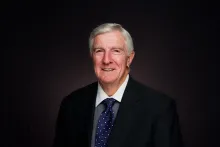
Before his retirement in 2021, Dr. Donald Ward pastored churches in Texas and Louisiana, and taught at Ambassador Bible College in Cincinnati, Ohio. He has also served as chairman of the Council of Elders of the United Church of God. He holds a BS degree; a BA in theology; a MS degree; a doctor’s degree in education from East Texas State University; and has completed 18 hours of graduate theology from SMU.
