

Don Ward
This transcript was generated by AI and may contain errors. It is provided to assist those who may not be able to listen to the message.
The title of the sermon today is The Early and Later Rain.
We'll begin today by reviewing the meaning of the Holy Days.
If you look at the Holy Days, you can see a parallel between the Holy Days and the doctrines of Hebrews chapter 6. We'll go to Hebrews chapter 6 and verse 1. Here are the basic foundational doctrines of Jesus Christ, and Jesus Christ is the head of the church.
So in Hebrews 6.1, therefore leaving the principles of the doctrine of Christ, let us go on to perfection. Perfection cuts across all of these doctrines. It's a continuing process from the day you are called and repent all the way through the rest of your life until you're no longer alive in the flesh. Not laying in the foundation of repentance, so we'll find a parallel between repentance and Passover.
Repentance from dead works and faith toward God. Both of those are involved in Passover. And the Feast of Unleavened Bread, the doctrine of baptisms. Israel passed through the Red Sea on the last day of the Feast of Unleavened Bread. And of laying on of hands, receiving the Holy Spirit on Pentecost, the church did. And of resurrection of the dead, and of course the seventh trump sounds. And the resurrection takes place and of eternal judgment.
And during the time of atonement and the Feast of Tabernacles, in that period of time, eventually all nations are going to be judged. There's also a parallel in the sense of a literal historical event. The Holy Days picture literal events, and they also foreshadow a spiritual fulfillment. So this is very important to understand, and there's also a prophetic timeline within this. For example, on the first Passover, the heads of the households killed lambs and sprinkled the blood on the doorpost. That was a literal event. They literally did it, and Israel continued the practice of killing lambs and making offerings on Passover until the temple was destroyed. The spiritual fulfillment of Passover occurred when Jesus was crucified, and he became our Passover. So we go now to 1 Corinthians chapter 5. 1 Corinthians chapter 5 and verse 7.
So it's important to see now, you'll see in Passover that the emphasis is on repentance, examining yourself, having faith toward God. He is our Passover, faith in the sacrifice of Christ for the remission of sins, so that we come to Passover where we say that we're reconciled to God and we're reconciled to one another. Passover began with people doing literal things themselves, killing the lambs and sprinkling the blood on the doorpost. And when God passed through the land and he saw the blood on the doorpost, he passed over that house. But where the blood was not sprinkled, the firstborn of man and beast died. I'm not yet there. I've turned to the wrong... 1 Corinthians chapter 5 verse 7. Purge out therefore the old leaven, and we know so well that leaven represents sin, that you may be a new lump as you are unleavened. In other words, you may be physically unleavened and put the leaven out of your house, for even Christ our Passover is sacrificed for us. So the literal spiritual fulfillment of that Holy Day Passover was Jesus Christ was crucified and he paid the price for sin. And now his blood, his life essence, causes God to pass over. He not only passes over our sins, but he removes them. Therefore let us keep the feast, not with the old leaven, neither with the leaven of malice and wickedness, but with the unleavened bread of sincerity and truth. And so Jesus Christ, his sacrifice fulfilled that in the spiritual sense. And so we observed Passover. We had our initial Passover when we repented, and we exercised faith in the sacrifice of Christ. And on an annual basis, we examined ourselves again and go through that process to show and to remember the price it was paid for us to leave spiritual Egypt. Israel left Egypt on the first day of the feast of unleavened bread, on the fifteenth day of the month of Nisan on the sacred calendar. That was a literal event, and Israel was commanded to leave Egypt behind and live in unleavened bread or live an unleavened life of obedience. The spiritual fulfillment of unleavened bread is when we repent of our sins and we leave spiritual Egypt, sin and death, behind. And so all of us have our departure in the spiritual and figurative sense of leaving Egypt, sin and death, behind.
Israel crossed the Red Sea on the last day of the feast of unleavened bread, and that was a literal event. And that was their baptism. You turn back a page here from 1 Corinthians 5 to 1 Corinthians 4. I'm sorry, it's 1 Corinthians 10. Forward to 1 Corinthians 10. It's verse 4. I'm having some trouble with that. My wife said, well, what is dyslexia? I said, when you reverse numbers or letters. In 1 Corinthians 10, we'll read verse 1, Mover, brethren, I would not that you should be ignorant how that all our fathers were under the cloud and all pass through the sea. And we're all baptized into Moses in the cloud and in the sea. See, that was their baptism on the last day of the feast of unleavened bread. That's a literal event. Now, when we are baptized, we go into the watery grave. That is the spiritual fulfillment of that. And it's a literal event, but it's also a spiritual event with great significance because that's when you enter into the covenant of sacrifice with God in Christ. And you say that I am going to bury the old man and keep the old man under the watery grave of baptism, be raised to newness of life, to live a new life guided by the Spirit of God. Did all eat the same spiritual food? Did all drink the same spiritual drink? For they drank of that spiritual rock that followed them, and that rock was Christ. And we talked about yesterday how that Jesus Christ, the one who became Christ, manifested Himself in the cloud by day and the pillar of fire by night. Then we come to Pentecost, according to Jewish tradition. Now we go back to Exodus 19, where Israel, after they left Egypt, they came to Mount Sinai on the third month, or in the third month, Exodus 19.1. In the third month, when the children of Israel were gone forth out of the land of Egypt, the same day came they unto the wilderness of Sinai, where they were departed from Rephidim and were come to the desert of Sinai and pitched in the wilderness, and there Israel camped before the mount. And Moses went up to God and the eternal called unto him out of the mountain, saying, You shall say to the house of Jacob and tell the children of Israel, You have seen what I did unto the Egyptians, and how I bear you on eagle's wings and brought you unto myself. Now therefore, if you will obey my voice and indeed keep my covenant, then you shall be a special treasure unto me above all people, where all the earth is mine, and you shall be a kingdom of priests and a holy nation. These are the words which you shall speak unto the children of Israel. So the rest of chapter 19 is taken up with God telling Moses how to prepare the people for the giving of the law. Then chapter 20, God thunders the one who became Christ, the one who became Christ, thunders the Ten Commandments from the mountain. Remember in John chapter 5 where it says, You have neither heard nor seen, you have neither heard the voice of God or seen his shape at any time. So we know by this that it was the one who became Christ who thundered the Ten Commandments. Then in chapter 24, and we read this yesterday as well, verses 7 and 8.
And he took the book of the covenant and read it in the audience of the people, and they said, All that the Lord has said will we do and be obedient. And Moses took the blood and sprinkled it on the people and said, Behold, the blood of the covenant which the Lord has made with you concerning all these words. The Holy Spirit was sent to believers on the day of Pentecost, thus fulfilling the spiritual aspect of Pentecost. God gave them the law on the day of Pentecost, but they did not have such in heart and did not have God's Spirit within them. God's Spirit was among them and dwelt with them but not in them. And they committed harlotry and fornication, as we talked about yesterday, went astray. And eventually, God had to give them a bill of divorcement, the one who became Christ. We experience our individual Pentecost when we receive God's Spirit after baptism through the laying on of hands. So you see those doctrines running parallel with it. You see the literal event and then you see the spiritual fulfillment.
Now we come to trumpets. Trumpets were blown on special occasions in Israel to sound the alarm. It was blown on the feast days. And we have in the book of Revelation about the trumpets and literal events taking place there. And according to, and we'll read two or three scriptures here about the seventh trump, in Revelation 11 and verse 15, there will be a literal fulfillment, as it were, of the Feast of Trumpets. Virtually any commentator, commentary, messianic Jews, that doesn't necessarily prove anything, but even the Orthodox Jews talk about trumpets and a special time in the day of the Lord and that kind of thing. Revelation 11 verse 15.
Revelation 11 verse 15. And the seventh angel sounded, there were great voices in heaven, saying, The kingdoms of this world are become the kingdoms of our Lord and his Christ, and he shall reign for ever and ever. Back a page in Revelation chapter 10.
Revelation 10 verse 7.
But in the days of the voice of the seventh angel, when he shall begin to sound, the mystery of God should be finished as he hath declared to his servants the prophets. Now in 1 Corinthians, and I'm spending a little time on this because there are people in the church, I think even some ministers, who they just sort of wonder at times whether or not, since Pentecost is also called the Feast of First-Roots, well, is Christ going to come on the day of Pentecost and harvest, as it were, the first fruits.
I think we're going to see, of course, that on Pentecost, God began calling out a people for his name. In all the typology and all the fulfillment with regard to literal events, we have not had a literal, as it were, fulfillment of trumpets in a universal sense. We haven't had first, second, third, fourth, fifth, sixth trumpets as outlined in Revelation, unless someone just says, well, all of that is symbolism. We'll just write it off as symbolism. But in 1 Corinthians 15 and verse 50, 1 Corinthians 15, 50, now this I say, brethren, that flesh and blood cannot inherit the kingdom of God, neither shall corruption inherit incorruption. Behold, I show you a mystery. We shall not all sleep. We shall all be changed. When? It's not. It's at a particular time. In a moment in the twinkling of an eye at the last trump, the trumpet shall sound, and the dead shall be raised incorruptible, and we shall be changed. So, trumpets, it's a time on the one side of gloom and doom, the day of the Lord, and great turmoil and terrible trouble. Then on the other side, resurrection and death is defeated.
Now, with us in our spiritual lives, when we come up out of the watery grave, we are to live the resurrected life. We're to live the resurrected life, the new life, which parallels this basic doctrine in Hebrews chapter 6. Then, on atonement, in Leviticus 16, we find that on the day of atonement, there was a goat released into the wilderness. Before he was released, the priest confessed the sins on the head of the goat, and he was driven into the wilderness to bear the sins of the people. Satan is the author of sin and death. It clearly says that he's a murderer and a liar from the beginning in the book of John. And so, Satan is the one who brought sin and death into the picture and tried to thwart the plan of salvation. So, atonement is a time of judgment. Satan will be judged. He will be put away. But there's also another side of atonement for us in which, at atonement, the high priest could only go into the Holy of Holies once a year, and it was on the day of atonement. But now, as it says in Hebrews chapter 10, we can live in the Holy of Holies. We have direct access to the holiest of all. If you look at Hebrews 10, this is one of the most exciting understandings in the whole scripture that we can go directly to the throne of God and be in the presence of the holiest of all at any time. And also, in addition to that, we have our high priest who pleads the case for us as well.
In Hebrews chapter 10, verse 19, having therefore brethren boldness to enter into the holiest by the blood of Jesus. So we can go there at any time by a new and living way, which he had consecrated for us, through the veil, that is to say his flesh. And when Jesus Christ died, there's like a double meaning here. When Jesus Christ died, the veil on the temple was rent, and there was no longer this separation between Jew and Gentile as some of the symbolism, which we'll see a little later. And having an high priest over the house of God, let us draw near with a true heart and full assurance of faith, having our hearts sprinkled from an evil conscience, and our bodies washed with pure water, let us hold fast the profession of our faith without wavering, for he is faithful that is promised. And then, of course, this is going on to perfection. During the Feast of Tabernacles and the eighth day, everybody that's ever lived and everybody that ever will live will have an opportunity for salvation and go on to perfection. We are having our opportunity now. We're having our opportunity now to live under the government of God. Humans and the millennium, those that live over in that time, will have their opportunity to live under the government of God at that time. Of course, the government of God at that time will be far more direct than it is now. Now, and it's perhaps the reason why it appears that you will have greater responsibility in the kingdom of God because there's not a voice as it talks about in Isaiah 30. At that time, there will be a voice behind you saying, this is the way, walk you in it. In the millennium, you may play church. I mean, you may not believe it, but you're going to have to. I said it wrong. You may not believe it, but you're going to have to play church. Of course, we know that everybody's not going to believe it because when Satan goes out at the end of the millennium, he just released for a little season, all kinds of people are deceived. They follow him again.
It's amazing. But right now, there's not a voice behind you except your conviction in your heart and mind, and that conviction is largely drawn from the Spirit of God and the Word of God. Jesus Christ told Thomas, blessed are they who believe and have not seen.
So we see that between the literal events and the ultimate spiritual fulfillment, I'm talking about on the grand universal scene. We have seen on the grand universal scene, Pentecost, unleavened bread, first day left Egypt, last day across the Red Sea, Pentecost given in the third month, and then we spiritually go through that, and then a universal giving of the Holy Spirit on the day of Pentecost. So as far as that, we're between Pentecost and trumpets. The next great event will be the placing of the abomination of desolation and the great tribulation. So we're in that period of time. See, between the first Passover and the literal event, and when Jesus Christ came on the scene, it was about 1450 years. And so from the time that the Holy Spirit was given 31 A.D. to 2012, you see we almost have 2,000 years. But God is faithful, who has a promise.
And once again, some have speculated that because Pentecost is called the Feast of Firstfruits, that Christ would come and harvest the firstfruits on the day of Pentecost. But this breaks the pattern of spiritual fulfillment, as hopefully we have seen here. Pentecost is called the Feast of Weeks, the Hebrew word Shavat, the Feast of Harvest, or the Feast of Firstfruits, because it came seven weeks after the Omer was waved. Remember sheaf? Let's go back to Leviticus 23. Remember that I gave the sermon on Feast of Unleavened Bread that they didn't literally wave a sheaf of grain, that they cut the grain, they harvested the grain, they got all the they sifted it several times, they parched it, grounded it, made it into fine flour, and made an omer bread out of it, and they waved it on the weekly Sabbath after the first holy day within unleavened bread. Leviticus 23.
Verse 11, he shall wave the sheaf before the Lord to be accepted for you on the morrow after the Sabbath. The priest shall wave it. Verse 15, and you shall count unto you from the morrow after the Sabbath, from the day that you brought the sheaf of the wave offering, seven Sabbaths shall be complete. And so if you go seven Sabbaths, then the next day will be the fiftieth day on which Pentecost falls, even unto the morrow after the seventh Sabbath shall you number fifty days, and you shall offer a new meat offering unto the eternal. Unleavened bread centers on the barley harvest, the first of the first fruits, but the feast of weeks between Passover and Pentecost centers on the wheat harvest. So we go to Exodus 34 and verse 22 to see that. So you have the barley harvest, first of all, in the Passover season. You have the wheat harvest, then in the Pentecost season. And Pentecost is also called the Feast of First Fruits. In Exodus 34 and verse 22, and you shall observe the feast of weeks of the first fruits of wheat harvest, and the feast of end gathering at the year's end. Of course, that's the Feast of Tabernacles, and that was the fruit harvest. The major harvest was in the fall, the Feast of End Gathering. You can go back to Exodus 23 and verse 15. We'll read that. We had read in the offatory that three times a year shall the males appear before Me, and they shall not appear empty. Now, if you read Galatians chapter 3 and the last few verses where it talks about under the New Covenant there's neither male nor female, there's neither bond nor free, but you are all one in Christ. And if you be in Christ, then are you Abraham's seed and heirs according to the promise. But the males were the ones who were required to go under the terms of the Old Covenant. Today it's the New Covenant, and God does not distinguish between male and female with regard to their spiritual responsibility. And they all have the same potential in the eyes of God. God is not a respecter of persons. In Exodus 23 and verse 15, you shall keep the feast of unleavened bread, you shall eat unleavened bread seven days as I commanded you in the time appointed of the month of Abib. For in it you came out of Egypt and none shall appear before Me empty, the feast of harvest, the first fruits of your labors which you have sown in the field, and the feast of ingathering. So unleavened bread, pinnacost, atonement, tabernacles, last great day, all of that is called ingathering, atonement, tabernacles, and so on, your labors out of the field. Three times in the year shall all males appear before the Eternal your God. So all three feasts centered on the agricultural harvest of the land, which are a type of the spiritual harvest that is to come. So the Israelites were commanded to make three pilgrimages to Jerusalem to keep the feast in their seasons. And all of these feasts picture God's great redemptive and spiritual work with the sons of men. And as we have said so often, the feast days reveal the plan of God. As I mentioned earlier, the feast that passed over an unleavened bread center on the first fruits of the barley harvest, and the focus is on Christ leading Israel out of Egypt. Christ is the first of the first fruits. Now we'll see, once again, an order of things of when the first fruits of human beings that are called out will, when they will be changed. We'll go to 1 Corinthians 15 again. 1 Corinthians 15.
1 Corinthians 15. In Corinth, there are all kinds of problems. I mean tremendous problems. Some even said there was no resurrection. Verse 12, how say some of you that there's no resurrection from the dead. And if Christ be not risen, this is verse 14, if Christ be not risen, then as our preaching in vain, your faith is also vain. Yes, and we're also found false witnesses of God because we have testified of God that he raised up Christ, whom he raised not up, if so be that the dead rise not. Or if the dead rise not, then is not Christ risen. And if Christ be not risen, your faith is in vain, you're yet in your sins. Then they also, which are fallen asleep in Christ, are perished.
If in this life only we have hope, have hope in Christ, we're of all men most miserable. But now is Christ risen from the dead and became the firstfruits of them that slept. When did he rise from the dead? He rose from the dead during the feast of unleavened bread on a Sabbath late afternoon. For since by man came death, by man came also the resurrection of the dead. For as an Adam all die, even so in Christ, and that's the only way, shall all be made alive. But every man in his own order, Christ the firstfruits afterward, they that are Christ, at his coming. When does he come? According to all the typology in Revelation, it's the 7th Trump. Not at Pentecost as far as coming. Pentecost is when he began to call out the firstfruits.
During the feast of Pentecost centers on the firstfruits of the wheat harvest. We've already mentioned that. During the Pentecost season, Israel observed the fact that God gave them his law and they entered into the marriage covenant with them. We've already talked about that. The feast of end gathering in the fall centers on the great end gathering, in which all nations are to be gathered into a relationship with God and Christ, in the millennium, or at least they will have the opportunity. They all won't be there in the final end. The fall harvest is the fruit harvest. From Pentecost to the fall harvest is four months. So, in a sense, the nation of Israel became a type of the firstfruits of the spring harvest. Now listen to this very carefully. The nation of Israel became a type of the firstfruits of the spring harvest. Go to Jeremiah 2. Jeremiah 2 verses 1 and 2.
I'll turn to the Scriptures much quicker standing up so I know the trouble you have. In Jeremiah 2, more over the word of the Eternal came unto me, saying, Go and cry in the ears of Jerusalem, saying, Thus says the Lord, I remember you, the kindness of your youth, the love of your espousals, when you went after me in the wilderness, in a land that was not sown. We talked about Ezekiel 16 yesterday. Israel was holiness unto the Eternal and the firstfruits of his increase. All that devour him shall offend, evil shall come upon them, says the Eternal. Hear you the word of the Eternal, O house of Jacob and the families of the house of Israel. Thus says the Lord, What iniquity have your fathers found in me that they are gone far from me and have walked after vanity and become vain? I mean, God has not failed. He's been faithful the whole time. So why did you do that? But they were viewed as a type of firstfruits. Now, we, the members of the body of Christ, we are the spiritual anti-type of the firstfruits. Now, what is an anti-type? Let's go to James 1.18. James 1.18, while we're turning there, we want to answer one and give a definition of anti-type. Anti-type is one that is foreshadowed by or identified with an earlier symbol or figure, such as a figure in the Old Testament who has a spiritual counterpart in the New Testament. For example, Abraham is called the father of the faithful. Abraham is a type of God the father. Isaac is the son of promise. Isaac is a type of Jesus Christ. David is a type of Jesus Christ. Sarah is a type of the church, and so on. So, you have type, anti-type. You have the first, the physical part, the type, and then you have the spiritual fulfillment of it. With regard to the first fruits, the spiritual fulfillment of the first fruits, of course, is the Church of God, the ones that are in the first resurrection. In James 1.18, of his own will beget he us with a word of truth that we should be a kind of first fruits of his creation. Israel was a type of the first fruits. The Church of God is the spiritual fulfillment of the first fruits. Israel was the first nation to enter into a covenant relationship with God. We mentioned that several times yesterday and today in Exodus 24 verses 7 and 8. But they did not have the Holy Spirit. God was not their spiritual father in the sense that he had begotten them to a new life through the Holy Spirit. True believers today have that Holy Spirit, and they are the anti-type, the literal spiritual fulfillment of the first fruits. The Church today is the Israel of God and Holy nation.
And if you haven't memorized these two scriptures, I urge you to memorize them. We'll go there again in Galatians 6 verses 15 and 16. Everybody in the Church of God should know these scriptures and know them well. In Galatians chapter 6 verse 15, For in Christ Jesus neither circumcision avails anything nor uncircumcision but a new creation, And as many as walk according to this rule, peace be to them in mercy and upon the Israel of God. The first fruits. Now we go to 1 Peter chapter 2 verse 9. We talked about this yesterday with regard to now we are Ami and Ruhama. We are God's people and having obtained mercy, the spiritual fulfillment of what was prophesied by Hosea in chapter 1 of Hosea.
In 1 Peter chapter 2 verse 5, You also as living stones. See, this is the symbolism of the temple and the church. You also as living stones are built up a spiritual house, the temple of God, the habitation that he dwells in, and holy priesthood to offer up spiritual sacrifices acceptable to God by Jesus Christ. Prayer, thanksgiving, serving so many different ways of spiritual sacrifices, which many of you have entered into, and I know that God is well pleased. 2 Peter chapter 2 verse 6. Wherefore also it is contained in the scripture, Behold, I lay in Zion a chief cornerstone. Now in this case, this chief cornerstone is not one down in the corner of the foundation. As you might think of a chief cornerstone, this cornerstone is the head. It's like on a pyramid, you put a capstone, and that is what is being talked about, as we shall see. 3 Behold, I lay in Zion a chief cornerstone, elect precious. He that believes in him should not be confounded. 4 Unto you therefore which believe he is precious, but unto them which be disobedient. The stone which the builders disallowed, the same is made the head of the corner. So he is at the very top. He is the head of the church, this spiritual temple. You are a chosen generation, a royal priesthood, and holy nation. A purchased people that you should show forth the praises of him has called you out of darkness into his marvelous light, which in times past were not a people, were lo-ami, but now you're ami, the Hebrew word for people, but are now the people of God which had not obtained mercy, but now have obtained mercy. So in view of that, God admonishes us to live the kind of life that is outlined in the scriptures so that the other nations, the people in Big Sandy here in the surrounding community, you know, we have the kingdom of God seminars here, and we may have one or two or whatever to show up. And in fact, the two that showed up here for the kingdom of God seminars, I don't think they got an invitation letter. I think they just found us on the internet. I'm glad to see they were here yesterday and here today. But the people round about, they think that this is foolishness, but they have not really opened the pages of the Bible and see what it really says, because if you do, and very few people have the courage to do it, because it takes courage and great sacrifice, straight is the way and narrow is the gate that leads to eternal life. On the other hand, broad is the way, and broad is the gate that leads to destruction.
Dearly beloved, I beseech you as strangers and pilgrims, abstained from fleshly lusts which war against the soul, having your conduct honest among the nations, that whereas they speak against you as evildoers, oh, have you heard what they've done now? Of course, we used to live in a sea of rumors and accusations here in this area. That whereas they speak against you as evildoers, and of course in so many ways we have been our own worst enemies, we have shot ourselves in the foot more than any gunslinger who ever lived. I don't know why, and we continue to do it.
And it's like the old song, When Will They Ever Learn? When will they ever learn?
That whereas they speak against you as evildoers, they may by your good works, which they shall behold glorify God in the day of visitation.
I had the opportunity to visit the various projects that the Church of God was sponsoring around the world, Thailand, Sri Lanka, Jordan, Israel, and the people there that were in charge of these projects, they were not going to become converted, but they had a powerful witness given to them in person that cannot ever be denied. And the Minister of Interior and Sri Lanka told me, he said, we really in one sense don't really need your money, but we need your leadership, we need your know-how and your ability to organize and to care for what you have built. And then even after we withdrew all of our funds out of Sri Lanka, they continued what was called the Waterfield Institute there, where families in Sri Lanka were selling their inheritance, so their child could go to that school for one year. And yet we had people in the Church of God, including some ministers around the world and members who became the worst critics of Ambassador College that you could imagine, and still are to some degree today, and say, well, what about all those people that attended Ambassador College? Where are they today? And we could say the same thing about the Church. When Richard Rice did the study in 1986-87 of how people came into the Church and how many had left, this was a period of time in which Mr. Armstrong was over pastor general. He died in January of 86, but from that period back over 50 percent of those who had ever been baptized left the Church. Adam and Eve were placed in the Garden of Eden. They had the perfect environment. They had a perfect teacher. They had a perfect curriculum. And what did they do? They departed from the faith. So there are people who always want to throw the baby out with the bathwater.
When you throw the baby out with the bathwater, you've got an empty pan, brother. So I don't want to go there anymore. I mean, I let that.
In ancient Israel, both the spring and the fall harvest were dependent upon the rains coming at the right time. The fall rains are called the early rain. The spring rains are called the latter rain. The early rain is spoken of in Deuteronomy. Let's go to Deuteronomy 11, verse 13 through 17. Deuteronomy is the latter and earlier rain.
And we're going to see that that also symbolizes the giving of the Holy Spirit, as prophesied by Joel in Deuteronomy chapter 11. Deuteronomy 11, verse 13. And it came to pass, if you shall hearken diligently unto my commandments, which shall command you this day to love the Lord your God and serve him with all your heart and all your soul, that I will give you the reign of your land in his due season, the first reign and the latter reign, that you may gather in your corn and your wine and your oil.
And I will send grass in your fields for your cattle that you may eat and be full, take heed to yourselves that your heart be not deceived, and you turn aside and serve other gods and worship them. Now there's great symbolism in this first reign and latter reign. The early reign comes in the fall season from October to December.
These reigns are necessary for the seeds to germinate so the crops will grow, will come up first and then grow. The latter reign comes in the spring and supplies the moisture necessary to help the grain crops come to maturity. The reign is prophetic of the outpouring of the Holy Spirit upon people's lives individually as they repent and exercise faith in the sacrifice of Christ and are baptized and receive the laying on of hands. So we go to Joel chapter 2. Joel, one of the shortest prophecies in the Bible, but one of the most important we have started is study of Joel in our weekly, in our monthly Bible study here.
We covered chapter 1 and our first one a week or so ago. But in Joel chapter 2, Joel chapter 2 verse 21, Fear not, O land, be glad and rejoice, for the eternal will do great things. Be not afraid, you beasts of the field, for the pastures of the wilderness do spring, for the tree-bearers are fruit, the victory in the vine, do yield their strength. Be glad, then, you children of Zion, remember Zion, who Zion is, which we talked about yesterday, and rejoice in the Lord your God, for he hath given you the former rain, moderately, and he will cause to come down for you the rain, the former rain and the latter rain in the first month, in the month of Nisan in the sacred calendar.
In verse 26, And you shall eat in plenty, and be satisfied, and praise the name of the Eternal your God, that is dealt wondrously with you, and my people shall never be ashamed. And you shall know that I am in the midst of Israel, and that I am the Eternal your God, and none else, and my people shall never be ashamed. Then it comes down to when Christ has come and set up his government over the earth, and you shall know that I am the Eternal. And verse 28, And it shall come to pass afterward, that I will pour out my Spirit upon all flesh, and your sons and your daughters shall prophesy, your old men shall dream dreams, your young men shall see visions, and also upon the servants and upon the handmaids, in those days will I pour out my Spirit.
And I will show wonders in the heavens, in the earth, blood, in fire, in pillars of smoke. The sun shall be turned into darkness and moon into blood, before the great and the terrible day of the Lord. And it shall come to pass that whosoever shall call on the name of the Lord shall be delivered, for in Mount Zion and in Jerusalem shall be deliverance as the Eternal has said, and in the remnant whom the Lord shall call.
Now on that day of Pentecost, we go to Acts 2 now, that day of Pentecost, 31 A.D., when the Holy Spirit was sent, note how Peter starts his sermon. The first part of Acts chapter 2, where the suddenly rushing of a mighty wind and clothing tongues of fire upon the heads of the apostles, the apostles began to speak, and the people heard the apostles in the language of their land, whatever it was.
And then some began to mock. Verse 13, others mocking, said, These men are full of new wine. But Peter, standing up with the eleven, lifted up his voice and said unto them, You men of Judea, and all you that dwell at Jerusalem, be this known unto you, hearken to my words. For these are not drunken, as you suppose, seeing it as but the third hour of the day, nine o'clock in the morning. But this is that which was spoken by the prophet Joel. So an initial fulfillment in the literal sense of this began, that is the prophecy of Joel on that day of Pentecost. There will be a greater outpouring of this, of course, during the millennium and the last day. And it shall come to pass in the last day, says God, I will pour out my Spirit upon all flesh. Your sons and your daughters shall prophesy, and your young men shall see visions, and your old men shall dream dreams. And he just does a quote on down through verse 21. Verse 22, you men of Israel hear these words, Jesus of Nazareth, a man approved of God among you by miracles and wonders and signs which God did by him.
Lost my place there are signs which God did by him in the midst of you, as you yourselves also know. Him being delivered by the determinate counsel and foreknowledge of God. God knew that it was going to happen. You have taken and by wicked hands have crucified and slain, whom God hath raised up, having loosed the pains of death because it was not possible that he should be holding up. And then he quotes these prophecies from the David in the Psalms of how Jesus Christ would be resurrected from the dead. In verse 29, men and brethren let me freely speak unto you of the patriarch David. He is both dead and buried. His sepulcher is with us unto this day. Of course, David is not ascended into the heavens, as we'll read later. Therefore, being a prophet and knowing that God had sworn with an oath to him that of the fruit of his loins, in other words, he would be a descendant of David according to the flesh. He would raise up Christ to sit on his throne.
He, seeing this beforehand, spoke of the resurrection of Christ, that his sukai, his life essence, was not left in Hades, the grave. Neither his flesh did see corruption. This Jesus hath God raised up whereof your all witnesses. Therefore, being by the right hand of God exalted, having received of the Father the promise of the Holy Spirit, he has shed forth this which you now see and hear. So the source of the Holy Spirit proceeds from the Father. That's John 15.26. That's an important scripture. The Holy Spirit proceeds from the Father. It is sent in the name of Christ. It is shed on us through Christ. Exactly how that takes place. I don't know if anyone can exactly explain that, but that is the process. Therefore, being by the right hand of God exalted, having received of the Father the promise of the Holy Spirit, he has shed forth this which you now see and hear. For David is not ascended into the heavens, but he said himself, the Lord said unto my Lord, sit you on my right hand until I make your foes your footstool. Therefore, let all the house of Israel know assuredly that God has made that same Jesus whom you crucified, both Lord and Christ. Now, when they heard this, they were pricked in their heart and said unto Peter, and to the rest of the apostles, men and brethren, what shall we do? Then Peter said unto them, repent and be baptized every one of you in the name of Jesus Christ for their emission of sins, and you shall receive the gift of the Holy Spirit. Receiving the Holy Spirit is conditional. You have to repent. Now, Peter gave the short formula here, but you also have to do all the basic doctrines that were read at the beginning in Hebrews 6. You have to repent of dead works. You have to exercise faith in the sacrifice of Christ. You have to be baptized and receive the laying of hands. But it is conditional upon repentance and faith in Christ that you have turned your life around and you're going the other way. For the promise is unto you and to your children and to all that are afar off. Now, they didn't understand this phrase that all two are far off, because here he was talking about the other nations. But even on the day of Pentecost, they did not understand that the other nations would be recipients of the promises of God and inheritors of God and Jesus Christ. That came after Peter went to the house of Cornelius and, as it were, had somewhat of a second Pentecost, as we'll read in just a moment in Acts chapter 10. For the promise is unto you, to your children, and to all that are afar off, even as many as the Lord our God shall call. And with many other words did he testify and exhort, saying, Save yourself from this untoward generation. Then they that gladly received the word were baptized and the same day they were added unto the church, were added unto them, added this unto them, it's not in the manuscript, but were added about 3,000 life essences, souls.
Now they didn't go through a lot of baptismal counseling.
They didn't spend months there. And I know that one of the things that Mr. Armstrong admonished the ministers with regard to baptismal counseling, that some over did it to the point that it was like you had to be walking on water and perfect to be baptized.
That is, you need to repent of your sins, and you have to repent of your sins and exercise faith in the sacrifice of Christ for the remission of sins that are passed. And only you can do that and then man can baptize you in water based upon what you say. And when you get into the baptismal waters, first question you're going to be asked, state your name, and then the next question is, have you repented of your sins? That's the time to be honest. If you say, if you need to say no, then you need to get out of there. And then do it. And then man lays hands on you and asks God that he will give you his Holy Spirit, that he will baptize you with his Spirit. As you heard in the special music for, it is by one Spirit that we're all baptized into one body, whether we be Jew, Gentile, whatever. Verse 42, they continued steadfastly in the apostles' doctrine and fellowship and in breaking bread and in prayers. And fear came upon every life essence.
I heard a minister last night. I was thumbing through there looking for the news. He stopped on this religious channel. He's talking about Jesus Christ of his body and his soul as if it were two separate things. And many wonders and signs were done by the apostles. And all that believed were together and had all things in common, sold their possessions, goods, parted them to all men as every man had need. And they continued daily with one accord in the temple, breaking bread from house to house, to eat their meat with gladness and singleness of heart, praising God, having favor with all people, and the eternal added to the church daily, such as should be saved. See, man can sow all day long and preach the gospel, but it is through the Word of God and the Spirit of God that you're convicted. And as it says in 1 Corinthians 3, Paul sowed, Apollos watered, but God gave the increase. But our duty is to perform and fulfill the Great Commission, as you heard in the sermonette, regardless of what God decides to do. He calls people at the time in which it is best for them. Now, some people talk about this. Of course, they cannot continue to do this.
The basic reason so many talk about with regard to why they did this, you couldn't go, you couldn't support a family and live continually like this. Somebody had to bring home the bread. Somebody had to work. So you couldn't continue to do this house to house and all that indeterminately. And the speculation that is given is probably the best answer that I have heard with regard to this. They eventually had to go out back to their own houses and to work and to do the things that you have to do to keep a body and soul and family together. But their great anticipation was that the kingdom of God was going to come almost immediately. And you look at Acts chapter 1.
This is Luke's account of the ascension and what went on just before that.
Verse 4, Acts 1.4, And being assembled together with them commanded them that they should not depart from Jerusalem, but wait for the promise of the Father, which said, He, you have heard of Me, for John truly baptized with water, but you shall be baptized with the Holy Spirit not many days from here. When they therefore were come together, they asked him, saying, Lord, will you at this time restore the kingdom to Israel? Are you going to set it up right now? Now, after this event on Pentecost, they had great expectation.
And when they therefore would come together, they asked that question. Verse 7, And you said unto them, It is not for you to know the times or the seasons which the Father had put in His own power. In other words, He said, I'm not sure whether you're going to set it up now or not.
It's in the hands of the Father. But you shall receive power after that the Holy Spirit has come upon you, and you shall be witnesses unto Me both in Jerusalem and in Judea and Samaria, the other most parts of the earth. So in a sense, it's like repeating what we call the Great Commission. And when He had spoken these things, while they beheld, He was taken up, and a cloud received Him out of His sight. Now in Acts 10, what some have called like a second Pentecost, Peter had this vision, and he thought God was telling him to eat unclean things of this sheep coming down, which had various animals in it, telling them to rise up and to eat. And finally, it was made known to him in verse 28. This is Acts 10, 28, and He said of them, you know how that it is unlawful for a man that is a Jew to keep company or come into one of another nation. But God has showed me that I should not call any man common or unclean.
Verse 34, then Peter opened his mouth and said of a truth, I perceive that God is no respecter of persons, but in every nation he that fears him and works righteousness is accepted by him.
The word which God sent unto the children of Israel, preaching peace by Jesus Christ, he is Lord of all. That word I say you know, which was published throughout all Judea and began from Galilee after the baptism which John preached. So Peter continues here for the sake of time. I will go on down verse 44. Verse 44. While Peter yet spoke these words, the Holy Spirit fell on all them which heard the word, just like at Pentecost. And they of the circumcision, the Jews, which believe were astonished, as many as it came with Peter, because that on the Gentiles, the ethnos, the non-Jews, also was poured out the gift of the Holy Spirit. For they heard them speak with tongues and magnify God, then answered Peter, Can any man forbid water that these should not be baptized, which have received the Holy Spirit as well as we? He commanded them to be baptized in the name of the Eternal, then prayed they him to wait there to stay with them several days. So it seems that they received the Holy Spirit before they were baptized. But he has like a second Pentecost. Now in Ephesians chapter 2, this great unity of all peoples being joined together, Paul addresses here in his epistle to the Ephesians 2.13, But now in Christ Jesus, you who sometimes were afar off, remember that phrase that I read from Acts 2, verse 39, that you who are afar off, is to you and your children and those who are far off.
I remember one time we had a discussion with the Council of Elders about this, and this phrase of far off, and some said, well, these are the people who are way out from Jerusalem. I said, no, these are not the people way out from Jerusalem. These are the other nations.
These are the Gentiles. But now in Christ Jesus, you who sometimes were afar off are made nigh by the blood of Christ, for he is our peace, who hath made both one and hath broken down the middle wall of partition between us. Remember that veil was rent, having abolished in his flesh the enmity, even the law of commandments contained in ordinances, for to make in himself of twain one new man so making peace, that he might reconcile both unto God in one body by the stake, having slain the enmity thereby. He came and preached peace to you which were afar off the Gentiles, and to them that were nigh the Jews. For through him we both have access by one Spirit unto the Father. Now therefore you are no more strangers and foreigners but fellow citizens with the saints in the household of God, and are built upon the foundation of the apostles and prophets, Jesus Christ himself being the chief cornerstone, in whom all the building, fitly framed together, grows into an holy temple, the dwelling place of God in the Lord, in whom you are also built together for an habitation of God through the Spirit.
Brethren, here we are, day of Pentecost 2012, about 2,000 years later, and these promises are still as relevant and alive as they were at that time. And we are living in what I believe are the end times. Now how long will the end times last? I don't know. You could go back to what the church was thinking in the 50s and 60s as if the return of Christ was imminent. We had a booklet called 75 in Prophecy, and then some say, well, we didn't allow for the seven years in which Nebuchadnezzar was mad, so we had a sermon or two by someone you know out of Pasadena about 1982. Then after that, we sort of quit setting dates. Of course, we would say we've never set a date, but we have, and I think we have learned a lot of lessons.
But the urgency of the times and that which God has commissioned us to do, and a lot of that you heard in the sermonette with regard to the role that we can play in it, that this Gospel says you're going to receive power from on high. This Gospel is going to be preached beginning in Jerusalem, Judea, Samaria, to the other post parts of the world. How can they hear without a preacher? How can he preach unless he be sent? How beautiful are the feet of those who bring glad tidings of peace. Faith comes by hearing and hearing by the Word of God. It is the Spirit of God and the Word of God that convicts. So, brethren, on this day of Pentecost, let us reflect on what God has done for all of us and what lies before us. The great and precious promises that we have, and also the challenge that we have to continue in the faith and to be led by His Spirit.
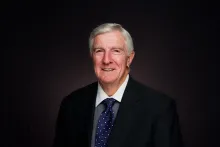
Before his retirement in 2021, Dr. Donald Ward pastored churches in Texas and Louisiana, and taught at Ambassador Bible College in Cincinnati, Ohio. He has also served as chairman of the Council of Elders of the United Church of God. He holds a BS degree; a BA in theology; a MS degree; a doctor’s degree in education from East Texas State University; and has completed 18 hours of graduate theology from SMU.
