
Don Ward
This transcript was generated by AI and may contain errors. It is provided to assist those who may not be able to listen to the message.
Pentecost is called the Feast of Weeks. It's also called the Feast of Harvest, or the Feast of the First Fruits. Passover was observed during the barley harvest, and Pentecost was observed during the wheat harvest. Let's look at Exodus 34, verse 22. Exodus 34, verse 22. Mr. Lucas read this scripture that said that three times during the year you shall appear before me.
The three main harvest seasons, the Jews would journey to, well, Israel would journey to Jerusalem to keep the feast. Of course, there were more than one feast in those days, those seasons, except Pentecost. Pentecost stood alone out there during the early harvest, that of the barley harvest. You would have Passover and unleavened bread with two holy days, the first and last days of unleavened bread. In Exodus 34, verse 22, You shall observe the Feast of Weeks, the First Fruits of Wheat Harvest, and the Feast of In-Gathering at the year's end.
There you see the three feast seasons. They centered around the harvest seasons. Of course, the ancient Israel was an agrarian society, as most nations were and people were. The industrial age was far away from them at that particular time. The major harvest was in the fall, the Feast of In-Gathering. So the Israelites were commanded to make three pilgrimages to Jerusalem to keep the feast in their seasons. The ability to present tithes and offerings centered around the three seasons of the year, how well they had done with their crops. And so he read that verse, you are to give as you have been blessed.
But more importantly, these three seasons present vital steps and represent vital steps in God's plan for bringing every person who's ever lived into relationship with him. The Feast of Passover and Unleavened Bread center on the first fruits of the barley harvest. And the focus is on Christ leading Israel out of Egypt, Christ being our Passover. Let's go to 1 Corinthians chapter 5. 1 Corinthians chapter 5 and Exodus chapter 12 talks about them sprinkling blood on the doorposts of their homes, the blood of lambs.
And as a result of that, when God passed through the land, if the blood was sprinkled on the doorposts of those homes, that home was passed over. But the homes in which that blood was not sprinkled, the firstborn of both man and beast were killed. In 1 Corinthians chapter 5, Paul is addressing one of the many problems in Corinth. I mentioned in the, as we led up to the ordination ceremony, that the Corinthians had about every problem that you want to name and about every division you could think of. They even had an incestuous fornicator among them. And Paul is warning them here to take action with regard to this incestuous fornicator because a little leaven, leaven's the whole lump, and leaven is a type of sin.
You look at verse 6, your glorying is not good. No, you're not. That a little leaven, leaven's the whole lump. So sin has to be dealt with because the wages of sin is death. But the gift of God is eternal life through Jesus Christ our Lord.
Purge out therefore the old leaven that you may be a new lump as you are unleavened, for even Christ our Passover sacrificed for us. So those lambs that were sacrificed beginning with that first Passover in Exodus, as described in Exodus 12, the type of that which was to come, Jesus Christ, and of course it is through the blood of Christ that we can be reconciled to God and receive the Holy Spirit. Therefore let us keep the feast not with old leaven, neither with the leaven of malice and wickedness, but with the unleavened bread of sincerity and truth.
And the unleavened bread of sincerity and truth is the Word of God, John 17, 17. Sanctify them through your word. Your word is truth. Now in Corinthians we go forward to 1 Corinthians 15, and we see here in 1 Corinthians 15 that Christ is the first of the first fruits. Now Pentecost is referred to as the Feast of the First Fruits, and God is calling out the first fruits now, and they will be harvested at the Feast of Trumpets according to all the symbolism in the Bible, the last trump, the sound of the last trump.
And when the seventh angel shall begin to sound, I'm not turning to those scriptures right now, but all of that. And we have people in the church who are some who are saying, well, we are the first fruits and Christ is going to return on the first fruits. There is no evidence whatsoever in the Bible that says Christ is going to return on Pentecost.
The evidence is that He is calling out the first fruits now. They'll be harvested later. Jesus Christ is the first of the first fruits, as we shall see here in 1 Corinthians 15 and verse 17.
And if Christ be not raised, your faith is in vain. See, there were people in Corinth that were even saying in verse 12, there is no resurrection from the dead, and they claim to be members of the church of God. No resurrection from the dead. I mean, why are you there? And if Christ be not raised, your faith is in vain, and yet in your sins, then they also which are fallen asleep in Christ are perished. If in this life only we have hope in Christ, we are of all men most miserable. If this is all there is to it, boy, human life is not worth very much, is it? But now is Christ risen from the dead and become the first fruits of them that slept. So Jesus Christ was raised from the dead after three days and three nights in the tomb. He was crucified on a Wednesday afternoon. He was in the tomb three days and three nights, being resurrected on the Sabbath, the first weekly Sabbath, within the Feast of Unleavened Bread. And then he was waved before the Father and accepted as the first of the first fruits. Remember when Mary Magdalene came to the tomb, Jesus Christ said, Touch me not, for I must ascend to my Father, to my God and your God, and go tell the disciples where to meet me. And later that day, he did appear to them and they touched him. So Jesus Christ is the first of the first fruits, pass over free to Israel physically from bondage, but the giving of the Torah, the law, on Pentecost, provided them with knowledge of how to be freed from idolatry and immorality. Of course, they had been in servitude in Egypt, and Egypt itself is symbolic of sin and death. They had been there for at least 200 years. They had lost sight of the truth and the way to conduct themselves. And so God revealed himself to them and began to bring them out. The Feast of Pentecost centers on the first fruits of the wheat harvest. During the first Pentecost season that Israel observed, God gave them his law, and they entered into a marriage covenant with him. We go now to Exodus 19. We'll see here Exodus basically records the journeyings of Israel out of Egypt, beginning with the Passover and them leaving. It's recorded in Exodus 13, the giving of the manna, the revealing of the Sabbath, keeping the Sabbath, and so many things as they journeyed. But all along the way, as we have said, God had to drag them to the Promised Land. And in some ways, I guess he's dragging us, but I'd rather see footprints in the sand than marks where he had to drag us. In Exodus 19, in the third month when the children of Israel were gone forth out of the land of Egypt, the same day came they into the wilderness of Sinai, where they were departed from Rephidim, and were to come to the desert of Sinai and had pitched in the wilderness, and there Israel camped before the mountain. Moses went up unto God, and the Eternal called unto him out of the mountain, saying, Thus shall you say to the house of Jacob, and tell the children of Israel, You have seen what I did unto the Egyptians, and how I bare you on eagle's wings, and brought you unto myself now. Therefore, if you will obey my voice indeed, and keep my covenant, then you shall be a peculiar treasure unto me above all people, for all the earth is mine. And you shall be unto me a kingdom of priests, and a holy nation, these are the words which ye shall speak unto the children of Israel.
And then God began in verse 9 to tell him that he was going to give them the Ten Commandments, the very backbone of the covenant that they were going to enter into. Now, it is according... there's no scripture that says that the law was given on Pentecost. The Jewish tradition is that the law was given on Pentecost. You see, it's in the third month, and we're in the third month of the sacred calendar. So there's pretty good circumstantial evidence that the law was given on Pentecost, and around that time, as we'll note in just a moment, they entered into the terms of the Old Covenant. You'll notice that this verse here, verse 5 and 6, especially 6, you shall be unto me a kingdom of priests, a holy nation. The Apostle Peter quotes that in essence in 1 Peter chapter 2 verse 9, where he says, Now the church, you are a holy nation, a purchased people, that you should show forth the praises of him, who has called you out of darkness into his marvelous light. So now the church is to be a holy nation, a kingdom, a priest. Much of the rest of Exodus 19 is taken up with the preparation for receiving the law, that they were to purify themselves, they were not to touch the mountain, because God's presence would be upon the mountain. Now in chapter 20, and God made all these, spoke all these words, saying, I am the eternal your God, which have brought you out of the land of Egypt, out of the house of bondage. You shall have no other gods before me. So God began to speak these words, and he spoke to them, gave them the Ten Commandments. And the people were very frightened with all of this. Look at verse 18. All the people saw the thunderings, the lightings, the noise of the trumpet, the mountains smoking, and when the people saw it, they removed and stood afar off. They said unto Moses, Speak you unto us, and we will hear, but let not God speak with us, lest we die. And Moses said unto the people, Fear not, for God has come to prove you, to test you, and that his fear may be before your face, that you sin not. That is, I've given you the law. Here it is. Here's how you can be sinless in that sense. But there's no evidence of the Holy Spirit being given here. In one place it says in the Pentateuchal that there was such a heart in them that they would fear me and keep my commandments always. In chapters 21, 22, and 23, Moses goes up and receives the statues and the judgments. Then in chapter 24, God, in essence, the one who became Jesus Christ, entered into a marriage covenant with Israel. This is Exodus 24, verse 4.
That was their eye due to the marriage covenant. They even built him an earthly sanctuary. You notice in chapter 25, verse 8, And let them make me a sanctuary, that I may dwell with them. Now you notice the last few verses in Exodus. You go to chapter 40. I know you have that Bible on your lap and sometimes hard to turn. But I'm turning with you. In Exodus 40, they build that sanctuary. So from Exodus 25 to Exodus 40 is basically taken up with the instructions of how to build this sanctuary.
It was to be patterned after that temple in heaven, the Holy of Holies, that is there. And they built that sanctuary. Remember, it was for a place for God to dwell in. Verse 33 of Exodus 40, He reared up the court round about the tabernacle on the altar and set up the hanging of the court gate, so Moses finished the work. Then a cloud covered the tent of the congregation, and the glory, that is, the presence of the eternal field of the tabernacle.
Moses was not able to enter in the tent of the congregation because the cloud stood or abode thereupon, and the glory of the eternal field of the tabernacle, his presence. And so God dwelt in a building made by hands for a period of time. When Solomon built the temple, the first temple, the glory of God, filled that temple. That's recorded in 2 Chronicles 5, verse 13-14. I rehearsed some of this.
This is vital for you to understand with regard to the background of Pentecost and receiving the Holy Spirit of God's presence and where he dwelt. Now, when the Restoration Temple was reared up and it was dedicated, the glory of God did not fill that temple. And Haggai writes that the glory of this second temple will exceed the glory of the first temple, because that picture, the temple that was to come, that is the Church of God. Now we go to 1 Corinthians 3.16.
1 Corinthians 3.16. So God, for a period of time, dwelt in a tabernacle in the wilderness, placed his presence in it, the holy of holies. The high priest could only go in there once a year, the day of atonement. Solomon's temple, God placed his presence. When the Babylonians destroyed that first temple, the Ark of the Covenant was taken, has not been recovered since then.
And when that Restoration Temple was built, the second temple, God's presence did not fill that temple, as we said. But it was to picture that which was to come, and that is the very essence and spirit of God that was to come in and fill this spiritual temple in 1 Corinthians 3.16. Know you not that you are the temple of God, and that the Spirit of God dwells in you. And so there are places in the New Testament that says, and Stephen says this in his inspired sermon in Acts 7, that God does not dwell in buildings made by hands.
If any man defile the temple of God, him shall God destroy, for the temple of God is holy. See, holy things have God's active presence within them. Sacred things point toward a higher reality. Holy things have God's active presence within them. The temple of God is holy. Which temple you are. And so that, even to remember that at one point the Ark of the Covenant was in the hands of the Philistines, and also for a while in a person's house. And David built a tabernacle.
Now, it doesn't record whether or not when David built that tabernacle, there was an interim step between the tabernacle and wilderness that was pitched at Shiloh and Solomon's Temple. And that interim step was David's tabernacle that was pitched on Mount Zion. And Mount Zion is a type or symbolic of the church. And God has chosen Mount Zion.
But there's no record of when David's tabernacle was dedicated, or whether or not the glory of God filled that tabernacle. David's tabernacle. I assume that it did, but I don't know that for sure. But we know for sure that it filled Solomon's Temple. It's called the Shekinah Glory. That's what the Jews call the presence of God in that temple. So God today dwells in each one of us the very essence of God. God, and for some reason we just can't quite get this straight with regard to how we express it. But I think we know it even in the ministry in the church. God is Spirit. John 4, 24. That is His essence.
Just as my essence is flesh, but I can have the essence of God in me, in my mind, my heart. And I can become a new creation through Jesus Christ our Lord.
It is through the Holy Spirit that we can do acts of power.
We used to, people would say all the time, Holy Spirit is the power of God. Holy Spirit is the power of God. And the Holy Spirit is the essence of God through which He does acts of power. Now in Hebrews chapter 8. Hebrews chapter 8.
What does Hebrews do? The book compares and contrasts elements of the Old Covenant with elements of the New Covenant. We've seen a little bit from the Old Covenant where God dwelt. We have read 1 Corinthians 3 verses 16 and 17 where God dwels now. Here's somewhat of a summary verse or two. Hebrews 8. Now the things which we have spoken, this is the sum. We have a high priest who has set on the right hand of the throne of the majesty in the heavens a master or minister of the sanctuary of the true tabernacle, which the eternal pitched and not man.
The Moses pitched that tabernacle in the wilderness. David pitched a tabernacle that was on Mount Zion. Solomon built a temple on Mount Moriah. The Restoration Temple was built on Mount Moriah. Today, standing on that temple mount are two Muslim mosques, the Dome of the Rock and the Al-Aqsa Mosque. And there's a big controversy, of course, of who is going to control that. The Jews believe that they must build a temple, and in order for a Messiah to return, others believe that the temple cannot be built by man, that Messiah must build it after he comes.
But if the Scripture is, if we understand them correctly, it says that someone will sit in a temple saying that he is God, and the whole world will be deceived by this deceiver, Satan, who energizes the beast and the false prophet. So a minister of the sanctuary of the true tabernacle, which the Eternal pitched and not man, it is a spiritual temple, it is a spiritual organism, and the very essence of God is in each one of us. The Feast of End-Gathering in the Fall, the Fruit Harp, and the Fruit Harp, it centers on the great end-gathering in which all nations are gathered into a relationship with God and Christ in the millennium.
Of course, you have the second resurrection to come. From Pentecost to the Fall harvest is four months. Christ says, don't wait until the Fall harvest. The fields are white to harvest already. So let's look at Matthew 13. We are in that period of time. The Holy Days revealed so many things. The plan of God from how to be released from sin and death, to overcoming sin, receiving the Holy Spirit, to Jesus Christ coming again, to overcoming Satan now and binding him, casting him out of our lives, symbolized by atonement, living under the government of God now in the flesh, as people will do in the millennium, and going on to perfection, as all people will have the opportunity to do after the second resurrection.
In Matthew 13, verse 38, The field is the world, the good seed are the children of the kingdom, but the tares are the children of the wicked one. The enemy that sowed them is the devil, the harvest is the end of the age, Aeon, and the reapers are the angels. As therefore the tares are gathered and burned in the fire, so shall it be at the end of the world. So shall the Son of Man send forth his angels, and he shall gather out of his kingdom all things that offend, and them which do iniquity shall cast them into a furnace of fire. There shall be wailing and gnashing of teeth.
Then shall the righteous shine forth as the Son in the kingdom of their Father, who hath ears to hear, let him hear. And also now we look at John 4 and verse 34. The field is the world. Go ye therefore into all the world.
Discycle every nation. Teach them to observe all things whatsoever I have commanded you, lo, I am with you, even unto the end of the age. Four months between Pentecost and Trumpets. And see, in the prophetic sense, in the physical, specific fulfillment, Jesus Christ is our Passover. That has been done and revealed. We know that through the sacrifice of Jesus Christ, we can have our sins remitted and come out of sin during unleavened bread. And that we can be partakers of that unleavened bread all of the time and keep sin out of our lives. Your word of a hidden in my heart that I might not sin against you.
Psalm 119 verse 11. And the Pentecost has come. It has been literally fulfilled. The Holy Spirit has been sent. And so in the prophetic sequence, we're between Pentecost and Trumpets. And during that time, from that day, we've had some 1,900 years to pass. From Pentecost to now, I think it's about, what, 1,982 years? Something like that. So in John chapter 4 and verse 34, Jesus speaking, John 4 verse 34, Jesus said unto them, My meat, my food, is to do the will of him that sent me, and to finish the work.
Say you not that there are yet four months. Say not that there are four months between Pentecost and Trumpets. Say not that there are four months. And then comes the harvest. Behold, I say unto you, lift up your eyes and look on the fields, for they are white to harvest already. And he that reaps receives wages and gathers fruit unto the eternal, that both he that sows and he that reaps may rejoice. And herein is that saying true, one sows another reaps. I sent you to reap that whereupon you bestowed no labor, other men labored, and you are entered into that labor.
Of course, to enter into that labor is a weighty matter. In a sense, the nation of Israel became a type of the first fruits of the spring harvest. They were the first nation to enter into a covenant relationship with God, as we read from Exodus 24, verses 7 and 8 there. But they did not receive the Holy Spirit. God was not their spiritual father in the sense that they had been begotten to a new life through the Holy Spirit.
Both the spring and the fall harvest were dependent upon the rains coming at the right time. And the fall rains are called the early rains. The rainwater symbolizes the Holy Spirit. We'll look now where in John you go, chapter 7, page or two, over to John 7, verse 37. Oil and water, either one or both, can represent the Holy Spirit. In John 7, verse 37, in the last day, that great day of the feast, Jesus stood and cried, saying, If any man thirst, let him come unto me and drink. He that believes on me, as the Scripture said, out of his belly, shall flow rivers of living waters. But this he spoke of the Spirit, which they that believe on him should receive.
For the Holy Spirit was not yet given, because Jesus was not yet glorified. Jesus Christ said clearly that the Comforter will not come unless I go away. If I go away, I will send him the Comforter, masterly him it unto you. And so he did on the day of Pentecost. The spring rains are called the latter rains. The early rain is spoken of in Deuteronomy. So let's go to Joel in this case, because Peter ties this in with Pentecost. In Joel, chapter 2, there's prophecy of the Holy Spirit being poured out.
Joel, chapter 2. Joel, chapter 2, verse 21. Joel is one of the most relevant prophecies for our day in the whole Bible. It depicts what the nations are currently doing, arming themselves to the hilt and all of that. In Joel, chapter 2, verse 21.
This is not the scripture I want. It's in verse 26. Verse 26. I want to start. And he shall eat in plenty and be satisfied and praise the name of the eternal your God that has dealt wondrously with you, and my people shall never be ashamed. And you shall know that I am in the midst of Israel. Of course, this goes into the millennium. But, and I say it, and it is true, the Church of God is the kingdom of God in embryo, because the restoration of all things has begun with the Church of God. And you shall know that I am in the midst of Israel, and that I am the eternal your God, and none else, and my people shall never be ashamed. It shall come to pass, afterward, that I will pour out my spirit upon all flesh, and your sons and your daughters shall prophesy, your old men shall dream dreams, your young men shall see visions, and also upon the servants and upon the handmaids in those days will I pour out my spirit. Then it goes into the very end time in the day of the Lord. I will show wonders in the heavens, in the earth, blood, and fire, and pillars of smoke. Now we go to Acts 2, Peter's inspired sermon on the day of Pentecost, when the Holy Spirit was sent to men.
Now some people get all confused, and we have a lot to learn, and I'm not going to try to teach it here today, with regard to all the various works and so on of the Holy Spirit. God's presence, his essence, had been with men and with women through the centuries, but this was something different with regard to the Holy Spirit being sent and how to receive this gift, because this gift had to do with not just the Holy Spirit coming upon someone and then prophesying, as had been done so often through the centuries, even the Spirit came upon Balaam's donkey and he prophesied.
The Holy Spirit being sent here is a gift unto eternal life, the spirit of Begettling. It's not a different spirit, but it's how God uses it. In Acts chapter 2 verse 1, when the day of Pentecost was fully come, so there will be some churches today, Protestant churches around the world, that will talk about Pentecost. A lot won't even mention it, yet they may talk about the Holy Spirit.
When the day of Pentecost was fully come, they were all with one accord in one place. Christ had commanded them in chapter 1 to wait there in Jerusalem until they received power from on high. Suddenly there came a sound from heaven as a rushing, mighty wind. It filled all the house where they were sitting. They appeared unto them, cloven tongues like an asaph fire, and it sat upon each of them. They were all filled with the Holy Spirit, began to speak with other glosses of Laelier, something like that, languages, as the Spirit gave them utterance. And all this talk, well, some say, well, maybe they're drunk, or this or that, the other, they heard this in their own language. And that was one of the great miracles of Pentecost. And then Peter stands up, verse 14, and he begins to preach. But Peter standing up with the 11, who would have you have selected to stand up on Pentecost? Would you have selected, if we have gotten together, the elders, or the GCE or whatever, to speak on Pentecost? Well, Peter, you know, Peter is this one who's outspoken, bold, rambunctious kind of thing. You know, he knew he was a leader, but man, who could bridle him cutting off ears? Why'd he have a sword in the first place? I guess you never thought about that. But anyhow, he was the one that Christ said, Get behind me, Satan. He was the one that denied Christ three times on the night that he was betrayed. Peter is the one who stands up Pentecost.
But Peter standing up with the 11, lifted up his voice, and said unto them, You men of Judea and all you that dwell at Jerusalem, be this known unto you, and hearken to my words. These are not drunken, as you suppose, seeing it is but nine o'clock in the morning. But this is that which was spoken by the prophet Joel, which we just read. It shall come to pass in the last days. So the last days, in one sense, began at Pentecost, because it begins the final fulfillment of what God is really doing with human beings.
The Old Covenant was like a prologue, a lead-up to, a lead-up to the day of Pentecost, in which men and women could receive within their being the Holy Spirit and be engendered with a new life within them that could write the law of God on their inward parts. You didn't necessarily need an ark of the covenant. Some people think, well, if you did discover the ark of the covenant, it would be a great testimony of the veracity of the Bible. But as far as it really doing anything for you, other than maybe bolster your faith, it is the Spirit of God that writes the law of God on our inward parts.
A lot of discoveries are taking place at the present time in the archaeological sense, proving the veracity of the historical record of the Bible. But, you know, God says, blessed are those who believe and have not seen. But the more proof, the better, I guess. "...shall come to pass in the last days, I will pour out my Spirit upon all flesh, and your sons and your daughters shall prophesy, and your young men shall see visions, and your old men shall dream dreams, and on my servants and on my handmaidens I will pour out in those days of my Spirit, and they shall prophesy, and I will show wonders." Of course, that leaps from that time to sometime in the future when the day of the Lord begins.
Who knows how far out that is? But God has already begun to pour out His Holy Spirit, and the restoration has begun through the Church of God. So the rain is prophetic of the outpouring of the Holy Spirit upon God's people individually as they accept Christ into their lives, repent of their sins, and they allow the Word of God and the Holy Spirit, the enabler, to teach and instruct them to the way of God. So these events mark the beginning of the calling out of the harvesting of the first fruits. Notice now, Peter gives his sermon. We'll go to verse 36, Acts 2.36.
He gives his sermon. He talks about the history of Israel. He talks about David. He talks about sending the Holy Spirit and the promise thereof. Verse 36, Therefore let all the house of Israel know assuredly that God had made that same Jesus, whom you crucified, both Lord and Christ.
And when they heard this, they were pricked in their hearts. They were convicted. They were cut to the quick. They were to the point, what can I do? I am so convicted. Now, Stephen preached a similar kind of sermon as recorded in Acts 7, and they were pricked in their hearts. And instead of repenting, they killed him. And so the hardening of the heart, and whether or not God is opening that mind and that heart, there are so many factors that play a role.
All the house of Israel know assuredly that God had made that same Jesus, whom you have crucified, both God and Christ. When they heard this, they were pricked in their hearts and sent unto Peter, to the rest of the apostles, men and brethren, what shall we do? Then Peter said unto them, Repent and be baptized, every one of you, in the name of Jesus Christ, for the remission of sins, and you shall receive the gift of the Holy Spirit. It is a gift, but it is conditional. The condition is you must repent. What do you repent of? Breaking God's immutable spiritual law.
That same law that was the basis of the Old Covenant. That law is not done away with. Hebrews 8.6 says it is established upon better promises, or furnished with. And the correct translation is it is furnished with law.
For the promise is unto your children. And one of the first things that the United Church of God did, and we spent about two years on this, in 1996-97, on the Council with this study paper, that says, and we sang the hymn here this morning, that God is calling children. That is, they have access to, it's sort of like the analogy of the Garden of Eden. That your children, growing up in the church, are not cut off.
They are sanctified. They are set apart. They have the opportunity. So many of us want to use the, and many of the old evangelists, and that kind of thing, because we have all seen, and I've seen myself with children, that they don't all go the same way. But we can't blame God. And to a large degree, maybe we shouldn't blame ourselves so much.
Because when all is said and done, it's up to you. And from a child, you have known the Scriptures. You are not cut off from access to the tree of life, as it were. Oh, it's up to God. No, it's up to you. You have access. It is to you and to your children. And to all that are far off, that all that are far off, that's the Gentiles.
It's not those who live on the other side of Sabine River. It's the Gentiles. Even as many as the Lord our God shall call. And with many other words—we just have a short summary of the sermon— and with many other words, he did testify and exhort, saying, Save yourselves from this untoward generation. I mean, what's new? The untoward generation. Then they that gladly received the word, then they that gladly received the word were baptized. Obviously, some did not gladly receive the word, but they didn't try to kill Peter apparently then.
And the same day they were added under them about 3,000 souls. They continued steadfastly in the apostles' doctrine, teaching and fellowship, and in breaking of bread and in prayers. And fear came upon every soul, and many wonders and signs were done by the apostles. And they are recorded here in the first few chapters of the book of Acts. You know, one of the apostles was killed. Peter was put in prison, but miraculously escaped. God supernaturally led him out of prison. Paul and Silas were put in prison.
They were supernaturally rescued from the prison. So, brethren, here we are on the day of Pentecost. I have covered two pages of eight, and it's time to quit. The final fulfillment, of course, is coming, and the latter reign. You turn to the book of James. We'll wrap this up here now. In James chapter 5, James chapter 5 is about the end times, and we see it taking place right now. I misspoke there's James 4 that I want. James 4 is very prophetic. No wonder I'm having trouble. I'm in the wrong book. It is James chapter 5.
In James chapter 5, he talks about the rich and what they're doing. Verse 7, Be patient, therefore, brethren, under the coming of the Lord. Behold, the husbandman waits for the precious fruit of the earth. And, of course, God the Father and Jesus Christ are anxiously waiting for the fall harvest for the gathering of the first fruits for the first resurrection until he received the early and latter reign.
Of course, the latter reign is coming, and the fall harvest, the first fruits, are going to be resurrected into the kingdom of God, into the family of God. Be you also patient, establish your heart, for the coming of the Lord draws near. Grudge not one against another, brethren, unless you be condemned, behold, the judge stands before the door. So James ties the coming of the Lord into the early and latter reign. Christ's death, burial, and resurrection was in the spring of the year. The outpouring of the Holy Spirit after the resurrection of Christ was in the spring of the year, early summer.
It was still technically spring. And all those who believe were first fruits. And so Christ is calling out the first fruits right now. And at His coming, the fall harvest, first resurrection.
So we are all types, and the symbolism has to do with at the last trump, as we have already mentioned. We're created physical, subject to death, after being called or given the opportunity to participate in the act of creation. God is calling out the first fruits now, and that began on Pentecost. And that harvest will take place in the fall, beginning with the Feast of Trumpets. There is no symbolism that indicates Christ comes on Pentecost. All of the symbolism points toward trumpets. So in the interim, say not, there are four months to the harvest. Because we are laborers now in God's building. Look at this in 1 Corinthians chapter 3. We read in 1 Corinthians 3, 16, that we are the temple of God. But you notice, in leading up to this, Paul is writing here in 1 Corinthians 3, 4, And while one says, I am of Paul, another I am of Apollos, are you not, carnal? Who then is Paul, and who is Apollos, but ministers by whom you believe, even as the Lord gave every man? I have planted, Apollos watered, but God gives the increase. So then neither is he that plants anything, neither he that waters, but God gives the increase. Now he that plants and he that waters are one, for every man shall receive his own reward according to his own labor. For we are laborers together with God, your God's building, your God's husbandry. According to the grace of God, which is given unto me as a wise master builder, I have laid the foundation and another bill there upon, but let every man take heed how he bills upon. So we are laboring together with God and Christ in building this spiritual temple. God's essence, his Holy Spirit, is in each one of us. We are new creations in Christ Jesus. All things are passed away. Behold, all things are become new. Now that we have this essence within us, we do have the power to overcome sin and death. We have been delivered, translated, Paul writes in Colossians 1.13, in the kingdom of his dear son. We're living, in essence, the Holy Days now. We have gone through Passover, unleavened bread, Pentecost. We have been resurrected after baptism into a new life, to live the resurrected life now. We are living under God's government now, as all the world will do during the millennium. We are casting out Satan now. We have power over Satan the devil. And we are to go on to perfection. Brethren, the meaning of the Pentecost can never be exhausted. And it is such a wonderful feast, and such a wonderful time in the plan of God. And I hope that we will continue to keep Pentecost continually. Because it says in 2 Corinthians 4.16, it says, The inward man is renewed daily, and he gives his spirit to those who obey him. He gives his spirit to those who ask for it. And he gives his spirit to those who exercise that which they have. So brethren, let's be admonished and exhorted and motivated to carry on this great work of building a temple of God.
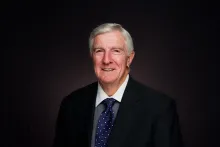
Before his retirement in 2021, Dr. Donald Ward pastored churches in Texas and Louisiana, and taught at Ambassador Bible College in Cincinnati, Ohio. He has also served as chairman of the Council of Elders of the United Church of God. He holds a BS degree; a BA in theology; a MS degree; a doctor’s degree in education from East Texas State University; and has completed 18 hours of graduate theology from SMU.
