
Mark Welch
This transcript was generated by AI and may contain errors. It is provided to assist those who may not be able to listen to the message.
Also, I was asked about why we do the Kingdom of God seminars the way that we do.
What we're trying to do is help other people and introduce them into an understanding of the Kingdom of God.
The first two seminars that we had nationally, the first two seminars that we had, we had over 3,000 visitors for the very first time come and hear about the Gospel of the Kingdom of God.
So we're very excited about the seminar concept, and we are able to be here today at the Holiday Inn because one of our members so kindly gave us a very large offering so that we could pay for the use of this facility and the snacks and food that we'll be enjoying when the presentation is over.
So a special thanks to him. He chose to remain anonymous, and certainly may God richly bless him for his kindness so that we could be here at the Holiday Inn today.
Well, let's get started on part two of the Kingdom of God seminar this afternoon.
Repentance, saying yes to God.
There came a time in Jesus' ministry where his disciples said, teach us how to pray. What are the kind of things that we should pray in our daily prayers?
And Jesus taught them something that's commonly known as the Lord's Prayer, but he had one phrase within that Lord's Prayer. He said, I want you to pray every day, thy kingdom come. Because that is the only real solution to the problems that our world has.
That's the only real hope that mankind has is that kingdom that we talked about in part one.
Thy kingdom come. So who will be in that kingdom?
How can we prepare to be part of that kingdom?
Well, we can go back and see a very powerful scripture in the book of Acts, chapter 2 and verse 37.
To give you context here, the early church received the Holy Spirit on another one of those seven annual holy days of God.
You know the first part one, I mentioned the Feast of Trumpets. That's one of them.
Another one is known as Pentecost. And it's because they were observing the day of Pentecost that the Holy Spirit came upon those who were there that day. And Peter gave a very stirring, a very powerful sermon. It says here in verse 37, now when they had heard this, they were cut to the heart. They wanted to do something about it. They wanted to react to the powerful message they had heard from Peter. And said to Peter and the rest of the apostles, men and brethren, what shall we do? They said, we want to be part of this kingdom. We want to serve mankind. We want to be there with Jesus Christ and be one of his saints. What can we do? And that's primarily what we would like to talk about during the second part of the seminar today. Mark chapter 1 and verse 14, Jesus came to Galilee preaching the gospel of the kingdom of God and saying the time is fulfilled in the kingdom of God is at hand. To that audience at that time, he was literally offering them a discipleship. And then he goes on to say something else, an important next step for them. He says, repent and believe in the gospel. So that's what we would like to focus on. First, repentance. What is repentance and why is it so important to become a saint of Jesus Christ?
Matthew chapter 4 and verse 17, Jesus began to preach and to say, repent and the kingdom of God for the kingdom of God is at hand. Before him, John the Baptist came saying very similar words, repent, he told his audience, for the kingdom of God is at hand. It's a necessary and important step towards becoming a disciple or a saint of Jesus Christ. So have you repented?
Do you know what repentance really is? Because it's a lot more than just being sorry.
You know, as a teenager, I did a lot of stupid things that I won't go into detail because we would be here too long today. And there were often times when I felt remorse for what I did, when I felt sorry for what I did, when I felt shame for what I did, when I felt worthless for what I did, but that alone was not repentance. That was just guilt working on my mind and shame and humility, working at me, making me feel low and sorrowful and remorseful. But that is not what biblical repentance is, as we'll see. 2 Corinthians chapter 13 and verse 5, Paul was writing to a church in Corinth that had a lot of problems. Some of the members had their favorite ministers.
Some of the members had different doctrinal agendas within the congregation. Some of the members had sexual issues that they needed to deal with. And here's what he told them. He said, examine yourselves to see whether you are in the faith. You have to do a self-examination. He says, test yourselves. Do you not realize that Christ Jesus is in you? And I might add, He's in us through the power of the Holy Spirit when we've been baptized, when we've received the laying on of hands, that Jesus Christ is in you, unless, of course, you fail the test. So if we examine ourselves and we fail the test, as we look at what repentance is, if there's something that we haven't done that we've left out, then maybe we haven't repented. Maybe we just convinced ourselves we've repented, but we did not have a biblical repentance. Jeremiah chapter 17 and verse 9, it says, the heart is deceitful above all things and desperately wicked. Who can know it? This is the prophet warning us that our hearts deceive us all the time. You know you probably, if you're like me, you carry on a dialogue in the side of your head most of the day. You're talking to yourself. We call that self-talk. And where most people go wrong is they fail to realize that most of the time we are lying to ourselves. We are lying to ourselves because our heart is deceitful, a heart the center of emotions. We tell ourselves, I can't do that because I'm not good looking enough.
I'm not rich enough. I don't have enough money to do that. You see, we limit ourselves. We lie to ourselves, again, the prince of the power of the air, in an effort to hold us down, in an order to control us. That's what Satan wants us to do. So the heart is deceitful. We lie to ourselves about ourselves and we oftentimes lie to ourselves about other people. We look at a person, look at the way he looked. He doesn't like me. Well, maybe he just has a nose itch. But you see, we lie to ourselves.
We reinterpret everything in a negative way because our heart lies to us. And what's going on in the inside oftentimes has to be challenged. A breakthrough will occur in your life. When you begin to challenge self-talk, when you have a thought that's negative, that says you can't do something or something, a negative about another human being, you stop and you say, wait a minute, let me really think about this. Is that true? And you'll oftentimes see that it's not true.
Again, it's another influence of that prince of the power of the air. We think we know it all.
And we think that we'll never lie to ourselves. But the truth is, my friends, we lie to ourselves all the time. Romans chapter 8 verses 7 through 8. Paul discusses it in a little different way.
He says here in chapter 8 verse 7, because the carnal mind is enmity against God, in other words, the way that we are natively, naturally, our default is an adversary against God. For it is not subject to the law of God, nor indeed can be. I'm going to give you a different translation that I think makes it a little more clear for us, the new century version. When people's thinking is controlled by the sinful self, and that's the way we are, frankly, before we receive God's Spirit, before we receive God's calling and begin to make changes in our lives, it's all about me.
It's about what I want right now. It's about making me happy. And if other people suffer, it's too bad. Paul refers to this as the sinful self. When people's thinking is controlled by the sinful self, they are against God because they refuse to obey God's law and really are not even able to obey God's law because they don't have God's Spirit. They don't have that extra helper that Jesus promised to give us the strength and the ability to change ourselves for the better, to grow and to use the fruits to develop the fruits of that Spirit in our lives. So natively, naturally, we are carnal. We are selfish. And that's not a good thing. That has to change.
So the first thing to remember about repentance is the fact that we need to repent because of who and what we are. It doesn't fit into God's standards. It does not comply with the way that God is who is good and righteous and holy. And it's our job to conform to His standards and not expect Him to lower His values, to make us happy or content. Here are some other things that Paul said. Now, he's quoting prophets here in Romans the third chapter, but it once again, from the perspective of looking at a carnal, selfish mind that is not yet converted, Paul says in verse 10, there is none righteous, no, not one. Righteousness comes from God. We may have some good qualities.
We may have some positive aspects of our lives. We may do some good things for other people, but that does not make us righteous. Verse 11, there is none who seeks after God. And sadly, if you look at our newspaper, you go through the Cleveland Plain Dealer page after page, you see sin upon sin, dysfunction upon dysfunction, and everyone just doing their own thing, trying to get through life the way that they think is best and the way that they want to.
Verse 12, they have all turned aside. People are not seeking God. What does the typical American want out of God? They really don't want a God that they can know. They don't want a God that they can have an intimate relationship with. They don't want a God that they can talk to every day. What most Americans want is a genie. They want a Walt Disney character. They want that magical being that they can say, hey, I'm in a pickle, wave the magic wand, rub the lamp, come out of there and solve my problems. Well, thank you, the problems went away. Now go back into your lamp and leave me alone.
Sadly, that's the kind of God that most Americans want. But the true God wants to have an intimate personal daily relationship with His children. And that's the kind of relationship that we're talking about is possible through repentance. Again, verse 12, they have all turned aside. There is none who does good. No, not one. Verse 17, and the way of peace they have not known. I'm just stunned at how many people that I talk to who are not peaceful inside. People that inside, they have anxieties.
They have guilt. They have shame. They have problems that they've been struggling with for years and years and years, and they are not a peaceful or a happy people. One of the fruits of the Holy Spirit that we're offered is joy. And joy should primarily radiate from our lives. Sure, we're all going to have bad days. I certainly have enough bad days. We're all going to have challenges.
We're all going to have problems, but primarily what God offers us through repentance, and ultimately the receiving of the Holy Spirit, is peace. And primarily an attitude of joy, even through some of the most difficult challenges that life throws at us. We can still have peace and still have joy. Verse 18, there is no fear of God before their eyes. Again, look at our entertainment, so-called entertainment industry, how they profane God's name. You go on some of these cable channels, HBO, and some of these other channels, and they just continually use God's name in vain with impunity. And it doesn't. Everybody laughs. They think it's funny that people are mocking God's name, and they just think it's a big hoot. And again, that's a negative result of the secular society that we live in, where all standards of decency have eroded and have collapsed.
So Paul reminds us there in Romans 3, the way the carnal native human heart is. Romans chapter 3 in verse 23, all have sinned and fall short of the glory of God. I've talked to people who have said, I'm basically a good person. You know, Mr. Thomas, I'm a good person. I think God is pleased with me.
Well, you know, good is a term open to interpretation, isn't it? And God's interpretation of what good is is far different than what our interpretation of good is, because God wants a relationship.
He doesn't want ceremony. He doesn't want us to show up someplace one day a week for an hour, wave our hands, sing our songs, listen to a sermon, and then go out the rest of the week and live like there is no God or we don't know Him. God wants to have an intimate, daily, personal relationship with us. That is how God defines good. Someone who calls in His name every day, not ceremonially, one day a week for an hour or so. So as Paul was inspired to write, all have sinned and fall short of the glory of God. Romans chapter 6 and verse 23, for the wages of sin is death. You know, if you work for someone, you receive wages for the things that you do. And that's also a spiritual principle. We receive wages for the sins that we do. And you know what those wages are? It's not very happy. The wages of sin is death. But there's good news.
It's the rest of the verse. But the gift of God is eternal life in Jesus Christ, our Lord. You see, we don't have immortal life instantaneously. We don't have that already. Life is a gift.
It's a gift from God, eternal life. And it's something that God will give us. And that process all begins with understanding the importance of repentance and what repentance is. There are actually six keys to repentance that I would like to talk about to you during this portion of this seminar. Going back to Acts chapter 3 and verse 19, the audience was encouraged to repent, therefore, and be converted that your sins may be blotted out. So let's take a look at this a little more closely. First of all, the first word in the scripture in verse 19 is repent.
That comes from a Greek word, metanoi, and it means to change one's mind. It means to be thinking about one thing in one attitude in one direction and say, well, that's not working. That hurts.
I think I'm going to do something else. This is not working. That's the one of the meanings of that Greek word. Another one is to change the way we think differently. That means if we primarily think of ourselves 24-7 and if the whole universe revolves around us, to begin stop thinking that way and realize that the universe revolves around God's will. It does not revolve around us. And when we begin to conform to God's will, when we begin to surrender to Him, when we begin to allow Him through His Spirit to make the changes in us that we need, then we can begin to be happy and abundant and live fulfilling lives. How about the word to be converted? That's another Greek word and it's epistrapho and it means to turn around. It means if I'm walking in this direction and I say, you know, that's painful. This hasn't worked for the last 30 years. That you turn around and you go the other way. It's like if you were in a ship and you're heading in one direction in the ocean and the ship turns around and heads back in a different direction. That's what the word converted means from the original Greek. It means to change course. And my friends, this goes far beyond just feeling guilty about the course that we're on, feeling remorseful about the things that we've done. It takes it to a whole new level that can result in positive change.
So we want to go into another direction. This is what the phrase repent and be converted means so that our sins can be blotted out. The second thing is to repent of being a sinner.
You and I all have something in common. We are addicted to sin. We are addicted to sin. We are sinners and we need to repent of being sinners and begin that process of making change in our lives because that's very pleasing to God. He doesn't expect instantaneous perfection, but what he wants to see is he wants to see a commitment, a zeal, and a dedication to use his spirit and become a better person, better defined by God's law and God's values. He wants to see growth in his fruits.
He wants to see his people changing and developing and growing for the better. Paul struggled with this. He understood the struggles that we go through. Romans chapter 7 verse 21. I'm going to be quoting here from the New Century version. Paul was fully human and here's how he worded it with his daily struggle against temptation and the natural mind's desire to do things that were wrong. He was a pretty spiritual man, a very religious man, an apostle, but he felt the same temptations and struggles that you and I do. He says, so I have learned this rule. When I want to do good, evil is there with me. In my mind, I'm happy with God's law. He says, you know, logically, I can understand that this is God's law. If I confirm to this law, I'll be completely happy and I will live an abundant life and I'll be able to accomplish God's will. He says, intellectually, I can understand that. I read it. I know it. I grasp it. He says, I'm happy with God's law in my mind. In verse 23, but I see another law working in my body. It's that carnality that we will have, frankly, to a degree, as long as we draw breath in our physical human beings.
He says, I see another law working in my body, which makes war against the law that my mind accepts. So he says, with one hand, I want to do what's right and I want to conform to God's law.
I want to conform to God's law. On the other hand, I have these constant pulls of the flesh.
Boy, isn't she pretty! You know, all of these thoughts that are entering his mind constantly that he's struggling with. He says that the other law working in my body is the law of sin, and that makes me its prisoner. It's constantly pulling me back towards it, towards the wrong values, the wrong thoughts, the wrong ideas and mindset. Verse 24, he says, What a miserable man I am! Who will save me from this body, this physical carnality, that I have that brings me death? Verse 25, I thank God for saving me through Jesus Christ our Lord. So in my mind, I am a slave to God's law. In other words, he wants to obey God's law. He's committed and zealous to obey God's law, but in my sinful self, I am a slave to the law of sin. He knew that he would occasionally stumble that even aside from all the knowledge and understanding that he had, he would sin. And he would need to go back and repent and need to go back on a regular basis and ask God to forgive him of his sins as he would repent. So, number two is to repent of being a sinner. Sin is the violation of God's law, and we need to repent of violating the law of God.
Number three of the six keys, repentance is not just sorrow or remorse. Again, the book of 2nd Corinthians, chapter 7, Paul writing to his congregation Corinth, he says, for the kind of sorrow God wants us to experience leads us away from sin and results in salvation.
There's no regret for that kind of sorrow. Again, godly sorrow leads us away from salvation. Why?
Because repentance, the key, is the fact that we desire to change. We say to God, I want to be better. I am committed to do better, to be better, and to draw upon your Holy Spirit to develop the fruits of that Spirit in my life. He says there's no regret for that kind of sorrow, but worldly sorrow, which lacks repentance, results in spiritual death. You know, many people are sorry, many people are remorseful that they got caught. But they have no intention of being better.
They have no intention of changing their lives. They have no intention of drawing a line in the sand and saying, this is the way I was, and this is the way I'm going to be. It reminds me of the song that Mr. Blakey's saying, you know, I eat what I used to be. Exactly. So the problem with worldly sorrow or remorse is that it's usually just sorry that it got caught. It's sorry that it's feeling guilty or humiliated or shamed, but it doesn't want to change. It doesn't want to be better. It doesn't want to grow. And that's what repentance is. The commitment, the effort, the desire to develop the mind of Jesus Christ himself. And again, we don't have to do that alone. We can receive the power of the Holy Spirit to give us the ability to do that. Number four, it's a change of mind and life. Repentance isn't just thinking happy thoughts. Oh, Jesus loves me. This I know.
Now I'm happy and it can snow. Repentance isn't just happy thoughts, good feelings.
Repentance is about changing our lives for the better to be more productive, to be more loving, more caring, more patient, more giving to others, beginning to work on and develop and overcome our personal sins and problems and addictions. Mark chapter 12 and verse 33, it says, man must love God with all his heart and with all his mind and with his strength and he must love his neighbor as he loves himself. So what is Jesus saying here? He said, if you want to have the right kind of relationship with God, first of all, you have to love God with your heart. The heart is the seat of our emotions. We have to love God with a passion, with an excitement, with an enthusiasm.
And he says you have to love God with your mind. You have to rationalize and believe that there is a God and understand that he has a plan and that your life is part of that plan. And rationally, consciously accept that and understand that. And then the third element, he says, with all of your strength, with your energy, with the passion that comes from your heart, and the understanding and logic that comes from your mind combined with your energy, your physical strength, we have to love God.
And that is the way to have an intimate and a deep and personal relationship with him. He says, of course, and also to love our neighbor as much as we love ourselves. Verse 34, Jesus noticed how wise his answer was, and so he told him, you are not far from the kingdom of God. He said you're on the right track here. You understand to love God with a passion, to love God with your heart and your mind, and to do something about it. That's where that strength comes from, not just to talk about it, not just to think happy thoughts, but to do something about the ability to change and grow. Jesus said you're not far from the kingdom of God. Also, part number four here, in change of mind and life, key number four, Isaiah chapter 55 and verse seven, it says, let the wicked forsake their way of life and change their way of thinking. That means if we're thinking selfishly, if we're thinking it's all about me, repentance means we stop thinking selfishly, we stop thinking it's all about me, because in reality, in truth, it's all about God, because He has a tremendous plan for your individual life, but your potential can never be reached. The opportunities that God wants to lay before you in this lifetime can never be achieved unless we change our selfish way of thinking and saying, I surrender to you, God, it's not about me, it's all about you. It's your will, your will be done, not my will.
So let the wicked forsake their way and life and change their way of thinking. Let them turn to the Lord our God. He is merciful and quick to forgive. See, the beautiful thing about repentance is that God is quickly willing to forgive when we understand what repentance really is, and we indeed repent. God says, I separate your sin as far as the east is from the west. I forgive you, and I don't hold it over your head. I don't bring it out of the bag five years ago and say, remember when you did this?
God says, I'm not that kind of a God. I forgive, and I wipe that sin clean, and I give you an opportunity for a fresh brand new start all over again. And my friends, that is available to us if we understand the power that lies behind true biblical repentance.
So, again, it's turning around and changing our mind and our life. Romans chapter 6 and verse 4, For we died and were buried with Christ at baptism. For just as Christ was raised from the dead by the glorious power of the Father, now we also may live new lives. This is from the new literal translation.
So what is Paul saying here to the church of Rome? He's saying that baptism pictured a watery grave. When you're baptized, according to the biblical standards, you literally are immersed. You are put under your entire body under the water. That represents a death, a death of the old self, the selfish old carnal person that we were.
It is a watery grave. We are buried like Jesus Christ was buried after he died. And when we come out of that water, it pictures the beginning of a new life, a new creature in Jesus Christ with our sins forgiven and an opportunity to live fresh and new all over again. And justice, Christ was raised from the dead by the glorious power of the Father. Now we also may live new lives.
That's what repentance allows us to do. Number five, the fifth key, is a literal change of direction, a whole change in your meaning of life, an entire change in what your purpose is for living. Because it's no longer about self, it's about giving back and giving to others. Romans chapter 12 and verse 2, and do not be conformed to this world, but be transformed by the renewing of your mind.
You see, when we truly repent, when we are baptized and we receive God's Holy Spirit, our lives literally are transformed. We were living for one reason, usually us, and now we're living for a whole other reason and purpose. We had a life that had no meaning.
We would wake up today and just go through the day without any concept of what this life is really all about. And now our life has new meaning. We realize we are a child of God. We are not an accident in this world. The things that we've done wrong, the stupid things that we've done wrong, now can be used so that we can help others, so that when we change and grow, we can support others who are going through the problems we had, and we can say to them, I've been there, I've done that.
Now let me help you. Let me tell you, let me show you, let me coach you on how you can have a happy and productive life and get out of the problem that you're suffering from. So you see, life that had no direction, no purpose, and no meaning, now has direction, because it's heading towards the kingdom of God.
It now has meaning because we want to become saints of the Most High. We want to serve with Jesus Christ for all eternity as His disciples and as His children in the kingdom.
And our lives now have a new purpose, and that purpose is to grow. It's to develop the fruits of the Holy Spirit and to take on what Paul said, literally, the quote, mind of Christ. Each day to conform and change ourselves and to become more like Jesus Christ with each and every passing day. So there's an entire transformation that takes place in our lives. There's a whole renewing process that occurs in our minds, in our thoughts, in our attitudes.
Second Corinthians chapter 5 and verse 17, therefore, if anyone is in Christ, he is a new creation. God wipes away those sins. Where as fresh as fallen snow, white and pure in his sight with no sins. He's a new creation. Old things have passed away. Behold, all things have become new. Why? Why? What does Paul mean when he says all things have become new? When we are converted, we look at everything differently because we no longer look at it to the prism of who we were.
We no longer look at everything through a selfish, narrow lens and judge everything and everybody, this person's out to get me and this person's bad because they're not like me. And you no longer look at life that way. You now look at life through the prism of the potential that people have. You look at life and you understand that people, they make mistakes. People do some silly things, but God is going to work with them too.
He has a plan. He's going to help them. Who knows? Maybe I can even help them. But all things become new because our attitudes, our mindset, every part of our lives changes for the better, changes for the positive. It begins to look at the potential in things. It begins to look at the glass as half full and not half empty. It changes our entire outlook on everything that we do on our entire lives. Number six, the sixth key, is unconditional surrender to God. There are a lot of people that want to have a partial surrender to God.
Well, God, I'll surrender to you one day a week for an hour. I'll get in my car and I'll go down to that church building and I'll really impress the people there. But God doesn't want us to be one hour a week, Christians. God wants us to be 24-7 believers and disciples and saints. He wants us to unconditionally surrender to God our will so that we can conform to His will. Jesus said in Luke chapter 14 and verse 26, He said, if anyone comes to Me but loves his father and mother and wife and children or brothers or even life more than Me, he cannot be My follower. Now, let's put this in context. Should we love our father and our mom and our wife and our children and brother? Yeah, absolutely. We should love them. Matter of fact, the deepest relationships we have with any human being should be with those people. But Jesus is saying you have to love Jesus Christ more. You have to love Him first.
He has to be the first priority. And if there's a conflict between what Jesus Christ teaches and what one of the family members said you should do or the way you should act or how you would think, we have to love Jesus Christ more and conform and live by God's law rather than what others expect of us. He's not saying that we shouldn't love our family. We certainly should love our family with a deep and abiding love, but we have to love Jesus Christ more to be His follower. That's unconditional surrender. I also want you to pick up it says, or even life in this verse. Some translations say, or even life itself. I'll tell you the story, one of my favorite stories about Martin Luther King many years ago during the Civil Rights Movement. He was speaking to a church down south and he said to the audience that we need to march non-violently. We need to do such and such and such and such and the hand started to go up. And one person said, well Dr.
King, I might lose my job. I can't do it. Another person, well the dog might bite me. The dogs might bite me. I can't do that. That would be bad. Another person raised their hand. Well, I might get beaten up by a billy club. A policeman may beat me up. And Dr. King listened to this and listened to listen to listen and people could tell he was getting frustrated. And he was trying to respond to these things and eventually he stopped. He said, you know what? He said, here's the bottom line.
He says, if you're not willing to die for something, you're not fit to live.
And I have to tell you regarding God's way of life, because there's talks in prophecy about a time when God's people will literally physically be martyred. Some will face martyrdom. I have to tell you that there's no important reason to live for anything than to live for God's way of life and even be willing to die for it. We have to love Jesus Christ even more than life itself.
That's what it takes to be his follower, his disciple. Verse 33, in the same way, any of you who does not give up everything he has cannot be my disciple. He says, you have to be willing to give up everything you have. Now, at first thought, you might say, my home, my car, my closet in both suits. I have to give all of this up for this truth. Well, here's the reality, my friends. You're just a steward of those things anyway. None of those things belong to you. 50 years from now, someone else will be living in that house. That car will be making Campbell's soup cans. Your clothes, if they made it in the goodwill, might be in a dump somewhere rotting under the earth. The point is, is that if you look at it from the right perspective, all of these things, this everything that we think is so important to us, really has no value at all.
Because death is the great equalizer. And when they put us in the ground, all of that stuff means nothing. Besides that, your kids will have what you had spent within 30 days anyway.
So when he said, in the same way, if any of you who does not give up everything he has cannot be my disciple, he said you have to put the spiritual as a higher priority than just physical things.
It has to do with conforming to God's will. And that's all about the Spirit. And not think that somehow, again remember the heart is deceitful above all things and desperately wicked. We con ourselves in thinking, well if I just have a big enough 401k, then I'll have security. Or if I have all this stuff, if the one who dies with the most toys wins and I just collect all these toys, then I'll be happy, then I'll be secure, then life will have meaning. And that's a lie.
That's an absolute lie. So Jesus really meant it when he says, any of you who does not give up everything he has cannot be my disciple. That's unconditional surrender. Not surrender. It says, God give up everything to you except this, this, and this. That's not the kind of follower that Jesus Christ can use. Luke chapter 18 and verse 18. Now a certain ruler asked him, saying, good teacher, what shall I do to inherit eternal life? And we've been talking about that today. So what should you do? Acts chapter 2 and verse 36. Again, going back to that time on that day of Pentecost, one of God's seven annual holy days, it's occurred in 31 A.D., Peter said, so let everyone in Israel know for certain that God has made this Jesus whom you crucified to be both Lord and Messiah. So you have to believe in Jesus. You have to understand that Jesus Christ is the Son of God and that He is both the Lord and Messiah. He is your Savior. Verse 37, Peter's words pierced their hearts and they said to him and to the other apostles' brothers, what should we do? What's the next step? That's the question that they asked. Acts chapter 2 and verse 38. Here was his reply.
Repent and be baptized, every one of you, in the name of Jesus Christ for the forgiveness of your sins. From the translation, the New Century version, Peter said to them, change your hearts and lives. Remember, sorrow isn't enough. Remorse isn't enough. Just feeling stupid about the silly things we did isn't enough. Change your hearts and lives and be baptized.
What else should we understand? Colossians chapter 1 and verse 13. God has freed us from the power of darkness and He's brought us into the kingdom of His dear Son. The Son paid for our sins and in Him we have forgiveness. When you become a disciple of Jesus Christ, you become, as a phrase that Paul used, an ambassador for Christ. That means our allegiance, our citizenship, is in another world.
It's in another kingdom, the kingdom of God, the one that we look forward to. But meanwhile, until that happens, we are living on this earth as strangers and pilgrims in a secular society with all of His craziness going on all around us. But in spite of that, we are living witnesses and ambassadors of Jesus Christ. In this way, He's brought us into the kingdom of His dear Son.
We are ambassadors now as we wait for that kingdom to be established. 1 Thessalonians chapter 2 and verse 12. Walk worthy of God who calls you into His own kingdom and glory. You see, there's something that we need to do. God does the forgiving. God does the calling. God does a lot. But what He wants us to do is show and demonstrate changed lives. Walk worthy of God who calls you into His own kingdom and glory. Matthew chapter 3 and verse 8. The religious leaders of the day of John the Baptist, they saw everybody was being baptized. Wow! What a great fad! We'll get in line and we'll be baptized just like all the people are, said the Sadducees and the Pharisees. And John saw them in line and he said, no, he said, I'm not going to baptize you. Therefore, bear fruits worthy of repentance.
You see, again, being sorrowful isn't enough. Being remorseful isn't enough. Change. Demonstratable fruits.
A desire to grow and to be different and to be all that God wants us to be is an important aspect of understanding what true biblical repentance is. So what should we repent of? Well, it says, in 1 John 3, 4, sin is the transgression of the law. What is God's law? Well, much of God's law is summed up in what we call the Ten Commandments. The first four deal with our relationship with God.
God says, if you want to have a happy and healthy and intimate relationship with me, then obey these first four commandments. Does last six deal with our relationships with one another, with our wives and our children and our family and our neighbors, the people we work with?
The last six deal with human relationships, and we need to certainly conform to those. And when we break one of those laws of the Ten Commandments, we sin because sin is the transgression of the law, and the Ten Commandments are an important part of God's law. By the way, we have a booklet called the Ten Commandments that is very outstanding that you may want to order and read if you get an opportunity. Now, for food of thought, I'm just going to give you an example of what one of those Ten Commandments says. Here's an example. Exodus chapter 20 verse 8, Remember the Sabbath day to keep it holy. Are you willing to do that? Remember what unconditional surrender is?
Remember the importance of growth and change? Remember that John says that sin is the transgression of the law. The law is God's commandments. If you're still confused or you would like more information on the importance of the Sabbath day in observing it, we also have another outstanding booklet called God's Sabbath Rest that you can read. But one booklet that I certainly encourage all of you to read ties into what we've been talking about today, and that is a booklet called Transforming Your Life, the Process of Conversion, because that is certainly something that will continue you on the progress and on the path of becoming a disciple and a believer in Jesus Christ, becoming one of the saints who will be with Jesus Christ at His kingdom.
Well, I wanted to let all of you know, first of all, thank all of you for coming here today. Our next seminar will be this September. I don't have the exact date for you yet. Once again, we will mail out postcards like we did before. The theme will be, What Does It Mean to Believe the Gospel? I'd like to thank you for being here today, for joining us. I would like to encourage you to enjoy some snacks that have been brought in and that are set on the table in the back.
Please fellowship and make some new friends, get to meet some people here that you've never met before. I would like to encourage you to visit our literature table and order some free, biblically focused booklets and courses. We have a Bible correspondence course that has a number of lessons that will automatically be sent to you so that you can continue to grow in the grace and the knowledge of our Lord. And also, for those of you who are interested in fellowshiping with us, I had an individual this afternoon who told me that he would like to begin fellowshiping with us.
We meet every Sabbath in Priya, Ohio at 12 noon, and I believe the address is in the bulletin that you were given when you registered for the seminar today. So, at this time, we would like to have a closing prayer, and I'm going to ask Mr. Mark Scapura, one of our members, to come forward and close the seminar with a prayer. Our loving God and King, we thank you so much for the positive words that you gave us here today. We thank you for everyone here in attendance today, everyone who made the effort to come and listen to your word, Father, and we ask for a special blessing on the efforts that everyone in this room has given today, and that you bless each and every one of us in our walk and to take that next step that we need to take, Father. We thank you for the positive words of your kingdom, of the joy and the abundance and the peace that we'll have on this earth, Father, and just that hope that you've given mankind. We ask that you bless each of us as we end this seminar here today in Jesus Christ's holy and righteous name. Amen.
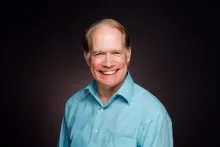
Greg Thomas is the former Pastor of the Cleveland, Ohio congregation. He retired as pastor in January 2025 and still attends there. Ordained in 1981, he has served in the ministry for 44-years. As a certified leadership consultant, Greg is the founder and president of weLEAD, Inc. Chartered in 2001, weLEAD is a 501(3)(c) non-profit organization and a major respected resource for free leadership development information reaching a worldwide audience. Greg also founded Leadership Excellence, Ltd in 2009 offering leadership training and coaching. He has an undergraduate degree from Ambassador College, and a master’s degree in leadership from Bellevue University. Greg has served on various Boards during his career. He is the author of two leadership development books, and is a certified life coach, and business coach.
Greg and his wife, B.J., live in Litchfield, Ohio. They first met in church as teenagers and were married in 1974. They enjoy spending time with family— especially their eight grandchildren.
