
Jorge de Campos
This transcript was generated by AI and may contain errors. It is provided to assist those who may not be able to listen to the message.
Well, good evening, brethren. In the study of the epistles of Paul, we've seen how Saul was a devout Pharisee and how initially he persecuted Christians.
We saw in Galatians 1, verse 13 and 14, I'm not going to go to it now, that how he was in Judaism. In other words, the Jewish religion of that day, as he called it, Judaism. And that Judaism is not Christianity because that Judaism wasn't even the religion of Moses, quote-unquote. It wasn't the religion of God. It was a deviation from the truth. Like today, people deviate from Christianity. And so-called Christianity is not true Christianity. But anyway, as we started with Paul's early life, we saw how he was converted. He went a little bit into his first trip. And then we saw that in his second journey, he passed by Professor Lomika. And he taught there on the Sabbath. We saw that a few times. And then let's just quickly glance at that, which is in Acts 17, starting from verse 1 to verse 4. And we see that in verse 2 says, then Paul, as his customer was, he went into them. And he was there for three Sabbaths. And he reasoned with them from the Scriptures, explaining and demonstrating that Christ had to suffer and rise again from the dead, saying, this Jesus whom I preach to you, he's the Christ. So, yeah, is an important point. What did Paul teach? He was teaching, amongst other things, of course, about the kingdom of God, but he was teaching an interesting thing that highlighted that Christ had to suffer and therefore die. Then he said, and rise again from the dead. And then he says that this Jesus whom I'm preaching to you is the Christ. So, he was highlighting to them the gospel of the kingdom of God, but he was also highlighting to them who Jesus Christ was. And you can see in verse 4, a great multitude of devout Greeks, another few of leading women joined Paul and Silas, Sylvanas. So, they followed him and therefore we see that the church started being impacted. A lot of people started being converted in a very short period there in Thessaloniki. So, this point here we can see that the Jews started getting jealous. We can see that they became jealous, and then there was an uproar. Now, in the early church, we see two basic problems. I mean, there are many varieties of these two basic problems, but we see the two basic problems. Initially, at this stage, we see the Jews, the Jewish people that had basically a pharacycle background, having the understanding that they were made just with God. In other words, justified. In other words, made right with God through obedience to the ceremonial law. In other words, they started adding weights to the law. I think this is one side of the equation, even today. People start adding, let's call it, self-righteousness, and that becomes a problem where people are not balanced in their Christianity. So, we've got to be careful of that one extreme. The other extreme that affected the early church as well was an extreme that people, and this came later, particularly as more and more Gentiles came into the church, that they were turning the grace of God into lawlessness. In other words, once saved, always saved, liberty from the law, you're saved by grace only, and that again is also an incorrect extreme. So, yeah, we have these two extremes that were prevalent in the early church and are prevalent today. You know, Satan's tricks never change. They're always the same. So, we see them in verse 5 of Acts 17 that they became interviews, and then there was an uproar, and then we can see that Paul had to flee. He ended up fleeing, as we can see a little later. He ended up fleeing to Corinth, and I've shown you before, but I just want to share with you, again, the map of Paul's journey, and that is the second journey that I want to share with you.
We can see the story where he went into Corinth and down the up, but first he went into Athens, but he was leaving Thessalonica. You know the story, he went to Berea. We went through all that previously, and then he stopped in Corinth, where he then wrote this epistle. So, what we have, therefore, is when he was then in Corinth, he had left Timothy and Silas with the Brethren in Thessalonica. Then they came back, and then based on Timothy's feedback, and surely Silas as well, then he wrote 1 Thessalonians, and based on that feedback, he wrote 1 Thessalonians to encourage the church, because it was a young church, and they went through great persecution in a very short period of time, also to, let's call it, correct them. By correct, I mean we can see a little later in Thessalonians that he's encouraging them to be careful and remain pure. You know, it was not allowed paganism back into the church. And thirdly, because a lot of the Jews, as we understand, had a concept at that Jewish time that the Messiah, you know, was the second coming of Christ, the Messiah, the liberation of the nation of Israel would happen at that time. There was various misconceptions about Christ's coming, and before in Thessalonians, he asked to address that. So those are kind of the first, the three main points that I should highlight about this letter to the Thessalonians. Anyway, so let's then review what we covered last time, and we can see from verse 2 to 4 that he is thanking them after a brief introduction for grace, to ask for God's grace and peace. He thanks them for their work of faith, for their labor of love, and for their patience of hope. He went through those during the last study. And they also put that in the concept of understanding, or for them to understand, and we need to understand, our great election. Now, you know we are called and then chosen or elected. So it's kind of a follow-up second step, the election, our great election. So he's saying in verse 4, knowing beloved brethren, your election, my God. So Yah is introducing this letter, and this letter was written around about 5152 AD. So that means it's about 20-21 years of the Christ's death. One point, Yah, that we see is that He's commanding them for the work of faith, the labor of love, and the patience of hope. We went through that last time, but I just want Yah to reflect on a point, an additional point, as we now take this and move on. I hope to go a little bit into chapter 2, but I'm not sure if we'll have time. But anyway, Yah, we have Yeez showing by this that are their fruits, in other words, their work of faith, their labor of love, and their patience of hope. And I hope that Yah will be able to in other words, the work of faith, the labor of love, and their patience of hope.
By their fruits, by their first love, by their work of faith, and all that. By that, they were reflecting Christ's character. They were reflecting Christ's character. If we just quickly look at 2 Corinthians chapter 4, there is a very interesting scripture, Yah, in 2 Corinthians chapter 4, that in verse 4, that it's talking about the God of this world. 2 Corinthians chapter 4 verse 4, and it's talking about the God of this world, that in verse 3, even if the Gospel is veiled, it is veiled to those who are perishing. And then verse 4 says, whose minds the God of this world, that Satan, has blinded.
Satan has blinded our minds, how? Through all the things that are happening in the world. Sure, God allowed it. But all the deceptions and things that are around in this world are blinding us. In other words, blinding the people that have not been called, and they have not had their eyes open. They who do not believe, right, lest the light of the Gospel of the glory of Christ. Now, that is a very interesting point, yeah, is the word lest. It actually is a word that it says not ice. You know, ice is a Greek word, Greek 1519, E-I-S, ice, which means into. It's got a movement of into. And then it says lest, you know, otherwise the light, because that goes together with should shine on them. In other words, it was so that he would not shine on them, would not get into them, not shine on them. At least the light of the Gospel of the glory of Christ should shine on them. The light of the Gospel of the glory of Christ. That is an amazing statement, because the glory of Christ, who Christ is, that is a light.
And that light needs to shine on us. And then when we have that light working on us, then we reflect that we are to reflect that light in fruits. And that's what Paul in Thessalonians was referring to, that they had this work of faith, labor of love, and patience of hope. They were reflecting the light that was shining in them through Christ, and they were exhibiting those fruits.
So I thought I would share that with you, which is an interesting point there. So anyway, continuing in 1 Thessalonians chapter 1 verse 5, we ended verse 4 previous times, so now verse 5, for our Gospel. Isn't that interesting? That uses the word our Gospel. It doesn't say the Gospel of the Kingdom of God in this specific sentence. Yeah, it doesn't say the Gospel of God. It says our Gospel. Obviously, it's God's Gospel. In other words, it's God's good news, right? But it's that they were preaching it. And so, obviously, it's not the Gospel that belongs to Paul and Timothy and Silas, but they were the ones that were preaching it, and therefore, it was, in a sense, their Gospel, you know, the Gospel that they were preaching. All right? And again, this Gospel is not just real words, because it says, did not come to you in word only. Obviously, in word, yeah, means that they were preaching it, but did not come to you in word. So, what is the Gospel that Paul was preaching? Let's make it very, very clear. So, let's go back to Acts. So, first, we're going to go to Acts 19, verse 8 through 10. Now, Acts 19, verse 8 through 10. Now, this is in Paul's third journey. So, let's look here at the journey. This picture here reflects Paul's second journey. Then, after being in Corinth, he then traveled back to Jerusalem and then to Antioch. But then, we see his third journey. And then, in his third journey, he went through southern Turkey, and he got into Ephesus there. So, now we see Paul in Ephesus at this third journey. And he was there for about two years. So, let's continue then reading in Acts 19, verse 8 and 9. He says, and he went into the synagogue and spoke boldly for three months. So, for the first three months, he went into the synagogue. Obviously, that would have been on the Sabbath. For three months, reasoning and persuading concerning the themes of what? What was Paul's gospel? It was the gospel of the kingdom of God. That was the gospel that Paul was preaching. So, he was preaching the gospel of the kingdom of God. But when somewhere hardened, he did not believe, but spoke evil of the way, before the multitude, he, Paul, departed from them and went through the disciples. Those who were following him, they said, okay, we're going to leave the synagogue because they were basically telling us to leave and he reasoned daily in the school of Tairimus. So, there we see he reasoned there. And verse 10 continued for two years. So, he was there in Ephesus for two years. And that was about the year of 54. So, we see about 54 or 55, he was there in Ephesus. So, he had already been in Thessaloniki. He had already written the letter to the Thessalonians. And we can see, yeah, they were still keeping the Sabbath. And he was preaching the gospel of the kingdom of God. Then we get down to Acts 20 verse 25. So, this is a little bit later in the trip. So, if I'm going to share the screen again for you to see the journey. So, this is now from Ephesus, if you enter on the trip, and then from the trip he's come back, and now he is in this area of Miletus. And then he calls for the elders from Ephesus, because he had been there for two years. So, he had ordained elders, etc. So, he calls for them, and then he basically says goodbye to them. So, it's like a goodbye. Hey, you're not going to see me again. I'm going to go. So, as you can see, I want to go because I want to get to Jerusalem.
By Pentecost. That's what he says in verse 16 of Acts 20. So, he was on with a mission to get to Jerusalem by Pentecost. So, that is during this third journey. So, and there in verse 25, in verse 25, that's in Miletus, Miletus at the end of his third journey, that's about the year 56.
In verse 20-25, he says, And indeed now I know that you all, among whom I have gone preaching the gospel of the kingdom of God, will see my face no more. So, he was saying goodbye to the elders in Ephesus, which had come and seen him in Miletus, and said goodbye.
Now, a little later, right towards the end of the book of Acts, chapter 28, while he is, let's call it, in home prison, he's in prison at home. In verse 23, you can see, So when they had appointed him a day to come to him at his lodging, to whom he explained, and solemnly testified of what? Of the kingdom of God. So, now this is at the end of the Acts of the Apostles, and right at the end Paul is preaching what? The gospel of the kingdom of God, persuading them concerning Jesus, explaining Jesus' position, responsibility, role in that kingdom of God, and either that from both the Lord Moses and the prophets. In other words, showing how a lot of those sacrifices and a lot of prophecies pointed to Christ. So, he was doing that from morning till evening. So, he was doing that to the people there in Rome. A little bit later, in verse 30 and 31, right the last two verses of Acts says, Then Paul dwelt two whole years in his own rented house and received all who came to him. So, he was in prison, but at home he wasn't allowed to leave. Verse 31, doing what? Preaching the gospel of the kingdom of God. And, now, note that it says, and teaching the things concerning the Lord Jesus Christ with all confidence, no one forbidding him. In other words, he was explaining that Christ, as we mentioned, at the beginning that he had to suffer, he had to resurrect, and that he was the Messiah. So, he was explaining how Jesus fulfilled that role. So, he was explaining the gospel of the kingdom of God, and let's call it an important component or segment of the gospel of the kingdom of God is Christ's role in that kingdom. And so, he was, let's call it, amplify or magnify what Christ's role is in that kingdom that will come to earth and it will rule on earth.
So, let's continue reading then in 1 Thessalonians chapter 5.
And it says, for our gospel do not come to you in word only. So, yes, our gospel, which is the preaching of the kingdom of God and the things concerning Jesus Christ, doesn't come to you just because we spoke to you and we're using God's word and the Bible, God's word, but also in power.
This gospel was preached to you in power and in the Holy Spirit and in much assurance, as you know, what kind of man will wear among you for your sake. Now, it's interesting, because of possibility, right? The word and, yeah, it says, but Christ says, preach you in word only, but also in power and in the Holy Spirit. These two words, in and in, is the Greek 1722n, which can be translated in, as it is here, in, but many times, over a hundred times, is also translated by or is also translated with.
So, we could, I'm not saying that that is the correct way, but I'm just saying you could say, for our gospel do not come to you in word only, but also in power or by the power, by the power of Jesus Christ, of the God's Holy Spirit. And in the Holy Spirit, in other words, that power is by or through God's Holy Spirit.
The word and, which is chi, could also be even, translated as even, and many times translated as even, or indeed. So, we could potentially interpret this, that do not come only by God's word, the word that they preached from the Bible, but also in power, which comes through God's Holy Spirit and with much confidence. So, yeah, we have much assurance. So, Paul spoke with great authority, but also in power, in power through or by God's Holy Spirit. And therefore, he was very convincing. He convicted people, you see, he, the convicting people, because what convicts people? We're going to go on to that.
There are two convicting agents in a moment. We're going to cover that in a moment. But let's go back to the word, the power, but also in power. Power is from the Greek word, dunamis, from which we get words like dynamo, or dynamite, or dynamic. So, he did this in power. He preached in power, and this power obviously came to Paul through God's Holy Spirit, which is the spirit of power.
So, yeah, we have. And what is God's Holy Spirit? God's Holy Spirit is the promise of the Father. Remember that? Let's look at Acts chapter 1. Acts chapter 1. In Acts chapter 1, we have in verse 4, and being assembled together with them, he commanded them, that's Christ, commanded them not to depart from Jerusalem, but to wait for the promise of the Father, which he said, you have heard from me. For John truly baptized with water, but you shall be baptized with the Holy Spirit, which is the promise of the Father not many days from now, probably about 10 days afterwards, because Christ was with them for about 40 days, as we read in verse 3, and so, and even Christ, after he was resurrected, was explaining them, you can see in Acts chapter 1 verse 3, he was explaining at the end of verse 3 that he was with them for 40 days, speaking of the themes pertaining to the kingdom of God.
So, but the focus that I want to highlight now is about the promise of the Father. You see, the Father promised to give us his Holy Spirit. God's Holy Spirit is that power from God that helps us to be saints, is the sanctification of the Spirit.
You see, when you and I are baptized, I tell people when they're baptized, it's only the beginning. It's not the end. Don't think, now you're baptized, you got it. No, that's only step one. Now, you have received God's Holy Spirit. God's Holy Spirit is in you. You've been begotten as a child of God, and now you've got to use that power. Think about it like God's DNA. It's just a simple analogy in today's world. People probably understand better. In other words, it's God's essence, God's power, not capability, that he gives to us to help us to overcome.
Now, it doesn't do the word for us. You and I still have to have world power. You and I still have to do our part. Yes, God's Holy Spirit, one of its attributes, is self-control. You read that in Galatians. This is love, joy, peace, nikness, goodness, kindness, etc. And the last one is self-control. Yes, it gives us some degrees, but you have to exercise it. You and I have to exercise it. So God's Holy Spirit is that power, that nature of God in us, albeit just a seed which has to grow in us, like a baby, has to grow in a mother's womb, which is the church, the mother of us all.
And as we grow in maturity, in becoming more like God, we then are using God's Holy Spirit, which is, that's why it's called, the sanctification of the Spirit. And then was the promise of the Father. In other words, the Father promised to give us the helper, and that came on the day of Pentecost. That is the promise of the Father.
And as we read then in verse 8 of Acts chapter 1, in verse 8, it says, but you shall receive power when the Holy Spirit has come. Power, Greek, dunamis, that word that implies dynamo, dynamic, dynamite, that same basic word, dunamis, power, when the Holy Spirit has come upon you. So, yeah, we have God gives us his power through his Holy Spirit. Obviously, his Holy Spirit is also got many other attributes like love, joy, peace. So, yeah, it's got many other attributes, many other characteristics. It's a spirit that gives us wisdom, gives us understanding, helps us to know the truth from a lie, helps us to discern right from wrong. So, it's many attributes, God's Holy Spirit. So, many attributes, but one of them is power.
In other words, it gives us God's nature. It gives us God's love. And now we've got to use it. It gives us that outgoing concern, and then he gives us, basically, think about it, the power, God's power of the universe. But it doesn't give us all the capabilities or the power of the universe because Christ and the Father's authority created the heavens and the earth through God's Holy Spirit, through his power. He doesn't give us that section, let's say that way, he doesn't give us that section of God's power. He gives us only a section of God's power, a section that you and I can use to do what? To change ourselves.
He gives us power that we ought to use to change ourselves. He gives us sufficient power for us to change ourselves. In other words, he does not give you the power to change somebody else.
He only gives you the power to change yourself and myself. Yes, it can be a positive influence, a light, an example, an encouragement that will help others to change, but he does not give you the power to change other people. So we have the power from God, if we use it, to overcome our human nature, our old self, our old man, so that we can become a new man. And that's part of the commitment. We will make it baptism that we're going to change from that old man. That old man is buried in the water, and a new man is resurrected symbolically in a symbolism, in a watery symbolism, that we are now going to live a newness of life. And that newness of life is that now we are becoming partakers of God's early spirit. Or put it another way, we are going to be partakers of divine nature, which is maybe saying it better. If you turn with me to 2 Peter chapter 1, this is a beautiful scripture, yeah, in 2 Peter chapter 1.
And reading, starting in verse 2, grace and peace, you know, God's graciousness and outcome is peace, as I went through that last time. It's not peace and grace, but it's grace and peace. Be multiplied to you in the knowledge of God and Jesus our Lord. I think about that. Think about that.
The sentence construction here is very similar to the last verse of this book. If you look at the end of 2 Peter, it says, but grow in the grace and knowledge of our Lord and Savior Jesus Christ. So in verse 2, it says, grace and peace be multiplied. So grace and the knowledge of God and Jesus Christ. And then it says, grow in it at the end of the book. So it's like two bookshelves, two bookends, on the bookshelf, two bookends of this epistle of 2 Peter, which says, grace and peace in the knowledge of God and grow in that grace and peace right at the end. And in the middle is a whole lot of points about having more grace and more peace and a greater knowledge of our Lord and Savior Jesus Christ. But look at this in verse 3, that is so interesting. Has He's divine power? What is God's divine power?
It's the Holy Spirit. Has He's divine power? That's God's Holy Spirit, the promise of the Father has given to us all things that pertain to life. It has given us all the spiritual tools that you and I need to have eternal life. It wants to change ourselves. Think about it. It's kind of a little bit simple analogy, but in other words, it's an analogy. Just use it as an analogy. If you're an electrician, you've got a toolbox and you've got all the different tools as electricians to do your job as an electrician. If you're on the other side, you've got a motor mechanic, you've got a whole workshop of different tools to do your job as a motor mechanic, and so on. God has given us a spiritual toolbox. I'm just saying it's an analogy, which is God's Holy Spirit, a part of His power, because His power is much more than just that, as I said, but sufficient things, that's why He says, has given us to us all things, all tools, all components, spiritual components that you and I need to have, to work, to grow, to overcome ourselves, so that we can have eternal life, because we've got to do our part. We've got to do our part.
And Godliness. Godliness means the Lord God, the Imitate God, through the knowledge of him through the knowledge of him who called us by glory and virtue, through the knowledge of him called us by glory and virtue, and by which has been given to us, in other words, by which the Holy Spirit has been given to us, exceedingly great and precious promises, through the power of the sanctification of God's Holy Spirit, through the power of the promise of the Father, we have great promises. You know that God's Holy Spirit is the down payment, the guarantee, guarantee that God gives us. So it's exceedingly great promises that through these application of these characteristics of God's Holy Spirit, His attributes, love, joy, peace, goodness, kindness, etc., that you may be partakers of the divine nature.
So that we change from the old man to the new man through the sanctification of the Spirit, okay, having escaped the corruption that is involved through lust, in other words, have escaped that old man. So I think it is a beautiful scripture when you think about that in that way. So God has given us the power of the universe to win, to win the battle of our lives, for us to overcome and to qualify to be sons and daughters of God. Sure, eternal life is a gift, but you and I have to show, let's call it gratitude, to that gift by doing our part and now living in the newness of life. So that's what we have to do. Let us then understand that God has given us His Spirit to help us, but He hasn't just given us His Spirit, He's even as His Word, the Bible. So we have two convicting agents, God's Word and the Bible. If you go back to 1 Thessalonians chapter 1 verse 5, for our gospel does not come to you in the word that is through God's Word, but also in power through God's Holy Spirit. So we have God's Word that was preached or read or whatever it was, but we need a preacher as well, and we have God's Holy Spirit. And the two work together, God's work with God's Holy Spirit, God's Word with God's Holy Spirit, to convict us. To convict us. Now, convicting is more than convincing.
Is it a first? So let's look at that very briefly. John 6 verse 63. John 6 verse 63.
From John 6 verse 63, you see that He quites God's words, the Bible, His words, with the Spirit and with life. He quites them at the same level. Let's look at John 6 verse 63.
It is the Spirit who gives life, and the flesh profits nothing. The words that I speak to you are Spirit, and they are life. So it's equating the words, the Bible, the preaching of God's Word, the healthy sound preaching of the plain truth of God's Word with God's Holy Spirit. The two work together because the words are Spirit. And now, if you look a little bit further, at John 16 verse 7 and 8.
And in John 16 verse 7 and 8, it says, nevertheless I tell you the truth. It is not your advantage that I go away, it is your advantage that I go away, for if I do not go away, the helper, that is God's Holy Spirit, will not come to you. But if I depart, I will send him, or better as it should read, it, God's Holy Spirit, to you. Had it, God's Holy Spirit, come, God's Holy Spirit would, verse 8, and when God's Holy Spirit has come, God's Holy Spirit would convict, convict the word of sin, and of righteousness, and of judgment. And here you can see God's Holy Spirit is what convicts us. But we saw in John 6, 16, 16, 16, that God's Word is also Spirit. In other words, it's equated. And so what we have is two convicting agents. God's Word, the Bible, and God's Holy Spirit. They work together.
The eyes prove again that God's Holy Spirit is not a person. You see we got the Father and Christ And then we've got the Word, which is Spirit, and the actual God, which is God's power and spiritual essence, working together to convict us. And of course, we read in Romans 10, verses 14 through 17, that the Word must be preached.
And, you know, our beautiful lot of people, those that preach the Gospel and the Word will be preached. So the Word has to be preached because it's shown through the Bible that requires to have a preacher. That is the required. That's the way God has done it. That's the way He set up. So going back to 1 Thessalonians, chapter 1, verse 5, it says, For our Gospel do not come to you in the Word. It was in the spoken Word preached by the apostles, but it worked together with God's Holy Spirit, God's power, to convict the Thessalonians.
It helps them, as it helps us, to open our eyes as we are called. It helps us to do God's work, helps the Church to do the work, helps the ministry to be able to have inspired preaching. And it also lifts that veil, in other words, that blinding veil that from Satan that blinds us, it lifts that veil. Like even Peter. Remember Peter is described, Christ said right at his Christ's death, he said, You're going to deny me three times.
And Peter says, No, I won't. Well, he did. You see, he had not quite gotten it yet. But then, when Christ resurrected right there at the end, then we see that Jesus Christ opened their minds to understanding. Look with me to Luke 24. Let's see. Look 24, verse 44 and 45. Right towards the end, he says, and he, Christ, opened their understanding that they might comprehend the Scriptures. And then he said to them, Thus it is written, and thus it was necessary for the Christ to suffer and to rise from the dead the third day.
In other words, they didn't get it previously. But now they saw Christ resurrected and Christ then helped them to see it. And then they say, Aha! I get it. So God's words through preaching plus the power of God's Holy Spirit helps us to be convicted. In other words, it's more than convinced, but know that we know for sure that it is that way. We're convicted. And then look at continuing in the latter part of verse five, and it says that there's, as you know, what kind of men we were among you for your sake.
So Yah is saying our conduct. So our gospel did not come to you in word only, but also in power through God's Holy Spirit with much confidence, conviction. And as you know what kind of men we were. And so our example, our light, helped you to understand better. You see, our conduct, our example, is extremely important. As people say, our actions speak louder than words. So the example of the apostles was very important. Now let's go on to verse six.
Well, we made a lot of progress, haven't we? Anyway, verse six. And you become followers of us and of the Lord, having received the word in much affliction with joy of the Holy Spirit. So Yah is saying, you become followers of us. You follow us. You follow us. Paul, Timothy, Silas, follows of us and of the Lord. What he's saying is, it's not wrong to follow a man provided that man is following Christ.
Paul says in 1 Corinthians 11, verse 1, says, imitate me as I imitate Christ. So we do benefit from the examples of people. The examples of people are a powerful tool to help us in the Christian role. That's why one of the most important parts of God's work that you can do is being an example. An example to your children. For instance, you tell your children, don't do something, or whatever it is, you go to church and tell them don't do it, but at home you do it. So the children say, well, that's hypocrisy.
I don't want to be in the church with my parents because there's a lot of hypocrisy. Unfortunately, that has happened a lot in the church in the past, so that is not good. We need to be the same inside and outside, at home and in church and whatever it is. We need to be the same. Our example speaks louder than words. That is very important. And so, and then he says, and you become followers of us and of the Lord, having received the word in much affliction.
You and I, you Thessalonians, received God's word in many trials. Afflictions, trials. You read in Acts 17 now, they had trials. We went through that. They had controversies. They had arguments about words. And so these many afflictions, the word there is telepsis from the Greek 2347, which is like pressing together or pressure or the stress. So in today's terminology, I would probably describe it as being under much stress. Are we under stress? They were under, under much stress. So they came to God's truth through the situation of being under much stress. So that you become examples to all in Macedonia and Achaia who believe.
So you become followers and the outcome of that is that you become examples. The Greek word here is tupos, Greek 5179, which means a figure formed by a blow or impression. You know, you have a mould and you hit it and then on this piece of metal you get a picture that was on the mould and under that example that it says that you become examples. In other words, that you become moulds to all in Macedonia and Achaia who believe. In other words, you become an example then to follow like a model, like a stem, like an example to be imitated. So that with the small you can make exact replicas because you got the smaller and you then you got another one back into the small and that is what it's meant here. You become examples. In other words, moulds, figures formed by a blow. So yeah, under stress and the tests we have, you become this example. So our example, brethren, whatever we are in our work environment, church, whatever we are is extremely important. That's why Christ says you are the light of the world. And that is being an example. A light does not make a noise. It just is light. It's an example. So they by their example, we're a light to the world. And then look at verse 8. It says, For from you the word of the Lord has sounded forth. Now remember, to those of you that got my notification today, I said, as the word of the Lord sounded forth or rang out from us this week. So I'm just making a little pun out of that verse. But it says, From out of you the word of the Lord has sounded forth. Sounded is like a trumpet, like the blowing of a trumpet. The actual word for sounded forth is repercutio. It's like a repercussion, a real sound, powerful sound, like the one of a trumpet.
And these people in Thessalonika had become an example that spoke loudly to the people of the world. For from you the word of the Lord has sounded forth. Not only in Macedonian Achaia, but also in every place. That doesn't mean that the word of loudspeakers going around there. No, it was an example. You see, look at it. Your faith towards God has gone out so that we do not need to say anything. Your faith, your example, people are talking about it. People are talking about it. Because your example is so exemplary. What do we have here? It's an amazing encouragement from Paul to these brethren in Thessalonika that have gone through enormous trials. And through these trials, they had become an amazing example to the whole world.
To the point that we, that's what it says, we do not need to say anything. We, that means Paul, Timothy, Silas, we don't have to say anything. Your example speaks for itself. And everybody is watching it because it's ringing forth. So how is our example this week? With other people, how we've done.
And so it's a question we could ask. Now let's read verse 9. And it says, And so God is saying, you left the idols. You left dead gods to the living true God. They, that was the Gentiles, they had to repent, they had to change direction, and that was noticeable. It was so dramatic, the change in that society, that culture, those few brethren, was so dramatic, that was noticeable. It was some of the way they did things, or the way they did things, that people noticed.
They were not preaching in the streets, but they were setting an example, the way they lived, the way they lived. And so the way you and I live can set an amazing example. Do we set an example? Or we like to fessil on us? Or we, is our example sounding forth like a trumpet to those around us?
And then it says, For they themselves declare concerning us what manner of entry. You know that example, how you turned from God, from those idols, to serve the living God. To serve is daw lu'o, which is like a slave, a servant, to do service, an amazing example of yielding to obedience.
Voluntarily serving, not being forced, not being dictated, but of their own desire with a loving, kind, gentle spirit, yielding to Christ's leadership and that through His ministers. The ministers are there to be helpers of your joy. They're not there to dictate over you. And therefore, you make the job of a minister a lot easier when there is that yielding obedience in a true service to the living God. Because there's not obedience to the ministries. Obedience to God. Obedience to God. How? By the way you talk, by the way you treat your fellow man, the way maybe you accept things in church, the way you talk to people generally speaking. So it is amazing. And now, continuing in verse 10. And to wait for His Son from heaven, that's Christ that's coming from heaven, the universe of Christ's return, whom He, that's God, raised from the dead. Even Jesus who delivers us from the wrath to come. So now we have a beautiful conclusion that reminds us to be patient, waiting for Christ's return. And basically ties to a later issue that the people there in Thessalonika had about Christ's return. So He says, hey, we've got to wait because they were expecting Christ's return to be there and then. This was a situation that was very common in the early primitive church. And many brethren, many people over the years have set up dates. Oh, Christ is coming on that date! And you and I know very clearly, no man knows a day or an hour. But people set up dates and therefore they went wrong in setting up dates. So at the end of this chapter, as at the end of basically every chapter in 1 Thessalonians, Paul has a positive ending. A positive ending in one way or another. Maybe you're waiting with hope or delivering us from the wrath to come and or whatever it is. Now understand that in the high says deliverance from the wrath to come. They did not have yet the book of Revelation. But knew that God would deliver them from judgment one day. So I think that's where we're going to stop today. We have completed chapter one. In the next study, we will then continue with chapter two.
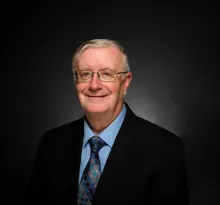
Jorge and his wife Kathy serve the Dallas (TX) and Lawton (OK) congregations. Jorge was born in Portuguese East Africa, now Mozambique, and also lived and served the Church in South Africa. He is also responsible for God’s Work in the Portuguese language, and has been visiting Portugal, Brazil and Angola at least once a year. Kathy was born in Pennsylvania and also served for a number of years in South Africa. They are the proud parents of five children, with 12 grandchildren and live in Allen, north of Dallas (TX).
