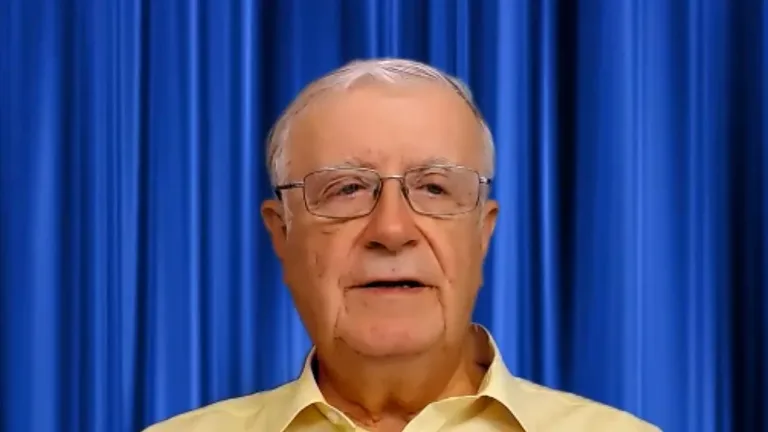


Jorge de Campos
Serve without complaining and disputing. Hold fast to the word of life. Be a light. Paul offered his service as a drink odffering on the Philippian's sacrice and service. Timothy had a similar care as Paul. There are times went there was not a so called "miraculous" healing.
This transcript was generated by AI and may contain errors. It is provided to assist those who may not be able to listen to the message.
Well, good evening, brethren. Paul states in Philippians that God will complete His work that He's doing in us. That he says in verse 6 of chapter 1, that he says that God has begun a good work in you, will complete it until the day of Jesus Christ. And so God has a plan for you and I. He's the master potter. In fact, let's just look at Isaiah 64 verse 8. Isaiah 64 verse 8.
Isaiah 64 verse 8. And what he's talking about, and he says, but now, O Lord, you are our Father, and we are the clay, and you our potter, and all we are the work of your hand. It is an amazing thing that sometimes we don't understand, and people don't understand, that God has a plan. And it's like if you have put together a construction plan, like for instance, you want to make alterations to your home, or you want to make an improvement, you know exactly what you want to do. Maybe not to every single detail, but you know what you want to do, where you want to put different rooms, what type of doors you want, etc. And God has got an amazing plan, and quite often we don't understand that. And he's the master potter, master potter, and he is putting together an amazing plan for you and I, for all of us. He knows exactly what he wants us to do, and he's giving us the talents and the abilities to do what he wants us to do. And so, he uses the power to do that and to overcome. And so, a little bit later in Philippians chapter 1 verse 26, it says, Philippians chapter 1, verse 27, only let your conduct be worthy of the gospel of Christ. In other words, that we must let our conduct be worthy of the good news that God has for us through Christ of that great plan that he has for you and I. And therefore, our conduct must be commensurate with that plan for us.
And we all are to stand, as it says in a bit further, so that whether I come and see you or I am absent, I may hear of your fears. But then he says that you may stand fast in one Spirit with one mind striving together for the faith of the gospel. And so, we ought to stand in one Spirit, striving together in unity towards that great plan, that great good news that he has for us.
And a part of that plan is you and I. And part of that is that you and I are to be or to become like Christ is. And so then in chapter 2, verse 2, it says, "...fulf like Christ's. We are to be like-minded because that's our goal. And that's part of his plan to have beings in his kingdom, in his family, with the outgoing care and love, as he puts it here, love of one accord, of one mind, in that unity of faith and of absolute trust in the Father, to be able for us to be able to do the various parts or tasks that he has planned for us.
Not just in the Millennium, brethren. He has planned for us in eternity in the whole universe that he has for us, that we just cannot even begin to comprehend. And he's got a great plan for you and I.
And so he wants us to be one, to be united with him. That reminds me of Christ's lost prayer in John 17 from verse 20 to 23, that he says that he wants us to be one like he and the Father are one, and so that ultimately we may be perfect in unity. That's our goal, to be united, to be one like God and Christ are one. We are to be one like they are. But a real important key for that unity is humility. We read in verse 3 of Philippians chapter 2, let nothing be done through selfish ambition or conceit, but in loveliness of mind.
That's in humility. Let each esteem others better themselves. A key for us to be like Christ and for us to be united and to be one of God and Christ is humility. And that's what Christ exemplified in his very act, because he says a bit further in verse 5, let this mind be in you, which was also in Christ Jesus, which was a mind of service of humility.
And then in verse 6 says that he, being in the form of God, did not consider it to be true, not considered a robbery to be equal with God. We had a little discussion about that last meeting, particularly after our study, and a very encouraging discussion. And in fact, if you're New King James Version Bible has a margin with a comment, mine has, and next to the word robbery, there's a little one. And if I read on the margin, it says something to be held unto to be equal.
And so obviously Christ was in the form of God, he was equal with God. But contextually, as we discussed last time, it is something to be held unto to be equal. In other words, not grasping or not holding unto being equal to God, but he let go of being like God and became a human being. And that really exemplifies his humility. He was willing to come as a human being to carry on the plan of God, to fulfill the will, the purpose of God, and to make it possible for you and I to be in the kingdom of God in his family. And so he emptied himself of all his privileges, as we see in verse 7 of his glorified position of being a spirit being, all powerful.
And he took the form of becoming a human being, becoming a man, as it says, coming in the likeness of man. And then in verse 8 he further says that he humbled himself even further to become obedient to the point of dying and dying on the cross. And he knew beforehand, long before, before the creation of the universe, that he had to do that.
And he was willing to do it. And imagine that thinking process for all those thousands and thousands of years that he had, that he knew he had to do that. And then so it would have been in in our terms a great, great moment of anxiety for that moment. But on the other side, he gave it up willingly for us because he looked towards the joy to come. And in verse 9, therefore, as a result, as a result, God gave him a very high-named office that there's no one higher than Jesus except the Father himself that gave him that position.
And so we all under Christ. And then in verse 10-11, he says because of that, we all have to bow down our knees to Christ. It's also interesting that that section verse 10-11 is a quote from the Old Testament from Isaiah 45 verse 23. And that's just a point that we made reference to in last study. And then continuing in verse 12 and 13, so concluding the section that we covered last time. You see, because it is God that is doing the work in us, we have to do our part. You see, because it's a teamwork. God is doing a work in us. And it says, but now we must work our own salvation with fear and trembling.
Now, some people may think, oh well, are we therefore meaning that we have to earn our salvation? Of course not. But God is giving us the power, the power of his Holy Spirit. And we have to use that power that God gives us to overcome, to fight our own nature.
As Paul describes very well at the end of chapter 7 of Romans, that he struggled very things.
And he said, well, who will free me from this body of sin? And he says, thanks to Christ. Because when you and I have a new body, a spiritual body, we will not have those pools of the flesh, of the fleshly nature. So we have to follow the lead of God's Holy Spirit, as Romans 8 14 says, you know, he that is led by God's Spirit is the Son of God. And so we've got to, as God's Holy Spirit, pricks your conscience and pricks my conscience, we have to follow the lead of God's Holy Spirit to be one with Christ and God. And so, ultimately, through this act of submission and humility, to be united and ultimately, therefore, to be like Christ is and like God is. And as I mentioned in previous studies, the various, very purpose of this book of Philippians is to encourage us to be like Christ. That, in a sense, is the theme through unity to be like Christ. And so we got to do it. We're going to make, we got to do our part individually, as it says, privately, in a words, whether in my absence or not, because it's God that is watching, because that's what we're trying to please, not man.
And I think the real challenge is when we don't feel like doing what is right.
There are times where the carnal pulls or the fleshly pulls may say, I don't feel like doing this. We need to pray to God and ask God to give us the desire and the will and the power daily to be motivated to do, because it says, for it is God who works in you both to will and to do for His good pleasure. And so when you and I are struggling against our own fleshly pulls, we need to pray. I think that's one thing we must maybe sometimes we forget. When we are struggling and we don't feel like doing something, we need to pray and ask God to give us the desire and the will and the power to be motivated and do what we know we need to do. And then continuing in verse 14 says, therefore do or do all things without complaining and disputing or without contentions, without grumbling, without muttering. In other words, we've got to be content with what we have and keep pushing forwards, because it's God, as it said in verse 13, who works in us to will and do. And so we need to strive to do that. We need to strive that continuously. And so that's what we got to be doing. We're going to be patient. We've got to be content with what we have.
And in the end, that is what we're talking about, being humble, having humility, which is the opposite of pride or even maybe dislike or hatred for others, which may trigger arguments and disputes. And quite often these arguments and disputing, because it says without complaining and disputing, so humble yourselves, don't be proud, submit yourselves to one another, and don't have these arguments. Quite often arguments are profitless. They don't yield any really good result. And many, many times arguments are human reasoning apart from God. And so let's be very careful with that. And then he continues, verse 15, that you may become blameless and harmless children of God without fault in the midst of a crooked and perverse generation, among whom you shine as lights in the world. And so we are to become, without any reputation of mischief or any inclination to be to be doing things wrong. And it says that means become blameless and harmless children of God. In other words, children means imitating our Heavenly Father. Let's just briefly look at Matthew chapter 5 verse 48. Matthew chapter 5 verse 48. Yeah, in the sermon on the mount, Christ says in verse 48, therefore you shall be perfect just as your Father in heaven is perfect. That's our goal. That's our duty as His children, as God's children. And so we must, like it says here, become harmless children of God. In other words, striving towards perfection without fault in the midst of a crooked and perverse generation. Oh boy, are we in the midst of a crooked and perverse generation. Interesting the word crooked is from the Greek word 4646 scholios, where we get words like scholios, which is when one's back is all skewed. And that means it's warped. That means that it deviates from the standard. And so when we have a crooked generation, it's one that deviates from the goal. From God's law, it's crooked. And it says and perverse, perverse. And it's a generation absolutely wicked. And so that's what it says. You become blameless. You become without rebuke. You become without reproach. In other words, without any charge of transgression against us. Now it's very similar to what you and I can read in Deuteronomy 32, verse 5. Let's just look at Deuteronomy 32 verse 5, because it is interesting to see that a lot of these things are actually in the local. It's actually in the local, in the law of Moses. In Deuteronomy 32 verse 5, we read . . . Interesting, and verse 4 says, he's the rock. But then in verse 5 says, they have corrupted themselves. They are not his children because of their blemish, a perverse and crooked generation. It's interesting how there are similarities of wording from the lawyer of what the nations are, what the nations have become. They corrupted themselves, and they are, like it says, perverse and crooked generation. And so as we go back to Philippians chapter 2 verse 15, it says, yeah, that without fault that we are to become blameless and harmless, children of God, without fault in the midst of a crooked and perverse generation. That's where we live in. And really, there's nothing more than what we read in the law in Deuteronomy 32 as we've seen, among whom you shine as lights in the world. In other words, we are to shine. Well, Christ said in the 7-on-the-mount that we are the light of the world. We are to be examples. We are to be a light. We are to shine as lights in the world.
It's like the light of the lights of the firmament, as maybe even the sun or the moon. We are to be an example to shine as light. And then he says holding fast to the world of life. Possibly, think about it following the example of shining lights. Holding fast is like a lighthouse, like a beacon at the entrance of a harbor that guides the boats to avoid rocky areas under the water or something like that with different guiding beacons. And therefore, our light is to guide others. How? By sticking to the world of life, sticking to God's Word.
Not adulterating it, not adding to it, not taking away from it. And that's what we we got to do.
And therefore, it says here, so that I may rejoice in the day of Christ that I have not run in vain or labored in vain.
As I read this, as I was preparing, I thought about how I often go to other countries and I see people really changing. And sometimes I also see people not changing. But I am encouraged when I see brethren changing because of my efforts of helping in preaching God's Word, and the brethren are looking at the Word and holding fast to the world of life like the Bereans and applying it in their life. And to me, when I see brethren, due to, as Paul says, that he has not run in vain or labored in vain, I am encouraged when I see brethren that are changing their lives, obviously, because they're holding fast to the world of life, which is the Bible, which is God's Word. But I had a role, albeit small, in helping those brethren in other countries, maybe in Brazil or in Angola or other countries. And I'm encouraged to see some fruits of that. And likewise Paul, he was saying, that he's rejoicing and that he will be able to rejoice even more at the resurrection. That's what he says in the day of Christ. That means when Christ comes back at his second coming at the resurrection and these brethren that Paul has worked with because of his labor, they have made it. Obviously, they're going to work out their own salvation. They're going to use God's Holy Spirit, but we as ministers play a role, like a little bit of a catalyst, a little bit of a role, in helping and guiding them to do that. And that is a joy. And that's what Paul was referring to, yeah, in verse 16.
And in verse 17 is also a very interesting statement. And he says, yes, and if I am being poured out as a drink offering on the sacrifice and service of your faith, I am glad and rejoice with you all. You know, his life, in a sense, was being poured out. His ministry was like a drink offering, poured out for them. It's like saying he was sacrificing, quote unquote, he was killing himself, giving of himself to help them, other these people, being the right type of Christians.
Now, an interesting thing about the drink offering that you might not know, but I want to draw your attention to this. A drink offering, let's look at Exodus 29. Exodus 29. Exodus 29 verse 40. Exodus 29 verse 40. And it says, with one lamb, I beg your pardon, with the one lamb shall be one tenth of an ephah, of flour mixed with one fourth of a hen of pressed oil, and one fourth of a hen of wine as a drink offering. You know, wine was poured out as part of that drink offering. Normally, in other words, the drink offering was normally wine being poured out, and a specific measurement, one fourth of a hen.
So, a specific measure. Now, look at also Leviticus 23. How many times have you and I read Leviticus 23? And I don't have to say any more. You and I know Leviticus 23 is the section that talks about God's early days, right?
Leviticus 23. You probably knew that off by heart, I'm sure. But look at verse 13 when he's talking about the section of the the wave sheaf offering. And then he says, yeah, and then he says, well, let's start in verse 12. And you shall offer on that day when you wave the sheaf a male lamb of the first year without blemish as a burnt offering to the Lord. Its grand offering shall be two tenths of an ephah, or fine flour mixed with oil, and an offering made by fire to the Lord for a sweet rama, and its drink offering shall be of wine one fourth of a hen.
So, the drink offering was normally wine poured out on the burnt offering. And so what we have here is the Philippians had had sacrificed in times and offerings, and they helped Paul. And when he, Paul, preached to them and he taught them, it was like Paul being poured out on their sacrifices. So it's very interesting, the spiritual parallel that one can draw. And so, yeah, in verse 17, Paul is saying, yes, I'm glad. In other words, I'm happy for you that my ministry has produced this in you.
Paul was rejoicing to see that the Philippian brethren were men and women, brethren, brothers and sisters, really working in becoming like Christ. And he was really rejoicing with you all. Verse 18, for the same reason, you also be glad and rejoice with me. So for the same reason, yes, you also be glad and rejoice with me. And then he moves on here in verse 19, saying that he wants to send Timothy, let's just read, but I trust in the Lord to send Timothy to you shortly that I may also be encouraged when I know your state.
Yeah, I want Timothy to go and be with you because I want him to tell me how you guys are doing. And so Paul wanted to know better, or to have a better understanding, how the brethren, the Philippian brethren, were doing. Because he was concerned about the congregation.
He had this love and concern for the brethren. He wanted to know how they were doing. And then he says in verse 20, he says, for I have no one like-minded who will sincerely care for your state. I think that is probably one of the most encouraging statements that, for instance, maybe, let's say, as an employee, you could hear from your manager, from your superior. It's just, I have nobody like-minded that will do the job like I want you to do. But this specific case is caring for the brethren. And I have no one like-minded Timothy had the same love and care for the church as Paul had.
And therefore, Timothy would care for them, for the Philippian brethren, in the same way, in the same manner as Paul would. And so that's why he says, I have none so like-minded, literally as some say it, like-solved with the same spirit, the same intent, as myself, as Timothy has. He's got the same mindset as I have as far as caring for the brethren. And then also Yah in verse 20 says, who will sincerely care?
The Greek word there is a word that could be translated as genuinely or with sincere solid solicitude, or naturally. Some versions translate that, who will naturally care for your state. And so Yah, we have a case in which God's spirit has so changed a person's nature that the natural way for that person is to be spiritual like God, like Christ, which is caring for the brethren. That's what Christ did, and that's what Paul was explaining at the beginning of chapter 2, that we ought to be like Christ. And the theme of this epistle is for us to be like Christ in unity, and he's saying there is no one that has naturally or sincerely this desire. In other words, yes, this person, in this case Timothy, through the power of God's Holy Spirit, has changed his carnality to a divine nature that it now is natural for him to be this so caring and spiritual type person. And that is our goal, our aim of unity through humility in Christ. Now in verse 21 and 22, but all seek their own, not the things which are Christ Jesus. And so a lot of other people are selfish, but he is saying Timothy is not selfish. He is caring for others. He is, that is the one spirit that you and I are to be. One like God is, like Christ is, and we need to imitate God, we need to imitate Christ. We need to be like Christ. That's what it is, because they, most people care for their own, not for Christ, but we have to care for Christ. Verse now 22. But you know he's proven character, proven character. I mean, he has proven by living, demonstrating his character, that as a son with his father, he served me in the Gospel. Timothy has served me in the Gospel, and that character has been proven by experience, by time. So he was not selfish. Therefore, I hope to send him at once, as soon as I see how it goes with me. So he's hoping to send him as soon as possible. Verse 24. I trust in the Lord that I myself shall also come shortly. And so, yeah, we can see that Paul hoped and expected to get out of prison, as he did. Now, he was in prison around about the years 60 to 62, A.D. of the current era. And then he left prison for about, and in other words, for another some five years. And then he preached the Gospel. And then he was sent back to prison and executed there in Rome, back to Rome and executed there. And he died around about 66, 67, A.D. So he did get out of prison in Rome. He did travel to various places. We believe he did travel to Spain. But little of that is mentioned in the Bible. So I trust in the Lord and I myself shall also come shortly. So he did, and he did go and visit Philippi. Verse 25. Yet I consider it necessary to send to you Epithriditis, my brother, fellow worker, my fellow soldier, but your messenger, and the one who ministered to my needs. You see, but in the meantime, he saw it necessary while he could not send Timothy to send Epithriditis.
And Epithriditis was apparently from Philippi. He came to Rome, from what we can understand, maybe bringing an offering or tithes from the brethren in Philippians in Philippi to help Paul. And then he stayed then in Rome to minister to Paul. Now Paul was sending him back to them.
And he says, Epithriditis, a brother. Now he was a member of the Christian family, of the family of God. He was completely converted to God.
And therefore, that's why he was able to be a preacher of the Gospel, because he was converted. So he was a brother in Christ, in the family of God. And then he says, a fellow worker, a companion in labor, in work. He labored in unity with the Apostle in this great work that Paul had. And Paul has an omission that God, through Christ, gave to Paul.
And then he says, and fellow soldier. He was a fellow soldier. That means that the work, many times, the work of preaching the Gospel in that society had a lot of difficulties and dangers. And often they add situations which were very difficult, fighting against the society, the devil, and their physical flesh. And we all are, in a sense, fellow soldiers. We live in the society, fighting the society, the pressures of this world, inspired by Satan, and our own flesh. So we all are fellow soldiers. And then he says, but your messenger. So he was their messenger. He was the one that the Philippian brethren sent to fulfill a Christian duty. And so, in a sense, he was one sent. So, in a sense, that's what the word Apostle means. I'm not saying that he had the title of an Apostle, but he had Apostle-like responsibility being sent to fulfill a Christian duty. And obviously, God had blessed him and honored him with various spiritual gifts and talents that he could, therefore, be relied to be sent and therefore to do the various kind acts that he was able to do and produce the fruits as one that was sent by the Philippian brethren. And lastly, he says, a messenger and the one who ministered to my need. And so, he was an affectionate friend to Paul, to the Apostle Paul, and he ministered. He served Paul's needs because Paul was still preaching the gospel and doing his work, but he was housebound and he was in different challenges because Paul was, let's call it, in prison, homebound. And therefore, he acknowledged that he was a prisoner in that way, in Rome, and therefore, this man, Epiphyditis, that the Philippians had sent, he became a very good friend of Paul and served Paul as he says, yeah, I ministered to my needs and contributed to whatever needs Paul had. It implies there are probably also physical needs and to his comfort and support. And so, he speaks very highly about Epiphyditis, this minister. But then he says, yeah, in verse 26, since he was longing for you all and the stressed because you had heard that he was sick, now note, yeah, this is important for us to understand because sometimes we have people, oh, there were so many healings and miracles in the early church. Why don't we have healings and miracles in the church today? We do have. We do have miracles and healings in the church today. We do. We do. But note, yeah, that Paul, we know Paul had healed many people. Remember that at times he even gave handkerchiefs and people were healed. That's where we get the anointed cloth, let's call it tradition in the church. And so many people had been healed through Paul. But now we have a minister of Jesus Christ, Epithriditis, very ill, he was sick. And he was sick long enough for the news that he was sick went back to Philippi. And it was long enough that the news came back from Philippi to rung to the point that he says that they heard about it and they were concerned about it. And then furthermore, Epithriditis was rather stressed. It was worn out and overpowered with heavy grief because it says, yeah, because he says, verse 26, since he was longing for you all and was distressed because you had heard that he was sick. He was very, very with a lot of grief that the brethren in Philippi knew that he was sick and he had heard that because they had heard of his health issues because he was very ill, right? So, the point here is Epithriditis had this problem for quite a long time.
And so, what is the lesson here? The lesson is that not everyone that was sick in the first century was immediately healed. There are examples that people are healed immediately, but not yet. This is an example that a very prominent person of God's service in the Church, a minister of Jesus Christ, who was not healed immediately. And so, yes, he did get better, but it was not one of these spontaneous miraculous events from one moment to another that he was healed. Now, does that happen today that people are miraculously healed? Yes, it does. I've seen it and I've experienced, but it does happen, but not always. In this case, it was more of a natural event. Look at 2 Timothy chapter 4 as well. In 2 Timothy chapter 4, we see another situation of Trophimus. 2 Timothy chapter 4 verse 20. And he's concluding the letter, and he says, greet this person, greet that person. And then he says, it asks the state in Corinth, but Trophimus, I have left in my letters sick.
Paul left Trophimus in my letters sick. So, yeah, we understand. We've seen that Epithriditis and now Trophimus was left in my letters sick. Sick. Why did I say sick? Sorry.
So, he was ill. And so, the power of performing QS and similarly of working at the miracles was given to the apostles, yes, at times when God decided, but did not happen all the time. And it was not dependent on the apostles own will. So, Paul undoubtedly would have healed Epithriditis if he could. Paul would have not left Trophimus at my letters sick if he could, if Paul had a power of working QS and miracles at his disposal. And so, it's God's decision according to God's will when he intervenes. And then continuing here in Philippians chapter 2 verse 27. For indeed he was sick almost unto death.
He was so sick that he almost died. And Paul, he says, he would have been extremely distraught. Paul would have been extremely distraught if Epithriditis had died. He says, yeah, but God had mercy on him and not only on him, but on me also. Lest I should have sorrow upon sorrow.
And so, Paul says he would have been very sad if Epithriditis had died at that moment.
Verse 28, therefore I sent him the more eagerly. So, he sent him rather urgently, so that when you see him again, you may rejoice and I may be less sorrowful. Because he has recovered. God is ill in his own time according to his will, according to his time. God healed him. And so, the brethren would rejoice with that. And then Paul would be a little bit happier, a little less sorrowful, as he reads here in verse 28. Verse 29, Receive him therefore in the Lord with all gladness and all such man in esteem. So, hold man like Epithriditis and Adaminuses in esteem as valuable in honor because of the work that in this case Epithriditis and others have done. Verse 30, Because for the work of Christ, he came close to death. Because of Christ's work, he nearly died. Now, as we know this, unfortunately, does happen to ministry. Sometimes they work many hours, maybe not eating properly because they're traveling to serve the church or it's not sleeping properly due to long hours of work or due to concerns about the brethren. And he sees, he says, so they serve. It's like this drink offering poured out for their sacrifices. And so, he says, yeah, receiving the study with old gladness and all such men in esteem because for the work of Christ, he came close to death, not regarding his life, but to supply what was lacking in your service towards me. So, he provided Epithriditis brought to Paul an offering from the Philippians, but also serves Paul when Paul was in house arrest. Now, in the next chapter, now Paul starts after explaining about Christ's humility and willingness to give his all for us, as we saw in the earlier part of chapter two. Now, Paul now in this next chapter moves into the very purpose, let's call it the very crux of this epistle by giving a remarkable, remarkable explanation of what it means to be like Christ.

Jorge and his wife Kathy serve the Dallas (TX) and Lawton (OK) congregations. Jorge was born in Portuguese East Africa, now Mozambique, and also lived and served the Church in South Africa. He is also responsible for God’s Work in the Portuguese language, and has been visiting Portugal, Brazil and Angola at least once a year. Kathy was born in Pennsylvania and also served for a number of years in South Africa. They are the proud parents of five children, with 12 grandchildren and live in Allen, north of Dallas (TX).