

Jorge de Campos
This transcript was generated by AI and may contain errors. It is provided to assist those who may not be able to listen to the message.
Well, good evening, brethren. In the first chapter of Corinthians, Paul thanks God for the grace that God extended to the Corinthians at that time and assures them of God's faithfulness to be with them till the end. That is equally encouraging to us because God ensures us and that we, that of his faithfulness towards us till the end. So that's encouraging to all of us.
Then Paul pleads with them for they all to speak the same thing, so there would be no divisions or factions amongst them.
And then he says it's because the good news of the gospel, a bigger part of Christ's suffering and death, is a stumbling block to the Jews because they were expecting a conquering Messiah. And to the Gentiles, his foolishness, it just doesn't make sense. And then as we are reading there in Corinthians, in chapter 1 towards verse 26 and 27, he says, we, the called out ones, are not the wisest, not the mightiest, not the noblest of this world.
But this is so, by design, by God, to put those that are wiser, wiser, mightier, nobler to the shame. And the soul, as we read in verse 30, it's because of him, but of him, and it's not of us. And he's talking to the Corinthians saying, you are in Christ Jesus, but for us it would be applicable. We are also in Christ Jesus. We are living with God's Spirit. God's Spirit is guiding us in our conduct. And Christ Jesus, who became, as it says, Christ Jesus, who became for us wisdom from God. In other words, wisdom from God, now, by Christ's suffering and death, it is for our gain, for our benefit, so that we can have eternal life. This is obviously a mystery to society, to the world, as we can see in chapter two, verse seven, talks about a mystery, a mystery to the world. But it's also righteousness to us, because it says it he believes, we believe, and it gets imputed to us as righteousness, as we read as the case of in Romans four, the case of Abraham. And then it's also for sanctification. We are sanctified by the Spirit, or of the Spirit, for obedience to obey God, as we read in first Peter chapter one verse two. And also for redemption, for us to be brought back from slavery, from the servitude of Satan, and redemption of the body to become sons of God, as we read in Romans eight, 21, so that we, and that's why we have now the first fruits of the Spirit, also Romans eight verse 23. And then again, in verse 31 says, this is not of us, the glory is God's. So it's God's doing, He's calling us, not the wise ones, and He's going to make sure He's going to do His best that we will be in the Kingdom, provided you and I don't walk away from it. So He wants us, He wants to encourage us, He wants us to remain faithful. Obviously, we have free moral agency, but He wants us to make it.
So that's a summary, very brief, of what we covered in the previous week. We today are going to start with the second chapter. And then in verse one, and I, brethren, when I came to you, did not come with excellence of speech or of wisdom declaring to you the testimony of God. So yeah, in chapter two, He says, look, my mission when I came was not to be speaking with great human eloquence and capability, as we read in chapter one of 1 Corinthians verse 17. He says, for Christ do not send me to baptize, but to preach the gospel, not with the wisdom of words. So again, He's saying, He didn't come with excellence of speech, we read here in chapter two, verse one, or of wisdom, declaring to you the testimony of God. So it's not of any great human wisdom, or any great eloquence, or pompous language. Now, obviously, Paul was very well educated. He could have used sophisticated language, but he didn't. He spoke in plain language. And then he says, for I determined not to know anything among you except Jesus Christ and Him crucified. All you need and Paul preached was Jesus Christ and about Jesus and Him crucified. That is the gospel. But yeah, it's the problem, because this is exactly where the churches in the world distort the gospel of Christ. They say, oh, you see, all you need to do is preach Jesus and Him crucified, and you're saved. But let's think this a little deeper.
Why was Jesus Christ crucified? Because we sinned. That's why Christ was crucified. And so His sacrifice was done so that He could cover our sins. Now, I just want to read Hebrews chapter 10, a section here in Hebrews chapter 10, which I find very inspiring. And I just want to include that as I read through it. Hebrews chapter 10. We're going to start in verse five. Therefore, when He came into the world, that's Jesus Christ, He said, sacrifice and offering you did not desire, but a body you have prepared for Me. So yeah, Christ is saying, you, God, did not desire sacrifice and offering, but you, God, you've prepared for Me a body. So Jesus Christ became a human being, and the Father prepared for Him a body. And then in verse 16, burned offerings and sacrifices for sin, you had no pleasure. God had no pleasure in these goats and bulls being killed. And He said, you had no pleasure.
So obviously, this was the sacrifices point to Christ's sacrifice. And then He says, then I said, Behold, I have come. So Christ came to the world as a human being. And then He says, in the volume of the book, it is written of me to do your will, O God. So there is a very significant young in the volume of the book. So there must be another book that Christ is referring to, or maybe it's the Bible. It is written of me and He came to do the Father's will. Verse 8, previously saying, sacrifice and burned offerings and offerings for sin you do not desire, nor have pleasure in them, which are offered according to the ceremonial laws, as you and I know, according to the law. Then He said, Behold, I have come to do your will, O God. So He takes away the first that He may be established the second. The first set of sacrifices, that established the second sacrifice, which is Christ's body. By that will, that's the will of God, that He came, He did the Father's will, we have been sanctified. We have been set aside, sanctified through the offering of the body of Jesus Christ once for all. The offering of the body of Jesus Christ was offered once for all. And then He continues in verse 11, and every priest stands ministering daily and offering repeatedly the same sacrifices. Obviously talking about the ceremonial law, offering these sacrifices, which they did until year 70 when the temple was destroyed.
That was some 40 years of Christ's death. And those sacrifices can never take away sins. Those sacrifices, or bulls and goats, can never take away sins. Verse 12, But this man, that's Christ, after He had offered one sacrifice for sins forever. So Christ offered His body as a one sacrifice for sins forever. So that sacrifice for sins is once, then once, forever. He is now sat down at the right hand of God from that time, waiting till His enemies are made His footstool. So He's now at the right hand of God, waiting till the time for Him to come back. When His enemies will be made as His footstool, in other words, He will then come and destroy His enemies, and He will establish the kingdom of God on earth, and that will be the time of the resurrection, as we know. For by one offering, by one offering, that is His offering of Christ's body, He has perfected forever. That one offering has perfected forever. Those who are being sanctified. We are in the process of being sanctified by God's Holy Spirit. So this is very significant, and let me just add verse one through four of the same chapter of Hebrews chapter 10. For the law, obviously it's talking about the ceremonial law, being a shadow of good things to come, and not the very image of the things. So it's a shadow. It's just a shadow of what is to come.
And it says, thus this law can never, with the same sacrifices which they offer continually, year by year, make those who approach perfect, make those who approach without sin. For then, would they not have ceased to be offered? For the worshipers once purified by those physical sacrifices of the old, old ceremonial law, would have had no more consciousness of sins.
But in those sacrifices, there's a reminder, a reminder of sins every year, because they keep doing them. For it is not possible that the blood of bulls and goats could take away sins, but the blood of Christ can. And so when people talk about, as we're reading here in 1 Corinthians chapter 2, verse 2, it says that Paul preached Jesus Christ and him crucified. He's basically talking about the sacrifice of Christ, that he died to take away our sins.
Obviously, we know that sin is the breaking of the law. We read that in 1 John chapter 3, verse 4. We know that we have to repent and be baptized and make a commitment. We read that in Acts 2.38. We know then we have to live a life of imitating Christ. It was live a Christian life as per 1 Corinthians 11, verse 1. And we know, as we read in Romans 6, verse 1 and 2, that just because we are under grace does not mean we continue to sin.
We have to obey God's law. So when we read in 1 Corinthians chapter 2, verse 2, he preached Jesus Christ and him being crucified. He was basically supporting the need of us obeying the law. Otherwise, there would have been no sin and no need of Christ being crucified. All right, then continuing in verse 3. I was with you in weakness, in fear, and in much trembling.
When Paul was with Corinthians, when he first went to Corinthians, he says, I was with you in weakness, in fear, and in much trembling. Now it's interesting if we just go back to Acts 18, verse 9 and 10. Acts 18, verse 9 and 10, because there he describes when he was in Corinthians. And in verse 9 and 10, he says, Now the Lord, stop to Paul. In the night, by a vision, do not be afraid, but speak, and do not keep silent, for I am with you, and no one will attack you to hurt you, for I have many people in this city.
So Paul must have gone through some physical concerns, because Christ himself, the Lord, he says, don't be afraid, I am with you, and no one will attack you or hurt you, just speak. And so continuing back to 1 Corinthians chapter 2, verse 3, is Paul signed to the Corinthians, when I was with you in weakness, in fear, and in much trembling, but he took courage, he took courage, because God, Christ, God through Christ, told him that Christ was with him.
And there was a lot of people there to back him up, to be encouraged, and so he spoke. And therefore, verse 4, in my speech, in my preaching, we're not with persuasive words. So again, he's saying, I was not being super, I faluted in the language that I used, I was not using great humanly devised words of human wisdom, but in demonstration of the Spirit, demonstration of the Spirit could very well mean solid proofs by going to the Bible, to the Old Testament, and proving from the Old Testament about Christ and what Christ did, in other words, by any demonstrating of the Spirit.
It could also be that there were miracles, because it says, and of power. So it could have been miracles, we know many times Paul went and people came to him and he passed handkerchiefs and others and people were healed. So there was a demonstration of the Spirit and of power.
So it could have well been by miracles, but it also, by expounding the Scriptures of the Old Testament carefully and showing them that this was so. So it was not just by using powerful words and highfalutin language, but that was just down to the nuts and bolts of the message. And then continuing in verse 5, that your faith should not be in the wisdom of man, but in the power of God. So their trust and their belief in the gospel was not because of great manly wisdom, but because of God's power. Verse 6, however, we speak wisdom amongst those who are mature.
We speak wisdom. We speak God's wisdom. To those who are mature. Mature is the Greek word 5046, 5046, telios, which in some versions is translated as perfect. But when we look at the meaning of that word, it means brought up to its end or grown up or grown up. And so it's grown up to a proper maturity related to their age, for instance. Is a two-year-old child mature? No, but maybe we could say an 18-year-old child is mature for his age. So really it's talking about a growth process. Those who are maturing, those that are mature, those that are reaching a maturity for their age, for their time in the church, they are maturing. And we speak wisdom for those who are growing in this process, a growth process, that we grow through. We grow to be more and more mature as time goes on. And so we speak wisdom amongst those who are mature. Verse 6, Yet not the wisdom of this age, nor of the rulers of this age who are coming to nothing. So we're not using the wisdom of this age, or society, or of the politicians or rulers of this age. No. Verse 7, But we speak the wisdom of God. We speak the wisdom of God in a mystery. Yeah, in a mystery to the world, because they don't get it. They don't get it. And why they don't get it? Because they don't have God's Spirit, as Paul is going to explain a little further ahead. They don't get it. So we speak the wisdom of God in a mystery. A mystery which is hidden, or in a secret, which is hidden to the world. That's what it says. The hidden wisdom which God ordained before the ages for our glory. So God ordained to be done this way. He decided that it would be done this way. And that means he decided that, according to God's plan, it was ordained. He preordained that. He decided, predetermined, that it would be done this way for glory. So, verse 8, which none of the rulers of this age knew, for had they known, they would not have crucified the Lord of glory. So had they understood this, had the rulers of this age, the politicians of the society they lived in at that time, had they understood it, they would have not crucified Christ. In fact, Pilate was kind of questioning whether he should release Christ. Turn with me to John chapter 19 verse 10. John chapter 19 verse 10. And then Pilate said to him, Are you not speaking to me? Do you not know that I have the I have power to crucify you and power to release you? So, heading down, who you're talking to, you would have not crucified Christ, but Christ kept quiet. And quite often, as when we under trials and difficulties, sometimes we don't keep quiet, but Christ kept quiet. Had he spoken and said who he was to defend himself and take his flesh, he would have not been crucified. Then you and I would not have a Savior. And that's what Satan wanted. So think about it there. So Pilate had a power to release Christ, but this was not revealed to them as we read here in verse 8. None of the rulers of this age knew, for had they known, had Christ spoken out, they would have not killed him. They were not crucified him. So, and it says, crucified the Lord of glory. Some people say it could be the glorious Lord. So let's continue reading now in verse 9. But as it is written, I has not seen, nor you heard, nor have entered into the heart of man, the things which God has prepared for those who love him.
The world has no concept of the plan of God. The world does not get it what God's plan is all about. This is basically taken from Isaiah 64 verse 4. So let's read Isaiah 64 verse 4.
Now it's interesting as we read, because you can see that it is not exactly the same thing verbatim, but it is extracted from this section, where he says, for since the beginning of the world, men have not heard, nor perceived by the ear, nor has the eye seen any God besides you, who acts for the one who waits for him. So yeah, we have the extraction is Isaiah 64 verse 4 from Yah to what we read in 1 Corinthians chapter 2 verse 9. So you see that under the inspiration of God's Holy Spirit, sometimes a quote with God's Holy Spirit, because this was inspired, it changes a little bit the quote, which is interesting. It's very interesting. Anyway, in Romans chapter 8 verse 9, so let's look at Romans chapter 8 verse 9 as well, Romans chapter 8 verse 9, it says, but you are not in the flesh, but in the Spirit, if indeed the Spirit of God dwells you. Now, if anyone does not have the Spirit of Christ, he is none of his. So we have God's Holy Spirit, so we understand these things and then look at verse 28. In verse 28 it says, and we know that all things work together for good to those who love God and and to those who are called according to his purpose. You see, so the world has no concept of the plan of God. We've got the Holy Spirit, we understand it, it's a gift, it's not a mystery, it's a gift from God, it's a blessing from him, and we know that everything will work out for good for those who love God, but it's not just loving God, to those who are called according to his purpose. You see, if you are called according to his purpose and you are responding to that calling, in other words, you are being chosen, you are responding to that calling, God is molding you for a purpose, and so everything is going to work out for good because God is working in you for a purpose, so everything is going to work out for good. So I hope that understanding helps you to see a little bit better and helps you to have a little bit more faith in exactly what we're reading. It really is solid, solid statements. I'm not saying that we never thought it was solid, but it just helps to complement that understanding. You see, the wall doesn't understand God's plan, the wall thinks, oh well, are we going to heaven? Well, we're not going to heaven when we die. God wants to share with us His realm, His way, how He lives, how He exists. He wants to share it with us, and the wall does not get that. It's a wonderful plan, and that's why we read in verse 9 or 1st Corinthians chapter 2, I has not seen nor year heard nor entered into the heart of man the things which God has prepared for those who love Him, and we can see as well those who are called according to His purpose. And continuing now in verse 10, but God has revealed them to us. God has revealed His plan to us through His Spirit. God's plan is revealed to us through His Spirit. What a blessing!
What a blessing we have, even though we live, let's call it, through the valleys of the shadow of death, even though we have trials, even though things are difficult, maybe for this reason or that reason, we need to understand that it says, yeah, God has revealed these things for us, and everything will work out for good, provided we don't walk away from what God is offering us. So, basically, what it's saying is, humanly mankind without God's Holy Spirit, because it says God has revealed to us through His Spirit. So, humanly, without God's Holy Spirit, human beings cannot understand spiritual truths. It's just that's what it is, but by His Spirit, we can. Even the very deep things of God, that's why it says. So, the Spirit searches all things, yes, the deep things of God, and that is very encouraging. That's what God helps us through His Spirit. And then we get to a section that I want to spend a little bit more time in, and that is talking a little bit about the Spirit of man, because it says, for what man knows the things of a man except the Spirit of the man which is in him? The Spirit of the man which is in him.
We could call that the human spirit, the Spirit of man in man. It is the Spirit of man in man that helps us as human beings to understand the things of man, things at the physical level. That's what it says. For what man knows the things of a man except the Spirit of man which is in him? So, the Spirit of man in us helps us to comprehend, to understand the things of man.
Let me put this another way. The human spirit imparts the power to our physical brain to think like a man. In other words, to become a mind, to help us understand things of man, to know things that relate to man, to reason, to make decisions, to even create a creative power. Maybe you're an artist and you create some art. Maybe you come out with some ideas and you invent something.
That is a capability that God has given us through the human spirit to be creative, not to the levels of God, but you can see that the human spirit enables the brain to really be well above, for instance, the brain of a chicken. It's just that different.
So, with that power of intellect, that power of the mind, with the Spirit of man in man, we can prove that God exists. We can prove that the Bible is the authoritative word of God.
And God can communicate with us. God can communicate with us and can reveal us His truth through His Spirit talking to the human spirit. In other words, connecting, being that connection. And through that, because we have free moral agency, we can submit to Him. We can be teachable. We can listen. We can obey. Or not, because we have the moral agency. So, the human spirit also becomes like a spiritual memory bank that memorizes everything about us.
I know, physically speaking, I have a terrible memory. But I know that one day, as a spirit being, all these things that I can't remember now, they'll come back because they all recorded it. There is maybe a connection between the brain and the human spirit that a section there that I just can't recall things as well as I wish. But it's all recorded in that memory bank. Our personality, our being, what we are. In other words, not just knowing the things of man, but our personal characteristics, even probably even physical things like what is our DNA like.
But if you and I only had the brain without the spirit of man in man, how could God, who is spirit, communicate with you or tell you or inspire you the spiritual truths of the Bible?
And so God created man, and then we procreate, and that capability has gone from parents to children and so on, because that's how God created us, you see? And that human spirit now makes possible a direct contact. In other words, a very personal relationship between you and the great God. But he has danger.
Satan is also spirit. And Satan can also send vibes like waves in the air, like radio frequencies, good sin vibes, spiritual vibes, which are bad, which are negative.
You know that like sometimes you say, well, I got up on the wrong side of the bed, you know, you're just kind of in a bad mood or whatever. We've got to be careful that what we allow into our brains. And so we've got to be very much in control of our minds and not allow anybody to try or anything or any situation to control our minds. We've got to be in absolute control. And so, yeah, two key points about the spirit of man in man or the human spirit.
It imparts the power of intellect to the brain, and it opens a channel of direct communication between God and us and our mind. When we pray, when we do Bible study, it there is a spiritual connection that through God's Spirit, we can have God's mind, God's Spirit can be with us. It's just a miracle how it actually works. So I would just give another simple analogy. It's like a spiritual antenna, a spiritual antenna, like an aerial that can receive spiritual broadcasts. And this world, we know that Satan is the prince of the power of the air, and he's transmitting every single frequency out there that you can tune the spiritual radio. Let's call it that. But you have to detune all those wrong frequencies, not listen to them and focus on God's frequency. A positive frequency, not a negative frequency. That's why I say, think on these things that are positive, that are good. You've got to keep our minds on the positive. So the human spirit makes it possible for man to be united with God, so that you and I may be the begotten children of God. By God's Holy Spirit, uniting with the human spirit, and we become a new man, a new person, as a true child of God. So, as we read here in verse 11, without the spirit of man, a man cannot know the things of man.
Now, because it's a spiritual connection with the physical brain, it is possible that if a person has a brain injury, there could be a disconnect.
For instance, I'm now speculating, maybe if a person has got dementia, the brain is actually, the human brain is kind of losing some of its functions, and is not able to connect with the spirit of man in man as effectively. And so, because this healthy connection of the spirit of man in man with the brain gives us self-awareness, gives us conscious, gives us emotions, and feelings positive feelings, guilt feelings, etc. And so, we've got to manage that very carefully. We've got to protect our brain. Now, one of the perversions of the world is that people confuse this with an immortal soul. The human spirit is not an immortal soul. The spirit of man in man is what makes a brain be like a human, because we're not an immortal soul. You and I read in Ezekiel 18, verse 4, and verse 20, it says, the soul that sins, it shall die, the soul. So, we are a living soul. We are a living being. We look at some other very interesting scripture, which is in Matthew 10, verse 28. Look at Matthew 10, verse 28. Matthew 10, verse 28. Therefore, do not fear them, you know, people, mankind, other human beings, I mean, probably 28, sorry, and do not fear those who kill the body, but cannot kill the soul. Now, I believe this word, solya, is a bad translation, because in Greek, it's sukei, five, five, nine, zero, which is more like a breath, a spirit. So, they cannot kill the spirit of man in man.
You see, when a human being dies, the physical body dies, the brain dies, but then there's that complete disconnect of the spirit of man in man, and God hates that spirit of man and stores it to the resurrection. See, that's what it says there in verse 28. But fear him, which is God, who is able to destroy both the spirit of man in man and the body in gienna fire, in the second death. So, that's how I read this. I might be wrong, but that is my best interpretation of this. So, God can kill a person permanently, how? By killing that resurrected body and destroying the spirit of man in man, and that being is completely destroyed, second death.
The first death is just the body, but the spirit of man and man, that life potentially still held there, so when God brings out a new body for that person, puts the spirit of man in that new body, and that new body now becomes a new living being, but it's the same person, but it's just got a new body, a healthier body. You see, what I said is that when a human being dies, God takes the spirit. Where do I get that? I get that from Ecclesiastes chapter 12 verse 7. Ecclesiastes chapter 12. Ecclesiastes chapter 12 verse 7.
Then the dust will return to the earth, so in other words, the human body, as it was, and the spirit, the spirit of man and man, will return to God who gave it. So at the first physical death, we're not talking about the second death, but the first physical death, the spirit of man will return to God who gave it. So it also explains where it came from, it comes from God, and where it's kept or stored upon death until the resurrection.
Also, we read, for instance, in Luke chapter 23 verse 46. Luke chapter 23. When Christ was dying, he said, or he's lost a few words. Luke 23 verse 46.
He says, and when Jesus has cried out of a loud voice, he said, Father, in your hands I commit my spirit. So it's Christ committed his spirit, the spirit of man and man. That's how I understand it, but we see because it returns to God upon death, and he committed to the Father. When he was resurrected, he put that spirit of man and man, and he became resurrected, being Christ being resurrected. So let's now also read in Ecclesiastes chapter 9 verse 5. Ecclesiastes chapter 9 verse 5.
For the living know that they will die. See, the living and the alive, they're thinking that the brain is working, and it's got the spirit of man and man, and it's functioning.
The spirit of man and man doesn't have life. The life is in the blood. The spirit of man and man is just that essence that empowers the brain to think like a human being. He says, but the dead know nothing. Why? Because it's not that the spirit of man now knows something. The man is dead.
The life potentially is still there to be resurrected because all the characteristics of that person or that being are stored in the spirit of man, but when you did, you know nothing. You did. You did. That's it. It doesn't matter for how long you did.
So look also at Job 32 verse 8. Job 32 verse 8. Job 32 verse 8 says, but there is a spirit in man. There is a spirit in man. There's a spirit of man, and the breath of the Almighty gives him understanding, and so God's breath could well be God's only spirit. It just gives us spiritual understanding beyond the physical. It could very well be referring to that. It could be a hint of God's only spirit, and we also know that now we are, as we are called, God's spirit is with us, as we read in John 14 verse 17, but once we baptize, the spirit is in us, so it merges, it unites with the spirit of man in man to become a new person. That's why we read, for instance, in Romans 8 verse 16. Romans 8 verse 16. Romans 8 verse 16. The spirit, that's God's only spirit, bears witness with our spirit, which is the spirit of man in man, that we are the children of God, because you got our spirit, and we've got the spirit of God merged to as a new being begotten, like the seed merged over. So we have this beguetal, second beguetal, and that is a witness. That's why it says here the spirit itself bears witness with our spirit, that we are the children of God, begotten, not yet born as spirit beings, but we are now begotten. Now a question people ask is, when does a person receive the spirit of man in man?
Let's just look at one or two scriptures here. The first one is at Luke chapter 1. Luke chapter 1 verse 39. Luke chapter 1 verse 39.
Yeah, we have the story of Mary, and we see that Mary just became pregnant miraculously by the God's Holy Spirit, and Jesus was in the womb of Mary. And in verse 39, starting to read in verse 39, now Mary arose in those days and went to the old country with haste to a city of Judah, and entered the house of Zechariahs and greeted Elizabeth. And you know, Elizabeth, Elizabeth was pregnant with John the Baptist, which was already, let's call it, six months into a stage of pregnancy. She's already pregnant for six months. John the Baptist was already, let's call it, six months in the womb, not yet born, will be wait another three months. But so it happened when Elizabeth heard the greeting of Mary, that the babe, that's John the Baptist, leaped in Elizabeth's womb, and Elizabeth was filled with the Holy Spirit.
The baby leaped. So the baby heard that voice and leaped, and we know the spirit of man in man is what gives us emotions and feelings and makes the brain act like a human. Then she spoke out with a loud voice and said, blessed are you among women, and blessed is the fruit of your womb. That's Elizabeth talking to Mary. But why is this granted to me that the mother of my Lord, Christ, should come to me? For indeed, as soon as the voice of you greeting sounded in my ears, the babe leaped in my womb for joy. So to me, I might be wrong, but to me, that is an indication that it does appear that at that time John the Baptist already had the spirit of man in man.
You also have other stories like he saw in Jacob, they weren't born yet, there were twins in a woman, they were already fighting one with the other. That is interesting, isn't it? But there's another interesting scripture here, and that is in Ecclesiastes 11 verse 5. Let's look at that.
And as you do not know what is the way of the wind, or how the bones grow in the womb of her who is with child, so you do not know the works of God who makes everything. Ah!
Now, first look, there are certain words there that are in italics, which are not in the original.
And so he said, taking the italics out, says, as you do not know what is the way of the wind, how the bones in the womb of her who is of child. Now, the word wind, it could have been translated spirit.
In fact, in the King James Version, says, and thou knowest not what the way of the spirit, how the bones in the womb of her that is of child.
And so we have a little bit of a possible translation dilemma.
It is interesting to look at the English Standard Version. The translators put it there. I'm going to cite the English Standard Version, and it says, as you do not know the way, the spirit comes to the bones in the womb of a woman with child.
So you do not know the work of God who makes everything.
You see, just like they added the words do grow, maybe they could have added, instead of the bones to grow, they could have added how it comes to the bones. In other words, as you know, you don't know the way of the spirit of man in man, how it comes to the bones of the child in the mother's womb. If that translation is correct, it kind of gives also a hint that the spirit of man in man is placed in a person at conception.
So I'm kind of inclined to that line of thought. I'm not saying it's a doctrine. I could be wrong. But I'm inclined to that. And that to me means that a miscarriage or an aborted child, the fetus could be resurrected.
That's speculative from my side, based on these examples that are quoted as far as John the Baptist in the womb, as far as Esau and Jacob fighting in the womb, as far as this possible translation of Ecclesiastes 11.5.
You see, I don't have all the answers.
We only know what we know. So this is speculative, I understand. But it just allows you to think maybe at a possibility, which I think it is possible. With God, everything is possible.
But then now let's continue reading in 1 Corinthians chapter 2 verse 11. I did say that I was going to spend a bit of time talking about the spirit of man in man. So the spirit of man in man, 1 Corinthians chapter 2 verse 11, is what helps us to understand the things of man. Likewise, it's the spirit of God that makes us understand the things of God. Therefore, if you are trying to convince a person that has not been called, trying to convince him about spiritual truths from the Bible, it actually is like trying to convince a chicken about how mathematics works or algebra. It's just they don't get it.
They'll get it one day when God holds them.
But it is God's decision when the person is going to be called.
Verse 12, for now we have received not the spirit of the world, but the spirit which is from God, that we might know the things that have been freely given to us by God. So we've not received the spirit of the world. Understand there's different types of levels of spirit. There's God's level, there is the angelic level of spirit, and there's the spirit of man in man, which is also in the essence. So let's continue in verse 13. It says, these things we also speak not in words, which are man's wisdom, teachers, but which the Holy Spirit teaches, comparing spiritual things with spiritual things. So we try to understand the truth by looking and having God's Holy Spirit, and we start comparing things with things, and then maybe we start understanding things which are difficult to understand to other people. And then we continue now in verse 14. But the natural man does not receive the things of the spirit of God. The natural man does not get the things from God.
So there's foolishness to him. Why? Because it's the spirit of God that enables the spirit of man to understand the things of God. Just like the spirit of man enables us to understand the things of man, but a chicken or a parrot does not have the things, the spirit of man. So it does not understand the things of man.
So continuing here, "...for they are foolish to him, nor can he know them," because they are spiritually discerned. They don't have God's spirit to understand these things which are spiritual.
And then verse 15, "...but he who is spiritual judges all things, yet himself is rightly judged by no one." So we are able to discern these things with God's Spirit, you know, but we answer to God. He is our ultimate judge. And verse 16, "...for who has known the mind of the Lord, that it may strike him, but we have the mind in Christ." Why? Because Christ lives in us through the power of His Holy Spirit. That's why we read in Philippians 2 verse 5, "...let this mind be in you," which was in Christ Jesus. So it is very encouraging. Paul here in this chapter is basically talking about, he's not speaking with persuasive words, but he's preaching Christ crucified, which to the world, they just don't get it because they don't have God's Holy Spirit. In the next study, we'll then move on to chapter 3.
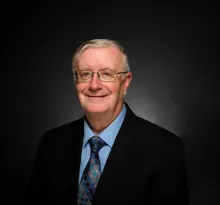
Jorge and his wife Kathy serve the Dallas (TX) and Lawton (OK) congregations. Jorge was born in Portuguese East Africa, now Mozambique, and also lived and served the Church in South Africa. He is also responsible for God’s Work in the Portuguese language, and has been visiting Portugal, Brazil and Angola at least once a year. Kathy was born in Pennsylvania and also served for a number of years in South Africa. They are the proud parents of five children, with 12 grandchildren and live in Allen, north of Dallas (TX).
