


Jorge de Campos
After Paul's beautiful and encouraging description of God's Plan of Salvation, he now begins to expound extremely important Christian living principles to of how to spiritual grow into the full stature of Christ.
This transcript was generated by AI and may contain errors. It is provided to assist those who may not be able to listen to the message.
Paul completed in Romans 11 a lovely section all the way from chapter 1 exposing wonderfully just in a beautiful and inspiring way God's plan of salvation. We are today going to briefly summarize how he expounded that up to the end of chapter 11.
We're going to see this wonderful good news of God's grace and love and ultimately end goal for all of us in the sixth position. And then he moves on in chapter 12 talking about some practical extremely important Christian principles to put in practice seeing that we have such a lovely and encouraging and uplifting plan from God, from God himself for us. And so in the first beginnings of Romans he explains that we are all sinners and whether we Jews or Gentiles we can see that in Romans 3 verse 9 we all sinners. And Jews are no better because they had the promises, they had the law, and they had the prophecies and they still failed. Then Paul goes on to explain God's faithfulness and righteousness and particularly his righteousness apart from the law through what Jesus Christ, what God and Christ planned and what Christ did under the command and instruction of the Father, what Christ has done for us. And in therefore is this what Christ has done for us as I mentioned under God's command and instruction and wisdom demonstrates many things in first place Christ's absolute trust in the Father but also their mutual love for us and God's righteousness because of his forbearance of our sins. In other words Jesus Christ makes us right with God, in other words he reconciles us with the Father, he makes us right, in other words he justifies us freely. If we truly trust what he has done for us, what God has done for us through Christ, that's what we read in Romans 3.26. This absolute trust and faith that we need to have in what God has done for us through Christ, when we have this absolute trust and faith and belief in his Word and his faithfulness, that is imputed to us as God's righteousness. That's an important point to understand. There may be quite often we do not comprehend fully. Now that does not void the law, it establishes it as we read in Romans 3.31. Paul then in chapter 4, the beginning of chapter 4, offers the example that Abraham trusted in God's promises and therefore he did believe he trusted and obeyed God's voice in faith.
We read that in Genesis 26 verse 5. I just want to go there because I want to emphasize the point that we read the other says, because Abraham obeyed my voice and kept my charge, my commandments, my statutes and my laws. He emphasizes here that he obeyed God's voice. That is in addition to God's laws and commandments. He trusted what God told him. Now what did God tell Abraham to do?
For one, we're reading Genesis 12 at the beginning of verse 1. Genesis 12 beginning of verse 1, he says, get out of your country from your family and from your father's house to a land that I'll show you, but I'm not telling you yet where you're gonna go. And here's a man, already not a spring chicken, he was already 75 years old. You know, 75 years old is quite a few years up behind you. And now he's gonna pack up his own, his family, his wife and he went to a lot and his family and servants and things like that.
He left. He left everything, not knowing where to go. Now that is faith. Or put in other words, that's absolute trust in God. Now the reason I'm emphasizing this, because this is in addition to obviously obeying God's commandments as we saw in in Genesis 26 verse 5. But he left out and then he says, and I'll bless you, I'll make you a great nation and those that bless you, I will bless those who bless you and I'll curse him who curses you.
And in all, in you, all the families of the earth shall be blessed. Yah is already a hint of the spiritual blessing through Christ, through his seed. But that's not all we then read in Genesis 15, in Genesis 15, and we see there starting for instance in verse 4, and it says, and and be all the war of the Lord came to him.
So yah yah is the Lord's voice and gave him some some additional information, some additional knowledge. And he said and say, this one shall not be away. In other words, his inheritance will not come through the son Ishmael that had been born, the promise, right? But one will come from your own body shall be your heir. Now you could say, well, then Ishmael come from his body in a sense, but you know the two shall be one flesh, his wife and becomes one body. He was one body of his wife Sarah and that means through his own body the two are one.
And it was going to be through that family unit that God said, that's what will be your heir. And then in verse 5, then he brought him, that's God, brought Abram, at that time still Abram, Abram, brought him outside and said, look now towards heaven and come to stars. And if you're not able to number them and he said to him, so shall your descendants be through this man, this person that is going to come out of your own body, you and Sarah. Now he was now Abram, now was 85 years old, and Sarah was, if I remember correctly, 10 years younger.
So she was also no spring chicken. She was already past the age of bearing children. And he said, so shall be your descendants. And you know what Abram did? He believed in the Lord. The act of belief, Yah, is not an act of saying that he kept the Ten Commandments. The act of belief, Yah, is that he believed in God's voice, what God told him, what God promised him, and he absolutely trust that that would be faithful, that God is faithful, that that would happen.
And that belief in what God said, God accounted it to Abraham for righteousness. It's important for us to understand that what was accounted for righteousness. And we know that later on he was even further tested, whether he would sacrifice his son, and obviously do not have to, but he was further tested on that.
And God said, now I know that you won't fear me. But the act of when God says, I'll impute upon you righteousness, was this one, Yah, in Genesis 15. Now when you and I turn to Romans, Romans, and we read in Romans chapter 4 verse 3, Romans chapter 4 verse 3, it says, so what does the scripture say? Abram believed God and it was accounted to him for righteousness.
You can see in a margin, a quote in your margin that says, quoting Genesis 15 verse 6, which I just read to you. And then you, what we see, Yah, is that he believed that he would have a child through Sarah, and that was imputed to him for righteousness. Look at Romans chapter 4 verse 17, starting from verse 17. As it is written, I have made you a father of many nations, in the presence of him whom he believed, God, who gives life to the dead and calls those things which do not exist as though they did.
And Yah, Paul is saying, Sarah's body, in other words, the capability of childbearing was quote unquote past that time, was quote unquote dead. But he gives life to the dead and calls those things which do not exist as though they did. And who contrary to hope, in hope believed, contrary to physical hope, because in physical hope there would be no real hope that Abram through Sarah would give child to a son.
But he believed, he trusted, he trusted in what he could not see and he could not understand as possible.
And then he says, in hope he believed so that he became the father of many nations according to what was spoken, so shall the descendants be. And we read that section a moment ago. Now in verse 19, and not being weak in faith, he did not consider his own body, although already dead, since by the time he gave birth to Isaac, he was about a hundred years old, and the deadness of Sarah's womb. Because if I remember correctly, she was 10 years younger, so she was 90 years old. And so, but he trusted in faith, he believed. And verse 20, he did not waver at the promise of God through unbelief, but was strengthened in faith, giving glory to God. And being fully convinced that what God had promised, God was also able to perform.
And therefore it was accounted to him for righteousness.
Now this is important for us to understand the act of belief for which Abraham was accounted righteous, was not related to keeping the Ten Commandments according to this, was related to trusting in what God said. Now we know Abraham obeyed God's laws as we read in Genesis 26 verse 5, but this imputing of to him for righteousness was because of this absolute trust in God. And God's dealing with us is no different. We have to listen to God's instructions, even if it requires absolute trust to do what is difficult and apparent impossible.
Because we believe and trust God, then his righteousness is imputed upon us.
Look at Romans chapter 4 verse 11, and he received the sign of circumcision, a seal of righteousness of faith, that he had still uncircumcised, that he might be the father of all those who believe, even if they're not circumcised, that righteousness might be imputed to them also, that is to us, Jews and Gentiles. So trusting God, believing in what he says, listening to his voice is so important, and that's why Denny goes in Romans 5 and it shows, that trust, trust, this faith does not void the law by no means, but the trust means that we will do what God says for us to do. And then he leads that this Paul in his explanation of this plan of salvation, he then goes into the symbolism of baptism, because it shows that our past sins are now forgiven because of what Christ has done. And because of that, we now need to commit to live the old way of life and now walk in newness of life. And so with past sins being forgiven, we therefore are freed from the penalty of those past sins, the penalty of law, which is death.
And therefore, as we go on then in chapter 7, we acknowledge in our minds that God's eternal law is good. But he also acknowledges that in our physical members, there remains a law of sin, and we are in a continual war, bringing us to captivity to this law of sin, which is in our members, and that we can see in Romans 7 verse 23. For I see another law in my members, worrying against the law of my mind and bringing me into captivity to the law of sin, which is in my members. And so Paul then as he explains this exposition of God's plan of salvation, as I said, starting that we all sinners and God is faithful, he's made a promise to Abraham, and he's imputing righteousness freely when we're trusting, provided we do what he says, and therefore we make that commitment, that baptism, and we live that new life.
Then he says we gotta be fully committed by following the lead of God's Holy Spirit. And that's what he says in Romans 8 verse 14. For as many as are led by the Spirit of God, those are the sons of God. We gotta be led. That means God's Spirit does not force us. We voluntarily submit and follow. And then he goes on to say, listen, God will never leave us. His love for us is eternal. He's unbendable. He will never fail. And that shows that at the end, towards the end, in verse 35 of chapter 8, where he says, who shall separate us from the love of Christ? And whatever trials or difficulties or whatever it may be, God will always love us and Christ will always love us. And so then Paul now goes into chapters 9, 10, 11, by giving further evidence of God's faithfulness, mercy, and love. By the fact that he called Israelites as God's chosen people, they do not trust God. Okay, now understand. It's important for us to always think about the very beginning. What was on right at the very beginning? At the very beginning, there was Adam and Eve and there were two trees. Those two trees, one represented, as we know the Tree of Life, but basically represented that we trust what God says for us to do. We trust that God tells us what's good for us. And the other is the Tree of the Knowledge of Good and Evil, which says, I am going to trust myself to decide for myself what is right and wrong.
And so, getting back to this point, the Israelites, as God's chosen people, they do not trust God.
In other words, they do not eat of the Tree of Life, but in other words, they do not follow his lead.
They do not follow the lead of God. Look out a parallel, a subtle parallel between Romans and Hebrews. And keep your finger there in Romans because we're going to get back to it. But look at Hebrews chapter 3. In Hebrews chapter 3, Hebrews chapter 3 verse 17 through 19.
Hebrews chapter 3 verse 17 through 19 says, Now with whom was the angry 40 years?
Who has got angry for 40 years? 40 years. Now you and I know, these are the Israelites. They were God's chosen people, but they did not obey. Let's look at what it says here.
Was it not with those who sinned whose corpses fell in the wilderness? Yeah, that generation was fell in the wilderness. And to whom did he swear that they would not enter his rest? You know, was they not entered that promised land, but to those who did not obey.
But now look at verse 19. For we see that they could not enter, it was the promised land, they could not enter in the promised land because of unbelief.
You see the word of belief is directly connected with obedience. So the Israelites, they do not trust God, they do not believe in God, and therefore they disobeyed. And they died in the wilderness.
Because they pursued their own self-righteousness, their own tree of the knowledge of good and evil.
And that's what we see as Paul describes in chapter 9 of Romans. He basically explains that they follow their own ideas. They decided to do their own thing.
And they became disobedient as we read in chapter 10. They became disobedient and contrary.
As we read in chapter 10, as it finishes in chapter 10 verse 21, he says, all day long I've stretched out my hands to a disobedient and contrary people.
You see, but God's faithfulness, mercy and love to all remains. And so because of their disbelief, they became stubborn and they became blind and it caused them to fall. And through their fall, salvation was offered or accepted by Gentiles. They fell, particularly even at the time of Christ. They just built their own systems of self-righteousness. Rather than God's righteousness, they had their own laws added to God's law.
They had their own weights, their own difficulties to the law. So they added to what God had given.
And so when Christ came and salvation was to do first into the Gentiles, it wasn't accepted by the Jews in general, but was accepted by Gentiles and made them jealous. You can see that in Acts when they were in Paul's first journey, how they became jealous.
But when the time of the Gentiles will be completed, which will be at the time of Christ's coming, we see that then all Israel will be saved. Romans 11 verse 26. He says, so all Israel will be saved because we see at the end of verse 25, it says that blindness in part has happened to Israel until the fullness of the Gentiles has come in. So, as Paul concludes the section in verse 32 of chapter 11, he says, for God has committed them all to disobedience, that he might have mercy on all. You see, right at the beginning of Romans, he shows that all have sinned. Then he goes on and explains that righteous was imputed to Abraham because he trusted and believed in God. It can also be imputed to us, but we have to make a commitment to change our lives. And we need God's help, we need God's Holy Spirit. Then he goes on to prove the fact by the very fact of the Israelites and then ultimate all Israelites will be saved by extension to the Jew first and to the Gentile. All Gentiles will be saved. Now, obviously, that is all those that don't reject the truth and turn away God. And so, yeah, we read in verse 32 of Romans 11, for God has committed them all to disobedience, that he might have mercy on all.
He's committed everybody because he'll have mercy. So, it shows God's faithfulness and God's love and mercy to everybody. And in fact, it shows God's wisdom.
Brilliant! It's brilliant because it says how the depth of the riches, both of the wisdom and knowledge of God, how unsearchable are his judgments and his ways past finding out. Who has known the mind of the Lord or who has become his counselor? Who has first given to him and that it shall be repaid to him? For of him and through him and to him are all things to whom be glory forever. Amen. So, yeah, concludes basically Paul's exposition of God's plan of salvation. And he just says, wow, wow, what great wisdom God has. Therefore, now, with that as a background, Paul now provides in chapters 12 and 13 some extremely important principles and various little principles that each one of those could even be developed into a sermon by itself, which I'm not going to spend that time today, but it just shows God brings out some very interesting points here. So, let's start with chapter 12, verse 1. I beseech you therefore, brethren. It was after all this explanation, after all this, let's call it clear exposition of God's plan of salvation. Paul now says, therefore, brethren, by the mercies of God, please, by God's mercy, please, present your body's living sacrifice, holy, acceptable to God, who is your reasonable service. You see, brethren, we knock our own. Our eternal life is a gift. Look at what Christ has done in a way. He had to have trust in God. He had to have faith in God.
Not only what he did that God would resurrect him, but he had a father at faith or trust that what they were doing, you know, was their wisdom, he knew what they were doing would bring many a people to salvation. That's why I say it's all Israel we say. He had an absolute confidence and trust in this plan that many of us would respond in a positive way. And so, what can we do?
What can you and I do? It's only rational and reasonable that we likewise offer our time and lives to God like he did for us. And that's what he says. Present your body's living sacrifice, holy, acceptable to God, which is now your reasonable service.
Now, when we read sections in the Old Testament, it says, well, do this and offer a sacrifice and this and that. And when people say, and we may say, oh, we don't offer sacrifices, no. Well, we do.
We do. It's a sacrifice of ourselves. It's our time and energy. It's our sacrifice that, for instance, says, go to the feast and we go. Now, for some of us might not be a sacrifice, but some in some nations where they struggle with every saint, that is a sacrifice.
That is a sacrifice. And I've seen many times, and you probably have seen it as well, particularly before the Holy Days, before Passover and before the feast, many, many trials come upon us. You've seen it. It's nothing new. And what does that mean? It means that Satan is trying to discourage us by creating little stumbling blocks around our lives for us not to go to the feast or not take the Passover. And we have to walk forward in trusting faith, listening to God's voice and trust and believe and walk in faith. And you know what?
Suddenly, a day before the feast or wherever it is, you are able to go. It's just, it's amazing. But if you have not planned everything and walked in faith, oh, well, I stayed home. I should have trusted God. You see, we offer sacrifices. We offer a sacrifice of trusting God when things around us don't appear that will be possible. But we just have to go on and trust God that He will make it right somehow, ultimately. And then we read in verse 2, and do not be conformed to this world.
Resist the pulls of this world. Resist pressures to disobey God.
And therefore, as I mentioned, often we have to obey and walk through open doors in our lives in faith, in faith. And that's what it says. Then God's righteousness is imputed upon us.
So this absolute faith and trust in God is very critical. Why? Because God has a purpose for you and I. He's got something in plan for you and I into the new heavens and new earth that He knows that He needs us to trust Him completely. And He's training us for that. Just as Abraham had to make a critical, or more than one, various critical life decisions in faith, leaving his own, absolutely trusting that he was going to have a child when he was already 100 years old and Sarah was already past childbearing age, you and I have to make critical decisions in our walk of faith.
And those critical decisions quite often represent or mean we do not conform to the world.
Because the world, the pressures of society are going to say, do this, do this, do this, do this, you have to do this. We have to have faith and trust in God that He will somehow open the doors even though we can't see it. That's why it says, after He explained this whole thing about God's plan of salvation, He says in Romans well I beseech you brave and I plead with you by God's mercy that you make a sacrifice and don't be conformed to this world. Don't compromise, don't, but be transformed by the renewing of your mind. You see God's righteous is imputed on us when we trust Him, but then as we live and we go on living, our mind is being renewed.
Our mind is being changed because we are submitting to God's righteousness, not our self-righteousness. And God's nature becomes part of our nature. You see initially God's righteous is imputed on us, but over time our mind needs to be renewed and changed. And look at 2 Peter chapter 1 verse 5.
Look at 2 Peter chapter 1 verse 5.
But also for this reason giving all diligence, in other words give it all effort, add to your faith. You see we're going to add to this trust. This trust is the beginning point then we gotta diligently add virtue, knowledge, self-control, stick to itiveness, perseverance, Godness becoming more and more like God, becoming more kind to our brothers, and then we put on true Agape love, Godly love.
You see we gotta build that up and we gotta be very diligent in that growth process.
Now understand we do not and we cannot do it by ourselves. You can't do it by yourself, I can't do it by myself. We need God's Holy Spirit and that's why in 2 verses earlier, still in 2 Peter chapter 1, but in verses 3 and 4 it says He is divine power. That's God's Holy Spirit. He is divine power has given to us all things. God's Holy Spirit has given us everything that you and I need to pertain to life, in other words to achieving eternal life, to achieving eternal life, to attain eternal life and Godness in other words and to become like God.
God's Holy Spirit has given us everything. It's like it's given us all the tools that you and I need, spiritual tools that you and I need for eternal life and to become like God.
Through the knowledge of him who called us by glory and virtue because we see his example of Jesus Christ and what he do is done. We are understanding how we got to become. Christ is our target. Let's call it our aim, our who we aim to reach to his stature, the full stature, this full mature growth of being like Christ. That's what it is through the knowledge of Christ who called us by glory and virtue by which have been given to us exceeding and great promises.
You see we've really received great promises that through these, through us using these tools and by us looking at these promises and therefore looking at the goal and striving to be like that, it says by these you may be partakers of the divine nature.
You see so at the beginning through faith God imputes upon us his righteousness. As we grow in faith through knowledge, self-control, perseverance, godliness, brotherly kindness and agape, we are putting on God's divine nature. We are becoming like God and that's why it says a little later in verse 10, therefore brethren be diligent to these and if you do these you'll never stumble. Do you know what that means? You will never leave God's church.
You will stay on the road and you'll be faithful and you'll be with Christ at his coming.
You'll be counted worthy to escape and to stand with Christ at his coming. So this period that you and I are in now is for us our day of judgment and we can see it's not a 24-hour period but it's a time period that God has given us once we receive our early spirit of overcoming and overcoming and becoming more and more like him and so it's a time period of our judgment as it says in first Peter chapter 4 verse 17, for the time has come for judgment to begin at the house of God. So we are being judged now. The day of judgment for us is now.
We were not going to have a second chance. This is it. So we better do it now. We are being evaluated now. Now those in the second resurrection that will be their time of evaluation and that proves again that in the second resurrection they will need a time, a time period of overcoming after they are baptized and overcoming and proving that they are being faithful to the end.
Now going back to verse 2 of Romans chapter 12 and it says, do not be conformed to this world. Cover that. Be transformed by the renewing of your mind. Cover that. That you may prove what is good. What is that good and acceptable and perfect will of God. In other words, that you're going to prove and in other words you're going to you come you and I committed a promise at baptism. Are we proving? Are we living up to that promise? And we're also proving what is good and acceptable to God and walking in faith like Abraham did listening to God's voice because that's what growth is all about. When we read in second Peter chapter 3 verse 18, grow in the grace and knowledge of our Lord and Savior Jesus Christ.
That's what it is. We prove, we test by experience and we grow in grace and knowledge. Now important to focus that it says and the knowledge of the Son of God, of the Son of Man, of our Lord and Savior Jesus Christ.
So many people think, oh it's technical knowledge. Oh I know all the scriptures. No, it's knowledge of the Son of Man. Understand the person, the character, the love, the kindness, the the mercy, the grace that the Father in Christ has, particularly Christ because Christ is the image of God. So we look at Christ. That's what it means that we need to grow in the knowledge of the Son of Man. And so getting back to the point, we gotta prove, we gotta discern what is good and evil. Like it says prove what is that good and acceptable and perfect will of God. We gotta discern, we gotta have clear in our minds what is good and what is evil.
Which tree? Tree of life? Do we trust God? Or the tree of knowledge of good and evil? That means we trust in our human reasoning succumbing to the pressures of society.
Which one?
And again, he has a wonderful parallel between Romans and Hebrews.
Look at YHWH in Hebrews chapter 5, Hebrews chapter 5 verse 12 through 14.
Hebrews 5 verse 12 through 14. For though by this time you ought to be teachers, you need someone to teach you again the first principles of the articles of God and you have come to need milk and not solid food. But everyone who partakes only of milk is unskilled in the world of righteousness.
For he's a babe. But solid food belongs to those who are mature or of a full age.
Right? That is those who by reason of use, they proving, they practicing, they growing, have their senses, have come to the point of learning to trust God that God knows and tells us what's good and evil and we trust God to tell us what's good and evil. In other words, we trust in the tree of life. And therefore he says, verse 1 of chapter 6 Hebrews, therefore leaving the discussions of the element principles of Christ, let us go on to perfection.
Yes, we need the basics, but we let's go on to perfection. And then in Hebrews, Paul goes on to perfection, which leads up to Hebrews chapter 11, which is the 5th chapter. And so again, then Paul, after Hebrews 11, goes on to Hebrews 12, where he ends with an exposition again of extremely important principles of how to live as as a Christian in Hebrews 12. And that's what he's exactly what he's doing in Romans 12. So you can see to me a subtle or maybe an interesting proof point that shows that Paul's logical thinking process of developing this exposition of God's plan, obviously with different starting points in Romans about mankind, Jews and Gentiles, Hebrews talking about the difference between the old covenant and the new covenant, but he follows this flow so that even though both have different beginnings in starting points in his explanation, in the end he comes to the conclusion that importance is how we live our lives as as the way of life. It's the way of life, how we are act and become Christians.
And so he has an important point. And this is quite pertinent to me because I come across a number of people as ideal people in Brazil, that they are some new people and they are very committed and focused to preaching the gospel. Great, great. But they want to be leaders in there and everywhere. But the question is, they don't even know how to live a true Christian life.
How can they preach by being a terrible example of their lives? Don't our actions speak louder than our words? And so the life of a Christian is first and foremost one of transformation, one that we gotta invite a new different spirit. As we read in Psalm 51, let's just read there, Psalm 51 verse 10 through 12. Psalm 51 verse 10 through 12. That's when Paul wrote this, Paul David wrote the psalm about the sin that he did with Bathsheba. And then he says here in verse 51 starting in verse 10, he says, create in me a clean heart.
Oh God. And renew a steadfast spirit in me.
Really Paul, keep saying Paul, sorry, David saw that it was a life of transformation, of change.
And then David says here in verse 11, do not cast me away from your presence and do not take your Holy Spirit from me. You recognize he had failed, but God in his mercy and kindness did not take his spirit away from him.
That is so encouraging. Restore to me the joy of your salvation and up your, uphold me by your generous spirit. You see the life of a Christian is one of us becoming like Christ, of us having a different mind like it describes in Philippians chapter 2 verse 5.
Philippians chapter 2 verse 5 says, let this mind be in you, which was in Christ Jesus.
You see, so the creation of a different mind and letting us become or being like Christ, that means that that's what it means when it says, let us grow in the knowledge.
Oh, it's not a technical knowledge of saying, well, this verse chapter in number is this. No, it's the knowledge of the Son of Man so that we become like Christ.
We was humble and he gave himself and all that. That is what we got to grow. And so in Romans chapter 12 verse 2, as we read, it says, and do not be conformed to this world, but be transformed by the renewing of your mind that you may prove what is that good and acceptable and perfect world of God. For I say through the grace given to me to everyone who is among you, not to think of himself more highly than what he thought to think, but to think soberly as God has dealt to each one a measure of faith. And that's how we will continue next week.
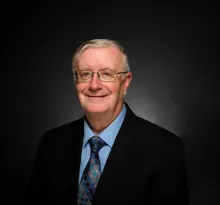
Jorge and his wife Kathy serve the Dallas (TX) and Lawton (OK) congregations. Jorge was born in Portuguese East Africa, now Mozambique, and also lived and served the Church in South Africa. He is also responsible for God’s Work in the Portuguese language, and has been visiting Portugal, Brazil and Angola at least once a year. Kathy was born in Pennsylvania and also served for a number of years in South Africa. They are the proud parents of five children, with 12 grandchildren and live in Allen, north of Dallas (TX).
