



Jorge de Campos
Rom 4:5, 7-8 “... his faith is accounted for righteousness . . . Blessed are those whose lawless deeds are forgiven, and whose sins are covered; blessed is the man to whom the Lord shall not impute sin."
This transcript was generated by AI and may contain errors. It is provided to assist those who may not be able to listen to the message.
Mr. Reynolds mentioned something very interesting, and that is that the main characteristic of a hardened heart is unbelief, not trusting the promises of God. Brethren, this brings us to a very, very important point about God's unsearchable wisdom and grace in His plan of salvation. And that is how trusting God, believing what God says, listening to God's voice. You know, Mr. Reynolds made reference to Numbers 14, 22, and it says, they did not heed His voice. Listening to God's voice and doing what He tells us to do is critical for the plan of salvation to ultimately be saved and have God's glory. In 2 Corinthians chapter 4, we read about Satan. We read that in 2 Corinthians chapter 4, verse 4. We read that Satan being the God of this world. Let me just get to there, 2 Corinthians 4, verse 4. We read that the God of this world or of this age has blinded those who do not believe.
And believing is actually trusting and doing what God tells us to do. And people do not believe what Christ says. You read, for instance, Matthew 7, 21, that He says, you have to do the Father's words, the Father's will. It's not just saying, Lord, Lord, I believe you. We have to listen to His voice. And Satan has blinded the minds of those who do not believe. List the light of the gospel. List this understanding of the good news of the glory of Christ. What is this understanding of the good news of the glory of Christ? What is that? Because Christ is the image of God, and therefore it's the glory of God, because Christ is in the image of God. So people don't understand the light of the—they don't comprehend this wonderful good news of the glory of God that should shine in us. One, our actions today must reflect God's image, but two, ultimately, you and us all will be glorified with the glory of God. And Satan does not want us to understand that. And this is the mystery of the gospel. This is a great mystery of this good news, which ultimately leads to the point that Paul mentioned in Romans 11 that all Israel will be saved. Even those that died in the wilderness for 40 years, they'll come to repent, and they'll receive the glory of God. And as you and I know, first to the Jew and then to the Gentile, in other words, God is no respecter of persons. All Jews and Gentiles, Israelites or not, will be saved, obviously provided that they don't deliberately reject the way once they know and refuse to follow it. Now, this is a beautiful hope. This is the light of this good news. And Satan does not want Christianity in general to comprehend it. Paul explains in the first chapters of Romans this wonderful plan of God culminating in chapter 11 when he says, all Israel will be saved and therefore implying that we all, even people that today are not here amongst us, when they will have that understanding provided they don't reject it, all will be saved and receive of that glory. That is a wonderful light of joy that Satan does not want the world to understand. We all have said, oh yes, we know that. We all have said. But as you and I read in Romans chapter 4 verse 3, in Romans chapter 4 verse 3, it says, Abraham believed God and it was accounted to him for righteousness.
I don't think sometimes we fully grasp what it's saying.
Because as we heard in the sermonette, we have to believe. We have to have a soft heart. And listen to the voice of God. And Abraham trusted, believed, and did what God told him to do. In other words, he obeyed God's voice. Oh yes, he did fail at times. But ultimately, he obeyed God's voice. Time and time again. And that was imputed, accounted, as it says, yeah, for righteousness. You know, you and I read in Genesis 26 verse 5, Genesis 26 verse 5, that Abraham obeyed my voice.
Now, quite often we read over it, and we don't stop to meditate about obeying his voice. Because then it says, and kept my charge, my commandments, my statutes, and my laws. And so, what we have here is God's charge, commandments, and laws. And on top of it, we also have God's will for Abraham to do certain things, and he did them.
We know in Genesis chapter 12, and let's just go there, Genesis 12, starting in verse 1, Genesis 12 verse 1, we see that when Abram at that time was 75 years old, he got an instruction from God. In other words, he heard God's voice, and God's voice told him, Abraham, get out of your country, from your family, from your father's house, to a land that I'll show you, to a land that I will show you. So I haven't shown it to you yet. You don't know yet where you're going to go. Now, brethren, how many of you that are 75 years old, and God tells you, pack up and go? Where? I'm not telling you yet. Just go. And Abram, now I ask you, he'd argued with God and said, but God, where? Tell me where first? I want to... No. He didn't argue. Because when it says, the promises of God says, I'll make a great nation. I'll bless you. I'll bless those who bless you. I'll curse those who curse you. And in you all the families of the earth shall be blessed, implying in his seed through Christ, all nations will be blessed. In verse 4 he says, Abram argued. No, it doesn't say that. Abram just got up and went.
And that shows that he listened to the voice. He heeded the voice. Now, that is not talking in this instance, not talking about the Ten Commandments. It's in addition to, like I'll show to you in Genesis 26, he listened to God's voice and he kept God's commandments. But he's specifically focusing on obeying his voice. You know the story a bit later in Genesis 15, when he says, well, but I don't have any children. You know, it's going to be the child of the servant.
That'll be the head of my house. And then God said, no, no. And God told him to come outside in verse 5, Genesis 15 verse 5, and he said, go out and look up. Now, if you go out in Dallas and you go and look up, you just see one or two stars, because there's so many lights. But when you're out in the field and it's pitch dark all around you, you see stars and stars. It is an amazing thing when you get out into the country and you look out. It's just, wow! Because in the city we don't see it. But as Abram looked at and counted stars, he couldn't count them. And you and I know that there are billions of stars, billions. And he said, so shall your descendants be. And what does it say in verse 6? Abram believed in the Lord, and he, God, accounted to Abram that belief for righteousness. God imputed to Abram that belief, that trust. And in the last, God spoke, gave a promise of something in the future, and he trusted. Now we know that in Genesis 22, for instance, you know, he had to even demonstrate further by being willing to sacrifice his son Isaac. And Abram obeyed God's voice. He feared. We know he faltered. We know he faltered. We know he sinned. Because you know, after this promise here in Genesis 15, and by the way, you're still uncircumcised. You were still uncircumcised in Genesis 15. We know that later he lied when he went to Egypt and told, well, say that Sarah is my sister. It's kind of, quote unquote, what you'd call a half lie, you know, but it's still a lie. And so what it shows is that this act of trust was counted or imputed to him for righteousness. This is important for us to understand. Do you and do I encounter very difficult situations in life where you and I have to act in complete trust? Sure, we got to do our part, but we got to act in complete trust. And we trust him because he doesn't lie. Brethren, this is a critical point for God to actually trust his voice because he desires that absolute trust from his children. When you and I are in his kingdom and even into the new heaven and new earth, he requires from us absolute trust because we don't know what other things he has in mind. And he has amazing things in his mind in new heaven and new earth, but he wants us to trust him. And as we go back to Romans chapter 4, and if we read from verse 4, Romans 4, 4, now to him who works, the ages are not counted as grace, but did. Yeah, so if you work in a job and you get a salary, you're going to get a salary. That's part of your work. It's your wages. But to him who does not work but believes on him. So Yah is actually not necessarily talking about obeying God's commandments. Of course we have to obey God's commandments. I'm not doing away with that because obeying God's commandments is the bare minimum. This is the bare minimum. You read in Luke 17, where he talks about an un-faithful servant, and then he says, I've done all these things. He says, well, you've done what you expected, you unprofitable servant. So just obeying God's commandments, that is expected. That's the minimum. But he's actually talking about going beyond and trusting God and believing what he says, undoubtedly, without any doubt, and just having the faith to do it. You see, and that's why he says at the end of verse 5, his faith, his absolute trust in God doing what he was told to do, was accounted for righteousness, was imputed on him as righteous, was put into, quote unquote, his bank account as credited righteous.
Just as David also describes the blessedness of the man to whom God imputes righteousness, grants righteousness, in other words, forgives our sins apart from works. You see, brethren, if you drive under the influence and you go to jail, just now driving without being under the influence would not pay for your fine. Works does not pay for your fine. Your fine has to be paid in a different way. And therefore, our fine for our sins is paid by what Christ has done for us. Gratas. And we are to believe that. Provided we do what he says and we repent. And we commit to live a new way of life. In verse eight says, Blessed is the man to whom the Lord shall not impute sin. In other words, blessed is the man that God forgives your sins.
And one of the conditions of forgiving is belief. And belief is doing what he promised us to do. Like Abraham did. Get out of your country! And he did! Maybe one day you and I may have to leave our situation to other places. And will we do it or will we look back like Lot's wife? Because he says you've got to do it in faith. And that faith is imputed upon us as righteousness. This is a big lesson. It's a big lesson. And this, brethren, was written for us. Look at Romans chapter 4 verse 23. Now, it was not written for his cycle alone. It was not written just for Abraham or for David. That it was imputed to him as righteousness, but also for us, for you and I. It shall be imputed to us, to you and me, who believe, who trust him, who listen to his voice when he says, do xyz and you do it. And you say, I can't do it. Well, we have to do it. We have to trust God. Well, I can't see the way out of it. Do it. Because he says it shall be imputed to us who believe in him, believe in who? In him, which is the Father, who raised up Jesus, our Lord, from the dead, and who was delivered up because of our offenses and was raised because of our justification. Christ died for us because of our sins, and not only did he die and paid for our sins, and paid for our sins because not only he died, but he was raised. It wasn't just dying, it was raised. For our justification, it was to make as right before God, just before God. That's why it says in verse 1 of chapter 5, therefore, having been justified by faith, you and I are made right before God because we trust him and believe and do what he says, even in difficult conditions where you and I say, how can I get out of this? Just do it in faith. And he says, we therefore have peace with God. Why? Because we made right with God. We reconciled with God. We are to one with God through what Jesus Christ has done, through whom we also have access by faith into this grace, which we stand. This gracious act of forgiving our sins and imputing it as righteousness, we stand on that, and we rejoice in the hope of the glory of God. We rejoice that we understand that one day we will be resurrected and will be spirit beings with the glory of God. Granted, Christ said, the Father is greater than I am, and you and I can say, Christ is greater than what we will be, but we'll have the same type of glory of that family. Isn't that beautiful, brethren? Isn't that beautiful?
You see, brethren, we will have, ultimately, eternal life because Christ died and resurrected, so made us right with God, justified us. But in addition to that, he is now living at the right hand of God, doing two things. Number one, he's being our high priest, and number two, he sends us his Holy Spirit, God's mind, God's power, God's capability for us to overcome. You see, we have an accuser, and now and again, you and I may have the wrong thought. You and I may say something to somebody in our families or in others, then we say, I shouldn't have said that, but it's gone out, and it's hurt. But you see, we have a high priest ready to forgive us, because the moment you've caused that hurt, Satan says, Ha-ha! God, look at and put your name. I'll put it in mine. Look at George. Look at what he said. Look what he thought. Ha-ha! And he is, you call him a son of God. And Christ, as your high priest, says, put your name there. He's praying on his knees. He's repentant. He or she is asking for forgiveness. And I'll forgive him, because my blood covers his sins or her sins. He's repentant. And he wants to change, and he's committed to change. He's going to try better. That is a wonderful hope, brethren. And so we are saved by his life, as you and I read in Romans chapter 5 verse 10, when it says, for if we are enemies, we reconcile to God through the death of his son, much more having been reconciled, it was made right, it was our sins being washed away, righteousness being imputed at us, we shall be saved by his life, as are how a priest, and because he sends us his Holy Spirit to help us. You see, basically, you and I got to make a commitment. And that's what baptism is. Baptism is, I believe, I trust, I'll do my part, and I repent. And I make a vow. I make a vow before God that I'm going to live a new life. Now, brethren, it is very dangerous for you and I to make a vow before God and then walk away from that vow. Please don't do that. But we make a vow, and that's what it means. We baptize into Christ, into the spiritual body of Christ, into and with Christ being in his body, we are dead under that symbolic grave, watery grave, and then we come out of that grave, and we ought to walk in newness of life. As Paul says in Romans 6, verse 4, at the end, he says, we baptized into death, that just as Christ was raised from the dead by the glory of his, by the power of the Father, by the glory of the Father, even so we also should walk in newness of life. We gotta walk. We gotta be new people. We gotta walk a new way. You and I cannot go back. Now, granted, we all frail human beings. We all frail human beings. And even Paul himself admitted that in Romans 7, because he says, you know, I love God's law. God's law is holy and the commandments are holy, righteous, and good, but I am flesh and I fail.
And then he says, I recognize there's a law of sin in my members. He says that in Romans chapter 7, verse 23, but I see another law in my members, in my flesh, in my carnal mind, in my carnal being. And there's a war in my mind, because I want to obey God, but his flesh is pulling me the wrong way. And Paul says here in verse 23, bringing me to captivity to the law of sin, which is in my members. And he expresses here in verse 24 what you and I probably have said many times. O wretched man or wretched woman that I am, who will deliver me from this body of death? And he gives the answer, I thank God through Jesus Christ. So then with the mind I serve the law of God, but with the flesh, the law of sin. And so I need God's Holy Spirit in my mind, working in my mind, and changing me. And that's why Paul then goes into chapter 8, explaining the work of God's Holy Spirit that is God's mind, and we need to be focused in having God's mind in us. We've got to be spiritually minded, not commonly minded.
We need to be led by God's Holy Spirit, not by fleshly desires.
And he says, and this is a wonderful hope that we have. Because you and I now, and it says, we have, we have the first fruits of the Spirit. Note the word have. We have. We have received as the first few that have received God's Holy Spirit. We have the first fruits of the Spirit. We are the first few in the society, in the soul that have received God's Holy Spirit.
It doesn't say we are now the first fruits. It says we have the first fruits of the Spirit. In other words, we have God's Spirit, which is symbolized by the day of Pentecost, and we receive God's Holy Spirit, and we have the first fruits of the Spirit. We're not yet the first fruits, but we have them. But look again at verse 23. Not only that, but we also who have the first fruits of the Spirit, even we ourselves grown within ourselves eagerly waiting for the sonship, for adoption, the redemption of our body. It was when we will become the first fruits at Christ's coming, symbolized by the day of trumpets.
So brethren, we have the first fruits. We are not yet the first fruits, but we will be the first fruits if we persevere till the end, if we are the faithful till the end, and those that will be of Christ are called, chosen, and faithful, as we read in Revelation. Well, you and I have to be faithful till the end. And then at Christ's coming, we will become Spirit beings. We will receive that sonship, that ultimate spiritual body, if we remain faithful till the end. The Israelites' example then, which Paul describes in chapter 10 and 11 of Romans, is that they were called.
They had a special mission, but the Israelites thought that they were saved because they were God's chosen people. They had the law, they had the tabernacle, and they were just hoping for political salvation from the Romans. But you see, they got a suffering servant, Jesus Christ, to die for us. They didn't understand that first mission of the Messiah. And so they turned against Christ. Christ became a stumbling block to them.
But Christ now is also, yes, to some Israelites that still believe, they are blessed, but it's now open to the Gentiles till the end of the time of the Gentiles, till the time of the Gentiles is fulfilled. As we read in Romans chapter 11. In Romans chapter 11, it says in verse 12, now if their fall is reached to the wall, which is to the Gentiles, and their failure reaches for the Gentiles, how much more their fullness? You see, one day they'll be granted the understanding they didn't have.
One day they'll receive God's Holy Spirit, which they never had. And look at verse 20, 25. For I do not desire, brethren, that's Romans 11, that you should be ignorant of this mystery. You ask a great mystery. People don't get it, don't understand it.
Lest you should be wise in your own opinion, that blindness in part has happened to the Israelites, to the Jews in general. Yes, God has called a few, but in general God has blinded them until the fullness of the Gentiles has come in.
And when that time of the Gentiles will be finished, Christ will return and will establish the kingdom of God reigning on earth. And then it says, verse 26, And so all Israel shall be saved. All Israel will ultimately be saved first in a millennium. They all will receive the knowledge of God's truth, and those that have died in the second resurrection, they'll have their first opportunity that they never had. In verse 31, it says, Even so, these also are now being disobedient. In other words, the Jews and Israelites have been disobedient, that through the mercy shown on you, Gentiles, they, the Israelites, may also obtain mercy in the future.
For God has committed them all to disobedience. All mankind has been going through disobedience, all have sinned. So it's right back to the beginning that we all have sinned, that God may have mercy on all. Oh, the depth of the reaches, both of the wisdom and the knowledge of God, how unsearchable His judgments in His ways. Brethren, this is God's great plan of salvation. The mystery of the gospel that you and I have our sins forgiven because we absolutely trust in His voice is so critical.
And because God shows no partiality, ultimately, all Israel will be saved, which means all nations will be saved, except those obviously that reject that opportunity. This is a beautiful light. It's a beautiful hope of the gospel, of the glory of Christ, that the world is being blinded to. But due to God's enduring love, if we have a believing heart, a big heart, a true, big spiritual heart, then look at it in verse 36.
For of Him, that's God, and through Him and to Him, are all things to whom be glory forever. We all will ultimately have the glory of God. What a blessing! What a blessing! Thank God for His mercy and kindness and what He's doing through Jesus Christ. Amen.
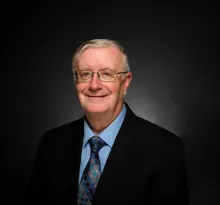
Jorge and his wife Kathy serve the Dallas (TX) and Lawton (OK) congregations. Jorge was born in Portuguese East Africa, now Mozambique, and also lived and served the Church in South Africa. He is also responsible for God’s Work in the Portuguese language, and has been visiting Portugal, Brazil and Angola at least once a year. Kathy was born in Pennsylvania and also served for a number of years in South Africa. They are the proud parents of five children, with 12 grandchildren and live in Allen, north of Dallas (TX).
