

Don Ward
This transcript was generated by AI and may contain errors. It is provided to assist those who may not be able to listen to the message.
The title of today's sermon is Essential Elements for Taking the Lord's Passover. Essential Elements for Taking the Lord's Passover. If someone were to ask you, why did Jesus die on the stake, what would you say? You might say, to pay for the sins of the world. Of course, that is a true statement, but what does his death on the stake mean to you personally?
He died on the stake, so you would not have to die on the stake. He died on the stake, so I would not have to die on the stake. Why? Because the wages of sin is death, as Paul says in Romans 6, verse 23, and as he writes in Romans 3, 23, all have sinned and come short of the glory of God. Scripture states that Jesus was foreordained to pay for the sins of the world, and that includes each person individually. So at this time, if you would, turn to 1 Peter chapter 1 and verse 17, and we'll see that Jesus Christ was foreordained before the foundation of the world paid for our sins. And as we shall see, this very much ties into Passover, because in essence, he was foreordained before time began, before the world began, to be our Passover, verse 17. And if we call on the Father, who without respect of persons judges everyone, according to each person's work, pass the time of your sojourning here in fear, for as much as you know that you were not redeemed with corruptible things as silver and gold from your vain conduct received by tradition from your fathers, but with the precious blood of Christ as a Lamb without blemish and without spot, who verily was foreordained before the foundation of the world. And the word foreordained is progonosco, P-R-O-G-O-S-K-O.
Progonosco, it means to know beforehand. So it was known before the foundation of the world what was manifested in these last times for you. Who by him do believe in God that raised him from the dead? Who by him do believe in God? It is through Christ, according to this, that we believe in God and raised him up from the dead and gave him glory that your faith and hope might be in God. Jesus Christ always pointed people toward the Scripture. He never glorified himself. He always glorified his Father. He said, the words I speak, they're not mine. They are the Father's words. Now let's note Revelation 13 and verse 8. Revelation 13 and verse 8, And all that dwell upon the earth shall worship him, that is, the beast's power, whose names are not written in the book of the life of the Lamb, slain from the foundation of the world. So we see, once again, from these Scriptures we can safely conclude that Passover was foreordained before the foundation of the world. God knew that humankind would sin and would need a Redeemer to buy them back from sin and death. Sin entered the universe when Satan began to undermine God's authority and sovereignty, which resulted in him drawing one-third of the angels. The first two or three verses there in Revelation 12 talks about that old Satan that his tail of the dragon drew one-third of the angels who followed him in rebellion and tried to take over the throne of God as you read about in Isaiah chapter 14. So sin entered the universe when Satan began to undermine God's authority and sovereignty, which resulted in him seducing, deceiving a third of the angels by his seductive, deceptive ways. His intent from the beginning was to try to overthrow God and become the object of worship. Of course, it took a little bit of time, as you can read about in Ezekiel 28 of him looking at himself about how wise he was, how intelligent he was, how bright he was, that he began to think, why should I take his back seat to anyone? And even though Satan failed in his attempt to take over the throne of God, he is still obsessed with the goal of breaking prophecy and becoming the object of worship, and for a short time he will deceive and achieve his goal. As I read from Revelation 13.8 once again, and all that dwell upon the earth, this says, and all that dwell upon the earth shall worship him, except those whose names are not written in the Lamb's book of life. Satan played a role in deceiving Eve into disobedience and sin when he cleverly tempted her by casting doubt in her mind as to God's truthfulness and faithfulness. So we go to Genesis chapter 2 and verse 14, where God instructed Adam and Eve with regard to the two trees in the garden, which we have heard about so often, but so important that we understand the background, the history. So once again, what are we saying? We're saying that Jesus Christ was foreordained before the foundation of the world, that he was as a lamb slain from the foundation of the world, that God knew that humans were going to sin, and he would need a redeemer. humankind would need a redeemer. Genesis 2 verse 14, and the name of the third river is Hildeko, that is it which goes toward the east of Assyria and the fourth river in Euphrates, and the Lord God took the man, put him into the garden of Eden to dress it and to keep it. Of course, God expects us to dress and keep whatever we have to make it look the best it possibly can at all times. He expects us to look the best that we can.
And the name of the, I'm sorry, continuing there, he put him in the garden to dress it and to keep it. Of course, man has done a sorry job with regard to keeping the garden as now the corporate capitalism has taken over the whole world and just about every speck of dust on the face of the earth has been explored. And the Lord commanded the man, saying, of every tree of the garden you may freely eat, but it's free of the knowledge of good and evil you shall not eat a bit, for in the day that you eat thereof you shall surely die.
So to disobey God, of course, is sin. The tree of the knowledge of good and evil symbolizes taking to yourself the prerogative of deciding what is good and what is evil. And God permitted humankind to have that prerogative, to be able to choose. After Adam and Eve aided the tree of the knowledge of good and evil and were cut off from God and the death penalty was on their head, God cast them out of the garden of Eden.
But let's notice what he said to them before he cast him out. One thing he did was to promise them a Redeemer. So we look at Genesis 3 and verse 15. And I will put enmity between you and the woman between your seed and her seed.
Her seed, eventually Jesus Christ, shall bruise your head. Jesus Christ is eventually going to put Satan away into the bottomless pit as you read about Revelation 20. Also in Romans, the last chapter, Romans chapter 16, I think is verse 35, that talks about that Christ is shortly going to bruise Satan's head and you shall bruise his heel.
Satan inspired the crucifixion of Jesus Christ. Sin is the transgression of the law and the wages of sin is death. Before Adam and Eve were cast out of the garden, God set up a caribim and made it impossible for Adam and Eve to get back to the tree of life after he cast them out. So let's read that in Genesis 3 and verse 22. And the Lord God said, Behold, the man has become as one of us to know good and evil.
To know good and evil means that they have decided to decide for themselves. See, good and evil is a spiritual matter. Good and evil is a spiritual matter, and only God has the prerogative of determining what is good and what is evil, since it is a spiritual matter. The Lord God said, Behold, the man has become as one of us to know good and evil. And now, lest he put forth his hand and take the tree of life and live forever, therefore the Lord God sent him forth from the garden of Eden to till the ground from whence he was taken.
As we have noted, God had instructed Adam and Eve told them that the day that they ate the tree of the knowledge of good and evil, they would begin to die. Adam and Eve's sin resulted in humankind's need for a redeemer to buy them back from sin and death.
As we shall see a little later, for by one man's sin, sin entered into the world. Sin entered into the universe when Satan drew a third part of the angels. Of course, he began sinning before they actually went with him and then tried to take over the throne of God. We noted earlier that God knew Adam and Eve would sin.
However, he gave humankind the baragatim. That means the choice of choosing for themselves what is good and what is evil. Eve could not resist the lust of the flesh, the lust of the eyes, and the pride of life. She was easy prey for Satan.
Satan is still using the same tactics today, the glamour and glitz of this world, but the now generation, that which is last but a short time, he sows doubt, he creates deception, he seduces a combination of deceptive seduces seductive narratives of lives mixed with truth, and he waits for humans to take the bait and they willingly do so. But we have seen that God and Christ had planned out their perfect plan of salvation before the foundation of the world.
In fact, it says in 2 Timothy 1 and verse 9 that before time began. So we know it was before the foundation of the world. But as we have noted before Adam and Eve were removed from the garden, he promised humankind a redeemer. There was a great prophecy also given in Deuteronomy 18 verse 15. Let's go to Deuteronomy 18.15, which shows that this redeemer would come. So laying the foundation for Passover goes way back before time began.
And here we have a prophecy by Moses. Of course, Moses was not a priest, but he was a prophet. So we see in Deuteronomy chapter 18 and verse 15 where Moses prophesied, The Lord your God will raise up unto you a prophet from the midst of you of your brethren, like unto me unto him you shall hearken, you shall listen. According to all that you desire of the Lord your God in Horeb, Horeb is another name for Mount Sinai where they received the Ten Commandments. In the day of the assembly saying they were all assembled there at the mount to receive the Ten Commandments, let me not hear again the voice of the Lord my God, neither let me see this great fire any more than I do. And the Lord said unto me, They have well spoken that which they have spoken. So the promise of a Redeemer is throughout the Bible, and that Redeemer, of course, is our Passover. We look at Acts chapter 3. In Acts chapter 3, we see a summary of the prophecies. We're not going to read all of these, but we'll read some of this. In Acts chapter 3, verse 13, the God of Abraham and of Isaac and of Jacob, the God of our fathers, hath glorified his Son Jesus, whom he delivered up, denied him in the presence of Pilate when he was determined to let him go. Of course, that story that Pilate did not want to kill Jesus Christ. We're not going to go into that story now. But you, denied the Holy One, the just, and desired a murderer, but ravish, to be granted unto you, and kill the Prince of Life whom God hath raised from the dead, whereof we are witnesses. He killed our Passover, the sacrifice that paid for the sins of the world. Verse 15, and killed the Prince of Life whom God has raised from the dead, whereof we are witnesses. Time after time, it talks about God raising Christ from the dead. Now we go down to verse 19. Repent you therefore, and be converted, that your sins may be blotted out. When the times are refreshing, shall come from the presence of the Lord, and he shall send Jesus Christ, which was before preached unto you, whom the heaven must receive until the times of restitution of all things, which God has spoken by the mouth of all his holy prophets, since the world began, for Moses truly said unto the fathers. And we read Deuteronomy 18.15, and then several others are catalogued there that prophesied of the Redeemer that was to come. By one man's sin, as we have already mentioned, sin entered into the world. We'll go now to Romans chapter 5. Romans chapter 5 verse 12.
Sin entered into the universe with Satan drawing a third part of the angels. Sin entered into the world, of course, in the sense of being recorded and the fact that they were given their choice and they were cast out, they disobeyed. So sin entered into the world by Adam's disobedience. And we'll read this here in Romans 5 verse 12. Wherefore, as by one man, sin entered into the world, and death by sin, and so death passed upon all men. Why? Because all have sinned. Now the Catholic religion, virtually every religion talks about original sin, and because of Adam's sin, the death penalty was passed on to us. No, that's not the reason. The reason is all have sinned. Remember now, once again, Romans 3, 23, that all have sinned and come short of the glory of God.
Now we look at verse 19. For as by one man's disobedience, many were made sinners. So by the obedience of one shall many be made righteous. Moreover, the law entered that the offense might abound. But there, where sin abounded, grace did much more abound. Now grace is the Greek word charis. It means divine favor. Because of God's love and His divine favor, He created humankind in the first place.
He wanted to share who He is, what He is, He in the Word, with humankind in a family setting.
And of course, He had to have that first seed, which was Christ, the first begotten, and then the first born from the dead as a spirit being. And He is now our elder brother. He is in the family of God. That as sin had reigned unto death, even so might grace reign through righteousness unto eternal life by Jesus Christ our Lord. How? Through Jesus Christ our Lord, through righteousness. Righteousness. All your commandments or righteousness is written in the Psalms. Psalm 119.
All your commandments are righteous. What shall we say then? Shall we continue in sin that grace may abound, that divine favor may abound? He created us. He gave us life. He gave us the Redeemer. But are we going to continue in sin that grace may abound? God forbid. How shall we that are dead to sin live any longer therein? We're dead to sin if we have repented of our sins, exercised faith in the sacrifice of Christ, and been baptized. So why did God create the first Passover? The first Passover, of course, was a shadow of, symbolic of, what was to come. It was instituted to deliver Israel from slavery in Egypt. And Egypt is symbolic of sin and death. Their slavery was physical and spiritual. The Old Covenant Passover symbolized the greater Passover sacrifice that was from the greater sacrifice that was to come from Jesus Christ. It is through the blood of the Lamb of God, slain from the foundation of the world, that one can be set free from sin and death. That first Passover, of course, they sprinkled the blood on the doorpost, and God passed over the houses in which he saw the blood.
So once again, Egypt symbolizes the spirit's condition. Each one of us was in before we were called into God's marvelous light and given the opportunity to be freed from sin and death Way back years ago, I wrote an article for the Good News, I think it was, that Passover is the festival of freedom because it sets us free. It set Israel free, and it sets us free from sin and death. And we're no longer to live in fear and superstition. So we were once all enslaved in spiritual Egypt, and the death penalty was on our heads because, as we've already noted, the wages of sin is death, but the gift of God is eternal life through Jesus Christ our Lord, Romans 6.23. The only way we can be bought back from sin and death is through the sacrifice of Christ, which we shall see is our Passover. So now let's go to Romans chapter 3. Romans chapter 3 and verse 23, which we've already quoted at least twice. Romans 3 verse 23.
For all have sinned and come short of the glory of God. Remember, I gave you a handout way back a few years ago mastering the book of Romans. In the first chapter of Romans, Paul takes the Jews to task. I'm sorry, I reversed it. In the first chapter, Romans Paul takes the Gentiles, the nations, to task. In the second chapter of Romans, he takes the Jews to task. In the third chapter of Romans, he begins to summarize and take Jew and Gentile to task. This is the summary verse of that. Romans 3.23. All have sinned come short of the glory of God. And so, what is the remedy? So it's in the next few verses among the most important, at least understood, most wrongfully discussed, I guess, in the whole Bible, probably. Verse 24, being justified freely by His grace, the grace of God, through the redemption that is in Jesus Christ. Once again, grace, divine favor, redemption, buying back power.
The death penalty was on our head. He paid the penalty whom God has set forth to be a propituation. Propituation means He went in our stead. For God has set forth to be a propituation through faith in His blood, to declare His righteousness for the remission of sins that are passed through the forbearance of God, the long suffering that God from the time that this plan of salvation was thought out and planned. I don't know how many, maybe how many millions of years passed, who knows? To declare, I say, at this time, His righteousness, He kept His word that He might be just and to justify Him which believes in Jesus.
God is also justifier. Jesus is justifier. God is justifier in that He sent His Son who willingly came and paid the price. Where's boasting then? It is excluded. By what law? A works? No, but by the law of faith. See, once you are convicted of sin, you could keep the law perfectly, but the law would not pay for sins that are passed. The only way that sin and the death penalty can be paid for is through the sacrifice of Christ, through faith in the exercise of faith in Christ. You notice that I say, time after time, exercise faith in the sacrifice of Christ. Where's boasting then? It is excluded by what law works? No, but by the law of faith. Therefore, we conclude that a man is justified by faith without the deeds of the law. Now, some people belittin'. This is where the Protestants go astray. It's where the Catholics, the whole religious world basically goes astray, in which it says you're justified by faith without the deeds of the law. The deeds of the law required the sacrifice, the blood of bulls and goats. It was a physical thing that kept them ceremonially clean so that they could enter into fellowship with God and the Word at the temple.
But those works will not justify it. You could begin to keep the law perfectly, but it still wouldn't pay for the sins that are passed. So we want to look, once again, verse 25. When God has set forth to be a propituation through faith in his blood to declare his righteousness for the remission of sins that are passed through the forbearance of God. Now, we will sin after we are converted, and it is still the blood of Christ that allows us the sacrifice of Christ to be forgiven of sins.
Verse 29. Is he the God of the Jews only? Is he not also the God of the Gentiles, the ethnos, the nations, yes, of the Gentiles also, seeing it as one God who shall justify the circumcision that is the Jews by faith and the uncircumcision, the non-Jew, through faith. Do then we make void the law through faith? God forbid, yea, we establish the law. And I always ask, when I read this verse, how do we establish the law through faith? God forbid, yea, we establish the law through faith. How? Because if the law were not in effect, we would have no need of a redeemer.
So the fact that the law is in effect, and that we need a redeemer, a Passover to pass over our sins to go in our stead, shows that we establish the law. It is good, it is holy, as Paul writes in Romans 7.
The only way we can be brought back then from sin and death is through the sacrifice of Christ. In that first Passover, as we mentioned earlier, the blood was sprinkled on the blood post, the blood was sprinkled on the door post of their dwellings. Today, the blood is sprinkled on our inward parts. It is on our hearts. It is sprinkled on our very mind, our inner being.
Today, the blood must be sprinkled on the heart. So let's notice Hebrews 10, verse 19.
Hebrews 10, verse 19.
Hebrews 10, verse 19. Hebrews 19, having therefore, brethren boldest, to enter into the holiest of all by the blood of Jesus, by a new and living way, which as he has consecrated for us through the veil, that is to say, his flesh. And having a high priest over the house of God, let us draw near with with a true heart in full assurance of faith, having our hearts sprinkled from an evil conscience.
So through the Spirit and Word of God, we can have a new conscience. What does that mean? That means that we can have a new knowing within. We have, as it were, the law of God written on our inward parts, a sprinkle of an evil conscience, and our bodies washed with pure water.
So we have that Word of God that is written on our inward parts. You look at verse 16. This is a covenant that I will make with them after those days, says the Lord. I will put my laws into their hearts and in their minds, and I will write them. And their sins and iniquities will I remember no more. So the blood is now sprinkled on our hearts. So how do you sprinkle blood on your heart? Through repentance, exercising faith in the sacrifice of Christ. We can be purged of sin, and by eating the unleavened bread of sincerity and truth, we can take in, we can put on, the very mind of God, having our conscience purged, and a new conscience within, a new knowing within. Remember, Christ said in John 6.63, the words that I speak, they are spirit, and they are life. This washing process, if you look at Ephesians 5 and verse 26, this washing process is helped by the Word of God. We are cleaned up, we're washed by the Word of God. In Ephesians 5 and verse 26, Ephesians 5 and verse 26, so that's why the more of the Word of God you have stored in your being, you could say in the symbolic sense, the more you will have God written on your inward parts. Verse 26, that he might sanctify and cleanse it, that is the church, with the washing of water by the Word, that he might present it to himself a glorious church, not having a spot or wrinkle or any such thing, but that it should be holy and without blemish. So we have this overview. Let's now focus on the essentials for eating and drinking to pass over. The four great essentials are, you must discern the physical body and life of Christ that was given for your sins. Discern the body of Christ, the Son of God who died for the sins of the world. He poured out his life essence for you, for me, and for all of humanity. He paid the ultimate price for sin. He knew no sin, but he became sin for us, so we might be reconciled to God the Father. Secondly, you must be reconciled to God and Christ. So you discern the body of Christ that was given for your sins. You must be reconciled to God and Christ. All of this sort of goes together.
You must be reconciled to your brothers and sisters in Christ. This means that you must discern the spiritual body of Christ, which is the Church.
Discern the body of Christ. Be reconciled to God and Christ. Be reconciled to the brethren. Discern the body, the spiritual body of Christ, the Church. That goes hand in glove of being reconciled to your brothers and sisters in the Church. This means that we have put sin out.
We have put sin out before we take the Passover. We put physical leavening out of our homes before we take the Passover. From the essentials we listed above, we see that we should come to Passover, having repented of our sins and having been reconciled to God and Christ and each member of the body of Christ, and partaking of the unleavened bread of sincerity and truth.
If we do that, we can take the Passover in full assurance that we are taking it as Christ commanded. We're protecting the unleavened bread of sincerity and truth. That means that we're putting on Christ, and that is putting sin out and eating unleavened bread, which is symbolic of that act.
For one to be reconciled to God, one must be convicted of sin. Remember the four things concerning the body of Christ, reconciled to God and Christ, reconciled each member of the body of Christ, and putting on discerning the body that is the Church, and eating and drinking of the unleavened bread of sincerity and truth. The great convicting agents of the spiritual realm, the Holy Spirit, and the Word of God. The Holy Spirit and the Word of God are the great convicting agents, and after one is convicted of sin, they must repent, obey, exercise faith, and repentance, obedience, and faith are inextricably linked together. You can't say you have faith without repentance. You can't say you have faith without obedience. You can't say that you have repented unless you obey. You can't say you have repentance or obedience without faith. So they're all three inextricable. Inextricable means they are not capable of being separated. This process consists of doing the weightier matters of the law. The exercising of judgment, mercy, and faith is one of the greatest themes of the Word of God. It was introduced in many different places. It was introduced in one place back in Micah. Go to Micah chapter 6. I think Micah is just after Nahum. In Micah chapter 6, in verse 8, He has showed you, O man, what is good and what does the Lord require of you, but to do justly, so judgment, to have mercy, to love mercy, and to walk humbly with your God. If you walk humbly with your God, you're walking in faith. After the Word of God and the Spirit of God convicts you of sin, you must judge yourself, confess your sins, and turn from your sins and cry out for God's mercy. True repentance and reconciliation with God requires giving up self and being led by the Spirit of God, which can be broadly summarized by what I call the three S's. We talk about the three C's—conviction, commitment, and courage—but three S's of surrender, submit, and serve. So remember Micah 6-8, and of course we know so well.
Matthew 23 and verse 23. So we'll turn to Matthew 23 and verse 23 and read that verse that we have talked about so many times for almost 50 years here in East Texas and many other places in classes and Bible studies, in lectures, and addresses to the Council, and on and on it goes. In Matthew 23-23, woe unto you, scribes, Pharisees, hypocrites, you pay tithe, men, anise, and coming, and have omitted the weightier manners of the law, judgment, mercy, and faith. These ought you up to done, and not to leave the other undone.
So we see here that God requires us to be reconciled to God in Christ, to be reconciled to each member of the body of Christ, and also, as we've already mentioned, we are to be to discern the body of Christ that is the Church. The Church is Christ's body. How is, why is Christ, why is the Church Christ's body? Because Christ lives in each one of us.
Now we go to 1 Corinthians 11. 1 Corinthians 11.
Jesus Christ instituted the symbols of the New Covenant Passover, and you remember that Paul was taught by Jesus Christ, and he says here that he was personally taught about Passover, and here is, contains, once again, it's somewhat a review of what we've already said, but said in different ways, and perhaps more directly, in 1 Corinthians 11, beginning in verse 17. What we're going to see here that mentions the Lord's Supper, it refers to love feasts. These were social meals that developed according to Greek custom. They're mentioned, love feasts in 2 Peter 2 13 and Jude 1 12.
So in 1 Corinthians 11 17, now this I've that I declare unto you, I praise you not that you come together not for the better, but for the worse. For first of all, when you come together in the Church, I hear that there are divisions among you, and I partly believe it, for there must be also heresies among you, that they which are approved may be made manifest among you.
You can read over that, but what that means is when a false teaching, when a false doctrine comes along, and you are deceived or taken in by it, you are responsible for it. I see. I can explain it. Others can explain it.
Your friend can explain it, can plead with you, but when it really comes down to it, it is on your shoulders you make the decision. I can't make it for you. No one else can make it for you. So it is through these various things that come along that God knows who is his. He separates the wheat from the chaff in many different ways.
Verse 20, When you come together therefore into one place, this is not to eat the Lord's supper. It is not for the traditional Passover meal, as someone has recently written.
I don't know how in the world you could do this. Why would you need special instructions for taking a Passover if it was just a continuation of the traditional Passover meal that the Jews observed? See, Jesus Christ and the disciples observed this Passover at the beginning of the fourteenth. He was crucified in the afternoon of the fourteenth. Remember, Hebrew day is run from sunset to sunset. Wherefore you come together therefore into one place, not to eat the Lord's supper. It is not for a love feast. Verse 21, For in eating everyone takes before other his own supper. One is hungry and another is drunken. So they surely weren't showing love. They had division. What have you not houses to eat and drink in, or despise you the church of God, and shame them that have not. Now notice that despise the church of God. The church of God, that's three words, but who is the church of God? The church of God can consist of the members of the church of God. So that's why I say you discern the body, Christ's body, the church, his physical body, and his spiritual body, the spiritual organism, the church, which consists of members. What shall I say to you? Shall I praise you in this? I praise you not. Far received as the Lord that which I delivered unto you. Far received as the Lord that which I delivered unto you. See, he received it of the Lord. Paul was given these special instructions from Christ himself. Christ wouldn't have needed instruction, or the disciples would not have needed instructions of the new covenant. Church would not have needed instructions on keeping the old passover. This is new. For I have received of the Lord that which I delivered unto you that the Lord Jesus, the same night in which he was betrayed, took bread. And when he had given things, he broke it and said, Take, eat, this is my body, which is broken for you. This is due in remembrance of me. So it is a remembrance. What is the remembrance to focus on? That Christ paid the price for our sins through his sacrifice, and without that sacrifice, the death penalty would still be on our heads. After the same manner also, he took the cup. When he had stopped saying, This cup is the new covenant, not the old covenant. This word, diathice, the King James translation of Testament is unfortunate.
This cup is the new covenant in my blood.
This do you as often as you drink it in remembrance of me. You remember that I died for your sins.
For as often as you eat this bread and drink this cup, you do show. I want to focus on that word show. It is cateangelo, it's like jello. Cateangelo means to announce, to declare, to make known, to announce, to declare the Lord's death. For as often as you eat this bread and drink this cup, you do announce, declare the Lord's death till he come.
Wherefore whosoever shall eat this bread and drink this cup of the Lord, unworthily shall be guilty of the body and blood of the Lord.
So we're going to focus on that word, unworthily. Unworthyly is an adverb. As we shall see.
The Passover is a very solemn and sober occasion. It is a life or death matter. Not a time for festive frolicking. It's not a time for a potluck meal or brown bag meal or a love fest or meal or any other. It is the Passover.
The key word is unworthily. The Greek word is an axios. I've gone over this at least 30 times, and it seems that people still do not get it. A-N-A-X-I-O-U-S. In the Greek, it means irreverently. In the Greek English translation, it is translated as unbefittingly. So whether you use irreverently or unbefittingly, it shows the manners. See, unworthily or an axios is an adverb. Adverbs describe the manner the manner of way you perform an action. When driving on ice, you go slowly. Slowly. Slowly is an adverb. It describes the manner in which you drive. Unworthyly describes the manner in which you take the passover. You do not take it unworthily. You do not take it unbefittingly. You do not take it irreverently. That's what the Corinthians do. Thus, when you observe the passover, do it irreverently and befittingly. For years, church members have labored under the assumption that they had to be worthy enough to take the passover. In some cases, that was a cop-out. It was an excuse. No person is worthy enough, but each person can take the passover in the manner that Paul prescribes in these verses.
With all the background and what you have today and the knowledge you have, you should be able to take it very happily. Let's note what a well-known commentator Barnes writes about the word anaxios. Perhaps there is no expression in the Bible that has given more trouble to weak and feeble Christians than this verse 27. It is certain there is no verse that has operated to deter so many from the taking of communion or passover. I added, passover. Or that is so often made use of as an excuse for not making a profession. The excuse is, I am unworthy to partake of the Holy Ordinance. I shall only expose myself to condemnation. I must therefore wait until I become more worthy. A lot of times people counseling for baptism say, well, I've got to wait until I think I'm really ready.
And you need to repent of your sins. You need to examine.
Most persons interpret it as if it were unworthy instead of unworthyly.
And they seem to suppose that it refers to their personal qualifications to their unfitness to partake of it rather than to the manner in which it is done.
And as I've already explained, this word is an adverb. It's not an adjective. And is referenced to the manner of the way you take the Passover. So the word means properly in an unworthily way.
You should not take the Passover unfittingly or in an unworthy way.
So Paul warns us to take it reverently because they had been taking it, the Corinthians, irreverently. Paul warns them not to do that. In view of these divisive practices that had developed in Corinth, Paul said, when you eat and drink the Passover, do it in remembrance of the death of our Savior. In other words, discern the body of Christ. To eat and drink without showing regard and understanding of the solemn significance of the event, is to be guilty of the body and blood of Christ. In verse 28, we see that you must examine yourself. And this word examine in the Greek is dokemizo. It means to test, to prove, to scrutinize, to see whether a thing is genuine or not. So we read verse 28, which was the Scripture of the day, but let a man examine himself. Dokemizo, scrutinize, really look at, examine himself, and so let him eat of that bread and drink of that cup. For he that eats and drinks unworthily, eats and drinks judgment to himself, does it mean to judge? Well, diacrino. It's not just crina, it's diacrino. It means all the way through judgment.
All the way through judgment. The examination is all the way through judgment. So to judge everything, you once again discern the body of Christ, and you remember that unless he had died in your place, you would have to die. There's no other name given under heaven, whereby men must be saved. So you have to discern the body of Christ, and you have to discern each member of the body of Christ to make sure that you are reconciled to your brothers and sisters in Christ. So we are to judge ourselves.
Now verse 30. For this cause, what cause? By not examining ourselves thoroughly, taking a pass over reverently. For this cause, many are weak and sickly among you, and many sleep. Many are dead.
How does that happen? But when we are judged, we are chasing of the Lord that we should not be condemned with the world. If we don't judge ourselves, Christ steps in, and he judges us. Remember Hebrews 12, verse 6, 7, 8 there, that if you are without chastisement, that you are illegitimate, you are not sons, that God chastens every son that he loves, and he would rather see you dead than miss out on his kingdom.
Wherefore, my brethren, when you come together to eat, wait for one another, and if any man hunger, let him eat in home, that you come not together unto condemnation, and the rest will I set in order when I come. So we are to judge ourselves, and in order to judge ourselves, we go before God, we cry out and say, Lord, have mercy on me, a sinner. And you realize that you have sinned. You repent of your sins. You exercise faith in the sacrifice of Christ, and he is faithful and just to forgive us of all unrighteousness.
So once again, we discern the literal body of Christ. We discern the Church of God, each member in it. We are to partake of the unleavened bread of sincerity and truth. The unleavened bread of sincerity and truth provides communion with God and Christ. How so? Because Christ said, the words I speak, they are spirit and they are life. So when we are reading and studying the Word of God, we are, in essence, having communion with God and Christ because we're eating and drinking of the Word of God. But the Corinthians were not discerning the body of believers. They were not having the same love, care, and concern for one another.
We must have that same love, care, and concern for one another. Let's go now and notice what the Apostle Paul writes concerning this in 1 Corinthians chapter 10.
The necessity that we be reconciled to God and Christ, the necessity to be reconciled to each other, that we discern the body of Christ, also that we discern the body of Christ that is the Church. In 1 Corinthians chapter 10 and verse 15, I speak as to wise men, judge you what I say. The cup of blessing which we bless is not the communion of the blood of Christ. The bread which we break is not the communion of the body of Christ. When you have communion with someone, it's like you are joined together. You are one.
For we being many are one bread and one body. For we are all partakers of that one bread. Now you look at 1 Corinthians 12, forward to 1 Corinthians 12, and verse 23, but those members of the body which we think to be less honorable, are the ones who are the ones who are the ones who are the ones who are the ones who think to be less honorable, talking about the physical body. Upon them we bestow more abundant honor, and our uncommonly parts have more abundant calmliness. For our calmly parts have no need, but God has tempered the body together, having given more abundant honor to that which lacks, that there should be no schism in the body. See, there was a schism in the body in Corinth when they took the Passover, but that the members should have the same care for one another, and whether one member suffers, all the members suffer with it. And when one member is honored, all the members rejoice with it. So remember, once again, I want to go back and read once again. 1 Corinthians 10 and verse 17.
For we being many are one bread and one body, for we are all partakers of that one body. This means that you have exercised judgment, mercy, and faith with God and Christ. You have exercised judgment, mercy, and faith with each member of the body of Christ.
The Passover is rooted, grounded, founded in God's love for us. Because of his love and grace, he has provided us with a Savior, a Passover for our sins, because God wants us to share his eternal being with us. He wants to share his eternal being, who he is, what he is, in a family setting with him and Jesus Christ. Jesus Christ, the forerunner, our elder brother, has already gone before us, a firstborn from the dead as a glorious spirit being. He in the Word ordained a plan to redeem humans from sin and death before the foundation of the world, for and own before the foundation of the world, to make it possible for them to partake, to make it possible for each one of us to partake in the divine nature of God. In summary, once again, Passover is a festival of freedom. Through the sacrifice of Jesus Christ, who is our Passover, we can be set free from fear, ignorant superstition, and the dogmas of man, and most importantly, be set free from sin and death. I want to close with one final scripture here. We'll start in John 8 and verse 31. John 8 and verse 31.
The Gospel of John chapter 8 and verse 31.
Then Jesus said to those Jews which believed on him, If you continue in my word, then you are my disciples indeed. You shall know the truth, and the truth shall set you free. Brethren, you have heard the truth here today of the Passover. It will set you free. They answered him, We be Abraham's seed. We were never in bondage to any man. How say you, we shall be made free?
Once again, I want to read this 32. You shall know the truth, and the truth shall set you free. Verse 34. Jesus answered them, Verily, verily, I send you, Whosoever commits sin is the servant of sin, and the servant which abides not in the house forever, but the son abides ever. Of course, we can abide with the son forever. If the son therefore shall make you free, you shall be free indeed.
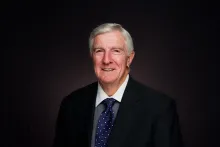
Before his retirement in 2021, Dr. Donald Ward pastored churches in Texas and Louisiana, and taught at Ambassador Bible College in Cincinnati, Ohio. He has also served as chairman of the Council of Elders of the United Church of God. He holds a BS degree; a BA in theology; a MS degree; a doctor’s degree in education from East Texas State University; and has completed 18 hours of graduate theology from SMU.
