
Don Ward
This transcript was generated by AI and may contain errors. It is provided to assist those who may not be able to listen to the message.
The title of our sermon today is Essentials for Taking the Passover. Things you need to understand, things you need to do, be ready to take the Passover. I think one of the things that the Church of God presents to the world that basically no one else does is the historical setting and framework for the plan of salvation and everything that has gone before. And with regard to the Passover, Passover is designed to pay the penalty for sin. Sin entered the universe when Satan began to undermine God's authority and sovereignty, which resulted in him drawing one-third of the angels following Satan in his seductive and deceptive ways. And then, that is, Satan and one-third of the angels trying to take over the throne of God, as described in Isaiah 14. We've read that many times. We are aware of that. That's how sin entered in. His intent, that is, Satan's intent from the very beginning was to try to overthrow God and become the object of worship. And even though Satan failed in his attempt to take over the throne of God, he was cast down and his angels with him, who became demons, he's still obsessed with the goal of breaking prophecy, becoming the object of worship, and for a short time, he will be able to achieve his goal. We see a prophecy here of that in Revelation 13 and verse 8.
Revelation 13, 8, And he, and all that dwell on the earth, shall worship him, all that dwell, all that dwell upon the earth, shall worship him, whose names are not written in the book of the life of the Lamb slain from the foundation of the world. So this is a world-wide deception. That old serpent, Satan the devil, who is deceiving the whole world through the beast's power and the false prophet, deceives the whole world, and really they'll be worshiping Satan the devil. So the need for Passover originated with Satan deceiving Eve into disobeying God, and then Eve presenting it to Adam and Adam willingly going along with it, eating of the tree of the knowledge of good and evil. And that tree, of course, symbolizes taking the prerogative to yourself of determining what is good and what is evil. After Adam and Eve ate of the tree of the knowledge of good and evil, they were cut off from God, and the death penalty was on their head. God had instructed them, told them, that in the day that they ate of the tree of the knowledge of good and evil, they would begin to die. You can read that in Genesis 12, Genesis 2, verses 14 through 17. In the day that you eat thereof, you're going to begin to die.
As we'll remind everyone, and surely we know it, that the wages of sin is death. So Adam and Eve's sin resulted in humanity's need for a Redeemer to buy them back from sin and death. Before God cast out Adam and Eve from the garden, he promised humankind a Redeemer. So let's look now at Genesis 3 and verse 15 here, the promise of a Redeemer, the first Messianic promise in the whole Bible, and there are many others that come after that. In Genesis 3 and verse 15, and I will put enmity between you and the woman, between your seed and her seed, it shall bruise your head, and you shall bruise his heel. So here we have Satan the devil is going to bruise the heel of Jesus Christ. He inspired the crucifixion of Jesus Christ, thinking that he would break prophecy and destroy the plan of God by killing Jesus Christ. He tried to kill Jesus Christ, you remember, after he was born. And then Jesus Christ, of course, is going to bruise Satan's head. He's going to put him away forever and ever, where he will be rendered of non-effect. So there's the first Messianic prophecy. Also note Deuteronomy 18 and verse 15, a great Messianic prophecy that we see there in Deuteronomy 18 and 15.
Moses, the author of what is called the Pentateuch, the first five books of the Old Testament.
In Deuteronomy 18 and verse 15, The Lord your God will raise up unto you a prophet from the midst of you, of your brethren like unto me. Moses was a mediator of the Old Covenant. Jesus Christ is a mediator of the New Covenant. Him shall you hearken, or him shall you listen to. And note the great summary of the Messianic prophecies that are given in Acts chapter 3 beginning in verse 15. We're not going to read all of these verses, but these verses should be read. All of them, Acts chapter 3, we'll read here two or three of these verses in Acts chapter 3 and beginning in verse 15. And of course, here are the apostles. They are preaching and speaking to the Jews at that time, and kill the Prince of life whom God has raised from the dead, whereof you are witnesses. And so they are urged then to repent and to turn unto Jesus Christ, and would come down to verse 22, and we see that prophecy of Deuteronomy 18.15 is repeated here, for Moses truly said unto the fathers of prophet, shall the Lord your God raise up unto you of your brethren like unto me, him shall you hear in all things whatsoever he shall say unto you, and it shall come to pass that every soul, every life, essence which will not hear that prophet shall be destroyed from among the people. Yes, and all the prophets. The next verse, 24, from Samuel and those that follow after as many as have spoken have likewise foretold of these days. There are over 60 messianic prophecies in the Old Testament promising that God would send a savior to redeem humankind, to restore unto them once again access to the tree of life which Adam and Eve squandered away when given the opportunity to partake of the tree of life. And so, as the Apostle Paul writes in Romans 3.23, all of humanity, it says, all have sinned and come short of the glory of God. Romans 3.23, remember in the study of Romans that in chapter one of Romans Paul takes the Gentiles to task, in chapter two he takes the Jews to task. Then he begins to summarize Romans 3 and he says that all have sinned and come short of the glory of God. And he writes in Romans, that is the Apostle Paul, Romans 6.23, the wages of sin is death, but the gift of God is eternal life through Jesus Christ our Lord. So the death penalty is upon all of humankind. And by one man's sin, that is Adam and Eve, sin entered into the world, into the human realm, and thus the need for a redeemer. And the need for the Passover is ever present among all of humanity because it's through partaking of the real Passover, Jesus Christ, who is our Passover. Partaking of that Passover and understanding of it is the only way that we can be redeemed and brought back from the wages of sin, which is death. So the Passover can be equated with freedom. There are two basic types of freedom. One is physical freedom. A lot of people talk about being free today. So there is physical freedom, political freedom, you might call it, and there is spiritual freedom. The Old Covenant Passover freed Israel from slavery in Egypt, but the purpose of it was to symbolize that which was to come, the greater Passover through Jesus Christ. So the Old Covenant symbolized the greater Passover sacrifice that was to come through Jesus Christ. It is through the blood of the Lamb, the blood of the Lamb of God, that we are set free from sin and death. Egypt symbolizes where each one of us was before we were called into God's marvelous light.
We were the slaves of sin, and he has given us the opportunity to be freed from sin and death. We can be freed in every sense of the word. It says in John 8 that, the Son shall make you free, you shall be free indeed. You'll be freed from fear, ignorant, superstition, and the dogmas of man, of freedom that cannot be purchased in terms of gold or silver, but of freedom that only comes through the understanding of the purpose and plan of God. So let's note now the words of the Apostle Paul in Ephesians chapter 2 and verse 1. In Ephesians 2 and verse 1, we've already read that the wages of sin is death. So we'll notice in Ephesians chapter 2 and verse 1 that all of humanity, which we've already quoted also, Romans 3.23, all of sinned and come short of the glory of God. But now we're reading from Ephesians 2, and you hath he quickened, made alive, who were dead in trespasses and sinned. So that is the death in the spiritual sense wherein times pass you walked according to the course of this world, according to the prince of the power of the air, the spirit that now works in the children of disobedience, among whom also we all had our conduct in times past, and the lust of our flesh, fulfilling the desires of the flesh and of the mind, and were by nature the children of wrath, even as others. So all of us have been in spiritual Egypt, and now we're given the opportunity to be translated into the very kingdom of God through repentance and through faith in the sacrifice of Christ, baptism, laying on of hands, to now live the resurrected life, and judgment is now in the house of God. Of course, we'll be explaining some of that in greater detail as we go along. Look at Colossians just forward there a few pages. We have Galatians, Ephesians, Philippians, Colossians, and Colossians chapter 2, verse 13, and you being dead in your sins and the uncircumcision of your flesh hath he quickened made alive together with him having forgiven you all trespasses. So the handwriting of ordinances that was against us in breaking God's immutable spiritual law has now been paid for through the sacrifice of Jesus Christ. And Acts 4, 12 tells us that there is none other name given under heaven whereby men must be saved. No, there are not several avenues to the kingdom of God. There are not several avenues to salvation. When the first Passover was instituted, God instructed the Israelites to kill lambs and sprinkle the blood on the doorposts of their dwellings.
And when God saw the blood, he would pass over that home. Let's rehearse, review a bit of that right now. If we go to Exodus 12, two great benchmarks with regard to the Passover, one being this one of the institution of the first Passover, and that which eventually freed Israel from slavery in Egypt, and then, of course, the institution of the symbols of the new covenant Passover by Jesus Christ and partaking of that. In Exodus 12 and verse 6, And you shall keep it up until the fourteenth, that is, the Lamb without blemish, through the fourteenth day of the month, and the whole assembly of the congregation of Israel shall kill it in the evening, and they shall take the blood and strike it on the two sides, and on the upper doorposts of the houses, wherein they shall eat it.
And so the families would gather together, they would kill the lamb, they would sprinkle the blood on the doorpost, and they shall eat the flesh in that night, and roast it with fire, and unleavened bread, and eat it with unleavened bread, and with bitter herbs shall they eat it. And it goes on giving further instruction there. We pick it up again in verse 13. And the blood shall be to you for a token upon the house where you are, and when I see the blood, we're used to seeing that old Protestant hymn, when I see the blood, I'll pass over you.
And when I see the blood, I will pass over you, and the plague shall not be upon you to destroy you, when I smite the land of Egypt. And this day shall be unto you for a memorial. In other words, a remembrance. You are to remember it, and you shall keep it a feast to the Lord throughout your generations.
And so that continues unto this very day. It is a different passover today. It is not the blood of an unblemished lamb in the physical sense, an animal, but it is the unblemished lamb of God, Jesus Christ. Seven days shall you eat unleavened bread, even the first day you shall put away leaven out of your houses.
For whosoever eats leavened bread from the first day unto the seventh day, that soul shall be cut off from the land of Israel. Now we pick it up further in verse 26, where we actually see the execution of this passover when God did come through the land. In verse 26, And it shall come to pass when your children so shall unto you what mean you by this service, that you shall say it is the sacrifice of the Lord's Passover, who passed over the houses of the children of Israel and Egypt, when he smothed the Egyptians and delivered our houses, and the people bowed the head and worshipped.
And the children of Israel went away and did as the Lord had commanded Moses and Aaron, so did they. And it came to pass that at midnight the Lord the eternal smote all the firstborn in the land of Egypt, from the firstborn of Pharaoh that sat on the throne unto the firstborn of the captive that was in the dungeon, and all the firstborn of cattle. And Pharaoh rose up in the night, and all his servants and all the Egyptians, there was a great cry in Egypt, where there was not a house, where there was not one dead. And so the Passover was vital then to the life of them in the physical sense.
Today the Passover is vital for us in the spiritual sense. Today the blood of Christ must be sprinkled on our hearts. Let's notice Hebrews now, Hebrews chapter 10. Beginning now the spiritual application, we have read the physical part, which was symbolic of that, which was to come through Jesus Christ. In Hebrews chapter 10, and beginning in verse 19 in this case, and having therefore, brethren, boldest to enter into the holiest by the blood of Jesus. What does that mean? Enter into the holiest. We can now come boldly before the throne of God into the very holy of holiest and make our wants and petitions known to God.
Under the terms of the Old Covenant, the high priest could go into the holiest of all on one day of the year, on the day of atonement. Now we have 24-7 access to the very throne of God. Holiest of all by. How do you get in there? He carried the blood of the goat. Today the blood of Jesus has been carried into the holiest of all in the heavens. By new and living way which he hath consecrated for us through the veil, that is to say his flesh.
Of course, you can look at this from a Du Bois-Antonre point of view of double. That is, there was a veil before the holiest of all. And now that veil upon the death of Jesus Christ, that veil was rent from top to bottom, giving access to the very throne of God. And that is to say through his flesh, that through the death of Jesus Christ, we now have access into the holiest of all.
And having a high priest over the house of God, let us draw near with a true heart in full assurance of faith, having our hearts sprinkled.
See, they sprinkle blood on the doorposts. Today we sprinkle blood on our hearts, having our hearts sprinkle from an evil conscience and our bodies watch with pure water. The word conscience means a knowing within. Through the word of God, we can have a new knowing within. We can know for sure what is good and what is evil. And we can put away that which is evil through repentance. Through repentance and exercising faith in the sacrifice of Christ, we can be purged of sin. And by eating the unleavened bread of sincerity and truth, we can ingest the very mind of God in Christ. Remember what Christ speaks in John 6.63, the flesh profits nothing. It is the spirit that quickens the words I speak. They are spirit and they are life. So with that overview, let's now focus on the absolute essentials for eating and drinking the Passover. The four great essentials are, and this is not an all-inclusive list. You heard many things in the first sermon that surely you need to take heed to. And some of this, of course, will be duplicated here. But we need to be reminded in so many different ways. First, you must discern the physical body and life of Christ that was given for your sins. The Son of God died for your sins. He poured out His life essence for you and for all of humanity. He paid the ultimate price for sin. No greater gift can anyone give than to lay down his life. And Jesus Christ laid down His life for us. He who knew no sin became sin for us that we might be reconciled to God the Father. I think oftentimes we maybe pass over that and don't realize so that we can be reconciled to the Father. Perhaps we'll read from Romans 5 about that a little later. Secondly, you must be reconciled to God in Christ.
Come before them. Repent of your sins. And then third, you must be reconciled to your brothers and sisters in Christ, as you heard in the first message. And then there is this quality that goes or this essential, I would say, that goes with this of being reconciled to God in Christ. You need to be reconciled fourthly to the spiritual body of Christ and each member of the body of Christ.
So this means we have to put sin out before we take the Passover. You don't take the Passover in your sins. From the essentials we enumerated, it means that we should come to Passover having repented of our sins and being reconciled to God, reconciled to Christ and each member of the body of Christ so we can take the Passover in full assurance that we are taking it as Christ commanded it. Now this is reinforced, I would say, by let's look at 1 Corinthians 5 verse 7. 1 Corinthians chapter 5 verse 7. You remember that the problem in Corinthians, or among the Corinthians as described in chapter 5, had to do with an incestuous fornicator, a person who evidently was having sexual relations with his father's wife, apparently a second wife. I'm not sure about that.
We come now to 1 Corinthians 5. Paul is telling them, purge out therefore the old leaven that you may be a new lump. And here he's talking about the leaven of sin and wickedness. As you are unleavened, as you are unleavened, it seems like almost like a contradiction, as you are unleavened, meaning that it's easy to put out the physical leavening that you can trace down.
But the most important thing is to purge out the old leaven of sin and wickedness, that you may be a new lump, as you are unleavened, for even Christ our Passover is sacrificed for us. Therefore, let us keep the feast, not with old leaven, neither with the leaven of malice and wickedness, but with the unleavened bread of sincerity and truth. So then the unleavened bread representing the Word of God, the unleavened bread of sincerity and truth. John 17, 17, your Word is truth. So, as you note, these overlap each other.
In application, you can't have one without the other. For one to be reconciled to God, you have to be convicted of sin, repent of sin, exercise faith in the sacrifice of Christ, be baptized, receive the Holy Spirit. Repentance, obedience, faith are all linked together. What do I mean by linked together? In this case, I mean you can't have one without the other. You can't have repentance without obedience, and you can't have obedience without repentance, and you can't have faith unless you're willing to obey. They are all inextricably linked together. The process of reconciliation consists of doing the weightier matters of the law. If we go to Matthew 23, 23, and we see the weightier matters of the law. Notice it is the weightier matters of what? The law. The weightier matters of the law, as summarized basically by the Ten Commandments. Woe unto you scribes, Pharisees, hypocrites, for you pay tithe of men, anis, and coming, and have omitted the weightier matters of the law. Judgment, mercy, and faith. Notice this, that faith is a weightier matter of the law. Judgment is a weightier matter of the law. Mercy is a weightier matter of the law. These ought you to have done, and not to leave, the other undone. See, after the Word of God and the Holy Spirit convicts the person of sin, they have to judge themselves. You remember the parable of the Pharisee and the publican that went up in the temple to pray? The Pharisee praised himself. Thank God he was not like this poor publican, and he enumerated his so-called good works. And then the publican, not so much as lifting up his eyes to heaven, said, Lord, have mercy on me, a sinner. He judged himself.
And then it says in the scripture that, saying to you that this man went down to his house, justified. So to judge oneself. Now, after you judge yourself and you are convicted of your sin, then that's one step. Then it goes to the faith and the sacrifice of Christ, of crying out for God's mercy and for his forgiveness. And the scripture says that he is faithful and just to forgive us of all unrighteousness when we repent. So the exercising of judgment, mercy, and faith is one of the greatest themes of the Bible, and it is overlooked. I appointed that out many times for many years. We want to turn once again to Micah 6 and verse 8. Micah 6 and verse 8 is somewhat a summary of what we've just read here in Matthew 23 verse 23. And in fact, Micah 6 and verse 8 is the foundational scripture for Matthew 23, 23. So in Micah chapter 6 and verse 8, he has showed you, O man, what is good and what does the Lord require of you? A lot of people just say, oh, tell me what to do and I'll do it. So what is required? And it tells you here to do justly, and you can't do justly without exercising right judgment, to love mercy and to walk humbly, which would in essence the same as saying, to walk in faith, to do justly, to love mercy and to walk humbly with your God. And in fact, the failure of Israel to exercise judgment, mercy and faith was one of the reasons why they went into captivity. This is oftentimes overlooked. Look at Zechariah chapter 6, Zechariah chapter 7. Zechariah chapter 7.
Verse 8, and the word of the Lord came unto Zechariah, saying, Thus speaks the Lord of hosts, saying, Execute true judgment, show mercy, and compassion every man to his brother. Oppress not the widow nor the fatherless, the stranger nor the poor. Let none of you imagine evil against his brother in your heart. They refused to hearken. They didn't listen. They didn't take it to heart. They didn't repent. They pulled away their shoulders, stopped their ears. They should not hear. Yes, they made their hearts as adamant stone, lest they should hear the law and the words which the Lord of hosts had sent in his spirit by the prophets. Therefore came a wrath from the Lord of hosts.
And so they were taken into captivity, as it goes on to say in this chapter. Just showing you, even historically, actually it started in the Garden of Eden, right after the Garden of Eden, with Cain and Abel, where Cain killed Abel when God came looking for Cain and found him and asked him, where's your brother, Abel? And Cain gave the response that was quite disrespectful. What? Am I my brother's keeper? And the resounding answer from Genesis Revelation is, yes. Yes, you are your brother's keeper.
True repentance and reconciliation with God requires giving up self and being led by the word and spirit of God, which can broadly be summarized by what I call the three S's. Surrender, submission, and service.
The baptismal chapter, in essence, covers this, and this is what we all agreed to do. Let's turn to Romans 6, what we call the baptism chapter. Romans chapter 6. What shall we say then, shall we continue in sin, that grace may abound? Of course, Paul is combating the notion that some had that you are saved by grace only in that you're axiomatically saved by God's grace and not including all of the requirements of repentance and faith. And baptism.
Notice his answer. What shall we say then, shall we continue in sin, that grace may abound? God didn't send Christ to save us in our sins. He sent Christ to save us out of our sins. God forbid, how shall we that are dead to sin live any longer therein? No, you not, that so many as us that were baptized into Jesus Christ were baptized unto his death. That's what it symbolizes, crucifying the old man. Therefore, we're bared with him by baptism into death, the old man, that like as Christ was raised up from the dead by the glory of the Father, even so also should we walk in newness of life. So we come up out of the baptismal waters to be a new person. For if we have been planted together in the likeness of his death, we shall be also in the likeness of his resurrection. Spirit being a new person. Of course, we won't be literally spirit beings until the resurrection, but we have a new knowing within, a new conscience. Knowing this, that our old man is crucified with him, that the body of sin might be destroyed, and henceforth we should not serve sin. For he that is dead, that old man is freed from sin. He's freed from the death penalty, and now he's free to live the righteous life. Verse 13, neither yield your members as instruments of unrighteousness unto sin, but yield yourselves to God as those that are alive from the dead and your members as instruments of righteousness unto God. For sin shall not have dominion over you, for you are not under the law, but under grace. By not under the law means you're not under the death penalty anymore. Your sins have been blotted out, but there was a requirement for those sins to be blotted out. Repentance, faith in the sacrifice of Christ, baptism. What then shall we say? Shall we sin because we're not under the law, but under grace? God forbid!
See, the law is still in effect. Know you not that to whom you yield yourself servants to obey. His servants you are whom you obey, whether of sin unto death or of obedience unto righteousness.
Now let's examine the specific instructions that Paul gave for taking the Passover. You know, the instructions for taking the Passover are about 2,000 years old, and if we go back to that first Passover, which was circa 1420 BC, something like that, then we see that Passover has been a topic, an item historically for 3,500 years, circa give or take a little. And essentially what Paul told the Corinthians 2,000 years ago is what we're telling people today, because it is the Word of God. So in 1 Corinthians 11 and verse 17, there's an abrupt change here in 1 Corinthians 11.
Verse 17, Paul begins to talk about the Passover. 1 Corinthians 11 verse 17.
Now in this that I declare unto you, I praise you not that you come together not for the better, but for the worse. For first of all, when you come together in the church, I hear that there be divisions among you. I partly believe it. For there must also be heresies, divisions among you, that they which are approved may be made manifest unto you. When you come together therefore into one place, this is not to eat the Lord's Supper, evidently referring to love feast. And love feasts are mentioned in 2 Peter 2.13 and Jude 1.12, where brethren would come together and have a feast. But a Passover is different from a love feast. A Passover is not the Lord's Supper. For in eating, everyone takes before his own Supper. One is hungry and another is drunken. So they were bringing food and also wine, alcohol, and they were faring sumptuously eating, drinking. Some got drunk even before taking the Passover symbols, evidently. What have you not houses to eat and drink in or despise you, the Church of God, and shame them that have not? See, that has to do with having the same love, care, and concern for one another, as we heard read in the first sermon in 1 Corinthians 12, verses 25-26 along in there, to have the same love, care, and concern one for another.
What shall I say to you? Shall I praise you in this? I praise you not. Now the instructions begin.
The essentials, according to Paul, who was taught by Jesus Christ for the Passover, I have received of the Lord, that which also I delivered unto you, that the Lord Jesus, the same night in which he was betrayed, took bread. And of course, we could read this from the Gospels as well. And when he had given thanks, he broke it and said, Take eat. This is my body, which is broken for you. This do in remembrance of me. Now this word, remembrance, is katangeloh. It means to announce, to declare, to make known the Lord's death. This do in remembrance of me. In other words, you ought to know what was required in order to keep the Passover. It required the death of Jesus Christ. This do in remembrance of me. Remember the word memorial that we read back in Exodus 12? For as often as you eat this bread and drink this cup, what do you do? You show the Lord's death till he comes. Therefore whosoever shall eat this bread and drink this cup of the Lord unworthily. Every year for about 30 years, I have paused here with the word unworthily. The Greek word is anaxios, a-n-a-x-i-o-u-s, and it means irreverently.
There's no one worthy enough to take the Passover. Not you, not I, not anyone, is worthy to take the Passover. We are all sinners, but when we come to the Passover, God can and Christ can view us as sinless if we have taken the necessary steps for taking the Passover as instructed from the Scripture. What were the Corinthians doing? They were taking the Passover irreverently. They were eating, drinking. They weren't having respect for one another. Some ate and fared sumptuously. Some did without, and they created division in the church.
Wherefore, whosoever shall eat this bread and drink this cup of the Lord irreverently shall be guilty of the body and blood of the Lord. You're not showing respect for the body, the literal physical body that was given, nor the spiritual body, the church of God. Where does Christ dwell today? Well, God the Father and Jesus Christ dwells in each one of us.
But let a man examine himself. The Greek word here for examine is dokemazo. It means to test, to prove, to scrutinize, to see whether or not a thing is genuine, as you might examine a gem.
Doki-mazo, let a person examine himself, so you discern the physical body of Christ that was buried, that was bruised and beaten and broken for your sins. In short, you must recognize that Jesus died for your sins, and apart from faith in his sacrifice, you would still be in your sins and without hope of eternal life. So, once again, the word unworthily means irreverently. For years, some church members labored under the assumption they had to be worthy enough to take the Passover. As we've already noted, no person is worthy enough to take the Passover. But each person can take the Passover in the manner that Paul prescribes and describes in these verses.
Paul warns them not to take the Passover irreverently because they had been doing just that, as we have seen from the context. So, in view of these divisive practices they had developed in Corinth, Paul said, one, when you eat and drink the Passover, do it in remembrance of me. You're remembering what it took to be there. That is the sacrifice of Jesus Christ.
To eat and drink without showing regard and understanding of the solemn significance of the event is to be guilty of the blood and body of Jesus Christ. It's not to be taken lightly. In verse 28 we see that we have to examine ourselves, but let a man examine himself.
So, a person has to examine himself. Then let him eat and drink of that cup. For he that eats, verse 29, eats and drinks unworthily irreverently, eats and drinks judgment to himself, not discerning the Lord's body.
This verse here, verse 29, where he eats and drinks damnation or judgment. The word for, the Greek word for judgment here or damnation is crema. K-R-I-M-A. Since he does not discern. Now listen to this. What is the Greek word that is translated discern? It is diacrino. What does diacrino mean? Thorough judgment.
If we talk about diameter of a circle, we talk about all the way through. So diacrino means all the way through judgment.
Considering every factor, that is the physical body of Christ, the spiritual body of Christ, reconciled to God in Christ, reconciled to the brother, not taking it irreverently. In the case, if he does not discern it, then God says, as we'll read in just a moment, he will step in and judge. So let's read 29, all of it. For he that eats and drinks irreverently, eats and drinks crema, judgment to himself, not diacrino, thorough judgment, not thoroughly judging the Lord's body. And the Lord's body, of course, consists of the physical body that Jesus Christ gave his blood and body, and it also consists of the church. We are the body of Christ, and if we fail to be reconciled with God and Christ and each member of the body of Christ, we are setting ourselves up to be judged by God. He will judge us. As I've said so many times, God would rather see us dead than to see us miss out on his kingdom. So he will step in. Verse 30, For this cause many are weak and sickly among you, and some many are dead. Why? Because they did not diacrino, thoroughly judge the body of Christ.
Of course, we could extend this to also including the Word of God, because the unleavened bread of sincerity and truth that we're to eat of that unleavened bread of sincerity and truth.
And the unleavened bread of sincerity and truth provides communion with God and Christ. Let me say that again. The unleavened bread of sincerity and truth, which is the Word of God, provides communion with God and Christ.
So we go now to 1 Corinthians 15. 1 Corinthians 15. I'm not 1 Corinthians 15. I want 2 Corinthians chapter 5.
And 2 Corinthians... And that's not what I want to eat out. I want 1 Corinthians chapter 10. In 1 Corinthians chapter 10.
Once again, what am I saying?
The literal body of Christ must be discerned. The Church of God must be discerned, reconciled to God, to Christ, each member of the body of Christ. And for that matter, the world extended. And then keeping the feast with the unleavened bread of sincerity and truth.
The unleavened bread of sincerity and truth, once again, provides communion with God and Christ. Why? Because the words I speak, their spirit and their life, God is spirit. So look, 1 Corinthians 10 and verse 15. I speak as the wise men judge you what I say. The cup of blessing which we bless, is it not the communion of the blood of Christ? The bread which we break, is it not the communion of the body of Christ? The communion of the body of Christ? We'll read it again. The cup of blessing which we bless, is it not the communion of the blood of Christ? The bread we break, which is which break, is it not the communion of the body of Christ?
This word communion here has to do with fellowship, with intimate relationship.
And then we continue to the next verse. For we being many are one bread and one body, for we are all partakers of that one bread. We're partakers of the word of God and Christ, and we are partakers of that one spirit, the Spirit of God, which binds us together in unity. So, brethren, I hope that we here have covered the essentials. We see that the Corinthians were not discerning the body of Christ. We will discern the body of Christ. We will be reconciled to God and Christ, each member of the body of Christ. And we will be able to take the Passover in faith and full assurance that we have come to the Passover, having our sins passed over. And now we take these symbols, showing that we understand what was necessary for us to sit and drink the Lord's Passover and eat of that unleavened bread of sincerity and truth.
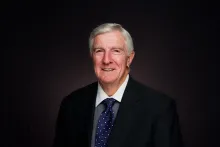
Before his retirement in 2021, Dr. Donald Ward pastored churches in Texas and Louisiana, and taught at Ambassador Bible College in Cincinnati, Ohio. He has also served as chairman of the Council of Elders of the United Church of God. He holds a BS degree; a BA in theology; a MS degree; a doctor’s degree in education from East Texas State University; and has completed 18 hours of graduate theology from SMU.
