

Robin S Webber
This transcript was generated by AI and may contain errors. It is provided to assist those who may not be able to listen to the message.
Did want to mention that we did have a really wonderful past week with Thanksgiving. We really had a blessing, and it is a blessing. When I mentioned this, I realized that time is incredibly how blessed we are, and sometimes things that others would long for. Sometimes you have things that others don't have, and others have things that you don't have. That's just kind of the mix of life. But we really had a nice week. We were able to take a couple of our grandchildren last Saturday night and bring them out, and to enjoy them on Sunday and Monday. That's the younger brood, because our grandchildren go from age 17 down to 2. So we kind of picked them according to year span, etc. It tends to work out better. And we had a wonderful time. Got to mention something to you that's just off the track, is that how many of you have ever been to the San Jacinto Wildlife Refuge?
How many want to go? No, anyway, that you've never been there. You should go there sometime. It's just utterly marvelous. How many have been to Nuevo? How many of you know where Nuevo is?
Okay. Is that how many of you know where the Ramon Expressway is? Going to the cow country?
Okay, yeah, that's Nuevo. Okay, got it. No, the smells wake you up. And they actually have a set aside of 8,000 acres back there. And what they do, because the San Jacinto River is now either dry or dammed up in the mountains, they've created all of this marshland. They have about 18 to 19 ponds. And by ponds, I mean, there are many of them are like lakes. And so it's a massive flyway, and you're just out there in the plains, and you've got the mountains rising above you. You've got the wind whispering through the trees and the bull rushes. And you have all the different kind of birds, and there's woods in there.
And it's just the neatest place to go and just to enjoy God's nature. So you might think about that sometime. And it's really beautiful. And if you want to know, just come up and see me afterwards, because Susan and I just really enjoy going up and out there. We used to enjoy going up to the Santa Rosa Plateau up above Murietta, but over the last five years, it hasn't been raining a lot, so the lakes have not been full up there. That's a whole another story if you've never been up there. You know, being in Los Angeles area, other than the Richardson's and a few others, you know, that live in the wilderness, is that, you know, it's not too far.
You just have to be creative and think and to get out and to be able to hear the voice of God through the wind and see the trees, etc., etc. Normally, when we talk about Thanksgiving, you know, we have the big meal, and we did have the big meal the other day, and so a lot of it tends to be leftover in our freezers and our refrigerators, and we even sometimes turn some of it into turkey popsicles, whatever we can do with the turkey.
And so we're going to kind of do that today. We're going to kind of keep on going off of Thanksgiving, and I've reordered a message that I gave last year in Los Angeles, and I want to bring it to you because I think it's kind of one of the most important messages that you can give, because here we are in America, and to think that, you know, we come together and we have this family tradition, and there is a lot of family in Thanksgiving, obviously, of being with those that we love and those that we invite into our house, and we have the bountiful food, and almost sometimes do I dare say the gluttonous food, there's just so much on the table, and of course on that day we try not to refuse, you know, we eat it, eat, eat, and eat, but that's not really how Thanksgiving started.
And I kind of want to go back to some of the roots of Thanksgiving, being a being a old history teacher and a history major, and still a history buff, and kind of acquaint some of you, because some of you, I think the younger people, and we're all young at heart here today, there's some really big lessons that come about, and I wasn't quite sure what I was going to speak about today until a couple of days ago, when our oldest grandson came to the door, and he came with a little Indian headband around his head, and he had one feather, and I said, hi Squanto, he says no my name is Mason, it's five and a half.
I said, no today you're going to be Squanto, and we're going to talk about Squanto today, and we're going to talk about you, and we're going to talk about me, and we're going to talk about God, and how God raises up people and inserts them into the lives of others, and sometimes people that have had challenges, just like we heard about ancient Israel being in slavery. And I really appreciate it, your message, Stephen, because even what you mentioned in the 1863 proclamation of Lincoln, we need to recognize that he issued that just a couple of months after Gettysburg, after one of the great battles on the North American continent, in which thousands of people died, and the nation was held in the balance for three days before July 4th, 1863, that after that, after so much loss and after so much devastation for two and a half years, he offers a proclamation of Thanksgiving.
And that's the title of my message today, and you might want to jot it down just so that you can stay with me in this brief amount of time that I have to share with you, and it's called Thanksgiving, forged in adversity. Oftentimes, today with Thanksgiving, we have Thanksgiving Day, and we have it forged in bounty. We have it forged in what comes from Sam's Club or Costco or Stater Brothers or etc., etc., etc., and it's all out on the table like a horn of plenty.
And it's very easy to be thankful, then move on and feast and feast and feast, and I love Thanksgiving being a feast. Please don't mistake me. But when we look at the Scriptures and when we look at our own history and the forefathers, of which they were called first before they were called pilgrims, their Thanksgiving was forged in adversity, and a very special person came along who frankly was not only a lifesaver but lives, plural, savor. But before that, train me if you would in Psalm 33.
In Psalm 33, let's go to the Psalms and let's notice something that our God mentions to us in Psalm 33 and verse 12. It says, blessed. Blessed is the nation whose God is the Lord, and the people he has chosen as his own inheritance. The Lord looks from heaven and he sees all the sons of men.
From the place of his dwelling he looks on all of the inhabitants of the earth. Then notice verse 15, interesting. He fashions their hearts individually and he considers all of their works.
This message is going to build upon how God fashions our hearts through various circumstances that we would never chart or perhaps even desire ourselves but to his glory, to his honor, and to help others. America has always been an exceptional nation. But again, as was brought out by Stephen in the very first message, a fine message, it's not because of Yankee ingenuity and it's not because of us. It's not because of our racial or ethnic quilt that comes together. It's not just simply because of Epler plus Unum to use the Latin from any one. It's because of an exceptional God.
And he has done with America over the centuries that it might be to his glory and his honor as he reached down and has touched our people more than once miraculously. You might want to jot this down.
I'm going to mention a book to you and it's just coming out this week. It's by the radio talk show host Michael Medved, if you've ever heard that name or listened to his show. And if you listen to his show, he is an educator. He is an Orthodox Jew. But he loves America, and frankly, he loves America having been a Christian nation because it makes it possible for his people and his religion to exist.
But he just wrote a book. It's called The American Miracle. Please jot it down. The American Miracle.
And the subtitle underneath that is, Divine Providence in the Rise of the Republic.
And he's going to use many examples that we've used for six years back, from the plain truth, to the good news, to beyond the day, the different ways that God, who is uncreated, reaches down into time and space to make his will happen and to bless people. Now, we know that, in a sense, that a portion of our nation was founded by eight religious people, and we're going to touch upon this. And our currency, our coins that are in our pockets, say, in God we trust.
In God we trust. It's just minted in there. But here's the big question, and it is simply this.
What happens when there are no coins in our pocket? What happens when we don't see the guy on the white horse coming over the hill immediately? Do we, will we, trust God in our lives?
With that thought, join me again, pivotal verse, 1 Thessalonians. Join me in 1 Thessalonians 5, because here is a task. God gives you and me on this Sabbath day, here in Redlands, through his Scripture, he gives us an action item to incorporate. 1 Thessalonians 5.
Verse 18. Notice what it says. Get ready. I have to warn you, I'm going to have to put on your seatbelts on this one. In everything, give thanks. In everything, give thanks, for this is the will of God in Christ Jesus for you.
And what's very interesting is what follows in verse 19. And don't quench, notice the Spirit.
God's Spirit, and it is a challenge, but it is an action item, must learn to flow consistently, both through adversity as well as prosperity.
It's very easy to do it when we're feeling prosperous, and we know that we're prosperous, at least physically, financially, health-wise. But what happens when there is adversity? Again, let's build the case scripturally, okay? Join me if you would, just a few pages over in the book of Colossians. In the book of Colossians, Philippians Colossians, and let's pick up the thought in verse 12. Let's just read this through and allow the words to kind of fall upon you for a moment. Therefore, as the elect of God, so we're talking to you, we're talking to me, we're talking to the spiritual Israel of God. Therefore, as the elect of God, holy and beloved, put on tender mercies kindness, humility, meekness, long suffering, and bearing with one another and forgiving one another. If anyone has a complaint against another, even as Christ forgave you, so you also must do. But above all of these things, put on love, which is the bond of perfection.
Now we're going to drink in verse 15. Get ready. This is what we want to center on.
And let the peace of God rule in your hearts to which also you are called in one body.
And be thankful. Be thankful. What we begin to see is that peace that might rule our heart is directly tied to being thankful. Same paragraph. And let the word of Christ dwell in you richly in all wisdom, teaching and admonishing one another in psalms and hymns and spiritual songs, singing with grace in your heart to the Lord. And whatever you do in word or deed, do all in the name of the Lord Jesus, notice again, giving thanks to God the Father through him.
So when we look at this example, we see what we may call a set of double thanks.
And that peace is inextricably tied to peace. That peace that passes all understanding. Join me if you would in Philippians 4. We're building a scriptural foundation. Then I'm going to tell you a story in Philippians 4. We pick up the thought in verse 6. Be anxious for nothing.
Now, with an audience this big today with about 39 people here, maybe 40, I know somebody out there has butterflies today. I'm not just talking about on your exterior. I'm talking about in your heart.
I'm talking about down in your knees where maybe some things are happening that are unsettling.
Be anxious for nothing. You mean nothing? Nothing. But in everything by prayer and supplication, with thanksgiving, with thanksgiving, let your request be made known to God. And notice, and the peace of God, which surpasses all understanding. Let's bring that down into low common denominator, Anglo-Saxon. Better than the facts on the ground. And the peace of God, which is better than the facts that are on the ground and in the moment, will guard your hearts and mind through Christ Jesus. So we see this. We see these verses. We're to be thankful in all sorts of circumstances. Now, does that just kind of come down like in the fairy dust from heaven up above? Peace. And y'all, I feel so good now. No. God says, blessed are the peacemakers.
So God has His part in this, but we also have to have our part in this. And a part of this, then, are you ready, is simply this, that we need to learn to be thankful, even in adversity.
And that is not humanly possible up and by itself. And so that's why we want to talk about thanksgiving forged in adversity. And I want to go right back now to the story dealing with our forefathers, those that were first here. And I want to deal with the story of the pilgrims.
You with me? We're going to bring in the Native American Squanto, and we're also going to be there. We're all going to kind of mix it up and understand all of these lessons together.
Can you imagine one person after the pilgrims come? And let's just talk about the pilgrims for a moment. What happened to the pilgrims? Many of us know the story, but some of our younger ones may not. You know, the pilgrims had gone from England, then they'd gone to Holland, and then the kids were losing their language being in Holland, so they went back to England. And then finally, they indentured themselves to an enterprise in which they would go forward, indentured over to this country. They would cross the pond, and that they would serve off that indenture hood for a number of years, because they felt it was so important that they serve God, unhindered from a state church. We often hear of the Anglicans or the Church of England, then we often hear of the Puritans in the story of England in the 1600s. The pilgrims were actually set aside from the Puritans. They were called Separatists. They felt that they were a chosen people of God. In fact, guess what? They didn't call themselves pilgrims. We call them pilgrims today because of Daniel Webster's story in 1820 at the 200th dedication of the rock, Plymouth Rock. And it's Daniel Webster that pegged them with the name, but they didn't call themselves a pilgrim. No, that's John Wayne, right? No, they called themselves, their language for one another, they called themselves the Saints.
They felt they were a separate people. They felt that they were going to a promised land, and they felt that Jehovah was going to go before them and open the way. Now, the only problem is that they were going to Virginia because that's where most of the British action was at this time in North America. But remember, they came over in the fall and they got sidelined and pushed into what we now call Massachusetts Bay with Cape Cod curving around. Now, what is very interesting in all of this, then, is that they landed. They landed in land, and the first bit of land that they landed in, and some of you have maybe been there at the tip of the Cape, it's called Provincetown. Today it's called Peatown, and that that's where they landed because they thought it was providential. They called it Province. But then they were on board the Mayflower, which was an old wine ship that they'd hired out. That had to be interesting down in the hall, and that they were there in Massachusetts Bay in the heart of winter when they started to build Plymouth Plantation.
What's very interesting in all of this is to understand what occurred here was that, as they came over, there were 102 original passengers. They were called—you might want to jot this down—they were called the Saints. The passengers were called the Saints, but there were also the strangers. That was the crew. Those were the soldiers that had been hired to protect them in this new land going over. So, one of the great books about the Pilgrims it's called, you might want to jot this down and look at it yourself, it's called The Saints and Strangers.
And it was a very uncommon, almost unholy alliance when you recognize what Elizabethan England was like. And so there they were. Now, out of that, there were in that Mayflower boat, there were 102 Mayflower passengers. But by the time that they started to settle Plymouth, four had died, just 102. So let's look at the audience here for a moment. Let's just look around.
So maybe three times as many people that are in this room, that was all the Pilgrims.
It was not the size of Moreno Valley, it's not the size of Redlands. That was it. And remember, when they landed, there was no rope tossed out to them, right? In the landing. Because there was no one to toss the rope. And there was no one to toss the rope because there was no pier to toss it from. In fact, there was not even a 7-11 there for them to grab a hot dog on their way into the woods. That's what it was. It was like Israel going over a crossing river, crossing an ocean.
And out of that group, when you look at it, out of the original 102, by the summer of 1621, there were another 46 deaths just amongst the passengers. So half of the Saints died, as well as 25 of the crew died. And after the general sickness, only 12 of 26 men with families and four of the 12 single men and the boys had survived. Unbelievable. And yet they had a perseverance. But here's the rest of the story. Here are these Englishmen that were basically merchants. They were professional people. Very few from that part of England, where they came from, especially this group of separatists, none of them were farmers. None of them were farmers.
So basically, once they land, and they're trying to start a homestead in December on the banks of New England in the marshes, they don't know how to farm. It's freezing cold, and they're basically evaporating away in death. And out of the woods, out of the woods, comes an Indian, Native American, if we want to be politically correct, Native American, and he comes out of the woods, and he's speaking English. You think of the odds, because remember, the pilgrims were supposed to go to Virginia, because that's where all the action was, down by Jamestown, right? And they land in what we call Massachusetts today. They're starving. They don't know what to do. They're very faithful. They're going to hang in under death, very Christian of them, because they feel Jehovah is leading them into this wilderness. And out of the woods comes a Native American speaking English. How often does God reach down in a human history and act? We have an exceptional God, but it didn't just happen overnight. Now, just to let you know, how often have you been at the airport, and you're about to travel, and or you're on the airline, somebody's sent by, and you say, you know, if you really want to talk to somebody in the airline, because sometimes when you're in a seat and you start talking, they don't stop talking for four hours. So you have to kind of figure out how much you want to talk on an airline when you're tired or you're doing business.
But how often have we sometimes, I've done this, I've said, hey, hi, Riverside, yeah, but I grew up in Pasadena. Oh, I grew up on Hill Street. You know, there's that immediate, you know, there's that immediate bond, or my wife meets somebody from Ohio, you know, I just start, you know, kind of getting this bond thing going. Well, imagine the bond that was needed, that when everything is going down, here comes a Native American out of the woods. Okay, are you with me?
Speaking English? Now, but that didn't just happen. There was something that Squanto had to go through, and I want to share something with you for a moment.
Squanto was of the Paduxet Band of the Wanapag tribe, and he was born about 1580. We're in 1620 with the pilgrim, so about 40 years before, he was born in 1580. And what had happened, he had been kidnapped by English merchants and explorers in 1605. This is 15 years before he'd been kidnapped, and he'd been taken back with four others to England as an exhibition of what might become inhabitants of the British Empire. In that particular set, he was treated well, and ultimately he was released and returned, and that's a blessing. He was able to go back to his home.
But understand, he was forcibly kidnapped. That's not nice. That's not good. I would suggest that's adversity. So he goes back only later to be kidnapped again in 1614 and sold into slavery this time in Spain. Not England, but in Spain. But some friars take pity on him and mercy on him.
They redeem him from the slave traders, and basically, and this has got to be miraculous in itself, he makes his way back up to England to where he becomes an indentured servant to an English lord who has merchant ventures. And what's interesting in all of this, he's picking up English all the time while he's over in England, and he actually goes across the ocean again and again is over in the Nova Scotia area, which is right up above Maine if you know Nova Scotia, and he is so close to home, but he has returned back to England. But after a while, he is taken back and released. So let's get the story here about Squanto. And maybe you've just heard the name Squanto, but to recognize over a course of a decade, he has forcibly kidnapped twice.
That's horrible! Taken away from his home, taken away from all of his culture, and to go over into Europe. But not only that, but when he returns in 1619, he comes back and he finds out that his entire tribe has been decimated by the plague. He's the last man standing in his tribe.
Just one. But sometimes, whether in 1619 or 20 or even today, it just takes one to make a historical difference, or a difference in a family, or a difference at school. And here he is. He has English on his tongue, and he comes out to help all of these people that frankly just don't know what they're doing. They're dying. They don't know how to farm. He teaches them to farm. He teaches them to use fish fertilizer to put on the agrarian field to make it grow. He becomes a guide to them and leads them to a tribe that he had been a part of since he'd come back. He begins to be a negotiator. He begins to become an interpreter. And through that negotiation, he begins to develop trade between the pilgrims and the Indians to where the Indians are trading furs to the pilgrims that then they can send back to England and begin to indenture themselves and pay for their time.
Now, what is very interesting about this is that he came back in 1619. Not 1622, or it might have been too late, but he came back in 1619. And he walked out of those woods, and he spoke English. And what is very interesting is William Bradford, and that's a name that maybe some of you have heard before in Pilgrim Lore.
William Bradford put it this way, speaking about the shepherding that Squanto did for the Saints at the plantation. William Bradford stated this, he was a special instrument of God to us.
And all of us that have grown up in America then know that when you see some pictures that might have depicted what had happened, you will often see the Native Americans there at the table with the pilgrims at that time. My question is simply for this that only you can answer, and it will not be a true or false because I cannot make you believe, but I ask you, is there a God above that reaches down and moves the hearts of men and women to make his purposes stand?
Join me if you would for a moment in Exodus 8, verse 19. God had intervened in Egypt to bring that empire down, and there finally came a point of reasoning amongst the wise men of Pharaoh where they said this to Pharaoh. Then the magicians said to Pharaoh, this is the finger of God, but Pharaoh's heart grew hard, and he did not heed them just as the Lord had said.
Even the pagans of Egypt said this event was the finger of God. My question is just simply this, on this Thanksgiving weekend is simply this, was what Squanto went through going back and forth over the ocean and then being placed on the North American continent again in 1619 and then coming out of the woods speaking English of, you can't make this up, right?
You cannot make this up. And then to, in a sense, be the human savior to be able to help the pilgrims make it through that first winter that ultimately would lead to the Thanksgiving Day that all of you and I imbibed of right then. But here's the point.
Here's the point. It came through adversity. Squanto's contribution to the saints and the Plymouth community came through his personal adversity. Stripped of culture, stripped of home, back and forth, kidnapped twice, and losing all of his people. And yet, for that moment in time, I believe, was an instrument of God's hands in securing that Plymouth plantation to move forward.
The pilgrims themselves. Susan and I have been to the Plymouth Plantation. Maybe some of you have, not the original, but the the remodel. And to think what those people went through in their quest to be God's people, to be the saints, they felt that they were the Israel, as it were, of the 17th century, and to go into that frontier and to make Jehovah, as they called them, Jehovah, their literal guide and lead. And going, and then having this Indian come up, and to be able to do that. That's probably not how you and I would have worked it, right? Join me if you would in Isaiah 55.
In Isaiah 55, and let's again notice, because what we would have wanted would have been just smooth cruising for the saints to come across from England, set up Plymouth Plantation, but that's not how it happened.
The birth itself, when you think of human birth, does not come easy.
And the birth of this nation and this people did not come easy. And Isaiah 55 verse 7, it says, or verse 8, For my thoughts are not your thoughts, nor are your ways my way, say the Lord, for as the heavens are higher than the earth, so are my ways higher than your ways, and my thoughts higher than your thoughts. And when we look at this, we recognize that so often, remember what we mentioned earlier about how God is dealing with the hearts and how He shapes us at times?
And the reason why I'm giving this to all of you right now is maybe today we are having a challenge and we don't fully understand why we are going through this right now. But I'm just basically here to tell you that current events are just simply, and I truly believe this, current events are just simply not the best gauge of understanding what God is doing with you or with others in the future. Things that we're going through right now, again, let's remember Squanto, maybe a name that we haven't thought about from a long time since maybe sixth grade. Squanto kidnapped twice, taken across the ocean twice, comes back. All of his people are dead, but it was setting up this event that he might walk out of those woods, speak English, and to help these poor, entire straits, people, that all they wanted to do is to worship God the way that they had come to understand it. And they felt that they could no longer be in England under the yoke of a national church. And so they laughed as pilgrims.
A pilgrim is an individual, sometimes called a devotee, who is moving and going towards something, be it a shrine or be it a devoted spot, and they're on the move and they have not put down roots.
And those are pilgrims. But pilgrims are not only those people that wear the funny shoes with the buckles and have the broad hats and the gray and the black and the white colors, with muskets holding a turkey. You and I are pilgrims today. And not everything is going to in that sense, even though we all know that we're headed towards the kingdom of God, and we have a general GPS of Scripture. It doesn't tell us all the twists and the turns. It doesn't tell us about all the personal bumps in the road. It doesn't even tell us who God is going to insert into our lives at time to make the road a little bit smoother and to keep us going.
Stephen today, so I won't belabor the point, Stephen today spoke about Joseph. A marvelous story. Joseph, who kind of got ahead of himself, didn't he, as a young man boasting of his dream?
It's very interesting. The dream never changed. The dream did come true, if you think about it, right? Of his brothers bowing down to him. But it was not in the way that Joseph himself dreamed.
God gave him a dream, but Joseph did not interpret that dream correct. And he noticed later on he would have to interpret another person's dream being Pharaoh. Are you with me? Are we correct?
And to recognize that in the course between those events, he would be sold into slavery by his own family. He would be betrayed by the house of Potiphar, and he would be put in prison.
He would later on then interpret the dream of a Pharaoh, wouldn't he? He'd be pulled out of prison.
He'd make that interpretation. And also, it's interesting, as you mentioned, Stephen, it was during a time it was dealing with food. It was dealing with famine. It was dealing with harvest. And God gave him a point, and he interpreted Pharaoh's dream, and he interpreted correctly. Join me if you would in Genesis 41. Genesis 41.
Let's just take a look here for a second. And let's pick up the thought in verse 53.
Then the seven years of plenty which were in the land of Egypt ended. As Joseph had said, it would happen. And the seven years of famine began to come, as Joseph had said.
And the family was in all lands, but in all the land of Egypt there was bread.
So when all the land of Egypt was famished, the people cried to Pharaoh for bread. And then Pharaoh said to the Egyptians, Go to Joseph! Whatever he says to you, do! And the famine was over all the face of the earth. And Joseph opened all the storehouse, sold to the Egyptians.
And the famine became severe in the land of Egypt. So all the countries came to Joseph in Egypt to buy grain because the famine was severe in all the lands. Joseph, who had been through such adversity, betrayed by his brothers, thrown down a pit, sold into slavery, gets a cushy job working in somebody's house. Potiphar's wife turns on him. Potiphar gets mad at Joseph, has him thrown into the prison. But he even found favor in the prison. Everywhere he went, he grew. Even through adversity, he grew until that time was ripe, until that moment was correct.
When he was called before Pharaoh, and the rest is history. Join me for what in Genesis 15.
In Genesis 50, towards the end of the story, we see something really unique about Joseph.
Genesis 15. Let's pick up the thought in verse 15, please.
When Joseph's brothers saw that their father was dead, this is not in the Bible, this is my paraphrase, they said, uh-oh, uh-oh, we're done in. Dad's gone, and he's still around. When Joseph's brothers saw that their father was dead, they said, perhaps Joseph will hate us and make us actually pay us for all the evil which he did to him.
So they sent messengers to Joseph, saying, before your father died, he commanded, saying, thus you shall say to Joseph, I beg you, please forgive the trespasses of your brother and their sin, for they did evil to you. Now please forgive the trespass of the servants of the God of your father, the servants of the God of your father, and Joseph wept when they spoke to him. Now, notice verse 18. Then his brothers also went and fell down on their faces, and they said, behold, we are your servants. Verse 19, Joseph said to them, do not be afraid, for am I in the place of God? But as for you, you meant evil against me. But God meant it for good, in order to bring it about as it is this day, to save many people alive. Now therefore, don't be afraid.
I will provide for you and your little ones, and he comforted them and spoke kindly to them.
Let's think about this for a moment. Joseph was willing to forgive. Are you with me?
Joseph, if you're wondering, it's absolutely pouring outside right now.
We've got rain, folks. But Joseph was willing to forgive his brothers. I want you to think about this for a moment. Squanto, Squanto came out of the woods and was willing to face those Europeans at that time that had kidnapped him twice. And perhaps, perhaps, I'm not saying this, but perhaps because of the white man's disease, not purposely perpetrated on the Indigenous people, as sometimes is given, but just because the antibodies weren't there, there was a plague that wiped out his tribe. Are you with me? And yet, he came out like a North American Joseph and did good for these people when he could have held vengeance in his heart.
I would suggest that Joseph was a thankful person. I would suggest that Squanto was a thankful person.
Let's think about this as we begin to conclude. Victor Frankel, famous Jewish gentleman that was in World War II, and he was a psychologist, and he's in those concentration camps, and he's analyzing what makes people survive and make it through another day versus those that wilted. Frankel said this. Frankel said this. Those who have a why to live can bear with almost anyhow. Those who have a why to live can bear with almost anyhow. He further said this. Between stimulus and response, there is a space.
In that space is our power to choose our response. Did you hear that? We all know what stimulus and response is. Cause and effect. You push in, I breathe out. That's hopefully okay. There's a response.
And life is what's happening that we haven't planned for, right? Life is what's happening that we haven't planned for. But what Frankel is saying here, because what he saw in those concentration camps, it's like that old phrase, the victory does not go to the strong. It does not, it went to those that had a purpose, that understood what was happening down here below.
How often have we heard many of us for the last 50 or 60 years, there is a purpose that is being worked down here below. Winston Churchill said that. Our ministers have said that.
Winston Churchill, of all people, back in the 30s, like Esquanto, and like the pilgrims, he had what is called the wilderness experience. He'd been a very flamboyant, gigantic personality that had to be whittled down. You know, if we remember what Winston Churchill was like, some of us that are older. The bulldog tenacity. He'd come from the line of Marlborough, the great hero of England back in the 18th century, early 18th century. He was born in a palace, and he thought he knew everything. And then God just put him aside. I think it was God that put him aside in the 1930s. He'd been a lord, admiral, a lord of the admiralty at a very early age.
But God just kind of put him over here, tucked him over on the shelf of history in the early 1930s.
He was out of the vision of everybody. That was good. And what happens sometimes in the adversity that will affect me or Susie or all of you at times? God puts us on a shelf.
He puts us in the wilderness. He does a squanto on us. He does a Joseph on us to prepare us.
If but for a moment in time in this lifetime, much less eternity, as you were speaking about, Stephen, but for a moment of time to come into human play, to be there for somebody, to help somebody, to make a difference, to recognize that the adversity that you and I go through, the lessons that we're learning in life, in our marriage, in our spirituality, on the job, at school, in the neighborhood, in that great battlefield that lies between the two ears of our head, it's for a purpose. Winston Churchill would come to the fore by the end of the 30s.
He nailed it about Hitler. He would become the Prime Minister of England. And then in 1945, most of you know this, after the war, he was immediately voted out the first time. But for that moment in time, he was used of God. I firmly believe that. Squanto, you want to know how much longer Squanto lived after 1620. But for a moment in time, two peoples that had suffered adversity, the pilgrims and Squanto, came together to openly establish as a part, not in Todok, but in part, the fabric of this nation. The fabric of our nation has always been between two cities, and not before. There's always a conflict. The fabric of what makes America comes down to two cities. Plymouth, with its religious background, and Manhattan, with its Dutch mercantile background.
Remember, Wall Street was founded by the Dutch. And it's these two cities to where we... it's very interesting that when you think about America today being prosperous, we can be thankful.
We have metal in our pockets, Manhattan, but with something stamped on it that comes from Plymouth.
And God we trust, even in adversity. Let's take these lessons home. Let's recognize that sometimes when there is a famine that is happening in our life, and I'm not talking about that which is affecting our county, but that which is affecting our hearts and our lives, and if we wonder if God has gone away somewhere to recognize that a lot is happening in the seasons of life.
Ecclesiastes 3, it tells us about the seasons of life. There's a time to sow, there's a time to plant, there's a time to reap, there's a time to laugh. There's a time even to die, and as you know, and I know some chapters are better than others. Something that I could just stay in and not go to the next chapter. Are you with me? Or am I the only one? And yet it's those chapters with adversity that allow us to respond to the action item that God has given us, and that is to be thankful in all things. All of us, in seasons of life, we think of the green of spring, we think of the warmth of summer, we think of the color of the fall, and it is all of those seasons of life that we like to just be on a bench and enjoy and just take it all in. But you know some of the greatest growth in nature and in our human lives, of where God was the master pillar. Much of the growth, and Stephen could probably talk about this more with all of his background, but that much of the growth occurs during the winter. When you don't see any green on the lens, when you don't, there is so much that is going underneath the soil during the winter, and all of us will experience winters of life.
Learn to be thankful for the winter. Give it to God, and recognize, just as He did the Pilgrims with the Squanto, we worship a God that will answer at the right time, and in the right way, and in the right place, and He will never be late. And just think about this. God might be preparing you today, are you with me? Might be preparing you today to be a 21st century Joseph, to be a 21st century Squanto, to walk into the wilderness of somebody else's life, and make a difference.
And where there might be death, there becomes life. Isn't that incredible to think about?
Let's talk about it in the message chat.
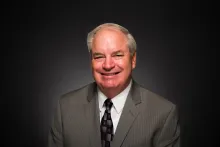
Robin Webber was born in Chicago, Illinois, in 1951, but has lived most of his life in California. He has been a part of the Church of God community since 1963. He attended Ambassador College in Pasadena from 1969-1973. He majored in theology and history.
Mr. Webber's interest remains in the study of history, socio-economics and literature. Over the years, he has offered his services to museums as a docent to share his enthusiasm and passions regarding these areas of expertise.
When time permits, he loves to go mountain biking on nearby ranch land and meet his wife as she hikes toward him.
