

Robin S Webber
This transcript was generated by AI and may contain errors. It is provided to assist those who may not be able to listen to the message.
Well, I'm looking forward to bringing this message to you today. Thanksgiving is always a very, very wonderful time of year and brings a lot of things to mind. And I do hope that each and every one of you had a very meaningful Thanksgiving, which normally means a family gathering. I'd like you to turn, if you would, with me to Psalm 33, verse 12. Psalm 33 and verse 12 to begin this message.
And as we do, I'd also like to welcome those that may be watching with us on the webcast. Glad to have you tune in wherever you might be, and we know that you are there. And welcome! In Psalm 33, as we go there, and let's pick up the thought in verse 12. It says, Blessed is the nation whose God is the Lord, the people he has chosen as his own inheritance.
Initially, that's what Thanksgiving was all about, starting 400 years ago. And I'd like to talk about that a little bit, about what occurred 400 years ago. I realize that this past Thursday, America gathers. It's a holiday. Families come together, multi-generational, time away from work, time to see one another. It becomes a ritual, but a ritual without substance. A ritual without remembering why. Remembering why Thanksgiving came about, and the initial set of characters that it involved. Then it's really for naught. It's just another bash. It's another mega-calorie feast in the course of the year.
It's just simply having the turkey, and the mashed potatoes, and the sweet potatoes, and the biscuits, and the pumpkin pie, and the pecan pie, and everything else that might be your family favorites. It's, if we just do that, and we don't go back, and as the Bible so often reminds us to remember, to remember of how this all started, then we, of all people, are, what do I dare say?
The Bible says, blessed is the nation that God is for. Unless we forget that America is an exceptional nation for simply one reason, and it's not because of Yankee ingenuity. I'm sorry. It's not because of Yankee ingenuity. It's not because of just simply being the melting pot of so many people that have come from so far. It is because of an exceptional God. And America, from the beginning, was molded and developed because God had a purpose and God had a plan.
God had made promises, fulfilled those promises, and even fulfilled the promises to those forefathers that came over, even as they would pray about it, which I'll talk to you about in a moment. The one thing that sometimes we forget in America, especially today in 2015, can we talk, is simply this. We go from having a mega feast, that is the nation at large, we have a mega feast on Thursday, and then most of the nation goes into Black Friday in a feeding frenzy to get.
Sometimes at any cost, as you read the newspapers, of what they can fill their bags and what they can fill their cars for at a price, at a good price. And that's where the nation is today. And we can forget what Thanksgiving is all about. Allow me to share a thought with you, because we're going to make it personal and we're going to bring it up to 2015. Thanksgiving Day was forged through adversity, lest we forget. Thanksgiving initially was not forged through a table full of food, a brim and flowing over.
Thanksgiving, an acknowledgement to God Almighty, came because of what the forefathers came through. These were individuals that were in search of a new hope and a new world and a new way. These were individuals that had gone back and forth between England and Holland and back to England. They had purchased a passage and had actually, in a sense, indentured themselves in a business venture to a merchant company to establish a plantation. But not in Massachusetts. They were planning to go to Virginia.
And sail they did. And they left Plymouth. There was actually another ship that went with them, but I think it was called the Swansea, but it had taken on water or something. They had to put those passengers all on the Mayflower and then had to make that voyage across the Atlantic in the midst of late autumn, in October. And then were set off course because of the challenges that they had on board. That ship was probably only about 100 feet long, maybe a little bit longer. You do the math. You look at this room. This room here is probably more than 100 feet width-wise. And they were on there. It was not designed for commercial passage.
In fact, beings would be given way. There would be barrels going back and forth underneath where the forefathers would be living and trying to live. But if it was not designed for human comfort, it was basically like being put in a U-Haul and crated across the ocean. And on that ship were the saints and the strangers. The saints were what we would come to be known as the forefathers or the pilgrims.
They were separatists from the Church of England that they thought was getting too worldly. And so they set forth to a new land and a new world with a great hope. The others were called the strangers. The strangers were those that they had hired to protect them, hired to help them build what would later on become a plantation.
Not a southern plantation. The word plantation is just where the merchant center would be. We hear about that. We know that they came into Massachusetts Bay, basically looking around. Others had gone by there over the years, but nobody had settled there. And there they were in Massachusetts Bay. Just imagine in October and November how cold it must have been, how wet and cold they were.
And then finally they got on shore and they began to build. These were the original people that established America in that sense. And then we know what that winter must have been like. You can just imagine what winter is like in New England. They were wet, they were cold. Many of the wives died. Many of the wives died because there was no heat. So they laid on top of their children. The children survived, the wives died. Half the colony of saints and strangers died. It was incredible. And that's how America began, at least in that section, in that corner of America. And yet they would come up to that next year and give thanksgiving.
But I'm going to share a story before that because it's an important story to share with you. And it's a verse that we've, frankly, as people of faith, have got to anchor into our hearts and our minds if we are going to spiritually survive. Join me, if you would, in Colossians 3. In Colossians 3, join me there for a moment. Then I'm going to pick up the rest of the story. But I want to anchor you with this thought.
Brethren, I do not just want this to be a passing of minutes. I don't want this just to be a passage of time. I want this to deeply set into us. To be a way forward as Christians, as we go through life together. In Colossians 3, we pick up the thought in verse 12. Therefore, as the elect of God, holy and beloved, put on tender mercies, kindness, humility, meekness, long-suffering, bearing with one another and forgiving one another if anyone has a complaint against another even as Christ forgave you, so also you must do. Not an option. It is an expectation, underlined.
But above all things, put on love, which is the bond of perfection. Consider that about putting on love in a moment, because that's going to be important to the story. And let the peace of God rule in your hearts. Have sovereignty and have reign over not only your emotions, but your motives behind those motions, to which you also were called in one body. And note, and be thankful.
And let the word of Christ dwell in you richly in all wisdom, teaching and admonishing one another in psalms and hymns and spiritual songs, singing with grace in your hearts to the Lord. And notice, in whatever you do in word or deed, notice, do all in the name of the Lord Jesus, giving thanks to God the Father through Him.
You might say that this is the double thanks set of verses. We are to give thanks. My question basically comes, how do we give thanks in the midst of adversity? How do we deal with that? Well, that is the title of this message. Thanksgiving Forged in Adversity. We oftentimes think of how the pilgrims had to move through that first winter in adversity. And then the spring would dawn, and ultimately from that spring would come a harvest, and they would all sit around with the Native Americans, and they'd have the first Thanksgiving.
You're all with me. We know the story. We're there. But I want to share the rest of the story to show you in a sense how God not only moves stars and solar systems and raises up kings and raises up empires to suit His purpose, but at time will raise up an individual. I'd like to share the story of Squanto with you.
How many of you know who Squanto is? Very good! Glad to hear that. But I'm going to share some things that maybe you don't know about Squanto. Because he was a part of that first Thanksgiving. Thanksgiving was about bringing people together, even people that we might consider the others, to be at the same table and to rejoice before God.
We know that the pilgrims were certainly thankful in that November in 1621, but what got them there, and what brought them to that table? You see, there was an Indian, there was a Native American, and he was raised in New England. In fact, he was raised right there in what became Plymouth Plantation. And as I mentioned earlier, the Mayflower was not the first ship that came into Massachusetts Bay. Ships had been coming through there for 15 to 20 years beforehand. They would come in, they would trade, they would barter, they would give the Native Americans, they would give them metal goods, and in turn they would receive pelts, and they would receive beads and trinkets, etc.
There was a bartering that was going on. And the Paltasset tribe was a very friendly tribe. They were perhaps even naive to what the European encounter would entail for them. Because after a while, they gave themselves so much they were taken advantage of. And they began to take those individuals from that tribe, and they would take them and sell them into slavery over in Europe. Squanto was one of them. Squanto was captured and taken in 1608. Now, I want you to follow this story. This is really good. This is incredible. And this will make you believe that there is indeed a God in heaven. Because Squanto, otherwise known as the Squanam, but we call him Squanto, he was taken by the English.
He was taken to Spain. He was sold into servitude in Spain. Thankfully, a bunch of friars bought him and began to work with him. They admired him and they respected him. They knew him to be a sincere man. They released him. And from Spain, remember, are you with me? We started in Massachusetts. We went to Spain. He was with the friars for a while. They released him from servitude from them and he moved up to England.
In England, he worked for a man. That man finally allowed him to go back to North America because he recognized he wanted to go home. Are you with me? So, he was given one-way passage on a ship to North America. He would be an interpreter. That would be the fee for his passage. For the Europeans, he would be an interpreter to the tribes. From England, he went to Nova Scotia. From Nova Scotia, he eventually came down and was dropped off from whence he came, in what we now know today as Massachusetts.
Oh, he was so glad to be home. But when he came home, he recognized that, and came to understand, that his entire tribe had been wiped out. The European encounter had brought diseases, and that entire tribe was wiped out, most likely, by smallpox.
He tried to cozy up to another tribe, and they took him in for a while. But basically, then he went in, he left that tribe, even though they knew of him, and he lived in the woods, by himself. The last man standing... You've heard of the last of the Mohicans? This was the last of the Pothassets. Last man standing, he was in the woods.
Now, stay with me. Are you with me already? From what we now know as Massachusetts, to Spain, to England, to Nova Scotia, back home. No family, no tribe. Nobody that spoke his immediate tongue. No father, no mother. Alone and in the woods. Pilgrims come. It's 1620. They make it through the winter. Now, you think about that. When the Pilgrims came, there was nobody to throw out the rope to them, because actually the ship stayed out, but if they came to shore, there'd be nobody to throw out the rope to them, because there was nobody to throw out the rope.
There'd be no pier for them to stand on to throw out the rope. There would be no boat shop or office to go into to get a nice cup of coffee. There would not even be a McDonald's. There would not even be a Motel 6. There were no lights left on, because there were no lights. They barely made it through the winter. Half of that colony died miserably, but they had a hope. They had a faith. They believed in the God Jehovah. They had this concept of an Israel. They had the concept of crossing not only a river, but an ocean, because they loved their God and they wanted their children to be able to worship God the way that they worshipped.
Many a time, when they were on the Mayflower, they would be dodging the barrels as they came down, back and forth, down the ship, down the bottom of the ship. They'd say, yet, Lord, thou canst save. But they would be pushed all the way to the brim to understand God's saving power. Now, there's 50 people left. There's just the New England woods. Are you with me? Let's look up here for a moment. This is the PowerPoint.
They're on their last gasp, it's spring, and out of the woods comes one man. One man and one man alone. And you're thinking, well, let's do the sign language thing. And he starts speaking English to them. And he's at home. This is his home. This is his woods. This is where he started. This is his homeland. Coincidence? I don't think so. I worship a God that has a design and has a purpose. And he can raise up empires, and he can raise up nations, and he can cause winds to blow, and he can hold back waves.
And he also can plant one man, one individual, all alone who had been through all of that adversity, kidnapped from his people, sold into slavery, back and forth through Europe, comes home, finds out all of his people are dead. He emerges out of the woods in springtime and says, I am Squanto. And he begins to work with the pilgrims. He begins to show them how to fish along the shores. He teaches them some of the American vegetables to plant, like corn to plant.
Like fish. Excuse me, not fish. Corn to plant. Squash to plant. He shows how they work together for those of you that are into agriculture. He shows how you take the fish from the marshes of New England, the dead ones at least, and you use them as fertilizer to allow the plants to grow.
He not only does that, but because of his ability, knowing the languages, knowing English, knowing English, and knowing the different tribes, he becomes an intermediary, an intermediary between our forefathers, the pilgrims, and those tribes. And has an ability through translation, and because of reason of mind and reason of heart, helps the pilgrims at least establish a peace with the local Native American community that will last for 50 years. If Squanto had not been there, perhaps somebody else would have brought somebody else along because God had a purpose for this country, because you and I worship an exceptional God.
And you say, wow, what an incredible story! What a close encounter of the most incredible kind. But it came through adversity. It came through incredible adversity, visited upon the forefathers on the Mayflower, and in that harbor, and on that shore, where half of them died. And it came with incredible adversity upon Squanto, who had basically had his whole life rearranged. But I do sincerely believe that it was in God's hands and for a purpose.
Let's take it a step further, then, and understand something about all of this for you and for me. Was it a coincidence? Again, I don't think so. I remember, and will often reflect to it in the book of Exodus, when at first the wise men could match Moses and Aaron, Miracle for Miracle. Oh, do you want to turn the river my old rat? Watch this. We'll throw in some food coloring. You want to do this? We'll do that. Got a snake? We got other snakes. Back and forth, back and forth. But finally, even the wise men, the wise men said, listen Pharaoh, ram ram, Pharaoh, you don't get it.
This is the finger of God. This is not just coincidence. We are dealing with the divine. Now, I've spoken today already about pilgrims and about Squanto and recognizing a miracle that God orchestrated, I believe, through one man to help settle people into this country. People that were people of faith gave up everything, counted the cost, and nonetheless, not only crossed the Jordan but crossed an ocean. And we're a part of the fabric of the development of this country as we know it today. It is utterly incredible.
And I remember that in studying this, and Susan and I actually saw a program the other night, which was really interesting on this same subject, that the governor of the Plymouth colony knew that it was indeed the hand of God that finally had come to answer. I want to share a verse with you if I could, please. The man that I talk about, the governor, his name was William Bradford. You'll be familiar with that as one of the Pilgrim family names. Join me if you would in Hebrews 11.6, because this is going to be very important for you in the coming days, the coming weeks, and the coming years of your life. It speaks about faith, and I'm so glad to be able to build upon what Lauren brought to us today. But without faith, it is impossible to please him. For he who comes to God must believe that he is, must believe that he is, and that he is rewarder of those who diligently seek him.
My comment to all of us, no matter what we're going through today, in our lives, in our pilgrimage, in our sojourning, in our movement towards the kingdom of God, if we are looking for God, and if we keep our eyes and our hearts open, we will bump into him in his time and in his way. From the time that Squanto was taken in 1608, he did not return until 1618. It was not another day experience. God does not work on our stopwatch. But I believe that he planted that individual, and I realize to the world around us that can sound foolish. But the wisdom of God is foolishness to men. This didn't just happen. I believe this was a miracle to encourage us when we look at our pilgrim forefathers, when we look at even the life of Squanto, who are forever connected together, and our Native American brethren, and those that came over on the European encounter, tied together forever around that festival of thanksgiving, that table of abundance, giving God thanks. Squanto only lived to see that for another year. But it's very interesting that as he lay a dying, he asked William Bradford that he might be committed, as he said, to the English God, and that he also bestowed and left all of his possessions to the English as a testament of his love. Is this what we were talking about around our thanksgiving tables? This Thursday passed. Is this what our youngsters are being taught in schools today? That an indispensable God has moved heaven and earth to fulfill his promises to Abraham, and that America was raised today, at this time, not due to Yankee ingenuity, but due to the grace of God, due to God making good on his promises, that we might indeed be that light that is on a shining hill. That's very important to understand. But it didn't come all at once. That Thanksgiving meal, which is unlike yours, I'm not sure what your meal was. You might have had turkey and mashed potatoes, sweet potato, gams, green beans with a little almonds, pecan pie, pumpkin pie. I'm not sure what yours looked like. Ours was probably half to two-thirds of that.
But it didn't come all at once, that abundance. It's very, very easy, as Lauren brought out, to thank God when everything is going okay. It's really cool to believe in God when everything is going all right. It's a completely different thing when you don't see it all at once. And that's what I want to speak to you about. Join me if you would in Isaiah 55 and verse 8. Isaiah 55 and verse 8.
And we don't always necessarily see God's way immediately at once.
Current events are not always the most realistic picture of what God is performing in our lives. And I want to keep on hitting on that, because I realize all of us, to one degree or another, are having challenges in our lives today. And sometimes we can say, where are you, God? And or we can say, why?
What is going on in this, the house of my pilgrimage? And why are you not visiting me today?
God, where are you? I feel forsaken. I feel abandoned. I feel alone.
But the element of alone, the element of alone, is essential in understanding, as God graphs us into the community of the kingdom.
There is a time to be alone, and there is a time that we are together.
Let's talk about that for a moment.
There are times when we are alone.
We think of Moses in Midian. Forty years.
Tending sheep.
Alone.
In the Sinai Peninsula. You think of Elijah at Horeb. Alone.
We think of Christ in the Judean wilderness for forty days. Alone.
We think of Paul of Tarsus, who was trying to do everything right once he fell off the donkey.
But it was too hot to handle.
God shelved him for ten years. Put him back over in Tarsus. Away from the twelve. Away from where seemingly all the action was in Jerusalem.
He was alone.
We think of, in our day, in our age, we think of great men of stature, statesmen.
Back in the last century, we think of Winston Churchill.
A man who bubbled up very quickly in his life, Lord of the Admiralty, and part of the World War I crew, and doing this and doing that, up and comer, came out of British nobility.
In the Duke of Marlborough.
And then flattened in the thirties. Just flattened. And you know what it's called? It's called his wilderness years. It's called his wilderness years. He was shut out.
He was put on a shelf.
For nearly a decade.
He was the one that trumpeted that there was a danger coming out of the continent. Nobody would listen to him. Shelved in the wilderness years.
God was forging something. God was creating something.
God was doing something.
You know, when we think of a very familiar passage, are you with me? In Ecclesiastes 3.
There is a season for everything. There is a season to plant, and there is a season to pluck up.
There is a season to dance. There is a season to laugh. And yes, there is even a season to die.
When you think of the four seasons that we have, we have four seasons.
And maybe you have your favorite season of the year. I'm talking about the four. Maybe you love the green of spring.
Maybe you love the warmth of summer.
Maybe you imbibe in the full color of autumn leaves that we in California are now enjoying as we move towards winter.
Those tend to be most people's three favorite seasons other than those that are from Minnesota or Wisconsin. They have this thing about winter. Right, Bob? Love the winter. Drive those trucks on the ice. Okay.
But most of us, reasonable people, other than the Vikings and the people from Wisconsin, we really enjoy the spring. We enjoy the summer. Fill the warmth. We enjoy the color of autumn.
Winter. What's winter? What's winter?
It's cold. You look out. It looks like everything is dying, or if it's not dying, it's dead.
We discount winter in our human experience.
Hear me. We discount winter.
We don't think anything is happening up here.
But it's all happening below the surface. Things are happening below the surface. Things are happening below the surface that spring and summer and autumn have made possible.
As that life has gone down and mulched and going down and down and down, things are happening underneath the surface that have yet not come to the fore, of which everybody can see and be used to God's use and to God's glory. I say to you as we think of Thanksgiving, and we think of the lessons of Thanksgiving being forged in adversity, don't diminish and don't lose the exercise that comes by going through the winters of our life.
Because that indeed can be the most important time. We know that Moses, in that winter of his life, in Midian, learned to tend sheep.
Then he had two and a half million people to herd from Egypt to the promised land. We know that Elijah was in Horeb to cool him off and to cool him down after Jezebel.
But it was for a purpose and for a reason. We had to recognize that God not only deals with the macro, but deals with the micro when it comes to a small, still voice inside of him.
We know that Paul had to stay over in Tarsus for about ten years to get his act together.
But then he came back.
For all those individuals that I mentioned, there was a squanto in their lifetime.
When you think of Moses, you recognize that God said, Aaron, go out and meet your brother.
Go out into that wilderness and meet him halfway, and you meet him and you welcome him home. He's going to need companionship. He's going to need to have somebody by him.
You think of that.
You think of even Jesus Christ, our Lord and Savior, at times in his life, when he was so very alone that God provided him a squanto, provided him a Simon of Cyrene to carry that cross to the end of the way, provided him one of his last conversations with a guy that nobody else would talk to because he was the thief.
But it was that thief that gave him the encouragement.
His words are in the Bible.
They give encouragement.
Even in the midst of adversity, these things were done.
You know, when you think of the story of Joseph, I'm just going to lead you through it for a moment, real quickly.
Real quickly.
Joseph was like a squanto.
But boy, did he have to go through a lot to get to where he could help other people.
Join me if you would for a moment. Come with me. Let's go to the book of Genesis.
We're going to run through this real quickly. Genesis 37.
The story of Joseph.
Genesis 37.
Let's pick up the thought in verse 27.
Remember how squanto was sold into slavery?
Genesis 37, verse 27.
I'm in Exodus. Excuse me. Genesis 37. You're there already. Thank you very much. Genesis, verse 27.
Notice, the brothers speaking, Come and let us sell him to the Ishmaelites, and let not our hand be upon him, for he is our brother and our flesh. And his brothers listened to him.
And then the Midianite traders passed by, so the brothers pulled Joseph up, and lifted him up out of the pit, and sold him to the Ishmaelites for twenty shekels of silver, and they took Joseph to Egypt.
Those that he trusted the most, his own kin, sold him into slavery.
But now, let's pick up the story in verse 36.
Now, the Midianites had sold him in Egypt to Potiphar, an officer of Pharaoh, and captain of the guard.
Join me now in chapter 39, and let's pick up the thought in verse 1.
Now, Joseph had been taken down to Egypt, and Potiphar, an officer of Pharaoh, captain of the guard, and Egyptian bought him from the Ishmaelites, who had taken him down there. And the Lord was with Joseph, and he was a successful man, and he was in the house of his master, the Egyptian.
And his master saw that the Lord was with him, and that the Lord made all he did to prosper in his hand.
And so, Joseph found favor in his sight and served him.
And then he made him overseer.
But we also recognize being in the house, Potiphar's wife set a trap, and Joseph was then thrown into prison.
But let's pick up the thought in verse 20. Even in prison, then Joseph master took him and put him into the prison, a place where the king's prisoners were confined, and there he was in prison. But the Lord was with Joseph and showed him mercy, and he gave him favor in the sight of the keeper of the prison. And the keeper of the prison committed to Joseph's hand all the prisoners who were in the prison.
Whatever they did there, it was his doing.
And the keeper of the prison did not look into anything that was under Joseph's authority, because the Lord was with him. And whatever he did, the Lord made it prosper.
So he was sold into slavery.
Think about it.
Sold into slavery.
Potiphar had him as his household head, cast him into prison, became over the prison.
And then let's pick up the rest of the thought, if we could here. Well, we know the rest of the thought, and that's in where... Excuse me, just a second here. See if we've got ahead of the story here.
No, that's not that. But I'll just say that just for sake of time. That we know that eventually, Pharaoh put him all over Egypt. All of it. All of it.
And his job was to make sure, more than Squanto, feeding 50 pilgrims and saints, feeding the world that was starving and famine.
But I want you to think about it for a moment. It did not start the day before he was made the viceroy of Egypt. He was in slavery.
He was bought.
He was then put into prison.
He had to interpret a dream.
He became the viceroy of Egypt.
There was a lot of suffering that was going on.
And yet then, join me if you would in Genesis 50. I want to share a beautiful thought here.
Genesis 50, verse 15.
This is after Jacob dies, and the brothers are saying, Oh boy, he's going to be coming after us. Now that daddy's gone, it's going to be vengeance time.
Verse 15, chapter 50.
Now notice this.
This is good. In order to bring it about as it is this day to save many people alive.
Is that not incredible, brethren?
Just allow that to fall on our ears a moment.
In how we handle our personal interactions with people.
And the adversity that has been visited upon us in our life.
That the very people that sold him into slavery.
He says it was for good.
Let us go back to a moment of thinking of this Thanksgiving Day and the story of Squanto.
Who was sold in to slavery.
But came out of those woods as one man, the last man standing of his tribe because there was nobody sitting, they were all dead.
And provided a pathway to the future of America.
He could have turned his back on the English. He had every right, every right, to let them starve for what they had done.
And what had been visited upon their people, wittingly or unwittingly. And I believe, unwittingly. By that European encounter.
You see, brethren, there is a purpose that is being worked out down here below.
And taking the current events that are in our life right now.
Are not the best ways of measuring God's grace.
Of measuring God's grace.
Of being involved in our life. Of molding and shaping us to be something more than we were when simply everything was going alright. I say that, I thought about saying that, sworn in, I thought. Knowing what some of you go through in life and what others of our brethren are going through in our circuit. I do not try to say that, naively.
But suffering, whether it be upon Christ in this lifetime when He was here, or be it upon us, is a part of God's molding.
He is not worried about if we're giving Him praise and glory and honor when everything is going alright. But when things are not going our way, join me if you would, please, in 2 Corinthians. 2 Corinthians. Join me there if you would, please. And join me in verse 12. 2 Corinthians 12. This is the story of Paul. And speaking about something that was vexing him. And he says in verse 7, Unless I shall be exalted above measure by the abundance of the revelations, a thorn in the flesh was given to me, and a messenger of Satan to buffet me, lest I be exalted above measure. And I know we have many, many different thoughts about what that might be, and one day we will fully find out what that was. But we can get stuck there wondering what the thorn was or the messenger, or we can get the big point. This is the big point. Concerning this thing, I plead it with the Lord three times. Yet, Lord, thou canst save as the pilgrims would bellow out from underneath the planks of the ship, three times, that it might depart from me.
And he said to me, My grace is sufficient for you, for my strength is made perfect in weakness. God did not choose to remove whatever it was that was vexing Paul. He said, I have already entered into your life.
I have become your God, your My person. And Paul had to come to a point of being alone without answers of being able to take care of himself and saying, Father, your grace, your sustaining grace, even when I don't see it in my hands, even when I don't see it around me, is sufficient. That's belief. And that belief that God will answer in the right way and at the right time and never be late when it regards our salvation. Why do I share this with you, brethren? And I conclude. You know, so often we think of that wonderful story of the Good Samaritan. The last individual that the community of that day would have thought would have been the one that would have helped the individual that was robbed on the way down to Jericho. It was the Samaritan. 400 years ago, there was a Paulistat Native American that walked out of the New England woods. See, Good Samaritans are not only stuck in the scriptures of our Bible. They're not just simply fossils to gaze upon in the museum of words that are before us. They happen every day, in every way, if we will allow them to. There was somebody there for that Samaritan, for that man that was robbed on the way down to Jericho. There was somebody that was there for our forefathers 400 years ago. And I do beg to say that there is one of you today or tomorrow or next week that will take this example. The example of either being that Good Samaritan today and walk out of the woods to give somebody hope and favor and encouragement when everything else is coming down around them. And in order to recognize what you and or I, for you may not know what my trials or challenges are, and at that time when we are alone, to recognize that there's a purpose that's being worked out here below. It's the seasons of our life that God might be able to gain, ultimately, that incredible spiritual harvest that He is reaping in each and every one of us. As I wrote to you this past week, and note that I sent out to the circuit, simply this. O, let us be thankful, O, let us be thankful for whatever might come our way, for indeed our God, the great God, the Almighty, stands before us, sits above us, and will never allow anything in our life, anything in our life, to separate us from His salvation. That's a wonderful thing to think about on this, the weekend of Thanksgiving.
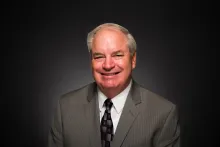
Robin Webber was born in Chicago, Illinois, in 1951, but has lived most of his life in California. He has been a part of the Church of God community since 1963. He attended Ambassador College in Pasadena from 1969-1973. He majored in theology and history.
Mr. Webber's interest remains in the study of history, socio-economics and literature. Over the years, he has offered his services to museums as a docent to share his enthusiasm and passions regarding these areas of expertise.
When time permits, he loves to go mountain biking on nearby ranch land and meet his wife as she hikes toward him.
