

Gary Antion
This transcript was generated by AI and may contain errors. It is provided to assist those who may not be able to listen to the message.
A speaker once started his speech with these words, quote, Thank you for your hearty applause, but perhaps I should remind you that it is said that if you applaud the speaker before he begins, that's faith. If you applaud him while he is still speaking, that's hope. And if you applaud him when he's all through, that's charity.
Faith, hope, and charity. These three vital ingredients for a Christian's life are something that we need as foundational principles to have in our lives. Let's take a look at 1 Corinthians 13, 13, and see what the Apostle Paul wrote. And this will be the subject of the sermon, 1 Corinthians 13 and verse 13. We read this, from the Apostle Paul to the church at Corinth. He said, And now abides faith, hope, and charity, or love. I'm reading from old King James. These three, but the greatest of these is love. So he does emphasize all three. He says these are all very important to you. And yes, love is the greatest one because that's what God is. But nonetheless, he says, faith, hope, and charity are three foundational needs for all Christians to have. So we need to take a look and focus on these so that we could keep them in our lives because faith, hope, and love are all essential for salvation. First of all, let's take a look in this order. Let's look at faith. The Greek word for faith is pistas, p-i-s-t-i-s. P-i-s-t-i-s, it's translated belief, believe, assurance, fidelity, and faith.
Hebrews 11 and verse 1 tells us why faith is so important and what it is. It gives us a definition and then we'll see why it's so important. Hebrews 11 and verse 1. Now, faith is the substance of things hoped for, the evidence of things not seen. Faith is what you have until you actually receive what you prayed about, what you're looking forward to, what you're hoping for. You'll see hope is even a part of that equation. Faith is the substance. It says, I know I'll get it. I know God can heal me. I know God can just say the word. God can do anything. I mean, Mr. Shoemaker's daughter, God could say anything. He could say heal it and it'll be healed. He didn't have to do anything. He didn't have to anybody help or anything else. That doesn't mean we can't use help because God does say faith with works. But God could do anything. If you believe that, you have faith.
But it's when it's received. Again, faith is the substance. I know I'm going to receive it until you actually receive it. For the evidence, and it's the evidence of things not seen. There's always, when you talk about faith, there's an unseen factor. I don't see it. He talks in Corinthians. He says, we walk by faith, not by sight. Sometimes you don't see. Why? Where's God leading me? What's he doing here? Sometimes it's only when we look back that we realize what God has actually done for us. Sometimes we don't see it at the beginning. We only see it afterwards. Wow! I didn't realize that. I look back at several things that happened in my life. I look at things that occurred. I say, wow! Look at that. Look at how that took place. But at the time, I didn't understand. I believed, but I didn't understand. Sometimes you believe and you pray, and then it happens and you're amazed. But you did pray for it, didn't you? And you did ask. Hebrews 11.1, what faith is. Hope is definitely involved. But let's see why it's necessary. I'm going to share with you some quotes, succinct quotes, along the way that I have. Here's one on faith from 5500, or maybe this is this one that's 15,000 quotes. 3381 by Lee Tan. He says, faith sees the invisible, believes the incredible, and receives the impossible.
Faith sees the invisible, believes the incredible, and receives the impossible.
So here's another one I want to share with you. After I'm going to share with it now, and then I'll read you the scripture. He said, an old Scotsman, this is number 3376 from the same source, an old Scotsman operated a little rowboat for passengers, and one day a passenger noticed that the old man had carved on one of the oars, faith on the other oar, works.
Curious, he asked the reason. Why do you have one of these things that says faith once says works? The old man, being a Christian, said, I'll show you. So he dropped one oar, and he just used the other works while they were in the boat, and the boat went around in circles.
Then he dropped the oar that had, and used faith only, and the boat went around the other way. So he did works first, they did faith, they just both went around in circles. Then he used both oars, and the boat went swiftly over the waters. He explained, one without the other will get you nowhere. But faith with works, pulling together, makes for progress. And isn't that what James said? See, the Bible's definition of faith is found in James.
James couples intellectual faith, what I think in my head, with what you do with what you think in your head. So James puts them both together. So for James, when he says have faith, he means have living faith. He doesn't mean have intellectual faith. He means put them both together. So it takes faith with works, not faith without. So I can say to you, if you want to be saved, just believe.
And you'll say, that's horrible. But if I mean James' definition, I mean believe in practice. So if I believe in God, I worship him. If I believe in God, I obey him. If I believe he's my Lord and Master, I listen to him. If I believe the 10 can believe the Bible, I follow it. I live the 10 commandments. I apply the 10 commandments, which by the way I love. I follow that. My students will laugh because I was accused.
I was accused of not believing the 10 commandments were to be done. And so I usually throw that in there every so often. I love the 10 commandments. I teach them vigorously. Mr. Shoemaker will know that. And all my students know that. In fact, when I was accused, I put a little note on my Facebook and I just said, somebody said they thought I didn't believe in teaching the 10 commandments or keeping the 10 commandments or was teaching against it. A lot of my students, some of them don't even come to our church anymore.
Mr. Antion, we're caught to 10 commandments. I was at college. I know he taught it. But people say things, whatever they want, like, you know, the latest rumor, I make $120,000 a year. Did you know that, Mr. Holliday and I both make $120,000? Do you know, because I'm on the Council of Elders, do you know that I get zero for being on the Council of Elders? It's been that way ever since the Council of Elders was formed. We get no extra money. The only ones that were given any money of a stipend were those who were no longer employed by the church. Those who weren't employed by the church who gave up their work time to come, there was an addition made that they could have some.
But the rest of us who were employed by the church, we get zero for being on the Council of Elders. Nothing. And there's a lot of extra work to being on the Council of Elders. A lot of reading, a lot of time that you take out, a lot of time that you devote to issues. So if anybody says to you, we make that, it's hardly 120,000. It isn't even, it isn't even. And I'll say to my, one of my friends in the ministry will, will not lament, but will notice our kids doing so well. And I'll say, yeah, my son-in-law does this and my daughter makes that.
And he'll say, yeah, my daughter makes this much of either of them. And he'll say, what? Where did we go wrong? That our kids make more than... I said, Ray, we're both in the ministry. We're in a service profession. You don't make money in a service profession. And we're not paid badly. And we get to keep more of our income than you would if you made more than I make. Because I get certain deductions as a minister. But it doesn't mean I'm paid 120,000 a year, these people throw these things out there, which is stupid.
They throw them out there. They don't even know what they're talking about. They have no knowledge. And then Mr. Dean answered this person who wrote, somebody in the church wrote, said, I want to know how much every one of these people make. You know, when I say to them, I want to know how much you make. You tell me exactly how much you...
He did send them the ranges, which is read every year. All the men who worked for us make between this and this, this and this, this and this. And most of them are at the low range. And none of those, even for the top pay position, which is the president, does not even come close to 120,000.
None of them is over 100,000. None of them is even 100,000. And most of the people paid are at the lower to middle end of their pay grade, not at the top end of their pay grade. So anyway, he sent and answered this person. But I'm going to share with you James 2 verse 14. James 2 verse 14.
I had James. Verse 14, I skipped way ahead to the next one. What does it profit my brethren, though a man say he has faith if he has not worked? So he's saying, I have intellectual faith. I believe it's in my head. It's in my mind. What good does it do? And if it doesn't have works to back it up, can faith save him? Because can intellectually thinking about something save you? Absolutely not. If a brother or sister is naked in destitute of daily food and one of you say to them, depart in peace, be warmed and filled, I'll pray for you. I have faith, but I also have food. I have faith you're going to eat sometime today, but I also have food.
Could I say I'll pray for you? But in the meantime, I'm going to give you some food because I believe God's going to give you some too. Here, I'm going to share. He said, what kind of person is this? Tells him, well, go be warmed and filled, notwithstanding you give them not those things which are needful for the body. What does it profit? Verse 17, even so, faith if it has not works is dead. If all your faith is, is in your head, you have a faith that's dead. See, if you believe something, you should be faithful, full of faith, so full of faith that it makes you act on that. If your head, what your head thinks doesn't translate down to your feet and make your feet walk in the direction that your head believes, something's wrong with your faith. It's dead. And that's what he's saying. He said, if a man say you have faith, you should believe it. If a man say you have faith, that's intellectual faith, and I have works, that's action. I say, show me your faith without your works, and I will show you my faith by my works.
What I do tells you what I believe because my head and my heart and actions are all in sync.
I don't believe one thing and do another. But see, the world wants you to think, the world and its churches, they want you to just believe. What do they mean by that? Just a nice thought? Is that what it's all about? Is there action? Why did Jesus Christ say, why do you call me Lord, Lord? And do not the things that I say. And not everybody that says to be Lord is going to make it into heaven. He didn't say heaven will be saved, kingdom of heaven. Not everybody that says Lord, Lord was going to make it into the kingdom of heaven, but he that does the will of my Father. That's Matthew 7. And the other one was Luke 6 46.
Memory scriptures, by the way. If you know these things, happy are you if you do them, he said about the Passover service, about foot washing. So we must be a doer. We can't just be one who thinks good things. So he goes on to say, you believe that there's one God, you do well. You have good intellectual faith? That's great! You know who else has great intellectual faith and even more than that? The devil. The devil also, devils or demons, also believe and tremble. Now they don't obey, but they do tremble. They believe so much that it affects them, they know God's going to reckon with them one day. But he says in verse 20, but will you know, O vain man, that faith without works is dead? He repeats it in verse 26. But for the...as the body without the Spirit is dead, so faith without works is dead.
It is important for us to have that kind of faith. Hebrews 11 6 tells you why faith is important.
Hebrews 11 verse 6, he says, without faith it is impossible to please him.
You cannot please God without the right faith. First of all, has anybody here seen God? If you raise your hand, I will rebuke you. Okay, nobody raise your hand. You haven't seen God. God is Spirit. God is Spirit. You don't see Spirit. You can see what he did. You see his handiwork, you don't see him. You can't see Spirit. So you have to have faith to believe that in which you cannot see. So without faith it is impossible to please God. You can't please him. Why? Because you don't believe he exists because you can't see him. You have to have faith. For he that comes to God must believe that he exists even though you can't see him. And faith is the evidence of things not seen and that he is a rewarder of them that diligently seek him. That's action. If I know there's a God out there, I want to find him. If God's calling me and drawing me, I want to find him. I want to serve him. I want to yield to him. That's what it's about. I'm going to serve the Lord my God. You need faith. One more scripture, 2 Corinthians 5-7, which I referred to before.
2 Corinthians 5 and verse 7 tells us we must walk by faith. There are many times we do not see the answer. We need to keep on going. Many times issues come up to bother us. We've got to keep on going. 2 Corinthians 5-7, for we walk by faith and not by sight. Spiritually speaking, sometimes you can't always see things, but you know there's a basic way and you follow that. And oftentimes, sometimes you do what you have not yet understood. A good understanding of all they that obey. That's what he says. Fear the Lord is the...Psalms 1, 11 and verse 10. A good understanding of all they that obey Him. Sometimes you obey and you say, oh, now I understand why that's such a good commandment. Oh, now I understand why the Sabbath is so precious. What a blessing to have a day that God says you...take it easy, relax. Get yourself spiritually in line again. Get yourself physically rejuvenated so you can serve me better. And you keep it and you say, wow, what a great blessing the Sabbath is. But you see it on paper. How's it 24 hours different than another 24 hours? It's not.
Difference is holy time. As far as how many hours? Not much different. Holy time. Serving God. It is different. I want to read you another quote. This one's number 3357. It says, God to be in Quebec. Story is told by a captain of a ship on which George Mueller of Bristol was traveling. During his life, he received more than one million pounds, that's pounds British sterling, from the Lord without advertising. Every penny came as an answer to prayer. We had George Mueller of Bristol on board, said the captain. I had been on the bridge for 24 hours and I never left it. George Mueller came to me and he said, captain, I've come to tell you I must be in Quebec on Saturday afternoon. It's impossible, the captain said. Then very well, if your ship cannot take me, God will find some other way. I have never broken an engagement in 57 years. Let's go down to the chart room and pray. I looked at the man of God and I thought to myself, what kind of a lunatic asylum can that man have come from? I for I'd never heard of such a thing. Mr. Mueller, I said, I did. Do you know how dense this fog is? He said no. My eye is not really on the density of the fog, but on the living God who controls every circumstance of my life. He knelt down and he prayed one of the most simple prayers. And when he had finished, I was going to pray, but he put his hand on my shoulder and he told me not to pray. He said, as you do not believe, he will answer. And as I believe he already has, there's no need for whatever for you to pray.
I looked at him and George Mueller said, Captain, I've known my Lord for 57 years and there's never been a single day when I failed to get an audience with the King. Get up, Captain. Open the door and you'll see the fog has gone. I got up and the fog indeed was gone. And on that Saturday afternoon, maybe he kept the Sabbath, on that Saturday afternoon, George Mueller kept his promised engagement. He had faith. He said, God can do it. I know he can and I know he will. Faith, the evidence of things not seen. Let's look at the second one. The second vital ingredient is that of hope. Second one is that of hope. The Greek word for hope is alpis, E-L-P-I-S, and it means a confident expectation. It means anticipation of good. I'm looking forward to something good. I'm looking ahead to the future with joy. Something good is going to happen. And I want to read a quote to you again, number 5169, the Cape of Good Hope. Did you know, you've heard of the Cape of Good Hope, right? Southern tip of Africa used to be called the Cape of Tempest. I didn't know that. Its swirling seas and continuously adverse weather conditions caused sailors great anxiety and took many lives. But a certain Portuguese determined, Portuguese person determined to find a safer route through the seas around that renowned land of Cathy. And he discovered a safer passage around this promontory. And the area was renamed, Cape of Good Hope. It had been known as the Cape of Tempest because it ruined people.
Now it became known as the Cape of Good Hope. Let's take a look at Titus 1 and verse 2 and see what our confident expectation can be. Even things in this life, hope is so essential.
Babies die when they have no hope. People give up and quit when they have no hope. The worst thing to find in a person who has no hope, find somebody that I have nowhere to look. There's nothing good that I can look forward to. I've counseled people like that. I always try to help them see there's some good. There's something good that can happen to you. And as a counselor, you know we were trained never ever let somebody leave your office without giving them some hope.
Things are going to get better. You're going to make it. You're going to make it. It's going to be okay. You're going to find things good for you. Don't let them leave without hope.
People who have no hope in their lives are people whose lives will be depressed and sad.
Hope. Confident expectation of something good is going to happen. Titus 1 verse 2, greatest hope we all can have is Titus 1.2, an hope of eternal life. And when your hope rests in God, you never have to be ashamed. Titus 1.2, in hope of eternal life, which God that cannot lie, God will never promise you something that he will not do. He promises you eternal life, promise before the world began. So you have that absolute confidence, I hope to be in God's kingdom. I hope to be a spirit being. I hope to be a part of the family of God. I have hope. And it's a lively hope because it's not just for us. 1 Peter 1.3, I'm not going to read it if you want the reference. 1 Peter 1.3 talks about a lively hope. It's a hope that involves other people. What I love about the church of God, what I love about the teachings of the Bible as we understand them. See, we're not just in it to save our own skins. I don't just say, you know what, let's just spend all the money on ourselves. Let's just take a collection here in the local church area. Let's all tie, then let's all be able to get better seats in this thicker cushions. You know, expand the building, better air conditioning system, or whatever you want to say. Let's all do. Let's all turn into ourselves.
Let's do everything for us. I want to save my skin. I don't want to suffer in hell, which they think they will. I don't want to burn forever and ever and dance around on those coals. I want to be saved. We have a hope that's for all people. We say, one day they will understand. God's got to call them. He's got to draw them now. He's got to bring them to the faith. We can't bring them to the faith. God will. We can help them when they come to the faith, but God has to bring them to the faith. And one day all people will have a chance to know. Boy, that's the hope I have. That's why every year I go to the Feast of Tabernacles and on that last great day I have a wonderful feeling for my granddad that I never saw, my grandmother that I never saw, my granddad on my mother's side who was very faithful to the Greek Orthodox Church or Syrian Orthodox Church but didn't know any better till his latter years when he fell out with the minister there and wouldn't go anymore because the minister kept skipping sections of the liturgy. So he thought, I'm not going back to that church. And so he didn't. He died. One day he'll have a chance. My grandmother on my mother's side never could read or write. She was illiterate. Wonderful lady. I look forward to teaching her how to read and write. Situ, I would call her, you need to read this book. The Bible. It's got wonderful things in it. Boy, will you ever understand when you can read words. What a great thing that'll be. See, my hope is for all peoples. It's for the little person up in Nepal in the high mountains near Mount Everest who never heard Jesus Christ's name, who will perish up there before they get his name. They go to hell. That's what the world will think. Well, here's your chance. You either make it now or bye-bye. That's not what God says. God says, there's time when all people are going to understand. See, that's the hope that we have. It's a beautiful hope. It means all people. We're not better than anybody else. It's just that God called you now. Called you now for a purpose and called me now for a purpose. A job that we have to do. The others are going to have a little bit easier than you and me because they won't have the world and Satan around them to get them in the millennium.
They'll still have themselves. That's a pretty big task as it is. So, again, we have that hope that God has called us to. Hebrews 11, verses 13 to 16. We have hope in a kingdom that God has promised that wonderful kingdom. Hebrews 11, verses 13 to 16. What kind of hope is that? It says, these all died in faith, not having received the promises. Talking about all these heroes of faith, of Abel and of Enoch and of Noah and of Abraham and Sarah and Isaac and Jacob. These all died in faith, not having received the promises, but having seen them afar off, that's faith, and were persuaded of them, that's hope, and embraced them and confessed that they were strangers in pilgrims on the earth. For they that say such things declare plainly that they seek a country. They seek something better than what this world has. And truly, if they had been mindful of that country from where they had come out, they might have had opportunity to return. If they'd put their mind and focused on that, on the Egypt and what it had, all the leaks of Egypt, boy, those cucumbers were good. You could have exchanged freedom for cucumbers? Where's your thinking? God gave made you free. If they had focused on that, they would have forgotten. But verse 16, but now they desire a better country. And that is a heavenly, wherefore God is not ashamed to be called their God, for He has prepared for them a city. These individuals were hoping for better, and we hope for better as well. Romans 8, verse 18. Romans 8 and verse 18. We need hope. Hope to go along with our faith. Actually, hope is necessary for faith. But Romans 8, 18, he says, For I reckon, Paul writes to the church at Rome, for I reckon that the suffering of this present time, the sufferings of this present time, are not worthy to be compared with the glory which will be revealed in us. God has something in store for us that's so great, so awesome, that we can't even begin to imagine what God has in store. I was telling the students in class just on Friday, if we could see what is out there, the beautiful colors in Hughes.
Moody Bible Institute did one years ago when I was in college, and they showed all the beautiful colors that are out there that you and I can't see. And they had prisms or whatever to show how much beauty there is out there that you can't see yet. I can't see yet. What about knowing where the gold is on the earth? What about knowing where all the gems are on the earth? That we could find those and search for those and look for those and help people to look for those. Hey, you know what? If we put it in their minds, they're not prospecting in the kingdom of God, and they say, no, maybe you ought to dig over there. Maybe I ought to dig over here and dig over here, finds gold.
You will know all that because God has so much in store for you. And to be able to bless people that way, to be able to lead them in the paths of righteousness, to be able to guide them and help them to walk in God's ways. Talk about joy and glory. And you talk about...for five years we thought we'd be childless until we were blessed with two daughters. And I used to say, well, you know, in the kingdom of God, I'll know what it's like because I'll have lots of children. And you will.
Lots of children. God calls us to his children. They'll be like your children that you work with and love and care for. By verse 19, he says, for the earnest expectation of the creation waits for the manifestation of the sons of God. The world is waiting for you and me. They're waiting for God, for his children to be born into his family. For the creation was made subject to vanity, not willingly. We didn't ask God to have what we have as the means of preservation, of self-preservation, not willingly, but by reason of him who has subjected the same in hope. God hopes for us.
God hopes for us to be in his kingdom. It's because the creation itself shall also be delivered from the bondage of corruption to the glorious liberty of the children of God. The whole world's going to be delivered into that. We know that the whole creation groans and travails in pain together until now. I'm Syrian, okay? Syrian. And a lot of my relatives, whatever by extension, are being killed by a brutal dictator mowing down his own people. And while the United States wouldn't let that happen in some places, they're letting it happen there, which is tragic. This world is groaning. It's groaning and travail. Verse 23, and not only they, but ourselves, which have the first fruits of the Spirit. We groan. We see a world that we'd like to see better. We see a world that's sick. We see a world that's topsy-turvy. We see a world that doesn't make sense. We see people say, we need more gas and oil, but don't sign up for the Keystone pipeline. Well, we wouldn't want to increase our oil supply, would we? We need oil. We don't want to increase it. Hmm, is there something wrong there? Am I way out of here in my thinking? Will we all sign it? We'll veto that because we want to assuage the people who think the earth is going to be polluted. In the meantime, our oil companies send the oil abroad to make enough, have lots of oil, make you pay more and send it abroad to China and some of these other countries so they can make more money. It's a crazy world we live in. God says, you know what? I'll take care of you. We groan. We groan within ourselves, waiting for the adoption, actually, placing his sons in the family of God, to wit the redemption of our body when we no longer will be subject to our earthly desires, but be spirit. In verse 24, for we are saved by hope. Little babies die if they have no hope. Nothing physically wrong with them.
The orphanages years ago, they call it Merasmus, a failing to thrive.
Well, they give them milk, but nobody cares for them. They have no... their mother giving them up, or they're in an orphanage, which obviously they haven't given up by their parents. Little babies shrivel up and die. They check them over. There's physically no reason. Those babies do not feel hope.
What a sad state our world is in. He said in verse 24, we're saved by hope, but hope that is seen is not hope. For what a man sees, why does he yet hope for it? Well, if it's already here, see, I don't have to hope for a glass of water. There's a glass of water here. Maybe I should take a sip just to make sure it's real water. It tastes like real water. I don't have to say, I sure hope I could have a glass of water. I sure hope I could have a glass of water. It's right here. I don't have to hope for it. That which I already have, I don't need to hope for. You hope for that which you don't have.
And you keep that hope up until you receive it. Verse 25, for if we hope for that which we see not, then we do with patience, wait for it. So God says, hope. Hope, it's not wish. So I just wish I could have it. Hope is confident expectation. Something good is going to happen to you.
Confident expectation. We also find a beautiful scripture in Lamentations 3, verses 24 to 26.
Lamentations 3, verses 24 to 26, which I find so inspiring. You talk about hope.
Lamentations, if I can keep flipping past it, my Bible's sticking together. Lamentations 3, verses 24 to 26, right after the book of Jeremiah. The Lord is my portion, says my soul. Therefore will I hope in him. As long as your hope is in God, that is absolutely confident expectation.
And verse 25, the Lord is good to them that wait for him. See something? When you're hoping, you have to wait. I'm hoping, I'm hoping I'll get it tomorrow. No, it didn't come. I'm hoping I'll get it the next day. No, it didn't come. I'm hoping it'll happen the next time. That hope. But you have to keep waiting. You have to be patient. The Lord is good to them that wait for him to the soul that seeks him. Verse 26, it is good that a man should both hope and quietly wait for the salvation of the Lord. Keep that hope of being in God's wonderful, glorious kingdom.
I have a quote, another quote on hope for you. This one's by Martin Luther King, Jr. He said, if you lose hope, somehow you lose the vitality that life, that keeps life moving. You lose that courage to be, that quality that helps you go on in spite of it all. And so today, he said, I still have a dream. And then there was one by Leroy Douglas who says, hope is one of those things in life that you cannot do without. Hope, it takes you to have hope. And after all, the God we serve is a God of hope. Romans 5 and verse 14. Romans 5 and verse 14. Sorry, 15 and verse 4. Mix that one up. Well, Romans 15 and verse 4. For what things so ever were written beforehand were written for our learning, that we through patience and comfort of the Scriptures might have hope. When you read the Scriptures, you say, God did this for them, God can do it for me. God did this for them, He can help me out. But notice in verse 13 of chapter 15. Now the God of hope fill you with all joy and peace, believing, in believing that you may abound in hope through the power of the Holy Spirit. God gives you that confident hope, expectation of something good. I'm going to read you one other quote. This is number 5154 from Lee Tan, 15,000 quotes. He says, the Assyrians, the Babylonians, the Phoenicians, the Egyptians, the Persians, the Greeks, and the Romans had their many gods. Gods of war, gods of industry, gods of agriculture, gods of cities, gods of towns, and various others. But in all of paganism's galaxy of the gods, there never was one called the God of hope. That's scarcely surprising, for in the ancient world, hope had become a despised delusion long before our Lord was ever born in Jerusalem. That is, the fact is, there's no hope for people who are living sinfully in a world apart from God. The God of Christians, now the God of hope, it says. All those religions, none of them had a God of hope. The God you serve is a God of hope. He wants you to hope. He wants you to keep confidently expecting what you're going to receive. The final one, then, is love. Love, the word is agape. That's the Greek word, and it means godly love. We usually translate it to mean outgoing concern for others. Loving others is much more than yourself. Outgoing concern. 1 John 4, verses 7 to 12. You see, why is love the most important? Because that's what God is. If you wanted to use one word description of God, I noticed the Republican candidates had to give a one word description of themselves in the debate they had recently. If you asked God to give a one word description of himself, here's what it would be. L-O-V-E. Love. That's the way God is. Everything he does is motivated out of that. Everything he acts upon, thinks about, is motivated out of love. 1 John 4, and verse 7. Beloved, let us love one another, for love is of God, and everyone that loves is born of God and knows God. When you have that love in you, you know the way God is. In verse 8, he that loves not, does not know God, for God is love. And verse 9. And this was manifested or shown the love of God toward us because that God sent his only begotten Son into the world, that we might live through him. Love is shown by things you do. If you love, you do.
If you love, you give. God so loved the world that he gave. That's what is attached to being, having that love for others. You want to do something for them. And in verse 10, here in his love, not that we loved God, but that he loved us. And he sent his Son to be the propitiation of our sins. We didn't love God first, he loved us. He reached out to us. He gave his Son before you and I were ever born. And he gave him before we were ever called. And he gave them before we were ever walking in his way. It said, while we were yet sinners, he died for us. Continuing in verse 11, Beloved, if God so loved us, we also ought to love one another. God sent us an example. He showed us he loved us. We ought to love others. In verse 12, no man has seen God at any time.
If we love one another, God dwells in us and his love is perfected in us. We haven't seen him, but we can sure know his effects if we have that love of God in our lives. Verse 16, And we have known and believed the love that God has to us. God is love. Second time it's mentioned. He that dwells in love dwells in God and God in him. Notice also verse 18, There is no fear in love, but perfect love casts out fear. What is fear? When you're afraid of something, what do you think about? Is there a snake in this room? Is there a snake afraid? What is it about? Me. When you have fear, it's about you. It's incoming.
When you have love, it's out going. Now there are healthy fears, of course. But if you're a fearful person, counteract that by being a loving person. Ask God to give you his love to think about others, to be other-centered instead of self-centered. Self-centered individuals will have fear. There's no fear in love, but perfect love. We could be perfect at it all the time. We never have any fears. We'll cast out fear because fear has torment. I'm afraid. Fear is not made perfect in love. In verse 19, we love him because he first loved us. God reaches out to us first. In verse 20, if a man says, I love God and hates his brother, he's a liar. See, you're talking about a brother in the church. A brother who has God's Holy Spirit that's supposed to produce what? Love, joy, peace, long suffering. And if you can't, if you hate your brother whom you have seen who has some of the love of God in him, how can you love God that you haven't even seen yet? For he that loves not his brother, whom he has seen, how can he love God whom he has not seen? And this is the command which we have from him that he who loves God should love his brother also. In chapter 5, verse 3, let me punctuate what love of God means. First John 5, 3, for this is the love of God that we keep his commandments. Did you hear me say that? Oops, did I make a mistake? I didn't make a mistake. Herein is the love of God that we keep his commandments, and his commandments are not grievous. See, God's commandments teach you to love God and teach you to love your fellow man. That's what they're about. They're done by a God of love for you as his people to learn to love him and to learn to love each other. That's what the commandments are about. When Jesus Christ was asked, what was the great commandment of the law? He said, love the Lord your God with all your heart, all your might, all your soul, all your being. And the second one is just like it. Love your neighbor as yourself. Because on these two commandments, hang the whole Bible, the law and the prophets at that time, the major portions of the whole word of God. That's on what? That's what the Bible is all about. Teaching you to love the Lord your God and your fellow man, how to deal with him, how to obey him, how to worship him, how to fall, how to help him, how to serve him. That's what it's all about. Romans 5.5. We can have the love of God. Romans 5 and verse 5. We need the love of God in our lives, but how do you get it?
Romans 5.5. See, this is what God's Spirit entering our lives does. When I was a 16 or 17 year old, I used to mow my dad's lawn. And the neighbor's lawn was right next door. And I would even mow a part of it. Was I a good Christian guy? Not really. Why did I do it? I wanted them to think highly of me. I didn't do it because I wanted to do it. I did it because I said, you know, don't think I'm a nice guy. Love of God says I do it because it's right. Love of God says I do it because I want to serve. It doesn't care what they think of me. See, I did it out of my love. I didn't do it out of God's love. Same act. They don't never know. He didn't ask me, did you do that of your love or God's love? His lawn was mowed, that portion. I didn't have to do it. I could just draw a line right where my dad's property line was, but I went over and did the his part, little part section. But my thought in doing it was, hmm, he'll think highly of me. But I should have said, I think highly of him. That's why I'm doing it. The love of God in you leads you to be outgoing. Romans 5-5, and hope makes not a shame because the love of God is shed abroad in our hearts by the Holy Spirit, which is given to us. The love of God in you, 1 Corinthians 13 is a whole section on the love of God, which I'll read. John 13, John 13, verses 34 and 35. John 13, verses 34 and 35.
We read this, a new commandment I give to you, that you love one another as I have loved you.
How did Christ love us? Did he love us wanting to get something from it, or did he love us because he cared about us? I have loved you that you also love one another. Verse 35, By this shall all men or all people or all humans know that you are my disciples if you have love one for another. When people see the love that God's people have for each other, that helps them see that this is the church of God. How do those people love each other? I know at the Feast of Tabernacles, a bewildered hotel clerk was standing behind her as people came in, and they see this person dashing over and hugging that one. And he said, are you relatives? Looks like you really... No, we're just in the same church. Well, I guess we are relatives. We're children of God. I didn't say that, but he wondered. Some were blondes, and some were brunettes, and some were maybe one race and another race. And they still had that closeness when they met. They were so excited to see each other. And he couldn't believe that they weren't relatives because of the love they had one for another. That's by this people will know.
Let me share with you a quote. This is a human story. He says, this is supposed to be a true story from a time of Oliver Cromwell in England. A young soldier had been tried in a military court and sentenced to death, and he was to be shot at the ringing of the curfew bell. His fiancee climbed up into the bell tower several hours before curfew time, and she tied herself to the bell's large clapper. At curfew time, when the only muted sons came out of the bell tower, because it didn't ring, Cromwell demanded to know why the bell was not ringing. His soldiers went back to investigate and found the young woman cut and bleeding from being knocked back and forth against the bell. They brought her down, and the story goes, Cromwell was so impressed with her willingness to suffer in this way on behalf of someone she loved, that he dismissed the soldier saying, curfew shall not ring tonight. Not a beautiful story of someone who's willing to share and give of themselves to help someone else. I have another quote, and this one's one of my favorites. Some of you may have heard this one already, but I have it. I want to share it with you anyway. It's called, The Power of an Attitude. Loving others, outgoing concern for them. A little over 50 years ago, and does it make a difference when you love people? Yes, it does. A little over 50 years ago, a Johns Hopkins professor gave a group of graduate students this assignment. He said, go to the slums, take 200 boys, ages between 12 and 16, investigate their background in an environment, then predict their chances for the future. So they, after consulting social statistics, talking to the boys, compiling much data in this one school district, they concluded that 90% of the boys would spend some time in jail. 90% out of 200 is what? 180?
25 years later, another group of graduate students was given the job of testing the prediction. Did this prediction work? Were they following these social statistics with this work? They went back to the slum area. Some of the boys, now men, were still there. A few had died, some had moved away, but they got in touch with 180 out of the original 200.
They found that only four of the group had ever been sent to jail.
Only four! When they predicted 180 would go to jail, only four went. Why was it that these men, who had lived in a breeding place of crime, had such a surprisingly good record? The researchers were continually told, well, there was this teacher. There was this teacher. They pressed further and found that in 75% of the cases, it was the same teacher! Researchers went to this teacher who was now living in a retirement home. How had she exerted this remarkable influence over a group of slum children? Could she give them any reason why these boys should have remembered her?
And she said, I really don't know. I don't know why these boys remembered me. And then, thinking back over the years, she said musingly more to herself than to her questionnaire.
I loved those boys. I loved those boys. Does love make a difference? You bet it does. Outgoing concern makes a difference in life. Let me read to you one more quote.
The heathen had a saying, man is a wolf to a man whom he does not know. You know, growl at them, chase them away, bark at them. But concerning the Christians, they exclaimed, they love each other without knowing each other. And they said, behold, how these Christians love one another. That's from number 7194. Most people, strangers, get away from me. But these Christians, they're Christians, even though you may not have known them, you still love them. Oh, how they see how they love each other without knowing each other. Love of God translates. And we want to write a scripture down in Romans 13.8. Most of us don't like to have debts, but one debt that you do, oh, everybody, is to love them. Romans 13.8, oh, nobody anything except to love them. I'm going to conclude with reading 1 Corinthians 13 out of the paraphrased or the Living Bible to make it flow a little easier. This is my conclusion. Remember, faith, hope, and love. The greatest of these is love. 1 chapter 13, verse 1, if I could speak in any language in heaven or on earth but didn't love others, I would only be making meaningless noise like a loud gong or a clanging cymbal. If I had the gift of prophecy and I knew all the mysteries of the future and knew everything about everything but didn't love others, what good would it be when I be? And if I had the gift of faith so that I could speak to a mountain and make it move without love, it would be no good to anybody. If I gave everything to the poor and even sacrificed my body, I could boast about it. But if I didn't love others, I would be of no value whatsoever. Love is patient and kind. Love is not jealous or boastful or proud or rude. Love does not demand its own way. Love is not irritable. It keeps no record when somebody is done wrong. It is never glad when about injustice but rejoices when the truth wins out. Love never gives up, never loses faith, is always hopeful, and endures through all every circumstance. Love will last forever. That's verse 8. But prophecy, speaking in tongues and special knowledge, will all disappear. Now we know only a little and even in the gift of prophecy reveals little. But when the end comes, these special gifts will all disappear. It's like this. When I was a child, I spoke and thought and reasoned as a child does. But when I grew up, I put away childish things. Now we see things imperfectly in a poor mirror. But then we will see everything with perfect clarity. All that I know is partial and complete. But then I will know everything completely, just as God knows me now.
There are three things that we'll endure. Faith, hope, and love. And the greatest of these is love. And may we all add faith, hope, and love into our lives that we may be in the kingdom of God.
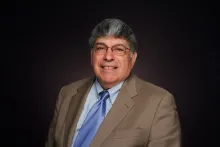
Gary Antion is a long-time minister, having served as a pastor in both the United States and Canada. He is also a certified counselor. Before his retirement in 2015, he was an instructor at Ambassador Bible College, where he had most recently also served as Coordinator.
