


Gary Antion
This transcript was generated by AI and may contain errors. It is provided to assist those who may not be able to listen to the message.
I began at 23. Actually, I began at 20. I was trained for one whole year, between my junior and senior years, with the minister riding shotgun with him for one whole year almost. A lot of school year. Then I transferred to England, in which case they didn't have very many men who'd been used to going out visiting and so on. Raymond McNair said, you can do that visiting. We'll welcome you. So, I was over a visit, one section of London. All the members of the church, I was responsible for visiting and caring for them.
I would take other students with me, and we would go visiting after school hours, and go visit various ones from all over the area, all over, I think it was, Southwest London. And I had, or Northwest London, so I had that. Plus, I had all the way over to Wales. There weren't very many people in Wales, but we did get over there one time to see somebody who had an interest. So, I gave sermonettes and sermons in England when I was a junior or senior student.
Well, then I came back to New York City, and I was a trainee again. I worked with New York City with Raymond Cole, and he was busy getting established, because he just transferred back there as well as me arriving. So, I had about three or four or five months with him, and then I was ordained by Mr. Armstrong back in 1960, yeah, 64, April 64, and at his hotel room with Guy Engelbart and I were both ordained as preaching elders, full ministers.
And then another man was ordained as a local elder who worked at the local area. So, it was a real blessing, totally surprised to be sitting there, and Mr. Armstrong got up and said, we're going to have some ordinations today this evening. We were eating dinner in his room. He had a catered meal brought in. We were sitting there. He and his wife were there, and then he announced that, and we were ordained. So, it was an honor and a blessing that Raymond Cole joined him, and they were coordinating. That was 1964. So, I was 23 years old at that time.
So, I'm now 83. So, it's a real blessing to be a part of serving God's people all over, and I did tell everybody that night that two things I would pass on to care for the brethren, care for the people, and share.
I mean, you're alert to what their needs are. You accept responsibility to help them, care for them, to look after them, and share. It means you want to do what you can to enhance their lives, to make them better, to do what you can, to make them better. Those are the two things I passed on to everybody that I felt. And I also said to one thing I've tried to do in my life.
I try to make a difference with everybody I meet. I try to make a difference. Maybe it's just the friendliness, maybe it's just the hello, maybe it's just the hi, maybe it's just gratitude, or a compliment. What is sincere? If I don't compliment you, it's not because I don't think you did a good job.
And, by the way, since I didn't remember, the music was beautiful. We had a very talented class this year at ABC, and Jane was one of the highlights there, too, as a violinist. She is wonderful. So, thank you for that. This is Rodin Bush, and thank you, too, for being a harpoonist. Is that a harpoonist? No, it's not a harpoonist. That's a person who shoots whales, right? She's a harpist. So, I always get confused. If a person plays a flute, you don't call them a flutist.
You call them a flutist, right? So, when they play the harp, do you call them a harpist or a harpoonist? I call them harpists, and that's correct. Anyway, thank you. It's always special to have some music here and an instrument that reminds us of what we'll be doing in the Kingdom when we roll around heaven all day and have our harps and we'll be playing. But she's already got an advantage to us already.
She might end up teaching us. I'm teasing you. We don't do that, and that's not what the Bible says we do. So, anyway, it's a blessing to be here with you, and I thank you so much for the opportunity to come up. We always love to come visit the North Church. We have many of you who've been friends of ours for a long time, and we love you, and thank you so much for the opportunity.
Well, what I've done this time, I didn't write out all my scriptures. So, in order to make the sermon, I put pink markers in here, and I know what scripture I'm going to turn to.
So, I have that here for me when I need to read the Bible. So, part of them I read the Bible, and part of it embedded in my sermon notes are the actual scriptures. So, I'll be able to do those for you right in my notes. So, phase B turning to a lot of scriptures, and I don't know about you, but when you get older, and you aren't old yet, you have this to look forward to.
Your fingers don't have as much moisture in them for some reason. They have a hard time turning pages and grabbing things. So, I try to cheat a little bit. Plus, I also, with my reading, I can read alright, because I have a good light on here.
I'm getting some in my head, in my face, but nonetheless, I put a bigger font when I put the scriptures in here. So, let's get going with the sermon today. We've come out of the days of Unleavened Bread. Leavening pictured sin. Leavening pictured hypocrisy. Leavening pictured a lack of sincerity and truth. And during those days, we were putting sin out of our lives.
During the days of Unleavened Bread, we're putting sin out of our lives. Since Christ redeemed us from sin, we'd want to stay away from it. So, as those days have gone by in past, we should not give up keeping the leavening out and putting in Unleavened Bread, which symbolizes sincerity and truth and character and Jesus Christ in us, the hope of glory. So, since we've departed from those days, I thought, and have been adding into our lives positive traits and characteristics so that we can stay out of sin.
I found three great characteristics or traits that actually called virtues. I looked them up. They're called three theological virtues that the Apostle Paul gave. A virtue has to do with a desire for moral excellence. You want to do it the best way you can and usually involve something moral.
You want to become the best you can be. And there are three areas that help us, three traits that we need to make sure not only are in our lives, because I'm sure they are in your lives, but maybe make sure they're abounding in our lives. And those three great characteristics that we as Christians need to build into our lives and brought to our attention by the Apostle Paul, it is letter to the Corinthians, his first letter.
And I'll read that Scripture to you. 1 Corinthians 13, 13. Now, what is 1 Corinthians 13? Love chapter, right? The love chapter. And so let's read these inspired words of these values, these character traits of moral excellence from God. Chapter 13, verse 13. I'll come back to chapter 13 a little bit later. And now abide faith, hope, and love.
These three, what should last in our lives? What should abound in our lives? What should live in our lives? Faith, hope, and love. Those three virtues are something we all need to have in abundance as we go through a world that is becoming more confused, more corrupt, more sinful. And I'm not saying every single person in the world. There are lots of people out there who try to do the best they can. Not everybody's confused. Not everybody's... there are people out there who can do a pretty good job.
They're not Christians the way I see biblical Christians, but they're doing the best they can. Hats off to them. They're doing the best they can. But they don't have God in their lives like we believe we do. As we believe, the Scripture tells us how to have God in our lives and what God in our lives means.
So, if I'll abide, faith, hope, and love. The Greek words, fisis, alphas, and agape. Faith, hope, and love.
So, let's take a look more deeply into the meaning of each that we may grow in each one abundantly. Not that you don't have it. I'm not here suggesting you've been in the church whatever how many years or just newly in the church and you don't even have any love. And you don't have any faith. And you don't have any hope. I hope you have all of them. But let's see if we can take a look at it, understand them more specifically.
Let's look at faith, first of all. The Greek word fisis, it has spin off pistaol, which is the verb that means believe.
Belief. It means evidence of things not seen.
Now, when you think about it, how many unseen things are there in the Christian's life? How many unseen factors were there before you were ever baptized?
You were being baptized so Jesus Christ could cover your sins because he was your Redeemer. Did you ever see him? No.
Do you ever see him live a perfect life? No. Did you ever see the blood pour out of him and see him mangled and beaten? No.
If you never saw that, how could you believe? What are you supposed to be baptized for? Because I want to be in the kingdom of God.
I want to have my sins forgiven so that I could be on the road to the kingdom of God, an eternal life.
Have you ever seen anybody who has eternal life? Have you ever seen the kingdom?
Now, we go to the Feast of Tabernacles in the fall of the year, and we picture a feast. We picture God's rule on the earth.
Do we actually know exactly how it's going to be? No, we don't.
We have an idea from the scripture descriptions of the millennium and what it can be like.
Do we know how it's going to be organized? Do we know how it's going to be ruled?
Not sure. We know that there's going to be some rulership, and we know some of the positions are already taken like the twelve tribes of Israel will be led by the twelve disciples.
So, what else? We don't know. We suppose Abraham will have a big job because he was the father of the faithful.
But we don't know. We don't know that Noah is going to be over immigration, but he'd do a better job, I think, than the current people do for the United States.
Anyway, we don't know that Noah is going to be over immigration. It's a supposition.
You don't know what your position is going to be, except God says, I give you rulership over ten, five, one city, or whatever, two cities.
I don't know either. And yet, I'm baptized because I believe in the Kingdom of God.
There are a lot of things that we never saw that we have to have the faith in.
We ask the minister to anoint us, our ministers, and pray for us when we're sick.
And we look for evidence that we're going to be better. And you should.
What's the evidence that I don't have a sickness anymore? I'm well.
I'm well. I'm not anointed for God to heal me in the Kingdom of God, because when I make it to the family of God, I'll be changed to be our new person.
God, you're going to heal me in the Kingdom. Is that why I'm anointed now?
If I die and not even anointed and add with Christians, I'll be resurrected.
And I have a brand new body. I'm not going to be sick anymore.
But when that minister puts oil on us and prays for us, what does it take? Belief.
I believe God can do it because He says He will.
Now, does He have to do it always, every single time? And you would never die as long as you could get to a minister.
You contact a minister. Or have a minister give you some pre-anointed cloths.
So if you get sick, you get to lie and God heal me. You never die.
God never promises eternal life in the flesh for us.
But we still have to have faith, don't we? We have to believe.
Isn't it interesting? Let's take a look real quickly at Hebrews 11.
Hebrews 11, verse 1. Of course, Hebrews is the chapter that we have a lot of things in here.
Hebrews 11 and verse 1. Let's read this.
Now, faith is the substance of things hoped for. So we see hope coming up next.
It's a vital part of belief. Faith is the substance of things hoped for, the evidence of things not seen.
I've never seen a hand right on a wall when I did a baptism for somebody, where God writes on it and says, Joe, your sins have been forgiven you.
How do I know that putting somebody under the water forgives their sins? Because God says so.
But do I see proof of it? No.
How do I know the Bible's the Word of God? Do I know what God's handwriting looks like?
And does it look like King James English or New King James English?
Or does it look like the type that did my Bible? No. Does it look like the Oxford version or Cambridge version of the Bible's what they wrote?
I don't know, but I do know this. I believe the Bible because I see so many internal beliefs, internal reasons to believe.
So it does take faith, and faith is vital for us to keep on going, to put one foot in front of the other, when you can't see. In fact, we'll read the Scripture. We walk by faith, not by sight.
So faith would never stand up in a court of law.
They want proof, hard proof, evidence.
Can I show that when it comes to spiritual issues? No.
That's why it takes faith. In Hebrews 11 and verse 3, we read this.
By faith, we understand that the worlds were framed by the Word of God as though, let's see, as that the things which are made are made without things that we can see. They're not visible.
What we see in the Scriptures, what we see in the world today, it was not made with physical things that we can see.
Probably atoms and other things. I don't know how God did it, but it's made with things that we can't see.
So even the creation itself, even you yourself as a part of the creation, were made from things that you could not see.
That takes a lot of belief and a lot of faith that God does give us.
Verse 6, why is faith one of the founding, one of the big three, you might say?
Verse 6, but without faith it is impossible to please Him.
For He who comes to God must believe that He is.
Have you confronted that in your life? Firmly, securely, and surely?
That you know and know that you know that God exists.
But what do you go to? I go to creation. I go to matter. I go to weeds, plants, humans, and the marbles that did not just happen, could not have just happened.
And now they have all these studies they do, DNA and all the rest. They know that they had to start somewhere and someone had to start it.
Evolution is just so full of holes, it takes a whole lot more faith to believe in evolution than to believe in creation.
And yet you cannot, can you 100% prove it? Prove it means I saw it happen. Prove it means I have this proof and that proof.
But you have reasons to believe. Reasons to believe. We have booklets on it, does God exist? We have booklets on proof of the Bible.
There's really more reasons to believe the Bible. But take a look. Take a look why.
And make sure you're solid in that. It takes faith to believe. But God requires it.
He said that He's a rewarder of those who diligently seek Him. Once you know Him, once you believe Him, don't ever let it go.
And there are people who believe and believe strongly. But I do. Practice God's way of life for years. Turn to side.
Not from an organization. Not from other people. From God Himself. Faith. Believing in that which you cannot see.
But with reason. Not with... I have no reason to believe this. I just fantasy. Fanciful. That's not what God requires. Not what God wants.
He wants you to look. He wants you to be able to say, here's why I believe. Here's why I believe in the Bible.
These prophecies couldn't have come to pass without God doing it. Everything that happened in Jesus Christ's life had to be made to happen.
Even riding a donkey into town. Had to happen. How'd that happen? No human could make it happen. Jesus couldn't have been born. Anybody could have pretended... And by the way, there have been something like 1,500 people who claimed they were Jesus. All through the years. Messiah.
One guy when I was a trainee and said, this baseball cap had all types of buttons on it. I am He. To be sure, yes, I'm the one that had all these baseball caps.
I said, yeah, right. You're the Messiah. But again, people don't know. They don't know where to look.
Now, once you prove God exists and once you believe that this is His word, because He says it so many times, and the Lord came to me saying, and the Lord came to me saying, and the Lord came to me saying, and God inspired this, and God inspired that, and God moved holy men to write the Scripture.
When I see that and understand that, I know God's word is inspired. And I go through and check it.
And believe me, over 60 years ago, maybe 65, 66, before I ever went to Ambassador, I didn't want to go.
I said, if they're teaching what's not in the Bible, and I proved the Bible was God's word, if God's word is truth, once I have truth, I can prove anything.
Scripturally, spiritually, I've got it here.
Thy word is truth, John 17, 17. And you don't have to be deceived. Nobody has to be.
You can shore up your faith by the Scriptures.
But let me explain to you that there are two aspects of faith.
That's why people say, do you believe in the Lord, brother? Do you believe in the Lord? It's easy to believe in the Lord, brother.
But it's not so easy to follow the Lord, brother.
Faith involves two aspects, intellectual and active.
James tells us that very clearly in his writings in the book of James. Faith without works is dead.
And why did Jesus say to the people, the Jews, who believed on him, John 8?
He preached, and some of those Jews who were antagonistic, to start with, when they heard what he was saying, they believed on him. He said, that's a good start.
But if you know the truth and follow it, that's what I want. You'll be my disciple.
It's not only intellectual belief. I know, I know, I know.
It's I know and I do. Intellectual and actual.
Intellectual, which is petty and active, which is doing.
One is I know, the other one is I know and I do.
God wants living faith. We had two booklets in the early years.
One was what is faith? That was one. That's the intellectual side of it.
And the second is what kind of faith is required for salvation?
That's putting them both together.
You have to get the theoretical, yes. You have to get the intellectual, but then you can't stop at the intellectual. Well, I know this, I know that.
What do you do with what you know?
Do you believe down to your toes? Therefore, your feet will go in the direction that God wants you to go?
Or do you just believe it up here? Is it cerebral?
Some people just love to get our literature so they can argue.
Oh, thank you, Mr. Armstrong, for sending all this literature to me.
Now I can meet the Jehovah's Witnesses and I can meet them in the discussion.
Is that what it's all about? Faith.
Intellectual and active. I know and I do. Remember what Jesus Christ said?
Not everyone who says to me, Lord, Lord, is that a recognition? They know that He's Lord. We'll enter into the kingdom of God.
But He who does the will, Matthew 7, 21, He who does the will of my Father.
See, it's thinking, it's believing intellectually, and then doing what you believe.
And in Mark 16 and verse 15, we find that it is absolutely essential for salvation.
Mark 16 verses 15 and 16. Let me read that to you.
And He said to them, Go into all the world. Christ did.
Preach the gospel to every creature. He who believes and is baptized, believes and is baptized, shall be saved.
But He who does not believe will be condemned.
Faith is so vital. Take one final look at the Scripture in James chapter 2.
James chapter 2. James chapter 2.
And look at, let's look at verses, beginning in verse 14. James 2 verse 14.
What does it profit, my brethren, if someone says he has faith, but does not have works?
See, he's just thinking of it. He just knows it in his head.
But what does he do with what he knows? Does it translate into actions?
He said, Can faith save him? That means intellectual faith.
If a brother or sister is naked in destitute of daily food, and one of you says to them, Depart in peace, be warmed and filled, but you do not give them the things which are needed for the body. What does it profit? You say, I hear you have a problem. I'll pray for you.
I'll be praying for you. And praying for you is good.
But if you can, in your hand, to help them, why don't you extend your hand and help them?
That's faith with works. I believe God's going to bless you. And here, let me give you a little jump start from me.
But he goes on to say in verse 17, Thus, they also, I'm sorry, I'm having a hard time seeing this with the light, but that's okay. That's also faith by itself. If it does not have works, it's dead.
And in 18, but someone will say, you have faith and I have works. Say, is that's the way it is? You do faith and I do works? No. He says, that's not it. You have faith. Show me your faith without your works and I will show you my faith by my works.
It's faith and works. It's intellectual and active.
The active involves the intellectual because you've got to believe it in order to do it.
But it isn't enough just to believe. It isn't enough just to think good thoughts.
It isn't enough just to say, I know God exists, but do you follow Him?
It isn't enough to just say, Lord, Lord, you've got to do what He says.
If He's your Lord, right, He's your Master, right?
The Masters tell their slaves what to do, or servants. And that's what we are. Servants to God, not to some man who's cruel and mean.
So in verse 19, you believe that there's one God, you do well.
Yes, you have a cerebral belief.
Even the demons believe and tremble.
But they don't follow Him, do they?
Even the demons believe. Remember they say, Jesus, at least Jesus, don't come to punish us.
They recognized Him. They knew who He was.
Did they follow Him? No, they did not.
So He says in verse 20, But do you want to know, O foolish man, that faith without works is dead?
Was not Abraham our Father justified by works when He offered Isaac his son on the altar?
Do you see that faith was working together, intellectual, was working together with the active?
And by works, faith was made perfect.
Why? Because I know and I do. You have perfect integrity.
What I believe, I do. If I don't believe it, I don't do it.
If I don't see it, I can't preach it.
If I don't agree with it, I can't say it. Have integrity.
Sometimes you do before you quite understand. Remember that fear of the Lord is the beginning of wisdom, a good understanding of all days that do His commandment. So sometimes, the sign is good, but I'm not sure it works. I'll give it a try. Sometimes doing it helps you understand it better. That's Psalm 111, verse 10. But normally, normally, we should see it, believe it, and do it. That's the model that we see. 2 Corinthians 5, 7. I'm not going to go there. Well, I can. We read this Scripture, for we walk by faith and not by sight. 2 Corinthians 5, 7. So that's faith. Let's look at the second aspect. Faith is so important in so many ways because it leads the way for us. It's that initial step for going with what we have not seen. The second one is hope. The second virtue, theological virtue. And by the way, faith has to come from God. It is the faith of God, not the faith of ourselves. It's the faith of God. There were several Scriptures where they couldn't cast out a demon. And he said, why can't we do this? He said, have the faith of God. Some translations put it, faith in God. Many say faith in God. But if you look it up, it'll say God's faith. Have the faith of God. Our faith is not enough. And faithfulness, being full of faith, comes as a gift of what of God, a fruit of God's Holy Spirit. So we can ask God if we don't have enough faith, we should ask Him. God, give me faith. God, give me wisdom. God, give me strength. God, give me help. And God will give it to us abundantly. Help me to understand this. In the early years, there were four students at Ambassador College, started. Raymond Cole, Dr. Herman Hay, Richard Armstrong, Mr. Armstrong's son, one out of four, was a relative, and Betty Bates, Michael, she became. The four of them were early students. And in the early years, people came with different beliefs, just like they come now with different beliefs. And Dr. Hay, Herman Hay at that time, believed that Passover was on the 15th.
And so he did not agree with Mr. Armstrong on the 14th. And Passover was coming up that first year in the springtime. And Mr. Armstrong had had several sessions with him privately to try to understand, and he would go back and study, and he didn't understand yet. But he kept on studying and asking God's will, God's power, God's strength, God's understanding. And he saw it! And he lived off campus because they didn't have a dorms at that time. He came running to Mr. Armstrong's house, and Dr. Hay thought, would you call an athlete? You know, probably his knees were flying every which way. But he came running to Mr. Armstrong's house, knocked on the door, knocked on the door, but I think it was the day before Passover. I see it! I see it! I see it!
He didn't see it, till God opened his mind more. Believe. Prove your beliefs by the Scriptures. Believe. So important is the first step. Hope is the second step. Alpha is the Greek word, E-L-P-I-S. It's number 1680 in Strongs, if you want to check it. It's used 53 times in the Bible, and I should have told you that faith, faith is used even more than that.
Faith occurs 243 times, and is number 4102 in Strongs. If you want to look up more, I get it from players, and I have several other translations, or several other Greek words that I use. So, Elpis is the one for hope. And what is hope? Hope is expectation of something in the future, usually good. You usually don't hope for trials. God, give me a trial today. You usually don't hope, or I hope I have an accident today. I hope I fall.
I hope I do this. I hope I burn the dinner tonight. I hope I mar my car by scraping it against the post in the driveway. We don't usually hope for things that are bad. And hope is what we all need to have in life. Some of it is just a temporary hope. I hope for this. I hope for that. I'm saving up for a new car, if that's what you're saving. I'm not, but if you were, saving up for a new car. I hope it'll be a good one. I know which one I look. I look at several deals. Oh, I hope I can afford that car. I hope I can get that car.
Hope can involve physical things, but we're talking spiritual things that takes God to give you hope. Hope. People who lose hope will probably not be long before the grave. People I've worked with and talk with that are sick, I'll try to tell them. Keep hopeful. Even if the circumstances dire, keep hopeful. Some people, they told they were going to die because they have that sepsis in their system, where they're poisoned in their body and they can't get it out, and they're trying every which thing to get it out, and they're headed for death.
They're anointed, they believe, and they're waiting, and they're better again. God can do anything. God can raise the dead. God can let people wear the same clothes, though they wouldn't be in style anymore for 40 years, without them wearing out. I haven't found any shoes that last quite that long, but I have some that last pretty long.
But God can do anything. He's your God. He's my God. He can reverse physical things. He can walk on water. He can make fish have a coin in its mouth. They can swallow a coin somewhere. I guess maybe people are throwing pennies in the wish pond that swallows a Roman penny. Okay, go to pick that fish out. The first fish you catch, it'll have the tax money. Hot comes the money. God can make access float back to you against the current. See, my God can do anything, and your God can too. So we hope. We hope for the best.
We hope that it'll come out. We hope I'll get better. We hope to be out. We try to see the future, the hope that we have. And of course, God's hope for us is a hope of eternal life. God's hope for us is to have a part of His kingdom, to be children of God and the family of God, never ever again to suffer pain or anguish. Never again. And to help other people come to understand the wonderful glory of God's kingdom. God wants to give us glory, which we all fallen short of.
Didn't He say that? All of sin then comes short of the glory of God. God wants to share. Jesus Christ wanted to share His glory. He hoped that all of us could see. He wished that His disciples could just see Him.
Oh, I wish my disciples could see the glory that I have. I wish. One day you will. One day you will. Some say you do not go to heaven. Yeah, you can go to heaven if you want to. What if God says to you in the spiritual realm, Hey, Joe, I'd like you to come up to me.
Come up here and visit with me. You're saying, I'm sorry I can't go to heaven. I'm going to preach against this all my life so we don't go to heaven. Of course you can go to heaven. But is that your goal? No. God says the kingdom of God is coming to this earth. And God's going to come to this earth too. But before He does that, can you go up to heaven and visit Him if He wants you to? Of course you could. You'll be spirit being in the family of God, as a child of His.
He loves His children. What an awesome God we have. Titus 1 and verse 2. And by the way, it is looking to the future with joy as hope. Looking to the future with joy.
Titus 1 and verse 2. We read what Paul wrote to Titus. He said, In hope of eternal life, which God, who cannot lie, promised before time began. God promised us eternal life. And what God promises He will deliver. It all takes two people involved. It takes you to wait for the promise. It takes you, somebody said years ago, God's waiting to bless us. He's just waiting for us to bring our baskets. And, look, God, here's a blessing. You have to bring the baskets to get the blessings, which means you have to be in the right place, the right time, the right attitude, the right circumstance, and the right spiritual condition. He's just waiting to bless us, like a little child waiting to get candy. Let's take a look at Hebrews 11, verses 13 to 16. Hebrews 11, we talk about the heroes of faith, verse 13. These all died in faith, not having received the promises, but having seen them afar off, were assured of them and embraced them, and confessed that they were strangers and pilgrims on the earth, for those who say such things declare plainly that they seek a homeland. I'm looking for something that has foundations. I'm looking for something who's builder, and notice what it goes on to say. And, truly, if they had been called to mind the country from which they had come, they would have had opportunity to return it. They'd put focus on, look all we had in Egypt. Yeah, what did you have in Egypt? Mud pits. What did you have in Egypt? The man that makes so many bricks. What did you have in Egypt? Oh, yeah, you had some food, and your little plot that you had at home when you had time to tend it. But what did you have? Well, leeks and onions, they gave us. Oh, leeks and onions, that's a real good diet.
But that's what they gave them. If you're Greek, I guess it's good. You can make tzatzaki or whatever it is and put the sauce on it.
But that isn't what God wants. He says, but now they desire a better. That is a heavenly country. Therefore, God is not ashamed to call them to be called their God, for He has prepared a city for them. And what is that city? New Jerusalem.
He's prepared a kingdom. He's prepared a world that isn't in chaos. He's prepared a world where fighting will be dismissed.
That's a beautiful world. And a lot of the people who enter the millennium to start with, the thousand years of God's rule, will have the opportunity to live under that kind of rule. It's a hope that we all can have. Romans chapter 8, another scripture that I'll read to you, Romans chapter 8 verses 19 to 25, helps us to see what hope is. Romans chapter 8, and we're looking at verse 19. Romans 8 and verse 19. For the earnest expectation of the creation eagerly waits for the revealing of the sons of God. You know, this world is waiting for God's intervention. It's waiting for you and me to be part of His kingdom of God, to try to bring some sense to this world. Christ will do it with His helpers. And verse 20, for the creation was subjected to futility. Not willingly. But when you think about it, everything we do in life now, physically, is vanity.
And vanity is not evil all the time. You're not seeking vanity. Everything we do in life. I wash my hair. I comb my hair. I wash my face. I clean up. I shave. Guess what? A couple days, I have to do it all over again. It's vanity. It's useless. It doesn't last. Nothing in this world lasts.
You have a really nice meal? It's great at the time. Did it last? No, I need another meal the next day.
That's why Solomon gave me the realization I've tried everything. I've had experiences any way, any experience I want. And it's all vanity. It doesn't last. That's what he means.
The creation was subject to vanity or futility, not willingly. We didn't ask to be subject to that, but by reason of him who subjected it in hope.
We're made that way that we can... You know what? I don't like this being this temporary. I want permanency.
Like Abraham, we sought a city who had foundations whose builder and maker is God, not whose builder and maker is city of New York or the city of Boston or the city of Paris, which is, by the way, named the number one most desirable city or beautiful city in the world, Paris. Wait till New Jerusalem is shown. Then we'll see what beauty is like when God does it his way. He said, because the creation itself will also be delivered from the bondage of corruption into the glorious liberty of the children of God.
So that's what we read in Romans chapter 8 verses 19 to 25, verse 24, verse 22. For we know that the whole creation groans and labors with birth pangs together until now. And on Paul's days, that's what it was doing in our day too. And not only they, but we also, which have the first fruits of the Spirit, even we ourselves groan within ourselves, eagerly waiting for the adoption or the sonship for the redemption of our bodies. Someone gave a sermon on adoption and it was questioned. And yes, we are going to be made actual sons, not just adopted. But even in that day, adoption was better than having a child. Why? When you adopt somebody, you chose them.
If you saw the movie Bend Her, when he saved that man's life, that man wanted to make him his son. Young Arias he called him. He chose him, gave him every privilege he would have given his own child. He chose him. He didn't just have to. A child's born your child. You have to accept them, whether you like them or not. Maybe they aren't as handsome as you thought they would be.
Maybe they're not as pretty as you thought they would be. Maybe they came deformed. And you thought, oh, well, I'll take care of this and labor of love all my life. But we as people have to take what we get in that case. But God says, I chose you. And that's why adoption is used there. We also better at a place against sons. God's not just going to adopt us. He's going to have us be born into his family, which is different. It says adoption, the redemption of our body. Verse 24, for we are saved by hope.
Hope is vital. But hope that is seen is not hope. I don't have to hope for a bottle of water, but I'm really thirsty. I hope I can have a bottle of water. I hope one can come here. There is one here. So do I have to hope for a bottle of water? I don't have to hope anymore. It's already here. What is seen is not hope.
That's where faith comes in. Evidence of things not seen. Hope. He said in verse 24, yes, but hope that is seen is not hope. But why does one still hope for what he sees? In verse 25, but if we hope for what we do not see, then we eagerly wait for it with perseverance. It takes stick to it of this. It takes hanging in there while we're waiting for that to be fulfilled.
So that's hope. God wants us to keep that hope. It's necessary in Romans 15 and verse 4 and 13. Necessary hope comes from God's Spirit. Notice Romans 15.4. Well, whatever things were written before were written for our learning. Romans 15.4. That we, through the patience and comfort of the Scriptures, might have hope. God's Word gives us hope. God's Word inspires us with hope. And verse 13. Now may the God of hope fill you with all joy and peace in believing that you may have bound in hope.
How? How may you have that spiritual hope by the power of God's Holy Spirit, by the power of the Holy Spirit of God? That's Romans 15 and verse 13. Let's look at the third one. Third one is love. Love. There are two sides of love, by the way. You know when Jesus Christ was questioning Peter, he said, Peter, do you love me? He said, do you have agape love for me? You know what Peter answered?
Of course, you know that I love you. You know I love you like a buddy, like a friend, like a brother. So he asked him a second time, Peter, do you agape me? And Peter said, yes, Lord, I do like you, or love you like I love a brother. And he said, feed my sheep, feed my lamb. The third one he said, Peter, do you like me? Peter said, Lord, I've told you the third time, I like you. Peter was incapable of saying he loved God. The Greek word that's used is a love that is out flowing, is caring, is reaching out to others, where filio is more of a love for others, love your family.
And by the way, agape can be used for love of another person, too, if it's done the agape way, which is caring. But generally, agape is associated with God's love. Agape, God's love. And how do you have God's love? What is God? Who is God? 1 John 4, 8. God is love. And if God is in your life, and in my life, we have the love of God.
Now it's up to us to exercise it, and to use it, and to show it. And what does agape mean? It's Strong's 26, agape, used 116 times as agape, means love, goodwill, benevolence. Romans 5, 5, we find it's from God. Romans 5, verse 5. Now hope does not disappoint, because the love of God has been poured out in our hearts by the Holy Spirit, which was given to us. What is listed is the very first fruit that the Holy Spirit generates. Love. Agape. And it is agape. We have God's Spirit, Romans 5, 5, that gives us that love.
1 Corinthians 13. Let's read this section a little more carefully. 1 Corinthians 13.
And we'll read 1 through 13 very quickly.
1 Corinthians 13, verse 1. So I speak with a tongue of angels, of men and angels, and have not love agape. I have become a sounding brass or a tinkling clanging cymbal. If I don't do it out of love, it's just blowing into the wind. Sound in the wind. And though I have the gift of prophecy and understand all mysteries and all knowledge, and though I have not love, and I have all faith so that I could move mountains, but I have not love, I am nothing. Love is the motivating factor. Why believe? What I hope for? What motivates me? The love of God. To care for others. God's love teaches me to care for others. Love of God teaches me that I need to care for you.
And you know what the Scripture says? Love your neighbor as yourself. So I have to have a healthy view of who I am, too. That God has made me, not what I was. What I was was a sinner. What I was, I was buried in baptism. What I was, I was an old man with sins. I was a young man, but I was old. In sin. He buried me. He forgave me. And now that new man can grow in love for the love of God. Remember, you come out to walk in newness of life? You don't come out to walk in oldness of life. And it's God's love that keeps us going. And I remember quite vividly the difference of my neighbor's lawn, thinking he'll like me because I did this for him. He'll think highly of me because I did this. And when I was baptized, I did it. I do this just to help this person. Total different attitude. Same action. That man didn't know why I did it. I did. Did I do it for me or did I do it for him? So he says, "...and though I bestow my goods to feed the poor, and though I give my body to be burned, but have not love, it profits me nothing." I had a man who did not counsel with anybody. He read our literature. He believed he should not have anything. Jesus said, you know, go sell what you have and follow me. So he thought he was selling all. He gave away everything. He gave his car away, gave people money, walked down the street, gave people money. He gave it all away. Then he finally came to Toronto, and we had a chance to be explained that, you know, the Bible tells you, you have a responsibility to take care of your wife, take care of your family, take care of yourself, to work, to get a job, to help others that way. Not by throwing in the towel. And so he understood that at that time, but he didn't before that. But the point is, you could give everything away and still not do it out of the love of God. It's worthless. It's ableist. Love suffers long and is kind. Love is patient. Love does not envy. Love does not parade itself. Love does not puff stuff. Love does not behave itself rudely. Love does not speak its own. Love is not provoked, doesn't easily get provoked. Does not think evil. Does not think of evil things. That is my...we have mind control. God's Spirit gives us His power. It gives us Timothy 2 Timothy 1, 6, 7. Paul writes, I've not given you a spirit of fear, but a power of love and of a sound mind. And some people don't use the sound-minded aspect of it to control their thoughts. Quit thinking evil. Quit thinking what's wrong. Quit letting your mind dwell on it. Shift it. Like you shift gears in a car, shift gears in your mind. Shift away from that. He said, bears all things, believes all things, hopes all things, doesn't rejoice in iniquity, but rejoices in the truth. Verse 8, love never fails. Consistent. That's the kind of love we have to have. But whether there be prophecies, they'll fail. Whether there be tongues, they'll cease. Whether there be knowledge, it will vanish. And all the knowledge and the past, I'm always reminded of the man, the older man, who came to ABC the first year, 2000. And he was interviewed by the council, saying, how is this program going? And he got the microphone, he said, I'm so glad to be here. He was in his 70s. I'm so glad to be here. He came from Canada. He said, I'm so glad to be here, because everything I ever learned in school, that he was an engineer, he did construction, and everything he had to learn about doing, everything I ever learned in school, when I was going to school, is now obsolete.
But I know that what I learned here from God's Word will never be obsolete. I hope that was an incredible answer.
God's way, don't lose it, don't let it go, don't let it slip through your hands. It never becomes passe. It never becomes old, out of fashion. It's never out of fashion to be humble. By the way, humility only belongs to Christians. Most people don't want you to be humble. It's like humbles weak, instead of strong. Humility is not weak, because it's a choice by a person who has character. We heard a sermonette on humility.
It's a choice. You have a choice to be humble. Not people can humble you, but they can't make you humble. They can humble you, they can't make you humble. Only you can humble yourself.
So we go on to say it, verse 9, For we know in part, and we prophesy in part, But when that which is perfect has come, verse 10, Then that which is in part will be done away. When I was a child, I spoke as a child, I understood as a child, I thought as a child, But when I became a man, I put away childish things. For now we see through a glass, through a mirror darkly, or not dimly, rather, but then face to face. Now I know in part, but then I shall know, just as I also am known, known by God. Then he says, now by these three. Love is so important because it's the motivating one. It kind of puts it all together. I hope in the kingdom. I have love for God. I want to be in his kingdom. I have love for his people. I want to walk this way of life, because I love it. Do you love God's way of life? There's not a burden. Is it a trial? Is it a test? Everything is testing? Oh, God's testing me all the time. God doesn't test you all the time. He probably tests you. You made your own stuff. So, you sold your own oats in that case. But God loves you. He loves me. He wants to do the best by each of us. He wants us to have the best. We are his children, and that's what we want for our children. Matthew 22, verses 37 and 40. How is that love manifested? And you have to do it in this order. Love God, love your fellow man. If I'm good at loving my fellow man, am I doing it out of godliness, or am I doing it out of selfishness? Am I nice to these people, because I want more business from them? Or am I nice to them, because they're nice people? You have to ask yourself, is there a motive in saying something nice to that person?
Or am I doing it to be nice to them? You have to know. I have to know. He said, Matthew 22, 37, Jesus Christ. So, love God, love fellow man. This is what he says. Jesus said to him, verse 37, You shall love the Lord your God with all your heart, with all your soul, with all your mind. Verse 38, this is the first and great commandment. Love God, love him, look to him, seek him, seek his self, seek his guidance, seek his leading.
And the second is like unto it, you shall love your neighbor as yourself, on these two commandments, saying all the law and the prophets. Love your neighbor as yourself. And what does that law of God entail? It entails a lot of things. And it means we, as individuals, John, you can write John 3, verses 14 to 18 in your scriptures. I'm not going to read it. And verse 23, he says, love and word is not enough.
Love indeed. Now you can say it's nice to say nice words, but if they aren't backed by deeds, what good are they? Love and word and deed, 1 John 3, verses 14 to 18. I will read 1 John 5, verses 2 and 3. The love of God and his, for the love of God and his children. Let's notice 1 John 5, verse 2. By this we know that we love the children of God. How do you know that we love the children of God? When we love God and keep his commandments. Do you know that keeping God's commandments shows you to love his children? Why?
Because I won't steal, I won't cheat, I won't lie, I won't covet, I won't take their house, I won't take their children, I will keep my children in check so they won't hurt their property. Six of the ten have to do with how you treat people.
And God gave it to us. God gave them to us. So you love your brethren by keeping his commandments. And verse 3, for this is the love of God. Do you know what God's love is? That we keep his commandments, and his commandments are not burdensome. God's commandments lead us to eternal life. But it's not all just commandments, it's not all just law. It's God's spirit, God's grace, and God's power that enables us to have it.
In conclusion, John 13, verses 34 and 35, the sign of being his disciples, verse 34, a new commandment I give to you that you love one another. Why is it new? Leviticus 19.18 gives us this, As I have loved you, aha! There's the difference. The aha! Love others as I have loved you. Not expecting anything in return. Not expecting anything in return. Giving to them. As I have loved you, that you also love one another. Verse 35, John 13.
By this, all will know that you are my disciples if you have love for one another. It is the very identifying sign that we are the children of God by how you love one another. Finally, in John 17, verse 26, next to finally, Jesus prayed for us in his Lord's Prayer.
His final prayer, not quite final because he did cry out to God, but his final prayer before his trial came, he said, I have declared to them your name, John 17, 26, and will declare it, that the love with which you loved me may be in them, and I in them. That the love that you've given me may be in them. We have the capability of doing it.
Finally, Romans 8 and verse 39, brethren, verses 38 and 39, do not give up. Do not quit. Do not let circumstances, situations, people, ministers, church, anything else take you away from the love of God. Romans 8 verses 38 and verse 39, the apostle Paul declared, For I am persuaded that neither death nor life, nor angels, nor principalities, nor powers, nor things present, nor things to come, nor height, nor depth, nor any other created thing shall be able to separate us from the love of God, which is in Christ Jesus our Lord.
So there you have the three great virtues, faith, hope, and love. May we all use them in our lives to keep on keeping out the leaven and put again the bread of life.
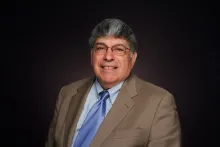
Gary Antion is a long-time minister, having served as a pastor in both the United States and Canada. He is also a certified counselor. Before his retirement in 2015, he was an instructor at Ambassador Bible College, where he had most recently also served as Coordinator.
