
Robin S Webber
This transcript was generated by AI and may contain errors. It is provided to assist those who may not be able to listen to the message.
The title for my message today is, Fear versus Faith. Fear versus faith. And in one sense, I think they could be stand-alone topics. And obviously they are stand-alone topics. But I think in many ways they interact together as well, in terms of how we live this Christian life, the options that we choose, the way we respond to certain things.
And so my lead question for today, for you and I, is, when we're faced by life's challenges, how do we respond? How do we respond? Do we respond out of fear? Or do we respond out of faith? Have you ever been afraid, brethren? Have you ever experienced fear? There's a couple different types of fear, but the kind I'm asking about today is more the emotional fear. It could even be considered an irrational fear, maybe an overwhelming fear that affects your life, the decisions that you make.
Symptoms to that kind of fear include, and this is an extreme of that, terror, panic, fright. Maybe less extreme synonyms would be dread or distress, maybe alarm, dismay. Certainly there's varying degrees of fear, some very intense, very emotionally intense, and others maybe more of an anxiety that would keep us awake at night. Not all fear is the same.
Now, people can generally fear various things. It's probably safe to say that all of us at one time or another have experienced some level of fear. And not all fear is necessarily bad of and by itself. We have built into us sort of an instinctual type of fear. There's something built within us that generally, for most people, keeps you from walking right out to the ledge of a skyscraper and just looking over the edge. There's the fear of falling.
It's generally a fear that's built in that would preserve our life, keep us from a healthy respect, give us a healthy respect from getting into certain circumstances. So, in some ways, fear can be a positive motivator, but that's not all that fear is. And I think we would acknowledge that fear that actually grips us and overrides rational thinking and reasoning is a wrong kind of fear.
It's a kind of fear that as Christians we need to learn to control. So people can fear various things. Some people are afraid of the darkness. Others are afraid of loss, maybe financial loss or physical loss in some ways. Some people have phobias. Maybe it's arachnophobia, a fear of spiders. There are certain things I don't really care for, snakes being one of them. We have bull snakes that will go out.
They're non-venomous, but they crawl across our pasture, and I generally try to avoid them. If I look down and there's one crawling between my feet, I'll give a jump. My wife will pick them up by the tail and grab them behind the head and pet them and be their friend.
But again, people can have different types of phobias or fear. We have a friend who has a dreadful fear of spiders. And everywhere we go, she's kind of on the lookout for spiders and be careful of the spiders. As a matter of fact, one time she was driving her car on Bigelow Gulch in Spokane, and it's kind of a busy two-lane highway-type road. And she noticed a spider crawling up the windshield of her car as she just screeched to a stop, flung the door open, and leaped out right in the middle of the road.
It could have been hit, could have been killed, but that intense fear and reaction of that spider was immediate. And as I said, those kinds of fears, rational thinking, can tend to sometimes go out the window. Darla and Tabitha, this is a parent of a school friend of Tabitha's, so they all went one day to the movie theater to see a movie.
And they're sharing popcorn, and Darla reaches across, picks up some popcorn, and one kernel of popcorn falls out and lands on the lady's arm and starts rolling down her arm. And suddenly it's this wild flailing that's going on because there could be a spider crawling on her. Darla said that was the most exciting part of the movie. But again, brethren, we can experience different kinds of fears. And I would say phobia is a little bit different of a category, even, than the kind of fear that I want to address today.
But phobias can control our life to a certain degree in ways that it should not. And if any of us have a phobia, we should seek help, and perhaps even professional help in a way to be able to at least deal with those things. The fear may not be totally gone, but learn to bring it into control and subjection in a way that it doesn't rule over our life. Again, some can have failure of loss as a fear and fear of situations beyond their control.
You lay awake at night, kind of dreading what tomorrow's going to hold or what next week or next month's going to hold, what might come along beyond your control, and some fear death. So, I would say, in our life, there are many things that could direct us in terms of a fearful direction. And the kind of fear I've described often, again, exceeds rational, logical thinking, and our responses could be along an irrational way as well. When I was in Nigeria in the spring, Dari and I were driving through Lagos, and he pointed to this canal that runs through the city.
And as the highway goes, it's a bridge over this canal. And he mentioned to me the number of people that have actually died in that canal, and there was one incident a few years back where there was an explosion. Three, four miles away, it was a gas-type explosion at a manufacturing plant, but it created just such a percussion and sound that it sounded like a bomb had gone off, and people literally, in panic, streamed by the hundreds, because there are people everywhere, millions of people in Lagos, streams by the hundreds into this canal.
Well, Nigerians can't, by and large, tend to swim. They can't swim. And the fact is, that canal, if you were to go out in it, it's probably not much more than Chefs Beat. But the fact is, the panic, the surge of the people, and just the disarray that was going on, dozens of people drowned and died, again, just out of response to fear that was not rational and thought through in that way. Fear can cause people to do a number of things, not rational, and that's largely because fear is emotionally based. And when I think of my life, in terms of decisions that I've made, probably some of the worst decisions I've ever made have been emotionally driven decisions.
You know, financial decisions, other decisions, where you're wanting to try to address a problem, rectify a situation, and so you just make a decision based on emotion, and later on, when you have the time to sort of settle down and logically think this through, you go, well, you know, that maybe wasn't the best decision at the time. But again, emotionally driven responses can tend to lead us in the wrong direction, and certainly fear can drive those types of responses. Commercial advertisers in the United States can tend to use fear as a tactic to target the consumer.
You've probably all seen commercials where there's the man in the hooded mask, and he's the criminal, and it's dark night, promoting music playing, and he's breaking into the house, and the advertisement is sort of, you know, could this happen to you?
Don't let this happen to you. And advertisers seem to have found a way to connect with our fears in order to make the sale. They can reach across, again, connect with those things, drag them into the light, sort of magnify them to the point that we say, oh no, you know, I have to act. I need that product or that service, and it's a way of connecting and pulling people in. Now, I would say it's important not to dismiss those things altogether.
We certainly don't want to be victimized, and we want to make wise decisions based on real concerns, but again, not decisions that are based in fear in this way. As God's people, we need to be those who are not given over to fear. In fact, if we're given over to God in us, in a close relationship with God, we will be a people who are not given over to fear.
Let's go today to 2 Timothy chapter 1 to begin with. 2 Timothy chapter 1. Notice Paul's words to Timothy beginning in verse 6.
Paul says, Therefore I remind you to stir up the gift of God which is in you, through the laying on of my hands. That gift of God was his Holy Spirit. This could be referring to perhaps receiving a Holy Spirit following his baptism, or perhaps following ordination. Either way, it was the laying on of hands by which Timothy received that measure of God's Spirit. Verse 7, he says, For God has not given us a spirit of fear, but of power and love, and of a sound mind. And when we talk about power, love, and sound-mindedness, we're not talking about something that is generated by us.
We're talking about the fact that when we receive God's Holy Spirit, we are infused with his power, his love, and his sound-mindedness. And the degree by which we will exercise that is dependent on the degree that we yield to God's Spirit in us, in working with us. God is not a being who entertains fear. Fear has never been a part of God's focus. God so loved the world that he sent his only son. So it was an act of love by which God responded.
And all that God does is motivated out of love and outgoing concern. Fear is not a motivating factor to God. It's not a part of his mindset. It's not a part of his spirit that he gives to us. And therefore, brethren, fear should not be a part of our mindset, as we allow God to work in us in this way. In fact, the Spirit of God, again, is not a spirit of fear.
And if it is dwelling in us and we're utilizing it, it's actually a spirit that will push fear out of our lives. The point of the message today is not to talk about all aspects of fear. Certainly, the fear of God is a real thing. We should fear God, and that fear has been described, and can be described in one term as a respect for God, for his power, and what he has lined out.
But also, fear for God includes just that, I would say, fear. Fear to cross God, fear to disobey him, fear of the consequences of breaking his commandments, fear of facing the lake of fire. That should be a motivating factor in our life. Again, that's not the main topic of my message today, but we will cover that again at some point. But the point is fear in terms of what gets in the way of our Christian life, what gets in the way of our relationship with God.
So again, I come back to the question of facing life's challenges. When we have these things that are presented before us, how do we respond? Is it out of fear, or is it out of faith? Because they are two very different responses. Fear and faith are opposites of one another.
In fact, they're enemies of one another. Because faith is of God, fear is not. So faith and fear are enemies, but we need to understand that they are not equal to one another. Because if faith is of God and fear is not, certainly faith trumps fear any day of the week. Faith is the antidote to fear. So, brethren, are you... am I... are we fearful people? I would say, if so, we need to learn to practice and exercise more faith. Faith triumphs over fear.
Faith is looking to God in trusting confidence and knowing that He has our eternal interest at heart. And when we talk about eternal interest, that's something that supersedes our interest of today, necessarily. You know, if we don't have the newest house, or the nicest car, or the biggest bank account, and we say, God, why haven't you blessed me? Isn't that in my interest?
Well, maybe that's not in your eternal interest. And that's truly what God is looking out for each and every day. As God's people, we need to learn to overcome fear, exercise faith. Now, last week I touched on faith in my sermon, and I quoted from 2 Corinthians 5, verse 7, which says, we walk by faith, not by sight. That's a powerful scripture as it pertains to faith. We walk by faith, not by sight. And I said, we often respond according to the things we can see, and we consider that to be faith, and it can be, in part. You know, if we see the solution, we know we need to walk through it, and we do so according to faith that it is the right thing.
That is exercising faith, in part. But the fact is, stepping forward, when we don't know the solution, when we don't know what the answer is, all we know is that we have to obey God and put Him first, and that He will work it out, that's faith. Knowing that God provides for His people, even if the solution isn't what we would have chosen for ourselves, moving forward from that point.
So again, we walk by faith, not sight. We must put God first. The problem with walking by sight only is that when we encounter a challenge in this life, bigger than ourselves, we tend to just see that challenge for what it is, as opposed to looking to God, looking to Him for the solution.
For walking in faith towards God, we need to recognize that there is no challenge or struggle or obstacle that is greater than God. Certainly, no fear that would be greater than God in us. God guiding and directing our steps. And so with that understanding, we can step forward in confidence and faith, again knowing God will see us through, and that He provides the answer.
We walk by faith, not by sight. Now, challenges in life can be positive or negative, depending on what they are, and people can respond in both fear or faith. And people have responded in both ways. I'd say the biggest challenge, brethren, you and I will ever face in this life is our calling to seek first the Kingdom of God and His righteousness. Now, that's a positive challenge. That's something God's laid before us. You know, take on my spirit and still my character in your life, walk according to it.
But it's a challenge to do that in a world that's going completely the other way. It's like swimming upstream. It can be a challenge to overcome the carnal nature and grow into the stature of the fullness of Jesus Christ. It's a challenge put thin out of our life. It's a challenge to turn and go the other way from where it is that we started. Again, obtaining the Kingdom of God and the righteousness of God is the greatest challenge that we will ever face.
But we will be up to the challenge if God does, in fact, as He does, give us His Spirit and follow through with that spiritual support that He offers. But, you know, people have responded to the calling of God very differently. Some have responded in fear and turned and ran the other way. And some have responded in faith, saying, you know, I'm not sure God where this journey is going to lead and what's fully going to be required of me, but I do know I'm committed to seeing this through to the end.
So again, brethren, we can respond to our challenges in either faith or fear. I want to go back and look at an example we tend to turn to during the Days of the Eleven Bread, Numbers chapter 13. I want to look at an example of people who were faced with the situation. And the example is that some responded according to faith, and some responded according to fear. And the outcome for each was completely different. Numbers chapter 13.
Here's a nation of Israel who's approaching the Promised Land. It's a type of the journey you and I are on to the kingdom of God. They come up to the brink of the Promised Land. They're preparing to enter, and now they're sending 12 spies into the land, kind of scope it out, and bring back a report. Numbers chapter 13 and beginning in verse 1, it says, Verse 3, so Moses sent from the wilderness of Peran according to the commandment of the Lord all of them of the men who were heads of the children of Israel. And it goes on, kind of listing their names and the tribes which they were from.
Verse 16, it says, So he changes Joshua's name here, and Joshua now, which essentially means Yahweh, is salvation. The point is, it is by God by which salvation comes. That is Joshua's name. And of course, God would be their savior if they looked at him in faith. Verse 17, So I tend to remember the Bible story lessons that we had as a kid, and then later the Bible stories that the church had put out.
And they had illustrations in there, and they showed the men of Israel as they came back out of the land carrying the single cluster of grapes between two men on one pole. And, you know, as I kind of imagined it from the picture, maybe the grapes were more like the size of cantaloupes. And I don't know if it was necessarily so, such as that, but it does describe that two men carried one cluster of grapes on the pole.
It was an abundant land. It was rich and fruitful, that blessing which God was giving to them. Verse 25, And this is its fruit. And they said, so this is what we saw. It was abundant, it was fruitful, crops, you know, riches. It truly is a wonderful and abundant land. What a great place to be. But we saw something else as well. For carrying on, verse 28, And they found the descendants of Anak there, the Amalekites dwell in the land of the south, the Hittites and the Jebusites and the Amorites dwell in the mountains, the Canaanites dwell by the sea along the banks of the Jordan.
And so, they say, you know what, we saw trouble there as well. We saw things that made us fear. And if you'd seen them, they would make you fear and quake in your boots as well. They said, yes, the land is wonderful, abundant, fruitful, many blessings could be had there, but if cities are walled up to heaven, there's giants, there's vicious armies. This is what we saw. And then this was their report. You know, brethren, the problem here is that these 10 spies who gave the negative report were walking by sight. They saw what they saw. They depended on what they saw. They reported what they saw. And now they're acting in fear based on what they saw.
They're walking by sight, not according to faith. Verse 30 says, Then Caleb quieted the people before Moses and said, Let us go up at once and take possession, for we are well able to overcome it. What was Caleb looking at? What did Caleb see? What did he see differently than what the other spies saw? Well, nothing. Caleb saw the same giants, the same cities, the same armies, the same obstacles. He also saw the same fruitful abundance.
But the difference was Caleb was walking according to faith. He knew what God had promised his people. He had seen the miracles by which God brought them out of Egypt by strength of hand. He had been there at the Red Sea as God parted the waters and they walked across, destroyed the armies of Egypt behind them. Caleb, along with the rest of the men, had been there when God provided in the wilderness, made the bitter water sweet, provided quail, provided manna, did all these things for them.
Caleb knew the promise of God. He had faith that God, who had brought them this far, was able to deliver that which he had promised to his people.
Caleb was walking by faith, not by sight. Verse 31 says, And all the people whom we saw in it were men of great stature. And we saw the giants, the descendants of Anak there, from the giants. And we, he says, were like grasshoppers in our own sight. And so we were in their sight. So we were like grasshoppers in our own sight. That's how they perceived themselves.
In light of what they saw in the land, they said, we are small. We are powerless. We are weak. There's certainly nothing that we can do to take this land for ourselves. They were fearful and little in their own eyes. Brethren, this is what walking by sight looks like. This is exactly what it looks like. This is what fear does the people that God could otherwise work with, if only they would submit to him.
Because the strength and the power and the might doesn't come of ourselves, it comes of God. God in us, what it is that God is able to do for us. The God who opens the seas, that's not by any physical strength and might, but God does work those things out for His people that look to Him in faith and put their trust in Him. The problem with fear is that it causes people to draw back. It causes them to falter, causes them to turn aside, where faith, on the other hand, responds to what God is doing, and it empowers the people to move forward.
Ten spies, responded in fear, wanted to return to Egypt. The two, Joshua and Caleb, that responded in faith to God, despite the obstacles, were ready and willing to move forward. Chapter 14, verse 1, Now let us select a leader and return to Egypt. Can you imagine contemplating the fact that it would be better if God had never called you out of this world, than to call you out and lead you up to a point where now you're facing an obstacle or a decision where you would have to put your faith and trust in Him?
Again, that's not walking by faith, that's walking by sight when you say, let us select a leader and go back to Egypt. Let us forsake this calling and go back to the world. Certainly, it's not what God is working out in our lives. Israel wanted to, by and large, tuck tail and run. Verse 5, To begin, the point is, look to God and faith. And this is an example of what that looks like. It's a clear example of what it is to look to God in fear, or to look at the obstacles in fear. But here Joshua and Caleb are looking to God in faith.
And it's a willingness to go forward despite the challenges in order to follow where God is leading. Verse 10, And then the Lord said to Moses, How long would these people reject me? Turning aside from God's lead in fear is not just something that we do in terms of to ourselves. It is a rejection of God and what God is doing in our life. And he just said, Moses, How long would these people reject me? How long would they not believe me with all the signs which I have performed among them?
He says, I will strike them with the pestilence, and disinherit them. I will make of you, Moses, a nation greater and mightier than they. Jumping down to verse 21, we know Moses pleaded with God on behalf of Israel. God relented at that point. Verse 21 says, But truly as I live, all the earth shall be filled with the glory of the Lord, because all these men who have seen my glory, and the signs which I did in Egypt and in the wilderness, put me to test now these ten times, and have not heeded my voice.
They certainly shall not see the land of which I swore to their fathers, nor shall any of those who rejected me see it. He says, But my servant, Caleb, because he has a different spirit in him, and has followed me fully, I will bring into the land where he went, and his descendants shall inherit it. Verse 29, God says, The carcasses of you who have complained against me shall fall in this wilderness, all of you who are numbered according to your entire number, from twenty years old and above.
Except for Caleb, the son of Jafuna, and Joshua, the son of Nun, you shall by no means enter the land which I swore I would make you dwell in. So again, after all God had done in their midst, Israel still, but not looked at God in faith, and therefore God would not fulfill his promise to that generation, to those twenty years and older. They were walking by sight. They're not trusting God, and God said, They're not worthy to receive what it is that they could have had had they only followed me. But Joshua and Caleb, and that younger generation, they would hopefully learn to trust God, they would receive those things.
God is looking for people who are not fearful in the response to him, people who can walk by faith, not by sight. And the question is, brethren, do we? Day in, day out, throughout all our decisions, do we walk by faith, or do we walk by sight? You know, sometimes maybe we're not staring the promised land and the giants in the face, but there's other kinds of situations which arise in our life that we have to make a decision. Am I going to put God first?
You know, is the threat of anything my employer can do to me greater than God? What about my college professor? You know, we have plans in life, things we're doing, places we're going, but it can't be done apart from putting God first. Jesus comforted his disciples in Luke 12, verse 32, when he said, Don't fear, little flock. It's your Father's good pleasure to give you the kingdom. In other words, don't be afraid. God desires to see us through to the end, to give us the kingdom, that which he has promised. But again, we need to respond in faith and encourage, not fear.
God doesn't call us to destruction. He wasn't bringing Israel up and sending him into the Promised Land for one big slaughter. God doesn't call us out of this world and not give us the things that we need in order to fulfill that calling, to reach the kingdom of God. So he does walk with us along the way.
He provides for us. He opens the sea before us, but it requires faith and trust in him. It requires action on our part, putting one foot in front of the other to the goal of the kingdom of God. I tend to think what it would have been like for Israel to stand there at the brink of the Promised Land to see the opposition in the physical sense that stood before them. And they're looking at it with the end goal in mind of settling that land.
It would be theirs. And I could imagine it was sort of an overwhelming thing to them. Look at all that needs to be done in order to possess the Promised Land. And in our life, we look towards the kingdom of God. And in some ways, that could almost seem like an insurmountable obstacle as we consider all that needs to take place in our life to achieve the kingdom of God.
But the point is, we need to look to God in faith and simply, day by day, put one foot in front of the other in obedience to Him. One day at a time, one step at a time, never turning aside, never running in fear towards the kingdom of God. When the twelve spies were sent into the land, they were told to be of good courage. Do not fear. And only two of them heeded that instruction. Ten did not. And at the end of the day, it was those two who were allowed to enter into the land of promise.
Again, when we live according to faith and not fear, it is God who works in us to accomplish incredible things. And God cannot work. God will not work with a people who are fearful and will not respond to Him in faith.
Our part to play is to trust in Him and not turn aside. Again, faith moves forward in response. Fear turns aside. Fear draws back. If we're living according to faith, God can use us in powerful ways, just as He did to these individuals that we can find all throughout Scripture.
Faith, brethren, is an active process in our life. It's not just kind of sitting back and letting life happen to us or letting God just sort of open the door and pull us through. But faith is actually an active process, and it's going to be evidenced in our life by our actions, and it's going to be made complete through our actions as well. So I'll say that again. Faith is going to be evidenced by our actions, and it's going to be made complete by our actions as well.
If you have faith, it's going to be evidenced in how you live. Right? You're going to live according to your faith, you're going to act according to your faith, and your faith will be evident to those around you according to your actions. Your actions will also make your faith complete because you are acting on what you believe.
That's why it's called living faith. Let's notice the book of James, Chapter 2. James 2. James, the half-brother of Jesus Christ. Chapter 2 and verse 14. Again, considering the active part of faith. James says, What is a prophet, my brother? And if someone says he has faith but does not have works, can faith save him? Can just saying, I believe, save you? Is that enough? Or do we not also have to respond and put into action that which we believe? Verse 15, If a brother or sister is naked and destitute of daily food, and then one of you says to them, Depart in peace, be warmed and filled, but you do not give them the things which are needed for the body, what does it profit?
That's also faith by itself if it does not have works is dead. So if you believe and then you don't do anything about it, your faith really isn't going to amount to much of anything. Again, just saying, I believe, I believe without backing it up by putting one foot in front of the other really won't lead you anywhere. Actually, the opposite would be true.
You are now accountable to what you claim to know, but do not act on. Ultimately, that accountability then leads to judgment. So we need to walk by faith, but also that needs to be backed up by our actions. Verse 18, but some will say, You have faith, I have works, show me your faith without your works, and I will show you my faith by my works.
So again, faith is evidenced through our actions. Verse 19, You believe that there is one God, you do well, even the demons believe and tremble. So, belief of and by itself, that's good, but it's not enough. The demons believe, the demons know there is one God, the demons know as well the sacrifice of Jesus Christ, the demons know what it is that you and I have been called to in terms of our eternal perspective, but again, it just says they tremble.
If we respond in faith, we need not tremble, brethren. Verse 20, but do you know, O foolish man, that faith without works is dead? Was not Abraham our father justified by works when he offered Isaac his son on the altar? Do you see that faith was working together with his works, and by his works, faith was made perfect? And actually, the word here, Greek word translated perfect, could actually be translated complete. And I would actually, I would say, be a better rendering of that. Do not see that faith was working together with his works, and by works, faith was made complete. So our actions, as we respond in faith to God, is what makes our faith complete.
Verse 23, in the scripture, was fulfilled, which says, Abraham believed God, and it was accounted to him for righteousness, and he was called the friend of God. Do you see then that a man is justified by works, and not by faith only? Likewise was not Rahab the harlot also justified by works, when she received the messengers and sent them out another way. For as the body without the spear is dead, so faith without works is dead also.
We don't want dead faith. We want to be exercising living faith. So that takes action. That takes response to God. It's a process made complete through our actions and responses. And so what I want to do is look at the faith chapter. I can't hardly talk about faith without going to Hebrews 11. We're just going to cruise through it briefly, but I want us to look at how faith manifested itself in the lives of the faithful in terms of the actions that it brought about. Hebrews 11, beginning in verse 1, It says, So faith isn't primarily pertaining to the things which are seen.
As this shows, it's pertaining primarily to those things which are unseen. When you have something that's not seen by the physical eyes, for example, our calling from God, you can't physically see that in that way, but when you have something that cannot be seen by physical eyes, then what's the proof or evidence of it if it can't be seen?
What's the proof of our calling if it can't be seen? What's the proof that God exists if he can't be seen? Well, brethren, the evidence is in our faith, in our actions, in the way that we live our lives. So faith is evidence of these things not seen. We respond, that is, evidence of those things. Verse 4 says, It says, So, again, we're looking at the fact that it's by faith they took action. By faith, Abel offered more excellent sacrifice. He acted. Verse 8, When he was called to go out to the place, he would receive as an inheritance, and he went out not knowing where he was going. By faith, he dwelt in the land of promise, as in the foreign country, dwelling in tents with Isaac and Jacob, heirs with him of the same promise. Verse 17, By faith, Abraham, when he was tested, offered up Isaac. Verse 20, By faith, Isaac blessed Jacob and Esau concerning things to come.
Verse 23, By faith, Moses, when he was born, was hidden three months by his parents. That was his parents' faith. That was not Moses' faith. That was the faith of his parents. Again, by faith, Moses, hidden three months by his parents, because they saw he was a beautiful child, and they were not afraid of the king's command. Do we respond in faith or fear? Pharaoh is telling you, relinquish your child, or you will die as well, and you hide that child, and you put it out, try to give it hope of life, as they did putting Moses' adrift on the Nile. Is that not responding in faith? That God will do his part as well. Verse 24, By faith, Moses, now this is his faith, when he became of age, refused to be called the son of Pharaoh's daughter, choosing rather to suffer the affliction with the people of God, than to enjoy the passing pleasures of sin. Esteeming the reproach of Christ's greater riches than the treasures in Egypt, he looked to the reward. By faith, he forsook Egypt, not fearing the wrath of the king, for he endured a seeing him who is invisible. By faith, he kept the paths over, and the sprinkling of blood, lest he who destroyed the first form should touch him. By faith, they passed through the Red Sea, as by dry land, whereas the Egyptians attempting to do so were drowned. By faith, the walls of Jericho fell down, after they were encircled for seven days, and goes on as well. By faith, Rahab did not perish with those who did not believe, when she had received the spies with peace. And as you read through the accounts, it goes on and on through these other individuals as well, who, by faith, didn't just sit back, but by faith they responded. There were actions in their life, putting one foot in front of the other in response to the calling of God. Again, faith is active, moving towards what God is calling us to. Fear is withdrawing, turning aside, drawing back. Another example that contrasts faith with fear is found in the parable of the Talons. Matthew 25.
Matthew 25, beginning in verse 14, wanting us to recognize clearly, brethren, that there is more than one way to respond, and God is looking to our response as we walk through this life. Matthew 25, verse 14, Jesus Christ's words, He says, He called His own servants and delivered His goods to them. In the one He gave five talents to another two and to another one, to each according to His own ability, and immediately He went on a journey. So the point is, to each of these men, according to their ability, here's something that I want you to invest and to grow. That's the instruction from the Master. Verse 16, So He said to one who had received five talents, He came, He brought the five, and He said, Lord, You delivered to me five talents, and look, I've gained five more besides them. And His Lord said to him, Well done, good and faithful servant, You were faithful over a few things, I will make you rule over many things, enter into the joy of your Lord. Also, He who had received the two talents did the same, He gained two besides them, and He received the same response. Verse 24, Then He who had received one talent came and said, Lord, I knew You were a hard man, reaping where You have not sown, gathering where You have not scattered seed, and I was afraid.
Verse 2, actually we're willing to step out and take some risk, because the Master has said, Here I'm giving You something and trusting You with it to grow it. This one says, Lord, I was afraid. And as a result, I went and hid Your talent in the ground, and look, there You have what is Yours. So this man responded out of fear, and he gained nothing because of that fear, nothing for his Master, because I was afraid and I hid Your talent in the ground. Point of this parable, brethren, is that God expects us to do something with what it is He's given us, by His Spirit, by the talent and abilities that we have as well. God expects us not to just lie there dormant, as He invests Himself in our life, He expects us to produce, to be abundant in that way, not fearfully bury what it is that He is doing with you and me. We cannot afford to respond out of fear. So verse 25, again, I was afraid, went and hid Your talent in the ground, and look, there You have what is Yours. But as Lord answered and said to Him, You wicked and lazy servant, You knew that I reap where I have not sown, and gather where I have not scattered seed. So You also have deposited my money with the bankers, and at my combing I would have received back my own with interest. He said You should have at least done something, which is better than nothing. Therefore take the talent from Him, give it to Him that has ten talents. For everyone who has, more will be given, and he will have abundance. But from him who does not have, even what he does have will be taken away, and cast the unprofitable servant into outer darkness, there will be weeping and gnashing of teeth. So the good and profitable servants stepped out on faith. They took risk. They grew what it was that they had been given into more. The fearful servant did not, and as a result, he was cast out. It should be a sobering reminder and a warning for us. Brethren, the kingdom of God is for those who will respond to God and walk in faith towards Him. It is not for the fearful. It is not for the cowardly. In fact, the Scripture says those individuals won't even be there. Revelation 21.
Revelation 21. Verse 5.
It says, And he who sat on the throne said, Behold, I make all things new. And he said to me, Write, for these words are true and faithful. And he said to me, It is done. I am the Alpha and the Omega, the beginning and the end. I will give the fountain of water of life freely to him who thirsts. We're talking about God the Father here. Verse 7.
But the cowardly, the unbelieving, the abominable, murderers, sexually immoral, sorcerers, idolaters, and all liars, shall have their part in the lake which burns the fire and brimstone, which is the second death. My new King James says cowardly, the original King James, I believe, says fearful. Those individuals who cannot learn to control their fear and walk in faith towards God will not be in the kingdom of God. And when we read this description here in the scripture, it lumps fear into a whole lot of other sins that we would consider to be dramatic. And yet, this is the level at which it's recorded for us. Because fear is equated to drawing back in our lives, pulling back from the relationship with God when He has offered us a spirit that is not of fear. If we're going to overcome, be in the kingdom, we must exercise faith. Again, faith conquers fear. That comes by looking to God first and foremost, by drawing close to Him, by walking in faith, by faith, not by sight. So, brethren, I'd say if you're struggling with some sort of unresolved fear that's hindering your walk with God, then you need to go to God with your fears. Lay them before Him. Seek His help to overcome. It's that important. Our salvation depends on it. In Psalm 34, verse 4, David says, he says, So David sought God. He looked at God in faith. He cried out to God and laid those things before God, and he heard Him. And he says, He delivered me from all my fears. And God will do the same for you as well. But it requires that active participation, that faith, on our behalf. As we start to conclude, brethren, I want to quickly look through a number of scriptures that help to show the contrast between faith and fear. And frankly, these scriptures are positive, and they're encouraging, and hopefully they will help to strengthen us as we work to put fear out of our lives and look in faith to what it is that God is doing. Deuteronomy chapter 31, verse 6. Several of these, but we'll just move quickly.
Deuteronomy 31, verse 6. Here, Israel is preparing to enter the Promised Land, hopefully for good. Deuteronomy 31, verse 6. God says, And these are the words of Moses, but it's the instruction which is coming from God. Don't be afraid. He is the one who goes with you, and he will never leave you nor forsake you. God is walking with us today. We cannot walk in fear. We must walk in trust and faith, knowing that he is there. We must be strong and of good courage. First John chapter 4.
First John 4, verse 4.
John says, And so these are words that we can draw on and depend on, remembering that God who is in us is greater than any fear or obstacle you and I could ever face. He who is in you is greater than he who is in the world. Ultimately, Satan the devil is the instigator of fear. God and faith are the antidote. Psalm 27.
Psalm chapter 27, giving verse 1.
Another Psalm of David. David says, David says, David's confidence was in God as his deliverer and savior. That's where our faith and trust must lie as well. As long as David kept the proper perspective, there was nothing that man could do, nothing that could arise against him that would cause him to fear. As long as he kept his eyes on God, and he knew God was with him, he could walk forward in confidence. Back to 1 John, once again, chapter 4.
1 John 4 verse 17.
It says, Love, we heard about that in the sermonette today, the love of God, Love has been perfected among us in this, That we may have boldness in the day of judgment, because as he is, so are we in this world. Verse 18.
So fear involves torment, but perfect love comes from God. The more we learn to love as God loves, the more we will be able to remove fear farther and farther from our life. Final Scripture, Isaiah 41.
Isaiah 41 verse 8.
It says, And Jacob, who I have chosen, the descendants of Abraham, my friend. Today God says, You are my children, you are my sons and daughters, you who I have called out of this world. Verse 9.
I will strengthen you, yes, I will help you, I will uphold you with my righteous right hand. Brethren, this is a promise from God, that as long as we look to Him in faith and trust, following His lead, He will never leave us nor forsake us. He will lift us up in strength. He will open the sea before us. He'll provide the way. Again, the question we let off with, when faced with life's challenges, how will we respond? Will we respond out of fear or faith? Fear can be a regular part of life if one allows it, but rather than it doesn't have to be. God, through His Spirit, will help us to overcome fear. He will comfort us and encourage us. He will strengthen us as long as we, again, look to Him in faith. Faith is active. Faith is forward moving, forward stepping, engaging into what it is that God has called us to, taking action in response to Him. Fear is drawing back and it is turning aside. Jesus Christ said, it is my Father's good pleasure to give you His kingdom. Let us have confidence in that statement. Let us be strong and of good courage. Let us continually, day by day, be putting one foot in front of the other on our journey to the kingdom of God, looking to Him in faith. Brethren, do not fear.
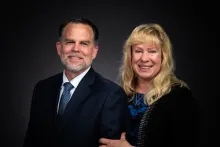
Paul serves as Pastor for the United Church of God congregations in Spokane, Kennewick and Kettle Falls, Washington, and Lewiston, Idaho.
Paul grew up in the Church of God from a young age. He attended Ambassador College in Big Sandy, Texas from 1991-93. He and his wife, Darla, were married in 1994 and have two children, all residing in Spokane.
After college, Paul started a landscape maintenance business, which he and Darla ran for 22 years. He served as the Assistant Pastor of his current congregations for six years before becoming the Pastor in January of 2018.
Paul’s hobbies include backpacking, camping and social events with his family and friends. He assists Darla in her business of raising and training Icelandic horses at their ranch. Mowing the field on his tractor is a favorite pastime.
Paul also serves as Senior Pastor for the English-speaking congregations in West Africa, making 3-4 trips a year to visit brethren in Nigeria and Ghana.
