

Robin S Webber
This transcript was generated by AI and may contain errors. It is provided to assist those who may not be able to listen to the message.
Well, good afternoon, everyone! And a happy Sabbath to each and every one of you. What a beautiful, beautiful, beautiful day outside, isn't it? Love coming down what I affectionately call Guacamole Alley. Brethren, let's open up our Bibles to Romans 8 and verse 31. And as we open up our Bibles, hopefully on this Sabbath day, we'll also be ready and able to open up our hearts. We just heard a hymn talking about, Search Me, O God, and show Me your everlasting ways. And hopefully that's a message that can resonate not only by the special music, but by what I hope to share with you today. Romans 8.31 is what we might call a familiar Scripture to many of us. The question is, how familiar is it as to our walk before God? Let's look at Romans 8 and verse 31. What then shall we say to these things? If God be for us, who can be against us? If God is for us, who can be against us? I remember many, many years ago when I was in college, and the instructor that was our teacher for the epistles class, when he came to Romans, he gave a phrase, and I'll share it with you, and I put it in what we might call our inspired margins at the time. And I think I still have it in the Bible that I had in college, and it was simply this. As we look at this, if God be for us, who can be against us? It went simply like this, God plus me equals majority. Some of you are nodding here. You had that same teacher. You went to the same college. God plus me equals majority. Now, when you think about that, it's profound. It's also kind of cute. It could be a bumper sticker in that sense. You could put it on the back of your car as you go up and down the 15, or the 805, or out the 8. But the question is, does this Scripture stick with us as we come up to some of the great challenges that face us in life? God offers us some encouragement here about this. And what I want to do today for each and every one of us, we can look at a Scripture sometimes like Romans 8.31, and it's short, it's sweet, it's profound. But what I want to do with you today is I want to add some flesh and some blood and some heart to this Scripture, because Scriptures are great. But when you add a Scripture plus a story, I think we begin to go somewhere. Because all of us recognize that when it's all said and done, and we come down to these moments in life when perhaps nothing is going our way or everybody is coming our way, and we are wanting to stand up for God the Father. We are wanting to stand in the example of Jesus Christ, but everything around us is perchance pulling us away from that or coming at us. Sometimes it can be challenging. And in following God, there's always these two dynamics. There is a human risk, and there is a spiritual challenge. Have you ever noticed that? What is spiritually challenging is normally humanly risky.
And sometimes we perchance can become torn or don't know which way to go. Allow me to acquaint you with the individual that we're going to be talking about today. It's interesting that Scripture just gives a very brief thought about Him, and then the story develops. Join me, if you would, in the book of Numbers. In the book of Numbers, and join me in chapter 14.
And in Numbers 14 and verse 24, we are introduced to one of the great individuals of Scripture. In Numbers 14 and verse 24. And notice what is mentioned here. But my servant, Caleb, because he had a different spirit in him, and has followed me fully, I will bring him into the land where he went, and his descendants shall inherit it.
It's very interesting what is mentioned here about the gentleman, Caleb. It says that he had a different spirit. Doesn't mean that he lived on a different planet. Doesn't mean that he had a different set of challenges. But it said he had a different spirit as to how he approached life. The old King James puts it this way.
He had another spirit, something different, something totally unique, away and apart from human nature of and by itself. So let's move forward. Let's talk about Caleb this afternoon. We're basically going to stay in story. Why does God give us the life of Caleb to understand on this day? Because it's to remind us and to refresh us that God is true to his word. And he is looking still down to this day for individuals that will be true to him. So we want to look at what makes Caleb different.
Our story begins at the threshold of opportunity for ancient Israel, the people of God, and also the people of Caleb. They were seemingly at what we might call almost the finish line of God's victory for his people, a covenant people. God had drawn them and brought them out of Egypt. He had created miracles to bring them through the Red Sea.
Now they were almost there. The Promised Land was just right ahead. God's victory was all around them. Only the details had to be worked out. And what's that old expression about details? The devil is in the details. God had a purpose. God had a plan. God had made promises. And he had granted provisions to carry out those promises. And his victory was there for them to snatch, to honor God.
And then some of the details got in the way. Let's notice how the story begins in Numbers 13. In Numbers 13, Moses was the leader of ancient Israel. And the Lord spoke to Moses, saying, So Moses sent them from the wilderness of Peron according to the command of the Lord. And all of the men are then listed, two out of each tribe.
Now, I don't know when is the last time you had an opportunity to focus on a study on Caleb, or what God desired to do with his people, and what he desires to do for us today. But my eyes could not help but be drawn to verse 2, in the discussion that God was having with Moses, to send men to spy out the land of Canaan. Did you ever notice where it says, which I am giving to the children?
God was wanting to give it to them. He wanted to give the promised land as a gift. God was going to go before them. God was going to make it happen. But you know and I know what can happen along the way.
Here Moses chose qualified individuals. He wanted to have a broad-based group of people to seek counsel from. Because there were some big decisions upon this earthly leader, Moses. Sure, God was guiding them, but Moses was there on earth.
And some big decisions were there regarding new responsibilities for the people. So he wanted to know, number one, what ought to be done. What was fundamental to know, and to get the facts. Notice verse 17. This is what they were to do. Then Moses sent them to spy out the land of Canaan, and said to them, Go up this way into the south, and go up to the mountains, and see what the land is like.
Whether the people who dwell in it are strong or weak, few or many. And whether the land they dwell in is good or bad, and whether the cities they inhabit are like camps or strongholds. And whether the land is rich or poor, and whether there are forests there or not. Be of good courage. Basically, if you think about it this way, Moses was like a Thomas Jefferson of antiquity.
And he was sending out his own Lewis and Clark team. Except it wasn't the Louisiana Purchase. It was the Promised Land. He said, I need you. Go out. I need a survey. I need to get information. I want to know what's happening there on the ground. And then come back and give me a report.
But notice what he says, friends, in verse 20. Again, a phrase that leaps out of the Bible. He says, Be of good courage. Now, why were they to be of good courage? Because God had already revealed to Moses, I'm going to give you this. I want to give... And you realize you didn't have anything back in Egypt. And I brought you this far, and now I'll give you a land. It's going to be yours.
I'm going to bless you. Why wouldn't you be of good courage, then? In Moses instills a can-do attitude into the people. In Numbers 13, verse 25, notice what happens once they come back.
And they return from spying out the land after 40 days. And for 40 days... Now, remember that, because that's going to be real important. If you've never followed the story here... I know all of us think we know the story, but stay with me. We're going to hopefully learn a few things today. And they return from spying the land for 40 days. That's about a month and a half. And now they departed and came back to Moses and Aaron, and they brought back the congregation of the children of Israel in the wilderness of Peran, and noticed at a place called Kadesh, which was an oasis where Israel was staying. And they brought back word to them and to all the congregation, and showed them the fruit of the land. I think many of us are familiar about the clusters of grapes that were so big, they had to cut them down and they had to carry them. It was, you know, the Central Valley or Napa would be like, step back. You think you know about grapes? You haven't seen anything yet. The land was overabundant with fruit that was just enormous. And so they began to give this report. They said, we went to the land where you sent us, and it truly does. It really does. Oh, God knows what He's doing. It truly does. Flow with milk and honey, and this is its fruit. Now, it's interesting. They followed instructions.
But now we're going to learn something, and maybe something that we can take personally as we learn lessons from this story. It's one thing to get the facts. Now it's going to be another thing to interpret the facts. Because it is not in getting the facts, but it is in the interpretation of the facts that is going to create a challenge here. Because we're going to find out in a moment that the spies begin to interpret the facts, based on only what they see. Only on what they see. Not based upon what they know that God has revealed or their belief in God.
And it's interesting that it is at this place called Kadesh. Now, I mentioned that it is an oasis. Kadesh literally means holiness. You might want to jot that down. Because this oasis where the children of Israel were staying before they were to cross the river was a gathering point. But it was going to be a big intersection in the history of these people as to whether or not they were going to move forward and walk into holiness the way that God wanted them to, or whether they were going to be sunk by holes of doubt in their own life.
This was going to be a major intersection that was going to affect Israel for years and years and years to come. And notice what it says here. Nevertheless, the people who dwell in the land are strong. The cities are fortified and very large. And moreover, we saw the descendants of Anak there. And the Amalekites dwell in the land of the south, and the Hittites and the Jebusites, and the Amorites dwell in the mountains.
And the Canaanites dwell by the sea and along the bank of the Jordan. So they give this report, and they start talking about not only the fruit of the land, not only the sustenance of the land, but now we've got a problem. We're talking about the inhabitants of the land. And they talk about these people, these descendants of Anak. Now that's interesting because Anak literally means long neck. And it has the sense of being giants.
What the Israelites were confronting at this time were probably the... It was the great-great-grandpappy of Goliath. That these people were in the land, and they were large, and they were big. Physically, they looked very scary. And they had to make a choice. They had a human risk and a spiritual challenge.
The human risk is what do we do with these big obstacles that are in our way? The spiritual challenge was to remember that God had said, Clearly, I have given you the land. God already saw that it had already occurred. Only the details had to be worked out, but they got stuck on the inhabitants.
They got stuck on these big people. And here it is at Kedesh. And this is very important because all of us have Kedeshes in life. Intersections in life that, of and by themselves, might not seem gigantic at the moment, but by the decisions that we make, whether it is based upon what God wants us to do or what we do, based upon faith or fear, based upon obedience or taking matters into our own hands, can affect us for the rest of our life.
Kedesh, this spot that was determined to mean holiness, was to affect Israel for at least the next 40 years. Because they looked at man. They looked at the around, which is very interesting. And so we see this is happening. But one person stood out. And it's kind of interesting. I was reading through this story this morning. It's kind of interesting because we tend to normally lump Caleb with somebody else.
And we'll be talking about him in a few minutes. But it's interesting who began the conversation. The first one that is mentioned to carry the conversation. And giving it a closer look, I always thought it was the other guy. But it was one man. And sometimes what I want to share with you, perhaps what you're going through right now in the Kedesh moment, of your life, an intersection in your life, it just takes one individual to make a difference. To stand up.
To speak out about the things of God. To be a witness. Doesn't mean everybody is going to accept you're a witness. But who do you want to have hear you, people or God? And notice then as we become acquainted with this man named Caleb.
Then Caleb quieted the people before Moses and said, Let us go up at once and take possession. For we are well able to overcome it. Amazing! Here he is. Had Caleb visited a different world than the other spies? Is he looking at a different view? No. He had the same giants in front of him, the same situation in front of him, the same life circumstances facing him squarely in the face. And yet he said, Let's go up at once. This does not take a lot of thinking because God already says it's ours. God put his claim on it. God says he's going to give it to us. Let's go up and do it. For we are well able to overcome it. Now, let's understand something so that we can bring it down to us today. It's not that Caleb had different facts. And he didn't even necessarily have extraordinary faith apart from his companions. The difference is simply this. Are you ready?
He chose, and life is made up of choices, to exercise his faith. He made the choice to exercise his faith towards the greatness of God. His boldness was not dependent upon Israel, but dependent upon God's abilities. And as he heard all of these naysayers and all these reporters around him, he could not agree with the majority because they would then be disagreeing with God.
And so he stood up, and he stood out. And Caleb's different spirit and boldness wasn't a matter of recklessness, but had great purpose. Now, I want you to think about it for a moment. Maybe you've been in a circumstance like this, but can you imagine standing up in a crowd? Now, let's understand. Let's get in the sequence. The spies come back. Everybody's been wondering for 40 days, what's going on out there? What are they going to bring back? And then the 40...it's not the 40, they've been gone for 40...the 12 spies come back.
There's Moses, there's the leaders. I'm sure there's many, many people huddled around, all ears. Kind of want to know what's...want to put your ear to the ground, what's going on? Are we ready to go? So you have probably countless people around, and then talk of the Giants comes up. Oh, oh, oh, oh, oh. Kind of like a Wizard of Oz.
You know, lions, tigers, and bears. And you're supposed to say, oh my, lions and tigers, you know, and it goes... And you know, the eyes are getting wider, and the imagination...it's like in the old days, some of you older folks... Remember how big those personalities were on radio? You could just imagine how big they were, because you couldn't see them. So the mind's just kind of getting bigger and bigger and bigger and bigger.
And there they are, and there's all of this talk, and there's all of this motion going on. And then here's this guy named Caleb. He says, oh, come on! God's already said it! This is God! He brought us out of Egypt. He allowed us across the Red Sea. He's gotten us through the desert. We're in the home stretch. Let's go up and do it.
It's an amazing attitude. But one thing about Caleb that we need to learn about... When you do make a stand, you had better have something to stand on. And that's what made Caleb, Caleb.
When you're going to take a stand, you better know what you're standing on and who you are standing up for. Number one, you better have the facts. Caleb had seen the land for himself. He had the facts. Number two, you'd better have a right attitude. And what better attitude did Caleb have than to put his trust in God that gave him that courage? Number three, you better stay clearly what you believe. You're going to say something. Say it. You better stay clearly what you believe. And he did. We'll be more than able to overcome it, as he said in verse 30. So if you're going to stand for something, you better stand on something and you better know what you're about.
But then notice the quiet. Then Caleb quieted the people. But there's one thing about quiet. It only lasted so long. Because in the people, the fears began to take over again. One thing that I found in the Bible, whenever we're reading the great stories of the Bible, maybe this is a way that you can explore the Bible for yourself. It's always more fun to teach people how to read the Bible than just tell them about it.
One thing that you want to find in some of the great stories of the Bible is that wherever God is, Satan isn't far behind. You see this in the story of Caleb, where he stands up.
He's a type of Peter in the New Testament. He stands up before the audience. He points to God. Remember how it was in the book of Acts that when Peter's on stage on that day of Pentecost, when the Spirit had fully come, and he's giving you this story, and things are really going swell and well, and all of a sudden somebody says, Hey, guys, it's only 9 o'clock in the morning. I think they've had some sauce already. They're not speaking clearly. Let's remember something. In the Scriptures, wherever God is, Satan isn't far behind. And again, may I say, in your own life, as we're moving towards the promised land of the kingdom of God, when God is acting in your life, let's recognize that the adversary is not happy.
And if God is working loudly in your life, appreciate and understand that Satan may not be too far behind. Now, that doesn't mean that we need to be afraid of Satan, but we need to be aware of Satan, and recognize how he's going to come at us. For we find here, but the men who had gone up with him said, Oh, we're not able to go up against the people, for they're stronger than we. And they gave the children of Israel a bad report of the land, which they had spied out, saying, The land through which we have gone as spies is a land that devours its inhabitants.
And all the people whom we saw in it are men of great stature. That's what Enoch means. They had long necks. They were tall. And there we saw the giants, the descendants of Enoch. And they came from the giants. And we were like grasshoppers in our own sight. And so we were in their sight. Now, this is one of the verses that we need to stop at for a little bit and linger, because it's a verse that can directly affect us.
It's interesting how ten of the spies saw themselves. Did you notice that? They saw themselves as what? Grasshoppers. And then that is ultimately how the foe saw them. What is interesting is because of what they saw, they were paralyzed. And so they shrunk. Fear can literally paralyze you, and it can make you shrink. If not physically, it can make you shrink morally and spiritually. The other spies forgot what they knew about God. God had said, Go up. Through Moses, He said, Go up. I've given you the land. Be of good courage. And they only chose to remember what they knew about themselves.
And they forgot a promise from God is a sure thing. Now, I want you to relate this in your life, because I'm not just here to share a story with you today. These stories are given to us to bring into our lives. What has God promised us? What has He said is assuredly ours. And what stands in our way to where it looks like there's a giant? Looks like something that God can handle.
Oh, we can't handle it. God can handle it. God has already said, let's think about this for a moment. God has already said that you have been redeemed.
That you have been accepted. That you are loved by the Father. That we have an elder brother. That we are under the new covenant. That He's given us a new spirit. He's given us a new heart. He's placed His commandments in our minds and in our hearts to live for Him and to move towards the Kingdom of God.
That's pretty exciting when you think about it. I hope you're as excited as I am just thinking about it. Because that's why we're here, I presume. So what is then standing in our way that allows us to shrink back or to fall back or to think that somehow God doesn't know what He's doing or His GPS got us off in the wrong country or in the wrong trial or the wrong situation or the wrong venue?
We need to recognize God has defined us. He said we were lost and now we're found. He said, Nobody wanted you, but I wanted you. You were weak and you were base, but I have made you acceptable. And I'm bringing you towards a Promised Land, not just some desert that's green like Israel, but the Kingdom of God. And yet what can happen is because we see the situations around us, we can shrink, and then we begin to define ourselves. See, notice the Scripture. Let's look at this real quickly. Very important.
And life lessons for some of our young people as you're just getting out of the blocks in life right now. There we saw the Giants. The descendants of A and I came from the Giants, and we were like grasshoppers in our own sight.
The way they saw themselves, the way they defined their being is only how others saw them. As Christians, friends, young and old and in between, we need to define ourselves. And we must define ourselves by God's purpose, by God's plan, by God's promises, and by God's provisions.
If you want to make a fascinating study of the Bible and something that you can grab a hold of as you face the different Giants in your life, and there will be Giants in the land around us today and ones that you're tackling right now, you always start with the four P's. That God has a purpose. He wants to make you into His image.
And He has a plan of redemption. So He not only has a purpose, but He has a plan. And He makes promises. And He makes provisions. If you really want to do a study, go through the Bible with the thought of looking for the purpose of God, the plan of God, the promises of God, not half empty, half baked promises, but then find provisions that He makes to make those occur. And here it was. This was the challenge then.
Now, I want to share something about leadership. Leadership is very important because here were individuals that were, with their bad report, taking the people a different way. It's interesting. And this is something I think about as your pastor. And I know our elders do and our deacons do. That hopefully we are leaders that are godly. Because leaders do have an impact on our lives. And we do instill and we do shape and we do mold opinions and attitudes. But hopefully matched with the facts, not beyond the facts. And to recognize just how important that is. That as we present material out of the Bible to you, or situations that we're going through as a family, or as a congregation, or as an organization, or whatever might be happening in the world, that we hit it square on the head the way God would see it.
Is it half empty? Is it half full? Is it the wrong glass? Is it the right glass? Does the glass need to be replaced? There are many ways of looking at the glass. Are we in the right jungle? Are we going the right way? Are we doing the right thing? This is very, very important. You notice what happened here. Chapter 14, verse 1.
All the congregation lifted up their voices and cried, and the people wept that night. They got real emotional. And all the children of Israel complained against Moses and Aaron, and the whole congregation said to them, If only we had died in the land of Egypt, or if only we had died in this wilderness, why has the Lord brought us to this land to fall by the sword that our wives and our children should become victims?
Would it not have been better for us to return to Egypt? So they said to one another, Let us select another leader and return to Egypt. Now, this is interesting. Here it says Israel went into a pandemonium. Now, let's understand something about our friends the Israelites back in the Old Testament. This group was most likely well-intentioned. But faith can only survive so long by using its ears and eyes. And that's what they were doing. They had not planned to fail. Israel had not planned to come up against this wall.
They had not planned it. There, when you think about it and looking at it, the children of Israel were not first-hand cowards like the spies. I want you to think about this for a moment. The children of Israel were not first-hand cowards like the spies. The spies were the ones that had gone into the land. The spies were the ones that interpreted the fact that they saw. But what the Israelites did that you and I might do at times is simply this. They inhaled it. And they became infected with that attitude of fear and lack of faith.
A little bit, if I can use an analogy, like many of us have never smoked in this room. But I'm sure some of us have breathed in second-hand smoke. I'm sure all of us at one time or another have done that. You see, some of your face is wincing, even as I mentioned that. It's very important that we take responsibility for what we are inhaling. There may be this person or that person where they take facts, they interpret them their way. They say this, they say that. It might be a family member. It might be somebody in the congregation.
It might be somebody in your community. But you also have a responsibility as how you accept debt. Leaders have a responsibility. But you as an individual also have a responsibility as how you inhale. You every day make a responsibility as to whether or not you are inhaling faith or you are inhaling fear. You are inhaling God's confidence and God's plan and purpose and promises or provisions, or you're sucking in fear. And this is what was going on with the Israelites. Let's understand. They got a little unnerved here. They thought that it wasn't going to be like this. Oh no!
What's going to happen? Let's remember something when it comes to whether it be crossing the river into the Promised Land or as we look forward to crossing from death into life, into God's kingdom. God never promised a picnic. God never promised a picnic. He promised a kingdom. And therein lies the difference. Now notice what happens in verse 9. Now it gets very interesting. All of the children of Israel, they are stirred up. And if you've ever been around people in the Middle East, they kind of get stirred up. You ever watched those videos coming from that part of the world?
Just by culture. They get really stirred up and throwing dirt and tearing clothes and crying and wailing. But notice now, notice now Caleb's words. Where it says this. Oh no, let's go to verse 6. Pardon me. I'm going to go back. Because now Joshua picks up the story. But it says that Caleb was also speaking. But Joshua the son of Nun and Caleb the son of Jephana, who were among those who had spied out the land, tore their clothes.
I mean, probably everybody's tearing their clothes for different reasons. They're just seeing this all happening. And they spoke to the congregation of the children of Israel, saying, The land we passed through to spy out is an exceeding good land. And if the Lord delights in us, then he will bring us into the land and give it to us, a land which flows with milk and honey. Only, verse 9, do not rebel against the Lord, nor fear the people of the land, for they are our bread.
Basically, they're served up by God. God has laid the table, and their protection has departed from them. And let's remember something here. The Lord is with us. Do not fear them.
Now, what is amazing about all of this is simply this. Here, Israel was at the goal line. In many ways, they had trusted God with smaller things, and now they were asked to give God the big things. And here we find Caleb has a consistent story. He does not change whatsoever. But also, let's notice something here. That standing up for the truth and standing up for God may not only make you lose friends, but you can also lose your life. Verse 10, and all the congregation said to stone them with stones. To stone them with stones. Now, why were they being stoned? Let's kind of come back a moment. They were being stoned because they had simply taken God at His word. The group leader, Moses, had sent them out. He said, God's going to give us the land and be of good courage. They go out. They look at the land. They remember what God had said. He promised that He would give the land, and they wanted to be of good courage. Notice where this winds them up. They are about to be stoned by a mob. And then the Lord said to Moses, how long will these people reject me, and how long will they not believe me, with all the signs which I have performed among them? Now, there's one thing I want to share with you. I'm going to come back again if you were not here a couple weeks ago when I spoke. Because, again, I think this is very important. Caleb, in this story, is the first to speak out. He's going up the right mountain. But remember what I said a couple of weeks ago when we were talking about how to climb? It's not enough to choose the right mountain. Make sure you have the right companions with you. And you notice here the companionship of Joshua in adversity.
Have you thought about asking God and praying to God that He might supply you the kind of companionship that you need to help you with whatever you're having to face right now, the giants that are in your life? Sometimes God's will and God's way works through people. And we need to be bolstered because we love God. We cannot necessarily see Him, but we can also see Him in other people as they're there as comforters and encouragers. Look at this. We think of Paul and Barnabas, or Paul and Timothy, and or David and Jonathan in the Scriptures. We think of another pairing in the sense of Joshua and Caleb. God knew that they were going to need one another. God knows that you may have a need right now for a deep heart companion in your life. Ask God to reveal that individual to you. Ask God to give you a companion so that you can be right before Him with the challenges that face you and some of the giants that are along the way. Now, notice as we do this that Israel's worst fear came upon them. They were afraid that if they were going to go up into the Promised Land that somehow they would be annihilated. Well, look at chapter 14, verse 22. God had had enough. And He said, because all of these men who have seen My glory and the signs which I did in Egypt and in the wilderness, and have put Me to the test, now these ten times, and they have not heeded My voice, they certainly shall not see the land of which I swore to their fathers. Neither shall any of those who rejected Me see it. But My servant, Caleb, because he has a different spirit in him, and has followed Me fully, I will bring into the land where he went, and his descendants shall inherit it. Let's drop down to verse 31. God now speaking to Israel, But your little ones whom you said would be victims, I will bring in, and they shall know the land which you have despised. God was not going to allow anybody over 20 years of age to go into the Promised Land. Only the children! Now, I see a few children here on the front row. You think about this for a moment. I'm looking around. There's a couple over here that I think are under 20. Looking to my right. Yeah. I want to show you something for a second. Would you two please rise? This is the interactive portion of church, okay? And Aubrey, I think you're still under 20, aren't you? Huh? Who's there? Amber, would you please rise? See what happens when you come to San Diego? And would you two please rise behind here, please? Okay. Does anybody feel like they want to be under 20?
There you go. Now, I want you... Calvesters, stay seated. Okay. Anyway, I want you to gain the impact. And sometimes it's... Don't sit down yet. Is that... No, don't sit down yet. You're going into the Promised Land. We're not. Imagine that.
Kind of visual, isn't it, when you think about it? What? Don't get tired yet. You're under 20. You can stand. Okay. Please be seated. Notice the impact. Amber, you can sit down now. Okay? Is that... Notice the impact of a decision that was made at Kadesh. Kadesh seemingly was an oasis with day trees and palm trees and one more place to tender yourself, to kind of comfort yourself, to wash up in the stream. They weren't really thinking that this was going to have the impact, but it was an intersection of life for a nation. And they made a decision, and it was going to affect them the rest of their lives. And for the 40 days, the 40 days that those spies were in there and came away with a lack of faith, a day for a year is why Israel wandered. Do you know why Israel wandered for 40 years? Because for every day that the spies were in the land and doubted. Let's understand something. This is oftentimes what happens in life.
We can do something. We can even come to a reckoning and understand it. But sometimes, while God may choose to redeem us, while we might have a spiritual connection with Him, He will, in that sense, allow us to be responsible for the decisions physically that we have made in a moment like that.
That is why we want to be around Caleb's, Joshua's, in the church.
We want to be around people that know what they're standing for, know that they have been called, know that they have been redeemed, know that they are accepted, know that they have a new heart, know that they have a new spirit in them. That isn't that what the new covenant is about? Know that we have a future. Know that God is going to grant us eternal life.
And these are people that are filled with the courage of God. These are people that are talking more about God than themselves. These are people that are spreading God's story more than about their doubts. See, the story lives on. It's only our time. Caleb and Joshua are now gone and dead. Interesting in this story. I'd like to show you a verse out of the New Testament, Luke 9, 24. In Luke 9 and verse 24, because in a sense, you wonder if this was a little bit on Jesus' mind.
Going back, thinking about this, as He was the one as the word, as Jehovah, that led ancient Israel in the wilderness. Notice what it says in Luke 9, verse 24. For whoever desires to save his life will lose it, but whoever loses his life for my sake will save it. Does that sound like Caleb? Joshua? Caleb was willing to stand up for God and knew what he was standing upon. And he was willing to lose his life. That's what allows Caleb to be of a different spirit or of another spirit. I want to conclude with just some very basic thoughts and very basic principles that you and I can walk away with on this Sabbath day and incorporate in our life. What allowed Caleb to have a different spirit? Because you know it. When you come into the presence of God's spirit in people, in a spirit-led and spirit-fed people, you know you're dealing with something really beautiful that's out of this world that is in them. And you want to be a part of it. Allow me just to give you a few points. They're very brief. Number one, what Caleb understood is simply this. Number one, it's more important for your heart to affect your eyes than your eyes to affect your heart. It's more important for your heart to affect your eyes than your eyes to affect your heart. We know what the twelve, there were twelve spies saw, but ten of them were affected by their eyesight, not by their heart. Now, why is that important to understand? Not 3,500 years ago, but today. Because our natural senses, our natural senses, can be devoid of sensing God's promises. Our natural senses alone are not going to pick up God's promises or what He might have in store down the line to intervene in our life. God is faithful. And Caleb simply believed that what God promised He would deliver. Now, I want you to think about this in your life right now. What has God promised us that somehow perchance we don't think that He is delivering the goods? Caleb took God at His word. He had faith. Oh, he had to. Josh, when everybody was circling Him with the stones, join me in Hebrews 11 and verse 6. Caleb's story was long before this scripture was written. That's why it's always good to put a story. That's why God wants us to put flesh and blood and heart on some of these scriptures. But without faith, Hebrews 11 and verse 6, it is impossible to please Him, for He who comes to God must believe that He is, and notice what it says, and that He is rewarder of those who diligently seek Him. Caleb understood that. He understands that it's more important for your heart to affect your eyes than your eyes to affect your heart. I remember many years ago I heard a message by a minister that had been a pilot. He talked about how important it is to trust your instrumentation. Even over what you're seeing, that sometimes what happens is when people crash short of a runway, what has happened is they go to school, they go through the classes, they learn basically. You've got to trust the instruments. But then when they're in the sky, away from the classroom, it can be an illusion. It can be, in a sense, a mirage of what's going on up there. They take their eyes off the instruments and they trust their eyes rather than the instruments. He said, I'd never do that. Well, you haven't been there. But that's what happens. We have more than an instrument. We have a God.
And he says, I've given you the land. And I've given you a spirit. I've given you a heart and be of good courage. Point number two. Caleb understood that complaining will get you nowhere. Have you learned that one yet? Complaining will get you nowhere. Those that complain the loudest, the ten spies and the children of Israel, we're never a part of the solution. Now, let's understand. A lot of their complaints were humanly legitimate, like food and water and shelter. And those giants. But they never learned to turn their cares into prayers. And they left them at the care level. God knows that humanly we have cares. He wants to answer them. And yet we let this thing called fear and worry get in the way. You know that 90% of what we worry about, 90% of what we worry about, never comes to pass.
And the 10% that does come to pass, 90% of that never comes to pass the way that we thought it would.
But we can spend 100% of our time... Are you with me on the facts so far? You're smiling. Because you've been there, so have I. But we spend 100% of our time worrying about those giants. Remember, worry is a responsibility that God hasn't given us.
Point number three. Caleb tested the spirits. Caleb tested the spirits. In John 1 John 4 and verse 1, you might want to jot that down. We'll be getting into it in a couple classes. John implored the people in the first century AD. Test the spirits. Test them. What are they of? And what Caleb did is he found out that the spirit of the majority was repugnant. He'd rather be in the minority. He'd rather be a part of it. Romans 8, 31 says, If God be for me, who can be against me? Number four. He understood for courage and faith to be effective. Now, get your seat belts on. Get your airbags deployed spiritually. Here we go. He, that is Caleb, understood for courage and faith to be effective. We must be combined with words and action, not just good intentions. How often have we limited God's work in us, God's spirit flowing in us? We have the best of intentions. Oh, we know what we ought to do, but we don't speak up. We don't stand up. We let everybody else define us. Then God's witness is never made. What did James say about faith and works? You show me your faith, I'll show you my works. Let's conclude this marvelous story by going to Joshua 14. Joshua 14 and verse 6. Amazing story.
So often we leave Caleb there with the crowd, with the stone throwers and the condemnation against Israel. Too often we don't get to the rest of the story here in Joshua. Partly Joshua 14. This will just be very brief. Verse 6. Many, many, many, many years down the line, it was time to divvy up the land. And as the Lord had commanded in verse 5, so the children of Israel did, and they divided the land. The children of Judah came to Joshua and Gilgal. And notice Caleb's still there because he got to cross the river. The others didn't. And Caleb, the son of Jephaniah the king of Zonite, said to him, You know the word which the Lord said to Moses, the man of God concerning you and me in Kadesh, Barnaiah. In that holy spot. You were there, Joshua. Remember what God said? I was 40 years old when Moses, the servant of the Lord, sent me from Kadesh, Barnaiah to spy out the land. And I brought back word to him, notice, as it was in my heart. Not my eyes. You're with me? Not my ears. But as it was my heart. Verse 8, Nevertheless, my brethren who went up with me made the heart of the people melt. Another way of looking at it, it wasted the congregation. But I wholly followed the Lord my God. Caleb didn't give God a quarter of a tank or half a tank. He gave him his whole heart. So Moses swore on that day, saying, Surely the land where your foot is trodden shall be your inheritance and your children's forever. Because you have noticed, Holy, Holy followed the Lord my God. If you're not getting results in your life today, ask yourself, are you giving God just a quarter, a half, two-thirds of your heart, of your life, of your existence? If you want to be like heroes of faith like Caleb, you've got to give, as we say in Southern California, the whole enchilada. We've got to put everything out the plate of our existence and give ourselves to God, knowing that He says, I'm your God, I've given you the land and be of good courage. So Moses swore on that day, said that, verse 10, And now behold, the Lord has kept me alive. He's telling the story. See, God gives many of us in this lifetime a story. He says, this is my story and I'm repeating it to you, dear Joshua, even though you were there. And here's the fact of the matter. God was true to His Word. He promised I'd stay alive and here I am. He's kept me alive these 45 years. Ever since the Lord spoke the Word to Moses while Israel wandered in the wilderness. And here I am now. I'm 85 years old. And yet I am as strong as this day as when Moses sent me. Just as my strength was then, so now is my strength for war, both for going out. And by the way, I can not only go out, but I can come back in. Now, therefore, now it's interesting, Caleb's having this, shall we say, conversation with Joshua. I'm ready for the claim, even though it's been 45 years. I've kind of been waiting on this one. I got across the river. I was alive, but God said to Moses, He'd give me some land. Now, therefore, give me this mountain, which the Lord spoke in that day. For you heard in that day how the Anakim were there, and that the cities were great and fortified. And it may be that the Lord will be with me, and I shall be able to drive them out, as the Lord said. Now, let's understand what's happening here. We'll wrap up. Caleb is going right back down to this moment. The mountain that is being spoken about, the city had basically become depleted down below, but there were still the children and the sons of Anak on the mountain.
And it is most likely from that mountain that they had viewed the Holy Land, the Promised Land.
And Caleb is saying, I'm going to go right back. You give me that mountain, because I'm going to claim your promises.
I haven't retired. Now, I want you to think about this, some of you that are older in this room. Older than me, as the younger people are looking at me, say, older? Older! A lot older! Where's Dale? Oh, good. Okay, here we go. Dale!
The bottom line that we learn about Caleb is that people of God don't go into retirement.
The saints of God are never, ever, ever, ever, ever, ever, ever, ever, ever put into pasture.
We have a heart. We have a spirit. We have an example.
And please understand that God may have His greatest miracle that He yet wants to work in you this day. But you've got to do something. You've got to have a different spirit. You've got to have another spirit. And you've got to believe, as Caleb did, that if God before us, who then can be against us?
So basically what I've told you today is nobody's going into retirement here. We've got a job ahead of us.
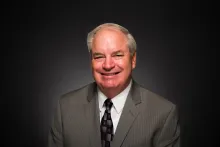
Robin Webber was born in Chicago, Illinois, in 1951, but has lived most of his life in California. He has been a part of the Church of God community since 1963. He attended Ambassador College in Pasadena from 1969-1973. He majored in theology and history.
Mr. Webber's interest remains in the study of history, socio-economics and literature. Over the years, he has offered his services to museums as a docent to share his enthusiasm and passions regarding these areas of expertise.
When time permits, he loves to go mountain biking on nearby ranch land and meet his wife as she hikes toward him.
