

Robin S Webber
This transcript was generated by AI and may contain errors. It is provided to assist those who may not be able to listen to the message.
I'd like to get right to the message. I'd like to allude to a verse that's very famous in the Bible, and it comes out. It's one that we grab ahold of very softly. Join me, if you would, in Romans 8. In Romans 8, one of the great chapters of Scripture. And in Romans 8, and picking it up in verse 31. Let's note what it says.
If God is for us, who can be against us? One of the clarion scriptures of all times, and one that we hold to at times, especially when we have challenges. When some of us were in school at Ambassador College, we had a teacher that was very good at coining phrases.
I remember the phrase that he used when it came to Romans 8.31. It was not so much a phrase, but it was actually a saying. It said it went like this. God plus me equals majority. God plus me equals majority. Now, when we think about that, that's really kind of neat. Especially when we think of Romans 8.31. God is for us who can be against us. In other words, me and God against the world, as it were, or for the world, if it's on a positive sense. And that is well and good. And you look at that, and that's kind of neat. That's something you'd like to almost put on the back of your car. Make it a bumper sticker, as it were. God plus me equals majority, which is well and which is good. And it's something that we want to have stick in our heart. It's easy to say. It's easy to read. But when the really difficult and the challenging times come, how long does that sticker stay up? Not on our bumper of our car, but in the bumper of our hearts when life comes at us in incredible ways. When we think about that, if we hold on to that equation of God plus me equals majority, when we think of Romans 8.31, that of God before us who can be against us, we have to understand two vital factors coming together. Number one, there is indeed a spiritual challenge. And there is also a human risk when we enter this arena of decision-making and put God first beyond everything that we see. There was such an individual. And what I want to do this afternoon in this message, because a verse is a verse, but there's got to be a story that's with a verse or it's just a bumper sticker. And what I want to do for you today here in Los Angeles is I want to put flesh and blood and a heart on Romans 8, verse 31. Join me if you would. Let's open up the Scriptures. Turn to Numbers 14. In the book of Numbers 14, we find the story of Israel moving towards the Promised Land. And it was a time of challenge. Something had occurred, and we're going to be getting into that story, but I at least want to give you the name of the individual we're going to be talking about. Who's flesh? Who's flesh and blood and heart and spirit is going to be put upon Romans 8, 31. We pick up it then here in, again, Numbers 14, verse 24. But my servant, Caleb, because he has a different spirit in him.
The old King James puts it this way, because he had another spirit in him, and has followed me fully. I will bring into the land where he went, and his descendants shall inherit it. The purpose of this message today is to learn the why and the how. Caleb had a different spirit from the majority of his fellow countrymen.
I'm going to offer you some very specific keys. It's not enough just to mention Romans 8, 31. It's not just enough to mention the name Caleb. We're going to flesh it out literally and hang it on Romans 8, 31. If God indeed is for us, who can be against us? Now, as we move forward, our story begins on the threshold of opportunity.
Israel had gone through the sea, was moving up towards the land of promise. And that would be the finish line of God's victory. It was just over the corner, just on the other side of the hill, as it were. The promised land was there. We've made it. God said he would pull us out of slavery, and he would give us this promised land.
The victory was won. The victory was won. When we go back to the book of Numbers, join me if you would there, Numbers 13. In Numbers 13, if we'll pick up the thought in verse 1, let's notice. And the Lord spoke to Moses, saying, Send men to spy out the land of Canaan. Now, notice carefully as we read it, which I am giving to the children of Israel. I'm giving you, who are a slave people, I'm giving you a gift. You just have to accept it. And know that I am going to be that cutting edge going in before you, and I'm going to give you this land.
From each tribe, then, you're going to gather some fathers, and you shall send a man and every one a leader among them. So here's God. He's saying, the gift is coming. The victory is won.
All you have to do is send out these scouts. They're going to do a reconnaissance report. They're going to give you a full kind of picture of what's going on there, and then get ready. I'm going to go into action. But so often, as we know, the devil is in the details. The devil is in the details, and it certainly was here because of some of the attitudes that came out.
Moses had done his part. He had established a leadership plan where each tribe had a representative, because everybody was going to talk to somebody. Well, what's it like? What's that Promised Land like? Is it really everything that God told us it was about? And so Moses widely put all the straws in the drink. Things were about to happen. And we notice then here in Romans 13, verse 18, Romans 13, pardon me, Numbers 13, verse 18, pardon me, and see what the land is like, whether the people who dwell in it are strong or weak, few or many, whether they dwell in it is good or bad, whether the cities they inhabit are like camps or strongholds, and whether the land is rich or poor, and whether there are forests or whether there are not.
But notice, be of good courage and bring some of the fruit of the land. And now the time was the season of the first ripe grapes. Moses, as his leader, gathered a team, as it were, of leaders that were what we traditionally call the 12 spies, and he gave them a pep rally.
The subtle guys, you're going to go in, and by the way, God has already said, He's going to give you the land. But go in, check it out, and as you go, have faith and be of, indeed, good courage. That was the job. Now, in Numbers 13, verse 25, let's pick up the story. They returned, were spying out the land after 40 days. And now they departed and came back to Moses and Aaron and all the congregation of the children of Israel and the wilderness of Payeran at Kdash.
You might want to circle that word. It's going to be important in the story and our discussion later. And they brought back word to them and to all the congregation and showed them the fruit of the land. And then they told them and said, We went into the land where you sent us. It truly flows with milk and honey, and this is its fruit. So far, so good. Nevertheless, the people who dwell on the land are strong, the cities are fortified, and very large. Moreover, when we saw the descendants of Anak there, the word Anak is going to become very germane to this story and, frankly, germane to our lives in the 21st century before this message is done.
The Amalekites also dwell there and say they were going down the line. Now, the spies knew what the sons of Anak were like, and the people who are about to mention know what the sons of Anak were like. And for those of you who have never heard of the sons of Anak, you're going to know about them in a moment. The story is simply this. They brought it up. Now, verse 30, an incredible character is introduced to us. His name is Caleb. Then Caleb quieted the people before Moses and said, Let us go up at once and take possession, for we are well able to, notice, overcome it.
You've got to remember, there are about 2.5 million people in the camp of Israel. And even as these spies went out, and if you divide 12 into that, and recognize everybody was talking to their individual leader, the spy from their tribe, you can just begin to understand the buzz and the talk that was going up. There was a lot of dust being thrown up in the air. Susan and I today, when we were coming up the 215 Freeway and Riverside, you don't have this problem in Eagle Rock or in Pasadena.
But out where we live, there's a lot of winter wheat fields, and there's a lot of sheep. And now, they're going to graze from field to field. And pretty soon, they'll be behind the Weber family. And we'll even have more sheepdom around us. But sometimes, when you're driving up through Riverside County, through all those farms, you see the dust.
And you know there's two things that are either... They probably have this up in the Central Valley, too. And that is simply this. Either that tireless farmer is out there plowing his fields, and there's a lot of dust in California right now. And or, you know, the sheep are in there. And there's so much dust going up, sometimes you can barely see the sheep. In other words, where there are sheep, there's going to be dust. And isn't it interesting that sometimes people call...
God calls His covenant people what? He calls them sheep. And there are some similarities. And we have to learn how to bring that dust that gets going up, and sometimes blankets things to where we can't see God clearly. We need to get that dust and formation. That's what Caleb was trying to do. Caleb said, look, let's go up. Let's take it at once. For we are well able to overcome it. And when we look at this, we understand some things that are very basic.
The spies had gone out, and they were to be fact-finders. And that is very, very important to find the facts. And that's what they did. The second thing, when you have facts that are coming into your life, and sometimes, have you noticed, or am I the only one, that life is what's happening that you haven't planned for? And so you try to deal with the facts at hand.
But bringing the facts into our lives is only the first part of the story. Then we have to interpret the facts. We have to interpret the facts. If we just take facts up and by themselves, we have to understand something very, very important. Here's the bottom line. If you get nothing else out of the sermon, this is what I want you to understand. Our eyes and our ears, our eyes and our ears, do indeed affect our hearts.
And they can stop them cold. We can be paralyzed by what our eyes and our ears see. Let's turn that around now in a positive sense, may I? We must understand that is what is within our heart as a covenant people. In our heart, not in our pupils and not in our ears, our hearts need to define what our eyes and our ears are seeing.
When you do that, when I do that, our life begins to change and deal with the data that's coming our way that maybe we have not asked for and to understand. It's very interesting when you think of that word, K'', which I mentioned. K''' is where they met. K'' in the life of Israel was a moment of decision. Because from the decision that they would make there, it would affect two and a half million people.
It would either draw people towards God, separate people from God, it would either keep families together and or it would divide people together. It's very interesting, you might want to jot it down. The word K' means holiness. Holiness. They had entered a moment of holiness as to whether or not they were going to trust God, who said he was going to give them the land or they were going to be paralyzed, not by faith, but by the fear that they had by what their eyes saw and what their ears might have heard.
Very important. As is so often the case, one event in life would affect the rest of their lives dramatically.
Dramatically. I think all of us have seen that at times in our lives with ourselves or with our children, or remember when we were a teenager or when we were a young adult, we basically were on this path towards one way or the other, and then one situation came into our life.
And how we handled that situation, whether we handled it in a pro-fashion or whether we did it in a con-fashion, negative, to a degree, has affected the rest of our life. God willing, God hoping, we've overcome a lot of that, but one decision can do it all. Let's understand some of the dynamics that were with these spies for a moment. They were full of positives after that 40-day adventure in the Promised Land.
They'd even brought clusters of grapes. Can you imagine that? To have poles between two men and to have an entire cluster of grapes that they could not even... They had to carry them in. It was incredible. It was a land of milk and honey and fruit. What were the obstacles? The obstacles, there were obstacles. I realize that many of you have your own private businesses. I see many individuals here that have their own businesses.
You know that for every challenge there is an obstacle. For every mountain there is a valley. For every fertile ground there is a desert. That's just life. They went in and they shared the bounty and they shared the good report, but they had a situation here. That was they shared the obstacles. There are always going to be obstacles. One thing I want to share with you, whether you've been in the Word for 50 years or you've just begun to attend services and just begun to understand God, it's simply this.
God did not promise us a picnic. God did not promise us a picnic. It's not always going to be like what we saw at camp. It's not always going to be happy. We would pray that for ourselves and pray that for the church and pray that for our children and our grandchildren. It's not. God never promised us a picnic. God promised Israel then and the Israel of God today, the elect, the church, the bride of Christ. He promises us a kingdom. And Jesus never said that it would be easy, but He did say that it would be worth it.
And so we see this situation here. If we go down to chapter 13, verse 28, because they got stuck on this, the sons of Anak. Now, what's very interesting about Anak, this is going to make sense when I tell you, Anak actually is a word of old. It's Hebrew. It means sons of the neck. Sons of the neck. In other words, they were tall. It's like their neck didn't stop. It was like the world's first NBA team, the dream team. Except it was the nightmare team for ancient Israel, the sons of Anak, the tall people. These are the same individuals that were probably the great-great-great-great-granddaddy of Goliath and his fellow gang from the city of Gath.
What do we learn from this? What do we learn from this? What do we take away for our Mondays, Tuesdays, and Wednesdays? Simply this. Indeed, there were obstacles. But talking and focusing on what was wrong or could go wrong distracted the audience's attention from what was good, what was right, what was possible. And focusing only on the negatives can obscure the positive and blind us from how God fully wants to intervene in our life as a person, as a people, as a congregation, as a church, as the body of Christ.
So very important to understand. But there was one person here that made the difference. What made Caleb so very different to take a stand and to stand up against overwhelming odds? Let's talk about it for a second, may we? And a lot of this, are you with me? This is probably going to make common sense once we go through it a little bit. Did Caleb see a different band of giants than the other ten?
Now Joshua's in here too, but what did they do? Did they go to separate rooms and meet and greet different giants? Did he see different giants than the other? Was it like a giant zoo? So he was in this part of the park to see these giants, and the others saw...
Caleb and Joshua just saw shorter giants. They saw the maybe six-foot-six giants versus the eight-foot giants. Did they see different giants? We have to ask ourselves that. Let's get into the story. No, no, Caleb did not see different giants. It's not that Caleb had different facts, and it's not even that he had extraordinary, extraordinary faith more than his companions. Okay, so what's the difference? He exercised his faith. When we come into this way of life, as Mr. Fish mentioned in his prayer, we surrender ourselves to that same rock that led Moses and Israel out of Egypt, and that rock is Jesus Christ, and we accept his name.
It's not like he gives Bob Brown super-steroid faith, and he gives the rest of you little bitty, itsy-teeny-weeny... No, I'm not going to go with that song of old... faith. He gives faith. Ephesians 1 says that God the Father through Christ has given us all spiritual blessings. He didn't give Robin Weber this blessing, this blessing, this blessing, and this blessing, and give Robert Lyons over here just, well, this.
He gives us his Spirit. He gives us his blessings. He gives us his power, and he gives us the faith. Not only faith in Christ, but the faith of Christ in us to accomplish our Father's will. The difference is, are you with me? The difference is Caleb chose to exercise it. And in exercising that, it wasn't that his boldness, it wasn't dependent upon Israel's abilities, but God's abilities.
Romans 8, 31 says, if God is for us, who can be against us? The bumper sticker goes this way. God plus me equals majority. The bottom line in Caleb is, he simply couldn't agree with the majority.
If he agreed with majority and got stuck in fear, that means he was disagreeing with God. You cannot agree with a crowd that is wallowing in fear, and then say that you are agreeing with God.
1 John 4a, King says that love cannot be perfected in fear. Now, let's understand something. Caleb was not a spiritual show-off. Caleb's different spirit and boldness was not reckless. It had great purpose. Can you imagine standing up in the middle of the crowd and saying, excuse me, excuse me, but let's get something straight here. When you make a stand, you better have something to stand on. Let me give you three short keys. Number one, when you make that stand, you count that cost, you see your God.
There are three things that you do. Number one, you better have the facts. You better have the facts. Number one, Caleb had seen the land himself. He'd seen all of the giants. He'd seen all of the cluster of grapes. He'd seen all of the milk. He'd seen all of the honey. It wasn't like he was some spiritual nut. It wasn't like he was an ostrich with his head in the sand. And of course, when you put your hand in the sand, you know what is exposed? The rest of the story. He wasn't a Pollyanna saying, oh, let's play the happiness game.
No, he's very real. Some of the things that are happening coming your way right now, those giants, those sons of Anak that are alive and well on the job, in the home, in the marriage, in the health. Sons of Anak are alive and well in 2015. It's not like they're extinct. It's not like they're petrified in the sands of the Sinai. You and I know that all of us, nobody has a silver spoon, has very real challenges in our life.
That means that, number two, then, we better make sure that we have a right attitude and that we are looking up rather than down and around.
God has said that He is our Father. He's given Jesus Christ as our elder brother. He's given His beloved Son as our champion.
He has said that He will neither leave us nor forsake us. He says, Lo, I shall be with you till the end. That was the attitude that encompassed Caleb. Number three, better state clearly what you believe. Then, and only then, state clearly what you believe.
As Caleb did, yes, let's go up. Indeed, we truly can overcome it. But we know that the quiet lasted only so long because wherever God is, Satan isn't far behind. Notice verse 31.
And they gave the Children of Israel a bad report of the land which they spied, saying, Oh, this land through which we have gone. All the spies, as the spies, is a land that devours its inhabitants. And all the people whom we saw in it are men of great stature. There we saw the giants. Yes, the descendants of Anak, Mr. Long Neck himself.
And we were like grasshoppers in our own sight. And so we were in their sight.
When we view ourselves as a grasshopper, we are defining ourselves, and we're allowing others to define us. And if you think you are a grasshopper, you're going to act like a grasshopper.
You're going to be small, and you're going to be flighty. And I know boys do this. I don't know if girls do this. Of course, everything is equal these days, so maybe girls do this. Do girls chase grasshoppers like boys do? I'm looking at this gang in front of me. Is that a yes or no? Okay.
But as a boy, you see a grasshopper. You're going in for the pickup, right?
And it jumps. Then you go after it, and it jumps. And it jumps. That's what fear does. Fear makes you jumpy. You're not centered. You're not anchored.
You're allowing external events and whatever comes into your life to define your life, rather than to define life because you are the Father's child, and Jesus Christ is your Savior.
And that you've already taken it to the bank, and you've taken everything out of your bank, and you've surrendered your life to them. And they will be your champion, and they will be your guide. That's what Caleb did. That's not what these gentlemen were doing.
The other spies forgot that they knew about God and only chose to remember what they knew about themselves. They forgot that a promise from God is a sure thing.
The difference between fear and faith is simply this. Faith in God always reduces the size of the giants that are arrayed against us.
I know a couple weeks ago I shared a personal story about Susie and I, and praying for one of our daughters, and a great challenge that came up at once like a whirlwind.
And we felt so helpless as parents because we love our children and our grandchildren so much, of which one is with us right now, and she's heard this story already. But she also knows that we worship a mighty God, and that we had faith in God that if we put our petition before Him, that everything would be alright. And if it were not, we said, Father, we accept Your will. Whether you answer now or not, we know that you have something else better in store. But it's our job to put our lives and the lives of our loved ones, even if they don't even know You at this time, into Your hands.
And within minutes, the answer came. But if that answer had not come within minutes, our faith would not have been broken. It would have only been strengthened. Because God wasn't worried about what we were going to do. He was concerned whether or not we would, like Caleb, exercise faith. And whether for either good or ill, that we were going to go along with Him on this ride, along with our family, and that we worship a good God, and He wants the best for us. What faith does, that kind of faith—can I share something with you? For you that are having to do some giant killing right now in your life?
Faith in God right-sizes the giants in your life. It right-sizes the giants in your life and brings them down to tackle size. Because God's going to do His part what you can't do, but He also has expectations and partnership with you that you're going to exercise faith, that you're going to exercise His Spirit. You're going to remember that God says, I'm going to give you a spirit of love and of power and of a sound mind.
And that is, it says in Philippians 4 and verse 13, Through Jesus Christ I can indeed do all things. So that's what happened. But here's the story. Caleb stood up. Have you ever done that before? Today's the day. It's Tuesday. I prayed up. I studied up. I read this verse. I'm just ready for that challenge. Just when it comes, I'm going to do right by God for the—just going to do it. Then you do it.
It feels good. I said the right thing. I even quoted Scripture. I did verse. I spread word. And then the crowd gathers around you. They didn't like what you said. God might like what you said, but the crowd doesn't like what you said. Well, that's exactly what happened to Caleb here as we go to verse 12. And now this time there's Joshua involved. But Joshua, the son of Nun, and Caleb, the son of Jephana, who were among those who had spied out the land, they tore off—it says here that they, who were among the land, had spied out—tore their clothes.
And they spoke to all the congregation of the children of Israel, saying, The land we pass through to spy out is exceedingly good land. And if the Lord delights in us, then we will bring us into the land and give it to us, a land which flows with milk and honey. But Israel, don't rebel! Don't rebel because the first report, like Caleb, went down like a dud. Because everybody started quaking because of the long necks. And those who had said, Don't rebel! Don't fear them! Well, Caleb, along now with Joshua this time, stood up. So what happens? I did this twice.
God must be on my side. Things are really looking good at this point in the story until you need to read the next verse. Let's notice what it says. And all the congregation said, Stonem! With stones! God, is that what you wanted me to say? No, this is not what I thought was going to happen. It says, Stonem with stones! Now the glory of the Lord appeared into the tabernacle of meeting before all the children of Israel.
And God rebuked the children of Israel for their lack of faith. They were scared to death because of the giants that were in the land. And something happened to them. God made a judgment in K-dash, that intersection of life that would affect the rest of their lives. If you look at verse 29. Verse 29. The carcasses of you who have complained against me shall fall in this wilderness. All of you who were numbered according to your entire number from twenty years and above, except for Caleb, the son of Jephana, and Joshua, the son of Nun. And ye shall by no means enter the land which I swore I would make you dwell. And then Moses down in verse 39 told these words to all of the children of Israel.
And all of the children of Israel were so sad. They mourned greatly. That which they had feared the most, that they might die at the hands of a giant. Their own actions at that time would, in that sense, bring about their death. They would never see the promise fulfilled. And what should have been a short trip of three months would turn out to be forty years.
Their families would go in circles. That's what fear does. It makes you go around in circles rather than having faith in our living God. And that's exactly what happened to them. Let's use a New Testament scripture for a moment, Luke 9.24. Perhaps this thought was in Jesus' mind when he mentioned this in the Gospel of Luke, Luke 9 and verse 24, as we come to it where it says simply this, For whoever desires to save his life will lose it, but whoever loses his life, for my name's sake, notice, will save it.
So as we begin to conclude, here's the question I have for you. What allowed Caleb to have a different spirit? What allowed him to have a different spirit? What was in that internal compass within him that allowed him to map a right course of action even in difficult circumstances? What is it? Number one. These are very short as we move towards conclusion. I have to share something with you that I shared with Redlands this morning. In a society that is becoming less and less religious, it's very interesting how the name of Caleb, though, is used more and more.
Caleb is one of the most popular names in America for giving to a boy. Because Caleb speaks to what? Determination. It speaks to focus. It speaks to spiritual masculinity. And so we don't make this one-sided. The rest of you in this room can be Caleb-enus. You can be feminine Caleb's because it's the Spirit of God. Let me give you some bottom line material here as we conclude. Number one. It's more important for your heart to affect your eyes than your eyes to affect your heart.
I could have come up with that. Can we conclude? How often does your eyes affect your heart? Rather than the spiritual oil of God in your heart affect what you see and then what you do about it, even when you didn't invite what you see to come onto your life screen. You see, the bottom line is simply this, friends.
Are you with me? Life is not what you plan for. Life is what's happening that you have not planned for. That's the important thing to understand here. And that's where Caleb was at. God was faithful.
And Caleb simply believed that God would deliver on his promises. I know the story that I shared about Susie and me is a story that goes through every day and every way in this congregation. It's just that I'm up here sharing something.
We have to provoke one another to good works and to not be like the spies of old, but to share what God is doing for us. And that's something that we need to be doing over in Wirtz Hall after services. That's what we need to be doing in our Bible chats, message chats. And when we're down in the park down in Orange County, we need to be provoking one another to good works. Number two, he understood that complaining will get you nowhere. He understood that complaining will get you nowhere.
The story and the lesson of Numbers 13 and 14, friends, is simply this. Those that complained the loudest were never allowed to be a part of the solution. You ever been around a complainer? Yeah, yeah, yeah. Just keep on going. Just fills a lot of air. I'm going to share something with you. I want to be direct. You're saying, when is Mr. Weber going to get direct? He's going to get direct right now. Remember what I talked about during the Days of the 11 Bread? The lesson of the Days of the 11 Bread is what? To hasten.
To be quick. To have the shoes on your feet, the staff on your hand, the belt on your waist. Remember that one? And you need to be ready to move wherever God is guiding and directing you. I'm stating this, that more than ever, we need to hasten towards the caliphs that God brings into our life. We need to be around people of faith. We need to be around that have their confidence in God. We need to be around people that are talking about God's promises rather than their own human premises. Does that mean that we're not to have a soft ear and a kind heart towards those who are going through challenges? Absolutely! Absolutely! But have you ever noticed that some people, like an old 45, never get past that song? They would rather talk about self rather than what God has in store for them. Remember what it says in 1 Corinthians 15.33. You can jot it down. Bad company corrupts good manners. Bad company corrupts good manners. And there's a time when we become so understanding that we don't understand that it's time to hasten. We've done what we can. We've heard the individual. Their life, unfortunately, is set on a 45 record that goes around and around that has a scratch on it, so it keeps on playing the same old tune. Susan and I, when we were living over on Madison Avenue when we were young, 2 54, South Madison. We had an individual that lived next to us. Unfortunately, the woman was a severe alcoholic. And sometimes her screen door was open when we'd go into our little apartment. Always remember, this happened two or three times. I could see her blacked out on the floor. But she had this record going. It was an old Frank Sinatra tune. Now, over and over, it keeps happening over again. And I always remember it was like it was stuck. There's that piece of dust on the old 45. I'd see the circumstance. I'd hear that song. And that's how some people are.
Just over and over, I keep going over the world I knew. The world that was created, perhaps because of missteps, perhaps things that they didn't plan for, perhaps by the sons of Anak that came in their life, but they have not submitted themselves to the promises of God. Brethren, life is short. We need to ask God, number one, to bring Caliphs into our life. And ask God to help us, you and me, to be Caliphs. Just don't go looking for one. Be one. Stand up. Remind people of God's promises. Remind that we worship a good and an awesome and fantastic God. Get revved up. God says, as much to Israel of old as to the Israel of today, I have given you a kingdom and I await you to be there. Trust in me. Believe in me. Oh yeah, the giants will come. Don't get your tape measure out and see how tall they are. Look up! Look at me! Look at what I did. Look at what my son did for you. I've given you something better than Moses, something better than Joshua.
I've given you the Christ to show that it can be done.
Hasten towards good company. People that will build you up and you be one yourself. Develop that fruit, that life, that light, that love. Joshua needed Caliphs. Have you ever thought, you know, we always think a book is named after Joshua? Are you with me?
Got Joshua in the Bible? Yes or no? Yes? Hands up. I want to keep you awake for five more minutes. Okay. Caleb is not. I think that Joshua needed Caleb. Caleb put air into Joshua's sail just as much at times as Barnabas put love into Paul's life.
We need one another at times to encourage one another to get over these hurdles.
Point number three. Caleb tested the spirits. First John 4.1 says, test the spirits. And he found the spirit of the majority repugnant and was willing to become a part of that equation. God plus me equals majority. Number four. He understood for courage and faith to be effective.
They must be combined with words and actions, and when you take a stand, you keep on standing.
It's one thing to take a stand, and the crowd comes your way. It's a different thing when you take a stand and the crowd walks out on you, or they pick up stones.
It's very interesting what Caleb did reminds me so very much of 500 years ago at the Diet of Worms in the Holy Roman Empire. When one man got up who was convicted by reading something in the book of Romans, a man that we would in some ways disagree with in other premises and other thoughts and other doctrines of the Bible. That's not my point. The point is what he said. As he stood before the young Holy Roman Emperor Charles V, as he stood before all of the Cardinals of the Roman Empire, that Martin Luther stood up convicted of what he read in the book of Romans about grace.
And he said, with everybody ready, in a sense, to stone him, to make him recant. And that perhaps he would have faced what John Hoos faced 100 years before, to be burned at the stake. Nonetheless, he said, Here I stand, alone. I can do none other.
It is in that that we hear the echo of Caleb and the many Caliphs that are alive and well today in 2015 that are making a difference every day in moving towards faith rather than being paralyzed by fear. Interesting story at the end. Let's go to Joshua, Book of Joshua. Real quick closer. I hope, brethren, that this message has galvanized you. I hope you recognize that we worship an awesome God. God is alive and well. He's a living God, and he wants us to be alive and living for him. But giant slang is not just something that happens in a moment. It keeps on going all of our life.
In Joshua 14, pick up the thought. Verse 7. Caleb is still around at age 85. Now, I see Mr. Helgi back here. I told him I might pick on him a little bit. And, you know, Mr. Helgi is fun to pick on. It is that Mr. Helgi kind of reminds me of a Caleb. I mean, look at him. You would think that he is younger than I am. He's in good shape. Maybe it's the marine background. I'm not sure. And God's grace and help. But, you know, Mr. Helgi, well, Mr. Helgi, I'm not going to identify you as being 85 or 86. I'll just say 39. But notice the vigor. We know the power. We know the depth and the dynamism of Mr. Ralph Helgi. It must be the food that Ingrid serves him. As long as his convictions as well. Well, here's Caleb. Notice what it says in verse 7.
Notice from my eyes? From my ears? No! As it was in my heart. Nevertheless, my brethren who went up with me made the heart of the people melt.
But I wholly followed the Lord my God. So Moses swore on that day, saying, Surely the land where your foot is trodden shall be your inheritance and your children forever. Because you have followed the holy followed the Lord my God. And now behold, the Lord has kept me alive. As he said, these 45 years ever since the Lord spoke that word to Moses while Israel wandered in the wilderness. And now here I am this day, 85 years old. As yet I am as strong this day as on the day that Moses sent me. Just as my strength was then. So now is my strength for war. But for going out and for coming in. He's not only going to go out. He's got the strength to come back in. Now therefore give me this mountain of which the Lord spoke in that day. For you heard in that day how the Anakim were there. And that the cities were great and fortified. And it may be that the Lord will be with me. And I shall be able to drive them out as the Lord said.
Caleb, the giant killer at age 85, was still ready for the next giant killing. And Joshua blessed him and gave Hebron to Caleb, the son of Jephaniah as an inheritance.
Hebron therefore became the inheritance of Caleb, the son of Jephaniah the Kintzanite. Tintu this day, because notice, brethren, he wholly followed the Lord God of Israel.
Through the swamp of fear. Through the mountains of paralysis.
He followed the Lord God of Israel.
And what we now associate as Hebron, the burial place of Abram, the burial place of Sarai, was, notice what it says, was formerly Kirhath Arba, a Canaanite name.
Notice, was the greatest man among the Anakim, and then the land rested from war.
Brethren, this is a powerful story.
He said, you know, the last time this all came up, I didn't do too well.
Well, that was then, and this is now. God's Spirit has galvanized us today to read this story, to revitalize our spirit in us. It's not where you've been, it's where we're headed. It's not where we've gone, it's where God is directing us. We can always do better. We can always, again, improve and be perfected in God's way of life. I want to encourage every young man, every young woman that is in this building, and every older man and every middle-aged lady in this building, to either be a Caleb or a Calebena. But you be God's best. Do you remember Romans 8, 31?
Do you remember that if God is for us, who indeed can be against us? And do you remember that bumper sticker long ago that now has flesh and blood and heart upon it, that God plus me equals majority?
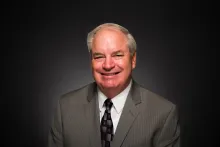
Robin Webber was born in Chicago, Illinois, in 1951, but has lived most of his life in California. He has been a part of the Church of God community since 1963. He attended Ambassador College in Pasadena from 1969-1973. He majored in theology and history.
Mr. Webber's interest remains in the study of history, socio-economics and literature. Over the years, he has offered his services to museums as a docent to share his enthusiasm and passions regarding these areas of expertise.
When time permits, he loves to go mountain biking on nearby ranch land and meet his wife as she hikes toward him.
