
Robin S Webber
This transcript was generated by AI and may contain errors. It is provided to assist those who may not be able to listen to the message.
This past weekend, we had the San Diego Church Family Weekend, and it was just an absolute joy to be able to have Sabbath services together, to be able to have a nice dance last Saturday night. Some of the folks were there. And then the next day, we had a beach party there in Oceanside. The one thing that kind of stands out with all the fun and all the togetherness and the fellowship was actually at the beach party, in which we were able to baptize two individuals.
And that was such a joyous occasion to be able to have baptisms right at the beach. And you know how we are in Redlands, where we go and we all go together as a church and we watch people get baptized here? Well, we did that. We kind of circled. There must have been about 70 or 80 people, and we kind of created a circle.
Then we kind of did it all within. And I have to tell you the story for a moment. It's kind of cute. And so what happened was, we circled. We kind of go through, you know, have you repented and have you done this and have you done that? And then they would say yes or no. And of course, one of the individuals that was being baptized is deaf.
And so we had the sign language people here, so it kind of took on an extra added element. And then Mr. Clark and Mr. Miller from San Diego took out the two individuals out into the ocean. Of course, we have all the people behind us watching this, too. But they went out in the ocean. Then, you know, normally you see, if you're by the ocean or like you're at the harbor at Oceanside, you usually see the pelicans go overhead.
And all of a sudden, boom, they go down. Well, out there, it was like they were going down one by one with baptisms. All of a sudden, you'd see this. Somebody would go down, and then they would come back up.
But they go down, and they come back up, and everybody followed like this. But with a deaf person, you know, deaf people can hear. And the way that you applaud in ASL is you go like this. So here's 80 people going like this all of a sudden. I'm not sure if they thought we were holy rollers or shakers or whatever. But it was really a very meaningful, I think ISIS was there. I don't know if there's anybody else there.
It was really a meaningful experience. I'd like to build upon that today and talk a little bit about what baptism is about. Because, you know, when we are baptized as people, and you can harken back when you were baptized, whether 50, 40, 30 years ago or three years ago or just a recent date, the word baptized comes from the Greek word baptizo, which means to be immersed. It doesn't mean to be sprinkled. It doesn't mean like the old real cream adder out of the 50s or 60s, a little dab will do you. It means that when one is baptized, you are fully committed and you are put under the water from the top of your head to the tip of your toe.
But the one thing that we need to understand is that when we are baptized, baptism is an outward confession of an inward profession. We're telling God that we are going to do something because of his involvement in our life. But when we're immersed, we're not just immersed into knowledge and or into understanding.
But what we're saying, whether we recognize it or not, and if you didn't recognize it at the time, I'm going to tell you what it's about today, is that we said we are going to be immersed into a new walk. And that is the walk of faith. Not just the walk of knowledge, not just the walk of the facts that are on the ground, but we, indeed, in faith, we're going to be immersed into this way of life.
Join me if you would for a moment. Let's go to Mark 1.14 to establish a basis of this. In Mark 1, the Gospel thereof, Mark 1, this is where it speaks of Jesus coming into Galilee. And there is this declaration, there is this proclamation that is given. It's often been thought that the Gospel of Mark was, in a sense, it's one of the more primitive Gospels, but that it was written with the Roman audience in mind that here comes the king, here comes Messiah. And back in that day when there was a Roman emperor or Roman generals, they would come through the hall or come through the gates of the city.
There was a proclamation, behold. And that's kind of the sense of Mark 1.14. Now, after John was put in prison, Jesus came into Galilee preaching the good news of the kingdom of God and saying, The time is fulfilled and the kingdom of God is at hand. It says, therefore then, because of this, repent and believe in the Gospel. Now, it is one thing as the king comes into our lives today to repent.
And in a sense, repentance, simply if you want to look up here for a moment, this is the PowerPoint. Repentance is that you were going this way on your own, on your own two legs. And as Mr. Delimater said, utilizing the spirit in man and your human nature, doing your own thing and being your own little God with a small g. God taps you on the shoulder and says, I want you to become my follower.
And then, therefore, you turn around. Now, just because you have repented and said that you've changed and you're no longer going to do this, you've also got to do something else. Because the bottom line I want to share with you this afternoon is God does not operate in a vacuum. God does not operate in a vacuum. But He does operate with the element of faith and your faith towards Him. It's one thing to say, no, I'm no longer going to do this. But faith is now that I am going to allow you to be the shepherd.
You are going to be my guide. You're going to be my God. And this is just the beginning of the journey because I will come to know you as Mr. Delamater brought out. I remember when I was baptized at age 19. And I think Susan was baptized at age 19, too. I know that because I was there. But anyway, the point being this is that when we said we knew God at age 19, it's not how we know God today.
It's a journey. Faith is not just simply an event. It is an experience. It is a way of life that we grow in. And I'm sharing this message with you today to encourage you to learn to grow in faith. Because that's how God wants us to walk. And having done that, it will take everything, though, just simply to stand. Join me, if you would, in Romans 1 and verse 17 to continue to lay a platform here before we go any further.
How important is it to come to God in faith? Because remember, Jesus came in the Galilee saying, repent and believe. So it's not enough simply to say, I'm going to repent. You also have to believe. And it says in Romans 1 verse 17, for in it the righteousness of God is revealed from faith to faith. And notice what it says. As it is written, the just shall live by faith. My question to kind of prick your heart and to bring you into this message today is simply this. Do you live by faith? Is this speaking about you? Is this speaking about me? To amplify this and to multiply the importance of this, join me if you would for a moment in 2 Corinthians 5.
In 2 Corinthians 5, and let's take a look at verse 7. Where again it says simply this, for we walk by faith and not by sight. Beautiful Scripture. But you know and I know that that just simply runs counter to everything that we learned since we were kids. What we hear when we were kids is simply this. Are you ready? Are you with me? Seeing is believing. Seeing is believing. And or, want another one? A bird in the hand is worth two in the bush. Am I the only one that was ever taught those two?
And that, both of those in a sense run counter to what God is asking us to do when He's called us out of this age and said, You will walk by faith. My point in all of this is not to push you back, but to move you forward. Faith is not something that comes all at once, just like it says, from faith to faith. Faith is something that grows. It is something that develops. It's like a muscle. But just like a muscle, if some of you remember when you finally start being good again, about every year you're good for about three months and you get good again and you start and you recognize there is no gain without pain.
You have to press up against something. You can't just wish muscles. You can't just wish the calories away. You have to do something about it. Therefore, there is a certain amount of pressure. I beg you to understand this. What I'm mentioning today is that as we walk by faith, it is not humanly comfortable.
It is not humanly comfortable. We need to understand that. The reason I'm giving this message is because I really do want to, as one Christian to another and as your pastor, instill within you the confidence that God has towards you. You see, God believes in His calling of you in this day and this age. And He has every confidence that He has given us everything that we need to continue in this walk of faith.
And what happens sometimes, it's not our faith that gets in the way. I look at each and every one of you. You are our friends. And each and every one of you, I believe, are people of faith. But here's the thing that I want to share with you. It's not our faith that gets us in trouble. Faith does not ever get us in trouble. It's our doubts that cozy up to our faith that get us in trouble.
You say, well, Mr. Weber, how can you say that? Join me in Mark 9, verse 24. Let's go over to Mark 9, 24 here for a second. Because sometimes I'll be talking with people as a pastor, or I'll hear sometimes things that I hear other speakers speaking or people just talking.
I don't know if I'm ever going to make it. I don't know if I'm worthy. I don't know. Oh, uh, uh. I want to share something with you. Are you with me? God does not have accidents. There are human parents that have accidents. I'm saying that with a smile and children appear. God is a Heavenly Father. That does not have accidents.
Every one of you are in this room today through God's miracle and by God's purposed to be able to hear a message like this to encourage you to know that you need to understand the lesson here in Mark 9, verse 24, where it says this is about the man whose son was ailing. And when Jesus saw that the people came running together, he rebuked the unclean spirit, saying, Deaf and dumb spirit, I command you come out of him and enter him no more.
And then the spirit cried out. Oh, actually, it's up in verse 24. I start in verse 25. This is the story beforehand. In Mark 9, verse 24, this is the story again of the lad that was deaf and had the dumb spirit. And Jesus was going to perform a miracle. Now here in verse 24 it says, And immediately the father of the child cried out and said with tears, Lord, I believe, help my unbelief. Classic. It's not our belief that gets us in trouble. It's our unbelief. It's those doubts that creep in. Why are doubts so serious?
And I'm sure today that some of you had this morning or maybe even coming to church certain doubts. Because doubts are not necessarily questions. They are questions on steroids. And normally a doubt is not looking for an answer because a doubt of and by itself is an answer.
A doubt is an answer. And God has not called us to be doubters, brethren. God gave himself. He gave his son his son. And we're going to find that. I want to share some scriptures that are going to encourage you today. Because I realize sometimes when people have been on this journey for so long, we get tired. Just as much as we get older, our physical bodies get tired. Our knees buckle. Our muscles wither. And that can also help spiritually. And that's why as we see the day approach even more so, we need to encourage one another with the verses that tell us not about what we're doing, but what God is doing.
And because then we see that he is doing that. We recognize we have a champion. We recognize that we have a hero. And then, therefore, yes, we have something to do. We respond in faith. The title of this message is simply this. Fearless faith or faithless fear? Fearless faith or faithless fear? Now, you just probably noticed all those words are kind of interlocked and they almost sound the same, but there are different results between fearless faith and faithless fear. Before we deal with fearless faith, let's deal with, first of all, faithless fear.
That's very important. Let's talk about it. I want to share some thoughts about fear for a moment. Fear is a four-letter word that should tell us something right there. You know how when we were young, our parents hopefully told us, don't use four-letter words. But this is one that tends to hang around with all of us because it's part and parcel of the human condition.
Allow me to say, well, I don't have fear. I do not have fear issues today. So I can just take a vacation while Mr. Weber is speaking up here. Let me give you some definitions of fear, and if the shoe fits, don't be afraid. Take it on. Here we go. Fear. Some synonyms for fear is timidity, anxiety, worry, care, apprehension, misgiving, mistrust, doubt. As you can see, I'm kind of spreading out a white net here just to capture all of you for a moment.
Panic! Stampede. Think about some of these for a moment. Do any of these fit us? Sometimes we can see it in others more than we can see it in ourselves. You know, when we think of the Wizard of Oz, and we think of Burt Lier playing the Cowardly Lion. Courage! You know how Wizard of Oz goes. And then all of a sudden he sees his tail and he goes into a panic. And the Tin Man, and Dora, the, and the Straw Man have to settle him back down again. And we can laugh when we think of the Cowardly Lion getting scared of his tail, which is attached to him.
But here's the thing I want to share with all of us. We are also distracted by matters and things that remain attached to us. That we need to discard in this walk of faith. We do not know how long our journey is. Nobody knows that. Only God can number the hairs on our head. And only God knows the days that are yet ahead of us. And if you knew that you were going to be living as long as you did it, we're actually teasing about this little bit about age.
That there's no expression that if I knew I was going to live this long, I would have taken care of myself a lot better when I was younger along the way. There would have been things that we would have, like on a ship when there's a storm. You see the old pirate movies or the old ships going down. You know what's going to happen? They're going to start throwing barrels and boxes and everything overboard because they want to make it from one end to the next.
Well, dear friends, that's what we need to do with our worries and our cares and our doubts and our anxieties if we're going to walk this walk of faith. One thing that we need to understand in taking a reality test is that fear is nothing new to humanity. It's been there from the very beginning. So let's just tackle fear for a moment and understand it's been there.
Join me, if you would, in Genesis 3. In Genesis 3, and let's pick up the thought again in the creation story in Genesis 3.10, it's where Adam and Eve have partaken of the tree of good and evil. And they, in a sense, notice what they do. In verse 10, God goes out looking for him in verse 9, looking for Adam and said, Where are you? As any parent, in a sense, would. We've all done that before, where we, Where are you?
And then, verse 10, so he said, I heard your voice in the garden, and I was afraid because I was naked, and I hid myself. What's very interesting is, if you think about it, being afraid and fear and hiding are actions that oftentimes become coupled together. If somebody is anxious, if somebody is afraid, they are moving themselves out of the mainstream of activity.
Our fears and our worries are just as much like Adam and Eve in the bushes rather than on the path of faith, on the walk of faith. When we have those fears, when we have those suspicions, when we have apprehension, it takes us off the path of faith. We think of Satan himself, that serpent that motivated Adam and Eve.
Satan is motivated by fear. Your thought about that? Satan is motivated by fear. Let's talk about this. Are you with me? We can say in this that I believe in God. That's why I'm here today on the Sabbath day. I believe in the Sabbath. I'm a Christian, and I observe the seventh day Sabbath, and I believe in God. But you know what also? You can do all that and still be afraid. The book of James says that Satan and his demons know that there is a God.
But they don't honor him. So these are some of the things that we want to think about for a moment. Let's also consider fear for a moment because it affects everybody a little bit differently. But fear does leave its marks. Some are tangible, some are intangible, and we can see this throughout Scripture.
Fear can leave. Number one, let's think of Cain. Fear can leave a noticeable mark on people. Fear can leave a noticeable mark on people.
Well, I don't have any mark on me. Well, it may not be on your forehead or whatever occurred to Cain. But what you say and how you say it can reveal or portray, depending upon how you look on it, on how your heart is marked.
I have a question for you that when I think of Christians, Christians should be just the utterly most optimistic people and positive people.
We know that there is no bound upon us that is going to hold us in the grave. We know that there is a sustainer, a creator, a life giver, a law giver, a healer, one who foretells the future and brings it to the fore.
Christians, of all people, should be optimistic. We, as a people, read the story and we say that we believe that Jesus arose from the tomb and the stone was turned away. And therefore, there is no stone that is too heavy that God cannot remove. And yet, sometimes, when we're afraid or we're worried or we have apprehension or misgiving, it can leave a mark like Cain. Fear that is not dealt with can be like Saul. Saul was afraid of David. God's anointed. So he lashed out, tried to take David's life, tried to destroy David. One thing that we want to recognize, if we are worried, if we have apprehension, if we are afraid, it is rarely what we might call a victimless crime. If you are walking on the path of fear and not the path of faith, you will affect others that are in your life. It not only takes you, but it will take others. What else will fear do? Fear like Moses. Fear will make us think of what we can do or what we can't do rather than what God has promised that he will do for us. Remember Moses up on the mountain? I can't do that, I can't do that, I can't do this, and I can't do that. Anyway, what am I going to tell Pharaoh is sending me? I am that I am. Big voice. I am that I am.
Moses got out of his list of why he can't do something. Think about it for a moment. By his works, what he was able to do rather than what God said that he would do through him. Now, sometimes fear can lash out like a saw on David. Fear can also implode. Think of Elijah. Think of Elijah on Mount Carmel, the priest of Baal. 450 of them are zapped by divine fire. Looks like everything is going all right. And then he remembers Joseph. Oh no, that woman. Fear can make us go into the shadows. Fear can make us join Elijah in a cave.
Fear can make us think that we are all alone. You know what God designed caves for? Three things. National parks, mushrooms, and bats. Now, you're all smiling and you're all laughing. But we know oftentimes when we are afraid and we don't think we can go on and all we're thinking about is, what am I going to do? And look what it was.
We've forgotten that there's a God. We've forgotten that there's a God of creation. And we've forgotten that God is not just simply a matter of first cause, but He continues to intervene in lives. Why don't you have me join me in Revelation 21, verse 8 for a moment. Again, startling but true, speaking about those that will not be in the kingdom of God. But the cowardly, the unbelieving, the abominable, the murderers, the sexual immoral, the sorcerers, the idolaters, and all the liars shall have their part in the lake which burns with fire and brimstone, which is the second death.
The cowardly, the fearful, those that do not understand that God has called us to a walk of faith.
Now, with all of that stated, I want to move to something very positive. Because we all recognize, do I dare say, may I, that all of us have been a part of this previous condition. God is calling us out of that. God wants us to walk a walk of faith. Join me if you would in John 16, 33. On that night, in which Jesus should have been most fearful, the last night of his human experience, and he's at the table with the 12. Notice what he says, These things I have spoken to you, that in me you may have a peace, and in the world you will have tribulation notice, but be of good cheer. I have overcome the world. Other translations say, do not be troubled. You say, who, me? Troubled? I'm feeling really good today. I don't have a problem at all.
Do I dare say, friends, that sometimes God is more honest with our condition than we are with ourselves? And Jesus, on the last night of his life, said, do not be troubled. Do you know why? Because even as disciples and followers of Jesus Christ, we do carry a load of our own troubles that we have not given to God yet.
That we have not thrown overboard. That we're still trained to handle by our own works. Rather than remembering that Abram was not justified by his works, but by his faith towards God. Now, with all of this stated, let's understand something before we go any further.
God cannot use your fear, your worries, your doubts. And that's a lot of energy, because when we have fears and doubts and worries, we are spending time, we are spending mental creativity, we are spending a lot of energy. Just like these clouds, are you with me, that build up over the mountains here that we've seen and keep on saying, come on over, please, come. Rain! It's August! And these clouds, Abram, notice how they build, and they build, and they build in about 2.30 in the afternoon. They have all that shape and all those big, thunderhead, cumulus clouds, and they're building, and they're building, and they're building. And they look, I tell Susan, look at that cloud, it just looks so angry, it just looks like it's going to break apart. Well, that's what we do sometimes if there are worries and our doubts and our anxieties. We let them build up like those thunderclouds over the San Bernardinos or the San Jacinto. But God can't use that. No matter how great and how big it is, God cannot use our fear. But He can use our faith, and He can use our belief just like that mustard seed, no matter how small it is. And that's what we want to build upon. So how do we do that? Join me if you would in Psalm 46 and verse 10. We're now going to transition from faithless fear to fearless faith. We start by stopping. Just like we stop on the Sabbath day and we're stopping as you're hearing this message. And we need to quiet ourselves. And that's why God does give us the Holy Sabbath day, to get quiet, to stop and stop being restless. In a world that does not stop. In Psalm 46 and verse 10, notice, Be still and know that I am God, and I will be exalted amongst the nations, and I will be exalted in the earth. If you have a globe of fear on your back, just like Atlas of old, and you've been carrying that, and you've been carrying that, and you've been carrying that, and you think that is strengthening you, because look, I'm still holding all this up. Just like Atlas. But for naught. All of that energy is futile.
God says, Be still and know that I am God. We live in a world where seeing is believing. And sometimes what happens, dear friends, is that we make our doubts, we make our fears, we make our apprehensions, we make them our gods. Because we are thinking about them more than the Creator God. We think about that which we see when He who is and cannot be seen has been revealed. Hmm.
Genesis 1. Join me there for a second. The construction of Genesis 1 is very interesting. Let's remember that, let's remember that Moses, under the inspiration of God, in writing Genesis 1, is making a statement. It's not only a statement that we might believe in that God is a Creator, but Genesis 1, Genesis 2, really reminds us and illuminates the reality that God is above all. When you look at Genesis 1, Genesis 2, and oftentimes people, and again, faith and reason do not need to collide. If we only simply look at Genesis 1 as being a scientific manual, that will be an interesting discussion. And again, you heard me say, faith and reason do not collide. But I think it's very interesting. When you look at Genesis 1, it says, In the beginning God created the heavens and the earth. And then we have the days of creation. We have about the dry land. We have about the water. We have about the birds. We have about the creepy crawly things. We have about man being created, etc., etc. We have all of those things that are mentioned that man worshipped, that Egypt worshipped. Egypt worshipped the Nile. Egypt worshipped the sun. Egypt worshipped man, the god-king, Pharaoh. And God says, before all of this, before that which you see, in the beginning God, he who is uncreated created the heavens and the earth. That's why, brethren, the way that we pop that bubble of doubt and fear is to go back to our very roots as people of faith. And remember that we have been called by a God that was there before time, before this world, before our doubts and our anxieties came by being still. That is worshipping God. Just being... I want you to think about this for a moment. Just by being still and not allowing your doubts and your fears and your anxieties to run your life. Just being, well, what am I going to do? What's the therapy for all of this? What am I going to do? What am I going to do? No. It starts by simply doing nothing. But by being still and stop. Because it's not working, it's not honoring God, it's not glorifying God, it's not worshipping God. When you spend more time with your doubts and more time with your anxieties than you are in worshipping, honoring and glorifying God. Be still. And then to remember that He is always before anything else came along. Very important. Now, as you do that, let's go to the Book of Job. If there was a gentleman that had every reason to be antsy, okay? A man that had his family taken away, had his property taken away, had his health taken away. And you might be saying in Hebrew, what in the blue blazes is going on? That's a Hebrew phrase. What in the blue blazes is going on down here, God? And God answers that in Job 42.
Because Job finally got still.
Still like Psalms 46 verse 10 still. By the time Job 42 came along. Job 42 and verse 1. Then Job answered the Lord and said, I know that you can do everything and that no purpose of yours can be withheld from you. We're going to be talking about that purpose a little bit more in the remaining minutes. You asked, who is this who hides counsel without knowledge? And therefore I've uttered what I did not understand, things too wonderful for me, which I did not know. Listen, please, and let me speak. You said I will question you and you shall answer me. And I've heard of you by the hearing of the ear, but now my eye sees you. Therefore I abhor myself and I repent in dust and in ashes. It mentions here that there are some things here that who is this who hides counsel without knowledge? And therefore I uttered that which I did not understand. I know that in my own personal life, and I think I could speak for Susie because you know we talk to one another all the time during the day, is that I remember as a young person trained in a way of life with a church upbringing, where everything seemed to be crystal clear and plain truth, and I could put it in this box, and I could put it in this box, and I could put it in this box, and I could put it in this box, and so I have all these boxes of understanding and truth and revelation, and like this, and like this, and it just all kind of fits very nicely. But when I have everything fitting very nicely in little boxes like this that I can kind of put and rearrange and put back together again, what room does that leave for God to work with me and to develop my faith?
One thing I've learned in 65 years of life is simply this. The older I get, the less I know. The older I get, the more amazing God becomes. The older I get, the bigger He becomes. Sometimes the less I know or thought I knew does not limit or minimize God, it actually makes them much greater. And I begin to think that I'm sitting on the same bench as Job and learning the same lesson, that there are some things that I'm going to have to leave to God in His time and in His way, but also to recognize that God promised that He will never be late. Sometimes we spell late D-E-A-T-H. But when we come to understand God and we come to understand Christ, who is the Alpha and the Omega, and holds the keys to life and to death, is to recognize that God's purpose for us is going to stand. We're never going to be late. I just want to encourage all of you on a hot August Sabbath afternoon for those of you wondering about God's love and wondering if He's still looking down upon you and is interested in you. And somehow you're going to wilt in the summer heat, or as the winter comes, you will freeze in the cold, is to recognize that God is for you. God has not given up on you. God has not changed. What you stated at that baptismal ceremony that I have repented, and I do believe that Jesus is my Savior, needs to become more magnified. But the way we allow that room to grow and become magnified is by tossing our doubts, tossing our fears overboard so that there will be room for that. Join me if you would in Philippians 4. In Philippians 4.
Notice what it says here. It says, Be anxious for nothing. Who me? Who me? Here's how are we. Be anxious for nothing. No. Let's remember something. Are you with me? The book of Philippians is a prison epistle.
You can read that at the front of the book. But this should tell you Paul's heart. It says, Be anxious, for nothing, but in everything by prayer and supplication, with thanksgiving, let your request be known to God. And the peace of God, which surpasses all understanding, that is so po-saic, so poetic, so beautiful, a peace that surpasses all understanding, and or a peace, like in the Old English, the peace that passeth understanding. No. Let me make it very elementary for you. What this is really saying, and the peace of God, which is better than the facts that are on the ground confronting you right now. That's what it really means. The peace of God, which surpasses all understanding, will guard your hearts and minds through Jesus Christ. Now, this is a reference back to John 14, verse 27. Join me if you're with there for a moment. John 14, again, spoken on that night of betrayal. In John 14, notice what it says, verse 27. Peace I leave with you. My peace I give to you. Not as the world gives to you. Do I give to you? And again, notice, let not your heart be troubled, neither let it be afraid. When the Jews say shalom, which means peace, shalom in Israel is like aloha in Hawaii. It is a coming and it is a going. It is a greeting and it is a farewell. It is a bookend of life. Bookend of life, right? And when a Jew says shalom as a greeting, there's a blessing in it. And the peace that is spoken about is not a life that is conflict-free. Not conflict-free. But the blessing in shalom, the blessing that Jesus was speaking about here, is that as you go your way, may God bless you and that He will keep you and that He will watch over you and that He will give you everything that you need to be able to go through that trial. Shalom is not just a hello and goodbye. It's a blessing. It's the same blessing that Jesus gave on the last night of His human existence. My peace, I leave with you. And here is a man that was going to undergo everything but peace in those next 17 to 18 hours, in the last hours of his life. Because he recognized at the end, with everything that he went through, that he was not only the Son of Man but the Son of God, and that his Father would not abandon him, and that with everything that he endured on the cross, at the very end, he had the confidence to say, Father, into Your hands, I commit my spirit. Now I have a question for you. Are you with me? You're supposed to nod at that point, so we're all together. Okay, good. Number one, this week, as we face our Mondays and our Tuesdays and our Wednesdays... Who, me?
I don't have a problem. Somebody comes up and says, you look worried to death. That's where our worries take us, too, by the way. Oh, no. Number one, be still. Think of the lesson of Moses and Israel, by the banks of the Red Sea.
Stand still.
Stand still. Don't reach like Adam. Don't reach like Eve for that which is visible, which is so easily accessible, which is so easily agreeable.
Stand still. And then, number two, is to recognize that Jesus Christ promised us a peace that passeth all understanding. Ephesians 1, verse 30... Let's go to Ephesians 1.
Paul, an apostle of Jesus Christ by the will of God of the saints who are in Ephesus and faithful in Christ Jesus. It says, grace to you and peace from God our Father and the Lord Jesus Christ. Grace is not an event alone. Grace is an experience. Grace is not just simply God's unmerited pardon for what we have done or who we have been apart from Him. Grace is God's every sustaining action to make His promise come true in you.
It's not an event alone. Grace is about God's initiative that it began with Him. It's God's invitation to become a part of His family and it's God's continuing involvement all along the way to make His promise come true in you. Blessed, verse 3, be the God and the Father of our Lord Jesus Christ, notice, who has blessed us with every spiritual blessing in the heavenly places in Christ. Sometimes the people will say, God's just down on me and doesn't want me to succeed. He called me and I don't know. It's like being a maintenance man. You know how the maintenance men, they have their leather belt around them. They've got this for a screwdriver and they've got this for a hammer and they've got this for this. Have you ever used to this? They have a this for this and everything. So it's all here. They're like cowboys going down, the gunfighter is going down a tombstone. No, they've got everything. No. And you say, well, no, I don't have this and I don't have this. No, I wish God had given me this and you know, everybody else has this but I'm missing the... No. Notice, embrace what Paul is saying here. Our Father above and Jesus Christ has blessed us with every spiritual blessing. They have left nothing on the bleacher. Everything is in the game. Everything is there. Just as we were chosen in Him before the foundation of the world that we should be holy and without blame before Him. And we were predetermined to adoption as sons by Christ to Himself according to the good pleasure of His will.
Sometimes we think that we don't have a full tool case. God says when He's called us that He has given us every good gift and everything that we need to be able to be there. Join me if you would in 2 Corinthians 12. I'm just going to go one more scripture here. 2 Corinthians 12. I'm trying to give this message just as a friend today to encourage fellow Christians to stay on the journey on this walk of faith.
And all of us need to be bucked up. You know, sometimes I'm bucked up by you. I'm lifted up by your example of faith. I'm lifted up by your example of love to one another. I may...we all need one another. We notice what it says in 2 Corinthians 12 here in verse 9. And it doesn't always mean that life is necessarily going to be easy and God's just going to do everything that we've asked Him to do on our wish list. It says concerning this thing...no, let's go to verse 7. And lest I should be exalted above measure by the abundance of the revelations of thorn in the flesh was given to me, a messenger of Satan to buffet me, lest I be exalted above measure. And concerning this thing, I plead it with the Lord three times that it might depart from me.
And you know, Paul, there is a time for us to ponder. There is a time for us to consider. What's going on down here, God? What are you telling me? What's going on? What's going on? But Paul finally worked it through and he got off his rock and he said this, and he said to me, My grace is sufficient for you, for my strength is made perfect in weakness.
At the end, God is not necessarily, as we go through life, going to answer everything in this lifetime the way that we think that He should answer it. He's not going to answer every immediate physical need, temporal matter, earthly desire. But Paul came to this determination. He said, My grace is sufficient for you, for my strength is made perfect in weakness. Therefore, most gladly I will rather boast in my infirmities that the power of Christ may rest upon me. Therefore, I take pleasure in infirmities, in reproaches, in needs, in persecution, in distresses, for Christ's sake, for when I am weak, therefore then, for when I am weak, then I am strong. When those two individuals were baptized last week on the seashore at Oceanside, they were experiencing God's grace. It's a beautiful thing. We harken back 30 years, 40 years, 50 years, 3 years, 3 months when we were baptized. We are experiencing God's grace. And actually God's grace probably began a whole long time before even the baptism. That's just an event. Sometimes it's just amazing how far God goes back into our life to reach us today. I know the Delimator family. I knew David's parents. They actually came to the church the same time as Susie's folks did. But it didn't just start in 1962 or 1963 when God begins working and molding with us. God's grace sometimes goes right back to the very beginning of our lives. He has us go through these different chapters, these different tunnels, these different doors. And He never stops showering His grace upon us, preparing us to be able to exist with Him forever. But there is going to be pressure, just like the pressure that was upon the Apostle Paul where he wanted, whether it was a physical condition or somebody tormenting Him, He just wanted that, passed out. Please God, out, out! And God didn't answer it. And then He just recognized that God, having reached into His life, God having shared His purpose, His plan, His grace, His mercy, His Son, that if God did nothing else in this lifetime, nothing, but set us out on the walk of faith, that that would be sufficient.
When I think about this, friends, and I think about situations and seasons in my life that we're yet going to have, whether it be health, finances, challenges, as a Christian, I just simply know this, that God owes me nothing. He doesn't owe me anything, because He's already given me everything that I will need for eternal life. He wants me, He wants Susie, He wants each and every one of us. Think about this for a moment. He wants us to experience eternity with Him more than we even do. I know that might be hard to think about. Just think about that for a moment. God wants us to experience what He has prepared for us more than we do.
How do you know that? I know that, because I read the book. He gave His Son. He gave His Son that that Son might be a door that we might be able to re-approach God and have relationship with Him. Does God even know that I am down here? Does He even care? Join me if you would in Luke 12.
Verse 6. Luke 12 and verse 6.
Jesus says, using an understanding of that day, are not five sparrows sold for two copper coins?
You've got to love sparrows. Is there anybody here that's anti-sparrow? I mean, how do you get mad at a sparrow? They are so cute! Not quite as cute as Robin's, but they are cute, aren't they? And it says, notice, are not five sparrows sold for two copper coins? And not one of them is forgotten before God.
What happened was that sparrows would be sold, and what would happen in the marketplace by the temple or out in the square, is they would always throw one in to seal the deal. The sparrow that was not first looked at, the sparrow that was not counted as being valuable, you took that fifth sparrow. Oh, you want these four here? Throw this one in, too? Yeah, we'll take it. God is saying that He knows each and every one of us, no matter what we are, and He never loses track of us. The very hairs of your head are all numbered. Do not fear, therefore, you are of more value than many sparrows. The very hairs on our head, you know that brunettes, redheads, and blondes all have a different number of hair follicles on their head. And He knows that. He created that diversity, and He knows that. And some of us are having less hair on our head. It's fun.
He knows exactly what our human condition is. Does He know that you're here today in Redlands, California? Does He know the doubts, the fears, and anxieties that we're carrying with us today? He says, load them on Me. I'll take care of them. Psalm 147. Just join me over there for a moment while it's on my mind. Psalm 147 will conclude. We have doubts, we have worries, we have fears. Notice verse 2, the Lord builds up Jerusalem. He gathers together the outcast of Israel. He heals the brokenhearted, and He binds up their wounds. And then notice what it says with all that spoken. He counts the number of the stars, and He calls them all by name. Whatever that Hubble telescope in all of its majesty reveals to us regarding the immensity, the enormity, the incredibility of the universe, God says He knows every one of those by name. And that's to remind you today that He knows exactly where you are on your walk of faith as you're trying to toss overboard those weights of fear and doubt and anxiety and recommit yourself to a good and a loving and a faithful God. Now please, go out and meet your Sundays, Mondays, and Tuesdays with that confidence that just like Abraham of old, we walk by faith, not merely by our works, but because we're chosen, by God's grace. And He wants you to understand that. And that's why I've given this message today.
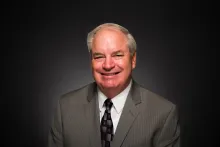
Robin Webber was born in Chicago, Illinois, in 1951, but has lived most of his life in California. He has been a part of the Church of God community since 1963. He attended Ambassador College in Pasadena from 1969-1973. He majored in theology and history.
Mr. Webber's interest remains in the study of history, socio-economics and literature. Over the years, he has offered his services to museums as a docent to share his enthusiasm and passions regarding these areas of expertise.
When time permits, he loves to go mountain biking on nearby ranch land and meet his wife as she hikes toward him.
