


Robin S Webber
This transcript was generated by AI and may contain errors. It is provided to assist those who may not be able to listen to the message.
At the turn of the 19th century, Walt Whitman—maybe some of you studied him back in American Lit—Walt Whitman, who was a poet. He was an essayist. He wrote about the ever-increasing, crowded urban life that was happening as the Industrial Revolution continued and continued. More people were coming off the farms and the small villages. They were moving into the big cities. They were crowded, much less. We had the immigrants coming over, the Poles, the Italians, the Greeks, and on and on, especially during that time, coming through Ellis Island and plopping over there in lower Manhattan, around 15th Street, 20th Street on the lower east side.
We've all seen some of those old black-and-white pictures where the streets were just crowded. People going up and down horses with apple carts behind them, bringing in loads. You know, there weren't a lot of automobiles back then. You saw the laundry that was hung up across the street. You saw the kids around the fire hydrant trying to loosen it because it was a hot, muggy day on Manhattan. You saw the ladies leaning out of the windows, talking to one another. Mrs. O'Leary was talking to Ms.
Manna Shebetz next door. They were all from different parts of the world, but now they were all in this crowd. So it was getting very, very crowded in the urban life, and it was swallowing up humanity. And then, to realize that beyond the crowd, to realize just our human nature, our human being, that we also can be crowded with everyday personal challenges. Whether you live out there by the cornfields or whether you are there in the city, human nature, left of and by itself, is a very crowded commodity that can shut us down.
It can paralyze us. And so he pondered all of this about what was coming at him, as to, well, what was life about? What could be done? And he pondered whether he or others should remain in a, do I dare say, a state of paralysis and just allow life to melt away and to settle into despair. I give this message because all of us at one time or another settle for despair rather than moving forward. Saying that you have despair is not a pejorative. It's not meant to be cruel. It's not meant to be that somehow we're a lesser human being.
At times, all of us, all of us, meet moments of despair that paralyzes, that make us stand still, that make us think that we are all alone. You know, Walt Whitman's writing this 130 years ago, and to recognize that during his lifetime, what were there? About one and a half billion people. And today we live on a crowded globe with 7.5 billion and climbing. If we live in California, we recognize how crowded it is. Susan and I get reminded every time we come down here to San Diego on the freeway, we get to join all of our fellow citizens and take it a little bit easy on life.
You know, just going five miles per hour. But it's crowded. And with all the crowds that are out there, and then sometimes having already had a crowded life of things coming at us that have squeezed us in, and then in the moment having something that is perhaps paralyzing us, all of us have something at one time or another. But I realize today with our audience here and those of you that are listening that good people, smiling people, Christian people, can come to a standstill, can come to a standstill and not move. And this message is for me, and this message is for you that I'm going to be giving.
So Walt Whitman pondered this, and the title of his contemplation in what he put to prose is simply called, O Me, O Life. Some of you may be familiar with that. O Me, O Life. What I would like to do is I'd like to just share a portion of that lament. Can't do it all. It would take a few minutes. But I want to just share the beginning, and I want to share the end, because there's a beginning and there's an end, and it's the end that we're going to concentrate on.
And basically, Walt Whitman said this, O Me, O Life, of the questions of these recurring, of the endless trains of the faithless, of the cities filled with the foolish. What amidst these, O Me, O Life? Then he wrote, answer, that you are here, that life exists, and identity, and that the powerful play goes on, and that you might be able to contribute a verse. With that stated, and with these words of wisdom put before us, I'd like to focus on just one person who elected to leave her life of despair and to contribute a verse.
And it's a verse, and it's a moment in time that is still this verse that she contributed that has come down to our day. We don't even know what her name is. We just had a message talking about Peter, and talking about John, and talking about the disciples, and we know them. And sometimes we can go, we read about our predecessors in the faith, and we think, oh, but we're not an apostle.
We didn't have immediate contact with Jesus and walked the trails of Galilee with them, or we're not Anna and Simeon in the temple. And you just put the names, and we sometimes say, well, they're different. And all we can do is kind of look up at them like Mount Rushmore, and to recognize that God is still molding and creating individuals down here, people that are not even with us today, that we don't know that are doing something very, very special, and they're contributing a verse. This lady that did not have a name was one who moved through a crowd and came forward to share a solidary moment in time with Christ.
This woman without a name, no name, but here's the bottom line. The woman without a name, yes, no name, but she did have a Savior. And that's ultimately who she would cling on to. And she reaches down to our day, and she touches us with her contributing a verse. If we allow to do so, as the powerful play goes on, even to our time and into our day, to enhance how we ourselves follow Jesus Christ.
So I'd like to give you the title of my message right out front so that we can stay together and recognize where hopefully this message is going to be taking you and me, and where along for the ride of the message of how, as the powerful play goes on, even with the crowd at life that may be in our heart or our mind or around us, to recognize how we can contribute a verse.
The title of the message is simply this, Alone with Christ. Alone with Christ in a crowd. Alone with Christ in a crowd. Her story begins as news is quickly spread around Capernaum on the Sea of Galilee that a miracle worker from Nazareth has just come ashore. The Sea of Galilee, which is up in the northern part of Israel, and Capernaum was on the northwest side, and that was just described to us by Mr. Miller. But he would be going back and forth at times between Capernaum on the northwest top of Sea of Galilee, and oftentimes he would be going over to Tiberias, which was mentioned, the town of Tiberias, or he'd be going over to the area on the northeast side called the Teqapolis, which was more Hellenistic, more gentile.
But what would happen when he was in the boat with the gentleman, oftentimes news came back quicker from those areas than the boat. And so people were always abreast and apprised of what he was doing, and a large crowd had gathered to welcome him.
Here he comes. Here comes Yeshua. Here comes that miracle worker from Nazareth. What's he going to do next? And what now? And so there was an air of excitement, and everybody poured out of the small village down to the water, waiting for the boat, the fishing boat, to arrive. And what we're going to do as it develops is, I'm going to take you—actually, when God says something once, or when gospel comments upon this, if he says it once and in one gospel alone, that's important. But this is actually shared in three different gospels.
So I'm going to go back and forth just a little bit. But for the moment and so, if you want to just kind of listen, it's probably going to be easier for you to listen rather than flip-flopping with me through the Scripture and creating a breeze for yourself unless you want to.
So we're just going to kind of talk about this as it comes to us. And in Mark 5, verse 21, it says, When Jesus had crossed again in a boat to the other side, here's a large crowd—that's the word—crowd gathered around him, and he was by the sea.
And then one of the synagogue leaders, named Jarius, came up. And when he saw Jesus, he fell at his knees. Here is a man of means, a leader, one of the leaders—not the only leader—but one of the leaders in the synagogue. And of course, when Jesus would go into the synagogue sometimes, half the crowd was with him, half the crowd wasn't. But here's Jarius making a statement of honor and respect, and he drops right to his knees in front of everybody because Jesus is here.
He has landed. So let's picture that. Let's kind of get a picture in our mind. Here's a man, perhaps a middle-aged man, probably in long clothes and cloaks, and he drops to his knees. He might have just dropped into the water. And you know what? He didn't care. He did not care because there was something that was happening back home. And he's asked him urgently and saying, My little daughter is near to death. Come and lay your hands on her so that she may be healed and that she might live.
Jesus went with him, and in Mark 5, verse 24, it says, And a large crowd followed and pressed around him. So let's get a picture of what's going on here. Are you with me? This is wall-to-wall people. This is almost like defensive ends around their quarterback guarding him.
It's like a wall, like closed in. And it says in some of the Gospels, it says that they are literally pressing upon him. It's tangible. There's the crowd, and there's the throng. Now, what is very interesting they want to share with you, may I? And that is simply that at times God is working ahead, and there's a reason why that crowd has gathered.
Jesus has landed. There's a reason why that crowd is now going to go with these two as they try to make it through the village up to Gerius' house. But there's also a reason why God has allowed this crowd to develop and to follow up and to see what's going on as he's asked to go and heal this lady. And so they're thronged by the crowd. But here's what I want you to understand as we go through Mark 5. We may move into Luke. We may move into Matthew a little bit. It's simply this. The purpose and the reason for this.
Gerius' noble desire creates the condition for the woman without a name to enter the Gospel stage and to contribute a verse. You never know what God... Here's the point I'd like to share with you. Sometimes when things are breaking up, you never know what God is doing ahead of time to prepare his entrance and his touch into your life and into my life.
And that's a very important part. The story does not begin with the woman without a name. It starts with Jesus landing. Crowd. Gerius comes. Appeals for him to come. Crowd expands. Crowd begins to leave with them. And sometimes, you know, the crowd can go by. Have you ever noticed that in life? And leave us behind. We stay put. Sometimes for a good reason.
Sometimes because of paralyzed. While everyone is moving to Gerius' home, here's the bottom line. She is moving with that crowd. There's a difference. Here's what I share with you. Let's get the flow of the motion. She is moving with that crowd, but she's also moving up within the crowd. Something's going to be happening here. Verse 25. Now a woman was there who had been suffering from a hemorrhage for 12 years. And she had endured a great deal under the care of many doctors.
And it's been all that she had. And yet, instead of getting better, she was getting worse. And since she heard about Jesus, notice she came up behind him in the crowd and would touch his cloak. That's very interesting. It's interesting that here she is, this woman that has been sick for 12 years. And it says that, in the other accounts, that she had a flow of blood. What she had was she had a hemorrhage condition. This was not minstrel.
This was a hemorrhage. And I just want to give you a little bit of the story. What's the story behind the story? As Barkley's commentaries bring out, both in his commentary on Luke and Mark, to inform us, the shame—and there was a shame in that sense and in that culture—the shame of the woman was that, ceremonially, she was unclean. You can find that back in Leviticus 15, 19 through 33. And her issue of blood had cut her off from life.
It shut her off from the worship of God. It shut her off from the fellowship of her friends. And also, beyond that, my own comments was, what she touched was considered polluted, and what touched her was considered unclean. What do we have here? What do we have here? We have an untouchable. We have a lady that has been clamped down, no life, can't communicate with her friends, can't go to services, has to be careful with everything she touches if she even tries to get to the water well in the middle of town.
You might say, no life, no how, no where. She's basically paralyzed because this minstrel cycle, this minstrel, not minstrel, this hemorrhaging condition has shut her in. So we take a look at this. What is she going to do? Is she going to be like Jarius? Is she going to be able to just go right up to the lake and drop down and say, heal me?
No. She can't do that because of her condition. And again, in that age, she's a woman. There's a cultural issue. Is she going to go up and say, here I am, I've got this problem? No, she's not going to do that. But here's the thing that she does, and I want to share this, which is really neat.
As she, the crowds are moving towards Jarius' house, motion's going heavy motion this way. Jesus and Jarius are boxed in by the crowd on both sides. They're pressing in, kind of guarding them like a quarterback in football. But here's the woman. She's going this way, but she's also moving in towards the center of traffic. And this is what she's saying, this woman that had this hemorrhage. And she said, for she kept saying to herself, if only I touch his cloak, I will be healed. If only I touch, and she kept on saying it. Let's think about this for a second.
I don't know if you ever saw that movie, What About Bob? Anybody ever see the movie What About Bob? I know you're smiling already. And there's the man who's a little crazy, and the doctor tells him, start small, and just take baby steps. So this gentleman, this guy who's a hoot, he's a comedian, his name's not coming to my mind right now, but in the movie he's going like this, baby steps, baby steps. He's heading for the elevator, he's in the elevator, and he's still saying baby steps, and the people are going like, really?
And the baby steps. I want you to consider a sister in the faith, because that's what she is. Who's been isolated for 12 years. That's a long time to be at home. It's a long time not to have a community. And yet, in faith, she's going up. Maybe if she looked through, maybe if she looked at the crowd, it would have been too much, and she would have been frozen and paralyzed. But she's there going, baby steps, baby steps. If only I can get to him, and if only I can reach out and touch his garment.
So we find that's what she does. Why is she wanting to reach out and to touch his garment? Let's discuss that for a moment, and to understand. Basically what she's reaching out for is to touch the tassels. To touch the tassels are on the back of his garment. Jesus was a Jew. Jesus was a rabbi, and that was the time, and that's what men of Judah did.
They did that because that's what God instructed to do, and that would remind them every time they had those tassels on, that theirs was the people of God that God had chosen, and chosen for a purpose. And thus they were to be a godly man. So in her mind, she's coming from behind. She says the different Gospels, if I can just touch the edge of his cloak, and that's where the tassels would be.
That's what she was going for. That was the target in mind. However, what happens then, there's another twist and a turn to this. She goes up, babies, if only, if only, if only, if only, and she's just moving forward.
She's not thinking about the crowd. She has the goal in mind. And then notice what it says here, that there's something happens. When she touches his cloak, she is healed of her disease. She comes from behind and touches them, and she is immediately healed of that disease. At the same time now, there's a twist and there's a turn to this. Notice Mark 5.30. Jesus knew at once that power had gone out from him.
He turned around in the crowd and said, Who touched my clothes? And as disciples said in verse 31, you see the crowd pressing against you? You see all of these people, they're trying to reach out. You know, it's kind of like the royal, you know, when the royal family takes a little walk down the avenues of London and everybody's in front and trying to touch and trying to get a handshake or whatever. But he's there, and you see the crowd pressing against you, and you say, Who touched me?
But he looked around to see who had done it. Then notice verse 33. Then the woman, Mark 5.33, the woman with fear and trembling, knowing what had happened to her, came and fell down before him and told him the whole truth. Now, we can just read this. Again, let's think of what's happening here. Jarius, we know by name, and we know ultimately the outcome of where that is going. But there's a whole point I want to give you to that moment. But here's this woman, the woman without a name, the woman with the disease. She touches Messiah from the rear, and he says, he felt something.
And then, now healed, she comes and falls down in front of him. This has a lot of color. This has a lot of action. This is her Savior. And she doesn't care now who knows. And she gives a witness when you look at this, and he said, she said, let me find the point here, but he looked around and said, the woman with fear and trembling, knowing what had happened to her, came and told, told what had happened and gave the entire truth. Now, when the villagers saw this woman, when the villagers saw this woman, they knew who she was.
Normally, when Jesus and when the disciples later on would heal somebody, God never wastes a miracle. Christ never wastes a miracle. This was known when she was healed. Everybody would know that she was healed, that this wasn't a fake healing. This wasn't like something on stage on television where somebody bounces over and, I'm healed. No, this was real. This was as real as the man that was born blind that Jesus put the mud on his eyes and said, go and wash yourself.
He had been blind since birth. People know that he hadn't just been poked in the eye. You have other examples of the man at the gate beautiful that when Peter and John came, everybody knew the man at the gate beautiful. Everybody knew that he was lame. Everybody had passed him for years. The gate beautiful was not in the back alley. That was the main gate up into the temple complex.
When God acts at times, he's doing it for a purpose so that everybody will know. It's like when Lazarus died of an illness. Jesus waited till the fourth day, not the third day, but the fourth day so that all would know that Lazarus was dead, that this was not a fluke. That somehow he'd just been like in Romeo and Juliet where one of them was asleep and then woke up, if you know the story.
No, Lazarus was dead. Dead all over, just like Rover. So let's remember something. God never will waste a miracle, and it's for a purpose. But sometimes in our own lives, it's also that we might be able to contribute a verse and be able to tell others our story of how God has dealt with us.
So let's move on from that point and to recognize what is going on. She is not only spontaneous healed, but Jesus is impacted by her touch, and he knew exactly what had been going on. So what is happening here? I'd like to share a thought about this.
I'd like you to jot down a note. Don't usually ask this, but if you're taking notes, let's understand what's happening here at this moment. Christ at this moment is touched twice. He is touched twice. He is touched from the rear, doesn't know who's behind him, but his inner being, the spirit that is with him, knows that somebody needs to receive his grace and needs to receive his healing.
And it goes out from him. He was touched from behind. But there's another thing that's very important that's going to bring us into our stories in a few minutes. His heart was also touched. It was not just his back, but God in the flesh was touched by what was going on and says, Daughter, your faith has made you whole. And at that moment, with the crowd all around him, with this woman without a name contributing a verse and telling them that this man don't have to worry about what he did across the lake. He's just done it right now before all of us. And she's healed and gives a witness.
And it's at that moment, with the crowd around, that it's just like Jesus and the woman are alone. Jesus and the woman are alone. The crowd is on mute. They're watching this, and it's as if Jesus is giving this woman her full attention. Daughter, a term of endearment. Your faith has made you whole. What can we learn from this story? I'm going to give you just a few points. Let's see how many points I have here. Oh, good. Only ten.
Minus seven. I'm going to give you three points. What I've taken, and I want to incorporate in my life. Point number one, we are never truly lost from God in a crowd. We are never truly lost from God in a crowd. I'd like us to go over to Psalm 139, if you'll join me, please.
And let's pick up the thought in verse one.
O Lord, you have searched me and known me. You know my sitting down and my rising up. You understand my thought afar off. You comprehend my path and my lying down, and are acquainted with all of my ways. For there is not a word on my tongue, but behold, O Lord, you know it all together.
God is never estranged from us. He is always near, and he looks after us. You know, it's interesting. I thought I jotted it down on my notes this morning, but I think again, can we be lost to God, who is omnipresent, who is all-knowing, all-loving, all-wise? God says that he has set the firmament in the sky and keeps them on their courses in the book of Isaiah. He says that he names the constellations and the stars by name.
The more we get into the universe with Hubble telescopes and whatever that latest one is called, that just when you think we've seen everything, it keeps on going, God says he's given names to all of those stars, all of those constellations, all of those suns, all of those solar systems. And not only does he name them, but he keeps them in order. Last time I noticed we haven't bumped into Venus or Mars.
And the moon hasn't knocked us out of orbit yet. So God has all of this, knows it, calls them by name, and keeps them in alignment. And when you look at the universe any more and you keep on going out, and you see, can you go any further, and you see more and more? It's pretty crowded out there with stars and planets. But he says he knows them, name by name. Join me if you would in Matthew 10, verse 29. In Matthew 10, verse 29.
Jesus says here, Are two sparrows sold for a copper coin? And not one of them falls in the ground apart from your father's will?
He knows exactly what's going on. Now, I want to share something with you. Are not two sparrows sold for a copper coin? And not one of them falls to the ground apart from your father's will? But now, keep your hand there and join me over in the Gospel of Luke, Luke 12, verse 6.
Because that's why we look at the Gospels back and forth, because they expand upon one another. In Luke 12, verse 6. Now, notice this. In Matthew, it says, Are not two sparrows sold? But now notice this. Are not five sparrows sold for two copper coins?
And not one of them is forgotten before God?
It goes on to say, But the very hairs of your head are all numbered. Do not fear, therefore, you are more valuable than sparrows. But it's interesting here in verse 6, Are not five sparrows? Why does it mention five sparrows? Because what would happen in the marketplace if some people wanted sparrows, and, you know, in the marketplace and the buyer, the salesman says, Such a deal. We've heard that before. Such a deal.
But it's not moving it. So what they do is they throw in an additional sparrow. Here you go. I'm going to throw one more in. It's not the one that the customer wanted. It's the, if there is such thing as an ugly sparrow, maybe a crippled sparrow. It's the sparrow that nobody wants. But I'll tell you what, you're going to make such a deal. You thought it was such a deal. Now I'm going to make it a bigger deal. I'm going to throw in. I like you. I'm going to throw in one more in there. That's you. That's me. That's God's people.
Those that, as Paul says, are the weak of the world, the base things of the world, where the world kind of just kind of looks down and says, oh really? There's a term, it's analytical, not political, but I'll use the phraseology, the deplorables.
And that's what we were before God began working with us.
God knows exactly where we are.
He knows exactly where we are. We're not lost in it.
Second point.
Second point. When in doubt, like the woman on the mission, always move towards Christ in faith. I want to share something, friends. You may never hear me say this again.
Always move forward towards Christ.
Baby steps.
Little steps.
Three baby steps make a yard of faith. If you have to, crawl towards Christ. He's not asking you, crawl before me. I'm not saying that, but because in your own mind, if you're paralyzed, then you crawl towards Christ. It's very interesting that Mr. Miller, I told you I'd build upon it. One thing about the Apostle Peter, and you know, can't wait to meet that guy. He had character, isn't he? He's a character. I mean, he's bigger than life with all of the episodes. Sometimes with Jesus, you could say with friends like Peter, you don't eat enemies. But the one thing about Peter that I've always gained out of Peter, at the end of the day, when he got it together, wherever Christ was, he wanted to be. He wanted to be. You know, when everybody else was trembling in the boat with the storm, he gets out, and at least he tries to walk on water and move towards Christ when everybody else is gawking and staring and then making fun of him when he goes for a dip.
And Jesus comes over and...
Come on, Peter. Remember when you were just discussing a skip about the story of John and Peter, and that's Master on the shore after after Pentecost? What's everybody doing? They're watching. What's Peter do? Peter's the one guy in the boat that jumps into the water and swims towards Christ. You ever thought about that? If he had to swim, if he had to crawl, if ultimately he had to be crucified as myth and legend and perhaps reality, if he had to be crucified upside down because he was not worthy to be crucified as our Lord, he wanted to be as close as possible. But even in that moment of death, he wanted to humble himself. He did not think he was worthy. Yeah, he'd be on a piece of wood. Yeah, he would have spikes in his hands. Yeah.
But he did not quite want to take Jesus' place the way that he died.
I'm just encouraging all of us because we are crowded with our own emotions. We are crowded with our own past. We are crowded with all of the information that is coming at us today. We just watched a very interesting program last night about the tech forces of how they are actually swaying and changing minds that we are not even aware of. I'm not a conspiracy guy either, but the aspect of how big tech is grooming and changing the minds of America and the world at large. So our minds get crowded with thoughts that are coming and airwaves that are coming from others. And you remember this. When in doubt, when in fear, when you think you cannot go any further than need be, you remember our friend, the woman who contributed a verse that moved step by step. She knew the goal. If only I can touch the edge. And you know what? Here's the bottom line. She touched more than the edge of his cloak. She touched the heart of our Savior. Another thing that I'd like to share with you. The older I get, being a recycled teenager, I find that I've got to kind of slow my pace a little bit. I can't always do two things at once, even though as a guy with the challenge, I still try to do three things and juggle. But I have to step back. Here's the one thing I'd like to share with you, and that is simply this. Our God and our Messiah, His Son, can do two things at once. They can do three things at once. They can do beyond that, and we can just number up. The story that begins with Jarius, the story that begins with Jarius, the crowd gathers, and they're headed towards Jarius. Here's the mission. The woman enters in that through the crowd. He heals the woman. That's the middle part of the story and the flow of the crowd. Then, when He has that private audience with the woman, all of a sudden the news comes. The news comes, your daughter has died. Whoa.
That doesn't halt Jesus. Oh, by the way, they say, the Messiah, the rabbi, he doesn't need to come anymore. She's dead. Oh, do they have something coming? So the crowd's going to keep on going up with them. Whatever is going on in other people's lives that are beseeching God doesn't mean that He doesn't have time for you and will not deal with you in the spot.
That caught me. Sometimes scripture all hits us differently. All of these points just really excited me, and I wanted to share them with you. That's the God that we worship. He can take care of a woman that has been ill, that nobody has been able to take care of for 12 years, heal her, and then He moves on. But here's the point of the story. The woman was unclean, and under the law you were not to touch something that was unclean, right? We know the story about that. Now, guess what? The story's going to expand. That's why you have to know where the story begins and where the story ends. Now the story's going to—now He's going to go and touch a corpse. Hello. Because Jesus was asked to anoint the corpse. So He goes from touching and fellowshiping with a woman that has something unclean, quote-unquote, ceremonially, and now He's going to go to a household He's going to go in, and He's going to lay hands on that young lady, and she is going to be raised from the dead. And the crowd has only gotten larger now because it was big at the lake, following Him, pressing Him. Now there's the woman, probably more have been added to the crowd. Plus, she's walking with the crowd now because everybody's going to get to know about this miracle. One thing I'd like to share with you—join me if you would in Exodus 14.13. This is where ancient Israel was in a sense paralyzed on this side of the Red Sea. It's the famous story of coming out of Egypt. And I just want to read through Exodus 14.13.
Of what? There's a crowd. Who is the crowd? The army of Egypt waiting to come at them and snuff them out. And Moses said to the people, do not be afraid. Stand still. See the salvation of the Lord, which He will accomplish for you today. For the Egyptians that you see will see—you will see no more forever. The Lord will fight for you, and you shall hold your peace. Really? Legs are shaking? Bodies are shaking? Is there anybody else up there? You know, the old gag? And you shall hold your peace. And the Lord said to Moses, Why do you cry to me? Then He says, Tell the children of Israel, notice, to move forward. Forward. Forward. There's three things that we get out of this. Number one, out of this section, we are to stand still. Psalm 146, verse 10. Stand still. Get ahold of yourself. You are a child of God. Stand still and know about God. Number two, Moses talking to the children on behalf of God, hold your peace. Hold your peace. Shalom. Shalom. Shalom is not happy-happy. Shalom is that God will grant you a peace that surpasses all understanding. That God will make a way, His way, maybe not our way, but He will make a way that we are bonded in relationship. Be still and know that I am God. And that He will supply us with what we need along the way. Then notice, number three, with that, when we stand still to know who we worship, and then ask God that His peace, not our trembles, not our paralysis, but that His peace might heal us, and that we move forward, knowing that we are not alone. This takes us to the third step, and this will be short. We worship a God who touches us, and likewise is touched by us. Join me if you would, and let's go to Hebrews 4.
In Hebrews 4, I'm picking up the thought.
In verse 14, Seeing then, seeing then that we have a great High Priest who has passed through the heavens, Jesus, the Son of God, let us hold fast our confession. For we do not have a High Priest who cannot sympathize with our weaknesses, but was in all points tempted as we are, and yet without sin. This is good, New King James, but in the Old King James, the Authorized Version, it says this, For we do not have a High Priest who cannot be touched.
And the Word of God, through the author of Hebrews, the invitation of God is simply this. Are you with me? Let's begin to conclude. We don't have to come from behind. We don't have to sneak up on Him.
We don't need to worry about what other people are going to think.
And we may have more than a hemorrhage that comes out of us. We may be spiritually, emotionally, hemorrhaging. Maybe we've been apart from God. We've become paralyzed. We don't know what to do. And this tells us, see, this is the expansion of the woman without a name who knew she had a Savior, that we can touch God today as much as that woman touched Jesus. When the power was drawn out of Him, the healing came, and He stopped in His tracks and looked around. And I would suggest that He was looking around. Somebody believes in me here. Who is that? I've been touched, not just by somebody poking on my back or grabbing the tassels, but they have touched me that somebody has thought that my Father has truly sent me, that I am Messiah, that I am the embodiment of the prophecies of the prophets. And we can do that today as we pray, and that we can come. Open invitation may make a suggestion and a comment as we leave. And maybe in doing that, you need to take baby steps. Understood. We all come to God differently. My only point to you is we have the ability to touch that same individual that that lady touched years ago. And He says, you don't have to come from behind. I'm here. There's nothing that you have done, nothing. But I do offer you freedom. Freedom of spiritual movement, emotional healing. According to His physical healing, that you can live in the land of the living. Join me in let's conclude in Galatians 2 and verse 20. In Galatians 2...
Here we go. Galatians 2.20. Remember what Walt Whitman said? He said simply this. Answer that the powerful play goes on and that you might be able to contribute a verse. He also said to remember that we exist. We exist. But not in a secular sense. We do not exist. We have company. We know that we are not alone. And we have identity. And our identity is in Christ.
And He welcomes us. And offers that we might be able to prepare ourselves to contribute a verse. Galatians 2 and verse 20 says this. I have been crucified with Christ. It is no longer I who live, but Christ lives in me. And the life I now live in the flesh, I live by faith in the Son of God, who loved me and gave Himself for me. That is our identity. He's the one that walks before us.
He Himself and people like the Lady without a name that contributed a verse. And broke from her paralysis. And it is simply this, the story and the call of Isaiah 30 verse 21. This is the way. Walk you in it.
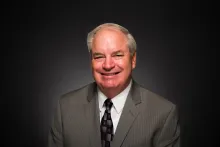
Robin Webber was born in Chicago, Illinois, in 1951, but has lived most of his life in California. He has been a part of the Church of God community since 1963. He attended Ambassador College in Pasadena from 1969-1973. He majored in theology and history.
Mr. Webber's interest remains in the study of history, socio-economics and literature. Over the years, he has offered his services to museums as a docent to share his enthusiasm and passions regarding these areas of expertise.
When time permits, he loves to go mountain biking on nearby ranch land and meet his wife as she hikes toward him.
